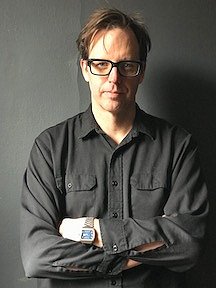
Dimitrios Dechouniotis is an Assistant Professor at the Department of Electrical and Computer Engineering within the School of Electrical and Computer Engineering at the University of Patras . His career spans roles in academia, research institutions, and public administration. 2004: Diploma in Electrical Engineering (University of Patras) 2006: MSc in Automation Systems (NTUA) 2014: PhD in Electrical and Computer Engineering (University of Patras) His research focuses on Systems & Control Theory , Cyber-Physical Systems , Robotics , Cloud Computing , and 5G Communications . Recent publications highlight work in edge computing , network slicing , and resource orchestration for IoT and robotics applications. He has participated in over 10 national and European research projects related to telecommunications and Industry 4.0. His technical contributions include frameworks for edge-cloud continuum orchestration , blockchain-based slice orchestration , and energy-aware resource allocation , with a strong emphasis on system modeling and control-theoretic approaches. Contact: dechouniotis@uop.gr | Office: Building Z, 2nd Floor
Ioannis Venetis is an Assistant Professor at the University of Piraeus, School of Information and Communication Technologies, Department of Informatics, specializing in Operating Systems and Parallel Computing. He earned his PhD from the Department of Computer Engineering and Informatics at the University of Patras. His research spans programming models for parallel systems, scheduling optimization, and applications in computational neuroscience and seismology. Research Interests Operating Systems Parallel Computing Scheduling Algorithms High-Performance Computing Computational Neuroscience Seismology Projects Participation in European and national research programs Development of Gisola (GPU-accelerated seismic inversion tool) His teaching portfolio includes courses like Operating Systems, Parallel Processing, and Symbolic Programming. Articles highlight expertise in GPU acceleration, tridiagonal solvers, sensor networks, and many-core architectures. Notable contributions include work on Chimera states in neuronal dynamics and hierarchical workload scheduling frameworks.
Professor Kyriazis Demosthenis serves as a Professor in the Department of Digital Systems at the University of Piraeus and currently holds the position of Vice-Chancellor for Research and Lifelong Learning. His academic career spans over two decades with significant contributions to service-oriented architectures and cloud computing. His educational background includes: Diploma in Electrical and Computer Engineering from the National Technical University of Athens (NTUA) in 2001 Interdepartmental postgraduate diploma in "Techno-Economic Systems" in 2004 (NTUA, National Kapodistrian University of Athens, University of Piraeus) PhD in Electrical and Computer Engineering from NTUA in 2007, specializing in Service-Oriented Architectures Professor Kyriazis focuses on service-oriented, distributed and heterogeneous systems with particular expertise in software technologies and data analysis. His work bridges theoretical frameworks with practical implementations in cloud infrastructure management. His research has evolved to address emerging challenges in virtualization technologies for high availability of cloud computing infrastructures and management techniques in Internet of Things environments. He has demonstrated leadership in European research initiatives, coordinating multiple projects and serving in prominent research groups including the Future Internet Architecture Board and Cloud QoS&SLAs. His work has practical applications across multimedia, virtual reality, and health domains. Throughout his career, Professor Kyriazis has participated in numerous European and Greek research projects including BigDataStack, CrowdHEALTH, MATILDA, 5GTANGO, CYBELE, ORBIT, VISION Cloud, IRMOS, and 4CaaSt. His research leadership extends to coordinating relevant European projects in the IoT and cloud computing domains.
Ioannis S. Triantafyllou is an Associate Professor at the Department of Statistics and Actuarial Science of the University of Piraeus, where he has been serving since 2022. Previously, he was an Associate Professor at the Department of Informatics with applications in Biomedicine at the University of Thessaly (2017-2021) and a Lecturer at the same department (2016-2017). He also serves as Collaborating Educational Staff at the School of Natural Sciences & Technology, Hellenic Open University since 2013. Education: Postdoctoral Research (2011) in Probability and Statistics at the University of Piraeus Doctoral Degree (2009) from the Department of Statistics & Actuarial Science, University of Piraeus Master's Degree in Applied Statistics (2005) from the University of Piraeus Bachelor's Degree (2002) from the Department of Mathematics, National & Kapodistrian University of Athens Dr. Triantafyllou's research focuses on Statistics and Applied Probability, with particular emphasis on Nonparametric Statistical Process Control, Nonparametric Statistical Inference, Statistical Reliability Theory, Order Statistics Theory, and Aging properties study. His work bridges theoretical statistics with practical applications in reliability engineering and quality control. He has developed innovative nonparametric methods for monitoring industrial processes without assuming specific distributional forms, which has significant implications for quality assurance in various industries. His recent publications demonstrate a strong focus on reliability structures, particularly consecutive-type systems, weighted components, and distribution-free control charts. The research shows a clear trend toward developing more sophisticated models that incorporate multiple failure modes, redundancy mechanisms, and nonparametric approaches that don't require distributional assumptions. His work increasingly intersects with applications in supply chain management, medical diagnostics, and engineering systems. Professional Recognition: Associate Editor at International Journal of Mathematical Engineering and Management Sciences Reviewer at Mathematical Reviews/MathSciNet Guest Editor for special issues in Mathematics, International Journal of Quality and Reliability Management, and Reliability: Theory and Applications Member of Scientific Committees for multiple Panhellenic Statistical Conferences Dr. Triantafyllou has supervised more than 60 undergraduate theses and over 35 master's theses throughout his career. His teaching spans 8 undergraduate and 23 graduate courses across multiple institutions, totaling more than 13 academic semesters of instruction. He has authored 18 teaching textbooks and served as a reviewer for 37 different international scientific journals, evaluating more than 70 papers. His research laboratory focuses on reliability engineering and statistical process control, with active collaborations across multiple institutions. Current projects involve developing advanced nonparametric control charts for industrial applications and studying complex reliability structures with multiple failure criteria.
Maria Chalkidi is an Associate Professor at the Department of Digital Systems within the School of Information and Communication Technologies at the University of Piraeus. She contributes significantly to the academic community through her research and teaching in computer science and digital systems. She received her B.A. from the Department of Computer Science of the University of Piraeus in 1997, followed by a Master's Degree in Information Systems and a PhD from the Athens University of Economics and Business (AUEB) in 1999 and 2003, respectively. Dr. Chalkidi's research spans several key areas including Machine Learning Techniques, Knowledge Mining in Distributed Environments (P2P Systems, Sensor Networks), and WWW & Databases with specialization in Web Document Clustering and Web Content Management. Her work integrates cognitive approaches with database technologies to address complex information management challenges. Among her notable achievements is the prestigious Marie Curie Outgoing International Fellowship awarded by the European Commission for 2004-2005, which supported her postdoctoral research at the University of California, Riverside's Department of Computer Science & Engineering. She has actively participated in national and European research programs, working with the DB-NET research group at AUEB. Dr. Chalkidi has served on numerous program committees for International Conferences in Knowledge Mining and Machine Learning, contributing to the advancement of these fields globally.
MARIAS IOANNIS is an Assistant Professor at the Department of Informatics , Athens University of Economics and Business . With a PhD in Informatics (2004) from the University of Athens and an engineering degree from the University of Patras (1995), he has focused on security and privacy in next-generation networks, including sensor networks, vehicular networks, and VoIP services. His research explores Privacy in information-centric networks Trust management in dynamic networks Anti-spam mechanisms for SIP/VoIP Location anonymity techniques Recent publications address content pollution in peer-to-peer systems, homomorphic encryption for privacy, and security in cognitive radio . He has received the Best Student Paper Award at NGI 2010 and contributes to European projects like PURSUIT (FP7) and PSIRP , where he co-designed security frameworks.
George Amanatidis is an Assistant Professor in the Department of Informatics at the Athens University of Economics and Business (AUEB) since December 2024 and a Research Associate at the Archimedes Unit of the Athena Research Center since February 2023. His academic career spans multiple international institutions with progressive roles in theoretical computer science and algorithmic economics. His educational qualifications include: PhD in Computer Science (2017) from Athens University of Economics and Business with thesis "Design of algorithms and mechanisms for problems with limited—or no—payoffs" Diploma in Applied Mathematics from National Technical University of Athens Master of Science in Mathematics from Georgia Institute of Technology Dr. Amanatidis specializes in algorithmic problems at the intersection of Discrete Mathematics, Computer Science, and Economics. His research critically examines fair allocation of goods, mechanism design frameworks, and graph sampling methodologies, contributing to foundational advancements in computational social choice and resource distribution theory. His work bridges theoretical computer science with economic modeling to solve complex optimization problems under constraints. No scientific awards are documented in the provided information. While no student advisement details or research grants are specified in the source material, his career trajectory demonstrates sustained engagement with high-impact academic institutions including the University of Essex, University of Amsterdam, Sapienza University of Rome, and CWI Netherlands. His current research activities at the Archimedes Unit focus on algorithmic design and computational theory, leveraging interdisciplinary approaches to address challenges in economic modeling and discrete systems.
Spyridon Voulgaris is an Assistant Professor at the Department of Informatics of the Athens University of Economics and Business , where he contributes to academic research and teaching in advanced computer science domains. Education Bachelor's in Computer Engineering and Informatics, University of Patras Master's in Computer Science, University of Michigan (USA) Doctorate in Computer Science, Vrije Universiteit Amsterdam (Netherlands) His research focuses on Distributed Systems, Peer-to-Peer Networks, Epidemic Protocols, Wireless Sensor Networks, and Blockchain Technologies , addressing fundamental challenges in scalable and resilient computer systems. His work has been conducted in collaboration with institutions like ETH Zurich, Vrije Universiteit Amsterdam, and industry labs including HP Labs, Microsoft Research, and INRIA. While no formal awards are documented in the provided text, his affiliations with top-tier academic and industrial research centers underscore his professional impact. He has contributed to journals such as ACM Transactions on Computer Systems and IEEE Transactions on Knowledge and Data Engineering .
Antonios G. Kladas is a Full Professor at the National Technical University of Athens (NTUA), School of Electrical and Computer Engineering, where he directs the Laboratory of Electrical Machines and Power Electronics. He holds a Diploma from Aristotle University of Thessaloniki (1982) and DEA/PhD degrees from Université Paris VI (1983-1987). His academic career spans roles as Assistant Professor (1996-2001), Associate Professor (2001-2006), and Full Professor (2006-present). Research Focus: Prof. Kladas specializes in electric machine and transformer design, renewable energy systems, industrial drives, and electromagnetic field computation. His work integrates finite-element modeling with optimization techniques for applications in electric vehicles, aerospace actuators, and power grids. Key innovations include hybrid electromagnetic-thermal methodologies and multi-objective evolutionary algorithms for motor design. Awarded the Best Paper Award at ICEM 2010 , he has led projects like the EU Clean Sky Programme and the fuel-efficient 'Pyrforos' vehicle prototype (Shell Eco Marathon 2012). He serves on steering committees for IEEE CEFC and ICEM conferences and has evaluated research programs for Italian/Portuguese agencies. Major Grants: EU Clean Sky (HPEM, EMAS), HERACLITOS II (electric vehicles), CREAM (integrated actuators) Advising: Supervised 14 PhD theses and >100 undergraduate projects on topics ranging from PM motor optimization to wave energy converters. Laboratory Leadership: Oversees 50+ researchers in the NTUA Laboratory of Electrical Machines and Power Electronics, focusing on experimental validation of industrial and renewable energy systems.
Rachid Guerraoui is a Moroccan-Swiss computer scientist and Full Professor in the School of Computer and Communication Sciences at EPFL. He is renowned for his significant contributions to distributed and concurrent computing, holding the prestigious Chair in Distributed Computing at the Collège de France (2018-19). As an ACM Fellow (2012) and recipient of the Dahl-Nygaard Senior Prize (2024), his work has shaped both theoretical foundations and practical implementations in distributed systems. Guerraoui earned simultaneous Master's degrees in Computer Engineering from École supérieure d'informatique électronique automatique (ESIEA) and in Computer Science from Pierre and Marie Curie University in 1989. He completed his PhD at Université d'Orsay in 1992 under the supervision of Christian Fluhr, with a dissertation titled "Programmation Répartie par Objets: Études et Propositions." Following postdoctoral research at EPFL, he joined the computer science faculty in 1999 after working at HP Labs and MIT. Guerraoui's research spans distributed computing, concurrent systems, transactional memory, and asynchronous algorithms. His work on establishing theoretical foundations of Transactional Memory, including the concept of opacity, has been highly influential. He has also made significant contributions to scalable information dissemination methods, asynchronous distributed computations, and the mathematical abstraction of indulgence. His research bridges theoretical rigor with practical implementations, as evidenced by systems like SwissTM and STMBench7. His publication record shows a clear evolution from theoretical foundations to practical implementations and broader applications. Early work focused on fundamental problems like consensus and renaming, while more recent publications address machine learning applications and public understanding of AI. The consistent thread throughout his career is a focus on making distributed systems more reliable, efficient, and accessible. Guerraoui has received numerous prestigious awards including: ACM Fellow (2012) ERC Advanced Grant Award (2013) Google Focused Award (2014) Middleware Best Paper Award (2014) Middleware 10-Years Best Paper Award Chair in Distributed Computing, Collège de France (2018-19) Dahl-Nygaard Senior Prize (2024) As an academic advisor, Guerraoui has mentored students including El Mahdi El Mahmdi, with whom he co-created the Wandida project - a collection of educational videos on computer science. His research has been supported by significant grants from the European Research Council and Google. Beyond research, Guerraoui actively participates in public discourse, particularly regarding computer science education and technology policy. Guerraoui leads the Distributed Computing Laboratory (DCL) at EPFL, which focuses on advancing the state of the art in distributed systems. The lab's work spans theoretical foundations, practical implementations, and educational outreach, reflecting Guerraoui's holistic approach to computer science research and education.
Arjun Guha is an Associate Professor at Northeastern University's Khoury College of Computer Sciences, where he also serves as the Area Chair for Software. He conducts research in programming languages with a focus on program synthesis for low-resource programming languages and understanding how computer science education is impacted by large language models. His work spans multiple domains including WebAssembly, software-defined networking, and serverless computing. Guha's research interests center around programming language design, implementation, and application. He has made significant contributions to understanding JavaScript through formal semantics (LambdaJS), developing functional reactive programming for web applications (Flapjax), and creating tools for software-defined networks (NetKAT, Frenetic). His recent work focuses on leveraging large language models for code generation in specialized programming languages and understanding their impact on programming education. His publications reveal a strong trend toward applying AI and machine learning techniques to programming language problems, particularly in code generation and understanding. The research spans from foundational programming language theory to practical applications in education and software development tools, with increasing focus on the intersection of programming languages and large language models. Guha has received several prestigious awards including the OOPSLA Most Influential Paper Award in 2019 for his work on Flapjax, an ACM SIGPLAN Research Highlight for his work on NetKAT, and a Best Student Paper Award. His research has been recognized for its foundational contributions to programming language theory and practical impact on software development. OOPSLA Most Influential Paper Award (2019) for Flapjax ACM SIGPLAN Research Highlight for A Fast Compiler for NetKAT Best Student Paper Award for Flapjax paper Guha advises numerous PhD, MS, and undergraduate students, with several alumni now at leading tech companies and academic institutions. His research has been supported by the National Science Foundation, the Department of Energy, the Office of Naval Research, and industry partners including Google, JPMorgan Chase, MathWorks, Meta, Oracle, and Roblox. He leads the Programming Research Laboratory at Northeastern and is actively involved in major research collaborations like the BigCode Project. Guha is a member of the Programming Research Laboratory at Northeastern and leads several major research initiatives including the BigCode Project's evaluation working group. His lab develops practical software systems like MultiPL-E (a polyglot benchmark for Code LLMs) and WasmFX (bringing effect handlers to WebAssembly), with applications in education, software development, and high-performance computing.
Mohamed Faouzi Atig is a Professor in Computer Systems at Uppsala University's Department of Information Technology since July 2021, following a progression from Assistant Professor (2014-2018) to Associate Professor (2018-2021). His academic career began with a post-doctoral position at Uppsala University (2010-2012) after earning his PhD from University of Paris Diderot-Paris 7 in 2010, followed by a docent degree (habilitation equivalent) from Uppsala University in 2017. His research focuses on formal verification of concurrent and infinite-state systems, with particular expertise in model checking , weak memory models (including x86-TSO, Release-Acquire), and automata theory applied to string constraints. His work bridges theoretical foundations with practical verification techniques for modern hardware and programming language semantics. Analysis of his publication record reveals a sustained focus on verification challenges in concurrent systems, evolving from foundational work on memory models (2015) to sophisticated techniques for string constraints (2017) and persistent memory (2024-2025). His research demonstrates consistent contributions to top venues like PLDI and POPL, with increasing complexity in handling real-world memory models while maintaining theoretical rigor. At Uppsala University, he has served on program committees for major conferences including POPL, VMCAI, and SPLASH, demonstrating active engagement with the programming languages research community.
Adam Chlipala is a Professor at the Massachusetts Institute of Technology working at the intersection of programming languages, formal methods, and computer systems. His research focuses on building practical verified systems with end-to-end machine-checked proofs, particularly using the Coq proof assistant. His educational background includes a Computer Science undergraduate degree from Carnegie Mellon University (2003) and a PhD in Computer Science from the University of California, Berkeley (2007). Following a postdoctoral position at Harvard University through 2011, he joined MIT as faculty. Chlipala's research spans multiple domains with strong emphasis on dependent types , verified compilation , and hardware-software co-verification . His work consistently bridges theoretical foundations with practical implementation, as evidenced by his development of the Ur/Web programming language and his focus on creating clean-slate hardware-software stacks with formal guarantees. Key research thrusts include cryptographic constant-time verification, side-channel security, and verified tensor compilation. His recent publications (2020-2025) reveal a clear trajectory toward increasingly complex verified systems, with growing emphasis on hardware-software integration, cryptographic implementations, and performance-critical applications. The work consistently leverages Coq for machine-checked proofs while addressing real-world constraints like timing channels and hardware interfaces. Chlipala is the author of the influential textbook Certified Programming with Dependent Types , which serves as a primary educational resource for Coq at numerous institutions worldwide. His professional activities include significant service to the PL community through program committees for major conferences including PLDI, POPL, ICFP, and CPP. He leads research initiatives connecting hardware and software verification, most notably through the DeepSpec project which aims to build fully verified computing stacks. His current work focuses on practical applications of dependent types for business applications through Ur/Web and verified cryptographic implementations.
Stephen Chong is a Gordon McKay Professor of Computer Science in the Harvard John A. Paulson School of Engineering and Applied Sciences, where he serves as Co-Director of Undergraduate Studies for Computer Science. His academic career spans over a decade of teaching and research at Harvard, where he has made significant contributions to programming languages and information security. Chong received his PhD from Cornell University under the guidance of Andrew Myers, and a bachelor's degree from Victoria University of Wellington, New Zealand. Prior to graduate school, he worked as a consultant and contractor in the software industry, bringing practical experience to his academic research. Professor Chong's research focuses on language-based information security, using programming language techniques to provide information security assurance. His work bridges the gap between theoretical foundations and practical applications, developing tools and frameworks that help programmers write trustworthy programs. His research has evolved to address increasingly complex security challenges in modern computing environments, from web applications to cyber-physical systems. His recent publications reveal a strong trend toward integrating advanced programming language techniques with security analysis, particularly through the use of Datalog, SMT solvers, and program synthesis. His work on Formulog has been particularly influential, extending Datalog with mechanisms to construct and reason about SMT formulas for static analysis. His research has expanded to address security challenges in cyber-physical systems, where sensor attacks pose unique threats to safety-critical infrastructure. Chong has received numerous prestigious awards including an NSF CAREER award, an AFOSR Young Investigator award, and a Sloan Research Fellowship. He has also served in leadership roles for major conferences including CSF 2012-2013, PLMW @ PLDI 2021, and as SIGPLAN-M Chair for 2025-2026. As an educator, Chong has mentored numerous students through Harvard's undergraduate research programs and has served as a thesis advisor. His teaching portfolio includes foundational courses like CS51, systems courses like CS61, and advanced topics in programming languages (CS152) and compilers (CS1530). He has been instrumental in shaping Harvard's computer science curriculum, particularly in security and programming languages. Chong leads a research group focused on language-based security, with projects including Formulog (for SMT-based static analysis), PRINCESS (for autonomous adaptation of software), and work on secure shell scripting (Shill). His group collaborates with researchers across Harvard and other institutions to tackle challenging problems at the intersection of programming languages and security.
Byron Cook is Professor of Computer Science at University College London (UCL) and Director of Automated Reasoning at Amazon Web Services. He leads Amazon's Automated Reasoning Group (ARG) and has driven the broad adoption of formal methods across AWS services. His career spans academia and industry, with significant contributions to program verification and automated reasoning. His research focuses on verification, automated reasoning, program analysis, computer/network security, programming languages, theorem proving, logic, and applications to hardware design, operating systems, and biological systems. Cook's work bridges theoretical foundations with practical applications in cloud security and system reliability, particularly through his leadership in applying formal methods to AWS infrastructure. Cook's recent publications demonstrate a strong focus on applying automated reasoning to cloud security challenges, particularly around access control policies, network reachability, and cryptographic implementations. His work shows a clear trajectory from theoretical program verification toward practical security applications in large-scale cloud environments, with emphasis on making formal methods accessible to developers through "one-click" verification tools. Scientific Awards: FREng (Fellow of the Royal Academy of Engineering) As an academic advisor, Cook has mentored numerous PhD students and interns who have gone on to significant careers in programming languages and verification research. His work at Amazon has secured substantial research funding for developing and deploying automated reasoning tools across AWS services. Cook founded and leads Amazon's Automated Reasoning Group (ARG), which develops tools like IAM Access Analyzer, Tiros, Zelkova, and T2. Previously, he managed the Programming Principles and Tools (PPT) group at Microsoft Research Cambridge, where he co-founded projects including TERMINATOR, SLAyer, and the Bio Model Analyzer (BMA).