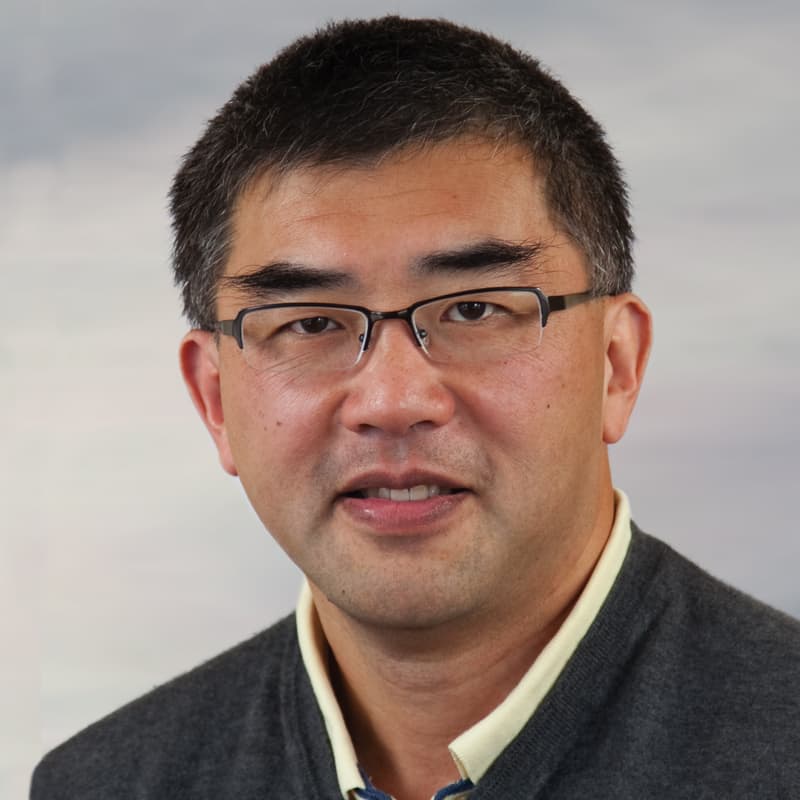
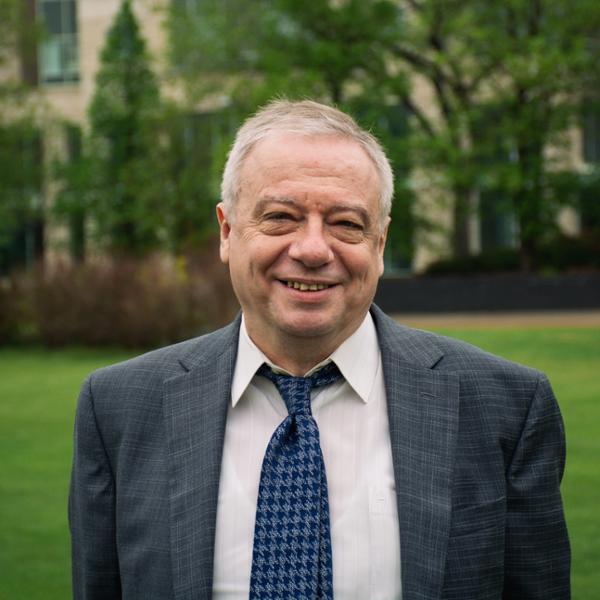
Glenn Savage is a Professor of Education Futures at the Faculty of Education, The University of Melbourne . His work focuses on the intersection of education policy, strategic design , and system change , with a particular emphasis on school funding , equity in education , and national curriculum reforms. He has held academic roles since 2011, including Associate Professor and Lecturer positions at the University of Melbourne and the University of Western Australia. Glenn Savage’s research has been funded by the Australian Research Council , and he frequently contributes to public discourse on education policy through platforms like The Conversation . His recent articles analyze the Better and Fairer Schools Agreement (2025–2034), NAPLAN testing , and the challenges of achieving equity targets in Australian schooling. Key themes in his work include federal-state funding negotiations , teacher workforce development , and accountability mechanisms for educational outcomes.
Allison McDonald is a Professor in the Department of Biology at Wilfrid Laurier University's Faculty of Science. Her research spans biochemical processes in plants and animals, focusing on mitochondrial and chloroplast bioenergetics, alternative oxidase pathways, and comparative physiology. She is a vocal advocate for science communication, women in STEM, and disabled scientists. Her academic background includes a PhD in Cell and Systems Biology from the University of Toronto Scarborough (2007) and an MSc in Biology from Queen’s University (2000). Her research lab investigates electron transport systems in photosynthesis and respiration, with applications in environmental science and metabolic diversity. The trends in her publications revolve around mitochondrial alternative oxidase, niclosamide toxicity, and metabolic flexibility across species. She employs techniques like gene expression analysis, enzyme characterization, and stress response assays. Notably, she emphasizes inclusive teaching practices and equity in academic settings. Allison also supervises undergraduate thesis students and contributes to graduate/postdoctoral professional development. She actively addresses systemic issues in academia, including conference accessibility and safety for women and disabled individuals, which she discusses in her blog posts and teaching materials.
Hamish Stewart is a Professor of Law at the University of Toronto Faculty of Law, where he has been teaching since 1993. His primary areas of expertise include Criminal Law, Contract Law, Evidence, and Legal Theory. He teaches courses in criminal law, evidence, law economics and justice, and participates in the Moot Callaghan Competitive Program. Professor Stewart holds a PhD in Economics from Harvard University (1989), an LL.B from the University of Toronto (1992), and a B.A. from the University of Toronto (1983). Before attending law school, he taught economics at Williams College. He clerked at the Ontario Court of Appeal in 1992-93 and was called to the Ontario Bar in 1998. His research interests focus on Contracts, Criminal Law, Criminal Procedure and Evidence, Economic Analysis of Law, and Legal Theory . Professor Stewart's scholarly work examines the philosophical foundations of criminal law, evidence law, and constitutional rights, with particular attention to the Canadian legal context. His publications explore the relationship between legal principles and moral philosophy, the structure of criminal offenses, and the interpretation of constitutional provisions like Section 7 of the Canadian Charter of Rights and Freedoms. His recent publications demonstrate a consistent focus on criminal justice theory, evidence law, and constitutional interpretation. Professor Stewart has made significant contributions to understanding the elements of criminal offenses, procedural rights, and the philosophical underpinnings of legal concepts like fundamental justice. His work often bridges theoretical legal philosophy with practical applications in the Canadian legal system. Professor Stewart has received research funding for projects including: "Towards a normative account of criminal evidence and procedure" (2012-2019) "An integrative account of criminal law" (2000-2003) "An integrative account of criminal law" (1999-2002) He serves as general editor of "Evidence: A Canadian Casebook" and associate editor of the "Canadian Criminal Cases." His most recent book is "Fundamental Justice, 2d ed." (2019), a treatise on Section 7 of the Canadian Charter of Rights and Freedoms.
Gilles Savard is a Full Professor in the Department of Mathematics and Industrial Engineering at Polytechnique Montréal. He serves as Director General of the Institute for Data Valorization (IVADO), a position he held until July 2021 when Luc Vinet succeeded him. He is also a member of the Research Group in Decision Analysis (GERAD) and the Interuniversity Research Center on Enterprise Networks, Logistics and Transportation (CIRRELT). In October 2021, he was appointed Acting President of Polytechnique Montréal. His research spans operations research, revenue management, and mathematical optimization with applications in transportation networks, energy systems, and logistics. He has made significant contributions to bilevel programming, network pricing, demand forecasting, and combinatorial optimization. His work bridges theoretical advances in mathematical programming with practical applications in revenue management systems across transportation and energy sectors. Analysis of his recent publications reveals a strong focus on integrating machine learning techniques with traditional optimization methods for revenue management problems. His work increasingly addresses smart grid optimization and energy market applications while maintaining core expertise in transportation revenue systems. The publications demonstrate sophisticated use of bilevel programming frameworks to model complex decision hierarchies in pricing problems. Order of Academic Palms from the French Ministry of National Education (2018) Innovation Personality Award from ADRIQ (2017) Professor Savard has supervised 23 PhD students and 28 Master's students throughout his career, with research spanning revenue management, transportation optimization, bilevel programming, and energy systems. His students have addressed problems in airline revenue management, railway demand forecasting, media placement optimization, and inventory management. He has participated in numerous research projects related to transportation networks, smart grid systems, and revenue optimization frameworks. Professor Savard has been instrumental in establishing Montreal as a hub for artificial intelligence research through his leadership at IVADO.
Professor Frank Lam, Senior Chair Professor of Wood Building Design and Construction at UBC Faculty of Forestry, specializes in timber engineering and applied mechanics. His research focuses on structural wood products, seismic performance analysis, and wood-based composite systems, with applications in sustainable construction and building innovation. Department of Wood Science, Forest Sciences Centre, UBC Active research areas: Timber engineering, Wood composites, Seismic resilience, Computational modeling His work includes projects funded by NSERC, NRCAN, and FII program, advancing knowledge in cross-laminated timber systems, hybrid structures, and environmental aging effects on timber materials. He has supervised graduate researchers like PhD candidate Xing Zhang. L.J. Markwardt Wood Engineering Award (1999) Japan Science and Technology Agency Research Fellowship (2001) Recent publications demonstrate technical leadership in developing fire-retardant wood composites, optimizing long-span timber floors, and improving seismic performance of hybrid systems. His research integrates computational modeling with experimental validation to enhance structural reliability and sustainable building practices.
Luis Alberto Torres Cruz serves as Assistant Professor and Teck Professor in Tailings Management and Innovation at the University of British Columbia's Norman B. Keevil Institute of Mining Engineering within the Faculty of Applied Science. His appointment commenced in 2024 following significant contributions to geotechnical engineering research and education. Educational background includes: Bachelor of Civil Engineering, Universidad del Valle (Cali, Colombia) PhD in Geotechnical Engineering, Wits University (Johannesburg, South Africa) Dr. Torres-Cruz's research critically addresses tailings dam safety through geotechnical stability analysis , remote sensing applications , and advanced laboratory/in situ testing . His work integrates satellite imagery analysis with traditional geotechnical methods to prevent catastrophic failures, focusing on particle characterization, slope stability, and liquefaction potential in mine waste facilities. This interdisciplinary approach bridges civil engineering with environmental risk management. Analysis of his 15 most recent publications reveals dominant trends in tailings dam failure prevention , remote sensing validation , and material behavior characterization . Key thematic clusters include satellite-based deformation monitoring, particle morphology effects on stability, and critical state soil mechanics applications to non-plastic tailings. His research consistently emphasizes practical implementation for industry safety improvements. Scientific recognition includes: RM Quigley Award Honourable Mention (Canadian Geotechnical Journal) Two-time Jennings Award winner (South African Institution of Civil Engineering) Dr. Torres-Cruz actively collaborates with mining companies, consulting firms, and academic institutions globally. He teaches graduate courses including MINE 380 (Mine Waste Management), MINE 486 (Mining and The Environment), and MINE 581 (Safety of Tailings Storage Facilities), while maintaining research partnerships focused on tailings innovation. His work with the Teck Resources partnership drives industry-relevant solutions for tailings management. As a chartered UK engineer and member of the Institution of Civil Engineers, he contributes to the Norman B. Keevil Institute's mission through the Tailings Management Research Group, where his team develops advanced monitoring techniques and stability assessment protocols for mine waste facilities worldwide.
Mary O'Connor is a Professor at the Department of Zoology within the Faculty of Science at the University of British Columbia. Her research focuses on the ecological dimensions of global change, particularly the effects of warming, biodiversity shifts, and invasive species on marine systems. She leads the O'Connor Lab and collaborates with cross-sector partnerships for biodiversity change detection. Education: Brown University (B.S., Aquatic Biology, 2000), University of North Carolina, Chapel Hill (Ph.D., Ecology, 2008), and Postdoc at NCEAS. Her research integrates temperature-dependent metabolic theory with empirical studies on trophic interactions, larval dispersal, and marine community structure. Recent work explores blue carbon reserves in Canadian seagrass systems and thermal adaptation in phytoplankton. Scientific awards include: Wall Research Team Faculty Award (2024) Distinguished University Scholar (2023) Steacie Memorial Fellowship (2020) NSERC Steacie Prize (2019) She investigates how temperature variation affects species interactions, ecosystem processes, and human-seafood relationships. Her lab includes researchers like D. Anderson and A. Ebersole, with funding from NSERC and the Peter Wall Endowment.
Jie Zhou is an Assistant Professor in the Department of Economics at The University of Winnipeg , Faculty of Business and Economics. His research focuses on household finance, portfolio choice, real estate finance, and pensions/retirement savings. Research Trends: Zhou's work examines tax implications on asset location, dynamics of retirement savings (e.g., 401(k) plans), equity share fluctuations in Canadian private businesses, and systemic risks from household indebtedness. His publications span topics like wealth distribution, mortgage market structures, and policy-driven financial stability. Publications highlight interdisciplinary applications of economic modeling, behavioral finance, and macroeconomic policy analysis.
Nasim Beigi-Mohammadi is an Assistant Professor at the Department of Electrical, Computer and Software Engineering within the Faculty of Engineering and Applied Science at Ontario Tech University. Her research focuses on Adaptive Systems and Autonomic Computing with applications in cloud infrastructure, cybersecurity, and smart grid technologies. PhD in Computer Science from York University (2019) MSc in Computer Science from Toronto Metropolitan University (2013) BEng in Computer Engineering from Shahed University (2008) Her work bridges Software Defined Networking with Self-Adaptive Applications , emphasizing automated threat mitigation (e.g., DDoS attacks), resource optimization in cloud environments, and secure smart grid implementations. Recent publications explore DevOps frameworks for system self-protection and network activity data privacy . Key article trends include: Cybersecurity (DDoS mitigation, intrusion detection), Cloud Computing (software-defined infrastructure, microservices), and Smart Grid Applications (secure communication protocols). Awards include the L'Oscar from York University and NSERC CGS D scholarship. Lassonde School of Engineering Award (L'Oscar) - York University (2017) NSERC Alexander Graham Bell Canada Graduate Scholarship (CGS D) - 2016 Recognition for Research Funding Achievements - York University (2016)
Robert Tremblay is a Full Professor at the Department of Civil, Geological and Mining Engineering at Polytechnique Montréal. He holds a B.Sc.A. from Laval University, an M.Sc. from Laval University, and a Ph.D. from the University of British Columbia. His expertise spans seismic design, structural stability, steel and concrete materials, and earthquake engineering. Affiliations: Groupe de recherche en génie des structures (GRS), Centre d’études interuniversitaire des structures sous charges extrêmes (CEISCE) Research Interests: Seismic design of steel and concrete structures, dynamic analysis, structural stability, cold-formed steel sections, bridge engineering Recent Publications: Focus on seismic coefficients for composite walls, buckling-restrained braced frames, and machine learning applications in bridge pier simulations Scientific Recognition: Recipient of the 2021 Discovery Grant and ranked among the top 2% most cited scientists in his field. Supervised 63 graduate students, including 16 PhD candidates. Media frequently cites his work on Montreal’s earthquake vulnerability and Champlain Bridge research.
Dr. José E. Herrera is an Associate Professor and Associate Chair (Undergraduate) at Western University , holding a joint appointment in the Department of Chemical and Biochemical Engineering and Civil and Environmental Engineering . His research focuses on bridging materials science , surface science , heterogeneous catalysis , and environmental engineering , with a particular interest in understanding interactions between heterogeneous and homogeneous reactions and surface phenomena. Key research areas include: Development of VOx/TiO2 catalysts for ethanol partial oxidation. Nitrogen-doped nanomaterials for enhanced catalytic activity. Lead corrosion scales in drinking water systems. Applications of carbon nanotubes in polymer composites. His recent publications highlight work on: Electronic structure tuning in catalytic systems. Surfactant-assisted nanotube dispersion. Redox active site characterization. Environmental implications of pipe corrosion. Dr. Herrera has advised Shahzad Barghi and collaborated on interdisciplinary projects involving materials development , environmental safety , and chemical reactor engineering .
Robert Chernomas serves as a Professor in the Department of Economics within the Faculty of Arts at the University of Manitoba, maintaining active research and teaching roles. He has held visiting professorships at Johns Hopkins University and Bucknell University, demonstrating broad academic engagement across North American institutions. His educational foundation includes a PhD in Economics from The New School for Social Research, completed in 1979, which underpins his critical approach to economic theory. Dr. Chernomas' research centers on heterodox macroeconomics and health economics, with sustained critique of neoliberal policies and their societal consequences. His work examines how economic structures influence health outcomes, inequality, and social justice, particularly in the United States context. He integrates historical analysis with contemporary political economy to challenge mainstream economic paradigms. Analysis of his recent publications reveals consistent thematic focus on neoliberalism's impact across multiple domains: health systems, racial and gender disparities, environmental sustainability, and democratic institutions. His scholarship demonstrates interdisciplinary reach, connecting economic theory with public health, sociology, and political science to address systemic societal challenges. Currently accepting graduate students for Master's and PhD supervision, Dr. Chernomas teaches specialized courses including ECON 3810 (Heterodox Macroeconomics) and ECON 3692 (Economic Determinants of Health), directly translating his research expertise into pedagogical practice.
Andrei Volodin is a Professor in the Department of Mathematics and Statistics at the University of Regina, Canada. He serves as the Co-op Work/Study Coordinator and has an extensive publication record spanning probability theory, statistical inference, and applied statistics. His research focuses on limit theorems, bootstrap methods, and distributional analysis with applications to quality control and healthcare economics.
Keith Vanderlinde is an Associate Professor at the David A. Dunlap Department of Astronomy & Astrophysics and the Dunlap Institute at the University of Toronto. His research focuses on cosmology and long-wavelength instrumentation, particularly large-scale structure studies and the expansion history of the universe. He leads projects like CHIME/FRB, CHORD, and HIRAX, developing radio telescopes to detect fast radio bursts (FRBs) and map cosmic evolution. Education: PhD in Physics (University of Chicago, 2008); BS in Physics with EE (MIT, 2002). Awards include CIfAR Junior Fellow (2011-2012) and McGill Trottier Fellow (2009-2011). Research interests span cosmological instrumentation, dark energy probes, and transient astronomy. Key projects include the CHIME radio telescope (studying 21cm emission and FRBs), the CHORD observatory, and international collaborations like HIRAX in South Africa. His work emphasizes instrument design, data analysis pipelines like kotekan, and multi-messenger astronomy. Lab involvement includes the Algonquin Radio Observatory and contributions to SPT-3G. Active in graduate/undergraduate training, mentoring students in cosmology and radio instrumentation.
Dr. Parvaneh Saeedi is a Professor and Associate Dean, Research & Graduate Studies in the School of Engineering Science at Simon Fraser University (SFU). She holds a Ph.D. in Electrical Engineering from the University of British Columbia (2004) and P.Eng. credentials. Her research focuses on computer vision, machine learning, and biomedical applications, with contributions to robotics, medical imaging, and remote sensing. Affiliations: Faculty of Applied Sciences, Simon Fraser University Education: B.Sc. (Iran University of Science and Technology), M.Sc. and Ph.D. (University of British Columbia) Her work spans automated image analysis systems, 3D reconstruction, and medical applications such as embryo grading and organ segmentation. She leads the Laboratory for Robotic Vision and has held roles at MacDonald Dettwiler and Associates and the Canada’s Michael Smith Genome Sciences Centre. Recognized with the NSERC University Faculty Award (2007), her teaching includes courses like ENSC 460/895 (Digital Image Processing).