Professor Jocelyn McPhie is affiliated with the School of Natural Sciences, Earth Sciences at the University of Tasmania . Her research spans Volcanology , Resource Geoscience , and Igneous Petrology , focusing on submarine volcanism, ore deposit formation, and volcanic facies analysis. Her funded projects include studies on the Olympic Dam deposit and Heard Island volcanism . She has supervised numerous PhD and Master's students in topics like explosive eruptions , hydrovolcanic interactions , and volcanic-hosted mineralization . Key grants: Australian Research Council Linkage Projects , BHP Billiton funding Expertise: Argon-Argon dating , tephrostratigraphy , volcanic architecture
Dr. Anwar Orabi is a Lecturer in Fire Safety Engineering at the School of Civil Engineering, University of Queensland , where he joined in mid-2023. His research focuses on Structural Fire Engineering , Numerical Simulation for performance-based design, Large-Scale Structural Analysis under fire conditions, and the Integration of AI and Data Science for real-time risk mitigation. He previously contributed to keystone projects in Hong Kong, including SureFire: Smart Urban Resilience and Firefighting and the Integrated Safety Engineering knowledge transfer initiative. Research Themes : Structural Fire Engineering, AI-Driven Design, Performance-Based Analysis Key Tools : OpenSees Framework, Finite Element Modeling, Hybrid Fire Simulation His recent work explores fire behavior in diagrid structures , composite floors , and steel/timber systems , with a focus on automated design and disaster resilience . Publications span Springer , Fire Technology , and Engineering Structures . Current supervision includes projects on physics-informed machine learning , mass timber coatings , and fire hazard mitigation in wildland-urban interfaces. Collaborators : Associate Professor David Lange, Dr. Felix Wiesner, Professor Asif Usmani
Dr. Taufiq Hidayat is an Honorary Research Fellow at the School of Chemical Engineering, The University of Queensland. His work focuses on phase equilibria and thermodynamic modeling in metallurgical systems. Contact: t.hidayat@uq.edu.au . PhD in Chemical Engineering (2013) from The University of Queensland, with a thesis on equilibrium studies of complex silicate-based slags in copper production. Dr. Hidayat's research spans metallurgical engineering, thermodynamic modeling, and phase equilibria in non-ferrous metal production. His work integrates experimental data and thermodynamic simulations to optimize copper and lead smelting processes. His recent publications highlight investigations into slag-matte-metal-tridymite equilibria, minor element distributions (As, Pb, Sn, Zn, Ag, Au), and the impact of temperature, sulfur dioxide partial pressure, and impurities (Al 2 O 3 , CaO, MgO) on industrial systems. Techniques include high-temperature experiments and CALPHAD-based modeling. As a collaborative researcher, he works with Professors Peter Hayes and Evgueni Jak to advance sustainable metallurgy practices. His contributions appear in journals like Metallurgical and Materials Transactions B , Journal of Phase Equilibria and Diffusion , and Calphad .
Dr. Rui Shi is an Adjunct Lecturer at the School of Civil Engineering, The University of Queensland. His research focuses on hydraulic engineering, particularly air-water flow properties in turbulent systems like hydraulic jumps, breaking bores, and stepped spillways. He employs both intrusive and non-intrusive measurement techniques to study multiphase flows and turbulence statistics. Education: PhD in Civil Engineering (2022), The University of Queensland. Shi's research spans experimental fluid dynamics, with publications analyzing bubble convection, void fraction, and dam-break wave boundary layers. His work often involves collaborations with Hubert Chanson and Davide Wüthrich, contributing to journals like International Journal of Multiphase Flow and Coastal Engineering . He has presented at conferences including the IAHR World Congress and Australasian Fluid Mechanics Conference. Shi's recent publications emphasize air-water flow measurement methodologies, turbulence dynamics in unsteady flows, and hydraulic structure optimization. His technical reports and peer-reviewed articles provide insights into stepped spillway performance, probe sensitivity, and prototype-scale hydraulic modeling. Email: r.shi@uq.edu.au
Dr. Viktoria Prostakova is a Postdoctoral Research Fellow at the School of Chemical Engineering, University of Queensland , specializing in thermodynamic modeling and metallurgical process optimization. Her research addresses both primary metal production and recycling challenges through experimental and computational approaches. Current Position: Postdoctoral Research Fellow (not part-time) Research Focus: Thermodynamic modeling of complex oxide, sulfide, and silicate systems in pyrometallurgy Collaborations: Denis Shishin, Evgueni Jak, Sergei Decterov Her work spans nickel, copper, lead, and zinc processing , with particular emphasis on slag-metal equilibrium, arsenic behavior, and e-waste recycling. She has contributed to developing thermodynamic databases for industrial applications and published in leading journals like Calphad and JOM . Key publication trends include: Thermodynamic optimization of multicomponent systems (As–S, Cu–As–S, Al2O3–FeO–Fe2O3–SiO2) High-temperature phase equilibria studies Modeling of matte/speiss/metal partitioning in recycling processes She is available for research supervision but no specific students are listed. Her work has been presented at international conferences including Copper2022, European Metallurgical Conference, and Molten Slags, Fluxes and Salts.
Dr. Yuan Xu is a Postdoctoral Research Fellow at the School of Chemical Engineering, The University of Queensland. His research focuses on rheology, colloidal science, physical chemistry, soft matter physics, and tribology. He holds a PhD in Chemical Engineering and a Bachelor of Engineering (Chemical and Material) from UQ. PhD in Chemical Engineering, The University of Queensland (2019) Bachelor of Engineering (Chemical and Material), The University of Queensland (2015) His research spans soft matter systems, nanocellulose hydrogels, tribological behavior of complex fluids, and viscoelastic lubrication. Recent work examines tribofilm formation, phase transitions, and rheological modeling of colloidal suspensions. Dr. Xu has contributed to 15+ publications between 2014-2024, including studies on cellulose nanocrystals, chocolate rheology, and pH-responsive materials. Collaborations include SICC Co., Ltd. for tribology applications in industrial polishing. He is available for research supervision and has participated in multidisciplinary projects involving material science and food engineering.
Dr Christina Clarke is an Honorary Lecturer in the Centre for Art History & Art Theory within the Australian National University's College of Arts & Social Sciences. With over two decades of experience as both an art historian and practicing metalsmith, she maintains active research and teaching roles at ANU, evidenced by recent publications through 2023 and teaching awards in 2020-2021. Her academic journey began with dual undergraduate degrees in Classical Studies and Visual Arts (specializing in gold-and silversmithing) at ANU, followed by advanced degrees including a PhD in Art History. Clarke's research centers on historical and archaeological metal material culture, spanning from the dawn of metallurgy to the early twentieth century. Her interdisciplinary methodology combines artisanal practice, archaeological analysis, archival research, and digital humanities approaches. Key research areas include Bronze Age Greek metal vessels, Greco-Roman and Pre-Columbian metalworking, Louis XIV's silver furniture production, Enlightenment French metal industries, nineteenth-century Australian silverware, and Arts and Crafts movement metalwork. Her work demonstrates particular strength in reconstructing historical fabrication processes through both theoretical and practical investigation. Her publication record shows consistent scholarly output with 13 research items documented between 2013-2021, including books, articles, digital editions, and conference papers. The research trajectory reveals deepening specialization in Louis XIV-era metalwork and continued engagement with Minoan metallurgy. Recent work increasingly incorporates digital humanities methodologies, exemplified by the collaborative digital critical edition of Jean-Benjamin de Laborde's songbook. 2021 ANU Vice-Chancellor's Award for Teaching Excellence 2020 ANU College of Arts and Social Sciences Dean's Commendation for Excellence in Teaching Endeavour Research Fellow at Voltaire Foundation, University of Oxford (2018) Clarke maintains significant engagement with the GLAM sector (galleries, libraries, archives, museums), having worked at the National Gallery of Australia in archival, curatorial, and conservation roles. She currently serves as Project Administrator for the Australian Research Council Discovery Project 'Performing Transdisciplinarity' and contributes to community education through silver jewelry courses. Her research network demonstrates strong international collaboration, particularly with European institutions focused on early modern material culture.
Sharma Chakravarthy is a Professor in the Department of Computer Science and Engineering at The University of Texas at Arlington (UTA) since January 2000. He is an ACM Distinguished Scientist, IEEE Senior Member, and Fulbright Specialist, recognized for his contributions to stream data processing, active databases, and graph mining. He established the Information Technology Laboratory (IT Lab) and an NSF-funded Distributed and Parallel Computing Cluster at UTA, and has supervised 15 PhD theses and 85 MS theses. His research spans semantic query optimization, scalability in graph mining, social network analysis, and multimedia databases. Education: B.E. in Electrical Engineering (Indian Institute of Science), M.Tech (IIT Bombay), M.S. and Ph.D. (University of Maryland, College Park) Prior affiliations: University of Florida (10 years), Computer Corporation of America (CCA, 3 years), Xerox Advanced Information Technology (1 year) Research Interests : His work focuses on adapting map/reduce paradigms for scaling graph mining algorithms to large networks, machine learning applications in Q-A social networks, and InfoSift—a classification system for text, email, and web data. He also explores stream data processing across domains like video analysis. Scientific Awards : 2003 Creative Outstanding Researcher (UTA) 2002 Department-Level Senior Outstanding Researcher ACM Distinguished Scientist IEEE Senior Member Fulbright Specialist Inclusion in Who's Who Among South Asian Americans and Who's Who Among America's Teachers He co-organized the 13th ACM International Conference on Distributed Event-Based Systems (DEBS 2013) and has authored over 200 refereed papers/book chapters. He has given tutorials on graph mining, active/real-time databases, and heterogeneous databases globally.
Per Stenstrom is a Professor at Chalmers University of Technology in Gothenburg, Sweden, renowned for foundational contributions to computer architecture and high-performance memory systems. His work bridges theoretical innovation with practical implementations in modern processor design. His research spans data-centric computing paradigms, focusing on memory hierarchy optimization, microarchitectural parallelism, and memory consistency models. Key themes include compression techniques for memory systems, databound architecture solutions, and sustainable performance scaling under power constraints—addressing critical challenges in contemporary computing infrastructure. Dr. Stenstrom serves as associate editor-in-chief of the Journal of Parallel and Distributed Computing (JPDC) for architecture, senior associate editor of ACM TACO, and topical editor of IEEE Transactions on Computers. He has chaired premier conferences including the IEEE/ACM Symposium on Computer Architecture and IEEE High-Performance Computer Architecture Symposium. ACM Fellow IEEE Fellow Member of the Royal Swedish Academy of Engineering Sciences Member of Academia Europaea Member of the Royal Spanish Academy of Engineering Science With four textbooks, approximately 200 publications, and 20 patents, his scholarly output defines modern computer architecture education. His editorial leadership shapes publishing standards across top-tier venues, though no student advising or grant details appear in source materials. Current lecture offerings include memory hierarchy compression, databound architectures, and microarchitectural optimization for modern processors.
Alison McAdam is a Lecturer in Communication at Deakin University, specializing in local journalism sustainability with a focus on rural and regional Australian communities . With 11 years of teaching experience and 22 years in regional newsrooms, she combines academic practice with industry expertise. Her research explores the civic value of country newspapers and their role in socio-economically disadvantaged areas.
Professor Paul R. Martin is a faculty member at the University of Sydney within the Faculty of Medicine and Health and the Clinical Ophthalmology and Eye Health department. He received his PhD in Physiology from the University of Sydney in 1986 and completed postdoctoral work in Germany. His research focuses on visual neuroscience , particularly the structure and function of the visual system, retinal circuits, and the processing of color, form, and motion signals through evolutionary pathways. Key Research Themes: Neurosciences, Mental Health Keywords: Nervous System, Ophthalmology, Vision His work employs immunohistochemistry , microscopy , and single-cell recording to study retinal and brain pathways. He has active collaborations with institutions in the United States (University of Washington, Vanderbilt) and Hungary (University of Pécs). Grant funding includes projects on retinal mapping and neural pathways related to vision.
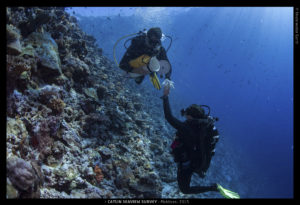
Dr. Veronica Radice is a Research Fellow at the University of Queensland and a member of the Australian Research Council Centre of Excellence for Coral Reef Studies. Her work focuses on coral physiology in relation to environmental conditions, particularly in mesophotic ecosystems, using biogeochemical techniques, genetics, and field experiments to study impacts of ocean warming and thermal stress on coral recovery from bleaching. Education: Bachelor’s degree in Biology from Johns Hopkins University, followed by research assistant and lab manager roles at Temple University. Research: Investigates coral trophic ecology, nutrient cycling, and gene expression under climate stress, with fieldwork in the Indo-Pacific and Maldives. Awards: XL Catlin Seaview Survey Ocean Scholar. Expertise: Mesophotic coral ecosystems, coral bleaching resilience, biogeochemistry, and oceanographic influences on reef productivity. Resources: Contributed to datasets and platforms like Mesophotic.org for coral reef research.
Firas Al-Doghman is a Lecturer at the School of Computer Science, University of Technology Sydney. With expertise in Machine Learning, Cybersecurity, and Internet of Things (IoT), he teaches subjects like iOS Applications, Networking, and Data Engineering while conducting research on smart algorithms and their cybersecurity applications. PhD in Computer Engineering and Data Management (UTS, 2020) Teaching since 2017 at UTS Former Associate Researcher/Lecturer at UNSW ADFA Research focuses on: Machine Learning integration with cybersecurity Blockchain applications in real estate Edge computing security frameworks Consensus-based data aggregation Publications highlight advancements in: Cybersecurity for supply chains Fractional NFTs in property ownership Carbon credit price prediction models Secure microservices orchestration Key collaborations include researchers from UNSW and industry partners.
Jonghwan Rhee is an Adjunct Research Fellow at the International Centre for Radio Astronomy Research (ICRAR) within The University of Western Australia. He earned his PhD from the Australian National University in 2015 and has since focused on neutral hydrogen gas surveys using the Australian Square Kilometre Array Pathfinder (ASKAP), particularly the WALLABY and DINGO projects. Role : Adjunct Research Fellow, ICRAR (UWA) Education : PhD (2015) from Australian National University Expertise : Radio astronomy, extragalactic studies, HI gas surveys, and machine learning for galaxy classification His research examines galaxy evolution through neutral hydrogen gas distributions, tidal interactions, and star formation processes in low surface brightness galaxies. Recent work includes developing machine learning frameworks for source-finding in radio data and analyzing perturbed galaxies via H i morphometrics. Key collaborations include contributions to the WALLABY pilot survey datasets, with focus areas in stellar mass dynamics, galaxy clusters, and gas scaling relations. His outputs have been referenced in news outlets, academic networks, and software repositories.
Dr. Andrey Alenin serves as a Senior Lecturer at UNSW Canberra within the School of Engineering and Technology. His extensive academic contributions focus on advanced optical systems, particularly in polarimetry and imaging technologies. With numerous publications spanning over a decade, his work has established him as a significant contributor to the field of optical science and engineering. Dr. Alenin's research interests center on optical polarimetry, Mueller matrix systems, and advanced imaging techniques. His work spans theoretical foundations of linear systems in optics to practical implementations of polarimetric imaging systems. He has made significant contributions to channeled spectropolarimetry, photoelastic modulator systems, and polarization visualization methods. His research bridges fundamental optical theory with real-world applications in remote sensing, satellite imaging, and quantum communications. The extensive list of book chapters he co-authored demonstrates his deep understanding of Fourier optics and linear systems theory. Analysis of Dr. Alenin's recent publications reveals a strong trajectory from fundamental polarimetric theory toward practical implementations. His work increasingly incorporates machine learning techniques for polarization data processing, particularly deep learning for spectral-temporal analysis. The research shows progression toward applications in remote sensing and satellite systems, including tropical cyclone monitoring and intersatellite quantum communications. His co-authorship of the comprehensive reference 'Field Guide to Linear Systems in Optics' with J.S. Tyo has provided valuable educational resources for students and researchers in the field. Dr. Alenin maintains active collaborations with researchers across multiple institutions, as evidenced by his extensive co-authorship network. His work appears in leading optics journals including Applied Optics, Optics Express, and the Journal of the Optical Society of America. His research has practical applications in defense, remote sensing, and quantum communications technologies.