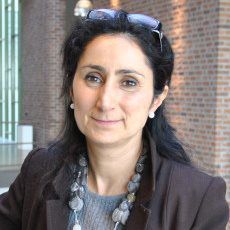
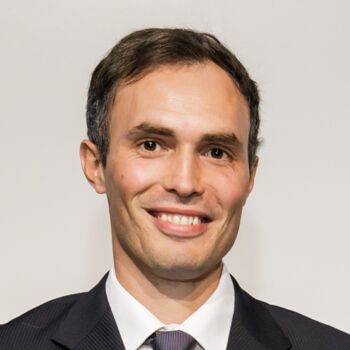
Dr. Reuben Binns is an Associate Professor of Human Centred Computing at the University of Oxford , where he investigates intersections between computer science, law, and philosophy. His research focuses on data protection , machine learning ethics , and regulation of technology .
Mendel Rosenblum is the Cheriton Family Professor and holds dual appointments as Professor in the Departments of Computer Science and Electrical Engineering at Stanford University. He is a co-founder of VMware Inc. and served as its Chief Scientist for its first decade, playing a pivotal role in designing foundational virtualization technologies. Rosenblum's research focuses on system software, distributed systems, and computer architecture, with notable contributions to virtualization, data center networks, and operating systems. He leads the Platform Lab at Stanford, exploring next-generation data center technologies and high-performance computing systems. Administrative Role: Faculty Director of Stanford Computer Forum (2012–present) Education: PhD (UC Berkeley, 1992), MS (UC Berkeley, 1989), BA (University of Virginia, 1984) His research interests span disk storage management, computer simulation, scalable operating systems, and security. Recent work emphasizes deployable consensus algorithms, programmable smartNICs, and self-programming networks. Rosenblum has authored over 80 publications and holds multiple patents in virtualization and system software. Awards & Recognition: ACM System Software Award (2009) IEEE Computer Entrepreneur Award (2011) ACM Thacker Breakthrough in Computing Award (2018) Member, National Academy of Engineering (2013) He advises PhD and Master's students, including current advisees Sina Jandaghi Semnani and Zixi Liu. Rosenblum teaches advanced courses on web applications, distributed systems, and independent research projects.
Dr. Kelley Gabriel is a Professor and Associate Dean in the School of Public Health at the University of Alabama at Birmingham (UAB), with a primary appointment in the Department of Epidemiology. She holds additional roles as a Senior Scientist in multiple UAB research centers, including the Nutrition Obesity Research Center (NORC) and the Integrative Center for Aging Research. Her research focuses on optimizing physical activity and sedentary behavior measurement in large epidemiological studies, with a particular emphasis on cardiorespiratory fitness, chronic disease prevention, and life-course health trajectories. Dr. Gabriel earned her PhD in Public Health (Epidemiology) from the University of Pittsburgh, an MS in Exercise Physiology from Northeastern University, and a BS in Athletic Training and Sports Medicine from Ithaca College. Her research interests include developing methodological strategies for precise physical activity measurement, examining the timing of physical fitness and disease risk, and leveraging cohort studies like CARDIA and SWAN. She has secured grants from NIH, NHLBI, and other agencies to support studies on the 24-hour movement paradigm, cognitive health, and cardiovascular outcomes. Key collaborations involve large-scale epidemiological cohorts such as the Coronary Artery Risk Development in Young Adults (CARDIA) and the Multi-Ethnic Study of Atherosclerosis (MESA). Her over 200 peer-reviewed publications and four book chapters reflect expertise in physical activity epidemiology and translational research. Grants include NIH-funded projects on cognitive resilience to Alzheimer’s disease, cardiovascular health trajectories, and the role of activity patterns in aging populations. Her work emphasizes translational strategies to improve public health through evidence-based lifestyle interventions. Dr. Gabriel leads multidisciplinary teams at UAB, contributing to initiatives like the Osteoporosis in Men (MrOS) Study and the Cooper Center Longitudinal Study. Her research integrates wearable technologies, biomarker analysis, and advanced statistical methods to address global health challenges related to physical activity and chronic disease.
Dr. Mohammadreza Arani is an Assistant Professor and Canada Research Chair (CRC) in Smart Grid Cyber-Physical Security at Toronto Metropolitan University's Department of Electrical, Computer, and Biomedical Engineering. He joined the university in 2019, bringing expertise in renewable energy, microgrids, and cybersecurity. His research focuses on enhancing smart grid stability, renewable integration, and cyber-physical security. Education: BSc: Sharif University of Technology (2009) MASc: University of Waterloo (2012) PhD: University of Alberta (2017) Research Interests: Arani specializes in cyber-physical security of smart grids, microgrid dynamics, renewable energy systems, and power system stability. His work bridges urban infrastructure needs and advanced energy technologies, emphasizing practical solutions for modern grid challenges. Awards: NSERC Postdoctoral Fellowship (2017–2019) Alberta Innovates Technology Future Student Scholarship (2014–2017) Advising & Collaboration: Arani views graduate students as future colleagues, fostering independent research and collaboration. He emphasizes interdisciplinary approaches and industry-academia partnerships, leveraging Toronto's urban environment for applied research. Labs & Teams: While no specific lab is named, his research benefits from Toronto Metropolitan's facilities and collaboration networks in power systems and cybersecurity.
Aileen Nielsen is a Ph.D. Candidate at ETH Zurich's Center for Law & Economics and a Fellow in Law & Tech. She holds a J.D. from Yale Law School, a B.A. in Anthropology from Princeton University, and advanced degrees in Applied Physics (Columbia) and Comparative Human Development (University of Chicago). Her research focuses on regulatory and judicial responses to technological innovation, particularly in AI governance, data privacy, and medical technology. She has practiced law in NYC and worked in tech startups across healthcare and political organizations. Education: Ph.D. Candidate (ETH Zurich), J.D. (Yale), M.S. Applied Physics (Columbia), M.A. Comparative Human Development (Chicago), B.A. Anthropology (Princeton) Her work combines empirical and experimental methods to address challenges like algorithmic fairness, AI liability in medicine, and public perceptions of data markets. Recent findings explore regulatory frameworks for AI systems and the ethical implications of algorithmic surveillance. She teaches courses on algorithms and fairness, law & tech research, and authentication security. Publications span law journals, cybersecurity white papers, and AI ethics conferences, with a focus on balancing innovation with societal accountability. Her books Practical Fairness and Practical Time Series Analysis further bridge technical and legal domains.
Theodora Varvarigou is a Professor in the Department of Electrical and Computer Engineering at the National Technical University of Athens (NTUA). She holds a B.Eng. from NTUA and M.Eng. and Ph.D. degrees from Stanford University. Her career includes research at AT&T Bell Labs and roles at the Technical University of Crete. From 2008-2012, she served as director of NTUA's 'Technoeconomic Systems' postgraduate program. Her research focuses on Cloud Computing, Multimedia Content Processing, Social Networking Technologies, and emerging areas like blockchain, edge computing, and cybersecurity. She has published over 200 papers and led numerous European research projects, emphasizing scalable systems, data management, and smart infrastructure applications. Her work spans technical innovations such as intrusion detection systems, edge resource optimization, and blockchain-based solutions for IoT, healthcare, and smart cities. Recent publications highlight advancements in AI-driven resource allocation, privacy-preserving blockchain designs, and predictive analytics for edge computing environments. Professor Varvarigou has contributed to interdisciplinary initiatives, including cohort data harmonization in biomedical research and social media analytics for urban planning. Her teaching includes courses on digital systems, network programming, and fault-tolerant systems.
Amir Asif is a Professor at the Lassonde School of Engineering, York University, and concurrently serves as Vice President, Research and Innovation. His academic leadership roles include Dean of the Gina Cody School of Engineering and Computer Science at Concordia University (2014-2020). He specializes in signal processing, communications, and their applications in healthcare, power grids, and distributed systems. Asif holds a PhD from Carnegie Mellon University and a Harvard certification in executive leadership. Education: PhD, Electrical and Computer Engineering, Carnegie Mellon University (1996) MS, Electrical and Computer Engineering, Carnegie Mellon University (1993) BSc, University of Engineering and Technology Lahore (1990) Harvard Certificate in Leadership for Senior Executives (2018) Research Interests: Asif’s work spans signal processing for medical imaging (e.g., ultrasound elastography), smart grid optimization, and cybersecurity in power systems. His recent publications address hydrogen energy systems, EMG-based gesture recognition, and resilient control frameworks against cyberattacks. Grants & Leadership: He leads NSERC-funded projects on federated learning and resilient algorithms. He chairs the Ontario Council of University Research and serves on TRIUMF Innovations and the Richmond Hill Board of Trade. His grants include SSHRC funding for equity initiatives and NSERC support for distributed signal processing. Teaching & Mentorship: Asif has supervised over a dozen graduate students and taught courses like Digital Communications and Statistical Signal Processing Theory. Notable advisees include Arash Mohammadi (PhD, 2014) and Nick Sajadi (PhD, 2017).
Daniel M. Roy is a Professor at the University of Toronto with cross-appointments in the Departments of Computer Science and Electrical and Computer Engineering. He serves as Associate Chair, Statistics, and is a Research Director at the Vector Institute and a CIFAR Canada AI Chair. His research focuses on foundational principles of prediction, inference, and decision-making under uncertainty, spanning machine learning, statistics, mathematical logic, applied probability, and computer science. He has contributed to learning theory, statistical network analysis, probabilistic programming, and Bayesian nonparametric statistics. Education: Ph.D. in Computer Science from MIT (2011), advised by Leslie Kaelbling. Postdoctoral fellowships at the University of Cambridge (Newton International Fellow and Research Fellow). His research explores information theories of learning , online learning , and nonstandard foundations for decision theory . Recent work includes best paper awards at ICML 2024 and advancements in probabilistic programming systems like Church. His publications address problems in generalization bounds, causal bandits, neural network theory, and exchangeable random structures. Scientific Awards include the MIT/EECS George M. Sprowls Doctoral Dissertation Award and the ICML 2024 Best Paper Award. He advises students and postdocs across statistics, computer science, and machine learning, with alumni now holding positions at institutions like Princeton, Imperial College London, and the University of Chicago.
Jean Walrand is a Professor in the Department of Electrical Engineering and Computer Sciences (EECS) at the University of California, Berkeley. His research focuses on communication networks, performance evaluation, game theory, and stochastic networks. He has authored several influential books, including Communication Networks: A Concise Introduction and Probability in Electrical Engineering and Computer Science , and holds numerous patents in network resource management. Ph.D. in EECS from UC Berkeley IEEE Fellow and recipient of the Stephen O. Rice Prize INFORMS Lanchester Prize for operations research contributions His research interests span communication networks, queueing theory, congestion control, wireless network scheduling, and economic models for network resource allocation. Walrand's work has significantly impacted network design and optimization, particularly in distributed algorithms and game-theoretic approaches. His recent publications emphasize network architecture, delay variability reduction, and distributed optimization algorithms. Walrand has mentored over 20 Ph.D. students, including notable contributors to wireless networks and network economics. IEEE Koji Kobayashi Award (2012) ACM Sigmetrics Achievement Award (2013) INFORMS Lanchester Prize for Communication Networks book As advisor to students like Libin Jiang and Hoi-Sheung Wilson So, Walrand has shaped research in wireless MAC protocols, bandwidth trading, and network security. His technical reports and patents address practical challenges in switch fabric design, bandwidth allocation, and power management.
Brad Campbell is an Associate Professor in the Department of Computer Science and Electrical and Computer Engineering at the University of Virginia, where he is a member of the Link Lab, a cross-disciplinary research group focused on cyber-physical systems. His research centers on designing and building scalable, effective, and unobtrusive embedded systems for the Internet of Things, with applications in smart buildings, smart cities, and personal health. His work spans hardware design, networking, and cloud infrastructure, with a strong emphasis on energy-harvesting systems, low-power wireless communication, and resilient embedded operating systems. He has led projects such as the Living Link Lab, a heavily instrumented smart building testbed, and has developed open-source platforms for self-powered sensing and IoT ecosystems. His recent publications reflect a strong trend toward privacy-preserving federated learning, contactless occupancy sensing using WiFi and light, decentralized edge computing, and sustainable IoT systems. These works are published in top venues including SenSys, BuildSys, MobiCom, and IPSN, indicating a high impact in the systems and networking community. NSF CAREER Award (2022) Best Paper Award at DFHS’19 Multiple graduate fellowships and teaching awards for his students UVA Engineering Endowed Graduate Fellowships Link Lab Seminar Award CPS Rising Star recognition Brad Campbell has advised numerous PhD and master’s students, many of whom have gone on to academic and industry roles. He has secured significant research funding, including from the NSF, and has contributed to curriculum development in cyber-physical systems. He is actively involved in teaching courses on computer networking, IoT, and operating systems, and has co-taught wireless IoT courses across multiple institutions. His lab focuses on real-world deployment of IoT systems, emphasizing scalability, fault tolerance, and long-term sustainability. He continues to push the boundaries of what embedded systems can achieve in everyday environments, from homes to cities.
Professor Lisa De Propris is a full-time faculty member at the University of Birmingham , affiliated with the Birmingham Business School , where she holds the position of Professor of Regional Economic Development . She is actively engaged in research, teaching, and international collaboration, with a strong focus on industrial and regional economics. Her research interests include knowledge economy, innovation systems, industrial districts, clusters, regional competitiveness, technological change, and EU regional and industrial policies. She has published extensively in top-tier journals such as Regional Studies , Cambridge Journal of Economics , Urban Studies , and Journal of Economic Geography . Her recent publications highlight a consistent focus on regional transformation, Industry 4.0, digitalisation, global value chains, and policy transitions , particularly in European contexts. She explores how regions adapt to technological shifts, reshoring trends, and sustainability challenges, often through qualitative and comparative analysis. She has secured significant research funding from Horizon 2020 , FP7 , AHRC , and EPSRC-ESRC , working as a Co-investigator and Lead at Birmingham. Her projects include MAKERS , Skillup , Welfare, Wealth and Work for Europe , and Cultural Intermediation . She teaches undergraduate modules such as Economics for Business , Business Economy and Government , and Globalisation, Innovation and Competitiveness , and is open to supervising PhD students in areas related to technological change, green transitions, and regional development. She is also involved in international networks and has served as a keynote speaker for the European Commission and the Committee of the Regions .
Jonathan McCarthy is a Professor and Director of the LLM Business Law Programme at University College Cork (UCC), serving as Deputy Director for Graduate Research in the School of Law. He holds a BCL and LLM from UCC and earned his PhD there in 2018. His research focuses on financial law and corporate governance, particularly regulatory frameworks for FinTech and SME support. He has taught at UCC since 2015 and previously at University of Limerick. Education: BCL (University College Cork) LLM (University College Cork) PhD (University College Cork, 2018) Research interests emphasize EU financial regulation, digital finance innovation, and corporate rescue mechanisms for SMEs. His work explores the efficacy of legal processes for start-ups and the adaptation of traditional frameworks to emerging technologies like blockchain and distributed ledger systems. He frequently reviews submissions for journals and publishers in his field. Teaching spans courses such as Company Law, Digital Finance Regulation, and Corporate Law at both undergraduate and postgraduate levels. He also serves as an external examiner for the Dublin Business School's LLB program. Professional development includes certifications in research integrity, universal design for learning, and connected curriculum strategies. Grants and funding include an Irish Research Council Government of Ireland Postgraduate Scholarship and the Ronan Daly Jermyn Scholarship during his doctoral research on SME rescue procedures in Ireland. His work combines qualitative analysis with policy advocacy for improved legal frameworks. Labs/Teams: Active in cross-disciplinary research within UCC's School of Law, collaborating on projects related to FinTech regulation and EU policy implementation.
Oliver Gasser is a researcher at the Max Planck Institute for Informatics (MPI-INF) and the Technical University of Munich (TUM), where he has co-lectured courses such as Advanced Computer Networking and Master Course Computer Networks. His research focuses on Internet measurement, security, and privacy, with a strong emphasis on IPv6, DNS, BGP, and web tracking technologies. His research interests include Internet measurement, IPv6 deployment, BGP security, DNS infrastructure, web tracking, privacy technologies, and network resilience. He has made significant contributions to understanding IPv6 hitlists, router fingerprinting, hypergiant content delivery networks, and consent banner manipulation on the web. His work combines large-scale active measurements with data analysis to uncover systemic issues in Internet infrastructure and privacy practices. The recent publications highlight a consistent focus on measurement-driven research across networking, security, and privacy. Trends include analyzing IPv6 adoption patterns, detecting covert tracking mechanisms in web cookies, evaluating security of Internet protocols like DNS and BGP, and improving measurement methodologies for large-scale network studies. His work often involves developing open tools and datasets that advance reproducibility in networking research. PAM 2023 Best Paper Award TMA 2023 Best Paper Award TMA 2023 Fast Track Award PAM 2018 Best Paper Award IRTF Applied Networking Research Prize 2018 IMC 2017 Community Contribution Award TMA 2017 Best Dataset Award CoNEXT 2023 Community Contribution Award Oliver Gasser has advised or co-advised over 40 master’s and bachelor’s theses at MPI-INF and TUM, demonstrating strong mentorship in academic research. He has led several measurement projects that have received external funding, including development of the IPv6 Hitlist Service and tools for analyzing web tracking. His community service includes extensive participation in program committees for major networking conferences such as IMC, CoNEXT, PAM, and TMA. He leads and contributes to several open research initiatives including the IPv6 Hitlist Service, SNMPv3 Measurement Service, MPTCP Measurement Service, DNS Observatory, and the BannerClick tool for automated cookie banner interaction. These platforms provide valuable resources for the global networking research community and support reproducible science.
Lucio Baccaro is Director at the Max Planck Institute for the Study of Societies (MPIfG) and was Full Professor of Macrosociology at the University of Geneva, where he also served as Deputy Dean for Research (2016–2020). He has held academic positions at MIT, Case Western Reserve University, and visiting roles at the University of Turin and the University of Vienna. His primary affiliations are with MPIfG and the University of Geneva, both central to his research in political economy and sociology. Education: PhD in Management and Political Science, Massachusetts Institute of Technology (MIT), 1999 Doctorate in Labor Law and Industrial Relations, University of Pavia, 1997 Master of Business Administration, Stoa' (IRI-MIT joint venture), 1991 Laurea in Philosophy, summa cum laude, University "La Sapienza", Rome, 1989 Lucio Baccaro’s research focuses on comparative political economy, labor relations, global worker rights, and deliberative governance . His work integrates economic sociology and political sociology to analyze institutional change, social dialogue, and the impact of globalization on labor and welfare systems. He has led major comparative studies on employment models, pension reforms, and international labor standards. His scholarship emphasizes the interplay between institutions, ideas, and power in shaping economic governance. His recent publications reveal a consistent focus on institutional change, deliberative processes, labor market reforms, and global justice . Themes include path dependence in international organizations, the transformation of collective bargaining, and the role of expertise in democratic governance. His interdisciplinary approach bridges sociology, political science, and economics, with strong methodological rigor in comparative and qualitative analysis. Scientific Awards and Honors: Honorary Professor, University of Duisburg-Essen (2023) Professeur honoraire, University of Geneva (2020) International Geneva Award (2011) Outstanding Young Scholar Award, IRRA (2003) Founder's Prize, SASE (2001) Maurice F. Strong Career Development Chair, MIT (2006–2009) Multiple fellowships from SSRC, Harvard, MIT, and CUNY Alfiere del Lavoro, awarded by the President of Italy (1984) Advising and Grants: While specific student advisees are not listed, Baccaro has supervised research and mentored scholars through his roles at MPIfG and the University of Geneva. He has secured substantial research funding, including grants from the Swiss National Science Foundation (SNF) and the Swiss Network for International Studies (SNIS), supporting projects on post-Fordist growth models, employment policy, and deliberative governance. His leadership in co-principal investigator roles highlights his collaborative research approach and institutional influence. Labs and Research Teams: As Director at MPIfG, Baccaro leads a major research institute focused on the study of societal and economic institutions. He has been instrumental in shaping research agendas on political economy and governance, fostering interdisciplinary collaboration and international scholarly exchange.
Shoshana R. Shelton is a Professor at the RAND School of Public Policy and a Policy Researcher at the RAND Corporation. Her work centers on program evaluation, public health systems, emergency preparedness, and national health security, with significant contributions to pandemic response, violence prevention, and crisis decision-making. She has led major projects for federal agencies including the CDC, DHS, FEMA, and the U.S. Secret Service. Education: M.P.H., The Ohio State University B.A. in English, Denison University Her research focuses on strengthening public health infrastructure through performance measurement, logic modeling, and stakeholder engagement. She has developed tools such as tabletop exercises for continuity of operations in public health laboratories and led after-action reviews of the public health response to COVID-19. Her work emphasizes building resilience against biological threats, natural disasters, and targeted violence. Shelton's recent publications highlight trends in emergency alert systems, disaster resilience, criminal justice reform during pandemics, and equitable health security research investment. She advocates for evidence-based policies that balance bioterrorism preparedness with responses to natural disasters and climate-related emergencies. Scientific Awards: No awards listed in the provided text. She has advised or collaborated with numerous federal and state agencies, contributing to national health security through rigorous evaluation and policy analysis. Her grants and projects reflect sustained funding from DHS, CDC, and other federal bodies focused on improving public safety and health system readiness. She has also led initiatives on behavioral threat assessment in schools and wearable technology for law enforcement wellness. Labs and Teams: Previously led a four-year project on mass attacks and targeted violence for the U.S. Secret Service. Collaborated with the Association of Public Health Laboratories (APHL) on continuity of operations planning. Contributed to the Priority Criminal Justice Needs Initiative, fostering innovation across law enforcement, courts, and corrections.