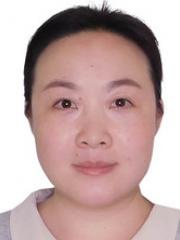
Professor Nuala Byrne is the Head of the School of Health Sciences at the University of Tasmania. Her academic role combines leadership in health sciences education and research. She specializes in nutrition, public health, and biomedical sciences, with a focus on infant and maternal health, body composition analysis, and physical activity promotion. Her research addresses global health challenges such as obesity prevention, dietary patterns, and culturally informed health interventions. She has supervised numerous doctoral and master’s students, including studies on infant growth trajectories, cardiovascular risk factors in rural populations, and neuromuscular recovery in athletes. Professor Byrne’s work spans international collaborations, particularly in South Asia and regional Australia, addressing issues like maternal-child health and food security. She leads projects such as the Baby-bod Study, examining infant growth and body composition, and advocates for policy initiatives to improve public health outcomes through innovative strategies like social prescribing and school gardening programs.
Dr. Francesco Stolfi is Senior Lecturer in Public Policy at Macquarie University's School of Social Sciences. His research examines the regulation of professions, social service markets, and fiscal politics in comparative perspective. Current projects investigate: Physician regulation in Australia and Canada Beekeeping regulation and pest control implications Policy entrepreneurship in historical suffrage movements Marketization of welfare services His publications demonstrate expertise in: Comparative analysis of European welfare reforms Fiscal governance during economic crises Distributive politics of regulatory changes EU influence on domestic policy
Ben Spies-Butcher is Associate Professor in Social Sciences at Macquarie University, specializing in political economy and welfare state dynamics. As Deputy Director of the Housing and Urban Research Centre and co-director of the Australian Basic Income Lab, his work examines how financial logics reshape social policy through public sector budgeting. Research focuses on: Marketization of welfare services Housing finance systems Basic income implementation Taxation policy impacts Publications show consistent focus on comparative welfare capitalism, with recent work analyzing wealth inequality patterns, justice reinvestment models, and pandemic income support experiments. Awards include the 2017 Glenda Powell National Travelling Fellowship for contributions to gerontology research.
Dr. Leslie Roberson is a Research Fellow at the University of Queensland’s School of the Environment, affiliated with the Centre for Biodiversity and Conservation Science and the Ocean Conservation Team led by A/Prof Carissa Klein. She holds a Bachelors in Environmental Studies from Yale University and a Masters in Applied Marine Science from the University of Cape Town, followed by a PhD in Earth and Environmental Sciences from the University of Queensland. Her research focuses on reducing fishing impacts on marine biodiversity and improving global seafood sustainability, with a particular emphasis on bycatch reduction, fisher behavior, and seafood trade dynamics. Her work spans Latin America, Africa, Oceania, and Southeast Asia, emphasizing transboundary conservation and policy interventions. Notable contributions include developing frameworks for assessing risks in biodiversity data publishing and advocating for multinational coordination in marine species conservation. She has also been recognized with the 2024 UQ Foundation Research Excellence Award for her project on leveraging fisher knowledge to address bycatch challenges. Her research outputs include over 17 journal articles, preprints, and policy reports, addressing topics like illegal fishing prevention, sustainable seafood accessibility, and ecological risk assessments. She collaborates with international organizations such as the Indian Ocean Tuna Commission and contributes to public discourse through media outlets like The Conversation . Leslie’s work bridges science and policy, emphasizing practical solutions that align environmental and socioeconomic sustainability. Her current projects include improving fisheries observation systems and advocating for policy reforms to combat illegal fishing practices.
Frank den Hartog is a Professor at the University of Canberra, holding the Cisco Research Chair in Critical Infrastructure, and an Adjunct Fellow at UNSW Canberra's School of Systems & Computing. His research focuses on complex wireless networked systems, IoT, and Cyber-Physical Systems. Previously, he served as Senior Scientist at TNO (2003–2016) and worked at KPN, pioneering home networking research. He holds a PhD in Physics from Leiden University and an MSc from Eindhoven University of Technology. Dr. den Hartog has led numerous industry-academic projects, including European Horizon 2020 initiatives, and contributed to 73 patents and 67 standardization papers. He actively participates in IEEE and has supervised 7 Master’s/Honours and 2 PhD students. His work has been recognized with academic and industry awards, and he co-authored over 90 peer-reviewed articles. Key affiliations: University of Canberra (Professor), UNSW Canberra (Adjunct Fellow) Education: PhD in Physics (Leiden University), MSc in Engineering (Eindhoven University of Technology) Research Interests: His work spans IoT security, 6G networking, blockchain in IoT, and smart home systems. He emphasizes standardization and interdisciplinary collaboration, addressing challenges in heterogeneous networks and cyber-physical integration. Publications: His recent work explores AI-driven smart home traffic analysis, 6G spectrum sharing, and IoT trust models. These contributions highlight advancements in network security, edge computing, and decentralized systems. Awards: Multiple unspecified academic and industry accolades for innovations in home networking and IoT. Grants/Leadership: Led EU-funded projects, chaired the HGI Technical Working Group (2012–2016), and reviewed journals and conferences. He contributes to the Home Gateway Initiative and collaborates with industry partners, fostering practical applications of theoretical research in telecommunications and cybersecurity.
Associate Professor Helen Paik is a Senior Lecturer at the School of Computer Science and Engineering at the University of New South Wales (UNSW). She holds a PhD in Computer Science (Web Data Integration) from UNSW (2004). Her research focuses on Service-oriented Software Design, Blockchain Technology, Distributed Ledger Systems, and Cyber Security. Before joining UNSW, she worked at QUT and in industry with IBM Australia. Her research emphasizes blockchain governance, decentralized identity management, and privacy-preserving technologies. Notable contributions include work on federated learning architectures, self-sovereign identity systems, and ethical AI frameworks. She has supervised PhD and Master’s students in areas like privacy-preserving AI, IoT security, and distributed systems. Helen’s publications span top-tier journals and conferences, including IEEE Transactions, ACM, and Springer. She actively contributes to interdisciplinary collaborations, integrating machine learning with public health for epidemic prediction and governance models for AI systems.
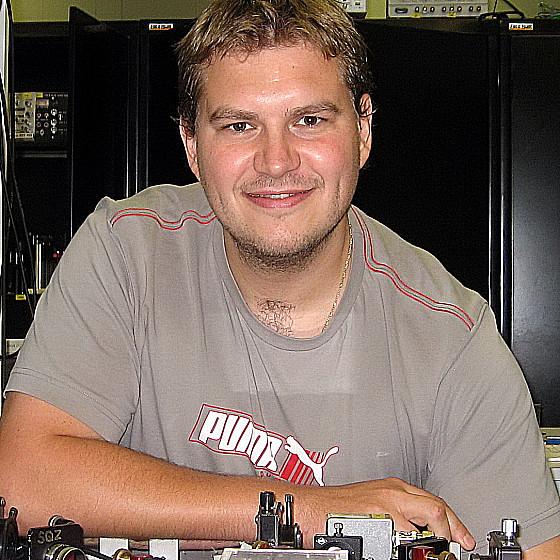
Dr. Jiri Janousek is a postdoctoral research fellow at the Australian National University (ANU) within the ANU College of Systems & Society , specifically contributing to the Quantum Imaging Group . He focuses on advancing quantum states of light in the spatial domain, particularly in generating squeezed and entangled states, optical detection techniques, and optomechanical systems. His work emphasizes novel methods for simultaneous spatial-mode squeezing and control of optical cavities. He earned his PhD in 2008 from the Technical University of Denmark , where he researched nonclassical quantum states for ultra-sensitive measurements and solid-state lasers in the visible spectrum. His expertise spans optical parametric amplifiers, laser systems, and quantum imaging applications in biological contexts. Research interests include quantum optics, optomechanics, and nonlinear optical systems, with emphasis on spatial-mode engineering and precision measurements. His contributions bridge theoretical and experimental quantum technologies, aiming to push the boundaries of quantum sensing and information processing. Notable research areas include Generation of squeezed light in diverse cavity geometries Optomechanical control of thermal states Entanglement distillation protocols Quantum imaging within living cells
Lisa Adkins is the Dean of the Faculty of Arts and Social Sciences at the University of Sydney, with a primary discipline in Sociology. She previously held an Academy of Finland Distinguished Professorship (2015–2019) and chaired Sociology departments at the University of Manchester and Goldsmiths, University of London. Her research focuses on financialization, asset economies, and gender studies, addressing how property ownership and debt shape contemporary inequality. She has contributed to influential works like The Asset Economy (2020) and The Time of Money (2018). Adkins has secured major grants, including the 2023 Australian Research Council grant on wealth inequality and the 2021 AHURI grant on home ownership pathways. She frequently engages with media, discussing topics like housing policy and middle-class dynamics in outlets like The Guardian and Noema Magazine . Her research explores intersections of gender, labor, and financial systems. Notable themes include 'femininity work' in hospitality and bar industries, the sociological implications of debt, and the role of asset ownership in class structures. She advocates for a sociology that addresses 21st-century challenges through interdisciplinary and politically engaged frameworks.
Associate Professor Marco Faravelli is affiliated with the School of Economics at The University of Queensland (UQ), within the Faculty of Business, Economics and Law. His primary research focuses on experimental and behavioral economics, political economy, and public economics. He holds a Ph.D. from the University of Edinburgh and has held academic positions at UQ since 2010 and previously at the University of St Andrews (2007–2010). Faravelli has secured significant grants, including ARC Discovery Projects and UQ-funded research initiatives. His work explores topics such as voting behavior, electoral systems, and public good funding mechanisms through experimental methods. Key achievements include studies on costly voting, gender barriers in political candidacy, and fair resource allocation during crises. He also contributes to academic leadership, serving on committees for research and seminars at UQ. Education: Ph.D. and M.Sc. in Economics from the University of Edinburgh, and a Laurea in Economics from Università di Milano Bicocca. His research has been published in top journals like Economic Journal , Games and Economic Behavior , and Journal of Public Economic Theory . Awards include UQ Early Career Researcher Grant and fellowships from his alma maters. Faravelli’s grants and collaborations address pressing issues like water pollution market design and electoral system efficiency. Research Interests: Experimental methods, voting behavior, political participation, public good provision, and behavioral decision-making. His recent work investigates how social preferences and contextual factors influence political and economic choices, with a focus on designing fair and effective institutions.
Dr. Naipeng Dong is a Lecturer at the School of Electrical Engineering and Computer Science, The University of Queensland. Her expertise lies in automatic formal verification of security and privacy in cryptographic protocols, Android applications, and blockchain systems. She holds a PhD from the Université du Luxembourg. Education: Doctor of Philosophy (PhD), Université du Luxembourg Research Interests: Dr. Dong focuses on developing efficient formal verification techniques for analyzing cryptographic protocols, ensuring fault-tolerance in systems with dishonest participants, and exploring applications in e-auction, e-health, Single-Sign-On (SSO) authentication, and blockchain consensus mechanisms. Her work also addresses blockchain-based systems, NFT applications in music copyright, and cybersecurity in industrial control systems. Advising and Grants: While specific grant details are not detailed, her research involves collaborative projects with industry and academic partners, emphasizing practical applications of formal verification and cybersecurity. She actively contributes to academic supervision. Labs and Teams: She is part of the Cyber Security and Software Engineering (CSS) discipline at UQ, collaborating with researchers like Associate Professor Guangdong Bai on trustworthy AI, privacy compliance, and formal methods.
Graeme Clark is a Professor at the University of Sydney, affiliated with the Sydney Environment Institute. His research focuses on marine ecology, climate change impacts, and biodiversity conservation. He advises PhD student Jakob Quade on ecosystem connectivity and marine habitats. Clark’s work integrates spatial modeling, citizen science, and environmental monitoring to address challenges like marine debris and Antarctic ecosystem vulnerability. His research spans topics like Antarctic benthic communities, desalination effects on marine life, and the interplay between human activities and coastal ecosystems. Notable projects include the Securing Antarctica's Environmental Future (SAEF) initiative and MyClimate informatics tool development. Clark has co-authored over 50 peer-reviewed articles since 2005, emphasizing interdisciplinary approaches to ecological conservation. Grants: MyClimate: personalising the climate crisis with informatics (2024) Securing Antarctica's Environmental Future (SAEF) (2021) Labs/Teams: Collaborates with interdisciplinary teams at the Sydney Environment Institute and Antarctic research networks.
Associate Professor Adriana Dutkiewicz is a Senior Lecturer and ARC Future Fellow at the School of Geosciences, Faculty of Science, University of Sydney. With over two decades of academic experience, she specializes in sedimentology and marine geology, focusing on large-scale synthesis of sedimentological and geochemical datasets to understand ocean chemistry and the global carbon cycle. Her work combines traditional sedimentology with cutting-edge technology to explore Earth's history from the Archaean to the present. Dr. Dutkiewicz earned her PhD from Flinders University with a thesis titled "Quaternary Palaeoclimate From the Lake Malata-Lake Greenly Complex, South Australia," supervised by Chris von der Borch. Her doctoral work was selected for special commendation by Flinders University. Prior to her PhD, she completed First Class Honours in Geoscience, earning the Western Mining Prize for Excellence in Geoscience. As a sedimentologist, Dr. Dutkiewicz's research spans diverse geological periods from Archaean to Quaternary. Her current focus involves synthesizing large sedimentological and geochemical datasets to provide new insights into marine sediment composition, ocean chemistry, and the global carbon cycle. She has developed innovative 3D globes for visualizing global seafloor lithology, polymetallic nodules, and contourites, enabling new approaches to understanding deep-sea processes. Her work is highly interdisciplinary, combining traditional geological methods with advanced computational techniques. Analysis of Dr. Dutkiewicz's recent publications reveals a strong focus on deep-sea processes, carbon cycling through geological time, and the relationship between tectonics and climate. Her work spans multiple geological periods but particularly emphasizes Cenozoic and Mesozoic Earth history. She frequently collaborates with Professor Dietmar Müller and the EarthByte research group, developing innovative computational approaches to model Earth's geological evolution. Her research has significant implications for understanding current climate change within a deep-time context. Dr. Dutkiewicz has received numerous prestigious awards recognizing her contributions to Earth sciences: Mawson Medal & Lecture from the Australian Academy of Science (2024) ARC Future Fellowship (2020) Dorothy Hill Award from the Australian Academy of Science (2006) CSIRO Medal for Scientific Achievement (2006, group award) JG Russell Award from the Australian Academy of Science (2005) ARC QEII Research Fellowship (2005-2010) Dr. Dutkiewicz actively supervises research students, including Faranak DALVAND who is investigating carbonate sequestration in the Pacific and Indian oceans over the Cenozoic. She has secured significant research funding, most notably an ARC Future Fellowship in 2020 for her project "The deep-sea carbon reservoir through geological time." Her earlier grants include projects on the global distribution of deep-sea sediments, tracing life's beginnings through molecular fossils, and understanding the origin of Australian opal deposits. She has also been involved in major collaborative projects like the GPlates Portal for 3D visualization of geological data. Dr. Dutkiewicz is a key member of the EarthByte research group at the University of Sydney, which specializes in developing computational tools for understanding Earth's evolution. Her work has led to the creation of the first digital map of the seafloor's geology, featured in numerous media outlets worldwide. She collaborates extensively with international researchers and contributes to major data synthesis efforts that integrate geological, geophysical, and geochemical information to create comprehensive models of Earth's history.
Dr. Vanessa Pino is a Postdoctoral Research Fellow in Soil Ecology & Biodiversity at the School of Life and Environmental Sciences, University of Sydney. Since 2017, she has focused on advancing understanding of soil ecosystems and biodiversity to promote sustainable land use practices. Her work emphasizes the critical role of soil biodiversity in maintaining ecosystem functions. Educated at the University of Chile (B.S., Agricultural Sciences, 2007), she received the CONICYT Bicentennial Becas-Chile Scholarship in 2009. Her research integrates microbial ecology, spatial analysis, and citizen science to address global environmental challenges such as soil degradation and climate change impacts. Key research themes include soil microbiome dynamics, pedogenic processes, and sustainable agricultural practices. Notable contributions include studies on soil biodiversity distribution across Australian landscapes, microbial community responses to environmental gradients, and innovative methods for soil health assessment (e.g., Tea Bag Index adaptation for citizen science). Her publications highlight interdisciplinary approaches to soil science, with recent work exploring soil amendments for crop resilience, greywater treatment systems, and soil slaking mapping in agricultural regions. Vanessa actively contributes to the Sydney Institute of Agriculture and collaborates globally on soil security initiatives.
Liana Pozza is a Lecturer in Agricultural Data Science at the University of Sydney's School of Life and Environmental Sciences. She is affiliated with the Sydney Institute of Agriculture, focusing on pedagogy, environmental modeling, and soil science applications. Her work emphasizes spatial distribution analysis of soil properties, crop constraints, and contaminants. Research interests include integrating machine learning with geospatial data for precision agriculture, interdisciplinary education in STEM, and global soil science training programs. She has contributed to projects like the National Inventory of Soil Science Teaching and the AgData Challenge hackathon (2nd prize). Key grants include 3D soil mapping research (GRDC) and soil organic carbon accounting (Department of Industry). Her publications span environmental virology, Gaussian process modeling, and citizen science initiatives. Selected Grants: 3D PAWC Mapping (2022), Accountable Accounting: Soil Organic Carbon (2022) Notable Achievement: 2nd Prize in AgData Challenge Hackathon (University of Sydney team)
Professor Jian Guo Zhu is a faculty member in the School of Electrical and Computer Engineering at the University of Sydney. He is affiliated with the Centre for Future Energy Networks and is a member of the Net Zero Institute and the Sydney Nano Institute. He holds a BE from Jiangsu Institute of Technology (1982), MSc from Shanghai University of Technology (1987), and PhD from the University of Technology Sydney (UTS, 1995), all in electrical engineering. Before joining the University of Sydney in 2018, he served as a lecturer and later full professor at UTS. His research focuses on power systems, smart grids, renewable energy, and electric machine design. Education: BE in Electrical Engineering, Jiangsu Institute of Technology (1982) MSc in Electrical Engineering, Shanghai University of Technology (1987) PhD in Electrical Engineering, University of Technology Sydney (1995) His research interests include optimizing energy networks, power electronics, and sustainable energy solutions. Recent publications address advanced control strategies for power converters, high-speed motor performance, and electromagnetic field computations. He leads projects funded by the Australian Research Council, including infrastructure for grid security and fuel cell testing facilities. Professor Zhu collaborates on grants such as the National Facility for Electricity Grid Security (2023) and contributes to interdisciplinary initiatives in energy resilience.