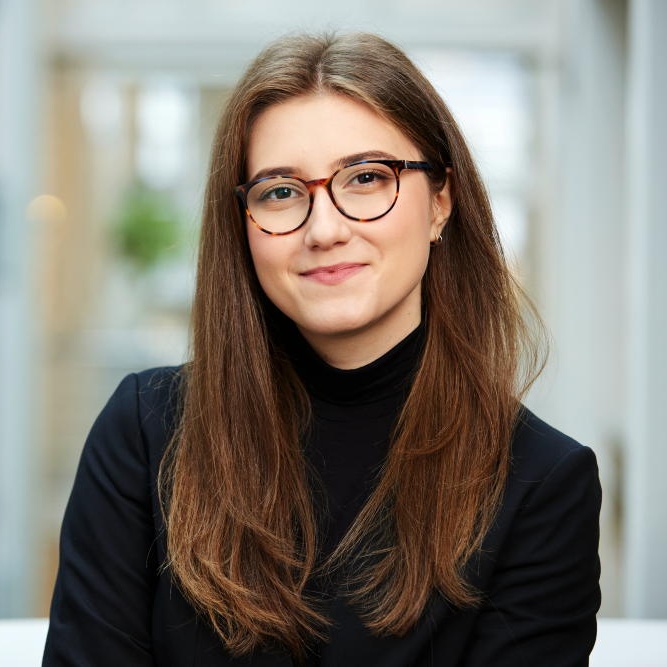
Mats Björkin is a Professor in the Department of Aesthetics at the University of Gothenburg. His research focuses on film distribution , industrial media culture , and technological/economic media history . Currently, he is developing methodological frameworks for analyzing organizational and technological influences on media evolution. His publications traverse diverse subfields but consistently examine media's role in societal transformation . Recent work includes analyses of 1950s youth fashion documentaries , WWI-era film logistics , and 1945-60 Swedish industrial modernization . Earlier contributions explore Swedish cinema's sexual revolution , peer-to-peer distribution , and media archaeology . Mats specializes in historical media ecologies through lenses of film logistics , corporate communication , and technological transitions . His work connects media historiography with contemporary issues like digital film preservation and gender representation in archives. Email: mats.bjorkin@filmvet.gu.se
Sobhi Barg serves as an Assistant Senior Lecturer in Power Electronics at Mälardalen University's Department of Computer and Electrical Engineering (DET) in Sundsvall, Sweden. His position within the STC Research Centre focuses on advanced power conversion systems and magnetic component design for electric vehicles and renewable energy applications. Education: PhD in Electrical Engineering from National Engineering School of Sfax (2018) Erasmus Master in Sustainable Transportation and Electrical Power Systems (University of Oviedo, University of Nottingham, Polytechnic Institute of Coimbra) (2015) Master in Electrical Systems from National Engineering School of Tunis (2010) Engineering Degree from National Engineering School of Tunis (2008) His research centers on multi-objective optimization of power electronic systems , with expertise in core loss modeling for high-frequency magnetics, wireless power transfer, and EV power conversion. Recent work demonstrates innovative approaches to planar magnetics using unbalanced-flux techniques and precise core loss calculation for non-sinusoidal waveforms, significantly advancing efficiency in power converter design. Publications since 2019 reveal strong focus on magnetic component optimization and loss modeling , with 50% appearing in IEEE Transactions journals. Key trends include development of empirical core loss models for complex waveforms (2025), novel unbalanced-flux approaches for planar magnetics (2023-2024), and multi-objective GA optimization techniques for flyback transformers (2019). Scientific Recognition: Erasmus Mundus Scholarship-Category A (48,000 Euro) for Master studies in Sustainable Transportation and Electrical Power Systems (2013-2015) Dr. Barg teaches Analog Electronics and Electric Circuits laboratory courses while contributing to the STORE (Electrical Energy Storage) and MDOBC research projects. His work at the STC Research Centre bridges theoretical modeling with practical applications in renewable energy systems and electric vehicle powertrains, emphasizing experimental validation through Seebeck effect measurements and FEA simulations. Current research activities include DC inductor design based on Ampere's Law (2024) and continued refinement of core loss models for next-generation power converters, with significant implications for high-efficiency energy conversion in sustainable transportation systems.
Professor Daniel Söderberg is affiliated with KTH Royal Institute of Technology, where he holds the position of Professor of processes from fibre-based materials from forest raw materials. His research focuses on understanding natural material formation processes, particularly using cellulose nanofibrils as building blocks, to develop scalable industrial methods for creating high-performance bio-based materials. He employs advanced experimental techniques such as synchrotron X-ray imaging and neutron scattering to study material behavior at the nanoscale, contributing to sustainable, renewable material innovations. His research interests revolve around the development of bio-based materials and industrial processes inspired by natural mechanisms. Key areas include: Nanofibril assembly and self-organization in fluid systems Cellulose nanofibril-based composites and thin films Scalable production of high-performance bio-based materials Advanced characterization techniques (e.g., synchrotron X-ray imaging, neutron scattering) Material dynamics under various environmental conditions (e.g., humidity, compression) Integration of renewable materials into electronic and structural applications Recent research trends emphasize the application of machine learning for analyzing material dynamics, optimization of spray deposition techniques for scalable production, and exploration of lignin and cellulose nanocomposites for renewable materials. Collaborations with facilities like the MAX IV synchrotron highlight his focus on advanced imaging and structural analysis for material innovation. In advising and grants, Dr. Söderberg has contributed to research projects involving pilot-scale manufacturing processes and collaborations with advanced facilities like the MAX IV synchrotron. While specific student names or detailed grant information are not provided here, his work reflects a strong emphasis on team-based research in nanomaterials and sustainable technologies. He is also involved in academic ceremonies at KTH, including the 2021 Professorial Inauguration. Dr. Söderberg collaborates with the ForMAX beamline at MAX IV synchrotron in Lund, focusing on multiscale structural characterization of hierarchical materials. His research also involves the pilot-scale Experimental Paper Machine (XPM) for material production studies, examining fire retardant composites and nanopaper fabrication.
Mebtu Bihonegn Beza is an Associate Professor at Chalmers University of Technology, Sweden, specializing in Electrical Power Engineering . His research focuses on power electronic converters, grid stability analysis, and HVDC transmission systems, particularly for offshore wind farm integration. Education: M.Sc., Lic.Eng., and Ph.D. in Electrical Power Engineering from Chalmers (2009, 2012, 2015) Key Research Themes: Grid-forming converters, electromagnetic transients, renewable energy system stability, and impedance/resonance analysis Recent publications (2024–2023) analyze advanced control strategies for converters, including small-signal stability, multiport architectures, and inertia emulation techniques. He collaborates on projects related to frequency-based stability tools and PhD programs with Addis Ababa University. Projects: Frequency-based analysis tool for converter-dominated grids (Swedish Energy Agency, 2023–2027) PhD program collaboration with Addis Ababa University (2018–2025) Contact: mebtu.beza@chalmers.se
Rickard Pettersson is a Senior Lecturer in Physical Geography at Uppsala University's Department of Earth Sciences, where he works within the Program for Air, Water and Landscape Sciences. His research focuses on glaciology and the dynamics of ice sheets, with particular emphasis on the flow dynamics, stability, and climatic response of glaciers. Dr. Pettersson's research interests center on glacier mass balance, thermodynamics, and the coupling between dynamical and hydrological processes on glaciers and ice sheets. He specializes in collecting, processing, and interpreting geophysical and remote sensing data, and assimilating these data into glaciological models. His work spans multiple geographical regions including Svalbard, Greenland, Antarctica, and Sweden, with particular focus on Storglaciären in Sweden. Analysis of his recent publications reveals a strong focus on Arctic and Antarctic glacial systems, with particular attention to Svalbard. His research examines ice sheet hydrology (particularly firn aquifers), glacier mass balance, subglacial processes, and the impacts of climate change on glacial systems. Methodologically, his work combines field measurements, remote sensing techniques (especially ground-penetrating radar), and numerical modeling approaches. Dr. Pettersson maintains an active research profile with numerous collaborations across international institutions. His work appears in leading journals in glaciology and earth sciences including The Cryosphere, Journal of Glaciology, and Geophysical Research Letters. While specific grant information isn't provided in the available text, his extensive publication record spanning multiple continents suggests participation in significant research projects and collaborations. His research group appears to focus on physical geography with emphasis on glaciological fieldwork and data analysis. The Program for Air, Water and Landscape Sciences at Uppsala University likely provides the institutional framework for his research activities, facilitating studies of cryospheric processes in both Arctic and Antarctic environments.
Sonia-Florina Horchidan is a doctoral researcher at the KTH Royal Institute of Technology in Stockholm, Sweden. She is affiliated with the Division of Software and Computer Systems within the School of Electrical Engineering and Computer Science (EECS), working under the supervision of Associate Professor Paris Carbone in the Data Systems Lab . Her academic activities include teaching assistant roles for courses in distributed systems and data storage paradigms. Research Focus: Graph Databases Machine Learning on Graphs Stream Processing Federated Learning with Privacy Guarantees Approximate Query Processing via ML Serverless Streaming Graph Analytics Scientific Contributions: Her recent publications at venues like EDBT, VLDB, and AI4DB explore intersections between graph data management and machine learning. Key themes include ML inference optimization in streaming systems, privacy-preserving health data forecasting, and innovative graph query execution models. Honors & Service: Co-authored Best Paper at DEEM 2022 Best Paper Award at VLDB 2023 PhD Workshop Program Committee Member, aiDM 2024 Reproducibility Committee Member, ACM SIGMOD/PODS
Eva Pålsgård is an Associate Professor in Engineering Physics with a focus on Microsystems Engineering at Uppsala University. She currently serves as a Research Advisor at the University Administration, specifically within the Office for Technology and Natural Sciences, Unit for Research Support. Her work focuses on Horizon Europe initiatives including EIC & EIT RawMaterials, Energy, Biotechnology KIC, with expertise spanning biomaterials, energy systems, and sustainable development. Dr. Pålsgård earned her Doctor of Philosophy in Ion dynamics in insulin-producing cells. Her academic journey includes: Marie Curie Fellow (1998) Postdoctoral fellow and researcher at the University of Oxford (1994-1999) Eva's research spans multiple interdisciplinary fields with a strong focus on materials science and biomedical applications . Her work in biomaterials has led to significant contributions in bone implant technology, particularly with nano-porous alumina coatings that improve osseointegration. She has also conducted important research in energy systems , nuclear engineering , and sustainable development , with specific expertise in electrochemical energy storage and nuclear fission/fusion technologies. Her methodology often involves advanced nuclear microscopy and X-ray microanalysis techniques to study elemental distributions in biological systems. Analysis of Dr. Pålsgård's publication record reveals a clear evolution in her research focus. Early in her career, she concentrated on cellular biology, particularly studying ion dynamics in insulin-producing cells using nuclear microscopy techniques. Over time, her research shifted toward biomaterials and bone implant technology, with numerous publications on nano-porous alumina coatings for medical applications. More recently, her work has expanded into energy systems and sustainable development, reflecting her current role advising on Horizon Europe initiatives in these areas. This progression demonstrates her ability to apply fundamental materials science principles across diverse application domains. Among her notable recognitions: Marie Curie Fellow (1998) As a Research Advisor for Horizon Europe programs, Dr. Pålsgård provides strategic guidance on research funding applications, particularly in the areas of EIC & EIT RawMaterials, Energy, and Biotechnology KIC. Her extensive background in both academic research and industry (including previous positions at VINNOVA, Pharmacia Diagnostics, Q-Med, and Karolinska Institutet) gives her unique insights into translating research into practical applications. She has been involved in numerous collaborative projects bridging academia and industry in the fields of biomaterials, energy systems, and sustainable technologies. Dr. Pålsgård's research has been conducted through collaborations with multiple institutions including the University of Oxford, Karolinska Institutet, and Chalmers University of Technology. Her work on bone implant interfaces involved interdisciplinary teams combining expertise in materials science, orthopedics, and cellular biology. Currently, through her advisory role, she connects researchers across Europe working on sustainable energy solutions, raw materials innovation, and biotechnology applications.
Yu Yang is a Researcher at KTH Royal Institute of Technology's Division of Electronics and Embedded Systems. He has been affiliated with KTH since at least 2020 and currently holds a postdoc position. His research focuses on neuromorphic computing, FPGA/ASIC implementation, approximate computing, and embedded systems design. He also explores ergonomic applications using wearable sensors to address workplace safety and musculoskeletal disorders. Yang has taught courses like Digital Design and Embedded Hardware Design in ASIC and FPGA , demonstrating expertise in both theoretical and applied electronics. His work bridges hardware acceleration (e.g., memristor-based neural networks) with practical applications like surgeon workload analysis and posture correction systems. Notable projects include the eBrainII ASIC implementation of a human-scale cortical model and developing smart workwear systems for real-time vibrotactile feedback. Publications span IEEE conferences (DATE, FDL, ASP-DAC) and journals like Frontiers in Neuroscience and Journal of Signal Processing Systems . His research often emphasizes low-power, high-performance computing while addressing ergonomic challenges in manufacturing and healthcare sectors.
Ming Li is a Postdoctoral Fellow at the KTH Royal Institute of Technology in the Department of Control Technology under the School of Electrical Engineering and Computer Science. Their research focuses on advanced materials for energy storage and hydrogel-based systems with applications in ionotronics, asymmetric structures, and sustainable nanotechnology.
Johan Marklund is a Professor of Production Management at Lund University, Sweden, and Deputy head of the Department of Industrial and Mechanical Sciences within the Faculty of Engineering (LTH). He holds MSc and PhD degrees from Linköping and Lund Universities respectively. His research focuses on inventory theory, supply chain management, and stochastic multi-echelon systems, contributing to UN Sustainable Development Goals through sustainable logistics solutions. Previously, he worked at the Leeds School of Business (University of Colorado, Boulder) and the Boston Consulting Group. His expertise spans operations research, with notable projects in AI-driven distribution systems and sustainable inventory control. He has supervised 7 students, including F. Malmberg and L. S. Ederfors Johansson. Key grants include an AI-driven distribution project funded by Vinnova (2024–2027). Research highlights include optimizing multi-channel inventory systems and green inventory strategies. His work often addresses real-world challenges in logistics efficiency and sustainability, with publications in top journals like Omega and European Journal of Operational Research. Awards: None explicitly listed Labs/Teams: Involved with LTH Profile Area: Food and Bio, and collaborates on inventory system modeling projects.
Andreas Norrman is a Professor of Engineering Logistics at Lund University, affiliated with the Centre for Retail Research and member of the LTH Profile Area: Food and Bio. His research focuses on supply chain management, logistics, and sustainable development goals. He has led projects on omnichannel distribution, short food supply chains, and supply chain risk management. Norrman has received multiple awards including the Emerald Highly Commended Awards and the 2025 Helsingborgs Handelsföreningen Excellens-stipendium. His recent work emphasizes change management measurement, warehouse system optimization, and legal-logistics interface analysis. Notable contributions include conceptual frameworks for defense supply chain governance and strategies for small farmers to bypass major retailers. He supervises graduate students like Carina Johnson and actively participates in interdisciplinary initiatives such as the FORCE center for food resilience. Norrman's research spans 107 publications and 10 active/completed projects, including the Urban Arena network and the Kritiska flöden commissioned study. His work addresses both theoretical advancements and practical applications in logistics innovation.
Henrik Ström is an Assistant Professor in Fluid Dynamics at Chalmers University of Technology, specializing in multiphase flow modeling, reactive flow analysis, and rarefied flow simulation. His research spans molecular to continuum levels, emphasizing interdisciplinary collaboration. He has contributed to over 160 publications, focusing on automotive catalysis, bubble dynamics, biomass conversion, and CFD-DEM modeling. Research Interests: Multiphase flow dynamics, computational fluid dynamics (CFD), reactive flow modeling, automotive exhaust systems, and biomass thermochemical processes. He explores phenomena such as lift forces on deformable bubbles, soot generation in gasifiers, and flow distribution optimization in catalytic converters. Projects include advanced modeling of catalytic converters, particle-fluid coupling in biomass conversion, and carbon capture technologies. He collaborates on automotive pollution control, heat exchanger design, and nanoscale catalytic systems. His work integrates experimental validation with high-resolution numerical simulations.
Mattias Vesterberg is an Associate Professor in the Department of Economics at Umeå School of Business, Economics and Statistics (USBE), Umeå University. He holds a Docent qualification and is affiliated with the Centre for Environmental and Resource Economics (CERE). His research focuses on electricity markets, including regulation, consumer behavior, distributed generation, and policy design. Key topics include demand response to pricing schemes, household PV systems, and the interplay between energy policy and industrial labor markets. Notable contributions include analysis of real-time pricing effects, grid efficiency under distributed generation, and the socio-economic impacts of environmental policies. He has been recognized with the USBE Scientific Awards 2019. Current research projects address electrification of transport, demand flexibility in distribution markets, and equity implications of energy transition policies. His work bridges academic research with practical policy recommendations, emphasizing data-driven approaches to energy market challenges. Awards: USBE Scientific Awards 2019 Research Focus: Electricity market regulation, consumer price responsiveness, renewable energy integration, and industrial policy impacts Current Projects: Electrification of private transport and equity considerations (2024–2026) Household reactions to high electricity prices (2022–2023) Grid efficiency in local distribution markets (2022–2026)
Helge Averfalk is a Lecturer at Halmstad University's Academy of Entrepreneurship, Innovation and Sustainability . His research focuses on advancing district heating systems, particularly low-temperature and fourth-generation technologies, emphasizing energy efficiency, waste heat recovery, and sustainable urban energy infrastructure. He has contributed to international projects like the IEA's DHC Annex TS2 and authored influential reports such as the Low-Temperature District Heating Implementation Guidebook . His work bridges technical innovation with policy, addressing challenges in mild and temperate climates, cost-benefit analysis, and system scalability. Key research themes include: Optimizing thermal efficiency in district networks Climate-adaptive infrastructure design Integration of renewable energy sources Public-private partnerships in energy systems Notable collaborations involve EU-funded initiatives like sEEnergies and Heat Roadmap Europe, advancing large-scale heat pump adoption and cross-border energy strategies. His publications span technical journals, conference proceedings, and policy-oriented reports, emphasizing practical implementation of sustainable energy solutions.
Ulrica Söderlind is an Associate Professor at Umeå University's Department of Food, Nutrition and Culinary Science. Her interdisciplinary research explores gastronomy and hospitality across historical periods and geographical areas, utilizing archaeological, historical, and religious sources. PhD in Economic History Master's in Archaeology and Theology Her research focuses on historical food practices in Sweden, Georgia, and the Middle East, examining how economic, religious, and cultural factors shape culinary traditions. She has published extensively on topics including Nobel Banquets , medieval Georgian cuisine, and 18th-century Swedish recipes. Recent publications (2024) analyze aristocratic cookbooks, archaeological food evidence, and cross-century recipe collections. Her work reveals trends in historical foodways, interreligious dietary practices, and maritime food provisioning. 2005 Royal Swedish Academy of Science Medal 2014 Georgian Embassy Medal Multiple Gourmand International Awards (2017-2022) She contributes to editorial boards and professional networks including Chaîne des Rôtisseurs, Swedish PEN, and Polar Researchers in Sweden. Her work bridges academic research with public engagement through film projects and museum collaborations.