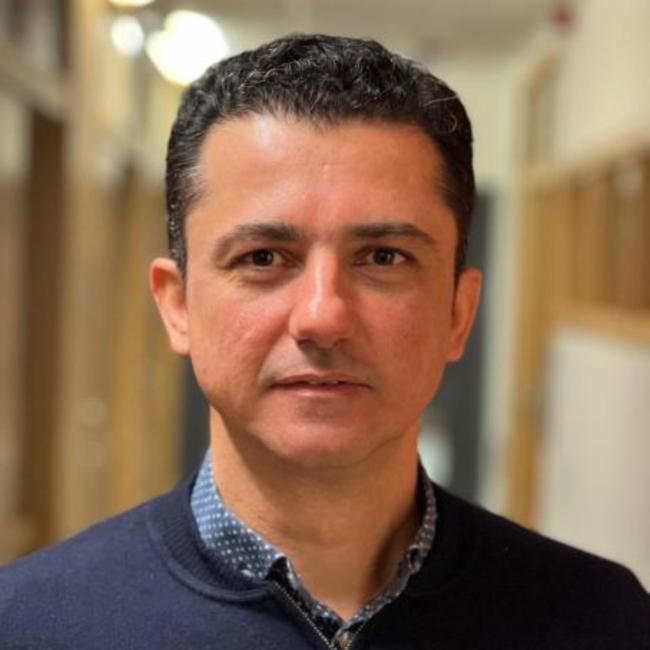
Satya Prakash Saraswat is a Postdoctoral Researcher at KTH Royal Institute of Technology's Nuclear Science and Engineering Unit in Stockholm, Sweden. He holds a Ph.D. from the Indian Institute of Technology Kanpur, with expertise in thermal-hydraulics, nuclear reactor safety, computational fluid dynamics (CFD), and system code development. His work spans fission and fusion reactor analysis, including contributions to the VALIDATIO project (University of Pisa) for fusion safety tools and the ATLAS project (Khalifa University) for advanced reactor safety enhancements. Research interests focus on computational modeling, AI integration in nuclear safety, and experimental validation of safety systems. He has developed skills in both experimental and numerical techniques, addressing challenges in multiphase flow, reactor core dynamics, and material compatibility. Key projects include validation of ASYST and SIMMER codes for condensation phenomena and lead-lithium interaction studies. Publications highlight advancements in burn-up wave characterization, code stability analysis (RELAP5/SIMMER), and thermal-hydraulic safety assessments for reactors like ESBWR and ITER systems. His work emphasizes enhancing safety tools through rigorous validation and innovative methodologies.
Olaf Hartig is a Senior Associate Professor at Linköping University's Department of Computer and Information Science (IDA), affiliated with the Database and Information Techniques (ADIT) division. He is also an Amazon Scholar collaborating with the Neptune graph database team. His research focuses on data management, semantic web technologies, graph databases, and distributed data systems. Hartig holds a PhD from Humboldt-Universität zu Berlin and is a Docent at Linköping University. He has received numerous awards, including the SWSA Distinguished Dissertation Award and eight best paper awards, and was selected as a Wallenberg Academy Fellow in 2024. Education: PhD in Computer Science (Humboldt-Universität zu Berlin), Docent (Linköping University). Research interests span query processing for Linked Data, federated systems, RDF and GraphQL semantics, and knowledge graph construction. He leads research groups in Database and Web Information Systems and Semantic Web Technologies at IDA. Key achievements include pioneering traversal-based query execution, developing Triple Pattern Fragments, and contributions to standards like RDF* and SPARQL*. His work has been recognized through grants, patents (e.g., on graph acceleration techniques), and leadership roles in conferences like ISWC and ESWC. Teaching: Course leader for database technology courses (TDDD12, TDDD37) and advanced topics like big data analytics and bioinformatics databases. Active in curriculum design and interdisciplinary education. Labs/Teams: Database and Web Information Systems Group, Semantic Web Research Group, Sports Analytics Group (IDA) Grants: Wallenberg Academy Fellowship, Swedish Research Council funding
Daniel Månsson is a Professor at the Department of Electrical Engineering, Royal Institute of Technology (KTH), specializing in smart electricity grids and power system components. His work spans electromagnetic compatibility (EMC) of large distributed systems, energy storage optimization, and privacy protection in smart metering. PhD in Engineering Physics (with specialization in Electromagnetism) Docent (Swedish Academic Title) in Electrical Engineering His research focuses on: Optimization of self-sufficient microgrids with energy hubs Smart meter privacy protection using energy storage EMC analysis of photovoltaic systems and UWB transients Hybrid energy storage system performance in renewable grids Recent publications indicate expertise in: Electromagnetic interference from solar PV systems Cyber-physical security in smart meters Conducted emission analysis Greenhouse gas reduction through optimized storage
Mathilde Luneau is an Assistant Professor in the Department of Applied Chemistry at the School of Chemistry and Chemical Engineering, Chalmers University of Technology. Her research focuses on heterogeneous catalysis and electrocatalysis for sustainable reactions, employing a multidisciplinary approach encompassing materials synthesis, testing, and advanced characterization. She aims to design efficient catalytic materials for energy and environmental applications. Education : PhD in Chemistry, University of Lyon, France. Postdoctoral Researcher at Harvard University under Prof. Cynthia Friend, investigating dilute alloy catalysts. Research Interests : Luneau’s work emphasizes sustainable reaction pathways using advanced catalytic systems. Her lab explores nanomaterials, bimetallic alloys, and electrochemical methods to enhance catalyst stability and selectivity. Key areas include fuel cell catalyst layers, oxygen-assisted coupling reactions, and additive manufacturing for flow reactors. She employs techniques like X-ray spectroscopy and machine learning to analyze catalyst structures and performance. Publications : Her recent studies highlight advancements in platinum nanoparticle synthesis, dilute PdAu catalysts, and Ti-6Al-4V anodes for electrochemical reactors. Trends reflect a focus on optimizing catalytic selectivity, stability under varying conditions, and scalable production methodologies. Labs/Teams : Luneau leads a research group at Chalmers dedicated to sustainable catalytic materials. Her team collaborates on projects like biogas processing and hydrogen production, leveraging interdisciplinary expertise in chemistry, engineering, and computational methods.
Valeria Castellucci is a Senior Lecturer and Associate Professor in the Department of Electrical Engineering at Uppsala University, Sweden, affiliated with the Division of Electricity. She holds the title of Docent in Engineering Science with Specialisation in Science of Electricity, reflecting her advanced academic standing and research contributions. Her research focuses on renewable energy systems, particularly wave energy and the integration of electric vehicles into power grids. Key areas include demand-side flexibility, peak load management, load shifting, and the optimization of wave energy parks. Her work combines theoretical modeling with real-world applications, often based on case studies in Uppsala, such as microgrid operations and EV charging infrastructure in parking garages. The recent publications highlight a strong trend toward smart grid technologies, grid stability, and the role of distributed energy resources in modern power systems. Her research emphasizes practical solutions for integrating variable renewable sources and managing electricity demand efficiently. Docent in Engineering Science with Specialisation in Science of Electricity Valeria Castellucci is actively involved in research collaboration, particularly with colleagues such as Carl Flygare, Alexander Wallberg, and Rafael Waters. Her work has been cited in policy sources and referenced in Wikipedia, indicating broader impact beyond academia. She contributes to both journal publications and conference proceedings, maintaining a high level of scholarly output in energy and electrical engineering. She is based at Ångströmlaboratoriet in Uppsala and is a key contributor to Uppsala University's wave energy research, including work at the Lysekil Research Site. Her doctoral thesis, Sea Level Compensation System for Wave Energy Converters (2016), laid the foundation for much of her ongoing research in marine renewable energy systems.
Cecilia Boström serves as a Senior Lecturer (Universitetslektor) and Docent at Uppsala University's Department of Electrical Engineering within the Faculty of Science and Technology. She holds dual roles as both an academic faculty member and Prefect (Head) of the Department of Electrical Engineering at the Ångström Laboratory. Her institutional email is cecilia.bostrom@angstrom.uu.se and she can be reached at phone number 018-471 58 55. Dr. Boström's research primarily focuses on electrical systems for renewable energy applications, with particular emphasis on wave power technology. Her work spans renewable energy integration, power grid stability, marine energy systems, and electrical engineering solutions for sustainable energy. She has extensively studied wave energy converters, power electronics for renewable integration, grid-forming control systems, and the application of marine energy for desalination and freshwater production. Her research aims to ensure that a significant portion of the world's future energy supply comes from renewable sources while maintaining reliable power systems. Analysis of her recent publications reveals a strong trend toward grid integration of renewable energy sources, particularly wave power systems. Her work demonstrates increasing focus on power electronics control strategies, grid-forming capabilities for island electrification, and service stacking with energy storage systems to address grid congestion. There's also a clear trajectory toward practical applications of wave energy for specific use cases like freshwater production on islands and vehicle-to-grid integration. Dr. Boström has been consistently active in wave energy research since the early 2000s, with numerous publications related to the Lysekil wave energy research site in Sweden. Her work spans theoretical modeling, experimental validation, and practical implementation of wave energy conversion systems. She appears to be actively involved in advising students and collaborating on research projects, as evidenced by her numerous co-authored publications across various topics in electrical engineering and renewable energy. Her work frequently intersects with energy storage applications, power quality assessment, and innovative control strategies for renewable integration. Dr. Boström is part of Uppsala University's wave energy research group, which has been conducting experiments at the Lysekil research site since the mid-2000s. This group has developed direct-drive linear generator technology for wave energy conversion and has been instrumental in advancing marine renewable energy research in Sweden.
Torsten Wik is a Professor in Control Engineering at Chalmers University of Technology. He leads the Control Engineering research group and focuses on process control with theoretical and applied methodologies. Institution: Chalmers University of Technology Department: Control Engineering His research spans optimal control, model reduction, and systems with model uncertainties. Applications include energy-saving systems, environmental improvement, biological systems (water purification, recirculating fish farms, LED greenhouse lighting), and battery estimation/modeling/control. Recent work emphasizes battery degradation diagnosis, state estimation, fast charging, and reconfigurable systems. Key methodologies include physics-informed frameworks, machine learning integration, entropy-based predictive algorithms, and hypergraph modeling. Applications extend to electric vehicles, photovoltaic systems, fuel cells, and biofilm reactors. Publications highlight collaborations across engineering domains, focusing on control theory, electrochemical modeling, and real-time optimization. His work bridges theoretical advancements with industrial applications in energy systems, transportation, and sustainable agriculture.
Christoph Egger is an Assistant Professor at Chalmers University of Technology in the Department of Computer Science and Engineering, where he works with the Security & Privacy Lab and the Crypto Team. Prior to this position, he was a Marie-Curie Fellow at Institut de Recherche en Informatique Fondamentale (IRIF) from fall 2022 to 2024, researching connections between cryptography and complexity theory. His educational background includes: PhD: "On Abstraction and Modularization in Protocol Analysis" Master's: "An implementation of global caching for the alternation-free coalgebraic μ-calculus" Bachelor's: "Analysing and attacking the I2P Network Database" Dr. Egger's research focuses on cryptography and its connections to computational complexity, statistical privacy, and formal methods. His work spans multiple areas including cryptographic foundations (random oracles, key agreement protocols), privacy-enhancing technologies (ring signatures, information flow techniques), and practical applications in genomic data security. He develops both theoretical frameworks and practical tools like CryptoZoo for cryptographic proof visualization, bridging the gap between theoretical cryptography and real-world security challenges. His recent publications demonstrate a strong focus on cryptographic foundations and privacy technologies, with significant contributions to ring signatures, key agreement protocols, and genomic data security. His work bridges theoretical cryptography with practical applications in blockchain, anonymous communications, and healthcare data management, showing consistent productivity across multiple high-impact venues in security and privacy. Dr. Egger has served on program committees for prestigious conferences including IEEE Computer Security Foundations Symposium (CSF), Proceedings on Privacy Enhancing Technologies (PETS), and Conference on Applied Cryptography and Network Security (ACNS). He currently advises PhD students Lucia Lavagnino at Chalmers and Kirthivaasan Puniamurthy at Aalto University. Previously, he advised Master's students including Julian Brost and Kirthivaasan Puniamurthy. His Marie-Curie Fellowship was cofunded by EU H2020 Marie Sklodowska-Curie Action and FSMP Comunity Service. Dr. Egger is an active member of the Security & Privacy Lab and Crypto Team at Chalmers. He is also a founding member of the FAUST CTF team and has been a Debian Developer for over a decade, contributing to various Free Software projects including the Linux kernel and Git version control system, demonstrating his commitment to both academic research and practical software security.
Viktoria Martin is a Professor of Energy Technology at KTH Royal Institute of Technology, specializing in thermal energy storage systems, particularly phase change materials (PCMs). Her research focuses on integrating sustainable energy solutions, such as renewable energy alternatives (e.g., solar heating) and optimizing district heating/cooling networks. She leads a research team with over 15 years of experience in PCM-based storage technologies, emphasizing compact, efficient systems that enhance energy efficiency in buildings and industrial processes. Her work often involves collaborations with international research institutes and industries. Her research interests span thermal energy storage design, industrial surplus heat utilization, and sustainable energy systems. She explores strategies to mitigate climate change through innovations like distributed cold storage in district cooling systems, energy efficiency in low-temperature district heating, and the integration of biowaste valorization into energy networks. Her studies also address socio-technical transitions and policy frameworks for sustainable development. Key trends in her publications include the optimization of thermal energy storage systems for urban and industrial applications, the role of PCMs in enhancing energy efficiency, and the analysis of energy-water-land interdependencies in Africa. She has contributed to modeling frameworks for energy system transitions and techno-economic assessments of novel storage technologies. Her work has implications for smart cities, renewable energy integration, and decarbonization strategies. Collaborations with global partners highlight her commitment to bridging academic research with industrial and policy applications.
Seif Haridi is a Professor at KTH Royal Institute of Technology in Stockholm, Sweden, specializing in parallel and distributed computing systems. He holds dual roles as Chair-Professor of Computer Systems and Chief Scientific Advisor at RISE SICS. His research integrates systems engineering with theoretical foundations, focusing on programming systems, distributed computing, and big data technologies. Key contributions include co-designing SICStus Prolog, the Mozart Programming System, and Apache Flink, as well as leading the development of HOPS, a European big data platform awarded the IEEE Scale Prize 2017. He has led major EU projects like EIT-Digital’s cloud computing initiative and co-founded startups such as LogicalClocks and HiveStreaming. His teaching includes courses on distributed algorithms and peer-to-peer computing at KTH. Notable awards include the European Data Science Technology Innovation 2019. His work spans systems like HOPS, Flink, and Kompics, emphasizing scalability and robustness in distributed environments. Current projects include CDA (Continuous Deep Analytics) and ExtremeEarth for geospatial data analysis. Research interests include distributed algorithms, consensus protocols, and cloud-native systems. His lab’s contributions to scalable storage (e.g., HopsFS) and stream processing (Apache Flink) highlight his impact on both academia and industry.
Magnus Rydén is a Professor in Energy Conversion at the Division of Energy Technology, Chalmers University of Technology, and serves as Director of Studies for the Energy, Environment and Systems research school. His research focuses on carbon capture technologies (e.g., Chemical-Looping Combustion), combustion optimization (Oxygen Carrier Aided Combustion), and biomass/waste-to-energy conversion. He teaches courses like Design of Industrial Energy Equipment (KVM071) and contributes to multiple energy-related master’s and bachelor’s programs. Key research areas include fluidized bed reactor dynamics, ash-material interactions, and interdisciplinary strategies for energy transition. Recent work emphasizes techno-economic analyses of bioenergy carbon capture and storage (BECCS), with projects like the Nordic flagship initiative targeting net-negative emissions. Experimental studies often involve large-scale systems (e.g., 12 MWth boilers) and novel oxygen carrier materials such as steel converter slag and ilmenite. Rydén’s publications span 20+ years, exploring CLC operational longevity (e.g., 11,000 hours of testing), OCAC for waste fuels, and hydrogen production via fluidized bed integration. His work bridges fundamental science and industrial applications, aiming to advance sustainable energy systems globally.
Raffaello Mariani is an Associate Professor at the Royal Institute of Technology (KTH), affiliated with the AEROSPACE, MOVEABILITY AND NAVAL ARCHITECTURE school and the Aeronautical and Vehicle Engineering Unit. He holds a BSc in Aerospace Engineering from Embry-Riddle Aeronautical University (2003), an MEng in Experimental Methods from Old Dominion University (2005), and a PhD in Fundamental Fluid Dynamics from The University of Manchester (2012). His career includes roles at BMT FM, ONERA, and Nanyang Technological University before joining KTH in 2018. Research focuses on experimental aerodynamics, supersonic jets, shock wave dynamics, and UAV design. Key areas include wind tunnel testing techniques (e.g., rainbow schlieren), flow control strategies, and hybrid-electric propulsion systems for sustainable aviation. He leads the Green Raven project, developing a hydrogen-powered blended-wing-body UAV to combat climate change. Teaching responsibilities include courses like Advanced Topics in Aeronautics and Future Sustainable Aviation . Active in interdisciplinary collaborations, he integrates electrochemistry, mechatronics, and embedded systems into aerospace engineering solutions. Award-winning contributions include pioneering work on vortex ring interactions and supersonic jet noise mitigation. His recent studies explore bio-inspired wing designs and ground-effect aircraft optimization.
Alp Yurtsever serves as an Assistant Professor in the Department of Mathematics and Mathematical Statistics at Umeå University, Sweden, where his research pioneers end-to-end optimization frameworks bridging theoretical modeling and practical algorithm design for data science challenges. His work fundamentally rethinks traditional black-box system approaches by integrating problem formulation with solution methodologies. His academic journey includes: PhD in Computer and Communication Sciences from École Polytechnique Fédérale de Lausanne (EPFL) under Prof. Volkan Cevher Postdoctoral fellowship at MIT's Laboratory for Information and Decision Systems (LIDS) with Prof. Suvrit Sra Dual BSc in Electrical and Electronics Engineering and Physics from Middle East Technical University Yurtsever's research centers on optimization theory for machine learning, with groundbreaking contributions in federated learning systems, convex programming, and scalable semidefinite solvers. He champions a unified perspective where modeling and algorithmic development inform each other, yielding methods with proven theoretical guarantees and real-world efficiency. His work particularly addresses communication bottlenecks in distributed systems and non-convex landscapes in neural network training, with applications spanning privacy-preserving AI and edge computing. Analysis of his publication trajectory reveals dominant themes in federated optimization and Frank-Wolfe variants, where he consistently develops communication-efficient algorithms for heterogeneous device networks. His recent work demonstrates increasing sophistication in handling multi-tier architectures and personalized learning objectives, while maintaining rigorous convergence guarantees. The integration of quantum-classical hybrid approaches in his 2022 ECCV paper signals expanding methodological boundaries. His scientific recognition includes: Thesis Distinction for PhD dissertation "Scalable Convex Optimization Methods for Semidefinite Programming" (EDIC program committee) Yurtsever actively contributes to Umeå University's Mathematical Programming Group and Statistical Learning for Spatio-Temporal Data initiative, though specific grant awards remain undisclosed in available materials. His collaborative network spans EPFL, MIT, and multiple European institutions as evidenced by co-authorship patterns. While no formal advisees are listed, his publications show mentorship of junior researchers through joint conference presentations. His laboratory operations are embedded within Umeå University's Department of Mathematics and Mathematical Statistics in the MIT-huset building, leveraging institutional resources for high-performance optimization research while maintaining strong international connections through his post-PhD affiliations.
Reza Sirjani is a Senior Lecturer in Electrical Engineering at Karlstad University. He has over 15 years of research experience in energy systems optimization, renewable energy, and power electronics. His academic journey includes roles at Cyprus International University (2013-2017) and Eastern Mediterranean University (2017-2022), where he became an Associate Professor and served as Vice Chair of the Department of Electrical and Electronics Engineering (2020-2022). Education: BSc in Electrical Engineering (Power Systems) from Khajeh Nasir Toosi University of Technology, Iran (2006) MSc in Electrical Engineering (Power Systems) from Tehran Science and Research University (2008) PhD in Electrical Engineering from National University of Malaysia (2013) Research interests include renewable energy integration, optimization techniques in energy systems, power electronics, FACTS devices, and smart grids. His work addresses challenges in power quality, energy storage systems, and distributed generation. Current projects: GränsENERGI (2025-2028): Innovative solutions for future energy supply LOKEN (2024-2027): Local Energy Management in Värmland Riskville power system expansion (2023-2024) Teaching: Courses include Electrical Power Systems Technology, Power Electronics, Electric Machines, and Renewable Energy Integration. Collaborations include Glava Energy Center, CSR, and Clear River Racing. Publications: Over 40 peer-reviewed articles focusing on optimization algorithms, energy storage, and renewable integration. Supervised 18 Master/PhD students.
Andreas Theocharis is an Assistant Professor in Electrical Engineering at Karlstad University, specializing in Electrical Power Systems and Renewable Energy Systems Research. His research focuses on renewable energy integration, smart grid technologies, and advanced modelling of electrical components like transformers and photovoltaic systems. He collaborates with institutions such as Ellevio, KTH, Delft University of Technology, and industry partners like Siemens and Vestas. Teaching responsibilities include courses on electric circuits, power systems operation, renewable energy applications, and grid integration. His work bridges academia and industry, addressing challenges in sustainable energy systems through advancements in AI, machine learning, and IoT. Research contributions span photovoltaic generator modelling, battery storage optimization, and electromagnetic compatibility. Key publications address generative AI for renewable energy communities, uncertainty quantification in solar forecasting, and robust energy management strategies. Collaborations involve global networks with universities in the Netherlands, Norway, Greece, and industry leaders in energy sectors. His expertise in transformer dynamics and smart grid solutions supports practical implementations of sustainable energy frameworks.