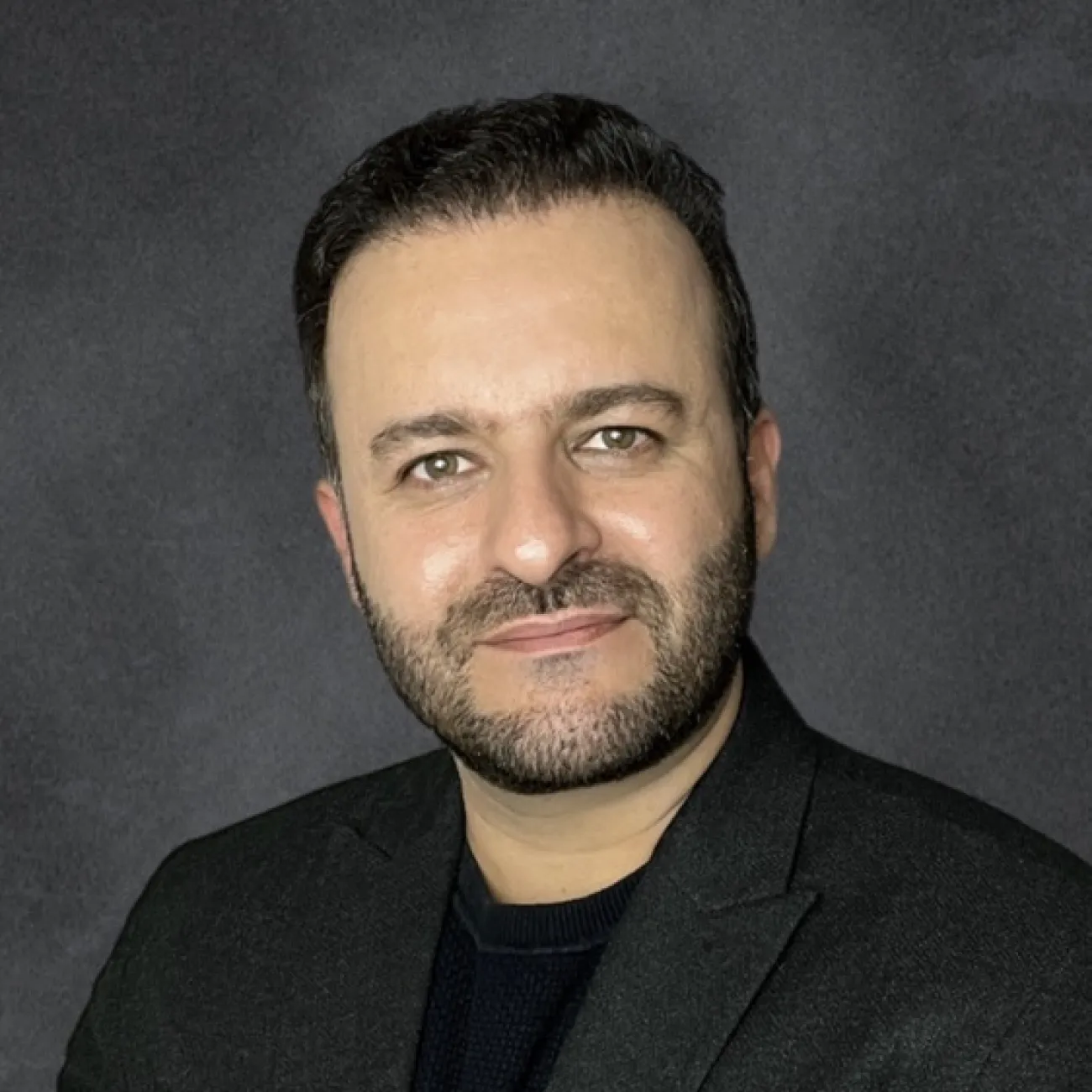
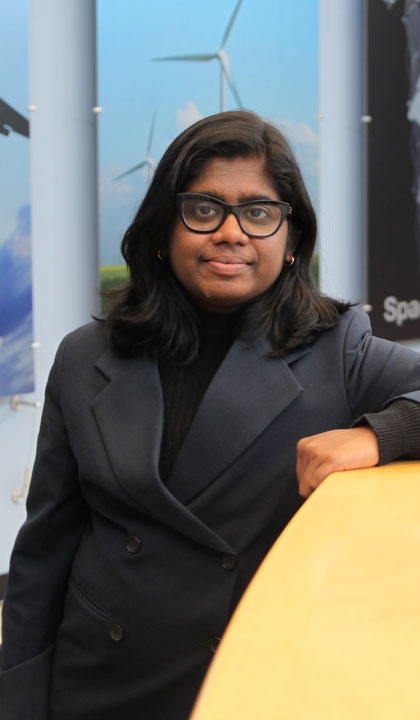
Professor Okan Topçu is a faculty member in the Department of Computer Engineering at Middle East Technical University, Northern Cyprus Campus (METU NCC), where he serves as Head of the Academic Board of Engineering and Natural Sciences. He holds a Ph.D. and M.S. from Middle East Technical University (Ankara, Turkey, 2007 and 1999 respectively). Education: Ph.D. & M.S. in Computer Engineering from METU Ankara Research Focus: Modeling and simulation, agent-based systems, distributed simulation, cybersecurity, and model-driven engineering
Alexander Alexandrovich Kharlamov serves as a Professor at the National Research University Higher School of Economics (HSE), specifically within the Faculty of Computer Science and Department of Software Engineering. He joined HSE in 2015 and has accumulated 42 years of scientific and teaching experience. His academic profile includes prominent identifiers such as ORCID: 0000-0003-2942-5101, ResearcherID: E-3760-2014, and Scopus AuthorID: 57193909855. He maintains an office at the Pokrovsky Boulevard campus (AUK "Pokrovsky Boulevard", Pokrovsky blvd, 11, office S913) and serves as the Editor-in-chief of the journal "Speech Technologies" since 2008. Doctor of Technical Sciences (2010) from Moscow State Institute of Electronics and Mathematics Candidate of Technical Sciences (1983) from Moscow State Technical University named after N.E. Bauman Postgraduate study (1980) at Moscow State Technical University named after N.E. Bauman Mathematics degree (1976) from Lomonosov Moscow State University Thermal Physics degree (1970) from Moscow Power Engineering Institute Professor Kharlamov's research focuses primarily on neuroinformatics, with significant contributions to neural networks, semantic representations, and intelligent information systems. His work bridges computational approaches with cognitive modeling, exploring how semantic networks can be used for text analysis, speech recognition, and situation monitoring. His research interests span both theoretical foundations of neuroinformatics and practical applications in areas such as social media analysis, smart city development, and digital transformation. He has developed the TextAnalyst technology for automatic semantic analysis of text and has made significant contributions to understanding how humans process information through neural network models. His recent scholarly output demonstrates a clear trajectory toward multimodal systems, digital transformation in urban environments, and advanced semantic analysis techniques. The publications reveal a consistent focus on applying neuroinformatics principles to real-world problems, particularly in analyzing social dynamics through digital footprints, developing intelligent monitoring systems, and creating semantic frameworks for information processing. His work increasingly addresses contemporary challenges such as pandemic response, social stress analysis, and digital conflict zones, showing adaptability to emerging societal needs while maintaining theoretical rigor. Corresponding Member of the International Academy of Informatization (1994) Professor Kharlamov has secured significant research funding through grants from the Russian Foundation for Basic Research (No. 14-06-00363) and the Russian Humanitarian Science Foundation (No. 15-03-00860). His research leadership spans decades, with documented projects from 1996 to present, covering areas such as neural network modeling, speech recognition systems, semantic analysis technologies, and intelligent information systems. He has served as principal investigator for numerous projects, often collaborating with institutions like IITP RAS and Bauman Moscow State Technical University. His teaching portfolio includes advanced courses in neuroinformatics, neuromathematics, and neural network theory for both bachelor's and minor programs at HSE. As Editor-in-chief of the journal "Speech Technologies" since 2008, Professor Kharlamov has shaped discourse in his field while continuing his own research on semantic networks and neural modeling. His work on homogeneous semantic networks represents a significant contribution to the field, providing frameworks for text analysis, situation monitoring, and knowledge representation. The integration of his theoretical work on neural networks with practical applications in information systems demonstrates a career-long commitment to bridging theoretical computer science with real-world implementation challenges.
Dr. Mohammad Soorati is an Assistant Professor of AI at the University of Southampton , affiliated with the Department of Electronics and Computer Science. His research focuses on human-swarm interaction , swarm robotics , and explainable AI , with applications in trust modeling, aerial swarms, and distributed machine learning. He leads the eXplainable Human-swarm Systems project and co-investigates an EPSRC-funded initiative on 5G-connected UAVs. Dr. Soorati sits on the boards of the Center for Machine Intelligence and Center for Robotics. His research has been featured in outlets like IEEE Spectrum and Robohub . He serves as an associate editor for ICRA and academic editor for PLOS ONE, and holds editorial roles in high-impact robotics conferences (IJCAI, AAAI, AAMAS). His work explores tools for human operators to interpret multi-agent systems and enhance situational awareness. Dr. Soorati teaches Machine Learning Technologies , Interdisciplinary Team Project , and Programming I . He actively supervises PhD students in AI and robotics, with current advisees including Thomas Graham Kelly and William Hunt. His awards include the AAMAS Best Demonstration Award (2023) and a Best Paper Award at ACRS 2010.
Tobias Meuser is a Researcher at the Multimedia Communications Lab of Technische Universität Darmstadt, leading the "Adaptive Communication Systems" group since 2020. He holds a PhD (2019) focused on vehicular network data management and has been a central figure in the third phase of the Collaborative Research Center (CRC) MAKI as a principal investigator in subproject B1. His work emphasizes resilient 5G networks, edge AI, and distributed systems. Education: B.Sc. Business Informatics (Fernuniversität Hagen) M.Sc. Informatics (TU Darmstadt) Research Interests: Resilience in 5G and beyond Edge AI and distributed machine learning Information assessment in vehicular networks Collaborative perception systems Hardware acceleration for network functions Key Projects: Principal Investigator in CRC MAKI's B1 (Monitoring and Analysis) Collaborations with Opel (cooperative maneuvering) and Deutsche Bahn (5G resilience) Labs/Teams: Head of Adaptive Communication Systems group at Multimedia Communications Lab Member of Distributed Sensing Systems group (2016–2020)
Rafael Duarte Pereira da Silva is a Research Fellow at the Research Group on Engineering and Intelligent Computing for Innovation and Development (GECAD) within the School of Engineering of the Polytechnic Institute of Porto. He is currently pursuing his doctoral degree in Artificial Intelligence and Intelligent Systems Engineering while developing AI-driven solutions for energy communities and smart buildings. His academic background includes: Master's degree in Artificial Intelligence Engineering (2025) from the Polytechnic Institute of Porto, with a dissertation on "Distributed Intelligent Management of Citizen Communities" (grade: 19/20). Bachelor's degree in Computer Engineering (2022) from the Polytechnic Institute of Porto, featuring a green computing project for smart building energy management. Currently enrolled in a doctoral program in Artificial Intelligence and Intelligent Systems Engineering (since 2025). Rafael's research spans Artificial Intelligence, Distributed Computing, and Energy Communities, focusing on human-centric intelligent systems for resource optimization. He develops virtual energy communities using IoT devices and AI models to enable dynamic interaction with community members while managing distributed resources. His work emphasizes sustainability through green computing principles and integration of renewable energy sources in smart infrastructure. His 2024-2025 publications reveal a cohesive research trajectory centered on the Caravels framework for decentralized energy management. Key themes include container-based infrastructure for community resource sharing, peer-to-peer energy trading with storage optimization, and AI-driven demand response systems. His work bridges theoretical AI models with practical IoT implementations, particularly in energy forecasting and HVAC control, demonstrating significant contributions to sustainable consumption in smart buildings and community-scale energy systems. Advising Co-supervised three undergraduate thesis projects at the Polytechnic Institute of Porto on IoT notification systems, Linux-based single-board computer configuration, and open-source IoT devices for smart buildings. Grants and Projects Sa4CPS: Secure situational awareness for critical cyber-physical systems (COMPETE2030-FEDER and ITEA) NGS: New Generation Storage (PRR initiative) TIoCPS: Trustworthy and Smart Communities of Cyber-Physical Systems (P2020 and ITEA programs) As an active GECAD member, Rafael contributes to server infrastructure management and organizes scientific events, including public demonstrations that secured the group's "Excellent" FCT evaluation rating. He has coordinated annual team energizing events for two consecutive years and participated in developing virtual energy community systems that showcase GECAD's research impact in distributed computing and IoT integration.
Dr. Cathy Rolland is a Lecturer at Université Clermont Auvergne (UCA) within the UFR STAPS department. She conducts research at the ACTé laboratory, focusing on Theme 1: Cognitive resources of sports and physical education professionals and Theme 4: Digital training environments for gymnastics coaches . Her work bridges sports coaching, cognitive anthropology, and digital technology, with particular expertise in 360° video applications for professional training. Research Interests include: Expert coaching knowledge in artistic gymnastics Digital training environment design Embodied knowledge transmission Immersive video training systems Cognitive scaffolding processes Professional vision development Key Article Trends show consistent focus on: 360° video implementation in physical education Intervention activity analysis Professional knowledge distribution Perceptual experience scaffolding Technology-mediated training Interdisciplinary approaches combining cognitive science and pedagogy Contact: Cathy.Rolland@uca.fr at UFR STAPS, Clermont-Ferrand, France.
Associate Professor Melrose Brown is a faculty member at UNSW Canberra, School of Engineering and Technology, where he leads numerical space situational awareness research and coordinates the Space Masters program. He holds advanced degrees in Aerospace Engineering and specializes in applying high-fidelity simulations to satellite-environment interactions in Low Earth Orbit (LEO). Research Focus: DSMC/PIC simulations for LEO satellites Orbit propagation and determination Ionospheric drag modeling Atmospheric physics Hypersonic CFD His recent publications analyze thermospheric responses to geomagnetic storms using GITM-OVATION models, ionospheric drag effects, and numerical tools like pdFOAM. Key keywords include Space Weather, Satellite Formation Control, and Computational Fluid Dynamics. He supervises Ph.D. projects related to aerospace engineering and offers scholarships for research in LEO dynamics. His work involves collaborations on CubeSat missions (e.g., M2) and space traffic management systems.
Salman Nazir is Professor at the University of South-Eastern Norway (USN) , Faculty of Technology, Natural Sciences and Maritime Sciences, Department of Maritime Operations. He heads the Training and Assessment Research Group (TARG) and is Scientific Leader of the national Centre of Excellence in Maritime Simulator Training and Assessment (COAST). Since 2019 he has held the rank of Professor, after serving as Associate Professor from 2015 and earlier post-doctoral and lecturer roles in Norway, Italy, South Korea and Pakistan. Education PhD in Industrial Chemistry and Chemical Engineering ( cum laude ), Politecnico di Milano, Italy, 2011–2013 MSc in Chemical Engineering (Process System Engineering), Hanyang University, South Korea, 2007–2009 BSc in Chemical Engineering, Bahauddin Zakariya University, Pakistan, 2002–2006 Research Interests Prof. Nazir’s work sits at the intersection of Human Factors, Safety and Simulation Technology . He investigates how immersive virtual- and augmented-reality simulators, novel training syllabi and evidence-based performance indices can enhance operator competence and safety in complex maritime and process-industry systems. Concepts such as Distributed Situation Awareness , multi-criteria decision making , accident analysis and learning process optimisation are central to his multidisciplinary agenda, which actively involves cognitive scientists, computer scientists, maritime practitioners and industrial stakeholders. Research Trends & Article Overview Across more than 80 peer-reviewed outputs, a clear trajectory emerges: early focus on process-industry training simulators and KPI development evolved into maritime-centric studies on simulator fidelity, VR-based education, and human-automation interaction in autonomous shipping. Recent work (2019–2021) emphasises systematic reviews and comparative European studies, validating VR-headset efficacy, performance-assessment frameworks, and sociotechnical implications of increased automation. Honours & Awards COAST designated one of 12 national Centres of Excellence in Education (SFU) by DIKU, Norway Coordinator/Leader, EU Horizon 2020 project ENHANCE (multi-million NOK) 400 000 NOK MARKOM 2020 Workshop grant PhD cum laude , Politecnico di Milano Young-researcher grants, Politecnico di Milano (2011 & 2013) Merit scholarships, Hanyang University & Korean Government Advising & Grant Portfolio Prof. Nazir currently supervises 6 master students and 1 PhD candidate in “Automated Performance Assessment in Maritime Operations”, while co-supervising additional PhD students at Liverpool John Moores University. He has successfully graduated 3 master and 6 bachelor students . External funding includes EU Horizon 2020, Norwegian SFU scheme, MARKOM 2020, Maritime Technology and Innovation (MTDI) and multiple Italian national grants. Labs & Collaborative Networks He leads TARG at USN, acts as Scientific Leader of COAST , and collaborates with leading international scholars such as Prof. Zaili Yang (Liverpool John Moores), Prof. Annette Kluge (University of Duisburg-Essen), Prof. Davide Manca (Politecnico di Milano) and Prof. Paulo Carvalho (UFRJ, Brazil). These partnerships span computer science, cognitive psychology, maritime logistics and safety engineering, ensuring a truly interdisciplinary research ecosystem.
Esther González Martínez is Full Professor of Sociology at the University of Fribourg (Switzerland) in the Faculty of Letters and Human Sciences, Department of Social Sciences. She earned her PhD in sociology and social sciences from the University of Lausanne and EHESS (2003), followed by postdoctoral research at Boston University, Cornell University, University of Wisconsin-Madison, and UCLA. Her research specializes in institutional interactions using conversation analysis and ethnomethodology, with current focus areas including: Healthcare communication practices (nurse coordination, corridor interactions) Legal settings (interrogation techniques, judicial procedures) Workplace mobility and multimodal interaction Request formulation in institutional contexts She leads the Interaction and Social Practices Research Group (GRIPS) and directs FNS-funded projects on hospital communication dynamics. Her recent publications (2015-2025) predominantly analyze healthcare interactions, demonstrating consistent focus on conversation patterns in mobile workplace settings, particularly nurse-doctor coordination and institutional request sequences. Notable research projects include: Requesting in hospital nurses' unscheduled interprofessional interactions (FNS 2019-2024) Mobile and Contingent Work Interactions in Hospital Care (FNS 2011-2015) Interactional competences in institutional practices (IC-You project 2012-2015) She maintains active collaboration networks internationally, including partnerships with University of York.
Leonard Munstermann is a Senior Research Scientist in the Department of Epidemiology of Microbial Diseases at Yale School of Public Health and an Affiliated Faculty member at the Yale Institute for Global Health. He also serves as the Head Curator of Entomology at the Yale Peabody Museum of Natural History, where he oversees one of North America's most significant entomological collections. With over four decades of experience, Dr. Munstermann has established himself as a leading expert in sand fly taxonomy and ecology, particularly focusing on the genus Lutzomyia comprising approximately 400 species of New World vectors of leishmaniasis. His educational background includes: PhD in Zoology from the University of Notre Dame (1979) MA in Zoology from the University of Minnesota (1968) BA in Psychology from the University of Minnesota Morris (1964) Dr. Munstermann's research spans insect biodiversity in tropical forests, development of new trap methods for insect vectors, and translating medical entomology research into K-12 teaching curricula. His scientific investigations examine epidemiological interactions between humans, sandflies, reservoir hosts, and parasites in novel epidemic situations of cutaneous leishmaniasis. His expertise encompasses vector-borne diseases, medical entomology, insect genetics, and public health education, with research interests including Biological Evolution, Entomology, Genetics, Global Health, Insect Vectors, Leishmaniasis, and Malaria. His extensive publication record demonstrates consistent contributions to vector biology, with recent work increasingly incorporating genomic approaches to study vector populations and disease transmission across different geographic regions. His research on Aedes albopictus population structure and genotyping arrays represents cutting-edge applications of molecular techniques to vector surveillance and control. Dr. Munstermann has received numerous scientific honors: Distinguished Alumnus of the Year, University of Minnesota, Morris (2004) Elected President, Connecticut Entomological Society (2001) Team Research Award from the Florida Entomological Society (2000) 14th Rozeboom Lecturer in Medical Entomology, John Hopkins University (1998) Published photographs of Insect Vectors of Disease in 42 newspapers, research journals and books, including Science, New York Times and Yale Medicine Throughout his career, Dr. Munstermann has secured significant grant funding, most notably a 15-year set of education grants focused on translating current research in medical entomology into K-12 teaching curricula. His Peace Corps experience teaching biology in Ghana and subsequent field work in tropical regions have informed his approach to public health education and vector-borne disease research. He has collaborated extensively with researchers across multiple institutions and countries, particularly in South America where leishmaniasis is endemic. As Head Curator of Entomology, Dr. Munstermann oversees collection management, research support, and public education initiatives related to insects. His work has included developing new trap methods using LED technology, as documented in his 2008 publication. His museum exhibits on vector-borne diseases, including the 'Invasion of the Bloodsuckers' exhibit, have reached wide audiences and contributed to public understanding of these important health issues.
Dr. Paul N. Gorman serves as Thread Director for Health Systems Sciences and Assistant Dean for Rural Medical Education at Oregon Health & Science University's School of Medicine. With over 30 years of clinical experience spanning rural primary care internal medicine, geriatrics, and urban hospitalist practice, he integrates systems thinking into medical education through the OHSU YourMD curriculum and expands rural physician workforce development via the Campus for Rural Health. His educational foundation includes: B.S. from University of Illinois at Chicago Circle (1975) M.D. from Rush Medical College (1980) Internal Medicine Internship & Residency at Rush Presbyterian-St. Luke's Medical Center Chief Residency (1983-84) and General Internal Medicine Fellowship at Portland VA Medical Center (1990-92) Dr. Gorman's research examines clinician information seeking behaviors, distributed cognition in clinical settings, and naturalistic decision making with emphasis on human factors in healthcare systems. His work bridges medical informatics and practical clinical workflows to enhance healthcare delivery through systems-based practice education. Current scholarship focuses on health systems science curriculum development, clinical decision support optimization, and rural healthcare access. His publication trajectory demonstrates evolving expertise from foundational human factors research toward healthcare system transformation, with recent work emphasizing cost-conscious care integration, clinical workflow modeling, and sociotechnical system design. Key themes include optimizing decision support while mitigating alert fatigue, understanding team process variations, and developing context-aware educational interventions. Honors include: Fellow of the American College of Physicians Fellow of the American College of Medical Informatics Dr. Gorman actively advocates for universal healthcare access through Physicians for a National Health Program and Health Care for All Oregon. His leadership in rural medical education expansion addresses critical physician workforce shortages while maintaining board certification in Internal Medicine. Current initiatives focus on implementing health systems science threads across medical education continuums and strengthening academic-community partnerships for equitable care delivery.
Dr. Francisco J. Aparicio Navarro serves as Associate Professor in Cyber Security and Programme Leader for BSc/MSc Digital Technology Solutions Degree Apprenticeships at De Montfort University's School of Computer Science and Informatics. An expert in Computer Network Security and Intrusion Detection Systems, his research develops novel unsupervised detection frameworks integrating Contextual Information and Situational Awareness for cyber-attack identification in networked environments. His research spans Network Security, Machine Learning, and Cyber Situational Awareness with specialized expertise in Penetration Testing, Cyber Threat Intelligence, and Incident Response. Key contributions include statistical approaches for multi-stage attack detection, data fusion techniques for anomaly identification, and security solutions for Connected Autonomous Vehicles developed in partnership with Airbus. His work bridges theoretical advances in cryptographic protocols with practical defense mechanisms for critical infrastructure. Recent publications demonstrate evolving focus from foundational wireless intrusion detection (2017-2018) toward sophisticated APT prediction using machine learning correlation analysis (2018-2019), vehicle cybersecurity (2019-2020), and emerging areas like medical imaging watermarking (2023) and lightweight cryptographic solutions (2024-2025). Cross-cutting themes include contextual information integration, IoT privacy compliance, and distributed authentication mechanisms. Scientific recognition includes: Fellowship of the Higher Education Academy (FHEA) He currently supervises PhD candidates Tareq Ahmad Alhajahjeh (Cyber Threats Intelligence using BRNN-LSTM) and Ademola Elijah Owaraye (Zero-Trust Security in Fog Computing), following successful completion of Dr. Raphael Martin Juergen Riebl's thesis on Vehicular AdHoc Networks. Research funding includes Innovate UK projects SACRED (Co-Investigator), INSURE Phases 1-2 (Principal Investigator), and FLOURISH (Co-Investigator with Airbus), alongside EPSRC/Dstl collaborations on networked battlespace security. As Director of the Cyber Security Academic Startup Accelerator Programme, he fosters industry-academia partnerships while maintaining active consultancy in penetration testing and incident response for commercial clients.
Tamilselvan Gajapriya is an Assistant Professor in the Department of Aviation Science at Saint Louis University, part of the School of Science and Engineering. He holds a Ph.D. in Aviation Science from Florida Institute of Technology, and master’s and bachelor’s degrees in Avionics and Electronics Engineering from Anna University, India. His research focuses on aviation safety, pilot selection/training, human factors, and physiological monitoring in flight environments. He directs the Aviation Safety, Aviation Physiology, and Ergonomics (ASAPE) Lab, which uses advanced equipment like EEG sensors and eye-tracking devices to study pilot performance under stress. Key research areas include cognitive workload assessment during emergencies, UAV privacy concerns, and consumer attitudes toward autonomous aircraft. He has published extensively in journals like Safety Science and Journal of Unmanned Vehicle Systems , with peer-reviewed work on topics ranging from pilot retention strategies to electronic chart usability. Professional affiliations include the Human Factors & Ergonomics Society and Women in Aviation International. His lab investigates physiological markers (e.g., galvanic skin response, EEG) to evaluate pilot decision-making and stress levels during simulated emergencies. Current projects explore factors influencing pilot career retention in commercial aviation and public acceptance of unmanned systems. Dr. Gajapriya collaborates with industry partners to translate research into practical aviation safety solutions.
Dieter Schmalstieg is the Alexander von Humboldt Professor of Visual Computing at the University of Stuttgart and an adjunct professor at Graz University of Technology. He leads research in augmented reality (AR), virtual reality (VR), and visualization, with contributions to tracking, rendering, and medical applications. His work spans academia and industry, with over 400 publications and numerous awards, including the IEEE ISMAR Career Impact Award and Fellow of the IEEE. Education: PhD (1997), Habilitation (2001) from Vienna University of Technology. Research: Focuses on AR/VR systems, medical visualization, and real-time graphics. Key projects include the Christian Doppler Laboratory for Handheld AR and collaborations with Qualcomm and VRVis. Awards: START Prize (2002), IEEE Technical Achievement Award (2012), Humboldt Professorship (2023). His teaching includes courses on computer graphics, VR, and real-time rendering. He has advised over 30 PhD students, many of whom hold academic or industry leadership roles. Current research explores situated analytics, mixed reality telepresence (MRUnion), and AR applications in mining and medicine (MiReBooks).
Suvi Vuori is a Researcher in the Department of Industrial Engineering and Management at Aalto University's School of Engineering. Their work focuses on the intersection of emotions and organizational practices, with particular expertise in emotion work within client-facing environments. Research interests span emotion work, organizational practices, strategic action, and situated learning in emotionally charged contexts. Their work examines how emotional dynamics influence organizational behavior, decision-making, and learning processes, particularly in client-facing roles where emotional labor is significant. Their recent publications (2019-2025) demonstrate consistent research output in organizational psychology, with a clear trajectory examining how emotions shape organizational practices and strategic outcomes. Key themes include hierarchical distribution of emotion work, emotional pressure in client interactions, and the role of selective attention in opportunity enactment. While no specific awards are listed in the available information, their research has contributed to understanding how emotional dynamics drive organizational behavior and strategic action. Their doctoral thesis represents a significant contribution to emotion-based perspectives on organizations. Vuori's research has practical implications for organizational management, particularly in industries requiring significant emotional labor. Their work bridges theoretical organizational psychology with practical applications for improving strategic decision-making in emotionally complex environments.