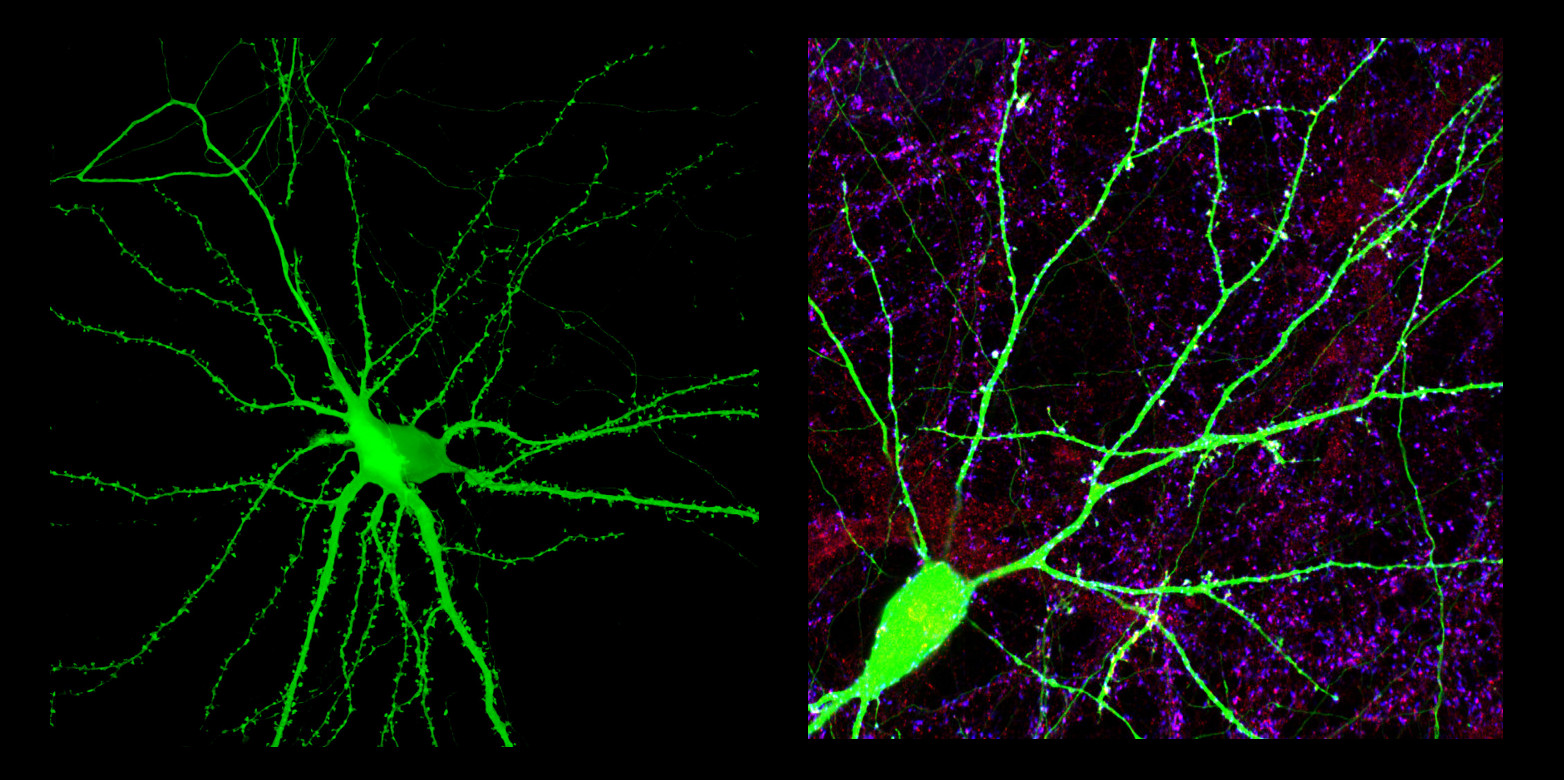
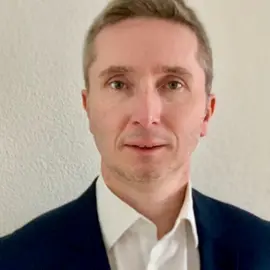
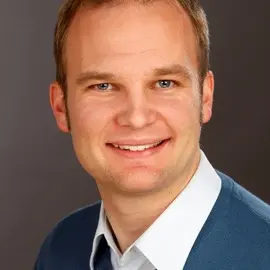
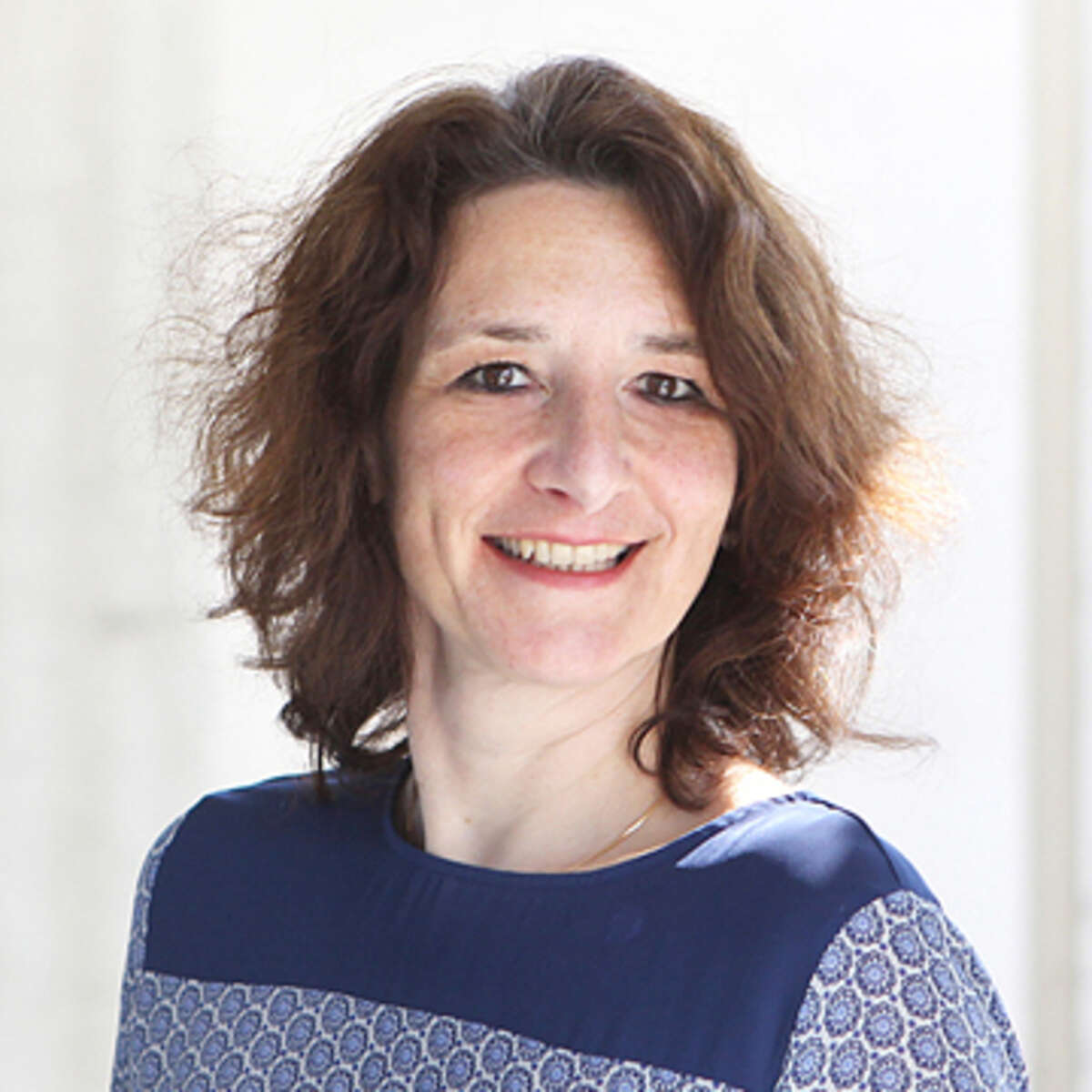
Gerhard Schratt is Full Professor and Head of the Institute for Neuroscience at ETH Zürich. His laboratory investigates molecular mechanisms of synapse development and plasticity, with emphasis on non-coding RNA regulation in neurological disorders. Research integrates molecular neurobiology with computational approaches to study microRNA functions in neuronal development, synaptic homeostasis, and stress responses. Current projects examine RNA-based therapies for neurodegenerative conditions and computational pathology platforms for digital histology. Professor Schratt's group develops AI frameworks for neurological assessment including multimodal dementia diagnosis, voice-based cognitive testing with privacy protection, and digital pathology for kidney disease. Collaborative projects with the Chan Zuckerberg Initiative explore mitochondrial regulation by microRNAs. He teaches molecular neurophysiology and neuroscience courses, supervising doctoral candidates in systems neuroscience approaches.
Dr. Gregory Duthé is a researcher at the ETH Zürich in the Structural Mechanics and Monitoring department. His work bridges computational modeling and structural diagnostics with applications in renewable energy systems. Research contributions include: Development of Graph Neural Networks for aerodynamic flow reconstruction Advancements in wake-induced load estimation for wind farms Innovations in unsupervised fault detection for offshore turbine systems Key publication trends show focus on physics-informed machine learning (2025), multi-agent infrastructure decision support (2025), and leading edge erosion modeling (2021). He combines graph-based architectures with structural health monitoring techniques across wind energy applications. Contact: duthe@ibk.baug.ethz.ch
Cesare Alippi is a Full Professor at the Faculty of Informatics, Università della Svizzera italiana (USI), and also holds a professorship at Politecnico di Milano, Italy. He serves as a visiting Professor at Guangdong University of Technology (China) and Consultant Professor at Northwestern Polytechnic of Xi'an (China). His academic leadership extends to multiple international institutions where he has served as a visiting researcher including UCL (UK), MIT (USA), ESPCI (France), CASIA (China), A*STAR (Singapore), and University of Kobe (Japan). Professor Alippi's research interests center around graph-based learning, adaptation and learning in non-stationary environments, and intelligence for embedded, cyber-physical systems and IoT. His work bridges theoretical foundations with practical applications in sensor networks, environmental monitoring, and industrial processes. He has established significant research infrastructure including the Wireless Embedded Systems (WEmSy) Lab and the Internet of Things Lab, with notable deployments for marine environment monitoring in Queensland, Australia and the Fiji Islands, as well as rockfall and landslide monitoring systems across Italy and Switzerland. His research output shows a clear evolution toward graph-based deep learning approaches for time series analysis, anomaly detection, and spatiotemporal forecasting, reflecting the growing importance of graph neural networks in handling complex relational data in non-stationary environments. Major Awards: IEEE CIS Enrique Ruspini Meritorious Service Award (2024) IEEE CIS Outstanding Computational Intelligence Magazine Paper Award (2018) Gabor Award from International Neural Network Society (2016) IBM Faculty Award (2013) IEEE Instrumentation and Measurement Society Young Engineer Award (2004) Professor Alippi has held significant leadership roles including Past Board of Governors member of the International Neural Network Society, Past member of the Administrative Committee of the IEEE Computational Intelligence Society, and Past Vice-President for Education of the IEEE Computational Intelligence Society. He has served as Associate Editor for Proceedings of IEEE and several other prestigious journals. His research has been supported through numerous grants including an IBM Faculty Award in 2013 specifically for research on Intelligent Embedded Systems working in non-stationary environments. His research infrastructure includes the Wireless Embedded Systems (WEmSy) Lab and the Internet of Things Lab, with notable deployments including a sophisticated automatic, adaptive, sustainable and reliable wireless monitoring system for marine environments deployed in Queensland, Australia (2007) and under deployment at the Fiji Islands (2014-2015). He has also led several top-world deployments for rockfall and landslide monitoring across Italy and Switzerland since 2010, demonstrating the practical impact of his research in real-world harsh environments.
Mihaela Albu is a Professor of Electrical Engineering at the Politehnica University of Bucharest (UPB), Romania. She teaches Advanced Topics in Instrumentation and Measurement, Smart Distribution Grids, and Signal Processing at both Master’s and Bachelor’s levels, while also contributing to courses like "Elektrische Meßtechnik" and "Sensoren" in the German Department of UPB. Ph.D., "Politehnica" University of Bucharest (1998) Diploma in Electrical Engineering, "Politehnica" University of Bucharest (1987) Her research spans smart energy grids , focusing on optimal renewable energy integration , real-time control , and DC grid technologies . She pioneered a DC demonstration platform at 230V and proposed power quality metrics for DC systems. Other interests include wide-area measurement systems , nonlinear power system phenomena , and IEEE/IEC standards for power systems. She has coordinated research teams funded by national and international grants, authored a monograph on power system measurements, 7 book chapters, and over 20 peer-reviewed journal publications. Her leadership in IEEE Instrumentation and Measurement Society includes roles like AdCom member, Distinguished Lecturer, and Vice-Chair of the PES-Romania Chapter. Key awards include the Fulbright Fellowship (2002–2003, 2010) IEEE Distinguished Lecturer recognition Dr. Albu founded the interdisciplinary MicroDERLab at UPB, a hub for smart grid research, and contributed to virtual laboratories and IEEE education initiatives.
Matthias Nyfeler is a Lecturer for Physics and Statistics at the Institute of Computational Life Sciences, Zurich University of Applied Sciences (ZHAW), since 2018. He previously served as a Lecturer at Jönköping University (2016-2018) and as a High School Teacher in Physics and Mathematics (2010-2016). His roles include Programme Director for the MSc specialisation in Applied Computational Life Sciences, Head of the Research Group Advance Signal Analytics, and Head of ICLS statistical consulting. Education: PhD in Theoretical Physics (University of Bern, 2005-2010), Master of Science in Physics (University of Bern, 2006-2009), Teaching Diploma for Physics and Mathematics (PHBern, 2010-2011), Postgraduate Studies in Secondary Education (Jönköping University, 2016-2017). His research focuses on Deep Learning and Statistical Signal Processing for applications like Drone Signal Classification and Bioacoustics . He also contributed to Quantum Antiferromagnetism and Cluster Algorithms earlier in his career. His recent publications highlight Robust CNN-based Drone Detection in low SNR environments and Multiscale Deep Learning for RF signal analysis. He led projects such as ChirpNet for AI biodiversity monitoring and TinyML Grasshopper Classifier. Matthias engages in Statistical Consulting and Mathematical Modeling , with a focus on Physical Computing and Radio Signal Processing . His work spans both academic research and applied technology development, including datasets for drone signal classification.
Boegli Alexis is an Associate Professor at Haute Ecole Arc - Ingénierie (HES-SO) since 2018, with a PhD in Science from the University of Neuchâtel. Specializing in embedded systems, RF technologies, and energy-efficient electronics, he focuses on applications requiring high constraints such as energy autonomy and compactness. His research spans BLE-based localization, dielectric elastomer actuators, and energy harvesting for biomedical devices. His educational background includes a BSC in Computer Science and Communication Systems from HES-SO and advanced studies in Microengineering at EPFL. He teaches courses like Electrotechnics I and co-supervises doctoral students in interdisciplinary projects. Key research areas include: RF Localization Systems (BLE AoA/AoD) High-Voltage Electronics for Capacitive Actuators Zero-Power Wearable Energy Harvesting Smart Sensor Networks Recent work demonstrates sub-meter accuracy in IoT localization systems using BLE and developed ultra-high-voltage (7kV) converters for dielectric elastomer actuators. His 2025 research explores inverted actuation cycles for facial prosthetics, reducing energy consumption by 1.5%. Patents include a BLE-based access control system combining RF positioning and video analysis (2022) and a real-time regulatory compliance method for wireless transmitters (2013). Collaboration with EPFL and CSEM drives technology transfer in industrial and biomedical applications. His projects often involve Innosuisse, SNSF, and industry partners.
Glück Florent is an Associate Professor at the Geneva School of Landscape, Engineering and Architecture (HES-SO), affiliated with the Technical and IT school's Computer Science and Communication Systems department. He specializes in embedded systems, system virtualization, and interdisciplinary projects at the intersection of engineering and healthcare. Affiliations: HES-SO Geneve, hepia inIT, and collaborations with medical and industrial partners. Education: Not explicitly listed, but implied through roles and projects involving systems engineering and computer science. Research Interests: His work spans embedded systems design, real-time data processing, and applied machine learning. Key focuses include secure hardware-software co-design (e.g., FPGA-based security), medical device development (e.g., neonatal monitoring systems), and IoT infrastructure for smart buildings and recycling. Project Trends: Florent leads projects combining engineering with societal impact, such as automated recycling systems (LusTra), secure medical diagnostics (BrainCheckX), and educational virtualization platforms (Nexus VDI). Recent work emphasizes AI-driven solutions for healthcare (e.g., cochlear implant support) and decentralized energy management. Grants and Funding: Multiple projects funded by HES-SO Rectorat, CTI, and industry partners, totaling over CHF 400,000 since 2014. Labs/Teams: Active in distributed embedded systems research, leading teams on projects like DPESI (distributed storage) and HERVA (random number validation platforms).
Michael David König is a Lecturer at the Department of Management, Technology, and Economics at ETH Zürich, specializing in Innovation Economics within the KOF Swiss Economic Institute. His research focuses on the intersection of network theory and economics, particularly examining R&D networks, technology spillovers, and innovation dynamics. König maintains an active research profile with publications spanning economics, network science, and computer science. König's research spans multiple domains including economic network analysis, innovation economics, and technology diffusion. He has made significant contributions to understanding how firms form R&D collaborations and how knowledge flows through these networks. His work combines theoretical modeling with empirical analysis of large-scale network data, revealing patterns such as oscillatory dynamics in R&D collaboration intensity. Recent research has also addressed practical economic issues, including firm responses to the COVID-19 pandemic and factors influencing R&D investment decisions in Switzerland. His interdisciplinary approach bridges economics with computational methods, reflecting his background in both theoretical and applied network analysis. König's publication record demonstrates a strong interdisciplinary trajectory, beginning with contributions to wireless network protocols and distributed systems before focusing more intensively on economic applications of network theory. A consistent theme across his career has been the study of how networks evolve and how these structures influence outcomes in various domains, from technology diffusion to economic fluctuations. His research often employs sophisticated modeling techniques to analyze the coevolution of networks and economic behavior, with particular attention to the dynamics of knowledge creation and diffusion. König teaches Introduction to Microeconomics at ETH Zürich, as evidenced by his listing in the Autumn Semester 2025 course catalog. His office is located at LEE G 224, Leonhardstrasse 21, 8092 Zürich, Switzerland. He is affiliated with the KOF Innovation Economics research group, which focuses on innovation, technological change, and their economic implications.
Mark Robinson is a Professor at the Department of Molecular Life Sciences, University of Zurich, and affiliated with the Swiss Institute of Bioinformatics. He leads the Robinson Research Group, focusing on Computational Biology Bioinformatics Single-Cell RNA Sequencing Statistical Genomics His work bridges computational method development with applications in cancer immunology, epigenetics, and developmental genetics. Key research contributions include Development of bioinformatics tools like pubassistant.ch, scDblFinder, and DESpace Advancements in spatial transcriptomics and single-cell data analysis Studies on epigenetic aging and tumor microenvironment dynamics Notable collaborations span institutions in Switzerland, Germany, and international agricultural pest research groups. His recent publications (2023-2025) emphasize Spatial omics data interpretation Interdisciplinary collaboration frameworks Optimized tissue processing methods Computational benchmarks for reproducible research While no specific scientific awards are mentioned in the data, his software tools and methodological papers demonstrate significant impact on open science and bioinformatics communities.
Olivier Lévêque is a Senior Scientist at the École Polytechnique Fédérale de Lausanne (EPFL), affiliated with the School of Computer and Communication Sciences. He conducts research at the Laboratory of Information Theory (LTHI) and holds teaching responsibilities in both Communication Systems (SSC) and Computer Science (SIN) sections. Additionally, he contributes to the Interface EPFL-Gymnases initiative. Lévêque obtained his Physics diploma (1995) and PhD in Mathematics (2001) from EPFL, with a visiting lectureship at Stanford University's Electrical Engineering Department in 2005-2006. His research explores fundamental aspects of information theory , random matrices , and stochastic calculus , with applications in wireless communications and network theory. Key interests include capacity scaling laws in ad hoc networks, diversity-multiplexing tradeoffs, and mathematical frameworks for communication systems. Recent publications demonstrate broad interdisciplinary engagement, spanning computational thinking assessment (2022), digital education frameworks (2019), satellite positioning systems (2018), and theoretical advances in probability (2018). His work consistently integrates mathematical rigor with practical communication challenges, particularly in wireless network optimization and information-theoretic security. He has supervised four doctoral students at EPFL and teaches courses including Information, Computation, Communication , Markov Chains and Algorithmic Applications , and Cryptography . Lévêque leads research activities within the Laboratory of Information Theory, focusing on theoretical foundations of modern communication systems.
Matthias Grossglauser is a Full Professor at the School of Computer and Communication Sciences at École Polytechnique Fédérale de Lausanne (EPFL), where he co-directs the Information and Network Dynamics lab. He serves on the Federal Communications Commission (ComCom), Switzerland's telecommunications regulatory authority, and previously directed EPFL's Doctoral School in Computer and Communication Sciences (2016-2019). His career includes positions at Nokia Research Center (Internet Laboratory lead), AT&T Research, and EPFL (Assistant Professor). Education Ph.D. in Computer Science from Sorbonne Universités M.Sc. in Electrical Engineering from Georgia Institute of Technology Engineering degree in Communication Systems from EPFL Research Focus Grossglauser's research integrates machine learning, stochastic networks, and discrete choice models to address challenges in artificial intelligence, network science, computational social sciences, and recommender systems. His work emphasizes both theoretical foundations and practical applications, including political forecasting, climate communication, and network dynamics. Publication Trends Recent articles demonstrate strong focus on causal inference, optimal learning algorithms, and social network analysis. Dominant themes include reinforcement learning optimization, graph-based modeling, and NLP applications in political science. Methodological innovations in matrix factorization, Bayesian modeling, and stochastic processes recur throughout. Awards & Honors Fellow of IEEE and ELLIS Cor Baayen Award (1998) CoNEXT/SIGCOMM Rising Star Award (2006) Best Paper Awards: ACM COSN (2014), IEEE INFOCOM (2001) Nokia Mobile Data Challenge Winner (2012) Academic Leadership Has advised 16+ PhD students to completion and currently supervises 4 doctoral candidates. Secured research funding for projects including dynamic recommender systems, network alignment algorithms, and computational social science tools (e.g., Predikon.ch vote prediction platform). Leads the Information and Network Dynamics lab, focusing on AI-driven network analysis.
Prof. Dr. Luciano Sarperi is a Lecturer at the ZHAW School of Engineering ’s Institute of Signal Processing and Wireless Communications , focusing on applied R&D with industry partners. His work spans Wireless Communication Systems , Mobile Networks (NR, LTE, NB-IoT), and Software Defined Radio . Expertise in GNSS Localization , Wireless Time-Synchronization , and Interference Cancellation for MIMO systems. Active in UAV navigation, RFI detection, and LoRa/Wi-Fi applications. Research Trends (2025–2004): Peer-reviewed work on MIMO Pre-coding , GNSS for Drones , Blind Signal Processing , and Wireless Standards . Patents in Multi-Cell MIMO and Channel Feedback . Education : PhD in Digital Signal Processing for MIMO-OFDM from the University of Liverpool (2007), M.Sc. in Microelectronic Systems and Telecommunications (2002). Experience : 2010–2017 at Swisscom (Research Engineer), 2007–2010 at Fujitsu Laboratories (U.K.).
Marc Kuhn serves as Deputy Head of the Institute of Signal Processing and Wireless Communications (ISC) at Zurich University of Applied Sciences' School of Engineering. He holds dual roles as Lecturer for Wireless Communication/Communications Engineering and Digital Signal Processing while leading applied research in next-generation wireless systems. His educational credentials include: Doctoral degree (Dr.-Ing.) in Communications Engineering from Saarland University (2002) Diplom-Ingenieur (Dipl.-Ing.) in Electrical Engineering from Saarland University (1998) Certificate of Advanced Studies (CAS) in Higher & Professional Education from ZHAW (2022) Marc Kuhn's research focuses on wireless signal processing challenges across multiple domains. His work addresses critical gaps in: Indoor positioning systems using UWB/WiFi/Bluetooth MIMO-OFDM for mobile networks Cooperative communication in MANETs under mobility Timing synchronization for distributed radar QoS optimization in vehicular networks Powerline communication resilience His publication trajectory (2022-2024) reveals concentrated innovation in cooperative MANET techniques, with 60% of recent work tackling synchronization imperfections through SDR implementations. Key patterns include distributed MIMO architectures for aerial systems and UWB-based localization frameworks that bypass traditional infrastructure constraints. At ZHAW's ISC institute, Kuhn leads the Communication Technology Lab's wireless group while managing the collision avoidance system project for UAVs using embedded SDR technology. His industry experience includes mobile network benchmarking at Wittneben Consult and foundational research at ETH Zurich's Communication Technology Lab spanning 12 years.
Prof. Dr. Michael Felux is full Professor and team leader of the Aviation Infrastructure group at the ZHAW School of Engineering , Zurich University of Applied Sciences. He also co-founded and co-owns the Estonian consultancy Navaid OÜ , providing GNSS/CNS expertise while ensuring non-conflict with his academic role. Education Dr.-Ing. in Mechanical Engineering, TU München (2012 – 2018) Dipl.-Tech. Math. in Mathematics, TU München (2003 – 2009) CAS Hochschuldidaktik (Higher-Education Didactics), PHZH (2021) Research Focus Michael Felux’s research centres on safe, secure and efficient aviation communication, navigation and surveillance (CNS) . He investigates GNSS-based augmentation systems (GBAS, SBAS) for precision approach and landing, develops real-time interference detection & localization techniques to counteract jamming and spoofing, and explores high-integrity navigation solutions for unmanned aerial vehicles (UAVs). Additional interests include environmental optimisation of flight procedures and multi-constellation, multi-frequency signal processing . Across more than 50 peer-reviewed publications since 2015, his work consistently targets the intersection of technical robustness and operational feasibility . Recent papers map GNSS disruption events across European airspace, quantify fuel-burn reductions enabled by GBAS-guided continuous-descent approaches, and introduce cost-efficient machine-learning frameworks for real-time localisation of malicious radio-frequency interference. Scientific Awards & Recognition (no specific awards listed in supplied material) Research Funding & Projects Spoofer Localization – Swiss project leader, ongoing EGNSS DFMC for GBAS based operations – EU project leader, ongoing Making I-CNS A Reality – integrated CNS technology, project leader, ongoing High Integrity Satellite Navigation for UAV using Galileo HAS – project leader, ongoing LINA – Shared large-scale infrastructure for safe testing of autonomous systems, team member, ongoing Collision avoidance system for manned & unmanned aircraft via SDR – completed Emission Reduction using Satellite Navigation for Approach Guidance – completed Laboratory & Team As head of the Aviation Infrastructure team at ZHAW, Prof. Felux directs a multidisciplinary group developing next-generation CNS technologies. The team operates dedicated GNSS/GBAS testbeds, flight-trial aircraft, and spectrum-monitoring networks to validate concepts from simulation through to real-world deployment.
Prof. Anne Spang is a Professor at the Biozentrum, University of Basel, where she leads a research group focused on understanding the fundamental mechanisms of intracellular organization. Her laboratory investigates molecular transport processes, RNA localization, and cellular responses to stress. Dr. Spang received her education at several prestigious institutions: Graduate student at the Max Planck Institute for Biochemistry, Genecenter, Martinsried, Germany (1992-1996) Studied Biochemistry at the University Pierre et Marie Curie, Paris VI, Paris, France (1990-1991) Studied Chemical Engineering at the University of Applied Science Darmstadt, Germany (1986-1990) Her research primarily focuses on the laws of organization in the cell, particularly molecular transport processes that ensure proper distribution of proteins and RNA molecules. Dr. Spang's work examines intracellular transport between the Golgi apparatus and the plasma membrane, endosome maturation, mRNA localization and stability, and cellular responses to various stress conditions. Her research has significant implications for developmental biology, stem cell research, and understanding cancer mechanisms related to cell polarity loss. Analysis of Dr. Spang's recent publications reveals a strong focus on endosomal maturation processes, protein folding mechanisms, and the cellular response to stress. Her work bridges fundamental cell biology with potential therapeutic applications, particularly in RNA-based therapies and understanding organelle communication. The research demonstrates sophisticated understanding of membrane trafficking, protein quality control systems, and the organization of cellular compartments. Dr. Spang has received numerous prestigious awards recognizing her contributions to cell biology, including the Lelio Orci Award (2025), election as a Fellow of the American Association for the Advancement of Sciences (2025), membership in the German National Academy of Sciences Leopoldina (2021), and the ASCB Fellow award (2020). As a dedicated researcher and mentor, Dr. Spang serves on editorial boards including Molecular Biology of the Cell and Traffic. Her laboratory actively collaborates with pharmaceutical companies like Roche and engages in cutting-edge research that bridges basic science with potential therapeutic applications, particularly in RNA-based therapies and understanding cellular responses to stress. The Spang Lab maintains active presence on social media platforms including Bluesky and Twitter, sharing their research findings and laboratory activities. The lab also participates in collaborative research initiatives such as the NCCR RNA & Disease, a Swiss National Center of Competence in Research focusing on RNA's role in disease mechanisms.