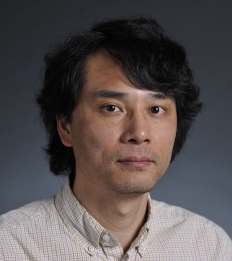
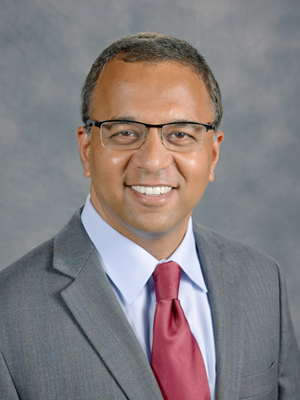
Prof. Dr. Tobias Glasmachers is a Full Professor at the Institut für Neuroinformatik , Ruhr-Universität Bochum, Germany, specializing in the Theory of Machine Learning . He leads the Optimization of Adaptive Systems group and holds appointments in both Computer Science and Interdisciplinary AI research. Key Research Areas : Optimization algorithms, evolutionary computation, reinforcement learning, supervised learning, and neural networks Technical Focus : Gradient-based methods, support vector machines, and adaptive coordinate descent Applications : Robotics, waste sorting facilities, 3D game environments (e.g., Doom/Minecraft), and human-centered AI design Notable Contributions : Development of LM-MA-ES evolution strategy, Hessian Estimation Evolution Strategy, and tachAId tool for ethical AI design. His work bridges theoretical analysis with practical implementations across diverse domains. Teaching : Offers courses in Informatik 1 - Programmieren, Machine Learning: Supervised Methods, and Evolutionary Algorithms. Supervises numerous Bachelor's and Master's theses on AI/ML applications.
Ognjen Marjanovic is a Senior Lecturer in Control Systems at the University of Manchester. His research focuses on optimal control of energy systems, robotics, and industrial processes, with particular emphasis on model predictive control applications. Research domains include: Energy Systems: Control of grid-scale storage, multi-energy coordination, and renewable integration Robotics: Swarm formation, underwater navigation, and nuclear inspection systems Industrial Control: Model predictive control for pharmaceutical and chemical processes Recent publications (2023-2025) demonstrate innovations in swarm robotics coordination algorithms, real-time energy storage modeling, and decentralized control of building energy systems. His work bridges theoretical control concepts with practical applications in power engineering and autonomous systems. He leads research projects on grid-scale storage interfacing and robotic inspection systems, and received the Manchester Doctoral College Award for collaborative robotics research.
Dr. Cesunica Ivey is an Associate Professor in the Department of Civil and Environmental Engineering at the University of California, Berkeley . As Vice Chair of Strategic Planning and Principal Investigator of the Air Quality Modeling and Exposure Lab (AQMEL), her work bridges air pollution science, computational methods, and environmental justice. Ph.D. in Environmental Engineering (Georgia Tech, 2016) M.S. in Environmental Engineering (Georgia Tech, 2011) B.S. in Civil Engineering (Georgia Tech, 2010) B.S. in Mathematics (Fort Valley State University, 2008) Dr. Ivey's research focuses on 4-D regional air pollution modeling, source apportionment, and low-cost sensor networks. Her work addresses: Human Interaction & Disparities : Examining mobility patterns, socioeconomics, and historical structures affecting exposure Air Quality & Meteorology : Studying wildfire smoke transport and weather-pollution interactions Computational Methods : Developing GPU-accelerated chemical solvers for faster predictions Sustainable Transitions : Analyzing climate change impacts on urban pollution Scientific Contributions include 15+ peer-reviewed publications on machine learning applications, environmental justice frameworks, and community-led monitoring. Her recent Environmental Research Letters study demonstrated indoor-outdoor PM2.5 linkages in rail-impacted communities. 2025 - Wildfire Smoke Transport Analysis 2024 - Rail Community Exposure Study 2024 - GPU Chemistry Solver Implementation Awards : UC Berkeley Chancellor's Award (2024-2025) Women in Science Prize (2022) ACS Talented 12 (2021) Dr. Ivey actively mentors graduate students and collaborates with organizations like the Healthy Martinez Initiative and Marin City Climate Resilience . Her lab develops predictive models to inform policy while advocating for data sovereignty in marginalized communities.
Professor Andrew Mills holds the position of Professor of Innovation in Aerospace Systems Monitoring and Control at the School of Electrical and Electronic Engineering, University of Sheffield. He also serves as Deputy Director of the Control, Monitoring and Systems University Technology Centre (UTC), focusing on industry and research council-funded projects. His work emphasizes applied research in aerospace, including sensing solutions, health monitoring, and control systems for gas turbines. He collaborates closely with Rolls-Royce and coordinates PhD/MSc projects to bridge academic and industrial research. Education : MEng (Engineering), Chartered Engineer (CEng) from the University of Sheffield. Research Interests : Gas Turbine Health Monitoring Embedded Systems in Extreme Environments Fleet Monitoring Algorithms Vision-Based Sensing Systems Thermal System Control Laws Prognostics and Health Management (PHM) Grants & Projects : Lead Investigator (PI) and Co-Investigator (CI) on grants such as: "Advanced Intelligent EHM" (TSB HITEA II, 2014–2017) "Wireless Sensing for Monitoring" (Rolls-Royce, PI, 2013–2015) "Autonomous Intelligence for Civil UAS" (Rolls-Royce, PI, 2012–2013) Labs & Teams : Leads the Control, Monitoring and Systems UTC, fostering collaboration between academia and industry for aerospace innovation.
Dr. Charith Abhayaratne is a Senior Lecturer and EEE Foundation Year Tutor at the School of Electrical and Electronic Engineering, University of Sheffield. He leads the Communications Research Group and serves as the accreditation team lead for the school. With qualifications including a PhD from the University of Bath and a B.E. from the University of Adelaide, his research focuses on signal processing, machine learning, multimedia security, and video coding. His work explores blockchain for content protection, visual salience in robotics, human activity recognition, and advanced video coding techniques (HDR, UHD, 360° video). His research has been funded by Innovate UK, EPSRC, and industry partners. Education: B.E. (Electrical and Electronic Engineering), The University of Adelaide, Australia (1998) PhD (Electronic and Electrical Engineering), University of Bath, UK (2002) PGCertHE (Higher Education), University of Sheffield (2008) Fellow of the Higher Education Academy (FHEA), Member of the Institution of Engineering and Technology (MIET), Member of IEEE (MIEEE) Research Interests: His work spans multimedia security (data hiding, blockchain), computer vision (visual salience, object recognition), and video coding (HDR/UHD). Current projects include robotic vision applications, assisted living through activity recognition, and international standards development (JPEG/MPEG). He has contributed to scalable video standards and serves on technical committees for IEEE, EURASIP, and APSIPA. Awards & Service: Recipient of the Alain Bensoussan Fellowship (ERCIM, 2002) Associate Editor for IEEE Transactions on Image Processing, IEEE Access, and Elsevier JISA Member of EPSRC Peer Review College and British Standards Institution (BSI) Grants & Labs: Active grants from Innovate UK and EPSRC support projects in multimedia security and video coding. His lab leads interdisciplinary work in AI-driven visual analytics and secure media distribution frameworks.
Mariusz Wzorek is an Assistant Professor and Head of Unit at the Department of Computer and Information Science (IDA) at Linköping University, Sweden. He is affiliated with the Artificial Intelligence and Integrated Computer Systems (AIICS) division, which focuses on advancing research and education in artificial intelligence, robotics, and collaborative systems. Dr. Wzorek holds a PhD from Linköping University (2023) and has expertise in autonomous systems, unmanned aerial vehicles (UAVs), and robotics. His research emphasizes safe navigation, collaborative robotics, and applications in emergency response and public safety scenarios. Key areas include UAV-based collision avoidance, geolocation using aerial imagery, and distributed systems for multi-agent coordination. His recent work involves developing systems like the RGS⊕ (RDF Graph Synchronization) for collaborative robotics, secure remote ID protocols for UAVs, and algorithms for autonomous search and rescue missions. These projects address challenges in sensor fusion, real-time decision-making, and robust communication in dynamic environments. Publications highlight contributions to UAV navigation, wireless mesh networks in emergencies, and 3D reconstruction using heterogeneous UAV teams. His research bridges theoretical foundations in AI with practical applications in robotics and safety-critical systems. While no specific scientific awards are listed, his active role in the AIICS division and numerous peer-reviewed publications reflect his significant contributions to the field.
Hongwei Xi is an Associate Professor in the Department of Computer Science at Boston University, affiliated with the College of Arts & Sciences. He holds a PhD in Pure and Applied Logic from Carnegie Mellon University (1998). His primary research focuses on applying advanced type theory to programming language design, particularly through the development of the ATS programming language. This language emphasizes safe software construction via a paradigm combining programming with theorem proving. Dr. Xi's work includes pioneering contributions to dependent and linear types for practical programming, as well as serving on program committees for major ACM conferences like POPL and PLDI. His research interests span type systems, formal verification, and concurrency models. He has authored numerous publications on topics such as session types, multirole logic, and dependently typed programming languages. Dr. Xi’s academic contributions also include the design of the ATS language and its implementation, which demonstrates practical applications of type-theoretic principles. His recent work explores two-level linear dependent type theories and multirole logic frameworks for multiparty systems. His professional activities include advising on language design and verification methodologies, though specific grant details are not detailed in the provided materials. Dr. Xi is actively involved in advancing the theoretical foundations of programming languages while ensuring practical applicability in real-world software development.
Abhishek Cauligi is an incoming Assistant Professor of Mechanical Engineering, starting in Summer 2025. Prior to this role, he worked as a Robotics Technologist at NASA Jet Propulsion Laboratory and earned his PhD in Aeronautics & Astronautics from Stanford University. His doctoral research focused on accelerating trajectory optimization using machine learning, with experiments conducted on the International Space Station. His research interests center on spacecraft and robotic autonomy, leveraging nonlinear optimization, machine learning, and control theory to advance autonomous space exploration. Key areas of focus include trajectory optimization, autonomous systems, and machine learning-driven solutions for space robotics. Recent work highlights include studies on transformer-based constraint prediction for powered descent guidance, diffusion policies for spacecraft trajectory generation, and stochastic optimization for asteroid reconnaissance. He has also contributed to lunar navigation systems (ShadowNav) and multi-agent autonomy for planetary exploration, such as the Cadre Lunar Technology Demonstration. Notable collaborations include the CoSTAR team’s victory in Phase II of the DARPA Subterranean Challenge, showcasing advanced robotic autonomy in challenging environments. His innovations span from gecko-inspired adhesive testing aboard the ISS to recurrent neural network approaches for mixed-integer optimal control problems.
Prof. Tao Gu is a Professor at the Department of Computing, Macquarie University, Sydney. He holds affiliations with the Future Communications Research Centre, Hearing Research Centre, and Smart Green Cities Research Centre. His research focuses on IoT, Ubiquitous Computing, Mobile Computing, Embedded AI, Wireless Sensor Networks, and Big Data Analytics. He earned his Ph.D. in Computer Science from the National University of Singapore (2006), M.Sc. in Electrical and Electronic Engineering from Nanyang Technological University, and B.Eng. in Automatic Control from Huazhong University of Science and Technology. Education: PhD (NUS), MSc (NTU), B.Eng (HUST) Affiliations: School of Computing, Macquarie University Research Themes: IoT, Embedded AI, Wireless Communication His research emphasizes innovative sensing and connectivity solutions. Notable projects include LoRa network optimization, mobile deep learning frameworks (MDLdroid), and acoustic-based health monitoring systems. He has received awards such as the IEEE SMARTCOMP 2016 Best Paper Award and the Ten Years CoMoRea Impact Paper Award at PerCom 2013. Current work explores secure device pairing, energy-efficient LoRa protocols, and multi-modal sensing using WiFi/RF signals. His lab develops systems like AudioGuard for intrusion detection and AIMSafe for driver behavior analysis. Ongoing projects address data-driven economies, hearing healthcare analytics, and non-intrusive human activity sensing.
Jason Gu is a Professor in the Department of Electrical and Computer Engineering at Dalhousie University, cross-appointed to the School of Biomedical Engineering. His research integrates robotics, control systems, and biomedical engineering to develop innovative solutions for mobile robotics, surgical systems, and rehabilitation technologies. His primary research domains include: Robotics : Mobile robotics, surgical robots, rehabilitation assistive devices, wireless control systems, and multi-sensor data fusion. Biomedical Engineering : Artificial eye implant control, medical robotic devices, and rehabilitation technology design. Control Systems : Real-time intelligent control, nonlinear systems theory, and embedded control applications. Alternative Energy : Development of novel energy technologies and systems. Analysis of his recent publications (2023-2025) reveals a strong convergence of AI with robotics, particularly in vision-language models for human-robot interaction, semantic SLAM for dynamic environments, and medical image processing. His work shows increasing emphasis on lightweight algorithms for UAVs, neural interfaces, and energy-efficient control systems for aerospace applications. His distinguished honors include: IEEE Canada President (2020-2021) and President-elect (2018-2019) Fellow of the Engineering Institute of Canada (FEIC) Fellow of the Canadian Academy of Engineering (FCAE) Professional Engineer (PEng) designation Professor Gu leads a dynamic research laboratory developing advanced robotic platforms including the PA10 Portable General-Purpose Intelligent Arm and B21r Mobile Robotic System. His team actively pursues real-world applications in surgical robotics, terrain perception for legged robots, and alternative energy systems through industry-academic partnerships and competitive research grants.
Swaminathan Gopalswamy is Research Professor in Texas A&M's Mechanical Engineering Department, specializing in autonomous systems and cyber-physical security. His research develops control systems for autonomous vehicles and infrastructure-enabled autonomy frameworks. Current projects include sensor fusion for multi-vehicle tracking, health monitoring for cyber-physical systems, and resilient algorithms for autonomous navigation. His work bridges control theory, embedded systems, and intelligent transportation applications.
Bala Sapkota is a researcher affiliated with Texas A&M AgriLife Research and Extension Center in Temple, part of the Texas A&M University System's College of Agriculture & Life Sciences. He holds a Ph.D. in Agronomy from Texas A&M University, following an M.S. in Agronomy and B.S. in Agriculture Science from Tribhuwan University. His work focuses on precision agriculture technologies, integrating remote sensing (UAV, LiDAR, multispectral imagery) with machine learning to improve crop monitoring, irrigation management, and yield prediction. Research interests include crop stand estimation, leaf area index quantification, nitrogen rate optimization for corn, and cotton production challenges in organic systems. He has developed decision support tools like the IDcrop mobile app for irrigation management. Sapkota’s studies also address pest management (e.g., South American Tomato Leaf Miner) and forage crop optimization in Central Texas agroecosystems. His research spans field trials in corn, cotton, and legumes, emphasizing data-driven approaches to enhance agricultural sustainability and resource efficiency. Collaborations with AgriLife Extension ensure practical applications of his findings for farmers and policymakers.
Bo Bernhardsson is a Professor in Automatic Control at the Department of Automatic Control, Faculty of Engineering (LTH), Lund University. He has been a full-time professor at Lund since 2010, following a decade (2001–2010) as an Expert in Mobile System Design and Optimization at Ericsson. He is affiliated with major research initiatives including ELLIIT (Excellence Center in Information Technology), LCCC (Lund Center for Control of Complex Engineering Systems), and WASP-AS (Wallenberg AI, Autonomous Systems and Software research school), where he has played a leadership role since 2016. His research focuses on modeling and control of uncertain and large-scale systems, with applications spanning industrial automation, mobile communications, particle accelerators, biomedical systems, and navigation technologies. He integrates theoretical control methods with practical implementations, particularly under constraints such as communication limitations, noise, and delays. His recent publications reveal a strong trend in networked control, communication-constrained estimation, and optimization-based control design. The works span theoretical advances in signal estimation under SNR constraints, event-based and stochastic control, and practical applications like IMU-radio fusion for navigation and RF field control in particle accelerators. Keywords include Control Theory, Communication Systems, Optimization, Signal Processing, and Networked Control , with subfields such as encoder-decoder co-design, virtual antenna arrays, and dynamic programming for time-delay systems. PhD in Control, Lund University, 1992 Professor in Automatic Control, Lund University, since 1999 Expert, Mobile Systems, Ericsson, 2001–2010 Bo Bernhardsson has supervised over 20 PhD and licentiate students, including Jacob Bergstedt (immune system modeling), Anders Mannesson (navigation and radio), and Erik Johannesson (control under communication constraints). His research has been funded by major entities such as the European Spallation Source and the Wallenberg Foundation. He teaches advanced courses in Linear Systems, Convex Optimization, and Robust Control, and has contributed significantly to both academic and industrial advancements in control engineering. He leads and collaborates on interdisciplinary projects involving real-time control, autonomous systems, and machine learning, often in partnership with industry and international research centers. His work in the RobotLab at LTH and on cloud-based control systems highlights his engagement with emerging technologies.
María del Pilar Jarabo Amores is a Full Professor at the Department of Signal Theory and Communications, University of Alcalá. Her research focuses on passive radar systems, sensor networks, and signal processing for defense and surveillance applications. She leads the AES3 research group (Acoustic and Electromagnetic Smart Sensor networks and Signal processing) and has expertise in radar detection, clutter modeling, and target tracking. Education: PhD in Telecommunications Engineering from the University of Alcalá (2005), supervised by Dr. Francisco López Ferreras. Research Interests: Development of passive radar technologies using DVB-T/S signals, motion compensation algorithms, and AI-driven detection methods. Key application areas include drone surveillance, maritime monitoring, and urban traffic imaging. Her work emphasizes robust detection in cluttered environments and distributed sensor network architectures. Key Contributions: Pioneered motion compensation techniques for passive radar systems, designed smart antennas for improved coverage (e.g., Ku-band microwave video camera), and developed adaptive beamforming methods. Her group's IDEPAR demonstrator showcases passive radar capabilities for terrestrial traffic monitoring. Labs/Teams: Leads the AES3 group, collaborating on EU-funded projects involving SAR imagery analysis and oil spill detection. Active in developing sensor networks for critical infrastructure protection.
David Anastasio de la Mata Moya is a Professor in the Department of Signal Theory and Communications at the University of Alcalá. His research focuses on advanced radar systems, including passive radar technology, signal processing for surveillance applications, and sensor network integration. He holds a PhD from the University of Alcalá (2012) with a thesis on robust radar detector design. Key research areas include: passive radar detection for drones and maritime targets, SAR imaging, machine learning-based detection algorithms, and antenna design for sensor networks. His work emphasizes practical implementations in coastal surveillance, urban traffic monitoring, and environmental monitoring. Recent publications highlight advancements in decentralized radar detection, long integration time processing for low-reflectivity targets, and clutter modeling techniques. His projects often involve collaboration with industry partners to deploy real-world systems like the IDEPAR demonstrator for terrestrial traffic monitoring. Active in the AES3 research group (Acoustic and Electromagnetic Smart Sensor networks), he explores integration of multi-modal sensors for intelligent surveillance systems. His technical contributions span antenna optimization, CFAR detector development, and Doppler processing techniques.