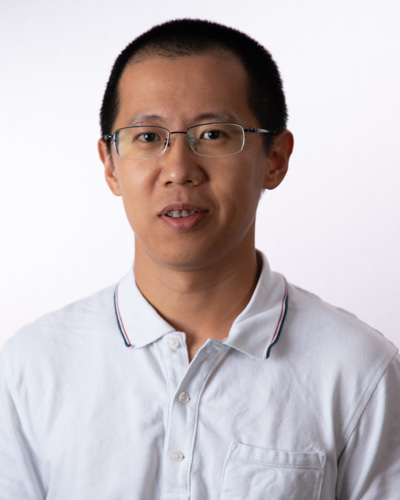
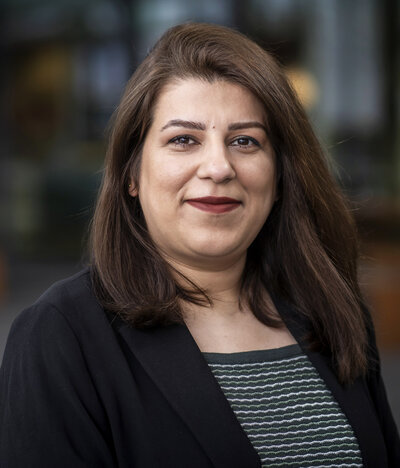
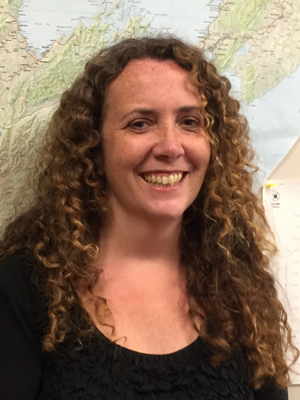
Chen Pan is an Assistant Professor in the Department of Electrical and Computer Engineering at the University of Texas at San Antonio's Klesse College of Engineering and Integrated Design. His research focuses on energy-harvesting embedded systems, low-power computing, and IoT network optimization through machine learning techniques. Ph.D. from University of Pittsburgh Specializes in transient computing for batteryless devices Develops reinforcement learning solutions for UAV-assisted IoT systems Chen's recent publications emphasize energy-aware scheduling, non-volatile memory optimization, and sustainable communication protocols. His work intersects spatiotemporal modeling, fault tolerance, and resource-constrained AI execution across heterogeneous architectures.
Jose Prenda Marin is a Professor at the Faculty of Experimental Sciences , Universidad de Huelva , specializing in Zoology within the Department of Integrated Sciences . His research focuses on freshwater biodiversity, conservation biology, and human-environment interactions in Mediterranean ecosystems. Education: PhD in Zoology from Universidad de Sevilla (1993), thesis on habitat use by aquatic animals in southern Spain with emphasis on biotic interactions Research Interests: Explore patterns in freshwater fish biodiversity, impacts of invasive species, otter ecology, and citizen science applications in bird monitoring. His work spans Mediterranean river basins, coastal lagoons, and urbanized habitats. Research Contributions: Analyzes ecological status through fish-based indices, studies habitat connectivity, and documents historical fish distributions for conservation recovery. His recent work emphasizes citizen science validation for bird monitoring across the Iberian Peninsula. Collaboration: Leads the RNM324 BIRDLAND research group focusing on agrarian and humanized environments, and contributes to the Centro de Investigación en Recursos Naturales Salud y Medio Ambiente (Natural Resources Research Center).
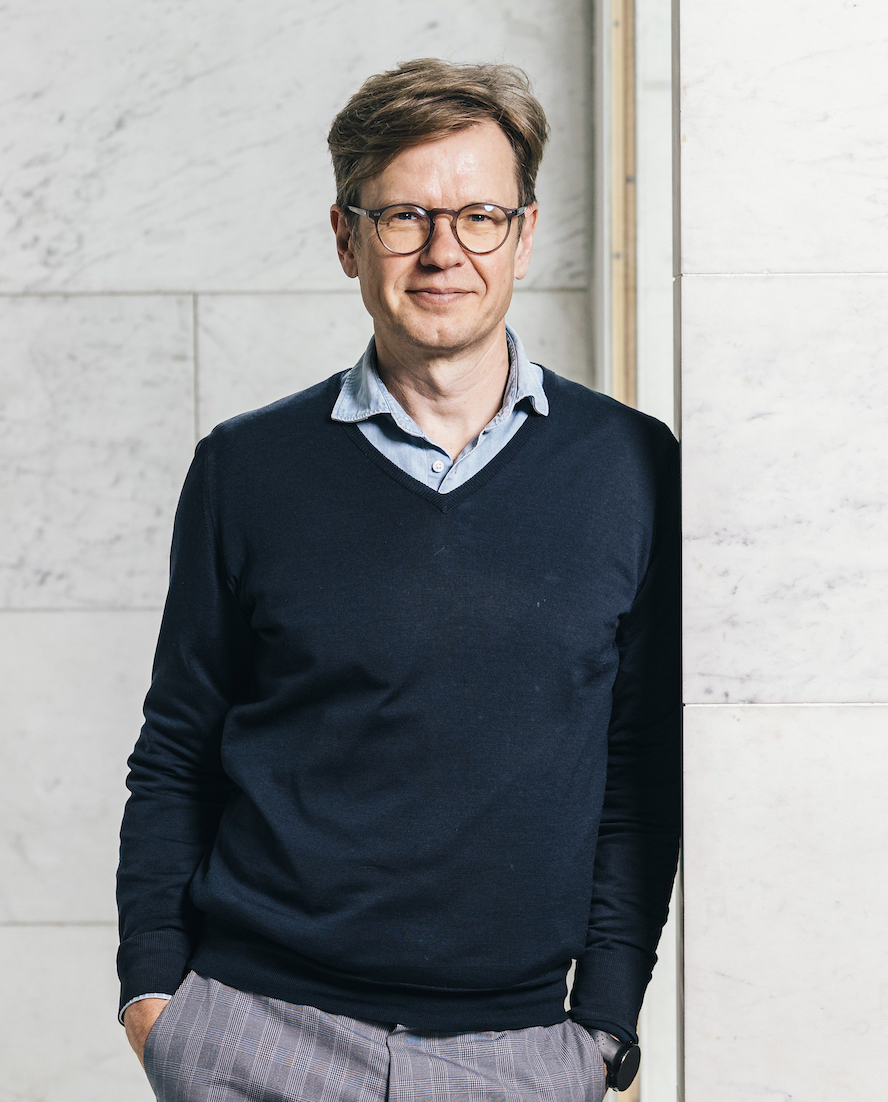
Matti Liski is a Professor of Economics at Aalto University School of Business, with affiliations at MIT-CEEPR, University of Cambridge EPRG, CESifo Munich, and former visiting professorship at Toulouse School of Economics. His work bridges theoretical and empirical microeconomics with applications in industrial organization, public policy, energy markets, and climate change. He has served on editorial boards of Scandinavian Journal of Economics and Journal of European Economic Association , and is recognized for excellence in teaching (2009, 2023) and refereeing (2015). Research trends from his recent publications highlight electricity market design, climate policy conflicts between EU and national frameworks, redistribution mechanisms via energy efficiency mandates, and empirical analyses of renewable energy's market impacts. His work combines game theory, resource economics, and policy evaluation to address market power, sustainability transitions, and climate strategies. Awards : Teacher of the Year (Helsinki School of Economics, 2009; Aalto University, 2023) Best Paper Award (2016, Journal of Environmental Economics and Management) Excellence in Refereeing (2015, Journal of the European Economic Association)
Dr. Ronald Huisman is an Associate Professor at the Finance Section of the Department of Economics , Faculty of Law, Economics and Governance , Utrecht University . With extensive research focused on Energy Markets, Renewable Integration, and Financial Risk , he contributes to the Pathways to Sustainability initiative, particularly in Energy Transition studies. His work bridges Economic Theory with Energy Policy , addressing critical challenges in modern power markets. Key research themes: Energy Economics, Climate Risk, Market Design Active in: Benelux Association for Energy Economics Teaches: Impact Investing courses Research Trends: Recent publications examine climate change risk in municipal financing, extreme energy price dynamics under renewable intermittency, and carbon-energy market interactions in China. Earlier work established foundational models for electricity futures pricing , overconfidence measurement , and regime jumps in energy prices.
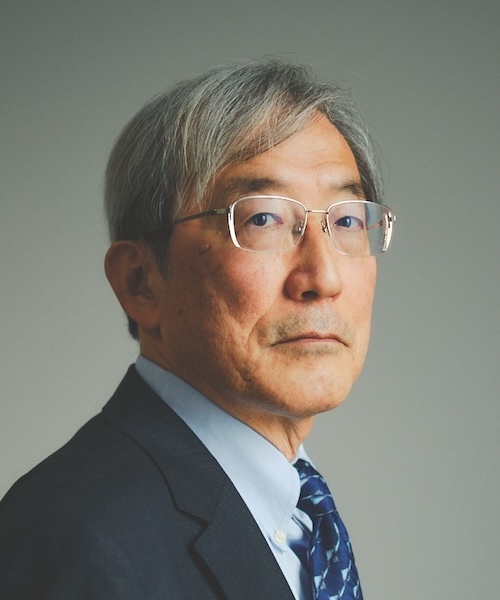
Hirofumi Matsuo is Professor of Operations Management and IIS Director at Tokyo International University. He holds a Ph.D. from MIT (1984), an M.E. (1979), and a B.A. (1977) from Kyoto University, both in Applied Mathematics and Physics. His academic appointments include professorships at Okayama Shoka University (2020-2021), Kobe University (2004-2020), University of Tsukuba (1999-2004), and University of Texas at Austin (1995-1999), where he advanced from Assistant to Associate Professor (1984-1995). His research focuses on Operations Management , Supply Chain Management , Service Operations , and Production Planning , addressing challenges in resilience, coordination, and optimization across high-tech, energy, and manufacturing sectors. His publications emphasize practical applications in semiconductor, automotive, and retail industries, with recurrent themes of risk mitigation and adaptive strategies. Awards include: JSPS Grants-in-Aid for Scientific Research (C) (five terms between 2000-2021) Fred H. Moore Centennial Professorship (1997-1999) Global Research Fellow at UT Austin's IC2 Institute (1988-2020)
Andrea La Nauze is an Associate Professor at Deakin Business School , Deakin University, specializing in environmental and energy economics. She previously held roles as Senior Research Fellow (2024), Research Fellow (2023–2024), and Lecturer (2021–2023) at The University of Queensland. She holds a PhD in Economics from the University of Melbourne (2017) and has worked with the Victorian Government and the United Nations. Her research intersects behavioral economics and policy analysis , focusing on energy markets, air pollution, and climate-related behaviors. She leads the Virtual Energy Network (VEN) research study, exploring community energy-sharing models through smart technology. Scientific Awards : Westpac Fellow, Honorary Senior Research Fellow at UQ, Research Affiliate at CESifo Munich
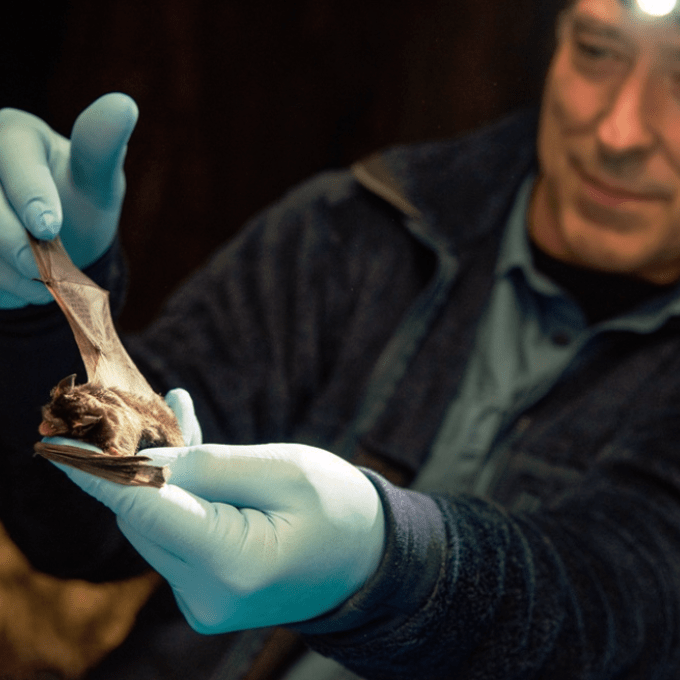
Joe Szewczak is a Professor in the Department of Biological Sciences at Cal Poly Humboldt. His research integrates engineering and biological sciences to explore physiological and ecological mechanisms in bats and birds, focusing on torpor physiology, bioacoustics, and non-invasive population monitoring. He teaches courses in Animal Physiology , Human Physiology , Biology of the Chiroptera , and Biological Applications of Physics . BSE, Duke University (1980) PhD, Brown University (1991) His research spans bat physiology under extreme conditions (torpor, high-altitude flight), bioacoustic monitoring for population assessment, and ecological impacts of anthropogenic changes . He has led projects on bat conservation , acoustic deterrents for wind turbines , and wildlife response to noise pollution . Joe has mentored numerous graduate students, including Ashley Abitz, Amon Armstrong, and Danielle (Skye) Salganek. His work has been supported by grants from Caltrans and the Bats and Wind Energy Cooperative. He co-developed advanced acoustic identification techniques for bats and birds and contributed to national guidelines for wildlife impact assessments .
Azizulrahman Shafiqurrahman serves as a Post Doctoral Fellow (Research Fellow) in the Department of Electrical Engineering at Khalifa University, Abu Dhabi, UAE. He transitioned to his current Research Engineer role in November 2022 after completing a Research and Teaching Assistant position from August 2020 to July 2022. His academic credentials include: M.Sc. in Electrical and Computer Engineering from Khalifa University (2022) B.Sc. in Electrical and Electronics Engineering from the University of Sharjah (2020) Shafiqurrahman's research centers on power electronics applications for sustainable energy systems, with specialized focus on electric vehicle infrastructure , microgrid stability , and power quality optimization . His work develops innovative solutions for vehicle-to-vehicle energy transfer, decentralized microgrid control, and high-efficiency GaN-based converters, directly addressing integration challenges of renewable energy sources and electric transportation networks. Analysis of his 2019-2024 publications reveals three dominant research trajectories: (1) Advanced control methodologies for islanded microgrids addressing load imbalance and power quality issues; (2) Bidirectional energy transfer systems for electric vehicles leveraging on-board power electronics; (3) High-frequency converter designs using wide-bandgap semiconductors for wireless power applications. His scientific recognition includes: Khalifa University's Graduate Research/Teaching Scholarship (2020) Shafiqurrahman contributes to academic discourse as a reviewer for leading journals and conferences while teaching Introduction to Computing using Matlab (ENGR112) . His research activities are anchored in the Advanced Power and Energy Center, where he collaborates on next-generation power systems development. As a core member of Khalifa University's Advanced Power and Energy Center, he actively participates in research initiatives spanning smart grid technologies, renewable energy integration, and electric vehicle infrastructure development, utilizing state-of-the-art power electronics laboratories for experimental validation.
Dr. Karthik Akkiraju serves as Assistant Professor in the Department of Materials Engineering within UBC's Faculty of Applied Science, maintaining an active research program at the intersection of materials science and socio-environmental systems. His office (FF 011) and contact email (karthik.akkiraju@ubc.ca) reflect his current institutional affiliation. His research pioneers a techno-social paradigm for planetary health through three synergistic foci: (1) Establishing material poverty benchmarks using household survey data to identify resource-deprived communities; (2) Quantifying socio-environmental impacts across material supply chains; (3) Integrating well-being metrics into heterogeneous catalyst design frameworks. This work fundamentally reimagines materials engineering by centering human well-being within ecological boundaries, developing design methodologies that balance material requirements with equitable environmental constraints. Analysis of his publication trajectory reveals consistent interdisciplinary innovation spanning computational catalysis, environmental policy, and social metrics. His recent work demonstrates particular strength in perovskite catalyst engineering for sustainable chemistry and novel methodologies for spatial well-being assessment, reflecting a unique fusion of traditional materials science with computational social science. Dr. Akkiraju directs the Sustainable Materials Lab (SMAL), where his team develops frameworks connecting material consumption patterns to human development outcomes, creating pathways for resource allocation that simultaneously address poverty alleviation and environmental sustainability.
Dr Hongyu Zhang is a Lecturer in Optimization for Machine Learning and AI at the School of Mathematical Sciences, University of Southampton. His expertise spans operational research and energy systems optimization, with a focus on stochastic programming and quantum computing applications. PhD Operational Research, NTNU MSc Operational Research with Data Science, University of Edinburgh BSc Mathematics and Applied Mathematics, Huaqiao University His research develops optimization models and algorithms for large-scale energy system planning, integrating machine learning, artificial intelligence, and quantum computing tools to address complexities in energy transition and policy-making. Key areas include multi-timescale uncertainty analysis, decomposition methods, and offshore energy hub modelling. Recent publications show strong trends in energy systems optimization (7 papers), algorithm development for stochastic programming (4 papers), and quantum computing applications (2 papers). His work addresses European energy security, hydrogen infrastructure development, and carbon capture technologies. Currently accepting PhD applications, Dr Zhang contributes to academic supervision and teaches optimization methods at the university. He is affiliated with the Operational Research group and CORMSIS center.
Gurunath Gurrala serves as an Associate Professor in the Department of Electrical Engineering at the Indian Institute of Science (IISc), Bangalore. His research focuses on power systems dynamics, high-performance computing applications, and renewable energy integration. He maintains active collaborations with international institutions including Oak Ridge National Lab and Texas A&M University. His research interests center on Power Systems Analysis and Control , with specialization in High Performance Computing Applications, Nonlinear and Intelligent Control, Weak Grid Integration of Renewables, Microgrid Protection, and Smart Grid Stability. His work bridges theoretical control systems with practical power grid challenges, particularly for renewable-rich grids. His recent publications demonstrate a strong interdisciplinary trend, spanning power systems (35%), control theory (25%), renewable integration (20%), and emerging applications in biomedical engineering and environmental systems (20%). Key recurring themes include grid stability under high renewable penetration, advanced protection schemes for microgrids, and computational methods for power system analysis. IEEE Power and Energy Society (PES) Outstanding Engineer Award 2018 Young Engineer Award 2015, Indian National Academy Engineers Best Conference Paper, IEEE PES General Meeting 2015 Best Ph.D Thesis Award (Prof.D.J.Badkas Medal) 2010 Elevated to Senior Member IEEE (2016) Professor Gurrala has secured competitive research funding including the Young Scientist Grant from DST (2015) and International Travel Support from SERB (2017). He actively mentors students through PhD and Master's programs while teaching advanced courses including Power System Dynamics and Control (E4 231), Computer Control of Power Systems (E4 233), and Selected Topics in Integrated Power Systems (E4 237). His research group collaborates with power utilities and international research labs on grid modernization challenges.
Nilufar Neyestani is an Assistant Professor in the Electrical Engineering department at Eindhoven University of Technology (TU/e), where she joined in 2023. She is affiliated with the Integrated Energy Systems team within the Electrical Engineering Systems (EES) group, focusing on multi-energy carrier perspectives of energy systems with emerging technologies and sector coupling. Her academic background includes: MSc in Electrical Engineering (Power System Studies) from Iran University of Science and Technology PhD completed in 2016 in Portugal Neyestani's research focuses on the integration of multi-energy systems, examining how different energy carriers can work together to create more resilient and efficient energy networks. Her work particularly addresses the challenges of renewable energy integration, with emphasis on wind power variability mitigation and the role of sector coupling in enhancing system flexibility. She investigates market mechanisms for multi-energy systems and the operational impacts of emerging technologies like plug-in electric vehicles on power distribution networks. Her publication record demonstrates consistent focus on energy system optimization across multiple sectors. The research shows evolution from analyzing PEV impacts on distribution networks (2018), to strategic market participation of multi-energy aggregators (2019), to wind variability mitigation using multi-energy systems (2020), indicating growing sophistication in modeling complex energy system interactions. Neyestani has held research positions at INESC TEC in Portugal, where she was promoted to senior researcher after six months, and at VITO in Belgium as a senior researcher (2021-2023) before joining TU/e. Her work has been supported by Portuguese funding agency FCT and European Regional Development Fund through the COMPETE 2020 Programme. She is actively involved in teaching Power System Analysis and Optimization and System Integration Project courses at TU/e and is a member of the Intelligent Energy Systems group and the Electrical Energy Systems (EIRES) research team.
Nikolaos Paterakis is an Assistant Professor of Power System Optimization and Electricity Markets with the Electrical Energy Systems research group at the Department of Electrical Engineering, Eindhoven University of Technology (TU/e). He is the founder and principal investigator of the Electricity Markets & Power System Optimization Laboratory (EMPSOLab) established in 2019, and a member of the Cyber-Physical Systems Center Eindhoven (CPSe). His research focuses on applying optimization and machine learning techniques to power system and electricity market problems, particularly regarding renewable energy integration and smart grid technologies. Dr. Paterakis received his Dipl.Eng. from Aristotle University of Thessaloniki in 2013, followed by a PhD in Industrial Engineering and Management (cum laude) from the University of Beira Interior in 2015. After serving as a post-doctoral fellow at TU/e from 2015-2017 and working as a consultant for the Energy Market Regulatory Authority of Turkey, he was appointed Assistant Professor at TU/e in April 2017. His research spans power system optimization, electricity market design, renewable energy integration, and the application of machine learning techniques to grid management problems. Recent work emphasizes distributed energy resource integration, local electricity markets, congestion management in low-voltage grids, and real-time grid control using advanced optimization techniques. His publications demonstrate a clear trajectory toward increasingly sophisticated methods for managing grid constraints while enabling market participation of distributed energy resources. Dr. Paterakis has received several prestigious awards including IEEE SEGE'15, SEST 2019, and SEST 2020 Best Paper Awards, and recognition as a Best Reviewer for IEEE Transactions on Smart Grid (2015, 2017) and IEEE Transactions on Sustainable Energy (2016). He serves as Associate Editor for multiple journals including IET Renewable Power Generation, IEEE Systems Journal, IEEE Transactions on Intelligent Transportation Systems, and Elsevier's e-Prime. He leads multiple research projects including MEGAMIND (NWO-funded), P2P-TALES (NWO-funded), and the Electricity Markets Game series (TU/e BOOST!-program). His educational contributions include teaching courses on power system analysis and optimization, electricity markets modeling, and developing innovative educational tools for power systems education. In 2021, he was elevated to Senior Member of the IEEE Power & Energy Society.
Laura M. Wallace serves as a Research Professor at the University of Texas Institute for Geophysics (UTIG) with a joint appointment at GNS Science in New Zealand. Her pioneering work focuses on geodetic analysis of crustal deformation at plate boundaries, particularly slow slip events in subduction zones like New Zealand's Hikurangi Margin. In 2018, she co-led IODP Expedition 375 aboard the JOIDES Resolution, drilling into active slow slip zones to install long-term monitoring observatories. Education: Ph.D. in Earth Sciences, University of California, Santa Cruz B.S. in Geology, University of North Carolina at Chapel Hill Research Focus: Wallace's work centers on tectonics and crustal deformation , utilizing land-based GPS and seafloor geodetic instruments to study subduction zone dynamics . Her 2002 discovery of slow slip events at Hikurangi revolutionized understanding of fault behavior, revealing how fluid pressure and lithological heterogeneity control slip patterns. She integrates geodetic data with seismic and drilling results to model earthquake cycles. Publication Trends: Recent work (2023-2025) analyzes spatiotemporal evolution of slow slip using multi-instrument approaches (GNSS, InSAR, seafloor sensors), with emphasis on New Zealand's seismic hazard models. Key themes include fluid-mediated fault weakening, seamount subduction effects, and probabilistic forecasting of megathrust events. Leadership & Grants: Wallace secured major funding through IODP for Expedition 375, enabling core sampling and observatory deployment at Hikurangi. She contributes to national hazard assessments for New Zealand, developing geodetic strain rate models and deformation frameworks for seismic hazard maps. Collaborative Infrastructure: She leverages UTIG's geodetic networks and GNS Science partnerships, utilizing JOIDES Resolution drilling data and SMART subsea cable initiatives for real-time offshore monitoring. Her lab integrates field observations with numerical modeling to predict subduction zone behavior.
Pawan Sharma is an Associate Professor at the Department of Electrical Engineering, Faculty of Engineering Science and Technology, UiT The Arctic University of Norway (Narvik Campus). He is affiliated with the Electromechanical Systems research group and the ARC research center. His research focuses on: Power system dynamics and control Distributed generation integration Microgrid optimization Smart grid technologies Reactive power control Electric vehicle-grid interaction Key research trends observed in his publications include: Hybrid microgrid control frameworks Cyber-physical co-simulation for grid applications Machine learning approaches for power optimization Integration of renewable energy sources Advanced converter control techniques Voltage stability and reactive power management He serves on the editorial boards of: International Transactions on Electrical Energy Systems Designs (MDPI) Electrical Engineering (Springer) Teaching responsibilities: Master's course: Power System Fundamentals (10 credits) Special PhD course: Distributed Energy Resources Integration (10 ECTS) Distributed Generation & Microgrids: Role and Concepts (5 credits) Research projects include: Cooperative Isolated Renewable Energy Systems (rural reliability) Hybrid Renewable Energy Micro Grid development Smart Solar PV Control Technology in Arctic regions arcICE, Arctic Energy, nICE initiatives