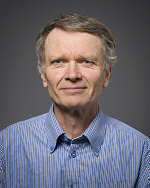
Hongjin Liang is an Associate Professor at the School of Computer Science , Nanjing University , China. He is an active researcher and educator in the fields of programming languages and formal verification, with a strong focus on concurrency theory, mechanized proofs, and memory models. Education: PhD in Computer Science (May 2014), dissertation titled Refinement Verification of Concurrent Programs and Its Applications . Research Interests: His research spans formal verification , concurrent programming , memory models , and mechanized reasoning . He is particularly known for his work on verifying concurrent data structures, program logics for concurrency, and certified compilation. He is a member of the PLaX research group . Publications and Impact: Liang has published extensively in top-tier venues such as POPL, PLDI, ESOP, TOPLAS, and CSL-LICS. His work often involves formalizing and verifying complex concurrent systems using interactive theorem provers like Rocq/Coq. Notable contributions include verifying compiler optimizations under weak memory models and developing program logics for randomized concurrent programs. Scientific Awards: Distinguished Paper Award , PLDI 2019 for "Towards Certified Separate Compilation for Concurrent Programs" Teaching and Advising: He teaches undergraduate and graduate courses including Formal Semantics of Programming Languages , Concurrency: Algorithms and Theories , and Compiler Design . He has supervised graduate students and served on numerous program committees for international conferences. Affiliations: He is affiliated with the PLaX research group at Nanjing University and has collaborated with researchers such as Xinyu Feng, Zhong Shao, and Jan Hoffmann.
Stephanie Balzer is an Assistant Professor in the Principles of Programming Group at Carnegie Mellon University's School of Computer Science. She received her PhD from ETH Zurich under Thomas R. Gross and focuses on developing rigorous type systems and verification logics to build failure-free, secure software through compositional and practical methods. Education: PhD (ETH Zurich), Master's (University of Zurich), Semester Thesis (University of Zurich) Her research spans session types , logical relations , and separation logic to ensure correctness and security in concurrent systems. Recent work includes verifying timed message-passing protocols and disentanglement in type systems. Key publication trends include session-typed concurrency , noninterference , and deadlock freedom across programming languages, formal methods, and security domains. She has authored multiple distinguished papers at ECOOP and POPL. Scientific Awards: NSF CAREER Award, ACM SIGPLAN Distinguished Paper, ECOOP Distinguished Paper She advises PhD students including Yue Yao, Yinsen Zhang, and Zak Kent, and has supervised former PhD students like Jules Jacobs (now at Cornell). Her grants include NSF funding for IoT verification , heterogeneous applications , and real-time protocols .
Robbert Krebbers is an associate professor at the Department of Software Science at Radboud University Nijmegen, Netherlands. He is a leading researcher in program verification, specializing in separation logic and the Coq proof assistant. Krebbers is a core contributor to the Iris framework, a higher-order concurrent separation logic framework implemented in Coq. His research spans theoretical foundations of programming languages and practical applications to real-world languages including C, Rust, and Scala. His research interests focus on scaling program verification techniques to challenging programming paradigms like concurrency, higher-order functions, and modules. Krebbers' work bridges formal methods with practical language implementation, particularly in verifying memory safety and concurrency properties. He has made significant contributions to Rust verification through the RustBelt project and has pioneered techniques for verifying concurrent data structures and message-passing systems. Krebbers' recent publications demonstrate a strong trend toward verifying complex concurrency patterns, developing automated proof techniques, and applying separation logic to practical programming language features. His work frequently appears in top-tier programming languages conferences including POPL, PLDI, and ICFP, with several papers receiving distinguished paper awards. The research spans from foundational logic development to practical verification tools for real-world programming languages. As a principal investigator in the Iris project, Krebbers has secured significant research funding including the ERC Consolidator Grant for the RustBelt project. His work has influenced both academic research and industrial practice, particularly in the Rust programming language ecosystem. The Iris framework he helped develop has been adopted by numerous verification projects worldwide. Krebbers has advised PhD students including Ike Mulder (focusing on proof automation for concurrent separation logic) and Jules Jacobs (working on guarantees by construction). He has been actively involved in the programming languages research community, serving on program committees for major conferences and organizing workshops on formal methods and verification. He leads research in the Department of Software Science at Radboud University, where his group focuses on developing foundational techniques for program verification. The group collaborates closely with the Logic and Semantics Group and Foundations of Programming Group across institutions, contributing to a vibrant research ecosystem around formal methods and programming languages.
Hamish Stewart is a Professor of Law at the University of Toronto Faculty of Law, where he has been teaching since 1993. His primary areas of expertise include Criminal Law, Contract Law, Evidence, and Legal Theory. He teaches courses in criminal law, evidence, law economics and justice, and participates in the Moot Callaghan Competitive Program. Professor Stewart holds a PhD in Economics from Harvard University (1989), an LL.B from the University of Toronto (1992), and a B.A. from the University of Toronto (1983). Before attending law school, he taught economics at Williams College. He clerked at the Ontario Court of Appeal in 1992-93 and was called to the Ontario Bar in 1998. His research interests focus on Contracts, Criminal Law, Criminal Procedure and Evidence, Economic Analysis of Law, and Legal Theory . Professor Stewart's scholarly work examines the philosophical foundations of criminal law, evidence law, and constitutional rights, with particular attention to the Canadian legal context. His publications explore the relationship between legal principles and moral philosophy, the structure of criminal offenses, and the interpretation of constitutional provisions like Section 7 of the Canadian Charter of Rights and Freedoms. His recent publications demonstrate a consistent focus on criminal justice theory, evidence law, and constitutional interpretation. Professor Stewart has made significant contributions to understanding the elements of criminal offenses, procedural rights, and the philosophical underpinnings of legal concepts like fundamental justice. His work often bridges theoretical legal philosophy with practical applications in the Canadian legal system. Professor Stewart has received research funding for projects including: "Towards a normative account of criminal evidence and procedure" (2012-2019) "An integrative account of criminal law" (2000-2003) "An integrative account of criminal law" (1999-2002) He serves as general editor of "Evidence: A Canadian Casebook" and associate editor of the "Canadian Criminal Cases." His most recent book is "Fundamental Justice, 2d ed." (2019), a treatise on Section 7 of the Canadian Charter of Rights and Freedoms.
Giorgia Lodi is a Researcher at the Semantic Technology Laboratory (STLab) of the Institute of Cognitive Science and Technologies (ISTC) under the National Research Council (CNR) in Italy. She also serves as a consultant at AgID (Agenzia per l'Italia Digitale). Her work integrates Semantic Web technologies, Linked Open Data, and distributed systems to advance smart governance and community development. Research Interests: Semantic Web Technologies Ontology Design Patterns Smart Cities and Communities Linked Open Data Big Data Applications Key Contributions: Recent publications focus on knowledge graphs for water-health domains (2023-2025), semantic modeling in cultural heritage (2017-2024), and ontology design patterns for IoT and public data (2016-2017). Earlier work includes privacy solutions for cloud computing (2012-2013) and failure prediction in distributed systems (2012). Laboratory: Affiliated with STLab at CNR-ISTC, where she contributes to semantic technology research and development.
Dr. Arianna L. Gianakos is an Assistant Professor of Orthopaedics & Rehabilitation at Yale School of Medicine, specializing in foot and ankle orthopedic surgery and sports medicine. She serves as a clinician, researcher, and educator with a focus on minimally invasive approaches to treating sports-related injuries. PhD Candidate, University of Amsterdam (Gender & Sex Related Differences in Foot & Ankle Surgery) International Foot and Ankle IONA and Sports Medicine Fellowship, NYU Langone Health Orthopedic Foot and Ankle Surgery Fellowship, Harvard-Massachusetts General Hospital Orthopedic Surgery Residency, Rutgers Health DO, Lake Erie College of Osteopathic Medicine BS, McGill University Dr. Gianakos' research focuses on gender- and sex-related differences in foot and ankle injuries, cartilage regeneration, tendon healing, and bone growth. She has pioneered work in in-office needle arthroscopy and has investigated the application of AI in orthopedic diagnostics. Her clinical practice emphasizes personalized treatment plans for athletes and active individuals with foot and ankle conditions. Analysis of her recent publications (2024-2025) reveals three key research trends: 1) Investigation of gender disparities and representation in orthopedics, 2) Exploration of AI applications in diagnostic accuracy for foot and ankle conditions, and 3) Advancement of minimally invasive surgical techniques including needle arthroscopy and distraction arthroplasty. Her work bridges clinical practice with innovative research approaches. #Trailblazer Award from Women in Medicine Summit (2022) Courage Award from Ruth Jackson Orthopedic Society (2021) Scientific Paper Winner from AOAO (2020) As an active researcher, Dr. Gianakos collaborates with colleagues across multiple institutions on studies related to foot and ankle biomechanics, gender differences in orthopedic outcomes, and innovative surgical techniques. Her commitment to mentorship extends to supporting women in orthopedics through various professional organizations and initiatives aimed at increasing diversity in the field. Dr. Gianakos leads the 3D Collaborative for Medical Innovation (3DC) and has established herself as a specialist in in-office needle arthroscopy procedures. Her work with elite athletes across multiple sports has informed her approach to returning patients to activity safely and efficiently.
Paul S. Rosenbloom is a Professor in the Department of Computer Science at the University of Southern California , with affiliations at the Institute for Creative Technologies . His work focuses on cognitive architectures , particularly the development of the Sigma architecture and contributions to the Common Model of Cognition . He has pioneered the integration of symbolic, probabilistic, and neural systems in AI research. Research Interests: Dr. Rosenbloom's research spans hybrid symbol systems , neural-symbolic integration , and the evolution of computational models of cognition . His recent work rethinks the Physical Symbol Systems Hypothesis through hybrid systems that bridge symbolic AI and neural networks, addressing challenges in universality , compositional reasoning , and cognitive modeling . Scientific Awards: 2011 Kurzweil Award for Best AGI Idea 2012 Kurzweil Award for Best AGI Paper 2023 Springer Prize for Best Paper Publications and Contributions: He has authored over 150 publications and co-authored foundational works on the Common Model of Cognition with Laird, Lebiere, and Stocco. His research has been supported by grants from the U.S. Army RDECOM and USC's Institute for Creative Technologies. He has mentored numerous collaborators and co-authors, including researchers like V. Ustun , A. Demski , and H. Joshi , in projects spanning virtual humans , reinforcement learning , and distributed vector representations .
Philip Brighten Godfrey is a Professor in the Department of Computer Science at the University of Illinois at Urbana-Champaign (UIUC) and Technical Director at VMware (formerly Broadcom). He co-founded network verification startup Veriflow, which was acquired in 2019. His research focuses on networked systems, blending theoretical and practical approaches to low-latency networking, software-defined architectures, microservices communication, and machine learning for network optimization. Education: Ph.D. in Computer Science (UC Berkeley, 2009), B.S. in Computer Science (Carnegie Mellon, 2002) His work spans data center design, network verification (e.g., VeriFlow), congestion control (PCC Vivace), and innovative projects like cISP (Speed-of-Light Internet). Recent publications address microservice tracing (TraceWeaver), fault localization (Flock), and XR device offloading (XRgo). Notable awards include the ACM SIGCOMM Rising Star Award, NSF CAREER Award, Sloan Research Fellowship, and multiple best paper recognitions. He has chaired SIGCOMM and HotNets, and his teaching excellence in courses like CS 538 Advanced Computer Networks has been repeatedly recognized. Scientific Honors ACM SIGCOMM Rising Star Award NSF CAREER Award (2012) Sloan Research Fellowship (2014) Best Paper Awards (SIGCOMM, HotSDN, CoNEXT) IEEE ComSoc Data Storage Best Paper Engineering Council Outstanding Advisor Award (2015) Godfrey leads research in the Coordinated Science Laboratory (CSL) and contributes to the LDOS NSF Expeditions project. His group advises Ph.D. students on topics ranging from network verification to XR systems optimization, with alumni now at Meta, Google, and academic institutions like ETH Zurich.
David Alm is an Associate Professor in Practical Philosophy at the Department of Philosophy, Faculty of Humanities and Theology, Lund University. He serves as Director of Studies for the Department of Philosophy since 2022 and is actively involved in research and administrative tasks including membership in the Basic Education Board of the Joint Faculties of Humanities and Theology. His research primarily focuses on normative ethics, with special attention to problems concerning desert, rights, and equality. His work explores fundamental questions about moral rights, punishment ethics, and the significance of numbers in moral decision-making. His research has been consistently funded by the Swedish Research Council through multiple projects spanning over a decade. Alm's scholarly output demonstrates a clear trajectory from his early work on moral desert through developing theories of rights to his current research on the moral significance of numbers. His publications consistently address deontological approaches to ethical problems, particularly examining how rights frameworks can address challenges in normative ethics. His recent work shows increasing sophistication in connecting abstract moral theory with concrete applications in criminal justice and distributive contexts. He has received significant research funding from the Swedish Research Council for multiple projects including 'On Moral Desert' (concluded 2009), 'Rights and Their Grounds' (through 2015), and 'The Moral Significance of Numbers' (awarded 2017). He serves as a peer reviewer for prestigious philosophy journals including The Journal of Philosophy, Journal of Ethics and Social Philosophy, Canadian Journal of Philosophy, and Journal of Business Ethics. Alm supervises doctoral students as indicated by his role as supervisor in the 'Revising Scanlonian Contractualism' dissertation project. He is also involved with the Lund Human Rights Research Hub, contributing to collaborative research on human rights theory and practice.
Maria Gini is a distinguished Professor in the Department of Computer Science and Engineering at the University of Minnesota's College of Science & Engineering. She holds the titles of CSE Distinguished Professor and Distinguished University Teaching Professor, reflecting her exceptional contributions to both research and education in computing. Dr. Gini's research focuses on artificial intelligence, robotics, and intelligent agents, with particular expertise in decision making for autonomous agents across various application domains. Her work spans swarm robotics, distributed methods for task allocation, robot exploration of unknown environments, navigation in dense crowds, and conversational agents. She leads the Next Generation Robotics Laboratory and has directed significant projects including MAGNET (Intelligent Agents for Electronic Commerce) and TAC-SCM (Autonomous Agents for Supply-Chain Management). Her recent publications demonstrate a consistent trajectory toward increasingly sophisticated autonomous systems capable of operating in complex, dynamic environments. The research shows strong interdisciplinary connections between robotics, artificial intelligence, and real-world applications in emergency response, environmental monitoring, e-commerce, and social interaction. A notable trend in her recent work is the emphasis on diversity and inclusion in AI research and education. Presidential Award for Excellence in Science, Mathematics and Engineering Mentoring (PAESMEM), 2025 Winner of the IJCAI Donald E. Walker Distinguished Service Award, 2024 ACM/SIGAI Autonomous Agents Research Award, 2022 ACM Fellow, IEEE Fellow, and AAAI Fellow Numerous university-level awards for teaching and service Dr. Gini has advised an impressive 34 PhD students throughout her career, demonstrating her commitment to mentoring the next generation of computer scientists. She has secured significant research funding through grants from NSF and other agencies, supporting projects like the Summer Computing Academy for high-school students and MinneWIC (the ACM-W Celebration of Women in Computing in the Upper Midwest). Her service contributions include leadership roles in major professional organizations including serving as President of the International Foundation on Autonomous Agents and Multi-Agent Systems (IFAAMAS) and General Chair of IJCAI 2021. In addition to her research laboratory, Dr. Gini has been instrumental in establishing several important initiatives including the Summer Computing Academy, MinneWIC, and DREU (Distributed Research Experiences for Undergraduates). Her work extends beyond traditional academic boundaries through collaborations with industry and government agencies focused on applying AI to real-world challenges in emergency response, commerce, and environmental sustainability.
Ashley Thomas is an Assistant Professor of Psychology at Harvard University , leading the Thomas Lab within the Harvard Laboratory for Developmental Studies . Her research focuses on how infants, toddlers, and children develop naive sociology —understanding social hierarchies, intimacy, and moral judgments in social contexts. Harvard University (2021-present): Assistant Professor University of California, Irvine & MIT (2018-2021): Postdoctoral Fellow (NIH NRSA) Education : PhD in Psychology, University of California, Irvine (2013-2018) BA in Architecture, University of California, Berkeley (2004-2008) Her work reveals how young children interpret social dominance, caregiver interactions, and intimacy through saliva-sharing cues. She has authored key publications in PNAS , Science , and Nature Human Behaviour , showing early sensitivity to hierarchical structures and moral evaluations of parenting decisions. Scientific Awards : NIH National Research Service Award (2018-2021) University of California, Irvine Merit Fellowship (2013-2018) Jean-Claude Falmagne Award (2017) Thomas has taught Introduction to Psychology at UC Irvine and Tools for Robust Science at MIT. She mentors undergraduate researchers through programs like UROP and SURP, emphasizing structural changes in academia and social equity.
Daniel M. Hausman is the Herbert A. Simon and Hilldale Professor of Philosophy at the University of Wisconsin-Madison, where he has been teaching since 1988. His work bridges the disciplines of philosophy and economics, focusing on methodological, metaphysical, and ethical issues at their intersection. He is a co-founder of the influential journal Economics and Philosophy and has made significant contributions to the philosophy of economics, moral philosophy, and health ethics. Hausman received his academic training at several prestigious institutions: B.A. from Harvard College in 1969 M.A.T. from New York University in 1971 B.A. and M.A. from Cambridge University in 1973 and 1977 M.Phil and Ph.D. from Columbia University in 1975 and 1978 Hausman's research spans several interconnected areas at the boundary between economics and philosophy. His early work focused on economic methodology, examining the philosophical foundations of economic theory and practice. He has made significant contributions to understanding causal reasoning in economics, the nature of economic explanation, and the relationship between positive and normative economics. More recently, his research has increasingly focused on health ethics, particularly on questions of health inequality, the measurement of health states, and the ethical foundations of healthcare resource allocation. His work consistently demonstrates how philosophical analysis can illuminate economic concepts and practices while showing how economic reasoning can inform philosophical debates about value, welfare, and justice. Hausman's extensive publication record reveals several key trends. His work has evolved from foundational questions about economic methodology to increasingly applied questions at the intersection of economics, philosophy, and health policy. A consistent thread throughout his career has been examining how preferences relate to welfare, value, and choice - a theme that appears in both his methodological work on economics and his more recent work on health valuation. His recent publications show a growing focus on practical ethical questions in healthcare, particularly concerning how to measure health states, evaluate health inequalities, and make fair decisions about healthcare resource allocation. Hausman's significant contributions to scholarship have been recognized with numerous honors: Elected to the American Academy of Arts and Sciences (2009) Phi Beta Kappa Romanell Lecturer (2010-2011) Hilldale Professor at University of Wisconsin-Madison (2011) Wisconsin Alumni Research Foundation Named Professorship (2003) Kellett Mid-Career Award from Wisconsin Alumni Research Foundation (1992) Throughout his career, Hausman has been deeply engaged in academic service and mentorship. He co-founded and edited the journal Economics and Philosophy for its first ten years, helping to establish this important interdisciplinary field. His numerous invited lectures at institutions worldwide demonstrate his influence across disciplines. While specific grant information isn't detailed in the provided text, his sustained research output and prestigious named professorships suggest significant research support. His work has clearly shaped how philosophers understand economics and how economists approach philosophical questions about their discipline. Hausman has been a central figure in the philosophy of economics community, helping to establish it as a distinct field of inquiry. While the text doesn't specify particular research labs or teams he leads, his extensive collaborative work, particularly with Michael McPherson on multiple books, indicates a strong commitment to interdisciplinary collaboration. His work continues to influence both philosophical and economic approaches to understanding human welfare, decision-making, and justice.
Carlos Morales serves as Associate Professor at Purdue University's Polytechnic Institute, specializing in digital video, animation, and interactive technology for visual training solutions. His research focuses on game-based learning applications in chemistry education and innovative distance learning systems, with significant contributions to educational technology through interdisciplinary collaboration. His primary research domains include: Game-based Learning for STEM education Interactive Educational Technology development Digital Video Production for distance learning Animation Technology pipelines Mobile Learning Applications design Chemistry Education Technology integration Dr. Morales' publication record (2002-2007) demonstrates consistent innovation in chemistry video games and mobile learning solutions, featuring multiple collaborative projects with chemistry educators. His work bridges engineering design and educational theory to create validated tools that enhance student engagement through visual realism and sustained interactivity. As Principal Investigator and Co-PI, he has secured substantial research funding including: National Science Foundation: $539,999 for "Effective Distance Learning Through Sustained Interactivity and Visual Realism" (2003-2006) National Science Foundation: $200,000 for "Game-based Learning in Chemistry" (2003-2006) ITaP MIDC: $15,000 for "Development of Mobile Games for Chemistry" (2006-2007) Discovery Learning Center: $20,000 for Chemistry Video Game Development (2006-2007)
Stavros Tripakis is an Associate Professor at the Khoury College of Computer Sciences at Northeastern University , where he joined in 2018. He is on sabbatical during the 2024-2025 academic year. His research focuses on the foundations of software and system design , emphasizing formal methods , computer-aided verification and synthesis, with applications to safety-critical, embedded, and cyber-physical systems, security, and trustworthy AI. He leads a group developing theory and tools for designing better systems. Recent publications explore distributed protocol synthesis, neural network verification, and inductive invariant inference, reflecting trends in formal methods for AI and distributed systems. His work often intersects with automated reasoning, model checking, and tool development. Scientific awards include the Distinguished Artifact Award at TACAS 2018 for the Refinement Calculus of Reactive Systems (RCRS) toolset. He advises Derek Egolf , Daniel Melcer , and William Schultz (graduated 2025). Former postdocs include Rômulo Meira-Góes (now Penn State) and Eunsuk Kang (now CMU). Current projects include the NSF FMitF grant (2023-2027) on safe multi-agent reinforcement learning and the NSF SaTC grant (2018-2022) on protocol design.
Audun Jøsang is a Professor of Cybersecurity at the University of Oslo and holds a Visiting Professor position at Queensland University of Technology (QUT) . His work focuses on trust and reputation systems in digital environments, with notable contributions to subjective logic —a mathematical framework for reasoning under uncertainty. Education : MSc in Information Security from Royal Holloway, University of London , MSc and PhD in Telecommunications from Norwegian University of Science and Technology (NTNU) Books : Subjective Logic: A Formalism for Reasoning Under Uncertainty (2016), Cybersecurity: Technology and Governance (2011) His research spans cybersecurity , artificial intelligence , and risk assessment , with applications in online marketplaces , social media , and decision-making under uncertainty . He has developed mathematical models for uncertainty-aware influence propagation and competitive information spread using subjective logic. Audun Jøsang’s work bridges theoretical foundations and industrial applications of computational trust and security analytics . His recent publications explore ethical AI , fair federated learning , and dynamic intelligence assessment for artificial general intelligence development.