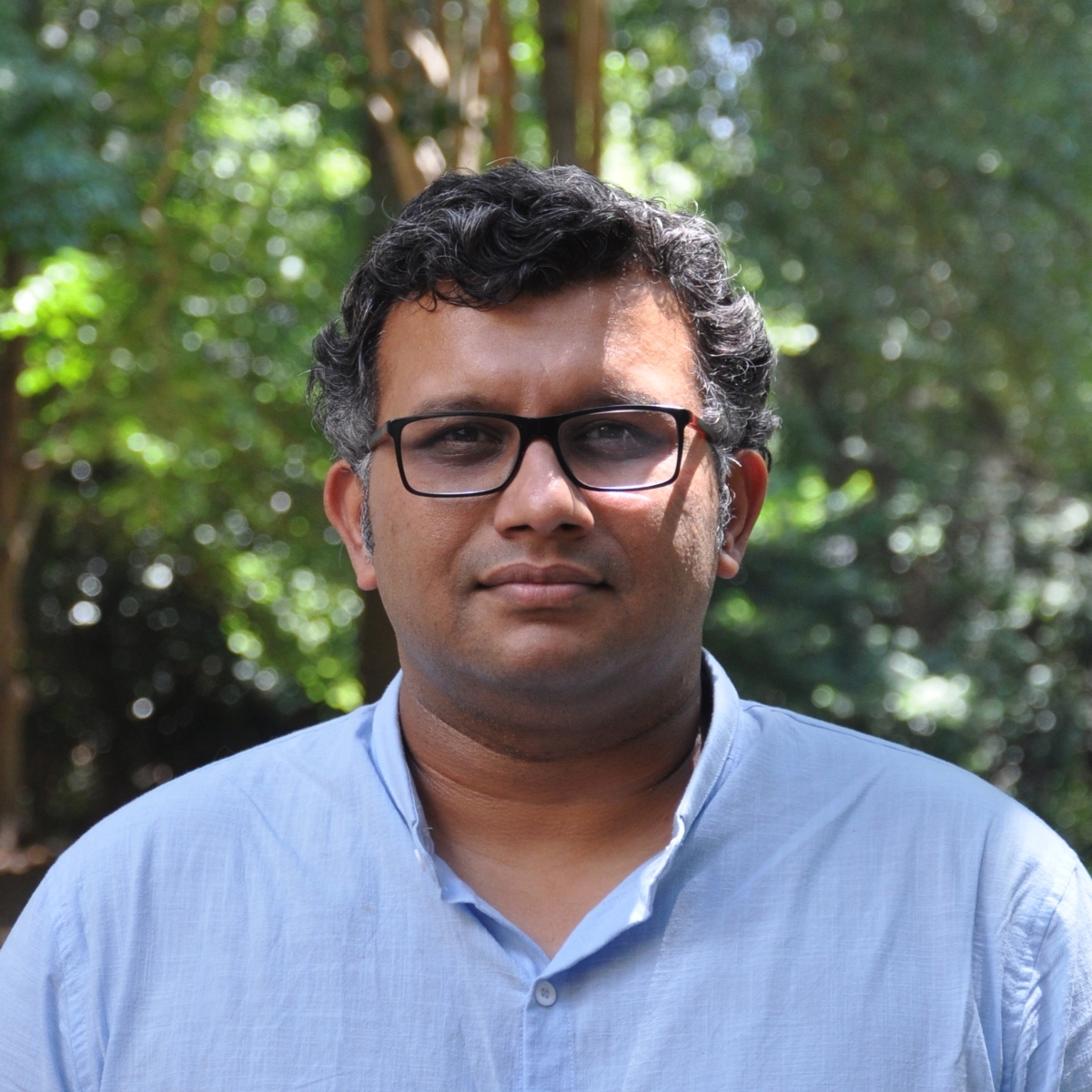
Prof. Dr. Alexander Braun serves as Professor of Physics at Düsseldorf University of Applied Sciences within the Faculty of Electrical Engineering & Information Technology. His office is located in Building 5, Room 05.2.054, and he can be reached at alexander.braun@hs-duesseldorf.de. His teaching responsibilities include physics courses for engineering students, with a focus on Newtonian mechanics as evidenced by his "Physics for KIT" course (WS 15/16). His academic background includes: Education at Hackettstown High School in New Jersey, USA Physics studies in Göttingen with specialization in Optics and Lasers Research stay at École Supérieure de Physique et Chimie Industrielle in Paris Diploma thesis at Laser-Laboratorium Göttingen on "Laser spectroscopic measurement methods for temperature determination in sprays" (collaboration with Bosch and VW) Doctoral work at Institute for Laser Physics in Hamburg on quantum computing, completed at University of Siegen Prof. Braun's research focuses on physically-realistic optical simulation for autonomous driving systems. Unlike conventional photorealistic approaches, his work emphasizes physically accurate modeling of optical properties, particularly point spread functions (PSF). His research group employs linear system theory combined with artificial neural networks to model measured PSFs, enabling accurate simulation of real-world optical effects on camera systems. This approach allows for creating convolution kernels that transform synthetic scenes into images matching specific camera system characteristics. His publication record shows a clear progression from quantum computing research to applied optics for automotive applications. The 15 most recent publications demonstrate significant focus on how optical aberrations impact AI performance in vision systems, with particular attention to automotive applications. His work bridges traditional optical engineering with modern AI, developing metrics and simulation tools that account for real-world optical imperfections. Key contributions include SOLAS (Superpositioning an Optical Lens in Automotive Simulation) and research on how windshield quality affects AI algorithm performance. Prof. Braun has been active in IEEE P2020 Automotive Image Quality standardization efforts, presenting at conferences like Automotive Glazing 2019. His research has direct practical implications for automotive camera system validation, production quality control, and development of more robust vision systems that can handle real-world optical conditions. His work on quantum annealing and digital annealing also shows continued interest in computational optimization methods, with potential applications in traffic flow optimization and logistics.