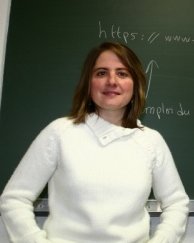
Micaela Mayero is a Researcher at the Laboratoire d'Informatique de Paris Nord (LIPN), affiliated with the Institut Galilée at Université Paris Nord. Her work focuses on formal proofs, numerical analysis, and verification using the Coq proof assistant. Education : PhD in Computer Science (2001) from Université Paris VI, Habilitation à Diriger des Recherches (2012). Her research spans formal verification , type theory , and numerical analysis , with a strong emphasis on mechanized proofs in mathematics and programming. Recent publications highlight applications in Lebesgue integration , polynomial approximations , and partial differential equations , reflecting her expertise in bridging theoretical mathematics with computational verification. Key trends across her articles include formalization of mathematical theorems in Coq, verification of numerical algorithms, and refinement of Petri net models. Collaborations with teams across France and Europe underscore her interdisciplinary approach.
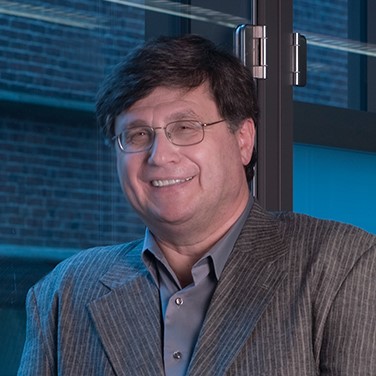
Suvrit Sra is the Esther and Harold E. Edgerton Career Development Associate Professor in the Department of Electrical Engineering and Computer Science at the Massachusetts Institute of Technology (MIT). He is a core member of the Institute for Data, Systems, and Society (IDSS) and the Laboratory for Information and Decision Systems (LIDS). Currently, he is on leave at the Technical University of Munich (TU Munich). His research centers on the mathematics of artificial intelligence , with emphases on optimization for machine learning (especially non-convex, non-Euclidean, and geometric optimization), theory of deep learning, discrete probability, sampling methods, convex geometry, and polynomials. He also explores applications in operations research, supply chains, and large language models. His recent articles demonstrate a strong focus on Riemannian optimization, convergence analysis of gradient methods, minimax optimization in geometric spaces, and invariant representations in graph learning. Key trends include theoretical advances in non-convex optimization and applications to reinforcement learning and distributional robustness. Awards and honors include: Alexander von Humboldt Professorship for AI (2024) Criteo Faculty Research Award (2017) SIAM Outstanding Paper Prize (2011) He advises PhD students (e.g., Zelda Mariet, Chengtao Li, Hongyi Zhang) and has secured grants including an NSF BIGDATA award for interpretable learning via discrete probability. His lab affiliations include the MIT ML Group, Center for Statistics, and TILOS AI Research Institute. He co-founded Pendulum, serving as Chief Scientist.
Gaurav Mahajan serves as a Postdoctoral Associate in Yale University's Department of Computer Science under Dan Spielman's mentorship, concurrently holding lecturer appointments for specialized courses including CPSC 648: Quantum Codes (Fall 2024) and the ICTS Reinforcement Learning Theory Bootcamp (Fall 2025). His academic journey includes a PhD from UCSD's Theory Group advised by Sanjoy Dasgupta and Shachar Lovett, with research summers at Microsoft Research, Institute for Advanced Study, and Simons Institute. His research spans machine learning theory with dual emphases on quantum learning (quantum error correction applications to complexity theory) and reinforcement learning (computational-statistical gaps, sample complexity). Recent publications in COLT, ALT, and NeurIPS reveal a trajectory from foundational PAC learning theory toward quantum-enhanced complexity analysis, featuring collaborations with leading theorists including Sham Kakade, Shachar Lovett, and Daniel Kane. Teaching activities demonstrate specialized expertise: his Quantum Codes course progresses from basic stabilizer codes to quantum Tanner codes using chain complex formalisms, while the RL Bootcamp bridges PyTorch implementations with theoretical complexity analysis. Though not leading a formal lab, his work connects Yale's quantum initiative with theoretical computer science communities through institutes like Simons. Current research shows increasing focus on quantum-classical connections—applying quantum information tools (e.g., classical shadows) to classical learning problems—while maintaining rigorous theoretical standards evidenced by consistent publications in top theory venues. Future directions likely involve deeper quantum complexity applications and expanding the quantum-RL interface.
Frank Riedel is a Professor of Economics at the Faculty of Economics, University of Bielefeld, where he has served as Director of the Center for Mathematical Economics since 2009. He is affiliated with the Institute for Mathematical Economic Research, Bielefeld Graduate School of Economics and Management (BIGSEM), and the Collaborative Research Center SFB 1283. His educational background includes: Diploma in Mathematics with minor in Philosophy from Albert-Ludwigs-University Freiburg (1995) Doctorate in Political Science from Humboldt University of Berlin (1998) Habilitation in Economics from Humboldt University of Berlin (2002) Professor Riedel's research focuses on economic theory under Knightian uncertainty (ambiguity), where agents face uncertainty about probability distributions rather than just risk with known probabilities. His work examines market behavior, risk measurement, game theory with strategic ambiguity, and general equilibrium theory with social preferences. He has made significant contributions to understanding optimal decision-making under model uncertainty. His recent publications demonstrate a strong mathematical approach to economic problems, particularly using stochastic analysis and control theory to address questions of optimal consumption, investment, and market equilibrium under ambiguity. The work consistently bridges theoretical economics with practical financial applications, showing evolution from foundational work on Knightian uncertainty to current applications in financial regulation. His notable scientific achievements include: Humboldt Prize for Outstanding Dissertations (1999) Feodor-Lynen Fellowship from the Alexander von Humboldt Foundation Multiple visiting professorships at Paris Dauphine, Paris Panthéon-Sorbonne, Princeton, and University of Johannesburg Professor Riedel has secured substantial research funding, including multiple projects from the German Research Foundation (DFG) through 2028, and has supervised numerous doctoral students through the Bielefeld Graduate School of Economics and Management. His current research continues to explore the mathematical foundations of decision-making under uncertainty with applications to financial markets and strategic interactions. He leads an active research group collaborating internationally, with recent projects focusing on taming uncertainty in dynamic economic systems and recursive utility functionals with intertemporal substitution.
Professor Mathilde Jauzac is a Research Professor at the Department of Physics, Durham University, and part of the Institute for Computational Cosmology. Her work bridges observational astrophysics and cosmology, focusing on galaxy clusters as cosmic laboratories for dark matter and structure formation studies. She leverages gravitational lensing techniques with data from Hubble, JWST, and ground-based instruments like VLT/MUSE to map mass distributions, substructure, and intracluster light. Key Research Areas: Gravitational Lensing, Dark Matter Substructure, Galaxy Cluster Dynamics, Cosmic Web, Instrumentation for Stratospheric Balloon Telescopes Notable Collaborations: BUFFALO Survey, Hubble Frontier Fields, Euclid Mission, SuperBIT Telescope, ALMA Lensing Cluster Survey Her publications from 2023–2025 demonstrate expertise in combining multi-wavelength observations (X-ray, optical, submillimeter) with simulations to refine cosmological models. Recent studies analyze lensing cross-sections, test ΛCDM predictions, and develop calibration methods for lensing techniques. She supervises postgraduate research students and contributes to instrument design for space and airborne platforms.
Val Tannen is a Professor at the University of Pennsylvania in the Department of Computer and Information Science . His research focuses on Databases , Logic , and Computation , with notable contributions to provenance analysis, semiring semantics, and stream processing systems like DBSP. 2023 : Best Paper at VLDB 2023 : Member of Academia Europaea 2013 : Fellow of the ACM His recent work includes incremental computation frameworks for databases, hierarchical query algorithms, and semantic-web integration middleware. He has co-advised PhD students Jesse Comer and Lawrence Dunn . Research groups: Databases and Logic and Computation .
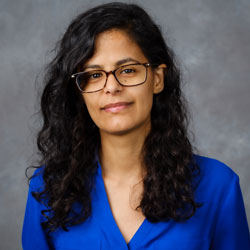
Dr. Sarra Alqahtani is an Associate Professor in the Computer Science Department at Wake Forest University. With a Ph.D. from the University of Tulsa (2015) and a two-year postdoc there, she focuses on safety and explainability in reinforcement learning (RL) and multi-agent RL (MARL), particularly for environmental applications. NSF CRII grant for safe MARL research NASA grant for drone navigation in Amazonian rainforests Her work addresses adversarial vulnerabilities in RL systems, develops robust safety policies, and combines local/global explanations to enhance AI interpretability. She applies these techniques to autonomous vehicle platoons, environmental monitoring, and illegal gold mining detection. Recent publications appear in top venues like AAMAS, IJCAI, and Nature. Research emphasizes transitioning MARL algorithms from simulations to real-world deployment while ensuring safety and reliability. Email: sarra-alqahtani@wfu.edu | Personal Site
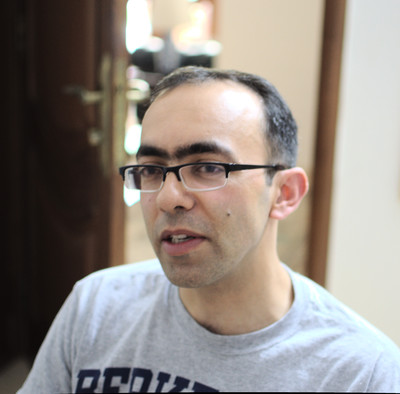
Mehmet Karay is an Assistant Professor at the Faculty of Economics and Administrative Sciences at Final University. Holding a Doctorate in Management Information Systems from Girne American University (2015), his academic background spans mathematics, computer science, and energy systems through his degrees from Eastern Mediterranean University. PhD: Management Information Systems (Girne American University, 2015) MS: Mathematics (Eastern Mediterranean University, 2005) MS: Secondary School Mathematics Teacher Education (Eastern Mediterranean University, 2008) BS: Applied Mathematics and Computer Science (Eastern Mediterranean University, 2001) Karay's research bridges computational intelligence with environmental and operational challenges. His work includes: Neural network applications in epidemiological modeling (Zika virus) Energy-economic analysis (CO2 emissions, renewable energy) Theoretical mathematics (Fixed Point Theorems) System modeling with Petri Nets Wireless network security analysis Recent publications emphasize neural network methodologies , mathematical modeling of complex systems, and security protocol evaluations . While his current affiliation shows no explicit awards in the provided data, his academic profile reflects interdisciplinary expertise in computational and mathematical approaches to real-world problems.
Giulia Bivona serves as an Associate Professor at the University of Palermo's School of Medicine and Surgery within the Department of Biopathology and Medical Biotechnology, where she leads the Clinical Biochemistry Section. Her extensive teaching portfolio spans Neuroscience, Medicine and Surgery, Dentistry, and Dietetics programs from 2009-2026, with core responsibilities in Clinical Biochemistry and related disciplines across undergraduate and professional health curricula. Her research centers on neurodegenerative disease biomarkers, particularly Alzheimer's disease subtyping through cerebrospinal fluid proteome profiling and machine learning approaches. She investigates vitamin D's immunomodulatory role in multiple sclerosis pathogenesis, CX3CL1 pathway interactions in neuroinflammation, and monocyte distribution width as a sepsis diagnostic tool. Current work integrates neuroimaging (1H-MRS, fMRI) with immune profiling to decode disease mechanisms in Alzheimer's, multiple sclerosis, and neonatal conditions. Analysis of her 2022-2025 publications reveals three dominant research trajectories: (1) Alzheimer's biomarker discovery using multi-omics and AI-driven classification of disease subtypes, (2) neuroimmunological intersections between vitamin D, Epstein-Barr virus, and autoimmune pathways in multiple sclerosis, and (3) hematological biomarkers (especially MDW) for rapid sepsis detection in emergency settings. Her methodological expertise bridges clinical biochemistry, neuroimaging, and machine learning applications in diagnostic development.
Caglar Uyanik serves as Assistant Professor of Mathematics and Director of the Madison Experimental Mathematics Lab (MXM) at the University of Wisconsin-Madison's Department of Mathematics. His research bridges geometric topology, group theory, and dynamical systems with significant contributions to Teichmüller theory and geodesic currents. His primary research interests include Geometric Topology , Geometric Group Theory , Ergodic Theory , and Dynamics , with specialized focus on mapping class groups, Teichmüller spaces, Out(F N ), geodesic currents, Veech surfaces, and symbolic dynamics. His work explores connections between group actions, hyperbolic geometry, and probabilistic methods in dynamical systems. Recent publications demonstrate evolving focus from foundational work on North-South dynamics (2014-2019) toward contemporary applications in random walks on Teichmüller space (2023) and singularity analysis of Cannon-Thurston maps (2025). Key thematic threads include geometric structures on moduli spaces, spectral properties of group actions, and distribution phenomena in translation surfaces. Scientific recognition includes: NSF CAREER award supporting research on geometric group theory Uyanik actively mentors graduate students including PhD recipients Yandi Wu (2024) and current candidates Rongsong Yang and Rachel Heikkinen, plus Master's student Hart Easley. He co-leads the NSF-funded RTG: Geometry, Group Actions and Dynamics while directing MXM which engages undergraduates in experimental mathematics projects. His research receives primary support through NSF Award DMS 2439076 and the RTG grant. As founder and director of the Madison Experimental Mathematics Lab, he cultivates collaborative research environments where students investigate geometric structures through computational experimentation, particularly focusing on translation surfaces and group actions.
Nicolas Courty is a Full Professor in Computer Science at University of Brittany South since 2018, where he leads the Obelix research team at IRISA (Institut de Recherche en Informatique et Systèmes Aléatoires). His research sits at the intersection of machine learning and Earth Observation, with a focus on optimal transport theory and its applications. Dr. Courty obtained his PhD in 2002 from INSA Rennes and his Habilitation à diriger des recherches in 2013, with early work focused on computer graphics and animation. Since 2014, he has developed expertise in optimal transport and its applications to machine learning, becoming a principal investigator in an ANR Chair program on AI (OTTOPIA) in 2020, focusing on applied optimal transport for Remote Sensing. Since 2024, he serves as co-director of Cluster SequoIA, a center of excellence in artificial intelligence research and training in Brittany. His research interests span optimal transport, statistical learning, kernel methods, manifold and geometric approaches to machine learning, with applications to computer graphics, vision, and remote sensing. He is particularly known for pioneering work at the intersection of non-Euclidean geometry and optimal transport, developing novel methods for dimensionality reduction, domain adaptation, and representation learning in complex data spaces. Analysis of his recent publications reveals a strong trend toward geometric machine learning, with increasing focus on non-Euclidean spaces (particularly hyperbolic geometry), sliced optimal transport methods, and applications to remote sensing and neuroscience. His work consistently bridges theoretical advances in optimal transport with practical applications in Earth observation, demonstrating a commitment to both theoretical rigor and real-world impact. Best paper prize at Eurographics 2024 Stanford/Elsevier's Top 2% Scientist Rankings Multiple papers accepted at top conferences including NeurIPS (with oral presentations), ECCV, BMVC, and Eurographics As principal investigator of the ANR Chair program OTTOPIA, Dr. Courty has secured significant research funding for applied optimal transport in Remote Sensing. His leadership extends to directing the Obelix research team at IRISA and co-directing Cluster SequoIA, demonstrating his growing influence in the AI research community in Brittany. He is actively involved in mentoring researchers and fostering collaborations across institutions. Dr. Courty leads the Obelix research team at IRISA, which focuses on the intersection of machine learning and Earth Observation. Under his direction, the team has developed innovative approaches to applying optimal transport theory to remote sensing data, contributing significantly to the field of geospatial AI. The team's work has practical applications in environmental monitoring, land use classification, and climate change analysis.
Professor Andrew Wood is a faculty member at the Research School of Finance, Actuarial Studies and Statistics, Australian National University. His research spans non-Euclidean statistics, theoretical statistics, computational methods, and applied statistics in sciences and medicine. Research Interests : Non-Euclidean statistics, directional statistics, statistical shape analysis, asymptotic theory, computational statistics, stochastic differential equations, and applications in science/medicine. Grants : Funded by Engineering and Physical Sciences Research Council (UK), Biotechnology and Biological Sciences Research Council (UK), and Australian Research Council Discovery Projects. Editorial Roles : Former Joint Editor of Journal of the Royal Statistical Society, Series B and current Associate Editor of Biometrika . Research Trends : Recent publications focus on robust statistical methods for non-Euclidean data, computational approaches for complex distributions, principal component analysis for high-dimensional datasets, and geometric inference on manifolds. Applications include microbiome analysis, surface fractal dimension estimation, and spherical regression models. Supervision & Collaboration : Registered as a supervisor at ANU, with collaborations across disciplines including molecular biology, environmental science, and computational mathematics.
Michael Draney is a Professor in the Natural & Applied Sciences department at the University of Wisconsin-Green Bay, within its College of Science, Engineering and Technology. His research focuses on terrestrial arthropod assemblages, particularly spiders, with specialized expertise in the ecology and taxonomy of sheet web spiders (family Linyphiidae). Education: Ph.D. in Entomology (1997), M.S. in Entomology (1992), and Certificate in Environmental Ethics (1995), all from the University of Georgia. Draney's work spans global spider conservation, tropical forest biodiversity, Arctic tundra ecology, and invasive species impact assessment. He has conducted extensive field surveys in the Everglades, Great Lakes region, Trinidad, and Alaska, with methodological contributions to sampling protocols for spiders and millipedes. His research combines taxonomic revisions, biogeographic analysis, and ecological studies of habitat specialization. Recent publications highlight cross-regional comparisons (Congo vs. Panama), microhabitat studies of tree trunk spiders, and conservation profiling for 200+ spider species. He has also examined human phobias (spider vs. scorpion fear) and invasive slug/sl earthworm impacts on woodland ecosystems. Collaborative efforts include data transparency in global spider conservation ( Supplementary Material 48 ) and long-term monitoring at the Arctic LTER site in Toolik Lake, Alaska.
Zoran Tomljanović is an Associate Professor and Vice-Dean for Teaching and Students at the School of Applied Mathematics and Informatics, Josip Juraj Strossmayer University of Osijek. His research focuses on numerical linear algebra, damping optimization in mechanical systems, control theory, and matrix equations, with significant contributions to model reduction and parametric system optimization. His work includes novel approaches to $H_{\infty}$ norm analysis for multi-agent systems, dimension reduction techniques for damped vibrational systems, and parametric dominant pole algorithms for semi-active damping optimization. These methods have been applied to problems in mechanical engineering, synchronization, and high-dimensional data partitioning. Key projects led by Tomljanović include Accelerated solution of optimal damping problems (DAAD 2021–2022), Vibration Reduction in Mechanical Systems (Croatian Science Foundation 2020–2023), and Robustness optimization of damped mechanical systems (DAAD 2017–2018). He has also contributed to educational initiatives through publications like Metode optimizacije (2014), a textbook on optimization methods. Professional activities include co-organizing the 8th Croatian Mathematical Congress (2024), Winter School on Model Reduction (2024), and multiple international workshops on optimal control and model reduction. Teaching responsibilities include courses on linear algebra and control theory applications.
Antonio Orvieto is a Professor and Principal Researcher at the Max Planck Institute for Intelligent Systems and ELLIS Institute Tübingen, where he leads the Deep Models and Optimization research group. He is also a lecturer at the University of Tübingen and faculty for the CLS, ELLIS, and IMPRS-IS PhD Programs. His research focuses on improving the efficiency of deep learning technologies through theoretical understanding of optimization dynamics and innovative neural network architectures. Dr. Orvieto earned his PhD from ETH Zürich under the supervision of Prof. Dr. Thomas Hofmann and Dr. Aurelien Lucchi. Prior to his PhD, he obtained his master's degree in Robotics, Systems, and Control from ETH. His educational background also includes undergraduate studies at Universita' degli studi di Padova in Italy. During his academic journey, he gained research experience at DeepMind (UK), Meta (US), MILA (CA), INRIA (FR), and HILTI (LI). Dr. Orvieto's research spans two main areas: understanding the intricacies of large-scale optimization dynamics and designing innovative architectures and powerful optimizers capable of handling complex data. His work particularly focuses on decoding patterns in sequential data, with applications in biology, neuroscience, natural language processing, and music generation. His theoretical approach to deep learning has led to significant contributions in understanding recurrent neural networks, transformers, and optimization methods. His recent publications reveal a strong focus on sequence modeling, optimization theory, and the theoretical foundations of deep learning, with particular emphasis on improving training efficiency and model performance. Schmidt Sciences AI2050 Early Career Fellow Dr. Orvieto actively mentors PhD students and leads a vibrant research group at the Max Planck Institute for Intelligent Systems. His Deep Models and Optimization group includes PhD students Destiny Okpekpe, Felix Sarnthein, Diganta Misra, Sajad Movahedi, and Wenjie Fan, among others. He is deeply involved in doctoral education as faculty for multiple PhD programs including CLS, ELLIS, and IMPRS-IS. His teaching includes the course "Nonconvex Optimization for Deep Learning" at the University of Tübingen. The Deep Models and Optimization research group investigates the interplay between optimizers and architectures in deep learning, with a focus on developing new networks for long-range reasoning. The group's mission is to design new optimizers and neural networks to accelerate technology and scientific discovery, with a strong theoretical foundation in optimization theory. They strongly believe that deep learning will revolutionize science and technology, and they aim to make powerful deep learning solutions accessible to scientists and engineers regardless of resource limitations.