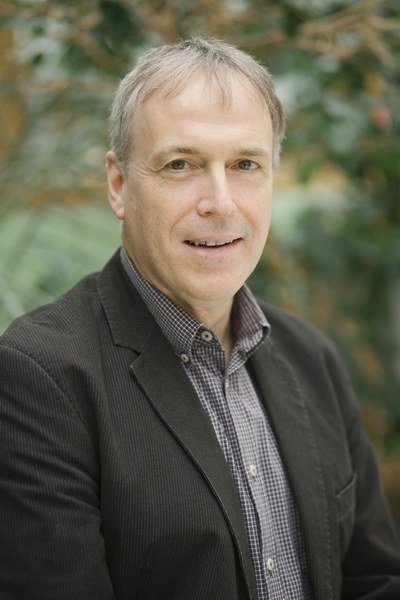
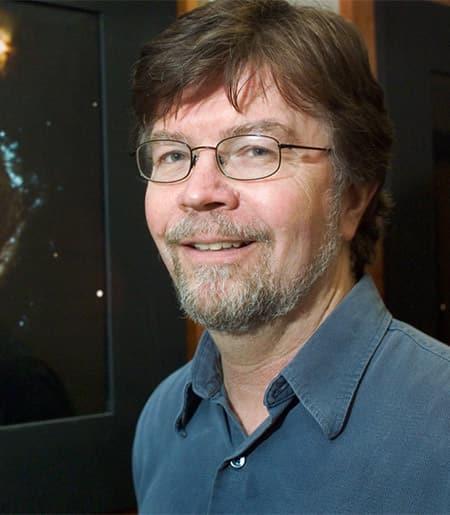
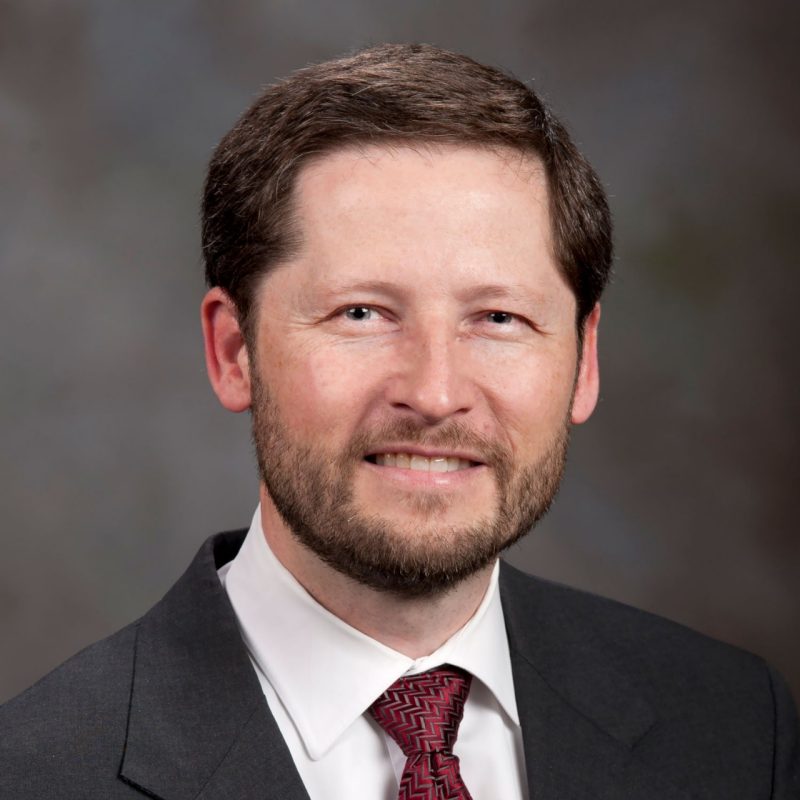
Tarik Namas is a Senior Lecturer in the Department of Electrical and Electronics Engineering at the International University of Sarajevo's Faculty of Engineering and Natural Science. With over 15 years of academic experience, he has held roles including Teaching and Research Assistant (2006-2009), Technical and Industrial Instructor at Jubail Industrial College (2009-2011), and IT Assistant at Prince Sultan Military College. His expertise spans Electrical Engineering , Signal Processing , and Power Systems , with a focus on fault detection, impedance analysis, and augmented reality applications in healthcare.
Christoph Müller is a Professor of Experimental Plant Ecology at Justus Liebig University Giessen (since 2009) and a Visiting Professor at University College Dublin's School of Biology and Environmental Science (since 2007). His work bridges soil science, plant ecology, and climate change biogeochemistry. PhD in Soil Science (Lincoln University, NZ, 1995) MSc in Soil Water Management (University of Reading, 1991) Diploma in Horticulture (FH, 1990) Research centers on climate change impacts on terrestrial ecosystems , focusing on elemental cycles and trace gas production in soils. He pioneered 15N/13C isotope tracing to quantify gross nitrogen transformations and developed Ntrace software for analyzing these processes. His landmark Giessen FACE experiment (20+ years) demonstrates how elevated CO2 alters rhizosphere microbiomes and nutrient dynamics. Recent publications (2021-2023) reveal mechanisms linking soil clay minerals to nitrogen cycling, quantify DNRA patterns across ecosystems, and explore biochar-nitrapyrin synergies for emission reduction. Grants from EPA Ireland and Department of Agriculture Ireland support his work on greenhouse gas mitigation and sustainable fertilization . Collaborations span institutions like UCD, with co-authors including Gerald Moser , Daniela Senkbeil , and Lea Meng . Current editorial roles involve European Journal of Soil Science and Frontiers in Terrestrial Microbiology . His methodology integrates stable isotope tracing , metabarcoding , and process-based modeling to unravel soil-plant-microbe interactions.
Marcin Wołowicz, PhD in Engineering , is a researcher at the Department of Rational Use of Energy within the Institute of Heat Engineering at Warsaw University of Technology. His academic career focuses on advanced energy system modeling and optimization, with particular emphasis on fuel cell technologies and thermal energy storage solutions. Key research areas: Fuel Cell Modeling & Design Expertise: Thermal System Optimization Specialization: Energy Storage & CO2 Reduction Wołowicz's publication record demonstrates sustained contribution to: Molten Carbonate Fuel Cell applications (11+ papers) Combined Heat and Power systems Thermal integration in power plants Seasonal energy storage solutions Waste heat utilization Supercritical power plant optimization His technical work involves both theoretical modeling (GateCycle, Hysys) and experimental validation across various energy scales from 100cm² laboratory cells to 800MW power stations.
Jean Decaix is a Researcher at the University of Applied Sciences and Arts Western Switzerland (HES-SO Valais-Wallis - Haute Ecole d'Ingénierie ) within the Department of Energy and Environmental Techniques . His work focuses on hydropower systems , computational fluid dynamics (CFD) , and cavitation modeling for hydraulic turbines. Decaix contributes to projects like SCCER-SoE (Supply of Electricity center) and XFlex Hydro , aiming to enhance grid stability through advanced turbine operation. Decaix's research spans Francis and Pelton turbines , with a focus on flow topology , unsteady cavitating flows , and hydraulic short-circuit modes . He develops freely distributable CFD tools for building airflow and turbine efficiency, validated through experimental measurements and numerical simulations . Notable projects : SCCER-SoE (2017-2020): Innovation roadmaps for geothermal and hydropower Solution de transfert d'énergie par pompage-turbinage à petite échelle (2015-2017): Economic model development for small-scale hydropower Decaix's 15 most recent publications (2015-2024) cover topics like cavitation suppression , vortex rope dynamics , Pelton turbine efficiency , and CFD validation for building energy systems. His work emphasizes renewable energy integration and mechanical stress reduction in hydropower plants.
Sung-Woo Lee serves as an Associate Professor in the Department of Radiation Oncology at the University of Maryland School of Medicine, based at the Central Maryland Radiation Oncology Center in Columbia, MD. His educational background includes: Bachelor of Science and Master of Science in Nuclear Engineering from Hanyang University, Seoul, Korea Master of Science in Health Physics from Texas A&M University Ph.D. in Nuclear Engineering (specializing in Health Physics and Medical Physics) from Texas A&M University (2003) Dr. Lee's research focuses on Medical Physics and Radiation Oncology , with expertise in stereotactic radiosurgery systems (Gamma Knife/CyberKnife), image-guided radiotherapy, treatment planning optimization, and imaging dose assessment. His work bridges engineering principles with clinical radiation oncology applications to enhance precision in cancer treatment. Analysis of his 2014 publications reveals concentrated research on comparative effectiveness of stereotactic radiosurgery platforms for brain metastases, CyberKnife prescription parameter optimization, and quantification of imaging dose impacts in robotic radiosurgery. His 2008 foundational work established clinical validation protocols for dual-tube kV localization systems in radiotherapy treatment rooms. Dr. Lee maintains active clinical engagement at the Central Maryland Radiation Oncology Center, where he applies medical physics expertise to advance radiotherapy technology implementation and quality assurance protocols.
Marco Rossi is an Associate Professor at Marche Polytechnic University in the College of Engineering , affiliated with the Department of Industrial Engineering and Mathematical Sciences . His research focuses on Mechanical Engineering and Materials Science , particularly the plasticity and fracture mechanics of sheet metals and additive manufacturing materials , utilizing advanced techniques like digital image correlation and inverse problems in computational mechanics . Scientific Sector: IIND-03/A - Mechanical Design and Machine Construction Contact: m.rossi@staff.univpm.it , via Brecce Bianche, Ancona, Italy His work emphasizes 3D anisotropic plasticity models , material calibration for sheet metal forming , and thermomechanical characterization of metals. Recent publications highlight applications of virtual fields method (VFM) and finite element model updating (FEMU) in optimizing experimental setups for additive manufacturing and high-strain testing . Key Research Areas: Mechanical Design Plasticity Modeling Digital Image Correlation Inverse Identification 3D Printing Material Behavior Tensegrity Structural Systems
Gwenn Smith, PhD, is a Professor of Psychiatry and Behavioral Sciences at Johns Hopkins University School of Medicine. She serves as Director of the Division of Geriatric Psychiatry and Neuropsychiatry and Co-Director of the Center for Translational Molecular Imaging at Johns Hopkins Bayview Medical Center. Her primary research facility is located at the Department of Psychiatry, 5300 Alpha Commons Drive, Baltimore. Dr. Smith leads a research program focused on molecular neuroimaging of neurodegenerative and mood disorders. For over two decades, her work has centered on: Developing PET imaging methods to study neurobiological mechanisms of cognitive decline Investigating monoaminergic system dysfunction in late-life depression and dementia Mapping treatment response mechanisms for brain stimulation therapies Identifying early biomarkers for Alzheimer's, Parkinson's, and related disorders Her publication portfolio demonstrates consistent focus on multimodal neuroimaging approaches integrating PET, MRI, and proteomic analyses. Recent work emphasizes: Interactions between serotonin degeneration and amyloid deposition Optimization of deep brain stimulation for Alzheimer's disease Neurobiological signatures of psychosis across neurodegenerative disorders Advanced 7T MR spectroscopy applications Dr. Smith directs several neuroimaging initiatives including studies on fornix deep brain stimulation (ADvance trial), blood-brain barrier opening using focused ultrasound, and traumatic brain injury in athletes. She maintains active collaborations across neurology, neurosurgery, and radiology departments to advance translational applications of neuroimaging.
Geir Mathisen serves as a Professor within the Department of Technical Cybernetics, Faculty of Information Technology and Electrical Engineering at the Norwegian University of Science and Technology (NTNU). He is an active member of the Group for Industrial Computer and Instrumentation Systems, focusing on real-time systems integration and cyber-physical applications across industrial and energy domains. His educational background includes a Civil Engineering degree and a Doctorate (PhD), both earned from NTNU's Department of Technical Cybernetics, establishing foundational expertise in control systems and technical cybernetics. Professor Mathisen's research spans cyber-physical systems, deterministic networking, and distributed real-time systems with significant applications in smart grids and industrial automation. His work pioneers magnetic field energy harvesting for railway systems, edge-based fault detection for photovoltaic panels, and multi-robot coordination in sewing automation. Current investigations focus on power system state estimation, optimal power flow in smart grids, and deterministic communication channels for latency-sensitive applications. Analysis of his 2020-2024 publications reveals a strategic convergence of real-time computing with energy systems, particularly in railway energy harvesting and photovoltaic monitoring. His research consistently bridges theoretical advances in networking protocols with practical industrial implementations, emphasizing determinism and composability in distributed cyber-physical environments. Scientific Awards: No specific awards or fellowships were documented in the provided materials. Professor Mathisen actively supervises doctoral and master's students, including Johannes Schrimpf (2013 PhD thesis on industrial robot control), and offers project assignments as noted for fall 2021. His research is conducted through Norwegian collaborative projects on flexible distribution grids and smart grid services, though specific grant mechanisms remain unspecified in the source material. He contributes significantly to the Group for Industrial Computer and Instrumentation Systems at NTNU, which develops advanced solutions for industrial control, measurement systems, and cyber-physical integration, particularly in energy and manufacturing contexts.
Mesut UYSAL is an Associate Professor at the Department of Forest Industry Engineering, Faculty of Forestry, Bursa Technical University. His research focuses on furniture mechanics, structural analysis in wood construction, and advanced manufacturing technologies like CAD/CAM/CAE and additive manufacturing for furniture components. Fields of Interest: Furniture Engineering, Structural Design, Materials Science, Additive Manufacturing, Environmental Engineering Recent Research Trends: 3D-printed biocomposites, screw withdrawal strength optimization, finite element modeling of wood products, and noise pollution assessment in manufacturing. His work emphasizes sustainable design and durability testing for wooden furniture joints, including mortise and tenon and dowel systems. He has published extensively on topics like epoxy resin reinforcement, cross-laminated timber properties, and cyclic load reliability metrics.
James M. Cordes holds the George Feldstein Professorship in Astronomy at Cornell University, affiliated with the Department of Astronomy within the College of Arts and Sciences. He maintains dual associations with the Carl Sagan Institute and the Center for Radiophysics and Space Research (CCAPS), conducting observations across global facilities including Arecibo Observatory, the Very Large Array, Parkes Telescope, and space-based instruments like Hubble and Chandra. His research centers on pulsar astronomy as a tool for fundamental physics, with expertise in radio signal processing , interstellar medium studies , and the search for extraterrestrial intelligence . Cordes pioneers statistical inference methods for gravitational wave detection and leads development of next-generation instrumentation like Arecibo's multiple-feed receiver system, while serving as a key contributor to the international Square Kilometer Array project. Analysis of Cordes's 2008–2012 publications reveals a cohesive research program using pulsars to probe spacetime curvature near black holes, detect gravitational waves, and investigate galactic center environments. His work consistently integrates multiwavelength observations with innovative data analysis, establishing foundational methodologies for pulsar timing arrays and demonstrating how circumpulsar phenomena can reveal hidden astrophysical structures. Cordes collaborates through the Carl Sagan Institute team and major consortia including NANOGrav. His observational campaigns coordinate radio, optical, infrared, and gamma-ray facilities worldwide—from Arecibo upgrades to Hubble Space Telescope campaigns—enabling breakthrough studies of cosmic plasma environments and gravitational phenomena, as highlighted in Cornell's coverage of the 2020 gravitational wave 'hum' detection.
Mennatallah El-Assady is an Assistant Professor at the Department of Computer Science, ETH Zurich, leading the Interactive Visualization and Intelligence Augmentation Lab (IVIA). Prior roles include research fellow at ETH Zurich's AI Center, research associate and doctoral student at the University of Konstanz (Germany) and OntarioTech University (Canada). Her research focuses on integrating data mining, machine learning, and visual analytics for text data, with applications in explainable AI, digital humanities, computational linguistics, and political communication analysis. Key projects include explAIner (interactive explainable ML), LingVis (linguistic visualization), and VisArgue (rhetorical analysis in debates). Notable scientific awards include the Best Paper Award and Honorable Mention at IEEE VIS and ACM TIIS. Her work spans interdisciplinary collaborations, particularly bridging visualization techniques with social sciences and musicology. Labs and teams highlight her leadership at IVIA and partnerships with institutions in Switzerland, Germany, and Canada.
Dr. Anđelija Mitrović is an Assistant Professor at the Department of Mechatronics, Faculty of Technical Sciences in Čačak, University of Kragujevac. She holds a PhD in Technical Sciences (Mechanical Engineering) from 2016 and Master of Science in Information Technology from 2010. Her academic career spans multiple institutions including College of Technical Vocational Studies Čačak (2006-2011) and Faculty of Technical Sciences Čačak (2020-present). BSc in Hydropower Engineering, Mechanical Engineering Faculty Belgrade (1996) Profesor in Engineering and Informatics, Technology Faculty Čačak (2006) MSc in Information Technology, Technology Faculty Čačak (2010) PhD in Technical Sciences, Faculty of Technical Sciences Novi Sad (2016) Her research focuses on Production Technologies with emphasis on metal cutting thermal analysis, CAD/CAM systems, and educational technology innovations. Key research trends include: Thermal modeling in conventional and unconventional machining 3D virtual environment applications for engineering education Finite element analysis of milling processes Software-based cutting parameter optimization Integration of immersive learning platforms Publications demonstrate expertise in Thermal Analysis , Manufacturing Simulation , and Virtual Learning Environments . While no formal awards are listed, her work appears in reputable journals and international conference proceedings.
Srđan Divac is a Teaching Assistant at the Department of General Electrical Engineering and Electronics within the Faculty of Technical Sciences, University of Kragujevac . He earned his PhD in 2025 (average grade: 9.88) after completing his master's (2018, grade: 10) and bachelor's (2017, grade: 9.67) studies at the same institution. His research focuses on: Numerical methods in electromagnetics Measurement uncertainty analysis for electrical machines Dynamic hysteresis modeling in ferromagnetic materials Harmonic interpolation techniques for nonlinear circuits Instantaneous magnetisation power analysis Equivalent circuit parameter estimation Key article trends include simulation of magnetic hysteresis loops, electromagnetic computation for power systems, and advanced modeling of ferromagnetic and permalloy materials under varying excitation frequencies. His work appears in journals like Applied Sciences and Energies , as well as conferences such as IcETRAN and PES .
Hans Georg Beyer is an Affiliated Professor in Energy Engineering at the Faculty of Science and Technology, The University of the Faroe Islands. His work focuses on sustainable energy systems with emphasis on renewable energy integration and meteorological aspects of power generation. With extensive publication history spanning over three decades, he has established himself as a leading researcher in renewable energy systems analysis. Professor Beyer's research interests center on sustainable energy supply systems based on renewables, with special emphasis on relating system performance characteristics to meteorological conditions. His work in Energy Meteorology covers analysis and modeling of spatial and temporal statistics of wind and irradiance fields, including forecasting methods for wind speed and solar irradiance with horizons of 6-35 hours and near now-casts in minute time scales. In Renewable Energy Systems, he investigates layout, dimensioning, modeling and performance analysis of grid-connected and stand-alone solar, wind and hybrid systems. His research bridges meteorological science with practical energy engineering applications, particularly for island and remote communities. His publication record shows consistent research activity with 55 research outputs documented, including significant contributions to solar and wind energy forecasting, hybrid system design, and grid integration challenges. Notable work includes the development of methods for satellite-derived irradiance data applications in PV system monitoring and performance assessment. Solar Energy Best Paper Award, ISES 1999 Solar World Congress, Jerusalem Professor Beyer has been instrumental in several major collaborative projects including PVSAT-2 (satellite-based PV system performance monitoring), SWERA (UNEP solar resource assessment), and various European initiatives focused on renewable energy integration. His work demonstrates strong international collaboration, particularly with German, Brazilian, and other European research institutions. While specific grant details aren't provided in the source material, his extensive publication record in high-impact journals suggests substantial research funding support throughout his career.
Dr. Jan Helge Bøhn is an Associate Professor in the Department of Mechanical Engineering at Virginia Tech's College of Engineering, specializing in rapid prototyping, additive manufacturing, geometric modeling, and international engineering education. His work bridges global collaborative engineering with innovative product development processes. Ph.D., Computer and Systems Engineering, Rensselaer Polytechnic Institute (1993) M.S., Computer and Systems Engineering, Rensselaer Polytechnic Institute (1989) B.S., Computer Science, Rensselaer Polytechnic Institute (1988) His research focuses on additive manufacturing and global engineering design , with applications in transatlantic dual degree programs, automotive PLM, and haptic accessibility solutions. He has pioneered adaptive slicing techniques for 3D printing and developed international curricula frameworks. Dr. Bøhn's publications highlight trends in collaborative engineering education , 3D printing , and human-computer interaction , particularly for low-vision users and automotive sectors. 2018 : PACE Platinum Certification 2015 : Alumni Award for Excellence in International Outreach 2013 : Virginia Tech Scholar of the Week & PACE Silver Certification He has led international initiatives, received multiple teaching excellence awards, and collaborated on global PLM educational labs. His work impacts both engineering pedagogy and industrial practices.