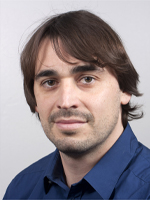
Gunter Spöck is an Associate Professor at the Department of Statistics, University of Klagenfurt, Austria, holding this position since his 2011 Habilitation in Statistics. His academic qualifications include: PhD in Mathematics from University of Klagenfurt (2005) Habilitation and Venia Docendi for Statistics from University of Klagenfurt (2011) Dr. Spöck's research centers on Spatial Statistics and Bayesian methodologies, with significant applications in environmental systems and industrial quality control. His work develops advanced spatial prediction models and sampling designs for complex real-world data, particularly in atmospheric science and semiconductor manufacturing. Analysis of his publication record (2012-2021) reveals consistent innovation in spatial modeling techniques, including novel approaches for wind profile analysis, defect detection in silicon wafers, and groundwater contamination assessment. His research demonstrates strong interdisciplinary collaboration across environmental science, engineering, and biostatistics. Scientific recognition includes: 1st price award (1997) No information is available regarding student supervision, research grants, or laboratory affiliations in the provided materials.
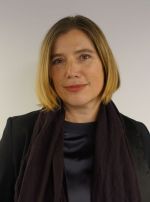
Thu Nguyen is a Research Fellow in the Department of Holistic Systems at Simula Metropolitan, a leading Norwegian research institute specializing in data science and computing. Her work focuses on developing robust methodologies for handling missing data across critical domains including healthcare diagnostics and environmental monitoring systems. Her primary research interests include: Advanced missing data imputation techniques Machine learning explainability under incomplete data Healthcare informatics and medical data analysis Environmental data processing for air quality prediction Multimodal data integration challenges Analysis of her publication record reveals a strong trajectory in developing computationally efficient imputation algorithms with real-world applications. Key trends include the application of principal component analysis and generative models to healthcare datasets (sperm tracking, medical imaging), environmental monitoring (air quality prediction), and multimodal systems. Her work consistently bridges theoretical statistical foundations with practical implementation needs, emphasizing model transparency and performance validation. Dr. Nguyen actively collaborates within Simula Metropolitan's data science ecosystem, contributing to interdisciplinary projects that address fundamental challenges in data completeness and usability across scientific domains.
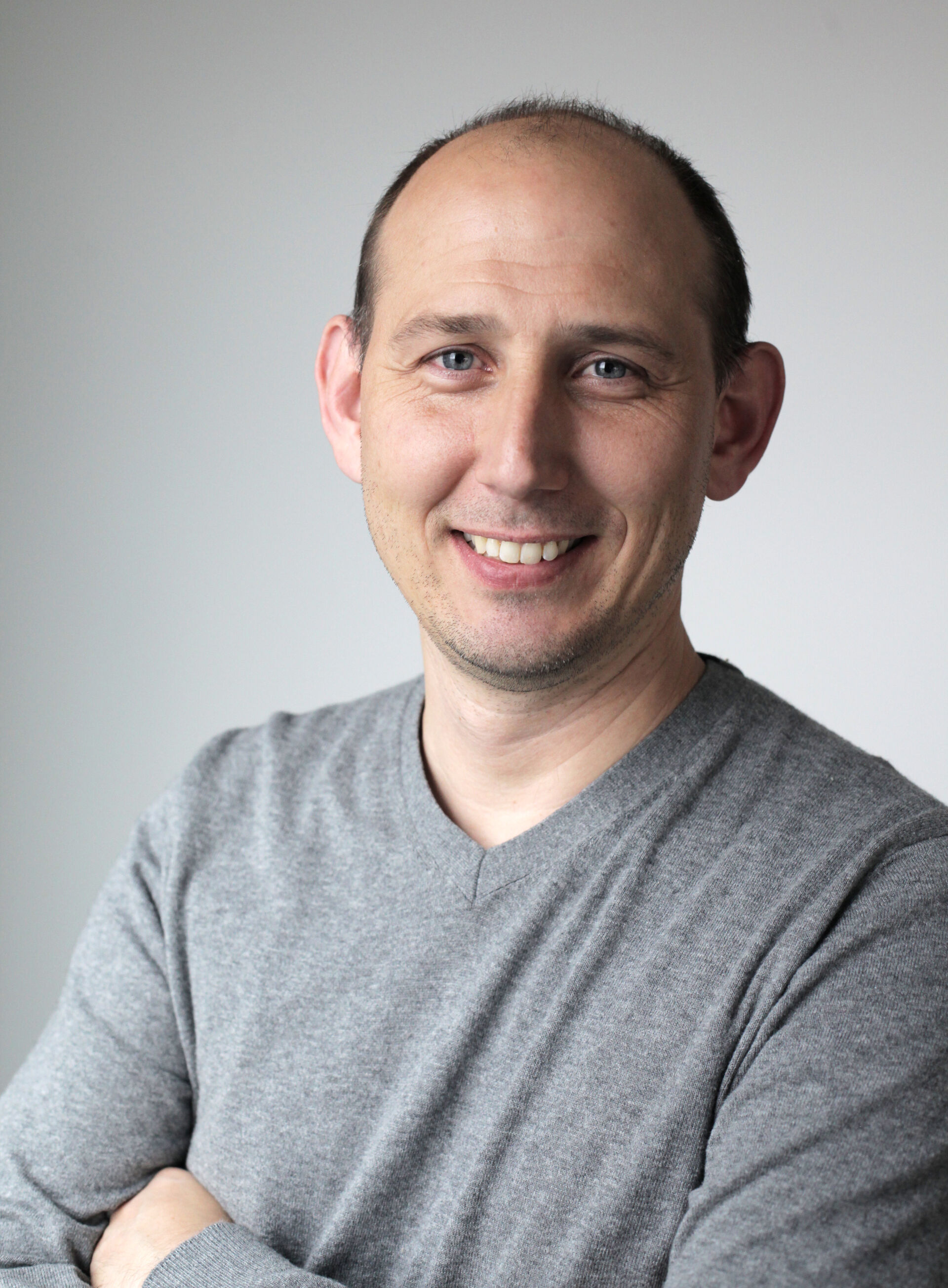
Tom Glover is an Assistant Professor in the Department of Computer Science within the Faculty of Technology, Art and Design at Oslo Metropolitan University. His office is located at Stensberggata 29, 0170 Oslo (Office number: SG204) with contact information including mobile: +47 975 38 894 and office: +47 672 37 712. Dr. Glover's research focuses on the intersection of cellular automata, artificial intelligence, and complex systems. His work spans theoretical computer science, artificial life, and practical applications in reservoir computing and control systems. His research group is part of the Innovation, Digital Transformation and Sustainability Research groups within the Department of Computer Science. Analysis of his publications reveals a consistent focus on cellular automata as computational models, with particular emphasis on their application in reservoir computing, network dynamics, and self-organizing systems. His work demonstrates how simple computational rules can generate complex behaviors with applications across multiple domains including control systems and biologically inspired computing. As an active researcher, Glover has published in reputable venues including the International Journal of Parallel, Emergent and Distributed Systems, Complex Systems, and proceedings from the Artificial Life Conference series. His recent work (2023-2024) shows continued development in sensitivity analysis of cellular automata and network topologies.
Agus Ismail Hasan is a Professor of Cyber-Physical Systems at the Department of ICT and Natural Sciences, Norwegian University of Science and Technology (NTNU), with a focus on Digital Twin , Autonomous Systems , and System Dynamics . His academic journey began with a BSc in Mathematics from Bandung Institute of Technology and a PhD in Control Systems from NTNU. His research spans interdisciplinary domains, integrating Control Theory , Machine Learning , and Industrial Applications to address challenges in autonomous vehicles , renewable energy systems , and public health modeling . Recent publications highlight advancements in Digital Twin fault diagnosis, Secure State Estimation for cyberattacks, and Marine Robotics optimization. Scientific contributions include the ASME Best Paper Award in Mechatronics (2015) and leadership roles in IEEE Technical Committee on Aerial Robotics and IFAC Technical Committee on Distributed Parameter Systems . His work bridges theoretical control systems with real-world implementations in maritime autonomy , wind energy , and epidemiological modeling .
Fatih Kizilaslan is a Research Fellow in the Department of Biostatistics at the University of Oslo, Norway, specializing in statistical models for high-dimensional and functional data. He holds a PhD in Mathematics from Gebze Technical University (2015) and has extensive academic experience, including roles as Associate Professor (2019-2023) and Assistant Professor (2016-2019) at Marmara University, Turkey. His research focuses on cure models, frailty modeling, and reliability analysis. He has conducted research at McMaster University (Canada) and the Gebze Institute of Technology (Turkey). His academic interests include survival analysis, statistical inference for extreme-value distributions, and applications of biostatistics in medical research. He is affiliated with the Statistical models for high-dimensional and functional data research group. His work emphasizes methodological advancements in stress-strength reliability, multicomponent systems, and record-based statistical models. Notable contributions include publications on cure models, frailty analysis, and reliability estimation in complex systems. His research bridges theoretical statistics with practical applications in biomedical and engineering contexts. He actively collaborates on projects involving high-dimensional covariates and predictive modeling for clinical outcomes.
Bjørn Atle Johan Angelsen is a Professor affiliated with the Norwegian University of Science and Technology (NTNU), based at AHL-senteret (Prinsesse Kristinas gate 3, Øya). His research focuses on medical ultrasound imaging, nonlinear acoustics, and biomedical engineering, with emphasis on applications in drug delivery, tissue characterization, and contrast agent detection. He has supervised multiple PhD students, including Ola Finneng Myhre, Jochen Rau, and Rune Hansen. His work frequently appears in journals like the Journal of the Acoustical Society of America and IEEE Transactions on Ultrasonics . Angelsen's research interests include dual-frequency ultrasound technologies, acoustic radiation force mechanisms, and the development of advanced imaging techniques for clinical diagnostics. His studies often involve collaborations on nanoparticle transport in biological tissues and the optimization of transducer designs to reduce scattering and enhance image clarity. His recent articles highlight advancements in nonlinear elasticity imaging, ultrasound-enhanced drug delivery, and the exploitation of acoustic properties for tissue classification. These contributions bridge fundamental physics with translational biomedical applications. While no specific awards are noted in the text, his extensive publication record and role as a supervisor at NTNU underscore his significant contributions to the field.
Carlos Duque Calvache is an Associate Professor II (20% part-time) in the Department of Geosciences at the University of Oslo. His academic career includes roles as an Assistant Professor at Aarhus University (Denmark), Postdoctoral Research Fellow positions at the University of Oslo and University of Copenhagen, and a Marie Curie IOF fellowship at the University of Delaware (USA). His primary research focuses on hydrogeology, groundwater numerical modeling, and coastal aquifer dynamics. Dr. Calvache’s research explores groundwater-surface water interactions, saltwater intrusion, and the application of heat as a tracer in hydrological systems. He has contributed to studies on the Motril-Salobreña aquifer in Spain, tidal effects on coastal aquifers, and geophysical methods for aquifer characterization in mining sites. He actively supervises MSc students and collaborates on interdisciplinary research projects. His publications emphasize methodological advancements in groundwater modeling, including type curves for flow estimation and dilution test applicability in vertical flow systems. Though no scientific awards are explicitly noted, his work demonstrates sustained contributions to environmental geosciences and hydrological engineering.
Anja Birgitta Estensen Klausen is an Associate Professor at the Norwegian University of Science and Technology (NTNU) in the Department of Structural Engineering. Her research focuses on concrete technology, particularly early-age cracking assessment, fatigue performance, and durability of concrete structures. Key research areas: Fatigue behavior of concrete, crack risk assessment, shrinkage/restraint effects, curing temperature impacts Roles in academia: Teaching courses in mechanics, structural engineering, and concrete technology Contributions to Eurocode 2 Annex D development Recent publications highlight her work on: Crack prediction models for restrained concrete Fatigue capacity under partial loading Thermo-chemo-mechanical modeling Mechanical behavior of ultra-high performance concrete Shrinkage-reducing admixtures Creep properties of fly ash concretes Her work combines experimental testing with theoretical modeling, focusing on improving structural safety and longevity.
Hans Kristian Kamfjord Eriksen is a Professor at the University of Oslo's Department of Astrophysics, part of the Faculty of Mathematics and Natural Sciences. His research focuses on cosmology, astrophysics, and the Cosmic Microwave Background (CMB), with a particular emphasis on CMB polarization, galactic emission, and intensity mapping. He contributes to major international projects like the LiteBIRD satellite mission and the COMAP (Cosmic Microwave Background Intensity Mapping) experiment. Eriksen's work involves analyzing data from experiments such as Planck, SPIDER, and WALOP-South, focusing on improving instrumentation, foreground modeling, and cosmological parameter estimation. His research addresses topics like primordial magnetic fields, gravitational lensing of the CMB, and the cosmic molecular gas content at high redshifts. Key projects include the LiteBIRD mission, aiming to detect primordial gravitational waves, and the COMAP Pathfinder, which maps CO emission to study cosmic structure formation. He collaborates extensively with global teams, contributing to advancements in data processing, receiver performance, and mission design.
Joao Leal is a Professor in the Department of Engineering Sciences at the University of Agder, Norway, with a research focus on hydraulic engineering and water resources management. His work spans mathematical and numerical modeling of water systems, metaheuristic optimization, and data-driven approaches for flood and wind forecasting. Research Interests: Leal specializes in compound channel hydraulics, floodplain conveyance, and data-driven models for water and wind energy systems. His research integrates dimensional analysis, turbulence modeling, and computational fluid dynamics to address challenges in urban hydraulics, hydropower design, and climate change adaptation. Publications Trends: Recent articles emphasize uncertainty quantification in flood mapping, AI-based wind power forecasting, and turbulent flow analysis. His work bridges fluid mechanics with machine learning applications, focusing on improving predictive accuracy for extreme hydrological events and renewable energy systems. Teaching: Leal has taught courses in Fluid Mechanics Hydro Power Systems Data Analysis for Renewable Energy Water and Wastewater Treatment at both undergraduate and graduate levels since 1997.
Amar Aganovic serves as an Associate Professor in the Department of Automation and Process Technology at UiT The Arctic University of Norway. His academic work bridges engineering principles with practical applications in building systems, particularly focusing on ventilation design and indoor environmental quality. Based in Tromsø, Norway, he maintains an active research profile with numerous publications spanning from 2017 to 2025. Dr. Aganovic's research interests center on indoor air quality, ventilation systems, and airborne infection control, with particular emphasis on hospital environments. His work combines computational fluid dynamics, building engineering, and epidemiological modeling to develop evidence-based solutions for reducing infection transmission through air. He has made significant contributions to understanding how ventilation design affects airborne pathogen transmission, especially during the COVID-19 pandemic. His research spans multiple disciplines including building physics, fluid dynamics, and public health. Analysis of his recent publications reveals a strong focus on developing and validating mathematical models for airborne infection risk assessment. His work demonstrates how ventilation parameters, room configuration, and environmental factors influence pathogen distribution and infection risk. He has published extensively on protected zone ventilation systems, computational modeling of airflow patterns, and optimization of energy-efficient building retrofits. Dr. Aganovic is an active member of the IR, Spectroscopy, and Numerical Modelling Research Group at UiT. His collaborative approach is evident through his frequent co-authorship with researchers including Guangyu Cao, Jarek Kurnitski, and Pawel Wargocki. While specific grant information isn't detailed in the provided materials, his extensive publication record suggests successful research funding across multiple projects related to indoor environmental quality and infection control. His laboratory work appears to focus on experimental validation of computational models, with numerous studies involving measurements in operating rooms, patient wards, and simulated environments. The research group maintains strong connections with healthcare facilities, particularly St. Olavs Hospital, where several experimental studies have been conducted to assess real-world ventilation performance.
Professor Hans Kristian Eriksen is a leading cosmologist at the Institute of Theoretical Astrophysics, University of Oslo, specializing in primordial gravitational wave detection through cosmic microwave background (CMB) analysis. His work bridges advanced computational methods with high-precision observational cosmology, focusing on next-generation satellite missions like LiteBIRD and ground-based experiments including COMAP and SPIDER. His research centers on developing exascale computational frameworks for Bayesian end-to-end CMB analysis, with particular emphasis on extracting faint primordial B-mode signals from overwhelming foreground contamination. Key methodologies include Monte Carlo Markov Chain samplers, component separation techniques, and systematic error propagation models that enable unprecedented precision in cosmological parameter estimation. Recent publications demonstrate dominant focus on the LiteBIRD satellite mission across simulation frameworks, scanning optimization, and science forecasts, alongside significant contributions to CO intensity mapping through the COMAP project. These works reveal evolving trends toward multi-messenger cosmology and increasingly sophisticated foreground mitigation strategies. ERC Starting Grant ERC Consolidator Grant H2020 COMPET-4 project (BeyondPlanck) Eriksen serves as principal investigator for major computational cosmology projects, including the Cosmoglobe initiative for end-to-end CMB analysis. His supervisory role encompasses computational astrophysics projects focused on massive parallelization of CMB analysis codes, with funding secured through competitive European grants. His team maintains active collaborations with NASA/JPL, Caltech, Oxford, and international consortia. He leads the Cosmoglobe group implementing one of the world's most comprehensive cosmological MCMC samplers, while actively contributing to the COMAP, PASIPHAE, Planck, QUIET, and SPIDER collaborations. Current efforts concentrate on preparing computational pipelines for LiteBIRD data analysis and advancing Bayesian methods for next-generation CMB polarization experiments.
Professor Kirstin Krüger is a Full Professor in Meteorology at the Department of Geosciences, University of Oslo, where she has held her position since October 2013. Her research focuses on atmospheric dynamics and the transport of ozone and climate-relevant gases from Earth's surface to the stratosphere, with expertise spanning marine observations and high-resolution modeling of the Middle Atmosphere, Chemistry Climate, and Earth System Models. Her academic background includes: PhD in Meteorology from the Free University of Berlin (2002) Studies in Meteorology at Goethe University Frankfurt and Free University Berlin Professor Krüger's research integrates Atmospheric Science , Climate Dynamics , and Volcanology to investigate how volcanic eruptions impact climate systems. She has pioneered multidisciplinary collaborations with Biogeochemical Oceanography and Volcanology experts, significantly contributing to volcanic forcing datasets for WMO ozone assessments and IPCC climate reports. Her work combines observational data with advanced Earth System Models to analyze gas transport mechanisms and climate feedback loops, particularly focusing on high-latitude eruptions and their global atmospheric consequences. Analysis of her publication record reveals a dominant research trajectory examining volcanic eruptions (especially Icelandic and tropical events) through climate modeling frameworks. Key themes include eruption parameter sensitivity (season, magnitude, location), stratospheric aerosol transport, ozone depletion mechanisms, and societal impacts in historical contexts like the Viking Age. Her studies increasingly integrate paleoclimate proxies with model simulations to reconstruct past climate-volcanism interactions. As an academic mentor, Professor Krüger has supervised over 20 students at Diplom, Bachelor, Master, and PhD levels. She currently leads the major interdisciplinary project "Volcanic Impacts on Climate, Environment, and Vikings Society during 500-1250 CE" with a 20-member team, including her core group of 6 researchers. This initiative combines climate modeling, paleoenvironmental reconstruction, and historical analysis to investigate how volcanic events influenced Scandinavian societies during the pre-Viking transition period. Her laboratory operations center on high-resolution volcanic eruption modeling using NorESM2 and other Earth System Models. The team specializes in simulating volatile transport pathways, quantifying radiative forcing, and assessing regional climate responses, with particular emphasis on Arctic amplification effects and ocean-atmosphere halogen interactions. Current work involves developing improved volcanic forcing datasets for next-generation climate models while exploring connections between marine biogeochemistry and stratospheric composition.
Volker Stolz is an Associate Professor in the Department of Informatics at the University of Oslo, Faculty of Mathematics and Natural Sciences. He is affiliated with the Reliable Systems research group, where his work centers on improving software reliability through formal methods, model transformation, and UML-based modeling. Institution: University of Oslo School: Faculty of Mathematics and Natural Sciences Department: Department of Informatics Research Group: Reliable Systems Contact: stolz@ifi.uio.no | +47 22852438 | Room GA06 9461 His research spans formal verification, concurrency, model-based testing, and programming language semantics. He has made significant contributions to deadlock detection, refactoring equivalence, runtime verification in distributed systems, and data race analysis, often using formal models such as Petri nets and active object languages. The recent publications highlight a consistent focus on software correctness , modular analysis , and automated verification techniques. Trends include the use of behavioral effects, abstract execution, and field calculus for distributed monitoring. His work frequently appears in top-tier venues like Theoretical Computer Science , Lecture Notes in Computer Science , and Journal of Logical and Algebraic Methods in Programming , indicating strong theoretical and practical impact. He collaborates extensively with researchers such as Violet Ka I Pun, Rui Wang, Lars Michael Kristensen, and Martin Steffen, reflecting an active and collaborative research profile. No scientific awards are mentioned in the provided text. There is no information available about student advising or research grants. Volker Stolz is involved in research projects related to model-based testing, formal methods, and reliable software systems, particularly through the Reliable Systems group. His work often involves building theoretical foundations and practical tools for verifying and improving software behavior in distributed and concurrent environments.
Stefano Fasciani is Associate Professor in the Department of Musicology at the University of Oslo's Faculty of Humanities, leading research in sound computing and interactive music systems. As Head of Creative Computing Oslo Hub and Director of the Music, Communication and Technology Master's program, he develops novel approaches to digital instrument design. Education includes: Ph.D. Integrative Sciences and Engineering, National University of Singapore (2014) M.Sc. Electronic Engineering, University of Rome Tor Vergata (2006) B.Sc. Electronic Engineering, University of Rome Tor Vergata (2003) Research integrates signal processing, machine learning, and embedded systems to create responsive musical interfaces and synthesis architectures. Current projects include neural modeling of acoustic instruments, optical sensor-based controllers, and multi-agent music systems. Manages the Nordic Sound and Music Computing network and Self-playing Guitars project. Secured funding from EU Erasmus+ and NordForsk for international collaborations in creative technologies. Supervises 15+ graduate students in projects spanning hardware design, evolutionary sound systems, and AI-driven composition tools. Teaching includes Music and Machine Learning, Interactive Music Systems, and Sound Programming courses.