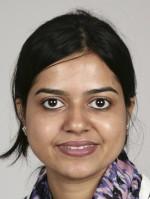
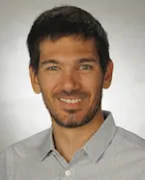
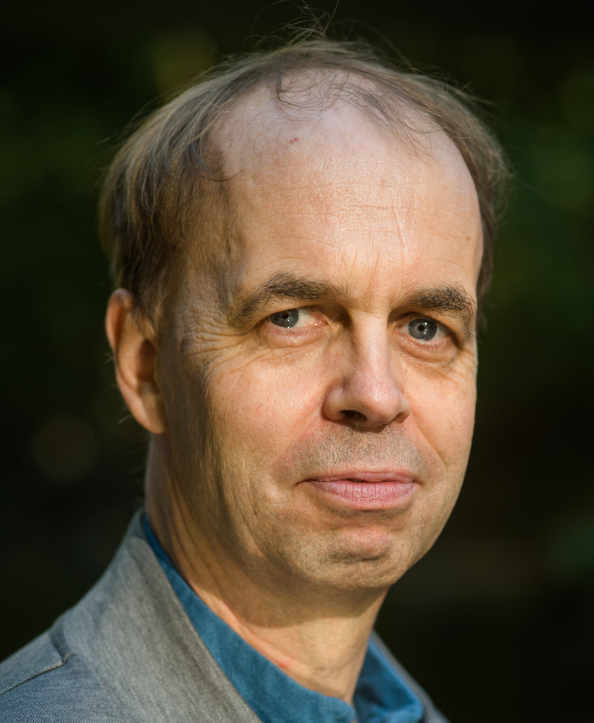
Christoph Heinzl is a Professor of Cognitive Sensor Systems at the University of Passau since September 2022. He leads the Knowledge-based Image Processing research group at the Fraunhofer Development Center X-ray Technology (EZRT) . His academic background includes a PhD in Informatics and a Habilitation in 2022 , both from TU Wien . Research Focus: Scientific visualization, visual analytics, immersive analytics, virtual/augmented reality, machine learning, and X-ray computed tomography (XCT). Key Trends: Development of novel visualization techniques for complex volumetric data (e.g., dynamic volume lines, visual coherence frameworks), parameter space analysis, and cross-virtuality collaboration tools. Applications: Aerospace component inspection, defect analysis in composites (CFRP, GFRP), porosity quantification, and 4DCT time-series exploration.
Lorenz Dörschel is an Adjunct Professor (Lehrbeauftragter) at the Institute of Automatic Control at RWTH Aachen University. He holds the academic title PD Dr.-Ing. habil, signifying post-doctoral research qualifications. His position is part-time, focusing on advanced control theory and applications. His primary research interests include: Control of distributed parameter systems (e.g., fluid dynamics, thermal processes) Model predictive control for industrial and automotive systems Parameter space methods for robust controller design Model reduction techniques for complex nonlinear systems Dörschel's recent publications (2018-2024) demonstrate broad applications across biomedical engineering, renewable energy, automotive systems, and industrial automation. His work consistently integrates mathematical rigor with practical implementations, emphasizing advanced control methodologies like nonlinear MPC, Lyapunov-based design, and Bayesian optimization. A recurring theme is the development of computationally efficient control strategies for distributed parameter systems. No scientific awards, student advising relationships, or research grants are documented in the available information.
Rupert Frank is a Professor of Mathematics at the University of Munich (LMU Munich) . He has held academic positions at Caltech (2013–2021) and Princeton University (2009–2013). His research spans Mathematical Physics , Spectral Theory , and Functional Inequalities , with a focus on quantum many-body systems, stability of matter, and nonlocal operators. Research Themes : Analysis of eigenvalues for Schrödinger and Pauli operators with complex potentials Semi-classical spectral asymptotics and effective theories for quantum systems Matrix inequalities and quantum information theory Calculus of variations in models like the liquid drop problem Geometric inequalities and their applications to quantum mechanics Magnetic field effects on spectral properties Recent Publications : 2025: Sharp stability for Sobolev/log-Sobolev inequalities with dimensional dependence 2025: Endpoint Schatten class properties of commutators 2024: Degenerate stability of Caffarelli-Kohn-Nirenberg inequality 2024: Hardy inequalities for large fermionic systems 2023: Review on Scott conjecture for Coulomb systems Scientific Awards : Young Scientist Prize in Mathematical Physics (2009) Grants and Collaborations : Principal Investigator in CRC TRR 352 (2023–) PI in Munich Center for Quantum Science and Technology (2019–) Multiple NSF grants (2009–2020) DFG and DAAD grants Editorial and Conference Leadership : Editorial boards: Communications in Mathematical Physics , Journal in Mathematical Physics , Journal of Spectral Theory , SIAM Journal on Mathematical Analysis , Springer Lecture Notes Organized conferences/workshops on quantum many-body systems, spectral methods, and functional inequalities (2018–2025)
Peter Richtarik is a Professor at the King Abdullah University of Science and Technology (KAUST), specializing in Machine Learning, Optimization, and Federated Learning. He actively teaches courses such as Stochastic Gradient Descent Methods and mentors PhD and MS students like Konstantin Burlachenko, Kai Yi, and Lukang Sun. His research spans distributed optimization, parameter-efficient fine-tuning, and theoretical frameworks for non-convex and non-smooth problems. Recent work includes 2025 contributions to Bernoulli-LoRA (theoretical PEFT) and Gluon (LMO-based optimizers). He co-developed Thanos (block-wise pruning) and BurTorch (CPU-optimized training framework). His publications focus on communication efficiency ( ATA , LoCoDL ), differential privacy ( DP-RBCD ), and stochastic proximal methods. Richtarik received the Charles Broyden Prize for his work on quasi-Newton methods. He frequently presents at workshops like MLSS in Senegal and FLOW seminars.
Prof. Dr. Julia Rieck is a Full Professor of Business Administration at the University of Hildesheim , leading the Department of Business Administration and Operations Research within the Faculty of Mathematics, Natural Sciences, Economics and Computer Science. As Dean of the Faculty , she oversees academic programs, quality management, and research initiatives. Her roles include academic advising for the Business Information Systems (B.Sc./M.Sc.) programs and active participation in examination boards and quality committees. Education: PhD in Political Science (Dr. rer. pol.) with summa cum laude (2008), Habilitation at Clausthal University of Technology (2014), and studies in Business Mathematics (Diploma, University of Hamburg, 2003) and Mathematics (Georg-August-University Göttingen, 2000). Research: Focuses on Operations Research , Supply Chain Management , Project Planning , and Logistics . Her work integrates mathematical modeling , machine learning , and real-world applications , particularly in disaster response , dynamic transportation , and sustainable e-commerce . Projects: Leads third-party funded initiatives like "IT für die sorgende Gesellschaft" (AI in healthcare/social sectors) and contributes to the HULLS real-lab (AI in aging societies). Collaborates with regional companies (e.g., Youco, ADITUS) and institutions (HAWK, University of Hannover). Teaching: Emphasizes practical application through case studies, industry partnerships, and the IT-Speed Dating event for student-company connections. Her courses cover project resource planning , logistics , and digital transformation . Labs & Teams: Active in the Institute of Business Administration & Business Information Systems , contributing to the KET Kompetenzwerkstatt (entrepreneurship support) and interdisciplinary teams in AI and sustainability research.
Michael Bach is a Professor for Water Management and Hydraulic Engineering at Stuttgart University of Applied Sciences since 2019. He also serves as the International Relations Officer (Auslandsbeauftragter) of the institution. His work focuses on integrated approaches to water resources management and modeling. Professor Bach's educational background includes: Civil Engineering studies at TU Darmstadt (Diplom-Ingenieur) Master's work at KTH Stockholm, Sweden Doctorate (Dr.-Ing.) from TU Darmstadt in 2010 His research interests span Water Management , Hydraulic Engineering , and Integrated Catchment Modeling . Professor Bach has developed software tools like BlueM.Wave for time series management and analysis, and BlueM.Sim for integrated river basin simulation. His work addresses critical challenges in urban wastewater systems, water quality modeling, and flood risk management, with applications both in Germany and internationally, including projects in Thailand. An analysis of his publication record reveals a strong focus on integrated modeling approaches for water systems, particularly for complex land use areas and urban environments. His work with the BlueM software package represents a significant contribution to the field, providing free tools for integrated river basin management. Many of his publications address the implementation of the EU Water Framework Directive and explore energy optimization within water management systems. Professor Bach has led numerous research projects since 2004, including ENERWA (energy optimization of water management systems), TASK (reservoir adaptation strategies for climate change), and IMCOP (integrated modeling of runoff and substance flows). He has collaborated extensively with academic and professional institutions, contributing to guidelines like the HSGSim for integrated urban wastewater system modeling. At Stuttgart University of Applied Sciences, Professor Bach is associated with the Kompetenzzentrum "Neue Forschungsfelder" (New Research Fields), where he contributes to advancing water management research and education.
Anne Seidlitz is a Professor of Pharmaceutical Technology at the Free University of Berlin since October 2024, previously holding the same position at Heinrich Heine University Düsseldorf (2021-2024). Affiliated with the Institute of Pharmacy , she leads the Seidlitz Pharmaceutical Technology Group , focusing on solid dosage forms and biorelevant drug release studies using 3D printing and hydrogel compartments . Doctorate in Pharmaceutical Technology (Greifswald, 2009) Habilitation in Natural Sciences (Greifswald, 2015) Qualified Person under German Medicines Act (AMG) Visiting Professorships: Hamburg, Jena Research Interests: Formulation development for implants , intravitreal injections , and subcutaneous delivery systems , with emphasis on biorelevant dissolution testing under physiological flow/movement conditions. Her group pioneers 3D-printed drug delivery devices and custom hydrogel models for vitreal , ear canal , and vascular implants . Publication Trends: Recent articles focus on thermal stability of steroids during extrusion, individualized implant design , and hydrogel compartments for non-oral dissolution testing . Key collaborations include EUFEPS Network and APV (Association for Pharmaceutical Process Engineering). Scientific Involvement: Member of EUFEPS Network on Bioavailability Scientific Council, German Federal Chamber of Pharmacists Active in APV (Arbeitsgemeinschaft für Pharmazeutische Verfahrenstechnik) Student Supervision: Mentored 24+ theses including 3D-printed tablets , implant coatings , and vitreal drug distribution . Collaborates with institutions in Düsseldorf , Jena , and Hamburg .
Atreyee Banerjee is a Researcher and Early Career Fellow at Albert-Ludwigs-Universität (Oct 2024–Jun 2025) and a Postdoctoral Researcher at the Max Planck Institute for Polymer Research (MPIP), Mainz, Germany, under Prof. Kurt Kremer. She completed her PhD in Chemical Science at CSIR-National Chemical Laboratory (2017) and postdocs at Cambridge University (2017–2019) and MPIP (2019–present). Education PhD (2017): CSIR-NCL, Pune, India (Supervisor: Dr. Sarika Maitra Bhattacharyya) MSc (2011): Visva Bharati, Santiniketan (Physical Chemistry) BSc (2009): Visva Bharati, Santiniketan Research Interests Focused on data-driven analysis of complex systems, including supercooled liquids, polymers, and organic crystals. Specializes in combining theory, simulations, and machine learning to study structural/dynamical properties. Key areas include glass transition, free energy landscapes, and polymer dynamics. Publications Overview Recent work includes machine learning approaches to glass transition in acrylic polymers (J. Chem. Phys., 2023), data-driven analysis of polymer dynamics (ACS Macro. Lett., 2023), and thermodynamic studies of supercooled liquids (Soft Matter, 2022). Research emphasizes methodological innovations like PCA clustering and basin-hopping optimization. Awards Recipient of DST-India Travel Award (2017), Best Research Scholar Award (CSIR-NCL, 2017), Shell-India Computational Talent Prize Bronze (2015), and multiple best poster awards (2014–2015). Grants & Labs Collaborates with Dr. Oleksandra Kukharenko in the Polymer Theory Group at MPIP. Active in computational initiatives like the ENGAGE Summer School (2023). Research involves datasets from GROMACS trajectories and open-source tools (e.g., scikit-learn).
Philippe Ciblat is a Professor at TELECOM Paris Tech, affiliated with the Department of Signal Processing and Communications. His research spans signal processing, wireless communications, and machine learning applications in networking. He has collaborated extensively with institutions like the University of Paris-Saclay and international researchers in areas such as cooperative communication protocols, resource allocation, and coding theory. Research Interests: Machine learning for signal processing, wireless channel modeling (Rician fading), lattice decoding, caching strategies, and distributed optimization. Notable Work: Pioneered transformer-based packet scheduling, neural network approaches to lattice decoding, and effective capacity analysis in fading channels. His contributions include over 170 publications in top venues (IEEE Trans. Signal Process., IEEE Trans. Wireless Commun.) and collaborations with industry partners on practical implementations like cache-aided polar coding. He has advised multiple researchers in distributed systems and wireless resource management.
Iason Papaioannou is an Adjunct Professor in the area of Uncertainty Quantification at the Technical University of Munich (TUM), affiliated with the Engineering Risk Analysis Group. He holds a habilitation from the TUM School of Engineering and Design and has been tenured since 2021 as an Akademischer Rat. His academic journey includes a Ph.D. in Civil Engineering from TUM (2012), an M.Sc. in Computational Mechanics (2007), and a Diploma in Civil Engineering from the National Technical University of Athens (2005). His research focuses on uncertainty quantification , reliability assessment , and Bayesian updating of engineering systems. Key areas include probabilistic modeling, machine learning applications, spatial variability analysis, and geotechnical reliability. He has pioneered methods for system reliability analysis, adaptive subset simulation, and cross-entropy-based importance sampling. Teaching responsibilities include courses such as Stochastic Finite Element Methods, Structural Reliability Methods, and Elements of Machine Learning. His work integrates advanced computational techniques with practical engineering challenges, emphasizing high-dimensional uncertainty analysis and data-driven model updating.
Claudius Gros is a Professor of Theoretical Physics at Goethe University Frankfurt. He holds a PhD from ETH Zurich and has held academic positions at Indiana University, University of Dortmund, and Saarland University. His research focuses on complex systems theory, physics of AI, self-organized robotics, and the Genesis Project, an interstellar mission concept for establishing life on exoplanets. His work bridges theoretical physics with interdisciplinary applications, including epidemiology modeling and societal dynamics analysis. Key contributions include the textbook Complex and Adaptive Dynamical Systems (Springer) and foundational studies on attention mechanisms in AI architectures. Education: Bachelor/Master: ETH Zurich, Theoretical Condensed Matter Physics PhD: ETH Zurich, 1985 (Advisor: T. Maurice Rice) Postdoc: Indiana University, 1988–1990 (With Steve Girvin and Allan MacDonald) Research Interests: Physics of AI : Analysis of transformer models, attention mechanisms, and neural scaling laws. Complex Systems : Epidemic models, dormancy dynamics in cellular automata (Spore Life), and self-organized robotics. Genesis Project : Feasibility of interstellar probes to seed life on exoplanets, magnetic sail deceleration. Societal Dynamics : Strategy condensation, envy-driven class stratification, and pandemic policy modeling. Articles Overview: Recent work spans AI physics (attention mechanisms, neural scaling), complex systems (epidemic oscillations, dormancy models), and robotics (self-organization principles). Themes include theoretical frameworks for embodied systems, computational models of societal behavior, and interdisciplinary applications of dynamical systems theory. Advising & Grants: Claudius Gros has advised multiple researchers, with co-authored papers featuring collaborators like O. Neumann, D.H. Nevermann, and B. Sandor. His grants include funding for Genesis Project studies and robotics research. Labs & Teams: His research group focuses on Physics of AI and Self-Organized Robotics , with active projects on embodied robots, neural network dynamics, and interstellar mission feasibility.
Cristiano Porciani is Professor of Astrophysics at the University of Bonn's Argelander Institute for Astronomy, specializing in cosmological structure formation and galaxy evolution. He leads a research group working on numerical simulations of large-scale structure and theoretical cosmology. His research focuses on dark matter distribution, galaxy bias, and cosmological parameter estimation using perturbation theory and high-performance computing. Recent work examines relativistic effects in large-scale structure and intensity mapping techniques. Publications show strong emphasis on Euclid mission science, including instrument characterization, survey simulations, and cosmological tests. Article trends reveal consistent development of statistical methods for analyzing next-generation sky surveys. Supervises 9 graduate students working on cosmological simulations, galaxy clustering statistics, and radiative transfer modeling. Leads research projects within the Euclid Consortium and Transregional Collaborative Research Centre.
PD Dr. habil. Thomas Wöhling serves as a Senior Research Scientist and Team Leader for Stochastic Modelling of Hydrosystems at the Chair of Hydrology, Dresden University of Technology's Faculty of Environmental Sciences. His research spans integrated environmental systems modeling with particular expertise in surface water-groundwater interactions, braided river systems, and vadose zone processes. Previously, he held research positions at Water and Earth System Sciences Competence Cluster in Tübingen (2010-2015) and Lincoln Environmental Research in New Zealand (2006-2010). Dr. Wöhling completed his Dipl.-Hydrol. (1999) and PhD in Hydrology (2005) at Dresden University of Technology, followed by habilitation in Stochastic Hydrology (2021). His educational background includes extensive research at the Institute of Hydrology and Meteorology at TU Dresden (1999-2005) where he developed foundational expertise in hydrological modeling. Wöhling's research focuses on integrated modeling of coupled environmental systems , particularly flow and contaminant transport in surface water-groundwater systems, nutrient and energy fluxes in soil-plant-atmosphere systems, and distributed hydrological modeling. His work emphasizes stochastic modeling and uncertainty analysis , with significant contributions to inverse modeling, model calibration, multiobjective optimization, and Bayesian model averaging techniques. He has pioneered methods for evaluating monitoring network worth and data utility for environmental models. His publication record demonstrates consistent contributions to hydrological science, with recent work (2023-2025) focusing on machine learning applications in hydrology, advanced statistical inversion techniques, and complex karst system modeling. Key trends include integration of physics-based and data-driven approaches, improved uncertainty quantification methods, and applications to climate change impacts on water resources. His work bridges theoretical advances with practical applications in New Zealand's braided rivers and European hydrological systems. STAHY Best Paper Award (2018) ASCE Journal of Irrigation and Drainage Engineering Best Reviewer Awards (2008, 2010, 2011, 2015, 2018) ASCE Journal of Irrigation and Drainage Engineering Best Paper Awards (2008, 2009) Dr. Wöhling leads the Stochastic Modelling of Hydrosystems team and has secured funding for numerous projects including Klimakonform, ISOSIM, VAMOS II, and the International Research Training Group 'Integrated Hydrosystem Modelling.' His work combines novel monitoring techniques with modeling and optimal sensor placement to improve prediction reliability for river-groundwater exchange fluxes. He collaborates extensively with international partners, particularly in New Zealand through the Lincoln Agritech's Braided Rivers program. His laboratory work focuses on combining traditional hydrological measurements with advanced computational techniques, including deep learning applications for soil surface hydrology and time-windowed Bayesian analysis for predictive modeling. The team maintains strong connections with field sites in Germany's Saxon region and New Zealand's Canterbury Plains, facilitating integrated theoretical and empirical research approaches.
Prof. Dr. Haris Gačanin is a faculty member at RWTH Aachen University, affiliated with the Institute for Distributed Signal Processing under the College of Electrical Engineering. His research focuses on integrating machine learning with wireless communication systems, particularly in industrial IoT, edge computing, and network optimization. Current academic rank: Professor Contact: harisg@dsp.rwth-aachen.de Research Interests: Wireless systems, machine learning, signal processing, and network optimization. Key contributions include: Adaptive resource allocation in IIoT and vehicular networks AI-driven channel estimation and feedback mechanisms Security-oriented emitter identification via metric learning Federated/transfer learning for edge environments Hardware-efficient deep learning models for mmWave and THz communications Methodological Focus: Combines reinforcement learning, attention mechanisms, and robust neural architectures with practical implementations on FPGA and vehicular systems.
Prof. Sherry Suyu is an Associate Professor at the Technical University of Munich (TUM) and a Max Planck Fellow at the Max Planck Institute for Astrophysics (MPA). Her research focuses on probing the dark cosmos through gravitational lensing, dark energy, dark matter, and supermassive black holes. She leads the H0LiCOW program measuring the universe's expansion rate using lensed quasars and the HOLISMOKES program studying lensed supernovae. Her work has been supported by an ERC Consolidator Grant. Education and Affiliations: PhD in Physics from Caltech (2008), postdoctoral positions at UC Santa Barbara and Stanford University. Joint appointments at MPA (since 2016) and TUM. Member of the Excellence Cluster ORIGINS. Holds honorary positions including Emmy Noether Visiting Fellowship at Perimeter Institute (2018). Research Interests: Gravitational lensing, cosmic expansion rate, galaxy evolution, supernovae, tidal disruption events, and deep learning applications. Her group studies galaxy clusters, dark matter distribution, and cosmological models using lensing techniques. Awards: 2021 Berkeley Prize (AAS), 2024 ISIMM Senior Prize. Over 90 peer-reviewed publications. Teaches courses on extragalactic astrophysics and gravitational lensing at TUM. Labs/Teams: Head of the Observational Cosmology Group at TUM-MPA. Collaborates internationally with institutions in the US, Europe, Japan, and Taiwan. Supervises postdocs, PhD students, and bachelor/master researchers.