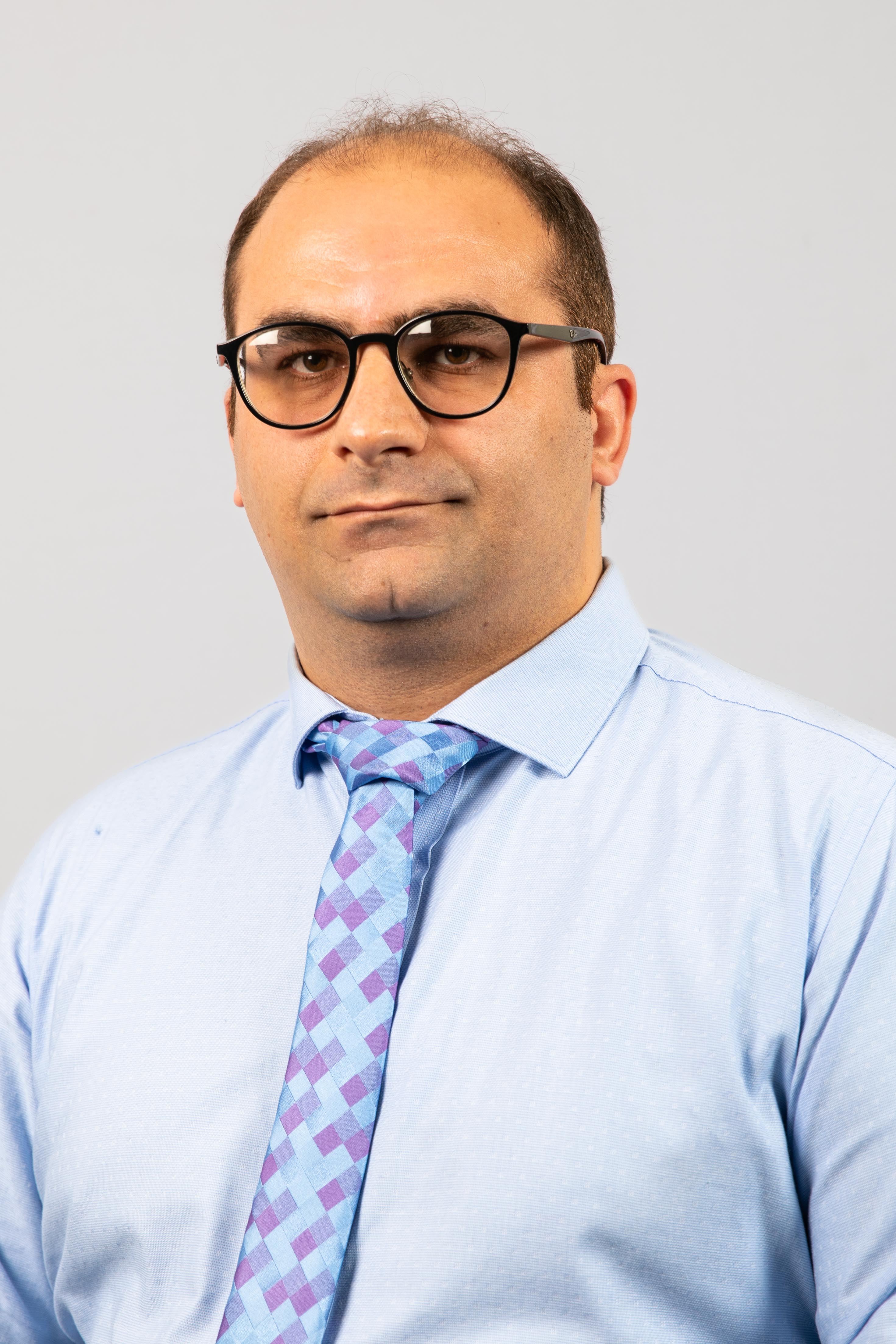
Zachary Aman is a Professor in the School of Engineering , Chemical Engineering department at the University of Western Australia . His research focuses on gas hydrates , flow assurance , and subsea pipeline management , with applications in petroleum engineering and hydrocarbon processing . Research Output: 127 publications Grants: 53 funded projects H-index: 39 Research interests include: Hydrate formation kinetics and rheology Subsea flowline stability and inhibition Hydrocarbon separation under high-pressure Novel composite materials and ionic liquids for hydrate management Article Trends highlight his work on hydrate probability models , flowloop experiments , and environmental applications like oil spill modeling and CO 2 capture. His recent work explores nanostructured additives and transient simulation tools for energy and environmental systems. Grants and Supervision reflect 53 funded projects and 19 supervised works, indicating active mentorship and industry collaboration.
Dr. Sie Teng Soh is an Associate Professor at Curtin University's School of Electrical Engineering, Computing and Mathematical Sciences. With qualifications including a PhD from Louisiana State University, he specializes in computer networks, wireless systems, and algorithm design. Research focuses on: Network topology optimization for UAV systems Energy-efficient IoT task scheduling Reliable wireless communication protocols Game-theoretic network management Green computing in software-defined networks Publication trends show advancing work in UAV network optimization, with recent articles addressing max-min rate optimization, energy harvesting in IIoT, and machine learning approaches for coverage prediction. His research consistently addresses practical challenges in wireless network deployment under real-world constraints. Teaching areas include advanced courses in network reliability and traffic engineering. Professional service includes editorial roles for IEEE Transactions on Parallel and Distributed Systems and program committee memberships for major conferences including FAST and EuroSys.
Dr. Ehsan Pashajavid is a Senior Lecturer at Curtin University's School of Electrical Engineering, Computing and Mathematical Sciences, within the Faculty of Science and Engineering. His research focuses on stochastic optimization, renewable energy integration, microgrid control, and electric vehicle systems. Research interests include: Microgrid and smart grid control algorithms Renewable energy resource management Power system stability and operation Energy storage optimization Electric vehicle-grid integration His publications demonstrate significant contributions to power system resilience, with recent work emphasizing battery storage economics, fault-tolerant converters, and model predictive control for grid stability. Article trends show strong focus on renewable integration challenges and optimization techniques for modern energy systems. Awards include Senior Member status in IEEE and its Power & Energy, Industrial Applications, and Power Electronics societies. Teaching responsibilities encompass graduate courses in Renewable Power Generation Systems, Smart Grid Control, and Renewable Energy Principles.
Professor Xue Li is a faculty member in the School of Electrical Engineering and Computer Science at the University of Queensland. His research focuses on machine learning, data mining, and their applications in healthcare, materials science, and computer vision. He has authored over 300 publications, including seminal works on knowledge graph completion, video quality enhancement, and alloy design using machine learning. His work bridges theoretical advancements with real-world applications, such as clinical diagnosis andTinyML systems. Key research interests include graph representation learning, medical informatics, and efficient algorithms for multimedia data. Notable contributions include developing commonsense-enhanced relation extraction models and frameworks for compressed video reconstruction. His research also addresses challenges in federated learning and privacy-preserving genomics. Prof. Li has collaborated extensively with industry and academia, contributing to projects in RFID systems, electronic nose pattern recognition, and cybersecurity. His work is published in top-tier venues like IEEE Transactions and ACM conferences. Despite no listed awards, his prolific output underscores academic impact.
Dr. Thomas Parkinson is a Lecturer at The University of Sydney and Deputy Director of the IEQ Lab within the School of Architecture, Design and Planning. His research focuses on high-performance buildings, indoor environmental quality (IEQ), and human thermal physiology. He holds a PhD in Architectural Science from The University of Sydney and has led technical development of the SAMBA IEQ Monitoring System. He previously worked at the Center for the Built Environment at UC Berkeley. Education: BEnvMgt, BSc(Hons1), PhD in Architectural Science (University of Sydney). Research interests include thermal comfort dynamics, sensor technology for built environments, and adaptive comfort models. Key contributions include the ASHRAE Global Thermal Comfort Database II and studies on workplace dissatisfaction in 600 office buildings. Awards: 2022 Ralph G. Nevins Award (ASHRAE) for thermal comfort research, 2018 Best Paper Award (Building and Environment). He reviews for journals like Building and Environment and serves on ASHRAE Technical Committees. Teaching: Courses include BADP1001 Empirical Thinking and DESC9067 Mechanical Services. Current advisee: Sepideh Borghei (PhD project on indoor greenery's impact). Affiliations: Lawrence Berkeley National Laboratory, UC Berkeley's Center for the Built Environment. Active in ASHRAE committees and professional networks.
Professor Glen Tian is a Professor at the School of Computer Science , Queensland University of Technology . He holds two PhDs: one in computer and software engineering from the University of Sydney (2009) and another in industrial automation from Zhejiang University (1993) . His academic career spans institutions including Hong Kong University of Science and Technology, Curtin University, and the University of Maryland at College Park. Editor-in-Chief of the Handbook of Real-Time Computing (Springer) Associate Editor for Information Sciences (Elsevier) and Asia-Pacific Journal of Chemical Engineering (Wiley) His research focuses on big data computing , cloud computing , computer networks , smart grid communication and control , networked control systems , and cyber-physical system security . Applications include power systems , medical big data , vehicular networks , and transport systems . Recent publications highlight advancements in smart grid communications , distributed optimization , secure multi-agent systems , and medical imaging analysis . He has led QUT's Big Data Lab and served as Leader of QUT's Networks and Communications Discipline . Scientific achievements include Over 20 research grants totaling >$6M 6 Australian Research Council (ARC) grants 1 MRFF-TTRA grant ($745,623) 1 ATN-DAAD Australia-Germany Collaborative Grant 1 DEST International Science Linkage grant He supervises PhD students in big data bioinformatics , smart grid optimization , and cyber-physical security , while mentoring 30+ postdocs and research fellows. Current projects include mitigating cyberattacks on power systems and developing AI-based atheroma diagnostic tools .
Prof. Tansu Alpcan is a Professor and Reader in the Department of Electrical and Electronic Engineering at The University of Melbourne, Australia. He holds a PhD from the University of Illinois at Urbana-Champaign (UIUC) and has held academic positions at Technical University Berlin and Deutsche Telekom Laboratories. His research focuses on AI/ML applications in engineering, game theory, cybersecurity, Industry 4.0, quantum machine learning, smart grids, and communication networks. Education: PhD in Electrical and Computer Engineering (UIUC, 2006); MSc (UIUC, 2003); BEng (Bogazici University, 1999). Research interests include adversarial machine learning, cybersecurity games, quantum computing, and renewable energy systems. Authored over 200 papers and two books, including Network Security: A Decision and Game Theoretic Approach (Cambridge, 2011). Recipient of IEEE Senior Membership (2012) and multiple best paper awards. He leads the WILAB and has secured grants such as the ARC Training Centre in Optimisation Technologies. Current projects include quantum machine learning, adversarial reinforcement learning, and smart grid modeling. Supervised 17 PhD and 3 Master’s students.
Dr Mahdi Davoodianidalik is a researcher in the Department of Nuclear Physics & Accelerator Applications at the Australian National University (ANU). He is affiliated with the Space plasma power and propulsion group and the Physics of fluids group, focusing on interdisciplinary research at the intersection of plasma physics, fluid dynamics, and space propulsion technologies. His research interests include Turbulence and wave-driven flows Plasma thrusters and electrothermal propulsion Fluctuation-induced forces and interactions Fluid-structure dynamics Thermal engineering of micro-thrusters Nonlinear phenomena in fluids Recent publications highlight his work on analogs of the Casimir effect in turbulent flows, passive propulsion mechanisms, and advanced propulsion systems using solid hydrocarbon propellants. He has contributed to understanding turbulence in both fundamental and applied contexts, with a focus on energy transfer and chaotic flow phenomena. His collaborations span ANU colleagues including Nicolas Francois and Michael Shats, with a strong emphasis on experimental and computational fluid dynamics.
Rasheed Hussain is an Associate Professor of Intelligent Network Security at the Smart Internet Lab and Bristol Digital Futures Institute (BDFI), School of Electrical, Electronic and Mechanical Engineering at the University of Bristol, UK. Previously, he served as a Senior Lecturer at the same institution from December 2021 to July 2025. He has held academic positions at Innopolis University, Russia, where he served as Associate Professor and Director of the Institute of Information Security and Cyber-Physical Systems, and as a guest researcher at the University of Amsterdam, Netherlands. His educational background includes a PhD in Computer Engineering from Hanyang University, South Korea (2011-2015), an MS in Computer Engineering from the same institution (2008-2010), and a B.Sc in Computer Software Engineering from the University of Engineering and Technology, Peshawar, Pakistan (2003-2007). Hussain's research focuses on network and cybersecurity, particularly future network security including 6G, the role of Digital Twins in future networks and systems security, and Responsible AI including fairness, trustworthiness, and explainability. His work spans information security, privacy, applied cryptography, vehicular networks, Internet of Things, Content-Centric Networking, cloud computing, API security, and blockchain applications. Senior member of IEEE Member of ACM ACM Distinguished Speaker Editorial board member for IEEE Communications Surveys & Tutorials, IEEE Access, and other journals His recent publications demonstrate a strong focus on the intersection of AI, networking, and security, with particular emphasis on Digital Twins, blockchain applications, federated learning, and 6G security. His research shows a clear trajectory toward addressing security challenges in emerging network architectures while incorporating responsible AI principles. Scientific Recognition: ACM Distinguished Speaker Netherlands University Teaching Qualification (Basis Kwalificatie Onderwijs, BKO) Hussain serves as a reviewer for major IEEE transactions, Springer and Elsevier journals, and participates in technical program committees for conferences including IEEE VTC, IEEE VNC, IEEE Globecom, and IEEE ICC. He is also certified as a trainer for the Instructional Skills Workshop (ISW) and contributes to the ESRC Centre for Sociodigital Futures (CenSoF) at the University of Bristol. His laboratory work centers around the Networks and Blockchain Lab, which focuses on security solutions for next-generation networks, with particular emphasis on Digital Twins security, blockchain applications, and AI-driven network security solutions. His current projects involve developing secure frameworks for future networks, trustworthy AI models, and privacy-preserving federated learning approaches.
Professor Guoyin Li is a faculty member at the School of Mathematics & Statistics , University of New South Wales (UNSW Sydney). He holds a Ph.D. from The Chinese University of Hong Kong (2007) and has been at UNSW since 2011, currently serving as Professor and Research Director. Research Interests His work spans optimization , variational analysis , and multilinear algebra , with applications in robust optimization , structural engineering , and machine learning . He specializes in nonconvex nonsmooth optimization , tensor eigenvalue problems , and exact semi-definite programming relaxations . Recent Publications His articles focus on robust optimization for structural design, nonlinear approximation techniques, and conic programming for uncertain data. Key journals include Foundations of Computational Mathematics , Mathematical Programming , and Computer Methods in Applied Mechanics and Engineering . Awards and Grants Fellow of the Australian Mathematical Society (2023) 2022 AustMS Medal 2024 Marguerite Frank Award ARC Discovery Grants (2021-2023, 2025-2027) ARC Research Hub Project (2017-2021) Professional Roles He serves on editorial boards of SIAM Journal on Optimization , Optimization Letters , and Journal of Optimization Theory and Applications , and has delivered plenary lectures at international conferences in Austria, Spain, and Canada.
Professor Javen Qinfeng Shi is a faculty member at the University of Adelaide, holding the position of Professor in the School of Computer and Mathematical Sciences under the Faculty of Sciences, Engineering and Technology. He serves as Founding Director of the Causal AI Group and as one of the directors at the Australian Institute for Machine Learning (AIML), based at the North Terrace campus location. His research centers on causation, artificial intelligence, mind and metaphysics, with Google Scholar rankings placing him 4th globally in causation and 7th in probabilistic graphical models. Shi develops causal AI methods to identify root causes, discover latent variables, eliminate spurious correlations, enhance cross-domain generalization, model intervention consequences, and solve counterfactual queries. His work focuses on optimizing intervention sequences for desired outcomes under resource constraints, applied to material discovery, agriculture, mining, sports, manufacturing, bushfire prediction, healthcare, and education. Professor Shi's industry impact includes the NOBURN bushfire prediction app (released 2023 with 50+ media coverages), energy material discovery via AI catalysts, and smart manufacturing logistics solutions. His work with the Responsible AI Think Tank (2022-2024) and current AI Industry Forum panellist role (2024 onward) demonstrates active contribution to national and state AI ecosystem development. His scientific awards include: 1st place at Open Catalyst Challenge (NeurIPS AI for Science 2023) Winner of AUS/NZ Bushfire Data Quest 2020 Citizen Science Grant 2021 Finalist in SA Department of Energy and Mining Gawler Challenge 2020 (2k+ participants from 100+ countries), recognized for "The most innovative modelling" 2nd place in Explorer Challenge 2019 (1k+ entries from 62 countries) 1st place at SAIC Volkswagen Logistics Innovation Day 2019 Shi is eligible to supervise Masters and PhD students and has secured research funding including the Citizen Science Grant 2021. His industry collaborations span energy, agriculture, mining, and emergency management, translating theoretical causal AI into practical tools like NOBURN. He leads the Causal AI Group at the University of Adelaide and directs research teams at AIML, focusing on causal inference frameworks for distribution shift resilience and intervention optimization. Current projects emphasize bushfire prediction, material science applications, and AI ethics implementation through the AI Industry Forum.
Dr. Boyin Ding is an Associate Professor at the University of Adelaide , serving as Academic Director at Haide College and researcher in the Mechanical Engineering department within the Faculty of Sciences, Engineering and Technology. He leads the Wave Energy Research initiative established in 2014, while also contributing to Robotics and Biomechanics through his work with the Flinders Medical Device Research Institute. Research Areas: Ocean Wave Energy Harvesting Control Systems for Renewable Energy 6DOF Robotic Testing Spine Biomechanics Transnational Education Programs Key Collaborations: Australia-China Joint Research Centre for Offshore Wind & Wave Energy Acoustics, Vibration and Control Research Group Scientific Awards: Australian Endeavour Fellowship Malcolm Kinnaird Engineering Excellence Award (2012) His recent publications focus on hybrid offshore energy systems, nonlinear hydrodynamics in wave energy converters, and biomechanical testing technologies. He has developed control algorithms for floating offshore wind-wave systems and pioneered 6DOF robotic platforms for medical applications. As an eligible PhD supervisor, he actively collaborates with global industries and academic institutions.
Dr. Wibowo Hardjawana is a Senior Lecturer in Telecommunications Engineering at the School of Electrical & Computer Engineering , University of Sydney. He holds a PhD from the University of Sydney and serves as an ARC DECRA Research Fellow. His research focuses on wireless network softwarisation, enabling programmable radio interfaces to address traffic elasticity in 5G/6G systems. Education : PhD (University of Sydney) Grants : ARC DP210100744 (2021), ARC DECRA DE140101114 (2014) His work spans 5G/6G network architectures , machine learning for wireless systems , and open radio interfaces . Key contributions include graph representation learning for interference management, Bayesian neural network detectors for OTFS modulation, and NOMA decoding techniques . Recent publications analyze ultra-reliable low-latency communications , UAV-enabled networks , and stochastic geometry in wireless systems . He has collaborated with institutions in China, Indonesia, and UAE, and engaged with industry partners like Telstra and Ausgrid.
Professor Isabella Dobrescu is Head of the School of Economics at the University of New South Wales (UNSW) Business School and co-chair of the STEP UP initiative in Education. She serves as an editor for the Journal of Pension Economics & Finance and maintains an active research program spanning labor economics, public finance, health economics, and applied econometrics. Her educational background includes a Ph.D. in Economics with Honors from the University of Padua (2009), an M.Sc. in Economic Mathematical Modeling Summa cum Laude from West University of Timisoara (2005), and dual bachelor's degrees in Economics from Nottingham Trent University and Finance Summa cum Laude from West University of Timisoara (2003). Dobrescu's research has evolved from structural work on consumption and saving dynamics to pioneering applications combining theory, empirical analysis, and randomized controlled trials to improve educational outcomes through technology. Her recent work focuses on financial literacy interventions for high school students through the STEP UP program, while maintaining her longstanding research on aging populations, retirement decision-making, and risk behavior. Her publication portfolio demonstrates consistent output across labor economics, health economics, and applied econometrics, with recent emphasis on educational technology interventions and financial decision-making in retirement contexts. The research shows methodological diversity spanning structural modeling, nonparametric partial identification techniques, and experimental approaches. UNSW Business School Research Impact Award (2021) UNSW President's Award for Building Collaborations (2019) UNSW Scientia Education Fellowship (2017) Australian Government Office of Learning & Teaching Citation (2016) ARC Early Career Research Fellowship (2012) Dobrescu has secured over AU$2.5 million in competitive research funding since 2010, including major ARC Linkage grants and substantial UNSW strategic investments. She leads the STEP UP initiative which has received over AU$650,000 in funding for financial literacy outreach programs. Her collaborative approach is evident in numerous multi-investigator projects with colleagues including Bateman, Thorp, Motta, and Newell across economics, finance, and education domains. As Head of the School of Economics and co-chair of STEP UP, Dobrescu leads research teams focused on educational interventions using technology, retirement decision-making, and the economics of aging. Her Playconomics platform represents a significant innovation in experiential economics education, receiving media coverage from major outlets including The Sydney Morning Herald and The Australian.
Professor Vallipuram Muthukkumarasamy is an Associate Professor at the School of Information and Communication Technology at Griffith University, where he has pioneered Network Security teaching and research since joining in 2001. He leads the Networking & Security and Blockchain Research Group at the Institute for Integrated and Intelligent Systems. Muthu holds a Ph.D. from Cambridge University and a B.Sc. Eng. with 1st Class Honors from the University of Peradeniya, Sri Lanka. His extensive academic appointments include Group Leader of Network Security and Blockchain Research (2008-present), Program Director for the Graduate Certificate in Blockchain Technology (2022-present), HDR Convenor (2022-present), Member of the University Council (2020-2021), and Deputy Head of School for Learning and Teaching (2013-2016). Muthu's research expertise spans Cyber Security, Blockchain Technology (DLT), and Wireless Sensor Networking. He has secured national and international funding for interdisciplinary research, published over 150 articles in international journals and conferences, and supervised more than 30 research Masters and PhD students to completion. He pioneered the Network Security teaching at Griffith and successfully proposed and led the development of Queensland's first Master of Cyber Security Program, creating a truly interdisciplinary curriculum with Law, Business, and Criminology Schools. His recent publications reveal a strong research trajectory in blockchain applications, security visualization techniques, and wireless sensor networks. His work explores DeFi user behavior analysis, NFT privacy risks in the metaverse, blockchain transaction visualization, and the integration of blockchain with AI for credit scoring systems. His wireless sensor network research focuses on energy-efficient routing protocols and network lifetime modeling. Muthu has received multiple best teacher awards from students and peers, and during his tenure as Deputy Head of School, the Griffith IT program was ranked #1 in Australia for overall student satisfaction. He successfully proposed and developed Cisco-related courses at undergraduate and postgraduate levels and instrumental in creating industry-sought-after networking and security courses across all academic levels. His funded research includes significant projects such as Increasing the South East Queensland Cyber Security Workforce, Linking Digital Payments to Crime Using Big Data Machine Learning Tools, Improving Water Markets through Digital Technologies, and developing Indo-Australian partnerships for digital transformation through blockchain. He is actively involved in community and charity activities and has been instrumental in internationalization efforts for Griffith University.