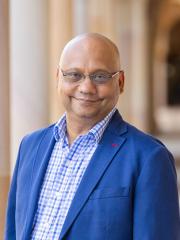
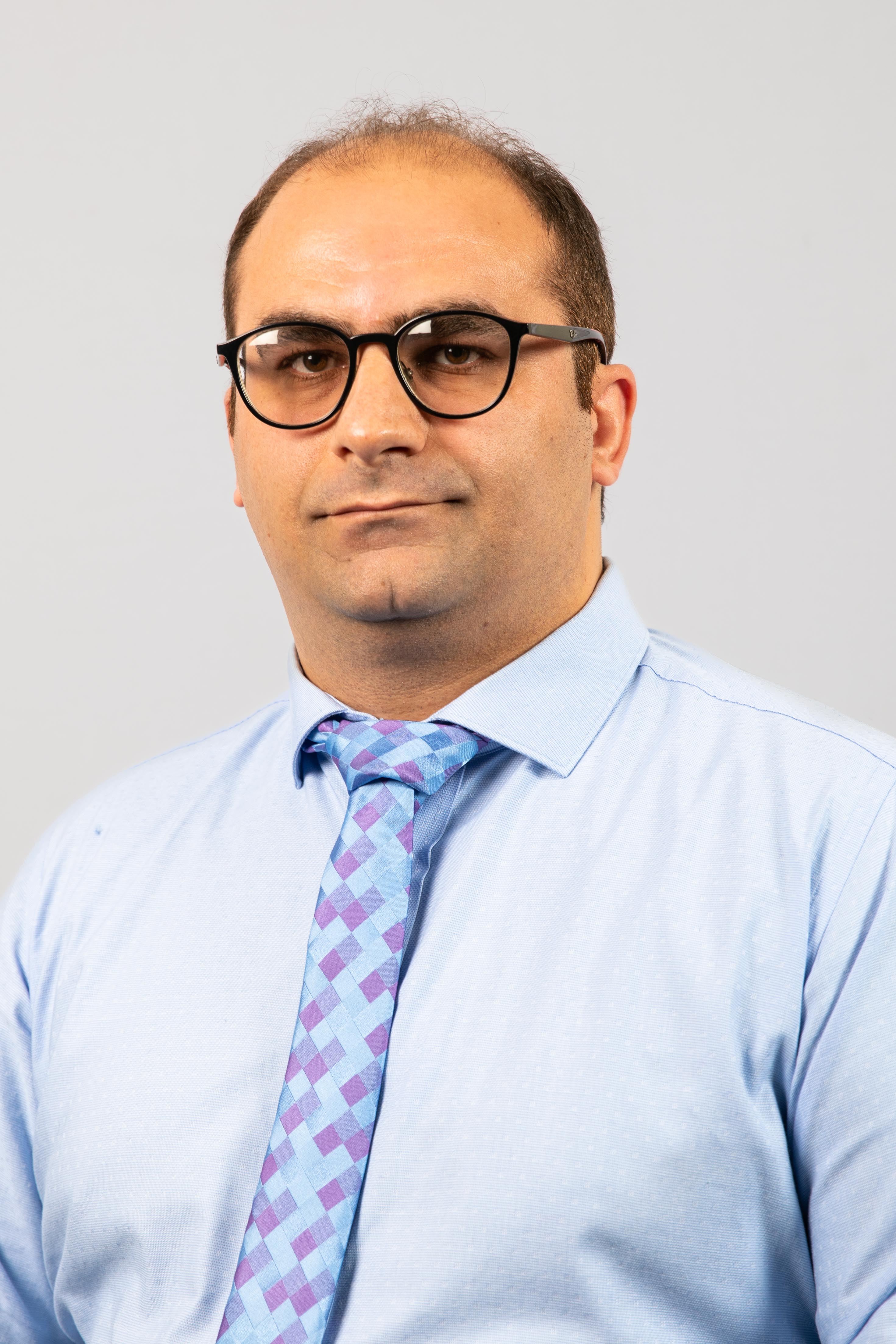
Andrew Zammit Mangion is an Associate Professor at the University of Wollongong , affiliated with the School of Mathematics and Applied Statistics . His research focuses on spatio-temporal statistics, computational methods, and environmental informatics, with applications in climate science and geospatial data analysis. Education : PhD in Statistics (University of Sheffield, 2012), B.Eng. (University of Malta, 2007) Research Themes : Spatio-temporal modeling, Bayesian inversion frameworks (e.g., WOMBAT v2.S), deep learning integration, and statistical software development (e.g., FRK package) Grants & Projects : ARC DECRA Fellow (2018), Chief Investigator on ARC Discovery Project (greenhouse gases), ARC Special Research Initiative (Securing Antarctica's Environmental Future), and ARC Industrial Transformation Hub (TIDE). Collaborations : University of Bristol, University of Edinburgh, ESA CCI, NASA OCO-2 data projects Scientific Awards include the prestigious Australian Research Council Discovery Early Career Researcher Award (DECRA). His work spans Antarctic ice sheet analysis, CO2 flux inversion, and scalable spatial statistical models for environmental monitoring.
Professor Paul Webley is the Woodside Monash Energy Partnership Director and Professor of Chemical Engineering at Monash University's Department of Chemical and Biological Engineering. His research focuses on sustainable energy technologies including carbon capture, hydrogen production/storage, and adsorption engineering. His work spans thermodynamics, gas separation processes, and clean fuel development, with applications in energy efficiency and environmental sustainability. Recent publications demonstrate significant contributions to CO2 utilization, hydrogen liquefaction/storage, and advanced separation technologies. Professor Webley leads multiple projects on carbon dioxide conversion, hydrogen technologies, and adsorption process optimization. He mentors PhD students in areas including carbon capture, hydrogen liquefaction, and adsorption engineering.
Dr. Lijun Chang is an Associate Professor in the School of Computer Science at the University of Sydney. He holds an ARC Future Fellowship (2019–2022) and an ARC DECRA Fellowship (2015–2017). Previously, he was at the University of New South Wales. His research focuses on graph analytics, mining, algorithms, and network science. He teaches courses like INFO5011 (Competitive Programming), COMP5313 (Large Scale Networks), and COMP9120 (Database Management Systems), and coaches the USYD Programming Competition Teams. Education: B.Eng. in Computer Science & Technology from Renmin University of China; PhD from the Chinese University of Hong Kong. Research highlights include scalable graph processing systems (e.g., ScaleG), densest subgraph detection, and graph similarity search. He leads projects funded by ARC grants such as 'Advanced Search of Cohesive Subgraphs in Big Graphs' (2018) and 'Directionality-Aware Cohesive Subgraph Search' (2022). His work emphasizes efficient algorithms for large-scale networks and graph databases. Awards : ARC Future Fellow, ARC DECRA Fellow Students : Yu KONG, Rashmika MATHTHAKA GAMAGE, Mouyi XU Labs/Teams : Focuses on graph algorithms and systems research, contributing to open-source tools and large-scale network analysis.
Dr Conrad Wasko is a Sydney Horizon Fellow at the University of Sydney and an honorary fellow at the University of Melbourne. He specializes in environmental hydrology and climate change impacts on extreme rainfall and flooding. His work has been cited by the IPCC and he co-leads the update to Australia’s flood estimation guidelines. Previously, he held an ARC DECRA Fellowship and a McKenzie Fellowship. He has published over 50 articles and received awards including the Batterham Medal (2023) and the MSSANZ Early Career Research Excellence Award (2019). His research focuses on quantifying climate-driven changes in rainfall patterns and flood risks, with applications to infrastructure resilience and policy. Education: PhD in Civil Engineering, UNSW Sydney (2016) Bachelor/Master’s qualifications (not explicitly stated in text) Key Roles: Member of The Net Zero Institute Editor of Journal of Hydrology X and Advances in Water Resources Hydroclimate Stream Leader, Modelling and Simulation Society of Australia and New Zealand His research emphasizes the intensification of extreme rainfall events with global warming, particularly their implications for flood risk and urban infrastructure. He uses advanced statistical models and climate data to project future flood scenarios and improve design standards. Recent work includes analyzing non-stationary rainfall patterns and improving flood frequency analysis techniques. Awards and Honors: Batterham Medal (Australian Academy of Technological Sciences and Engineering, 2023) Veski Victoria Fellow (2020) MSSANZ Early Career Research Excellence Award (2019) Lorenz G Straub Award (2016) Grants and Projects: ARC DECRA Fellowship (University of Melbourne) Contributions to national climate change adaptation frameworks Labs and Collaborations: Partnerships with the Water Research Centre (UNSW) and the Net Zero Institute Collaborations on global flood risk assessments and hydrological modeling tools
Dr Xinchen Zhang is a Grant-Funded Researcher (A) at the University of Adelaide's Department of Mechanical Engineering within the School of Electrical and Mechanical Engineering. His research focuses on integrating machine learning with computational fluid dynamics (CFD) to enhance predictive capabilities for multiphase flow solutions, particularly in sustainable energy applications like decarbonization technologies. He holds a PhD (2022) with a Dean's Commendation for Doctoral Thesis Excellence, emphasizing fluid and particle dynamics in particle-laden flows. His work addresses challenges in net-zero industrial processes such as limestone calcination and hydrogen production via methane pyrolysis, leveraging advanced CFD and ML-augmented methodologies. Key research areas include turbulence modeling, particle dispersion in jets, and flow regime analysis in horizontal particle-laden pipe systems. He is eligible to supervise Masters and PhD students as a co-supervisor. Dr Zhang's publications span 2018–2024, with recent trends focusing on physics-informed machine learning for turbulence modeling and multiphase flow optimization. His contributions advance computational efficiency and accuracy in predicting complex fluid-particle interactions.
Chun Ouyang is a Professor at Queensland University of Technology (QUT) in the School of Computer Science within the Faculty of Science. With an extensive publication record spanning over two decades from 2002 to 2025, Professor Ouyang has established themselves as a leading researcher in Business Process Management, Process Mining, and Explainable AI. Their work bridges theoretical foundations with practical applications across healthcare, finance, and industrial sectors. Professor Ouyang's research interests primarily focus on Business Process Management systems, Process Mining techniques, Explainable Artificial Intelligence, and Healthcare Process Analysis. Their work has evolved from foundational BPMN/BPEL translation research in the early 2000s to sophisticated process mining approaches in the 2010s, and most recently to cutting-edge Explainable AI applications in clinical and business contexts. They have developed novel methodologies for process querying, predictive process analytics, and XAI evaluation frameworks that have significantly advanced the field. Their research consistently emphasizes practical applicability while maintaining strong theoretical foundations, with publications in top-tier journals and conferences including IEEE Transactions, Springer journals, and major BPM conferences. Analysis of Professor Ouyang's recent publications (2023-2025) reveals a strategic research trajectory that integrates traditional process mining with modern AI techniques, particularly focusing on explainability and trustworthiness. Their work demonstrates a consistent pattern of addressing real-world challenges through rigorous methodological development, with increasing emphasis on healthcare applications, clinical decision support systems, and the ethical implications of AI deployment. The publications show strong interdisciplinary collaboration patterns, particularly with medical researchers and industry partners. Professor Ouyang has mentored numerous PhD students and early-career researchers who have gone on to establish themselves in the BPM and AI communities. Their research group at QUT has secured multiple competitive grants supporting innovative work in process analytics and AI. They maintain active collaborations with leading researchers globally, including Catarina Pinto Moreira, Arthur ter Hofstede, and Moe Wynn. Professor Ouyang leads the Process Analytics Research Group at QUT, which focuses on developing advanced techniques for business process analysis, prediction, and optimization. The group maintains strong industry connections with healthcare providers, financial institutions, and government agencies, ensuring their research has practical impact. Current projects include developing trustworthy AI systems for clinical decision support, cross-organizational process analysis frameworks, and next-generation process mining techniques for complex, distributed systems.
Dr. Gowri Sankar Ramachandran is a Senior Lecturer in the School of Information Systems at Queensland University of Technology (QUT), specializing in cybersecurity and distributed systems. She holds a PhD from KU Leuven (Belgium) and a postdoctoral position at the University of Southern California (USC). Her research focuses on open-source software security, runtime threat detection, blockchain applications, and IoT vulnerabilities. Notable contributions include the FUSE tool for detecting malicious packages and the discovery of hyperlink hijacking vulnerabilities affecting millions of domains. Research interests span software supply chain security, metadata-based risk analysis, and generative AI for cyber risk modeling. Awards include Best Paper Awards at ACM CBSE (2016), Mobiquitous (2017), and BigMM (2019). Collaborations include projects with CSIRO, the City of Los Angeles, and the University of São Paulo. She teaches courses on cybersecurity, database management, and network security, and actively supervises PhD students in cybersecurity and blockchain domains. Recent publications address blockchain-based data governance, quantum-resilient IoT protocols, and decentralized identity systems. Her work bridges academic research with real-world impact, addressing critical challenges in digital systems security and privacy.
Associate Professor Ivan Guo is a faculty member at Monash University's School of Mathematics, where he leads research in mathematical finance and stochastic modeling. He obtained his PhD in Mathematics from the University of Sydney in 2014 and currently accepts PhD students. His work bridges theoretical mathematics and practical financial applications, with active projects spanning 2022-2026. Research Focus Dr. Guo's research centers on three interconnected areas: Optimal Transport Applications : Developing transport-based methods for financial model calibration and derivatives pricing Market Microstructure : Analyzing market-making strategies, liquidity, and high-frequency trading dynamics Sustainable Finance : Modeling green investment impacts and energy market transitions using game-theoretic approaches Active Projects Can green investors drive transition to a low-emission economy? (2022-2026) Integrating energy storage into electricity markets (2022-2024) Data61 CRP #46 - Risklab mathematical sciences (2020-2023) Efficient computational techniques for econophysics (2019-2021) The role of liquidity in financial markets (2017-2020) His research consistently addresses model uncertainty, volatility dynamics, and computational methods across 18+ publications since 2012.
Professor Clinton Fookes is a faculty member at the Queensland University of Technology (QUT) within the School of Electrical Engineering & Robotics . His research focuses on leveraging computer vision and artificial intelligence to develop automated systems that understand, anticipate, and interact with human behaviors, with applications in medical diagnostics, autonomous vehicles, defense, and industrial efficiency . Research areas include AI adaptability, multimodal biosignal analysis, and human-machine interaction Collaborates with CSIRO Data61, Defence Science and Technology Group, Orica, Airbus, and Sentient Vision Systems Develops systems for human action detection, infrastructure monitoring, and stress response prediction His work addresses critical challenges in AI deployment, such as environmental adaptability and reducing diagnostic errors in medical and autonomous systems. Recent publications highlight trends in self-supervised learning, zero-shot knowledge transfer, multimodal integration , and 3D reconstruction for healthcare , while exploring ethical AI use in sectors like mining and defense . Professor Fookes emphasizes interdisciplinary collaboration, bridging engineering, medicine, and social sciences to advance AI systems capable of real-world impact. His research agenda includes improving AI memory capabilities and explainability for safer, more reliable automation.
Bojan Tamburic is a Senior Lecturer in Environmental Engineering at the University of New South Wales (UNSW) Sydney, where he is affiliated with the School of Engineering and the Department of Civil and Environmental Engineering. He holds the prestigious position of Australian Research Council Mid-Career Industry Fellow (IM230100222) and serves as the lead Chief Investigator of the Nuisance and Harmful Algae Science-Practice Partnership (NHASP). Dr. Tamburic earned his academic credentials from Imperial College London, including a PhD in Chemical Engineering (2009-2012), an MSc in Sustainable Energy Futures (2008), and an MSci in Physics (2003-2007). Prior to joining UNSW, he was a Chancellor's Postdoctoral Research Fellow at the University of Technology Sydney. His research focuses primarily on dual aspects of algal science: the management of harmful algal blooms ('bad algae') in waterbodies to preserve water quality and aquatic habitats, and the cultivation of beneficial algae ('good algae') for producing valuable bioproducts such as biofuels, animal feed, and sustainable chemicals. His work spans environmental engineering, water treatment processes, and algal biotechnology applications. Analysis of Tamburic's recent publications reveals a strong trend toward practical applications of algal science in water management. His research spans environmental monitoring using remote sensing, microplastic analysis in urban water systems, odour and taste management in drinking water, and innovative approaches to algal biomass harvesting and utilization. His work consistently bridges fundamental algal physiology with practical engineering solutions for water quality challenges. Australian Research Council Mid-Career Industry Fellow (IM230100222) for the project 'Large scale urban stormwater reuse: safe, clear and odourless water supply' (2023-2026) Dr. Tamburic leads significant research initiatives including the Nuisance and Harmful Algae Science-Practice Partnership (NHASP), focusing on translating scientific understanding of algal phenomena into practical management solutions. His grant portfolio demonstrates strong industry and government engagement, particularly in the area of sustainable water management. He teaches courses including DESN1000 Engineering Design and Innovation and CVEN9886 Environmental Microbial Processes at UNSW.
Professor Ashish Sinha is a leading academic in Marketing at the UQ Business School, holding concurrent roles as Visiting Professor at the Indian School of Business and Research Fellow at the Hong Kong Polytechnic University. His career spans senior leadership in academia (e.g., Academic Dean of Executive Education at ISB, Interim Dean at UTS Business School) and industry (Vice President at IRI, Chicago). His research bridges theory and practice, focusing on digital transformation, AI-driven strategies, ESG impact analysis, and marketing analytics. He has pioneered frameworks for retail optimization, category management, and B2B innovation adoption, with over 30 journal articles in top-tier outlets like Journal of Marketing and Marketing Science . Research Impacts: Sinha’s work has transformed executive education programs (e.g., ISB’s #38-ranked custom programs) and driven research excellence at UTS. He is a serial entrepreneur, having founded two analytics firms acquired for their practical impact. His $240M Food Agility CRC participation highlights his role in agribusiness innovation. Awards include the Davidson Award and twice runner-up for the Gary Lilien Practice Award for applied marketing science. Key Research Themes: AI in Marketing, Digital Transformation, ESG Strategies, Consumer Sentiment Analysis Leadership Roles: Academic Dean (ISB), ADR (UTS), Head of Marketing (UNSW) Industry Experience: Analytics leadership at IRI, strategic consulting across sectors Grants/Partnerships: CI in Food Agility CRC ($240M), multiple ERA-recognized research collaborations. Advises on AI ethics, sustainable marketing, and global business strategy.
Dr. Sasha Rubin is a Senior Lecturer and leader of the Computational Logic for AI (LOGIC-AI) group at the School of Computer Science, The University of Sydney. He holds a PhD in Mathematics and Computer Science from the University of Auckland and previously worked at the University of Naples Federico II. His research focuses on logic foundations of AI, including synthesis, planning, formal methods, and multi-agent systems. He teaches courses like Models of Computation and supervises students in topics like probabilistic systems and reinforcement learning. Research Interests: Mathematical Logic, Formal Verification, Temporal Logic Synthesis, Automated Reasoning, and Multi-Agent Systems. He has published extensively in top venues like IJCAI, AAAI, and ACM Transactions. His work includes verification of agent navigation, strategy logic, and planning under uncertain environments. Awards: Recognized as an Australian Research Field Leader in Theoretical Computer Science (2020). He serves on editorial boards for JAIR and conferences like KR, and organizes events such as the Australasian Association for Logic Conference (2024). Supervision and Grants: Current students include Ethan HIRSCHOWITZ and Kunal OSTWAL. Past supervision spans MPhil/PhD projects on probabilistic systems, ML classifier fairness, and symbolic automata. His grants include studies on logic and robots in anonymous graphs. Professional Activities: Member of EATCS, ACM, and mentor for the Sydney Summer Innovation Programme. He leads the LOGIC-AI lab and collaborates internationally, notably with Giuseppe De Giacomo at Sapienza University of Rome.
Dr. Sie Teng Soh is an Associate Professor at Curtin University's School of Electrical Engineering, Computing and Mathematical Sciences. With qualifications including a PhD from Louisiana State University, he specializes in computer networks, wireless systems, and algorithm design. Research focuses on: Network topology optimization for UAV systems Energy-efficient IoT task scheduling Reliable wireless communication protocols Game-theoretic network management Green computing in software-defined networks Publication trends show advancing work in UAV network optimization, with recent articles addressing max-min rate optimization, energy harvesting in IIoT, and machine learning approaches for coverage prediction. His research consistently addresses practical challenges in wireless network deployment under real-world constraints. Teaching areas include advanced courses in network reliability and traffic engineering. Professional service includes editorial roles for IEEE Transactions on Parallel and Distributed Systems and program committee memberships for major conferences including FAST and EuroSys.
Dr. Ehsan Pashajavid is a Senior Lecturer at Curtin University's School of Electrical Engineering, Computing and Mathematical Sciences, within the Faculty of Science and Engineering. His research focuses on stochastic optimization, renewable energy integration, microgrid control, and electric vehicle systems. Research interests include: Microgrid and smart grid control algorithms Renewable energy resource management Power system stability and operation Energy storage optimization Electric vehicle-grid integration His publications demonstrate significant contributions to power system resilience, with recent work emphasizing battery storage economics, fault-tolerant converters, and model predictive control for grid stability. Article trends show strong focus on renewable integration challenges and optimization techniques for modern energy systems. Awards include Senior Member status in IEEE and its Power & Energy, Industrial Applications, and Power Electronics societies. Teaching responsibilities encompass graduate courses in Renewable Power Generation Systems, Smart Grid Control, and Renewable Energy Principles.
Professor Xue Li is a faculty member in the School of Electrical Engineering and Computer Science at the University of Queensland. His research focuses on machine learning, data mining, and their applications in healthcare, materials science, and computer vision. He has authored over 300 publications, including seminal works on knowledge graph completion, video quality enhancement, and alloy design using machine learning. His work bridges theoretical advancements with real-world applications, such as clinical diagnosis andTinyML systems. Key research interests include graph representation learning, medical informatics, and efficient algorithms for multimedia data. Notable contributions include developing commonsense-enhanced relation extraction models and frameworks for compressed video reconstruction. His research also addresses challenges in federated learning and privacy-preserving genomics. Prof. Li has collaborated extensively with industry and academia, contributing to projects in RFID systems, electronic nose pattern recognition, and cybersecurity. His work is published in top-tier venues like IEEE Transactions and ACM conferences. Despite no listed awards, his prolific output underscores academic impact.