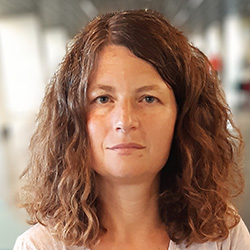
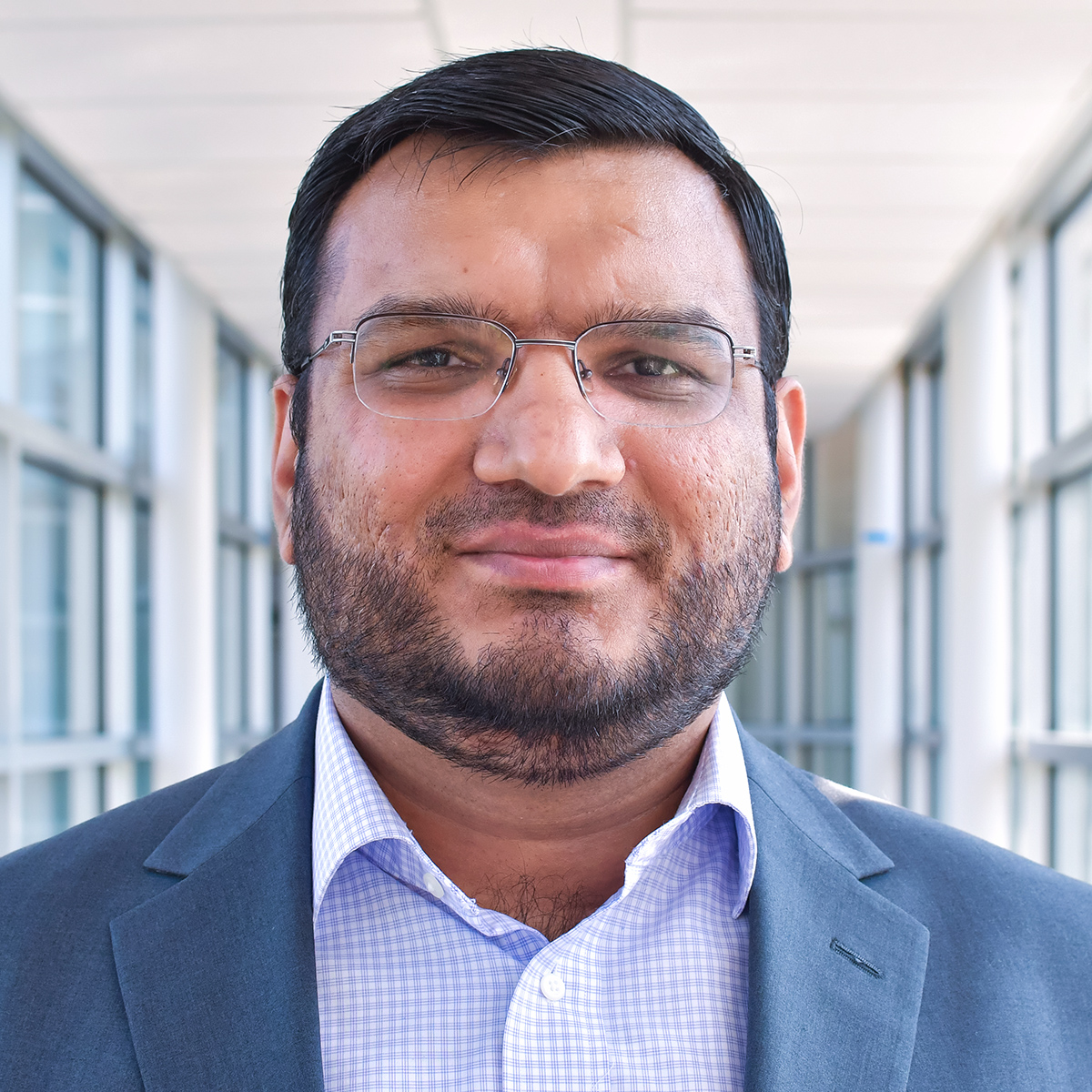
Edith Elkind is the Ginni Rometty Professor of Computer Science at Northwestern University, located in Evanston, Illinois. Her research focuses on strategic foundations of multiagent systems, with a particular emphasis on algorithms for preference aggregation and fair division. She has contributed significantly to topics such as multiwinner voting, participatory budgeting, and temporal voting mechanisms. Research Interests: Fair Division, Voting Theory, Algorithmic Game Theory, Multiagent Systems Her recent work includes advancements in temporal fairness, budget-constrained chore allocation, and representative body selection through computational methods. Elkind's publications often bridge theoretical computer science with practical applications in public decision-making and social choice mechanisms.
Papamichail Ioannis is a Professor at the School of Production Engineering and Management, Technical University of Crete. His research focuses on advanced traffic control systems, automated vehicle navigation, and intelligent transportation systems. He specializes in macroscopic/microscopic traffic modeling, reinforcement learning applications, and optimization-based control strategies for lane-free and conventional traffic environments. Key research areas include automated vehicle trajectory planning, variable speed limit algorithms, cooperative adaptive cruise control, and intersection control for connected vehicles. His work integrates numerical methods, partial differential equations, and multiagent decision-making frameworks to address traffic congestion, safety, and efficiency challenges. Recent investigations emphasize lane-free traffic systems, exploring optimal path planning, vehicle nudging strategies, and boundary control mechanisms through microscopic simulations. He has also developed novel controllers for highway work zones and urban networks, leveraging data fusion and real-time state estimation techniques. Ioannis collaborates on EU-funded projects and actively contributes to SUMO-based simulation tools for automated vehicle testing. His research bridges theoretical control systems with practical traffic management solutions, aiming for zero congestion/accidents in future transportation networks.
Carlos Ramos is a researcher affiliated with the University of Porto's Faculty of Engineering and the Polytechnic Institute of Porto's GECAD Research Group. He holds a PhD in Electrical Engineering and Computers from the University of Porto (1993). His work focuses on AI applications in energy systems, ambient intelligence, and agent-based systems. Ramos has collaborated extensively with researchers like Zita A. Vale and Sabah Mohammed on projects involving smart grids, manufacturing optimization, and cyber-physical systems. Research Interests : His primary areas include artificial intelligence, smart grids, machine learning, agent-based systems, and ambient intelligence. Recent work emphasizes explainable AI models in building energy management and genetic algorithms for industrial scheduling. Publications : Ramos has over 138 publications spanning journals like Engineering Applications of Artificial Intelligence and IEEE Transactions on Intelligent Systems . Key themes include AI-driven energy optimization, IoT applications in smart cities, and multi-agent systems for market simulation. His work often bridges theoretical AI with practical industrial and healthcare applications. Labs/Teams : Active in the GECAD Research Group, focusing on intelligent engineering solutions. Collaborates with international partners on projects like the Mascem electricity market simulator and the ISEM agent-based marketplace.
Kari Systä is a Professor of Software Engineering at Tampere University's Faculty of Information Technology and Communication Sciences. His career spans academia and industry, including 16 years at Nokia Corporation and current leadership in software engineering research. He teaches courses like Continuous Development and Deployment - DevOps and supervises Master's theses. Research Focus: Data-driven software engineering, web/cloud platforms, IoT architectures, energy systems software, and edge computing. Current Projects: LiquidAI (2023-2025) for IoT-Edge-Cloud ML systems; 6GSoft (2023-2026) for 6G software engineering; Microblock (2021-2023) on blockchain micro-credentials; and DELI (2023-2025) for energy research infrastructure. Research Unit: Leads work at TASE (Tampere Software Engineering Research Group). His expertise bridges software engineering theory and practice, with collaborations across Finnish universities and industry. He advocates for integrating AI/ML into software development workflows and optimizing energy systems through programmable edge-cloud solutions.
Murat Kuzlu is an Associate Professor at Old Dominion University's Department of Engineering Technology within the Batten College of Engineering and Technology. He received his B.Sc., M.Sc., and Ph.D. in Electronics and Telecommunications Engineering from Kocaeli University, Turkey, in 2001, 2004, and 2010, respectively. Ph.D., Electronics and Telecommunications Engineering, Kocaeli University (2010) M.Sc., Electronics and Telecommunications Engineering, Kocaeli University (2004) B.Sc., Electronics and Telecommunications Engineering, Kocaeli University (2001) His research spans Smart Grid , Demand Response , and Home/Building Energy Management Systems , with a focus on Co-simulation , Blockchain , Explainable AI , and Wireless Communication . Recent publications emphasize IoT integration, transactive energy, and cybersecurity. His scientific awards include being elected a Senior Member of IEEE . He leads the Advanced Smart System Lab for Smart City and IoT Applications , which explores technologies like 5G, RF energy harvesting, and embedded systems for grid-interactive buildings.
Dr. Popirlan Claudiu Ionut is a Lecturer in the Computer Science Department at the Faculty of Exact Sciences, University of Craiova, Romania. He has been actively involved in academic and research activities since 2004, progressing from Assistant Lecturer to Assistant Professor and currently serving as a Lecturer. He holds a Ph.D. in Computer Science from the University of Pitesti and has extensive teaching experience in advanced programming, databases, GIS, and software engineering. His educational background includes: Ph.D. in Computer Science, University of Pitesti (2005–2009) Master in Artificial Intelligence, University of Craiova (2003–2004) B.Sc. in Computer Science, University of Craiova (1999–2003) Secondary Education, Fratii Buzesti National College (1995–1999) Dr. Popirlan's research is centered on Artificial Intelligence, with a strong emphasis on Mobile Agents and Multiagent Systems. His work explores knowledge representation, processing, and management using agent-based architectures, with applications in robotics, contact centers, and virtual organizations. He has also contributed to web-based 3D visualization and modeling in mechanical engineering. His technical expertise spans Java technologies, databases, and software engineering. The analysis of his recent publications reveals a consistent focus on mobile agents for knowledge processing, distributed systems, and intelligent control. Themes include agent architectures, knowledge base management, pathfinding algorithms, and simulation systems, indicating a deep and sustained research trajectory in autonomous and intelligent software systems. He has received research grants such as TD CNCSIS and CNCSIS IDEI, where he served as director and team member respectively, focusing on mobile agents and knowledge management. His editorial roles include Scientific Referent for INFO-PRACTIC and Editorial Secretary for the Annals of the University of Craiova. Dr. Popirlan is an active member of the academic community, affiliated with IEEE, IEEE Computer Society, ACM, IBM Academic Initiative, Microsoft Faculty Connection, and the Romanian Mathematical Society. He is also part of the Research Center of Artificial Intelligence in Craiova.
Remy Dupas is a Professor at the University of Bordeaux , affiliated with the IMS Bordeaux - Integration, Material to System Laboratory within the Production Engineering research group. His work focuses on Operations Research , Logistics , and Transportation Systems , developing advanced algorithms for complex routing and supply chain optimization problems. Research Highlights: Innovative Branch-Cut-and-Price algorithms for Two-Echelon Vehicle Routing Problems with drones and time windows City Logistics models for sustainable urban freight distribution in Tokyo MultiAgent Systems for supply chain coordination 3D Loading Constraints integration in pickup-and-delivery problem solving Rail-Rail Transshipment scheduling methodologies Key Publications (2024-2007) demonstrate expertise in Combinatorial Optimization , Dynamic Routing , and Interoperability Metrics for enterprise systems. His research is characterized by strong Algorithm Development and Real-Time Transportation solutions.
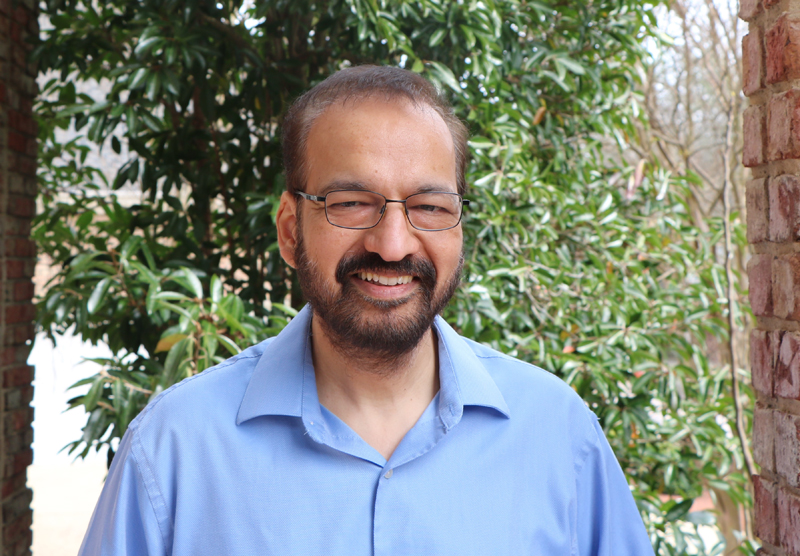
Munindar Singh is an Alumni Distinguished Graduate Professor in the Department of Computer Science at North Carolina State University , where he also serves as Co-Director of the DoD-sponsored Science of Security Lablet . His research spans Artificial Intelligence , Multiagent Systems , and Service-Oriented Computing , with applications in Cybersecurity , Privacy , and Social Computing . His research interests focus on ethical and sociotechnical dimensions of AI, including moral reasoning in social contexts , resilient multiagent systems , and responsible computing for sustainability . His work integrates formal methods with machine learning to address challenges in decentralized systems , agent communication , and cyber deception . Recent publications highlight trends in AI ethics , cybersecurity , and social simulation , with subfields like moral judgment analysis , domain adaptation , and metaverse services . These works often bridge technical and societal concerns, emphasizing trustworthy AI and ethical governance . Fellow, American Association for the Advancement of Science (AAAS) (2020) ACM/SIGAI Autonomous Agents Research Award (2020) IBM Shared University Research Award (2018) NCSU Research Leadership Academy Membership (2017) IFAAMAS Influential Paper Award (2016) National Science Foundation CAREER Award (1996) Munindar has held leadership roles, including editor-in-chief of ACM Transactions on Internet Technology and IEEE Internet Computing . His research is funded by sponsors such as DARPA , NSF , and IBM . He co-directs the Science of Security Lablet , a DoD-funded initiative advancing cybersecurity research.
Virginia Dignum is Professor of Responsible Artificial Intelligence and Director of the AI Policy Lab at Umeå University's Department of Computing Science. She serves as senior advisor for AI policy to the Wallenberg Foundations and is an active member of the UN High Level Advisory Body on AI. Her institutional affiliations include the Faculty of Technology Policy and Management at Delft University of Technology. Her research centers on the complex interdependencies between people, organizations, and technology. Key interests include: Responsible AI: Moral/ethical issues in autonomous agent teams and regulatory frameworks Social interaction formalization: Developing computational architectures for agent deliberation based on social practices Human-agent teamwork: Investigating negotiation, trust, and collaboration dynamics in socio-technical environments Her work bridges theoretical AI foundations with real-world policy implementation. Analysis of her recent publications reveals strong focus on AI governance frameworks, explainability mechanisms, and fairness operationalization. Key trends include development of context-sensitive ethical assessment tools, regulatory sandbox implementations, and formal models for human-AI coevolution. Her research increasingly addresses planetary-scale AI impacts and children's rights in digital environments. Major recognitions include: Election to Swedish Royal Academy of Engineering Sciences (IVA), 2020 Fellowship in European Artificial Intelligence Association (EURAI), 2018 Veni Fellowship from NWO for agent-based organizational frameworks, 2006 AI Ethics Professional of the Year award, 2022 Dignum actively shapes global AI policy through leadership roles in the UN High Level Advisory Body, Global Partnership on AI (GPAI), and World Economic Forum Council on AI. She chairs major conferences including AAMAS'24 and serves as Ethics Chair for AAAI'24. Her advisory work extends to the European Commission, IEEE Global Initiative, and UNESCO AI Ethics Recommendation implementation. Current initiatives include the Vatican lecture series on AI ethics and regional AI policy development in Västerbotten. She directs Umeå University's AI Policy Lab, focusing on translating ethical principles into actionable governance frameworks. The lab develops tools for regulatory compliance assessment and stakeholder engagement in AI deployment. Recent projects address digital contact tracing governance and AI's impact on democratic processes.
Mathijs de Weerdt is a Full Professor at Delft University of Technology, leading the Algorithmics Group within the Faculty of Electrical Engineering, Mathematics and Computer Science. His research focuses on developing advanced algorithms for planning and scheduling under uncertainty, with applications in energy systems, railway logistics, satellite operations, and agricultural supply chains. He bridges fundamental AI research with practical implementations through collaborations with Dutch National Railways (NS), Shell Recharge, and industry partners. Education: PhD in Multi-Agent Plan Merging (2003), MSc in Computer Science (Utrecht University, cum laude) Research Interests: Robustness in AI, Scalability of Optimization Algorithms, and Multi-Party Coordination His work integrates Stochastic Programming , Reinforcement Learning , and Constraint Programming to address challenges in energy transition and transportation. Recent 15 most recent publications emphasize surrogate modeling for EV charging optimization, multi-agent pathfinding in railways, and dynamic programming for decision trees. Scientific Awards: Recipient of the Erasmus Energy Forum Science Award (2016), Best Teacher Award in Delft Computer Science (2015), and honorable mentions for dissertation and paper awards. As a promotor , he guides over 20 PhD candidates in projects spanning smart grid algorithms, train unit shunting, and strawberry supply chain optimization. He leads large-scale initiatives like the NWO ESI-FAR project and co-chairs the Dutch AI Coalition's Energy & Sustainability working group.
Margaret Wiecek is a Professor in the Department of Mathematical and Statistical Sciences at Clemson University, affiliated with the College of Science. She holds a PhD and MS in Systems Engineering and Electrical Engineering from AGH University of Science and Technology in Krakow, Poland. Her research focuses on mathematical optimization, particularly multiobjective optimization, distributed systems, and optimization under uncertainty. Applications span engineering design, portfolio optimization, and network routing. She has developed algorithms like the distributed computation of Pareto sets and robust multiobjective optimization frameworks. Wiecek's work emphasizes interdisciplinary collaboration, with contributions to fluid-structure interaction modeling and parametric optimization. Notable publications include studies on robust efficiency, biobjective Bayesian optimization, and decomposition methods for complex systems. Her research has been recognized through awards such as the MCDM Gold Medal (2019) and the Excellence in Discovery Faculty Award (2020). Education: PhD, Systems Engineering, AGH University of Science and Technology (Krakow, Poland) MS, Electrical Engineering, AGH University of Science and Technology (Krakow, Poland) Awards: Sofia Kovalevskaia Visiting Professorship (1995) Mercator Visiting Professorship (2002) MCDM Gold Medal (2019) Advising & Grants: Guided students achieving awards (e.g., Brian Dandurak, Garrett Dranichak) Recipient of Collaborative Award (2012) and Research Award (2014) Labs/Teams: Involved in multiobjective optimization research groups and interdisciplinary projects at Clemson University.
Jose M. Vidal is a Professor and Director of Undergraduate Studies in the Computer Science and Engineering department at the Molinaroli College of Engineering and Computing, University of South Carolina . He holds a Ph.D. in Computer Science and Engineering from the University of Michigan (1998), an M.S. in Computer Science from Rensselaer Polytechnic Institute (1991), and a B.S. in Computer Science and Engineering from MIT (1990). His research focuses on multiagent systems , spanning theoretical aspects like coordination mechanisms, algorithmic game theory, and distributed algorithms, as well as implementation in agent-based simulations, web services, and mobile applications. He has authored numerous publications in fields including healthcare process optimization, traffic engineering, and sociological theory construction. 2019: Ad Hoc Vehicle Platoon Formation (Traffic Engineering) 2019: Wikitheoria for Sociological Theory Construction 2018: Email Intent Classification using Deep Learning 2017: Intelligent Transportation Systems using Mobile Data 2016: Healthcare Workflow Simulation Models 2014: Behavioral Modeling from Observational Data He has received significant funding from the NSF, Darpa, and industry partners for projects like Wikitheoria (a collaborative theory-building platform), TargetShare (resource allocation), and mobile healthcare applications. His work bridges theoretical research with practical implementations in domains ranging from traffic systems to hospital operations.
Michael N. Huhns is the NCR Distinguished Professor Emeritus of Computer Science and Engineering at the University of South Carolina, affiliated with the Molinaroli College of Engineering and Computing. He previously served as Department Chair and Director of the USC Center for Information Technology. He holds a BSE from the University of Michigan (1969), M.S. and Ph.D. in Electrical Engineering from the University of Southern California (1971, 1975). His research spans multiagent systems, service-oriented computing, ontology-based systems, and computational sociotechnical systems. He has authored over 250 papers and 11 books, including seminal works like Service-Oriented Computing: Semantics, Processes, Agents . He holds a patent for distributed computer system architecture and has received accolades such as IEEE Fellowship and AAAI Fellowship. Research interests emphasize distributed intelligence, system robustness, and socio-technical interactions. His articles explore agent negotiation, cloud-based systems, and ethical AI. Notable grants include projects on information dominance, healthcare systems, and environmental sensor networks. Awards: IEEE Fellow, AAAI Fellow, APAIA Fellow Advising: Supervised 12 PhD students and over 40 M.S. theses Labs/Teams: Founder of the International Foundation for Autonomous Agents and Multiagent Systems
Waseem Abbas serves as an Assistant Professor in the Department of Systems Engineering and Management at the Erik Jonsson School of Engineering and Computer Science, The University of Texas at Dallas. His academic focus centers on theoretical and applied networked systems research with critical infrastructure applications. His research program investigates network control systems and cyber-physical systems with emphasis on resilience and robustness against faults and strategic attacks. Key methodologies include graph theory (graph coloring, domination) and game theory applied to distributed control architectures. Primary application domains encompass robotic networks, sensor networks, transportation systems, and power grids where global behavior must emerge from local interactions. Specific contributions address robustness, controllability, optimal resource allocation, energy-efficient scheduling, intrusion detection, coverage problems, and resilient sensor placement. Analysis of his 2022-2024 publications reveals concentrated innovation in resilient consensus algorithms for Byzantine fault tolerance, structural controllability using zero forcing sets, and robust network design for critical infrastructure. His work increasingly integrates graph neural networks with control theory while maintaining strong theoretical foundations in graph-based security methods, demonstrating consistent advancement in networked system resilience.
Dr. Irene Zorzan is a Research Fellow at the University of Surrey, affiliated with the Section of Molecular and Systems Biology within the School of Biosciences. She is part of the Faculty of Health and Medical Sciences and contributes to the Centre for Mathematical and Computational Biology. Her work bridges systems biology, control theory, and mathematical modeling to study complex biological systems. Dr. Zorzan's research focuses on mathematical modeling of gene regulatory networks, bacterial stress responses, and the application of control theory to biological systems. Specific interests include bistability mechanisms in mycobacteria, robust analysis of biochemical systems, and the design of synthetic biological circuits. She also investigates stabilization strategies for compartmental systems and consensus protocols in multi-agent networks with positivity constraints. Her recent publications highlight contributions to understanding microbial stress adaptation, optimizing control strategies in positive systems, and analyzing spatial emergent behaviors in bacterial cells. Her interdisciplinary approach integrates computational methods with experimental insights from molecular biology and microbiology.