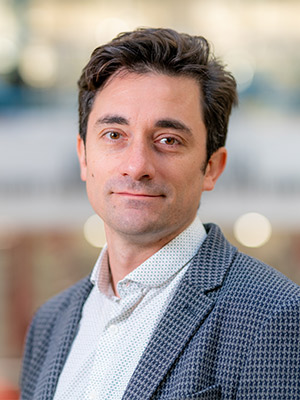
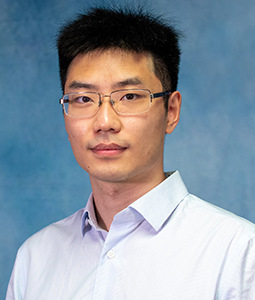
J. Haadi Jafarian is an Assistant Professor in the Department of Computer Science and Engineering at the University of Colorado Denver, where he leads the Active Cyber and Infrastructure Defense (ACID) Lab. He earned his Ph.D. from the University of North Carolina Charlotte in 2017. Research Interests: Active Cyber Defense (Moving Target Defense, Cyber Deception) Big Data Analytics for Cyber Threat Intelligence Security for Cyber-Physical Systems & Critical Infrastructures Cyber Resilience and Automation Recent Publications highlight innovations in traffic obfuscation, adversarial machine learning, and deception-based threat detection. His work spans network security, cybersecurity analytics, and scalable defense frameworks. Teaching includes: CSCI 4743/5743: Cyber and Infrastructure Defense (Fall 2023) CSCI 4742/5742: Cyber Programming and Analysis (Spring 2023) CSCI 4741: Cybersecurity Principles (Spring 2022) CSCI 4800: Web Application Development (Spring 2021) CSCI 3761: Computer Networks (Spring 2020) Labs & Teams: The ACID Lab focuses on developing proactive cyber defense strategies, including moving target defense, deception techniques, and security analytics for critical infrastructure.
Huy T Tran is an Assistant Professor in the Department of Aerospace Engineering at the University of Illinois at Urbana-Champaign's College of Engineering, with additional appointments at the Applied Research Institute. His research focuses on the intersection of robotics, artificial intelligence, and multi-agent systems, with applications spanning autonomous navigation, critical infrastructure resilience, and intelligent transportation. Dr. Tran earned his Ph.D. in Aerospace Engineering from Georgia Institute of Technology in 2015, following advanced degrees from Georgia Tech and University of Wisconsin-Madison. His academic journey includes research assistant professor positions before achieving his current assistant professor role in 2021. He previously worked as a Senior Multi-Disciplinary Systems Engineer at The MITRE Corporation and served as a Visiting Scholar at the Air Force Institute of Technology. His research interests encompass Autonomy, Reinforcement Learning, Artificial Intelligence, Machine Learning, Robotics, Multiagent Systems, Intelligent Transportation Systems, and Critical Infrastructure Resilience. As director of the Lab for Intelligent Robots and Agents (LIRA), he leads cutting-edge research in autonomous systems that interact with humans and other robots. His work has evolved from foundational resilience modeling in aerospace systems toward increasingly sophisticated AI applications in multi-robot coordination and explainable decision-making. Dr. Tran's publication record demonstrates a clear trajectory toward explainable AI and human-AI collaboration, with recent work focusing on generating explanations for reinforcement learning policies, coordination in ad hoc teams, and neuro-symbolic approaches to robot policy interpretation. His research bridges theoretical advances with practical applications in air traffic control, field robotics, and critical infrastructure management. Best Paper Award: Theoretical (2016 Complex Adaptive Systems Conference) Selected for oral presentation at IROS 2023 Workshop 27% full paper acceptance rate at AAMAS 2022 44% acceptance rate at ICRA 2020 As an educator, Dr. Tran teaches core aerospace courses including Computational Systems Engineering, Aerospace Numerical Methods, and Reinforcement Learning. He has secured significant research funding from NASA's Transformational Tools and Technologies program, ARL A2I2 program, ONR Science of AI program, and DARPA. His current projects span ad hoc teaming in multi-robot systems, collective autonomous air mobility, hierarchical reinforcement learning, and interpretable AI agents.
Daniel A Levinthal is the Reginald H. Jones Professor of Corporate Strategy and Professor of Management at the Wharton School, University of Pennsylvania. With extensive publications on organizational adaptation and industry evolution in technological contexts, he serves as Editor-in-Chief for Strategy Science and Organization Science. Research Interests Industry evolution Organizational learning Technological competition His 2024 research examines organizational search strategies, showing how cautious exploitation combines slow belief updating with strong explicit exploitation for effective adaptation. Recent work explores how political coalitions drive organizational change, with hierarchical belief influence structures proving more effective than flat designs in certain environments. Earlier studies developed the "Mendelian executive" framework and advanced Carnegie School decision-making theory. Scientific Awards Fellow of Strategic Management Society Fellow of Academy of Management Distinguished Scholar Awards (3 divisions) Irwin Award as Distinguished Educator 4 Honorary Doctorates Levinthal teaches advanced strategy courses (MGMT9000, MGMT9150) and graduate enterprise management (MGMT6110). His research has established foundational insights about organizational capabilities, knowledge aggregation, and strategic inertia.
Dr. Danesh Tarapore is an Associate Professor at the University of Southampton specializing in robotics and AI. He focuses on human-robot interaction, swarm intelligence, and autonomous systems. His current research involves developing resilient robotic teams and optimizing learning algorithms for constrained environments. He supervises 6 PhD students in the iPhD MINDS and Computer Science programs. Dr. Tarapore's work bridges theoretical advancements with practical applications in autonomous navigation, multimodal dataset creation, and quality-diversity optimization. His publications span conferences like HRI and journals in robotics and AI. He collaborates with institutions like the University Hospital Southampton and the Boldrewood Innovation Campus. Research Interests: Human-robot collaboration, swarm systems, machine learning, and adaptive control Key Contributions: HRI-SENSE dataset, evolutionary subset selection algorithms, forest navigation frameworks Grants and Funding: Active projects in multi-agent systems and resilient robotics Dr. Tarapore maintains active roles in the robotics community through conference participation and interdisciplinary collaborations.
Giorgia Ramponi is an Assistant Professor with Tenure Track at the Faculty of Business, Economics and Informatics at the University of Zurich. She is also an affiliated professor at the ETH AI Center and the Data Science and AI, Computer Science and Engineering department at Chalmers University of Technology. Her educational background includes a Ph.D. in Information Technology from Politecnico di Milano (completed June 2021 with honors), advised by Marcello Restelli, and a Master of Science in Computer Science with Honours Programme (110/110 cum laude) from la Sapienza (July 2017), advised by Flavio Chierichetti and Alessandro Panconesi. Dr. Ramponi's research focuses on machine learning and mathematical modeling, with particular emphasis on reinforcement learning and multiagent learning. Her work bridges theoretical foundations with practical applications, exploring how learning algorithms can make optimal decisions in complex environments. She has made significant contributions to areas including inverse reinforcement learning, multi-agent systems, constrained Markov decision processes, and human-AI interaction through preference learning. Her recent publications demonstrate a strong trend toward addressing fundamental challenges in reinforcement learning, particularly in multi-agent settings, constrained optimization, and learning from human feedback. Her work combines theoretical rigor with practical applications across robotics, economics, and decision-making systems. Hassler Research Grant for "Unified Feedback Integration Framework for Reinforcement Learning" Dr. Ramponi actively contributes to the academic community through conference participation, invited lectures (including at the Mediterranean Machine Learning Summer School), and teaching. She designed and taught the "Data Science and Machine Learning" course for the ETH-Ashesi Master program. She is also a member of the ELLIS community, which connects excellence in AI research across Europe. Her research group focuses on developing frameworks for reinforcement learning with various feedback types, including preferences, rewards, and demonstrations. The group aims to advance the theoretical understanding of learning algorithms while addressing practical challenges in real-world applications.
Dr. Haibo He is the Robert Haas Endowed Professor in the Department of Electrical, Computer, and Biomedical Engineering at the University of Rhode Island (URI). As an IEEE Fellow and NSF CAREER awardee, his research focuses on computational intelligence, neural networks, and reinforcement learning with applications to smart grids and microgrid systems. Ph.D. in Electrical Engineering, Ohio University, 2006 M.S. in Electrical Engineering, Huazhong University of Science and Technology, 2002 B.S. in Electrical Engineering, Huazhong University of Science and Technology, 1999 His research interests include: Computational Intelligence Adaptive Dynamic Programming Reinforcement Learning Deep Learning for Power Systems Distributed Control in Microgrids Imbalanced Data Learning Recent research trends from publications (2018-2025) show a focus on: Multi-agent reinforcement learning for energy systems Digital twin frameworks for grid security Event-triggered control mechanisms Finite-time convergence algorithms Cyber-attack resilient control systems Evolutionary computation in power networks Awards: IEEE Fellow (2018) NSF CAREER Award (2017) Dr. He leads the Computational Intelligence and Self-Adaptive Systems (CISA) Laboratory at URI, which conducts fundamental research on computational intelligence methods with applications to power systems, data mining, and neural networks.
Ceyhun Eksin is an Associate Professor and the Corrie and Jim Furber '64 Faculty Fellow at the Texas A&M University Industrial & Systems Engineering Department. He is also affiliated with the Electrical & Computer Engineering Department. His research focuses on networked multi-agent systems, integrating game theory, distributed optimization, and control theory to address challenges in autonomous systems, energy systems, and epidemiological modeling. Education: Ph.D. in Electrical and Systems Engineering from the University of Pennsylvania (2015), followed by a postdoctoral fellowship at Georgia Institute of Technology (hosted by Professors Jeff S. Shamma and Joshua S. Weitz). Research interests emphasize the design and analysis of complex systems, including distributed algorithms for autonomous teams, epidemic dynamics influenced by behavioral changes, and optimization in smart grids. His work bridges theoretical foundations with practical applications in cyber-physical systems and social networks. Notable awards include the NSF CAREER Award (2023) and TAMIDS Career Initiation Fellowship (2023). His research has been published in top journals like Proceedings of the National Academy of Sciences and IEEE Transactions . Lab activities center on the NetMaS (Networked Multiagent Systems) Lab, focusing on theoretical and algorithmic innovations for multi-agent systems. Collaborations span academia and industry, addressing real-world challenges in energy, healthcare, and robotics.
Prof. Leon van der Torre is a full professor of computer science at the University of Luxembourg, affiliated with the Lab for Intelligent and Adaptive Systems (ILIAS). He specializes in formal models of reasoning and interaction in intelligent systems, with research spanning deontic logic, argumentation theory, cognitive robotics, and compliance technologies. He was granted the Bao Yugang Chair Professorship at Zhejiang University (2023) and has held visiting positions, including at Stanford University's CSLI (2013). His research focuses on integrating logical formalisms with computational systems to address normative reasoning, multiagent coordination, and ethical AI. Key contributions include work on argumentation frameworks, deontic logic applications, and formal models of normative systems. He teaches courses such as 'Introduction to Intelligent Systems' and 'Game Theory', reflecting his expertise in AI and computational reasoning. Prof. van der Torre actively participates in international conferences (e.g., DEON, PRIMA) and has authored over 400 publications. His work bridges theoretical foundations with practical applications, addressing challenges in AI ethics, legal reasoning, and multiagent systems coordination.
Dana S. Nau is a Professor in the Department of Computer Science and a member of the Institute for Systems Research at the University of Maryland. He is renowned for his contributions to automated planning and game theory, including landmark algorithms like SHOP and foundational studies on game-tree pathology and strategic planning in computer bridge. With over 500 refereed publications and an H-index of 61, his work bridges theoretical computer science and practical applications in multiagent systems and evolutionary game theory. His research interests include hierarchical task network (HTN) planning, Bayesian network inference techniques, and the evolution of social norms through evolutionary game theory. Recent work focuses on spatial evolutionary games, surrogate Bayesian models, and strategic communication in multiagent environments. Awards: AAAI Fellow (202?), ACM Fellow (202?) Key Collaborations: Co-authored papers with leaders like Malik Ghallab (LAAS-CNRS), Satyandra K. Gupta (USC), and Vincent Hsiao (Bayesian networks research). Grants/Advising: Supervised students including Sunandita Patra (17+ joint papers) and Ruoxi Li, contributing to HTN planning and reinforcement learning advancements. His labs and research teams actively explore AI planning systems, probabilistic reasoning, and the intersection of game theory with social science phenomena like gossip evolution.
Dr Moody Alam serves as a Lecturer in the Department of Computer Science at the University of Bath, where he is also the Director of Studies for Undergraduates (Years 3, 4 & 5). His office is located in 1 WEST 3.63, and he can be reached at ma3145@bath.ac.uk or +44 (0) 1225 387661. Dr Alam's research focuses on Artificial Intelligence applications in multiagent systems with particular emphasis on smart energy systems and smart grids. His work contributes to UN Sustainable Development Goals, particularly in the areas of clean energy and sustainable infrastructure. His expertise spans distributed artificial intelligence, large-scale intelligent systems, and software engineering applications. As an educator, Dr Alam primarily teaches artificial intelligence and software engineering units. He holds a Fellowship with the Higher Education Academy, demonstrating his commitment to excellence in teaching. His career path includes significant research positions at prestigious institutions including Microsoft Research Cambridge, University of Southampton, and University of Oxford's Machine Learning Research Group, followed by industry leadership roles as Head of Data Science before returning to academia. Fellow of the Higher Education Academy Dr Alam obtained his PhD in Artificial Intelligence (specializing in distributed artificial intelligence and multiagent systems) from the University of Southampton in 2013. His academic journey began with a BSc in Computer Science (2005) followed by an MSc in Software Engineering (2007). After completing his doctorate, he spent a year at Microsoft Research Cambridge investigating AI aspects of smart energy systems, then returned to University of Southampton as a Senior Researcher before joining the Machine Learning Research Group at University of Oxford as a Principal Researcher.
Professor Michael Winikoff is a prominent academic at Victoria University of Wellington's School of Information Management, where he joined in June 2019 and served as Head of School from early 2021 to early 2025. Previously, he was Head of Department at University of Otago's Department of Information Science (February 2011 to December 2016) and Associate Professor at RMIT University's School of Computer Science and IT. His career spans over two decades of research in autonomous systems and agent-oriented software engineering. His educational background includes a PhD from the University of Melbourne (1994-1997). His research focuses on improving software creation methodologies, particularly for intelligent agents that exhibit robust and flexible behavior. He is best known for developing the Prometheus methodology for agent-based systems design. More recently, his work has expanded to address societal consequences of autonomous systems and trust issues, with significant contributions to explainable AI (XAI). His publication record demonstrates consistent contributions to autonomous systems research, with recent work focusing on explainability frameworks, trust calibration, and certification of reliable autonomous systems. His 15 most recent publications (2018-2025) show a clear evolution from technical agent design toward broader societal implications, particularly the intersection of technical design and human trust in autonomous systems. The publications span journals like Artificial Intelligence and IEEE Internet Computing, as well as major conferences including AAMAS. Past President of International Foundation for Autonomous Agents and Multiagent Systems (IFAAMAS) Co-Editor-in-Chief of Journal of Autonomous Agents and Multi-Agent Systems (JAAMAS) Chair of ICORE rankings management committee Editor-in-Chief for International Journal of Agent-Oriented Software Engineering (IJAOSE) Vice President of Computing Research and Education Association of Australasia (CORE) Professor Winikoff has led significant research projects funded by the Australian Research Council, including work on adaptive personae for interactive toys, service-oriented negotiation in multi-agent systems, and advanced software engineering for intelligent agent systems. His current research continues this trajectory, focusing on making autonomous systems more explainable and trustworthy through engineering approaches that consider both technical and human factors. He maintains active collaborations across institutions, with recent work involving researchers from RMIT University and other international partners.
Dr. Nirav Ajmeri is a Senior Lecturer in Artificial Intelligence at the University of Bristol's School of Computer Science. He holds a PhD and MS from North Carolina State University and a BE from Sardar Vallabhbhai Patel Institute of Technology. His work focuses on socially intelligent multiagent systems, ethics in AI, privacy-preserving technologies, and socio-technical systems design. Education: PhD and MS in Computer Science, North Carolina State University B.E. in Computer Engineering, Sardar Vallabhbhai Patel Institute of Technology Research Interests: Dr. Ajmeri explores ethical AI frameworks, normative multiagent systems, privacy in socio-technical environments, and human-agent collaboration. His work bridges technical innovation with societal impacts, focusing on fairness, accountability, and transparency in autonomous systems. Recent Trends in Publications: Recent work emphasizes ethical governance in AI (Rawlsian fairness, macro ethics), graph-based social network modeling, and multiagent simulations of polarization. He also investigates practical applications like misuse audits in mobile apps and cybersecurity hygiene promotion through normative systems. Awards: Best Blue Sky Paper Award at AAMAS 2020 Most Influential Paper Award (2024) for 2013 JSS publication on agile requirements Advising & Grants: Supervises PhD students in AI ethics, interactive AI, and cybersecurity. Co-developed the UKRI AI for Collective Intelligence Hub and contributed to national AI strategy frameworks. Engaged in tool development (e.g., Coco ASP implementation for norm reasoning). Labs & Teams: Active in Bristol's Interactive AI research group, leading projects on ethical AI design and multiagent system dynamics. Collaborates with interdisciplinary teams across computer science, social sciences, and policy domains.
Qi Zhang is an Assistant Professor in the Department of Computer Science and Engineering, AI Institute at the Molinaroli College of Engineering and Computing, University of South Carolina. His research focuses on developing safe, reliable, and trustworthy AI systems through advancements in reinforcement learning and decision-making algorithms for uncertain environments. He holds a Ph.D. from the University of Michigan (2020) and a B.E. from Shanghai Jiao Tong University (2015). Research interests include artificial intelligence, reinforcement learning, multi-agent systems, and decision-making under uncertainty. Key themes involve leveraging domain knowledge for robust AI solutions and ensuring ethical, transparent, and risk-aware system designs. His work spans applications in autonomous systems, healthcare, robotics, and materials science. Current projects emphasize improving algorithmic trustworthiness, safety, and adaptability across diverse contexts. He is affiliated with the AI Institute at USC and maintains an active research lab focused on these areas.
Alan Tsang is an Assistant Professor at Carleton University's School of Computer Science. He specializes in Multi-agent Systems and Computational Social Choice, focusing on strategic interactions in social networks. Previously, he was a Post-Doctoral Researcher at the National University of Singapore and earned his PhD from the Cheriton School of Computer Science at the University of Waterloo under Dr. Kate Larson. His research integrates game theory and agent-based simulations to address fairness, voting mechanisms, and social network dynamics. He is affiliated with Carleton's Institute for Data Science and the Department of Human-Computer Interaction (HCI), and serves as Information Officer of ACM SIGAI. His educational background includes a Master of Mathematics in Graph Theory and a Bachelor of Mathematics in Bioinformatics, both from the University of Waterloo. His work explores interdisciplinary applications, such as modeling pandemic impacts and ethical computing challenges. He teaches courses like Multiagent Systems and Computing, Society, and Ethics, and actively mentors students in graduate and undergraduate research programs. Key research areas include algorithmic fairness, social choice mechanisms, and agent-based modeling of societal systems. He leads the Games, Agents, and Incentives Workshop and collaborates on projects analyzing voting behavior in homophilic networks and fair allocation strategies.
Corina Cirstea is a Professor in the School of Electronics and Computer Science at the University of Southampton, where she has been a faculty member since 2003. She holds a DPhil in Computation from the University of Oxford and previously served as a Junior Research Fellow at St. John's College, Oxford. She is the Programme Leader for the BEng/MEng in Software Engineering and teaches core modules including Algorithmics, Theory of Computing, and Automated Software Verification. Education: DPhil in Computation, University of Oxford (2000) Junior Research Fellowship, St. John's College, Oxford (1999–2003) Her research focuses on logic and models of computation, particularly coalgebras and their applications in automated verification and synthesis. She explores coalgebraic temporal logics, trace semantics, and formal modeling of real-time and resource-aware systems, primarily using Event-B. Her work bridges theoretical foundations with practical system verification, especially in safety-critical domains. The analysis of her recent publications reveals a strong trend in formal methods, with consistent contributions to real-time system modeling, refinement techniques, and coalgebraic semantics. Her work integrates theoretical depth with engineering applications, particularly in automated verification and system design. Scientific Service and Recognition: Member of the editorial board, Compositionality journal Member of IFIP Working Group 1.3 Member of CALCO Steering Committee Member of CMCS Steering Committee Program Committee member for SEFM 2021, MFPS 2021, HIGHLIGHTS 2021, ICALP 2021, MFCS 2021, ACT 2020, ICE 2020, CMCS 2020, FOSSACS 2020 She advises PhD students including Chenyang Zhu and Eman Alkhammash, and has been involved in multiple research grants focused on formal verification, real-time systems, and software engineering. She collaborates extensively with researchers such as Michael Butler and Ichiro Hasuo. Her work contributes to both foundational theory and practical tooling in formal methods. She is associated with research groups and initiatives in formal methods and theoretical computer science at the University of Southampton, particularly within the broader context of software engineering and system verification.