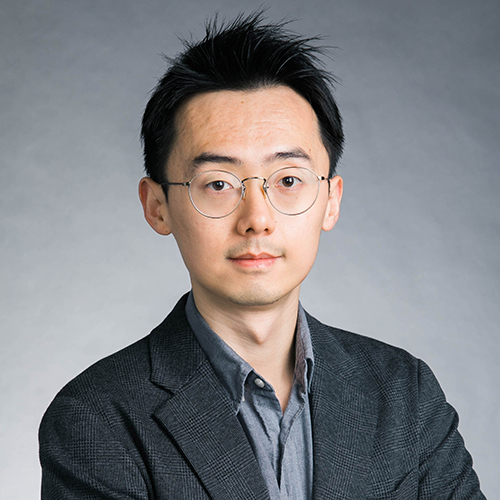
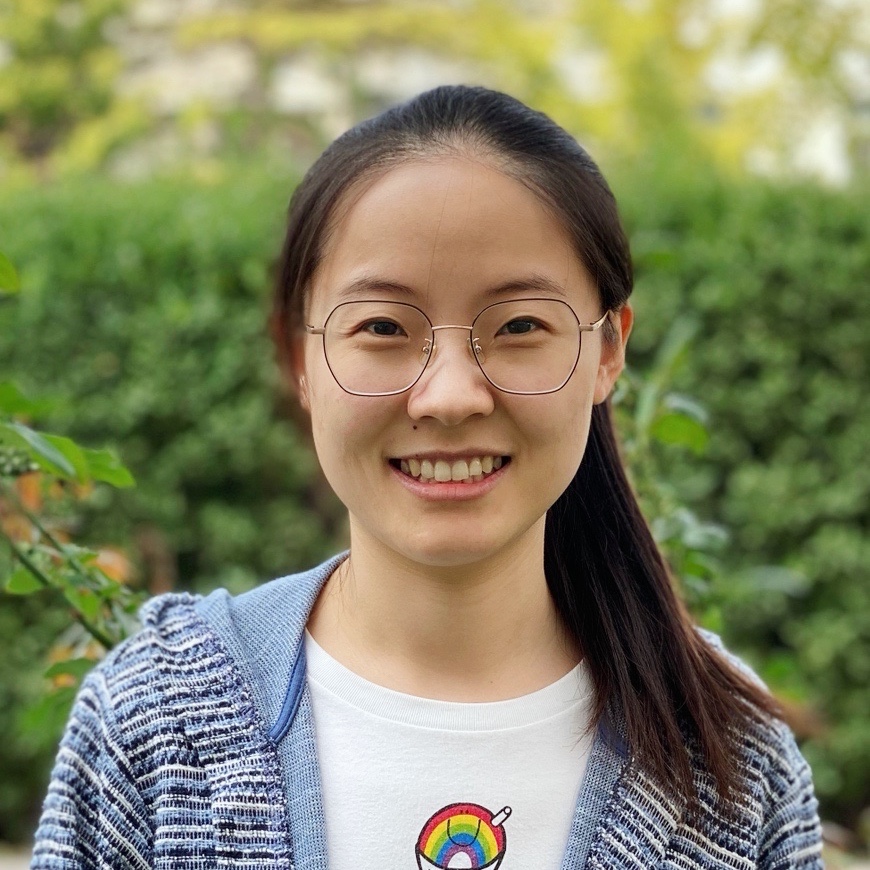
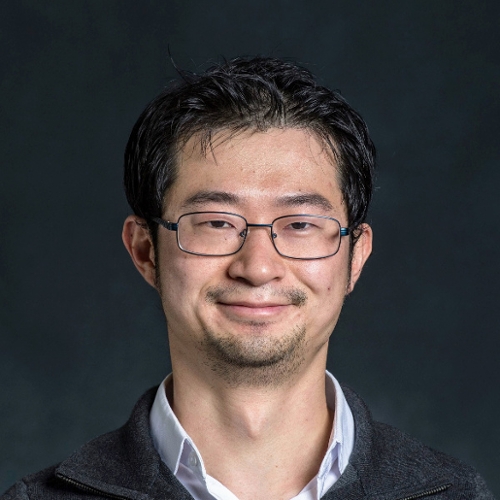
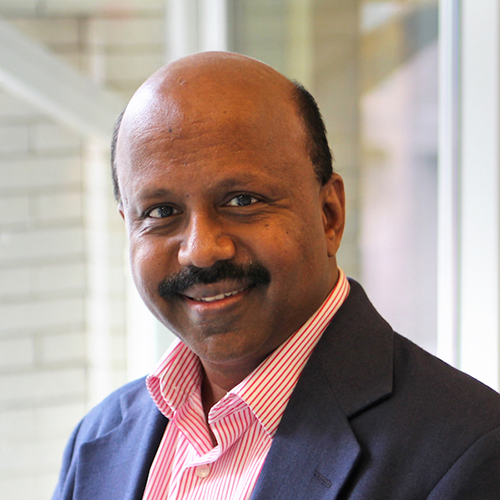
Shixiang (Woody) Zhu is an Assistant Professor in Data Analytics at the Heinz College of Information Systems and Public Policy, Carnegie Mellon University. He holds a PhD in Machine Learning from Georgia Institute of Technology (2022) and B.S./M.S. in Computer Science from Beijing University of Posts and Telecommunications (2017). His research bridges machine learning, operations research, and statistics, focusing on sequential modeling, human-AI collaboration, and energy systems operations. He has received awards including the IEEE Power & Energy Society Best Paper Award (2025) and was a finalist for the INFORMS Wagner Prize (2021). Education : PhD in Machine Learning, Georgia Tech (2017–2022) B.S./M.S. in Computer Science, BUPT (2010–2017) His research emphasizes spatio-temporal data analysis , decision making under uncertainty , and applications to energy systems, healthcare, and public policy. Notable projects include optimizing police zone design (Wagner Prize finalist) and enhancing grid resilience through robust optimization. He actively collaborates with institutions like Argonne National Laboratory and NSF-funded projects. Awards : Best Paper Award, IEEE Power & Energy Society (2025) Gen-AI Fellows (2024) Finalist, INFORMS Wagner Prize (2021) Advising & Grants : Advises PhD students Zekai Fan, Wenbin Zhou, and others Recipient of Block Center Seed Grant (2024), NSF funding (2024) His work spans energy resilience, public policy optimization, and causal inference in social systems. He co-leads the INFORMS Data Mining Society and reviews for top journals like Operations Research and Management Science.
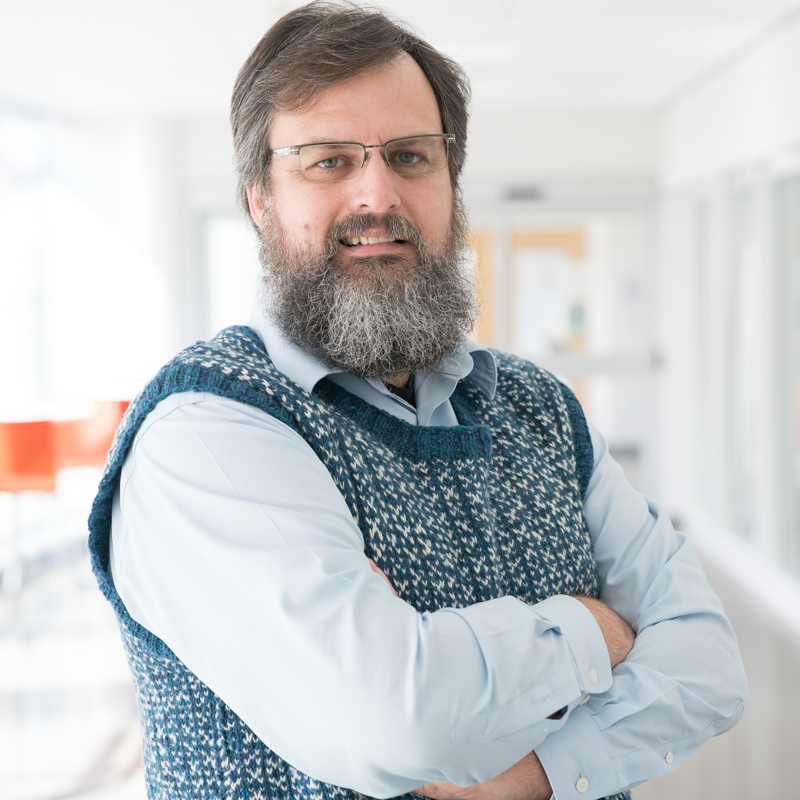
Bradley Schmerl serves as a Principal Systems Scientist in the Software and Societal Systems Department (S3D) within Carnegie Mellon University's School of Computer Science. His research advances software engineering practices for modern challenges in distributed heterogeneous systems, self-adaptation, and cyber-physical integration. He leads the ABLE research group and actively mentors students in the Masters in Software Engineering program while teaching core courses like Software Architecture and Software Engineering Practicum. Dr. Schmerl's work addresses critical challenges in composing continuously evolving software systems, including components from untrusted third parties and on-the-fly recomposition for environmental changes. His research develops reusable, analyzable tools for software composition with emphasis on model-based adaptation, uncertainty management, and cross-language integration. Key projects include Rainbow for runtime architecture reflection, Acme for formal architectural foundations, and Cyber-physical Systems research linking software models with physical dynamics. Analysis of his 2023-2025 publications reveals intensifying focus on robotics software architecture (particularly ROS-based systems), explainable AI for architectural tradeoff analysis, and configuration management in adaptive systems. Trends show growing integration of machine learning for auto-tuning, empirical studies of misconfigurations, and dimensionality reduction techniques for visualizing design spaces—consistently bridging theoretical rigor with practical tool development for real-world applications. Scientific Awards: No specific awards were documented in the source materials. Dr. Schmerl serves as Practice Area Lead and mentor in CMU's Masters in Software Engineering program, guiding client projects including Rainbow UI for self-adaptive framework interfaces, CoBot UI for telepresence robots, and Educational Telepresence Tasking Language development. His research receives support through ABLE group projects funded by grants targeting software architecture foundations, adaptation mechanisms, and cyber-physical system validation. As a core member of the ABLE research group, he directs investigations into architecture-based self-adaptation with active projects spanning Rainbow (runtime architecture models for dynamic adaptation), Acme (formal architectural styles and tools), and Cyber-physical Systems (software-physical model integration). The group also maintains legacy work in End-User Architecting, Architecture Evolution, and service-oriented platforms for intelligence analysis through SORASCS.
Eric P. Xing is a Professor at the Language Technologies Institute of Carnegie Mellon University , and currently serves as President of the Mohamed bin Zayed University of Artificial Intelligence . His work bridges machine learning methodology with computational biology and large-scale AI systems . Research Focus: Developing machine learning theory for high-dimensional, dynamic data Building foundation models for biology (AIDO, scLong, ProteinAligner) Designing scalable AI architectures (Pollux, LLM360, PAN) Advancing interpretable and controllable NLP systems Scientific Leadership: Founded the SAILING Lab at CMU Co-chaired ICML 2014 and ICML 2019 Recipient of the Jay Lepreau Best Paper Award (OSDI 2021) Education & Mentorship: Advises PhD students across machine learning and computational biology Alumni include faculty at ETH Zurich, University of Chicago, and UC San Diego
Keenan Crane is the Michael B. Donohue Associate Professor of Computer Science and Robotics at Carnegie Mellon University , with membership in the Center for Nonlinear Analysis and mentorship in the Geometry Collective . His research bridges differential geometry and computer science to develop fundamental algorithms for geometric data processing. Education : BS from University of Illinois at Urbana-Champaign, PhD from Caltech Fellowships : Google PhD Fellow, NSF Mathematical Sciences Postdoctoral Fellow Research focuses on Discrete Differential Geometry , addressing PDE solutions, mesh processing, and geometric modeling through methods like: Walk on Spheres for PDEs Intrinsic Triangulations for robust geometry Repulsive Energy formulations for collision avoidance Recent publications span 2025–2021 , emphasizing grid-free algorithms , anisotropic mesh generation , and differentiable systems . Scientific accolades include Packard Fellowship and NSF CAREER Award . Students include Nicole Feng , Olga Gutan , and Zoë Marschner . During his 2024 sabbatical at Roblox , he does not accept new researchers. Key software contributions include Penrose (math diagram generation) and I♥Mesh (domain-specific language for mesh algorithms).
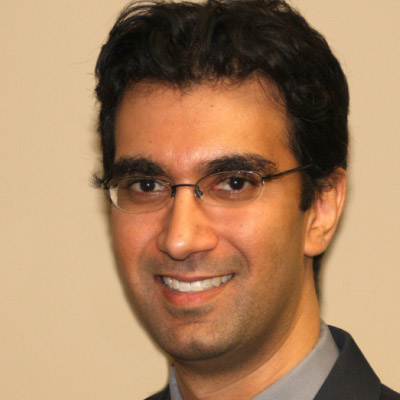
Dr. Avniel Singh Ghuman is an Associate Professor in the Department of Neurological Surgery at the University of Pittsburgh School of Medicine. He serves as Director of the Cognitive Neurodynamics Lab and plays a key role in advancing MEG (Magnetoencephalography) Research at the university. His work bridges clinical neurosurgery with fundamental neuroscience research to understand visual perception mechanisms. Dr. Ghuman's educational background includes: BA in Math and Physics from The Johns Hopkins University (1998) PhD in Biophysics from Harvard University (2007) Postdoctoral training at the National Institute of Mental Health Dr. Ghuman's research focuses on how the brain transforms visual input into meaningful perception of objects, faces, words, and social images in real-world contexts. His laboratory employs both invasive (intracranial EEG) and non-invasive (MEG) techniques to examine the spatiotemporal dynamics of neural activity during visual processing. The lab integrates multivariate machine learning methods, network analysis, and direct neural stimulation to investigate information processing at both local brain regions and distributed network levels. Recent work has pioneered methods for studying brain activity during authentic social interactions and natural behavior. His publication record demonstrates significant contributions to understanding real-world face perception, neural dynamics during natural behavior, and the application of advanced analytical techniques to brain imaging data. His research has revealed how brain network dynamics form a 'punctuated equilibrium' of stable states with transitory bursts between them, coinciding with behavioral shifts in everyday activities. Dr. Ghuman has received notable recognition for his work: Young Investigator Award from NARSAD (2012) Award for Innovative New Scientists from the National Institute of Mental Health (2015) His research has been featured in prominent media outlets including MIT Technology Review, The Wall Street Journal, and Carnegie Mellon University publications. As Director of the Cognitive Neurodynamics Lab, Dr. Ghuman leads a research program that has advanced our understanding of how the brain processes visual information in real-world environments, with implications for both fundamental neuroscience and clinical applications.
Kristen S. Kurland is a University Professor at Carnegie Mellon University (CMU), holding appointments in the H. John Heinz III College of Information Systems and Public Policy, the School of Architecture, and a courtesy appointment in the Civil and Environmental Engineering Department. She also serves as an adjunct faculty member at the University of Pittsburgh School of Medicine. Her roles include chairing the Geographical and Geospatial Sciences Committee of The National Academies of Sciences, Engineering, and Medicine, and serving on the Board on Earth Sciences and Resources. Her teaching focuses on GIS, Building Information Modeling (BIM), CAD, and 3D visualization, with courses at Heinz College targeting executive physicians and healthcare management students. Research interests span health and urban systems, geospatial analytics, machine learning, and smart cities. She actively collaborates with healthcare, government, and industry partners globally. Notable awards include the 2020 Carlow University Women of Spirit Award, 2012 Esri Health Communications Award, and multiple teaching accolades. Her funded research includes projects on urban quality of life, 3D visualization, and pediatric healthcare access funded by The Heinz Endowments, Deloitte Foundation, and others. Kurland advises numerous PhD students across architecture, civil engineering, and public policy, and leads grants addressing spatial health equity, urban design, and geospatial innovation. She is co-author of bestselling GIS workbooks like GIS Tutorial for Health and a frequent keynote speaker on geospatial technologies.
Garth Gibson is a Professor in the Computer Science Department and Department of Electrical and Computer Engineering at Carnegie Mellon University's School of Computer Science. He serves as Co-Director of the Master of Computational Data Science program and as Associate Dean for Master's Programs. Gibson has been a faculty member at CMU since 1991, after receiving his Ph.D. and M.Sc. in Computer Science from the University of California at Berkeley and a Bachelor of Mathematics in Computer Science and Applied Mathematics from the University of Waterloo. Gibson's research focuses on large-scale parallelism in computer systems, secondary memory system technologies and optimization, scalable file and key-value storage systems, scalable machine learning, and systematic testing for large scale systems. His work bridges theoretical concepts with practical implementations, with a strong emphasis on shepherding technological advances from academic research to commercial reality. He has made significant contributions to RAID technology, network-attached secure disks (NASD), and parallel file systems that have shaped industry standards and products. Gibson's recent publications reveal a strong trend toward data-intensive scalable computing, with increasing focus on machine learning systems, distributed storage solutions, and high-performance computing infrastructure. His research has evolved from foundational storage technologies to address the challenges of petascale and exascale computing environments, with particular attention to the intersection of storage systems and machine learning workloads. The papers demonstrate a consistent theme of addressing system scalability challenges through innovative architectural approaches. Scientific Awards: 2014 Fellow of the IEEE for contributions to the performance and reliability of transformative storage systems 2012 Fellow of the ACM for contributions to the performance and reliability of storage systems 2012 Jean-Claude Laprie Award in Dependable Computing Industrial/Commercial Product Impact Category 2011 SIGOPS Hall of Fame for the SIGMOD88 RAID paper 1999 Reynold B. Johnson Information Storage Award 1999 Allan Newell Award for Research Excellence 1998 Test of Time Award 1991 A.C.M. Doctoral Dissertation Award (tied for second) Gibson has advised numerous graduate students who have gone on to influential positions in both academia and industry, including Swapnil Patil who won first place in the 2010 ACM Graduate Student Research Competition. He has secured significant research funding through initiatives like the DOE Petascale Data Storage Institute and the Intel Science and Technology Center for Cloud Computing. His research has been supported by collaborations with national laboratories including Los Alamos, Sandia, Oak Ridge, Pacific Northwest, and Lawrence Berkeley. Gibson founded CMU's Parallel Data Laboratory (PDL) in 1993, which has grown into a vibrant research community comprising 6-9 faculty members, 2-3 dozen students, and 4-10 staff. The PDL operates with guidance from the Parallel Data Consortium, which includes 15-25 companies interested in parallel data systems. He also founded Panasas Inc. in 1999, a scalable storage cluster company that has deployed technology in national laboratories, energy sectors, and other high-performance computing environments. More recently, Gibson established the Big Learning research group and created the Systems Major curriculum within CMU's Master of Computational Data Science program.
Greg Ganger is the Jatras Professor of Electrical and Computer Engineering at Carnegie Mellon University and Director of the Parallel Data Lab (PDL). His research focuses on computer systems, including cloud computing, storage systems, distributed systems, and machine learning infrastructure. He holds a Ph.D. in Computer Science and Engineering from the University of Michigan and completed postdoctoral work at MIT. Education: Ph.D., M.S., and B.S. in Computer Science from the University of Michigan (1991–1995). Research Interests: Ganger leads projects in cloud computing, storage/file systems, operating systems, and systems for big data and large-scale machine learning. Recent work includes optimizing cloud resource scheduling, developing sustainable storage solutions, and improving ML cluster efficiency. The PDL explores storage system architecture, file systems, and leveraging new storage technologies like non-volatile memory (NVM). Awards: 2021 OSDI Best Paper, 2021 SOSP Best Paper, 2021 SoCC Test of Time Award, and 2021 R&D 100 Award. His team's work on Kangaroo caching and MACARON cloud caching exemplifies cutting-edge contributions. Advising & Grants: Advises graduate students in ECE and Computer Science. Active in grants related to distributed storage, cloud systems, and ML infrastructure. Collaborates with industry partners like Los Alamos National Lab on storage systems. Labs/Teams: Directs the Parallel Data Lab (PDL), a leading research group in storage and distributed systems. Collaborates with CMU’s CyLab on security aspects of storage systems and ML infrastructure.
Manfred Paulini is a Professor of Physics and the Associate Dean for Research at Carnegie Mellon University's Mellon College of Science. His research spans nuclear and particle physics, focusing on high-energy physics experiments at colliders like the Tevatron and Large Hadron Collider (LHC). He actively explores the intersection of particle physics and cosmology, particularly investigating matter-antimatter asymmetry and dark matter. His work combines traditional high-energy physics with modern machine learning techniques for event classification. Ph.D. and M.S. in Physics from University of Erlangen-Nürnberg Paulini's research focuses on CP violation in B meson systems and dark matter detection via supersymmetric particle production at the LHC. He contributes to the CMS experiment at CERN and previously worked on the CDF experiment at Fermilab. His machine learning work applies convolutional neural networks to collider data analysis for improved event classification accuracy across diverse decay topologies. His recent publications emphasize end-to-end ML classification of LHC data, supersymmetry searches, and precision measurements of CP violation parameters. Research spans 2000-2020 with consistent contributions to fundamental physics questions. Scientific Awards Fellow, American Physical Society Paulini's work involves developing novel detector data analysis frameworks and leading investigations into matter-antimatter asymmetry mechanisms. He supervises graduate student research through Carnegie Mellon's Department of Physics. Current projects include anomaly detection in collider data and improving supersymmetry search sensitivities through advanced ML techniques. His experimental work at CERN and Fermilab combines with computational innovations, maintaining active collaborations across multiple institutions while serving in leadership roles at Carnegie Mellon University.
Anita Williams Woolley is a Professor of Organizational Behavior and Theory at Carnegie Mellon University’s Tepper School of Business. She holds a PhD in Organizational Behavior from Harvard Business School, alongside a BA and MA in Psychology and Social Psychology from Harvard University. Her research focuses on collective intelligence, particularly in human-AI collaboration, team coordination, and the cognitive foundations of group performance. She is a Senior Editor at Organization Science and a founding Associate Editor of Collective Intelligence . Woolley’s work has been funded by DARPA, NSF, and the U.S. Army Research Office, including a $3M DARPA grant to advance artificial social intelligence. Her research has been published in top journals like Science , PNAS , and Nature Human Behavior . She explores how transactive memory systems, collective attention, and team composition enhance group performance, with recent studies on vocal and facial synchrony in teams and the impact of gender diversity on intelligence. Educations: PhD in Organizational Behavior, Harvard Business School MA in Social Psychology, Harvard University BA in Psychology, Harvard University Her research has practical implications for distributed teams and AI integration, including studies on hybrid intelligence and the design of collaborative tools. She co-leads the CI@CMU Lab and has advised organizations on optimizing team dynamics. Personal interests include fostering gender equality in science, as highlighted in her work on team diversity and the establishment of the Joe and Connie Williams Scholarship in her hometown. Woolley has held roles such as Associate Dean for Research at Tepper School (2022–2024) and has taught courses on managing teams and global collaboration. Her contributions extend to policy and public discourse on AI ethics and human-AI collaboration.
Craig Shultz is an Assistant Professor in the Department of Electrical and Computer Engineering at the University of Illinois Urbana-Champaign and co-founder of Fluid Reality . His research focuses on interactive embedded systems and haptic actuation , particularly tactile interfaces for VR/AR, IoT, and wearable devices. He employs an interdisciplinary approach blending psychophysics, electrical and mechanical engineering, and human-computer interaction (HCI) to advance haptic rendering. Specializes in surface haptics , non-contact haptics , and electroosmotic pump arrays . Develops technologies for scalable shape displays , mid-air haptic interactions , and haptic-augmented spatial computing . Teaches Interactive Haptic Systems (since 2025). His research has led to 6 best paper awards and nominations at ACM and IEEE venues, including the IEEE Transactions on Haptics Best Application Paper of the Year (2018). He received the Sony Faculty Innovation Award (2025) and the IEEE Technical Committee on Haptics Early Career Award (2025) . His publications emphasize haptic rendering , low-latency touchscreens , and non-contact tactile actuation . He actively collaborates with institutions like Northwestern University and KAIST HCI . Key research areas: tactile interfaces, scientific engineering, VR/AR haptics, and haptic design practices. Technologies developed: Fluid Reality haptic gloves, DynaButtons, LRAir synthetic jets, and TriboTouch micro-patterned surfaces.
Shuangning Li is an Assistant Professor of Econometrics and Statistics at the University of Chicago's Booth School of Business. He holds a Ph.D. from Stanford University's Department of Statistics, advised by Professors Emmanuel Candès and Stefan Wager, and a Bachelor of Science from the University of Hong Kong. Prior to his current role, he was a postdoctoral fellow in Statistics at Harvard University. His research focuses on causal inference, machine learning, and statistical methodology with applications in econometrics, networks, and genomics. **Education:** Ph.D. in Statistics, Stanford University (Advisors: Emmanuel Candès, Stefan Wager) Bachelor of Science, University of Hong Kong **Research Interests:** Causal inference in complex systems (e.g., networks, high-dimensional data) Statistical methods for experimental design and robustness Machine learning applications in genomics and reinforcement learning Randomization-based testing and knockoff filters **Recent Work Trends:** His articles emphasize methodological innovations in causal effect estimation, network interference modeling, and transfer learning. Recent work addresses challenges in stochastic congestion, multi-environment analysis, and cooperative learning frameworks. His 2024 paper advances covariate shift correction for conditional randomization tests, while his 2023 studies explore robustness in model-X inference and dyadic reinforcement learning dynamics. **Advising & Academic Background:** His doctoral training under Candès and Wager shaped his focus on rigorous statistical foundations. He has not yet listed advising relationships in available materials, but his research collaborations span academia and industry.
Will Townes is an Assistant Professor in the Department of Statistics and Data Science at Carnegie Mellon University's Dietrich College of Humanities and Social Sciences. He joined CMU in 2022 after completing a postdoctoral fellowship in computer science at Princeton University with Barbara Engelhardt. His academic journey includes a Ph.D. in biostatistics from Harvard University under Rafael Irizarry's supervision, an M.S. in math and statistics from Georgetown, and earlier work in tropical ecology fieldwork in the Philippines. Dr. Townes specializes in applied statistics with primary focus areas in biomedical and public health domains. His research centers on wastewater-based epidemiology, wearable devices, and auxiliary signals for infectious disease tracking and forecasting as part of the Delphi research group. He has developed normalization, feature selection, and dimension reduction methods for single cell RNA-Seq and spatial transcriptomics data analysis. His broader research interests span biostatistics, epidemiology, genomics, time series forecasting, and theoretical aspects of Tweedie distributions. His recent publications reveal a strong emphasis on wastewater surveillance methodologies, single-cell data analysis techniques, and infectious disease forecasting models. The research demonstrates a consistent focus on computational scalability and efficiency through approximate inference techniques. Dr. Townes approaches statistical problems with a pragmatic perspective, comfortable with probabilistic (Bayesian) models while drawing inspiration from diverse statistical perspectives. Member of DELPHI Lab Group at CMU Active contributor to genomics and biostatistics research Focus on computational efficiency in statistical methods Dr. Townes mentors several students including Gabrielle Thivierge (PhD candidate working on infectious disease forecasting methods), Julia Elrod, and Anna Rosengart. He teaches data science courses at CMU, including a field course in Costa Rica where students work with community partners on real-world data projects involving water quality indicators, spring flow rates, and ecological monitoring.
George Chen is an Assistant Professor of Information Systems at Carnegie Mellon University's Heinz College and an affiliated faculty member of the Machine Learning Department. His research focuses on machine learning applications in healthcare and developing countries, particularly in time series analysis and forecasting. He holds a PhD in Electrical Engineering and Computer Science from MIT, where he received the George Sprowls Award for his thesis on nonparametric methods. He also advises the AgriTech startup CoolCrop, providing farmers in India with market forecasts and cold storage solutions. Education: PhD, Electrical Engineering and Computer Science, MIT (2015) SM, Electrical Engineering and Computer Science, MIT (2012) BS, Electrical Engineering and Computer Sciences & Engineering Mathematics and Statistics, UC Berkeley (2010) Research: Chen develops nonparametric machine learning methods for healthcare (e.g., predicting patient outcomes) and agricultural forecasting (e.g., crop pricing for farmers). His work emphasizes interpretable models and statistical guarantees. He recently authored a monograph on deep learning for survival analysis and co-organized the 2023 AAAI Survival Analysis Symposium. Awards: NSF Fellowship, NDSEG Fellowship, Siebel Scholarship (PhD) MIT Goodwin Medal (2015, top teaching award) George Sprowls Award for Best Computer Science Thesis (MIT) Teaching: Teaches courses on unstructured data analytics at CMU, including graduate-level machine learning and time series analysis. Previously taught at MIT and UC Berkeley, winning teaching awards at both institutions. Professional Service: Area chair for ICML, NeurIPS, and MLHC (2025). Active in organizing conferences and workshops related to survival analysis and healthcare ML. Labs/Teams: Leads research collaborations in healthcare analytics and developing-world technology through the Heinz College and CMU's Machine Learning Department.
Dr. Raja Sooriamurthi is a Teaching Professor and Program Director of the Decision Analytics and Systems minor at the Information Systems Program of Carnegie Mellon University's Heinz College. His teaching and research focus on artificial intelligence, cognitive science, and educational pedagogy. Teaching Interests: Data science, database systems, big data, puzzle-based learning, system development lifecycle Research Interests: Case-based reasoning, knowledge management, distributed reasoning, machine learning, software development pedagogy Dr. Sooriamurthi leads curriculum innovation in information systems education, particularly through the IS2020 competency model . His work bridges AI applications with educational technologies, emphasizing authentic learning and generative AI tools for skill development. Key publication themes include: SQL instruction using AI-driven assessment Information systems curriculum design Puzzle-based learning for critical thinking Service-learning in leadership development Integration of NoSQL databases in education