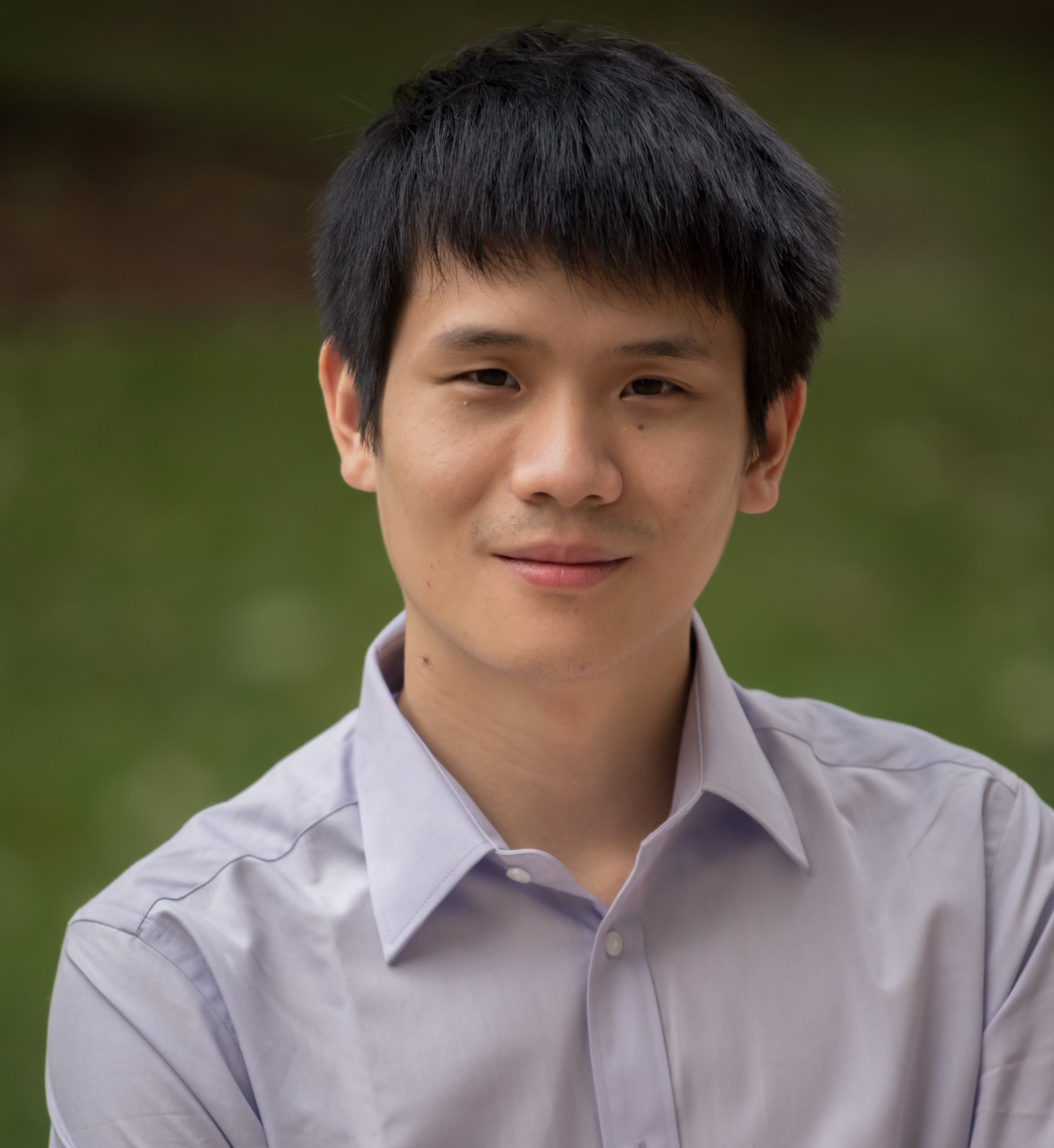
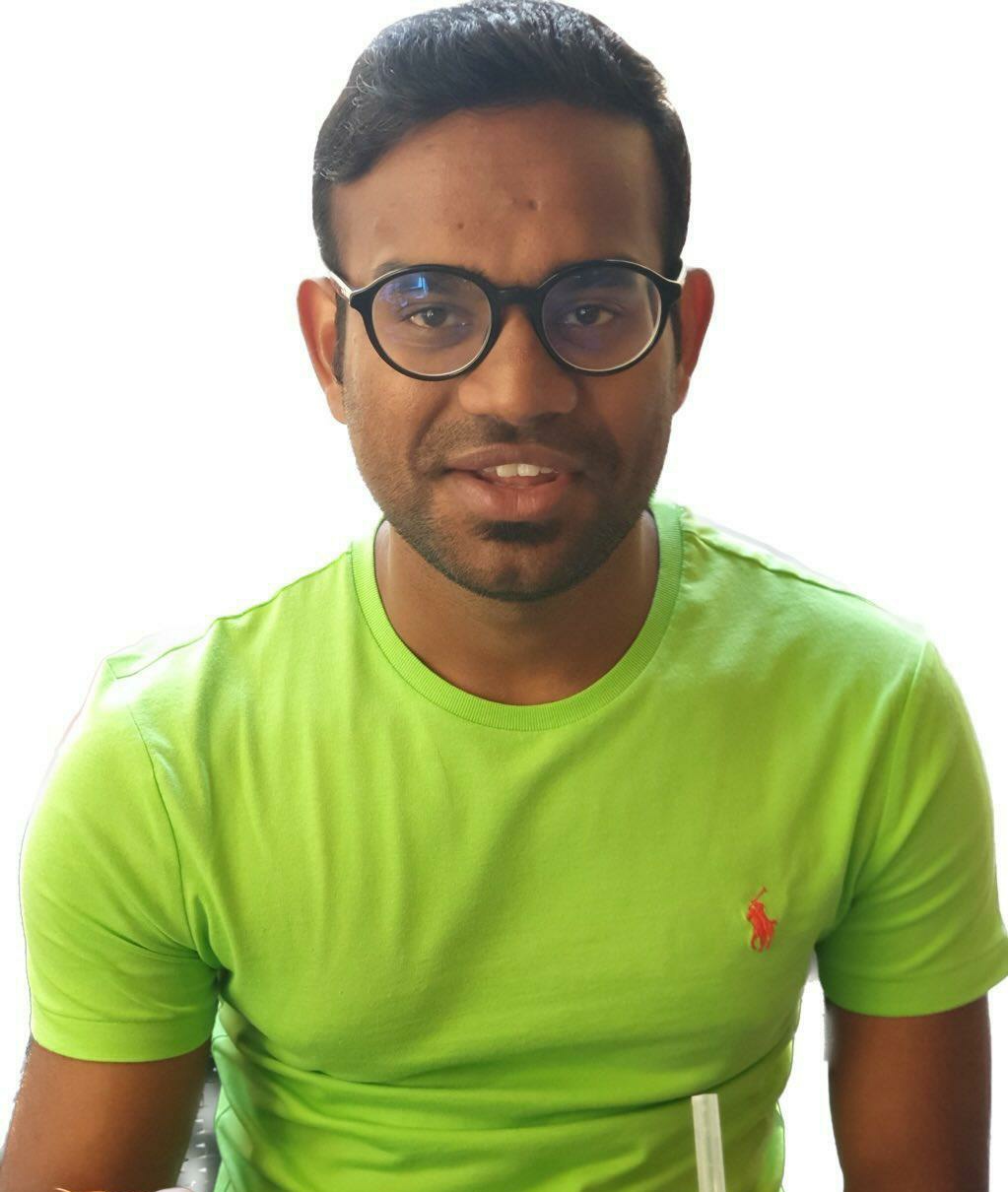
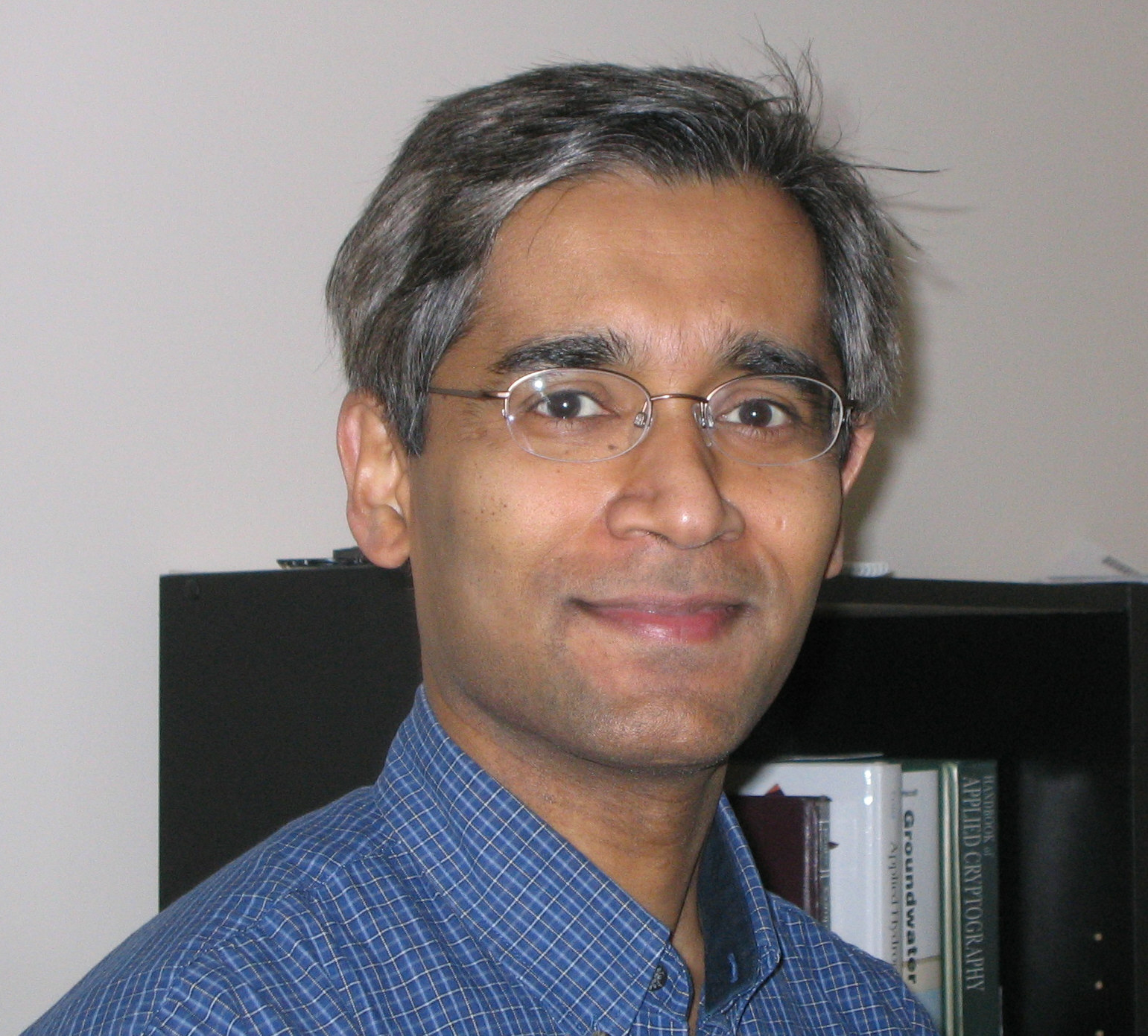
Barry Scudder-Davis serves as Adjunct Lecturer at Bentley University with appointments in both Computer Information Systems and Information and Process Management. Currently pursuing a PhD in Information Systems at Bentley University under advisor M. Lynne Markus, his research centers on blockchain and distributed ledger technology governance frameworks. His academic credentials include: Master of Science in Finance from Northeastern University Bachelor of Science in Business Administration from Northeastern University (Magna Cum Laude) Research primarily examines governance mechanisms in blockchain-based systems, with focus on consensus protocols, decentralized decision-making structures, and security implications of distributed architectures.
Luìs Manuel Nobre de Brito Elvas serves as a Research Fellow at Molde University College's Faculty of Logistics, specializing in artificial intelligence applications for healthcare systems and urban logistics. His work bridges computational methods with real-world challenges in medical data processing and city infrastructure management, contributing to interdisciplinary projects with Norwegian and international collaborators. Dr. Elvas's research centers on healthcare informatics, where he develops natural language processing techniques for medical report structuring, blockchain solutions for health data interoperability, and wearable technology frameworks for long-term care monitoring. His smart city research analyzes urban mobility patterns using mobile data to optimize logistics and public services, demonstrating consistent focus on practical implementations through publications in journals like Scientific Reports and JMIR Medical Informatics. Analysis of his 2023-2025 publications reveals concentrated expertise in medical AI, particularly fine-tuned language models for clinical text processing (75% of recent work), complemented by blockchain applications for health records (15%) and smart city analytics (10%). His research increasingly addresses hospital operational efficiency, with 40% of 2024-2025 publications targeting workload reduction through AI-assisted care systems. Dr. Elvas maintains active collaboration with Molde University College researchers including Joao C. Ferreira and Miguel Nunes across 19 co-authored publications. His work appears in high-impact venues such as IEEE conferences and Springer proceedings, though specific grant funding or student supervision details remain unreported in available sources. He operates from campus office C314 with primary focus on translating AI research into healthcare and logistics solutions.
Fan Long is an Assistant Professor in the Department of Computer Science at the University of Toronto, affiliated with the Bahen Centre for Information Technology. His research focuses on programming languages, software engineering, systems security, and blockchain technology, with particular emphasis on smart contract security and automatic patch generation. He leads the Conflux project, a high-throughput blockchain platform, and has contributed to systems like Shrec (bandwidth-efficient transaction relay), Gosig (scalable Byzantine consensus), and CodePhage (cross-application code transfer). Education background includes a PhD in Computer Science from MIT (as evidenced by his former MIT homepage). His work spans foundational blockchain scalability improvements, runtime validation for smart contracts (Solythesis), and input sanitization techniques (SIFT/SOAP). Notable awards include a Distinguished Paper at ICSE 2024 and Best Paper at IEEE ICBC 2022. Research highlights include developing Prophet (machine learning-driven patch generation), RCV (crash recovery tool), and LVMT (authenticated storage for blockchains). His lab collaborates with industry partners to address challenges in decentralized systems, including transaction finality, oracle security, and gas optimization in DeFi applications. Grants and collaborations include projects funded by NSERC, MIT-IBM Watson AI Lab, and industry partnerships with blockchain firms. Active in open-source communities, maintaining repositories for Conflux, Prophet, and CodePhage. Recent work explores atomic state sharding (Möbius), flash loan attack synthesis (Flashsyn), and robust front-running methodologies.
Jerrold SOH is an Assistant Professor of Law at the Yong Pung How School of Law, Singapore Management University (SMU), serving concurrently as Deputy Director of the Research Programme in Computational Law at the Centre for Digital Law. He holds an LL.M. from Harvard University and dual first-class honors degrees in Law (LL.B.) and Economics (B.Soc.Sci.) from the National University of Singapore (NUS). His academic journey includes roles as Deputy Director at the Centre for Computational Law (2021–2024) and Lecturer of Law at SMU (2018–2020). SOH’s research focuses on empirical legal studies, law and technology intersections, and computational methods in jurisprudence. He investigates topics such as judicial citation patterns, algorithmic accountability, AI-driven legal systems, and tort liability for automated vehicles. His work often bridges legal theory with data science, exemplified by projects like legal text formalization, network analysis of case law, and blockchain applications in property law. SOH has published widely in journals like the Asian Journal of Comparative Law , Frontiers in Physics , and American Business Law Journal , with recent work addressing AI legal implications, blockchain land transfers, and antitrust regulation. He is a Chief Data Scientist at Lex Quanta Pte Ltd and has received honors such as the SMU START Overseas Postgraduate Scholarship and multiple Dean’s Lists at NUS. His professional contributions span computational law infrastructure development, legal innovation advocacy, and educational initiatives in technology law. Current research priorities include AI ethics in legal contexts, control-centric liability frameworks, and empirical analyses of judicial decision-making processes.
Yiming Zeng is an Assistant Professor at the School of Computing, Binghamton University. He holds a PhD from Stony Brook University and a BS from Shanghai Jiao Tong University. His research focuses on quantum networking, quantum computing, edge computing, distributed systems, differential privacy, and decentralized optimization. He has been recognized with awards including the 2023 Sigcomm Workshop Travel Grant and the 2017 Stony Brook Academic Excellence Fellowship. Education: PhD in Electrical and Computer Engineering, Stony Brook University (2024 expected) BS in Engineering, Shanghai Jiao Tong University Research Interests: Quantum Networking: designing protocols for entanglement routing and management in quantum internets Edge Computing: optimizing edge caching, data offloading, and privacy-preserving techniques in 5G networks Decentralized Optimization: applying game theory to blockchain systems and distributed resource allocation Differential Privacy: developing methods for federated learning and data marketplaces Teaching Experience: Teaching Assistant for courses including Digital Logic Design, Electronics Laboratory, and Introduction to Electrical and Computer Engineering Labs/Teams: Active in quantum internet research and edge computing systems development, though specific lab affiliations are not explicitly stated.
Mayank Raikwar serves as a Postdoctoral Fellow in the Department of Informatics at the University of Oslo, where he is an active member of the Networks and Distributed Systems research group. His work focuses on advancing blockchain technologies and cryptographic protocols within distributed computing environments, with significant contributions to DAG-based distributed ledger systems and privacy-preserving mechanisms. Dr. Raikwar's research centers on blockchain security and distributed consensus , with particular expertise in DAG architectures, cryptographic primitives, and privacy-enhancing technologies. His investigations span theoretical foundations and practical implementations, addressing critical challenges in scalability, attack resilience, and secure data management. Recent work extends to healthcare applications through secure medical image retrieval frameworks, demonstrating interdisciplinary applicability of cryptographic techniques. Analysis of his publication trajectory (2019-2025) reveals consistent leadership in blockchain security research. His work frequently appears in top-tier venues including IEEE conferences and ACM proceedings, with significant contributions to understanding consensus protocols, randomness generation, and privacy models. The evolution of his research demonstrates increasing sophistication in addressing real-world implementation challenges while maintaining rigorous security guarantees. Within the University of Oslo's research ecosystem, Dr. Raikwar maintains active collaborations with Professor Danilo Gligoroski and Professor Roman Vitenberg. His current projects focus on next-generation blockchain architectures and privacy frameworks, positioning him at the forefront of distributed systems innovation.
Professor Michael Franz is a Distinguished Professor and ICS Alumni Professor in the Donald Bren School of Information and Computer Sciences at the University of California, Irvine. He also holds a courtesy appointment in the Department of Electrical Engineering and Computer Science in the Henry Samueli School of Engineering. Franz directs UCI's Secure Systems and Software Laboratory and is a Fellow of AAAS, ACM, IEEE, and an Inaugural Fellow of IFIP. His educational background includes: Doctor of Technical Sciences in Computer Science from ETH Zurich (advisor: Niklaus Wirth) Dipl. Informatik-Ingenieur ETH degree from ETH Zurich Professor Franz pioneered mobile code and dynamic compilation research, creating early just-in-time compilation systems and co-inventing trace compilation technology that became Firefox's JavaScript engine. His current research focuses on Software Systems, particularly compiler and virtual machine techniques for making software safer, faster, or both. His work spans Computer Security, Trustworthy Computing, and Software Engineering, with recent emphasis on multivariant execution, automated software diversity, and probabilistic memory safety. Franz's research bridges theoretical foundations with practical applications, resulting in technologies deployed in major software systems used by hundreds of millions. His publication record demonstrates consistent leadership in security and systems research, with recent work focusing on survivable systems, binary analysis, and cross-platform security solutions. The publications reveal an evolution from foundational compiler techniques to sophisticated security mechanisms addressing real-world vulnerabilities, with strong emphasis on practical implementation and measurable impact. Professor Franz has received numerous prestigious awards: ACM Charles P. 'Chuck' Thacker Breakthrough in Computing Award (2020) Humboldt Research Award (2019) Distinguished Professor at UCI (2022) UCI's 'Innovator of the Year Award' (2018) Fellowships from all four major computing professional organizations Multiple Best Paper Awards at top-tier conferences As an advisor, Franz has graduated over 40 Ph.D. students, with recent graduates including Mitchel Dickerson and André Rösti. His research group has secured over $24 million in competitive grants (more than $16 million as sole PI) and received over $1 million in unrestricted industry gifts. Franz maintains strong industry connections, with many former students now at Google, Apple, and Meta, and his research directly influences commercial technologies. Leading the Secure Systems and Software Laboratory, Franz fosters a collaborative environment focused on developing innovative security solutions. The lab maintains global research partnerships and continues to advance areas like multivariant execution systems, automated software diversity, and practical security mechanisms. Current projects emphasize developing systems that maintain functionality even when compromised, addressing the evolving landscape of cyber threats with scientifically rigorous approaches.
Walid Fdhila is a Researcher in the Security and Privacy group within the Faculty of Computer Science, focusing on blockchain applications and process management systems. His technical expertise spans distributed systems, privacy-enhancing technologies, and compliance verification. Research domains include: Blockchain-based audit systems for healthcare Privacy-preserving federated learning Cryptocurrency transaction anonymity Process compliance in decentralized environments Verification of distributed business processes He leads the 'Decentralized Trust in Digital Societies' project and develops applications of distributed ledger technology. Recent work creates frameworks for privacy-aware process execution across organizational boundaries.
Ilias Ioannou is a Lecturer in Law at the University of Bristol and a PhD candidate at Queen Mary University of London’s Centre for Commercial Law Studies. His research focuses on the legal and economic implications of blockchain technology in global supply chains, particularly in container shipping and financial systems. He holds degrees from Democritus University of Thrace (LL.B.), University of Athens (LL.M.), King’s College London (LL.M.), and Queen Mary (MRes). Ilias is a recipient of the LISS DTP Collaborative (CASE) Studentship and has published works on blockchain applications in trade finance, cryptocurrency regulation, and electronic trade systems. His academic contributions bridge law, finance, and technology, addressing issues such as smart contracts, anti-money laundering frameworks, and the modernization of international trade legislation. Ilias’ recent work explores how blockchain can transform traditional paper-based systems in maritime logistics and how legal frameworks must adapt to emerging fintech innovations.
M. Anwar Hasan is a Professor in the Department of Electrical and Computer Engineering at the University of Waterloo, where he has been a faculty member since January 1993. He was promoted to Associate Professor with tenure in 1998 and to full Professor in 2002. At Waterloo, he is also a member of the Centre for Applied Cryptographic Research, the Center for Wireless Communications, and the VLSI Research group. He previously spent 1992 as a post-doctoral fellow at the University of Victoria. Dr. Hasan received his B.Sc. and M.Sc. degrees in electrical and electronic engineering and computer engineering, respectively, from the Bangladesh University of Engineering and Technology in 1986 and 1988. He earned his Ph.D. in electrical engineering from the University of Victoria in 1992. His research focuses on cryptographic computations and embedded systems, dependable and secure computing, computer and network security, and computer arithmetic and architecture. His work has particularly emphasized efficient implementations of cryptographic algorithms, especially elliptic curve cryptography, with attention to side-channel attack resistance and fault tolerance. He has made significant contributions to finite field arithmetic, which forms the mathematical foundation for many cryptographic systems. Dr. Hasan's recent publications demonstrate continued leadership in cryptography, with work spanning traditional cryptographic implementations, post-quantum cryptography (particularly isogeny-based approaches), blockchain applications, secure multi-party computation, and hardware optimization for cryptographic operations. His research maintains a strong focus on both theoretical foundations and practical implementations. Raihan Memorial Gold Medal President's Research Scholarship (awarded four times at University of Victoria) Faculty of Engineering Distinguished Performance Award (2000) Outstanding Performance Award (2004) As a member of the Centre for Applied Cryptographic Research, Dr. Hasan has led numerous research projects in cryptographic hardware and software implementations. He served as an associate editor of the IEEE Transactions on Computers from 2000 to 2004 and has been involved in program and executive committees for several conferences. His research has been supported by various grants that have enabled him to supervise numerous graduate students and postdoctoral fellows, though specific grant details are not provided in the source material. Dr. Hasan's laboratory work has focused on implementing efficient and secure cryptographic systems, particularly examining side-channel attacks and developing countermeasures. His research team has produced numerous technical reports through the Centre for Applied Cryptographic Research (CACR) at Waterloo, demonstrating a sustained research program in cryptographic engineering.
J Gordijn is an Associate Professor at the Faculty of Science, Vrije Universiteit Amsterdam (VU), affiliated with the Software and Sustainability (S2) department and the Network Institute. He holds dual roles as Director of Gordijn Holding BV and The Value Engineers since 2017. His research focuses on digital business models, blockchain technology, smart city requirements engineering, and ecosystem governance. He has contributed to over 128 publications, emphasizing value-driven design, platform revenue models, and decentralized governance frameworks. Research interests span digital transformation, including blockchain applications for fair ecosystems, business model innovation, and inter-organizational alignment. His work bridges theoretical models with practical implementations, such as the e3value framework for ecosystem design and the Decent domain-specific language for governance decisions. Recent studies include smart city requirements in Southeast Asia and scalability challenges in ICT4D contexts. Collaborations involve global institutions and industry partners, with a focus on sustainable development goals (SDGs). He teaches courses on ICT's role in global contexts and leads research initiatives on platform economics and blockchain governance. His datasets, like the platform revenue model taxonomy, are publicly accessible via Zenodo. Notable contributions include pioneering work on service value networks, business-IT alignment, and automated service configuration. His research methodologies combine empirical studies with conceptual modeling to address complex systemic challenges in digital ecosystems.
Fadime Kaya is a Research Fellow at the Faculty of Science , Vrije Universiteit Amsterdam , affiliated with the Software and Sustainability (S2) group and the Network Institute . Her work focuses on decentralized governance models and blockchain applications. Her research spans Blockchain , Distributed Ledger Technology , and Decentralized Governance , with applications in digital ecosystems, renewable energy, and healthcare. She has contributed to 8 peer-reviewed publications, including a PhD thesis on model-based governance design. Recent outputs include ontological frameworks for Central Bank Digital Currency and Decentralized Energy Systems , alongside decision-tree models for blockchain adoption. She co-organized the IEEE Workshop Towards Decentralized Governance Design (2022). Education : MSc
Henry Selvaraj is a Professor in the Department of Electrical and Computer Engineering at the University of Nevada, Las Vegas. His expertise spans artificial intelligence, IoT systems, digital signal processing, and embedded systems, with applications in healthcare, energy, and robotics. His recent research focuses on machine learning applications for IoT systems, including sensor data restoration, energy-efficient computing, and medical diagnostics. He has developed novel methods for path planning in robotics, cancer detection in medical images, and fault-tolerant IoT architectures. With over 50 publications, his work demonstrates strong interdisciplinary collaboration between computer engineering, medical imaging, and power systems. Recent articles show growing emphasis on real-time embedded AI, hardware acceleration (FPGA), and blockchain applications in energy systems. Dr. Selvaraj's laboratory focuses on practical implementations of machine learning algorithms for resource-constrained environments, particularly in healthcare diagnostics and industrial IoT applications.
Nuno Mateus Coelho is an Associate Professor at Lusófona University and an Invited Associate Professor at the Polytechnic Institute of Cávado and Ave, specializing in Cybersecurity. He holds a PhD in Computer Science (Cybersecurity) from the University of Trás-os-Montes e Alto Douro and is a certified European Commission expert in Information Security projects. His professional roles include Cyber Security Adviser at Faurecia Automotive and Nanium Group, CEO of NRMC.PT, and Judicial Expert at the Ministry of Justice. He is also the Editor-in-Chief of the ARIS2 Journal and Director of the LAPI2S Lab. Education: PhD in Computer Science (Cybersecurity) – University of Trás-os-Montes e Alto Douro (2020) MSc in Computer Engineering (Cybersecurity) – Instituto Superior de Engenharia do Porto (2015) BSc in Information Systems Engineering – Instituto Superior de Línguas e Administração (2010) Ongoing Postdoctoral Research in Cybersecurity at Lusófona University Research Interests: Cybersecurity frameworks (e.g., CyberSoc, PCSRA) Blockchain and cryptographic systems (e.g., ChevroCrypto) AI-driven cybersecurity solutions Paranoid Operating Systems for privacy Healthcare cybersecurity and pandemic response (e.g., Vent2Life project) Key Projects & Grants: Lead WP5 of the Horizon 2020-funded CyberSecPro project Recipient of the INNCYBER Innovation Award (2021) for best European research Vent2Life: Repaired 200+ ventilators during the COVID-19 crisis General Chair of the iSCSi International Conference Media & Public Engagement: Regular cybersecurity commentator on CNN Portugal and TVI Keynote speaker at Web Summit, IEEE, and TEDx events Author of opinion columns on cybersecurity trends
Susan Eisenbach served as a Professor and Head of the Department of Computing at Imperial College London from January 2010 to September 2016, followed by roles as Dean of Learning and Teaching and Director of Studies. Her research focuses on software systems, smart contracts for blockchain, and specification languages for large open systems. She retired in 2020 during the pandemic and received a notable farewell via email. Her academic leadership spans over three decades at Imperial, including contributions to curriculum development and pedagogical innovation. She has supervised numerous PhD and Master’s students, many funded by prestigious grants (e.g., EPSRC, Microsoft Research). Her awards include the Imperial College Teaching Fellow (2002) and recognition for the LEXIS exam invigilation system (Best Applied Paper, 2001). Publications highlight her work on formal verification, programming language design, and blockchain technologies. Her articles address topics like memory layout optimization, smart contract safety, and garbage collection algorithms. Eisenbach’s service includes roles on programme committees (ECOOP, OOPSLA) and external reviews for institutions like Trinity College Dublin and KTH. She contributed to ACM committees and IFIP working groups, emphasizing education and programming language standards.