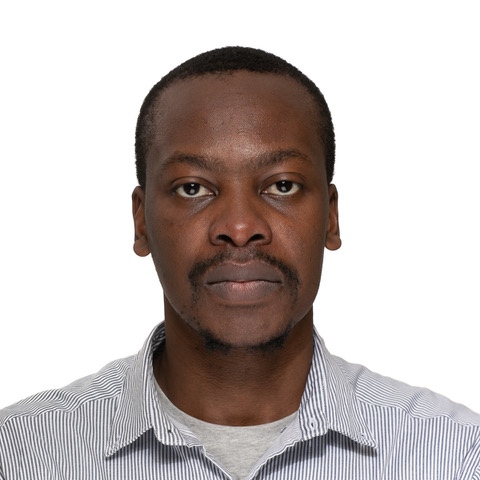
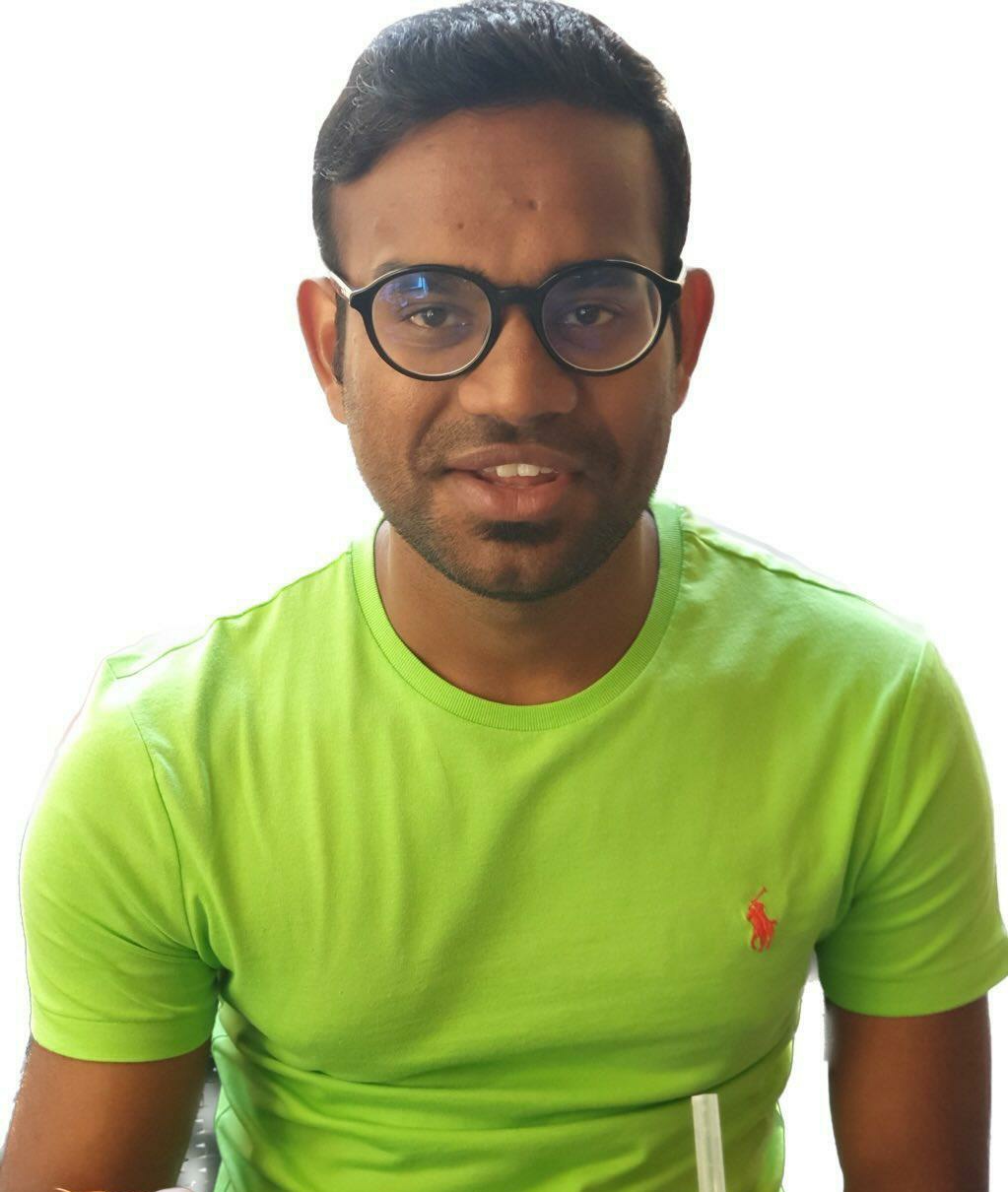
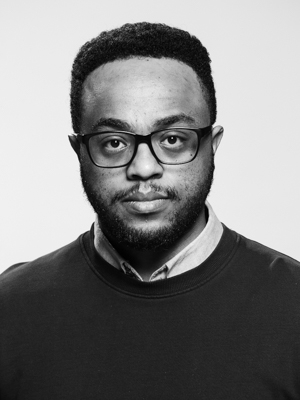
Joao Carlos Amaro Ferreira is a Professor at the Faculty of Logistics, Molde University College (HiMolde), Norway. He holds PhDs in Computer Engineering and Industrial Engineering from the Technical University of Lisbon and the University of Minho, respectively. His research focuses on Artificial Intelligence (AI) applications in healthcare, energy, transportation, IoT, blockchain, and smart cities. He has led over 40 projects, including 6 as Principal Investigator, and contributed to international conferences like OAIR and INTSYS. He served as IEEE CIS President (2016-2018) and is an IEEE Senior Member since 2015. His academic contributions span AI-driven solutions for public sector informatics, healthcare data quality, and cybersecurity. He actively participates in European projects such as e-Hospital4Future and explores blockchain applications in supply chains and medical records. Ferreira leads the ABC-AI research group, emphasizing ethical and applied AI. His work bridges academia and industry through projects like gamification systems for eco-driving and AI in fisheries traceability. Recent publications highlight AI's role in cardiovascular disease detection, emergency department optimization, and blockchain-enhanced healthcare interoperability. He collaborates internationally, co-editing journals like Applied Sciences , and has authored patents in edge computing for maritime monitoring.
Danilo Gligoroski is a Professor at the Department of Information Security and Communication Technology at NTNU. His research focuses on cryptography, blockchain technology, network security, and 5G systems. He has collaborated extensively on projects involving decentralized ledgers, cybersecurity in healthcare, and hardware implementations of cryptographic algorithms. Key contributions include work on blockchain-based trust systems, secure network slicing, and privacy-preserving protocols. Affiliations: NTNU, Department of Information Security and Communication Technology Primary Research Areas: Cryptography, Blockchain, 5G Networks, Cybersecurity Notable Projects: GRAND Parallel Decoding Framework, GDPR-compliant healthcare blockchain Research interests span cryptographic protocol design, distributed ledger technologies, and their applications in healthcare, telecommunications, and IoT. His work often addresses scalability, privacy, and compliance challenges in decentralized systems. Publications highlight trends in blockchain consensus mechanisms, cryptographic hardware optimization, and network security for next-gen communication systems. Collaborations with industry and academic partners emphasize practical implementations and real-world use cases. Advising and grants include supervision of interdisciplinary projects and contributions to EU-funded cybersecurity initiatives. Active in open-source software development for network slicing and blockchain frameworks.
Bjørn Jæger is a Professor at the Faculty of Logistics of Molde University College (HiMolde), Norway. He holds a Master of Science in Nuclear Physics from the University of Bergen and a PhD in Informatics from the University of Bergen. His research focuses on digitalization of business processes, enterprise systems, blockchain in supply chains, sustainability, IoT, and additive manufacturing. He has held visiting roles at institutions like Curtin Business School (Australia) and the University of Pittsburgh (USA). Education: PhD: 'Traffic Restoration in Survivable Wide Area Communication Networks' (University of Bergen & University of Pittsburgh, 2000) MSc in Nuclear Physics (University of Bergen, 1989) Research Interests: Blockchain applications in logistics and SCM ERP systems and digital transformation strategies IoT for smart manufacturing and supply chain visibility Additive manufacturing adoption in industries Circular economy frameworks in manufacturing Sustainability accounting with digital technologies Key Projects: Building Trust in Seafood Supply Chains using Blockchain/DNA Analysis Manufacturing Network 4.0 (2015-2019) Industrial Internet Initiative (2017-2021) Labs/Groups: Member of research groups like Digitalization for Sustainability, Informatics & Digitalization, and the Organic Digital Domain (ODD).
Roman Vitenberg is a Professor at the Department of Informatics, University of Oslo. His research focuses on distributed systems, blockchain, privacy, and middleware. He leads the Blockchain Lab, which runs Norway's production node in the EBSI network. Key contributions include work on fault-tolerant overlays, privacy-preserving frameworks for genomic data, and blockchain applications in healthcare. He teaches courses on distributed systems and blockchain technologies. Education: Ph.D. from Technion (Israel Institute of Technology), M.Sc. from Hebrew University of Jerusalem. Previous roles include postdoc at UC Santa Barbara and researcher at IBM. Research Interests: Distributed algorithms, blockchain systems, cloud/fog computing, dependability, and privacy-preserving techniques. Awards: Best Demo Award at ACM DEBS 2014, Best Paper Award at ACM DEBS 2016, Most Influential Paper Award (2007 paper recognized in 2017). Grants & Projects: PriTEM (privacy-preserving energy management), Conserns, Credence, and EBSI-NE (operating Norway's EBSI node). Advising: Supervised over 10 PhD and master students, including notable alumni at Spotify and Max-Planck Institute. Publications: Over 100 peer-reviewed articles in top venues like IEEE Transactions, ACM conferences, and blockchain-focused journals.
Chiara Bordin is an Associate Professor in Energy Informatics at the Department of Computer Science, UiT The Arctic University of Norway. She focuses on teaching and research within the Energy Informatics domain, with particular expertise in mathematical optimization applied to smart energy and power systems. Member of the Arctic Centre for Sustainable Energy (ARC) Member of the Aurora Center MASCOT (Mathematical Structures in Computation) Principal Investigator for projects including Smart Senja and TENORS Editorial board member for Energy Informatics Journal (Springer) and Discover Applied Science Journal (Springer Nature) Guest editor for special issue in Energies Journal on Smart and Sustainable Energy Hubs Dr. Bordin's research focuses on mathematical optimization in computer science applied to smart energy and power systems. Her work spans models for storage integration, strategic network design, power systems reliability, multi-agent systems for microgrids, stochastic multihorizon optimization, and electric vehicle management. By combining mathematical modeling with computer science, power systems engineering, economics, big data analytics, and machine learning, she addresses complex research questions within energy systems. Her work contributes significantly to the interdisciplinary field of Energy Informatics, particularly in smart energy-saving systems and smart grids. Her recent publications demonstrate a strong trend toward integrating artificial intelligence with traditional power system optimization, with increasing focus on resilience, reliability, and multi-use applications of energy infrastructure. The research spans both theoretical modeling and practical implementation challenges in Arctic and sub-Arctic environments. Member of technical program committee for Energy Informatics.Academy Conference Member of technical program committee for DACH+ Energy Informatics Conference Member of technical program committee for KES Sustainability in Energy and Buildings Conference Reviewer for high-ranked journals (Elsevier, Springer, Wiley) Academic R&D advisor for industries and startups in power systems and energy management Dr. Bordin teaches several advanced courses including INF-3010/INF-8010: Energy Informatics - Smart Energy and Power Systems Modelling at master's and PhD levels. She is available for capstone projects and can develop tailored special curriculum courses focusing on mathematical modeling, optimization, prescriptive analytics, and decision support systems within energy informatics. Her pedagogical approach emphasizes interdisciplinary connections between computer science, engineering, and energy systems. She is actively involved in the Arctic Centre for Sustainable Energy research community, contributing to the Digitalization research area where she collaborates on solutions for renewable energy system challenges through advanced digital technologies.
Anthony Junior Bokolo is a Researcher at Østfold University College's Department of Computer Science and Communication, concurrently serving as Senior Researcher at the Institute for Energy Technology. His research develops AIoT frameworks for sustainable smart cities, focusing on energy-sharing communities and decentralized mobility services. He holds a PhD in Computer Science from University Malaysia Pahang. Publications demonstrate consistent focus on DLT interoperability, data sovereignty in urban systems, and citizen-centric mobility solutions. Research integrates enterprise architecture with sustainability goals. Active projects include: Data Governance for Human-Centric Mobility (CRC Press 2025) ICT Ecosystem Architecture for +CityxChange (2021)
Marius Trandheim Kristiansen is an Assistant Professor in the Department of Management and Innovation at the University of Agder (UiA), Norway. His work bridges academic research and practical innovation, with strong ties to industry through projects like SFI Offshore Mechatronics. Research Interests: His academic focus lies at the intersection of digital transformation and business innovation. He investigates how digital technologies enable business model innovation, particularly through digital servitization in manufacturing. His work explores critical challenges such as gaining ecosystem acceptance and building legitimacy for smart services within established industrial environments. Key areas include blockchain, distributed ledger technologies, and sustainable innovation transitions. The recent publications highlight a consistent research trajectory centered on legitimacy and acceptance in digital servitization, especially within manufacturing ecosystems. His work combines case study methodologies with theoretical frameworks from innovation management and industrial marketing. Scientific Contributions: Building legitimacy in digital servitization (2025) Gaining acceptance for digital servitization (2024) Ecosystem acceptance of digital servitization (2021) Teaching and Professional Background: He teaches Customer Relationship Management (CRM) and is affiliated with the RIST Research Centre for Studies of Innovation for Sustainable Transition. Before academia, he was an entrepreneur and management consultant with over 10 years of experience in startups, strategy, and operations, particularly in the retail sector. He founded BAD NORWEGIAN AS and Trandheim Utvikling AS, and worked with Frost Nordic and South Africa’s Maxum incubator. Labs and Research Groups: He is actively involved in the RIST research center and collaborates with SFI Offshore Mechatronics, indicating strong engagement with interdisciplinary and industry-linked research initiatives.
Thomas Sødring serves as an Associate Professor in the Department of Archivistics, Library and Information Science within the Faculty of Social Sciences at Oslo Metropolitan University (OsloMet). His office is located at Pilestredet 48, 0167 Oslo (Office R407) with contact information including office phone +47 672 38 287 and email thomas.sodring@oslomet.no. He is actively involved with the Information Systems based on Metadata (METAINFO) research group, focusing on the intersection of traditional records management practices with emerging digital technologies. Sødring's research primarily centers on records management systems, particularly the Norwegian Noark standard, and its adaptation to modern technological challenges. His work demonstrates significant expertise in digital preservation, metadata systems, and the application of blockchain technology to public sector record-keeping. He has made notable contributions to understanding how Internet of Things data can be managed within government record-keeping frameworks and has explored innovative approaches to syllabi analysis through platforms like Leganto. His research bridges theoretical archival science with practical implementations in Norwegian municipal and governmental contexts. Analysis of his publication record from 2015-2022 reveals a consistent focus on the evolution of records management practices in the digital age, with particular emphasis on Norwegian public sector implementations. His work shows a clear trajectory from foundational research on digital preservation challenges toward more innovative applications of emerging technologies like blockchain for record integrity and AI for archival processing. The publications demonstrate strong collaboration with Norwegian institutions and international partners, particularly in the development and implementation of the Noark standard across various platforms and use cases. Sødring has been actively disseminating his research through numerous workshops and presentations at venues including KDRS Workshop, NUUG meetings, and events organized by Arkivverket (the National Archival Services of Norway). His work on Nikita (an open-source implementation of Noark 5) and Grouse (a requirements specification generator) demonstrates his commitment to practical applications of archival science that benefit both practitioners and researchers in the field.
Kishore Thapliyal is a Research Fellow at the University of Oslo, Norway, and previously held the same position at Palacky University in the Czech Republic. His research focuses on theoretical aspects of quantum optics, photonic quantum technology, and quantum information processing. Key areas include nonclassical state generation, entanglement quantification, decoherence suppression, and applications in quantum communication and cryptography. He collaborates with experimentalists to design models for multimode optical field experiments and explores non-Hermitian physics for quantum sensing enhancement. His academic journey includes postdoctoral roles since 2018, with a strong emphasis on advancing theoretical frameworks for quantum systems. Research interests span non-Hermitian dynamics, quantum resource optimization, and secure multiparty computation. He is affiliated with the Solid-state Physics and Quantum Technology research group at the University of Oslo. While no scientific awards are explicitly mentioned, his contributions to quantum photonics and theoretical models have been published extensively. Collaborations with experimental groups highlight his interdisciplinary approach to bridging theory and application in quantum technologies.
Professor Danilo Gligoroski is affiliated with the Norwegian University of Science and Technology (NTNU) under the Department of Information Security and Communication Technology. His work bridges cryptography, blockchain technology, and 5G network security, with a focus on decentralized systems and privacy-preserving protocols. Key research trends in his recent publications include blockchain applications in healthcare and reseller markets, verifiable delay functions for consensus mechanisms, and cryptographic frameworks for chat-based systems. He explores data integrity, network coding, and scalable storage solutions for blockchain ecosystems. Major collaborations include co-authors like Mayank Raikwar, Katina Kralevska, and Anton Karl Oskar Hasselgren. His work often intersects with GDPR compliance, network slice isolation, and secure service implementation in modern telecommunications.
Terje Lauvaas Andersen is an Associate Professor in Supply Chain Management at the Logistics Department , Molde University College . With a PhD in Logistics (2022) and a Master's in Computer Science (University of Bergen), his expertise bridges digital technology and sustainability. He teaches courses including Digital Business Management, Project Planning and Control, ERP systems, and IoT applications in supply chains. PhD in Logistics (2022), Molde University College Master's in Computer Science (University of Bergen) 30+ years of ICT management experience in industry and academia His research focuses on digital technology's role in circular economy transitions , particularly in e-waste handling and WEEE directive compliance. Key themes include information systems integration, master data management, and blockchain applications for green supply chains. Current projects examine how manufacturers can enable circularity through digital solutions. Recent publications highlight trends in reverse supply chain information flow (2023), cross-national WEEE directive variations (2022), and Edge&DL models for product circularity (2021). His work connects digital transformation with environmental sustainability through case studies and comparative analyses. Terje has conducted research stays at the RISE Institute, University of Brescia (2022, 2024), exploring digital-circular economy interdependencies. He contributes to the Digitization for Sustainability and Sustainable Communities research groups, with industry experience including 15 years as IT Manager at Glamox and 8 years at Molde University College.
Luìs Manuel Nobre de Brito Elvas serves as a Research Fellow at Molde University College's Faculty of Logistics, specializing in artificial intelligence applications for healthcare systems and urban logistics. His work bridges computational methods with real-world challenges in medical data processing and city infrastructure management, contributing to interdisciplinary projects with Norwegian and international collaborators. Dr. Elvas's research centers on healthcare informatics, where he develops natural language processing techniques for medical report structuring, blockchain solutions for health data interoperability, and wearable technology frameworks for long-term care monitoring. His smart city research analyzes urban mobility patterns using mobile data to optimize logistics and public services, demonstrating consistent focus on practical implementations through publications in journals like Scientific Reports and JMIR Medical Informatics. Analysis of his 2023-2025 publications reveals concentrated expertise in medical AI, particularly fine-tuned language models for clinical text processing (75% of recent work), complemented by blockchain applications for health records (15%) and smart city analytics (10%). His research increasingly addresses hospital operational efficiency, with 40% of 2024-2025 publications targeting workload reduction through AI-assisted care systems. Dr. Elvas maintains active collaboration with Molde University College researchers including Joao C. Ferreira and Miguel Nunes across 19 co-authored publications. His work appears in high-impact venues such as IEEE conferences and Springer proceedings, though specific grant funding or student supervision details remain unreported in available sources. He operates from campus office C314 with primary focus on translating AI research into healthcare and logistics solutions.
Mayank Raikwar serves as a Postdoctoral Fellow in the Department of Informatics at the University of Oslo, where he is an active member of the Networks and Distributed Systems research group. His work focuses on advancing blockchain technologies and cryptographic protocols within distributed computing environments, with significant contributions to DAG-based distributed ledger systems and privacy-preserving mechanisms. Dr. Raikwar's research centers on blockchain security and distributed consensus , with particular expertise in DAG architectures, cryptographic primitives, and privacy-enhancing technologies. His investigations span theoretical foundations and practical implementations, addressing critical challenges in scalability, attack resilience, and secure data management. Recent work extends to healthcare applications through secure medical image retrieval frameworks, demonstrating interdisciplinary applicability of cryptographic techniques. Analysis of his publication trajectory (2019-2025) reveals consistent leadership in blockchain security research. His work frequently appears in top-tier venues including IEEE conferences and ACM proceedings, with significant contributions to understanding consensus protocols, randomness generation, and privacy models. The evolution of his research demonstrates increasing sophistication in addressing real-world implementation challenges while maintaining rigorous security guarantees. Within the University of Oslo's research ecosystem, Dr. Raikwar maintains active collaborations with Professor Danilo Gligoroski and Professor Roman Vitenberg. His current projects focus on next-generation blockchain architectures and privacy frameworks, positioning him at the forefront of distributed systems innovation.
Daniel Gerbi Duguma is a Doctoral Research Fellow in Networks and Distributed Systems at the University of Oslo's Department of Informatics, within the Faculty of Mathematics and Natural Sciences. His research focuses on privacy-preserving security protocols for distributed systems. Research interests include: Blockchain-based security solutions Privacy in IoT and 5G networks Formal verification of security protocols Transactive energy management systems Recent publications explore security protocols for 5G networks and blockchain applications in healthcare systems. Contributes to the Privacy preserving Transactive Energy Management (PriTEM) project, developing secure frameworks for energy data exchange.
Katina Kralevska is an Associate Professor at the Department of Information Security and Communication Technology at NTNU since 2018. She previously served as Deputy Head of Department (2019-2020). Her academic background includes an MSc in Wireless and Mobile Communications from Ss. Cyril and Methodis University, Skopje (2012), and a PhD in Telematics from NTNU (2016). She has also conducted research at Imperial College London (2017). Her research focuses on blockchain technology applications in digital trust systems, 5G/6G network slicing, cybersecurity, distributed storage systems, and intent-based networking. She leads the Digital Transformation project on blockchain trust mechanisms and co-founded MemoScale AS, specializing in data protection solutions. Her publications emphasize blockchain in healthcare, network slicing optimization, and secure communication frameworks. She has advised multiple PhD and Master's students on topics like network slicing, blockchain applications, and 5G security. She holds several patents on erasure coding and network security techniques. She actively participates in academic governance, including NTNU’s Faculty Board, and serves as a program co-chair for IEEE Cyber Science Congress and committee member for global networking workshops.