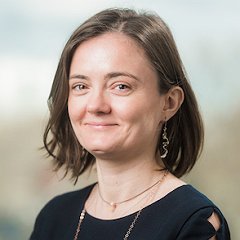
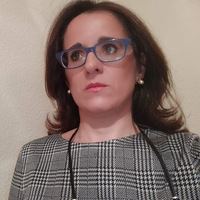
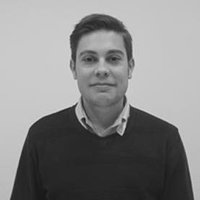
Nate Foster is a Professor of Computer Science at Cornell University and a Visiting Researcher at Jane Street . During 2023-24, he also holds a Visiting Professor position at EPFL in the Data Center Systems Laboratory. His research focuses on Programming Languages and Networking , with significant contributions to formal verification of network data planes and domain-specific language design. Awarded NSF CAREER Award , Sloan Research Fellowship , ACM SIGCOMM Rising Star Award , and ACM SIGPLAN Robin Milner Award Active in program committees for conferences like POPL, PLDI, SPLASH, and ICFP Research Trends : His recent work explores intersections of programming language theory with networking, including symbolic verification tools like KATch , infinite-state network analysis with StacKAT , and active learning frameworks for network automata. He applies formal methods to practical challenges in software-defined networking and hypervisor verification. Scientific Awards : NSF CAREER Award Sloan Research Fellowship ACM SIGCOMM Rising Star Award ACM SIGPLAN Robin Milner Award Academic Leadership : Serves as Session Preview Co-Chair for POPL 2024 and organizes workshops like RPLS 2025. He has chaired tutorials on P4 programming and mentored researchers through PLMW programs.
Alexandra Silva is a Professor of Computer Science in the Department of Computer Science at Cornell University's College of Engineering. She joined Cornell as faculty in 2021 after previously serving as a Royal Society Wolfson Fellow and Professor of Algebra, Semantics, and Computation at University College London. Her research spans programming languages, formal verification, and theoretical computer science, with particular focus on Kleene Algebra with Tests (KAT), probabilistic programming, and automata theory. She has held numerous leadership roles in major programming languages conferences including POPL, PLDI, and ICFP. Dr. Silva completed her PhD at Centrum Wiskunde & Informatica (CWI) in Amsterdam under the supervision of Jan Rutten and Marcello Bonsangue, with her thesis entitled "Kleene coalgebra" defended in December 2010. Prior to her PhD, she was an undergraduate student at University of Minho in Portugal, where she completed a 5-year Mathematics and Computer Science degree in May 2006. Her research focuses on the modular development of specification languages and algorithms for models of computations, often from the unifying perspective offered by coalgebra. She has made significant contributions to Kleene Algebra with Tests, probabilistic programming semantics, network verification, and automata learning. Her work bridges theoretical foundations with practical verification tools, particularly in the domain of Software-Defined Networking where her NetKAT framework has gained significant attention. Analysis of her recent publications reveals a strong trend toward unifying frameworks for program verification, particularly through her development of Outcome Logic which provides foundations for both correctness and incorrectness reasoning. Her work increasingly integrates probabilistic and concurrent aspects of programming languages, with applications to network verification and security. The NetKAT ecosystem remains a central theme, with extensions to infinite state verification, symbolic execution, and learning-based approaches. Distinguished paper award for Guarded Kleene algebra with tests: verification of uninterpreted programs in nearly linear time (POPL 2020) Dr. Silva advises a large research group with numerous PhD students, postdocs, and undergraduate researchers. Her group has produced significant work in programming languages theory, verification, and applications to networking. She has secured substantial research funding through various grants that support her work on formal methods for network verification and probabilistic programming. Her mentoring approach emphasizes both theoretical depth and practical impact, with many of her students moving to prestigious academic and industry positions. Her research group, spanning both Cornell University and University College London, focuses on developing theoretical foundations for programming languages with practical applications in network verification, probabilistic systems, and program analysis. The group maintains active collaborations with researchers at CWI, University of Oxford, and other leading institutions in programming languages and formal methods.
Aymeric Fromherz is a researcher at Inria Paris, focusing on formal methods for secure systems. He leads projects in Rust verification, high-assurance cryptography, and formalization of computational legal texts. Education includes a PhD from Carnegie Mellon University (co-advised by Bryan Parno and Corina Păsăreanu) and degrees from École Normale Supérieure. His research spans Rust verification (via Aeneas toolchain), verified cryptographic primitives , and computational law (through the Catala language). Recent publications address memory allocators, borrow-checking, and legal ambiguity detection. Major Scientific Awards : Distinguished Artifact Award (CAV 2025) Best Tool Paper Award (ESOP 2024) ACM SIGSAC Dissertation Award (2021) A.G. Milnes Dissertation Award (2021) He contributes to conferences like POPL, ICFP, and CPP, and participates in the Everest Project. The Prosecco Team at Inria Paris supports his research on formal methods and security.
María Teresa Ariza Gómez serves as a Full Professor in the Department of Telematics Engineering at the University of Seville, where she has established herself as a leading researcher in telecommunications and educational technology. Her academic career spans over two decades of continuous research contributions and teaching innovation. Professor Ariza Gómez's research interests focus on Telematics Engineering , with specialization in Distributed Systems , CORBA/MMS protocols , and IoT applications . She has pioneered the integration of gamification techniques into engineering education through tools like Kahoot, and developed virtual learning environments that transform programming instruction. Her work bridges theoretical telecommunications concepts with practical industrial applications, particularly in vehicle telematics and service station management systems. Her publication record shows consistent output with recent emphasis on educational technology (2015-2019), including software architecture for health applications and virtual laboratory environments. These works demonstrate her ability to adapt telecommunications expertise to solve problems in diverse domains from healthcare to automotive systems. Professor Ariza Gómez maintains active research through multiple projects including the TIC-154 research group (with continuous funding since 2006) and industry collaborations on Android applications and payment systems for gas stations. Her teaching methodology emphasizes project-based learning , virtual laboratories , and game-based educational resources that enhance student engagement in complex technical subjects. She leads research initiatives that combine telecommunications engineering with practical educational applications, creating innovative teaching tools that have been adopted across engineering disciplines at the University of Seville. Her work on virtualized computing environments has established a flexible, portable model that supports multidisciplinary teaching needs while maintaining technical rigor.
Maria-Cristina Marinescu serves as a Lecturer in the Department of Mathematics and Data Analytics at IQS School of Management. With a strong foundation in computational methods and data analysis, she contributes significantly to both teaching and research within the institution. Her academic profile demonstrates consistent scholarly activity with 44 documented scientific production items spanning over two decades. Dr. Marinescu's research interests center on Machine Learning, Data Analytics, and Artificial Intelligence, with notable applications in epidemic modeling, wireless sensor networks, and programming models. Her work bridges theoretical computer science with practical applications addressing real-world challenges in public health, digital well-being, and medical diagnostics. The fingerprint analysis of her work shows strong emphasis on Machine Learning (100%), Learning Systems (100%), and Transportation Models (100%), with substantial contributions to Programming Models (84%) and Wireless Sensor Networks (77%). Her recent publications reveal a trend toward interdisciplinary research that combines computational methods with societal challenges. She has made significant contributions to epidemic modeling during the COVID-19 pandemic, developing methods for accurate incidence rate estimation in Spain and analyzing information gains from multiple epidemic model outputs. Additionally, her work extends to medical applications including research on ocular ischemia and glaucoma, as well as innovative approaches to automated metadata annotation using machine learning techniques. Dr. Marinescu actively leads and participates in multiple research projects including Uncovering patterns of unconscious reactions to fake content (as Principal Investigator), MobilePressure (focused on reducing children's smartphone exposure), and ADAMIQS: Applied Data Analytics and Modelling IQS . These projects demonstrate her commitment to addressing contemporary issues through data-driven approaches while mentoring students and collaborating with interdisciplinary research teams.
María Mar Cebrián Villar is a Full Professor in the Department of Economics and Economic History at the University of Salamanca, where she also holds a position at the University Institute for Science and Technology Studies (INST). Her academic career spans several decades of research and teaching in economic history, with a particular focus on Spanish economic development during the mid-20th century. Her educational background includes: Degree in Economics from the University of Salamanca PhD from the European University Institute in Florence Dr. Cebrián Villar's research interests center on economic history, particularly the analysis of Spanish economic growth from 1959-1973, with emphasis on technology transfer's role in this growth. Her work spans business history (including studies of Nestlé and FASA-Renault), patents, pharmaceutical and automotive industries, migration patterns, intellectual property rights, and the importance of learning by doing in adopting foreign technologies. She has developed innovative teaching methods in economic history, incorporating digital tools like wikis and academic posters to enhance student engagement and learning. Her scholarly output reveals a consistent focus on Spanish economic development, technology transfer, and industrial history. A significant portion of her work examines the "Spanish miracle" period of rapid economic growth, analyzing the sources of this growth and the role of technology adoption. More recently, her research has expanded to include pharmaceutical patent systems and the intersection of technology and democracy. Dr. Cebrián Villar has secured substantial research funding throughout her career: One Integrated Action Six projects from the Ministry of Education and Science/Innovation/Science and Competitiveness One project from the University of Salamanca Two projects from the Regional Government of Castile and León She is currently part of a research group of excellence recognized by the Regional Government of Castile and León, working within the Unit for the Study of the History of Industry and Science and Technology Systems (HISCYT). Her international collaborations include research and training stays at prestigious institutions such as the University of Pennsylvania, the Center for Demographic Studies at the Autonomous University of Barcelona, the École des Hautes Études en Sciences Sociales in Paris, and the University of Sussex in Brighton.
Dr. Alfonso González Briones is an Associate Professor in the Department of Computer Science and Automation at the University of Salamanca, where he conducts cutting-edge research in intelligent systems and their applications. He is a prominent member of the BISITE Research Group and has also worked with the GRASIA Research Group at Complutense University of Madrid as a 'Juan De La Cierva' postdoc. His academic journey at the University of Salamanca includes a Bachelor of Technical Engineering in Computer Engineering (2012), a Bachelor's Degree in Computer Engineering (2013), a Master's Degree in Intelligent Systems (2014), and a PhD in Computer Engineering (2018). His research focuses on Ubiquitous Computing and Ambient Intelligence for developing smarter, more energy-efficient cities that improve social welfare and promote sustainable development. His work spans Multiple Agent Systems (MAS), energy optimization, smart cities infrastructure, Industry 4.0 applications, and machine learning techniques for various domains including social networks, transportation, and agricultural systems. Dr. González Briones has published extensively with over 30 journal articles and 60 conference proceedings publications, demonstrating consistent productivity across multiple domains of computer science and artificial intelligence. His research trends show a clear progression from foundational work in multi-agent systems toward increasingly sophisticated applications in smart cities, energy management, and Industry 4.0 contexts, with a growing emphasis on practical implementations that address real-world challenges. 2nd place in 1st SENSORS+CIRTI Award for best national thesis in Smart Cities (CAEPIA 2018) Juan de la Cierva State Program Grant in ICT - Information and Communication Technologies (2018) Member of scientific committees for Advances in Distributed Computing and Artificial Intelligence Journal (ADCAIJ) and British Journal of Applied Science and Technology (BJAST) Reviewer for prestigious journals including Supercomputing Journal, Journal of King Saud University, Energies, Sensors, Electronics, and Applied Sciences As an active researcher, Dr. González Briones has participated in 10 international research projects and served on technical committees for prestigious international conferences including AIPES, HAIS, FODERTICS, PAAMS, and KDIR. His work bridges academic research with practical industry applications, particularly in energy optimization systems, IoT, and Machine Learning solutions for real-world problems. He has also collaborated with private research centers including Virtual Power Solutions in Portugal and AIR Institute, where he worked as Project Manager in Industry 4.0 and IoT projects. His research infrastructure includes work with the BISITE Research Group, where he develops and implements multi-agent architectures for optimizing energy consumption and other complex systems. His laboratory work spans smart home energy management, intelligent transportation systems, semantic analysis for Industry 4.0, and social network analysis applications.
María Belén Pérez Lancho is a Full Professor in the Department of Computer Science and Automation at the University of Salamanca, Spain. With over 25 years of academic experience since completing her PhD in 1995, she maintains active affiliations with multiple research groups including BISITE (Bioinformatics, Intelligent Computing Systems and Educational Technology), CaUSAL (Academic Culture, Heritage and Social Memory), and Process Supervision and Control. Dr. Pérez Lancho earned her doctoral degree from the University of Salamanca with her thesis "Integrated process control system: a practical approach" supervised by Dr. Eladio Sanz García. Her academic foundation in systems engineering and automation has evolved into diverse research applications across multiple domains. Her research program demonstrates remarkable breadth while maintaining technical coherence. She has pioneered context-aware multiagent systems for home care environments, developing architectures like HoCa and HoCCAC that monitor patients and optimize task scheduling. In environmental science, she created hybrid intelligent systems for forest fire prediction using Case-Based Reasoning with topology-preserving algorithms. More recently, she has addressed cybersecurity challenges in educational technology through two-factor authentication systems. Her work consistently bridges theoretical computer science with practical implementations in real-world settings. Analysis of her publication trajectory reveals a consistent focus on adaptive intelligent systems that respond to environmental changes. Her earliest work established foundations in systems engineering, which evolved into sophisticated multi-agent applications across healthcare, environmental monitoring, and security domains. The most recent publications continue this trajectory while addressing contemporary challenges in educational technology security. Dr. Pérez Lancho maintains extensive collaborative relationships, particularly with Juan M. Corchado at the University of Salamanca, as evidenced by numerous co-authored publications. Her research has been implemented in actual home care environments and environmental monitoring systems, demonstrating the practical impact of her work. Her research infrastructure includes: BISITE group focusing on intelligent computing systems and educational technology CaUSAL group examining academic culture and heritage Process Supervision and Control group applying her foundational work to industrial contexts These affiliations support her interdisciplinary approach to solving complex problems through computational methods.
Mònica Baró Llambias is a Professor at the Faculty of Information and Audiovisual Media of the University of Barcelona. She is affiliated with the Information, Communication and Culture Research Center and coordinates the university master's degree in School Libraries and Reading Promotion (UAB-UB). She belongs to BiBES: Libraries, Education and Society, a consolidated research group recognized by the Generalitat de Catalunya (2014 SGR 382) and has led significant research projects including the R+D project 'History of Book Advertising in Spain: (15th-20th centuries)' (HAR2013-46336-P). Her research focuses on school libraries, children's book publishing, and the history of books. She has promoted the Observatory of Libraries, Books and Reading of the UB and has been instrumental in developing guidelines for school libraries in Catalonia. Her scholarly work bridges historical analysis with contemporary educational practices, examining how libraries function as essential spaces for literacy development in the digital age. She investigates the evolution of children's literature, the role of school libraries in educational systems, and the historical context of book advertising and publishing across centuries. Her recent publications demonstrate sustained focus on school libraries across different Spanish regions, particularly Catalonia and Galicia. Her work spans from historical analysis of book advertising from the 15th-20th centuries to contemporary studies of reading promotion and library standards. She examines information books for children, analyzes children's literature publishers like Editorial Joventut, and investigates the role of school libraries in modern educational contexts. As Principal Investigator with Pedro Rueda, she secured funding for significant research projects examining historical book advertising. She coordinates the university master's degree in School Libraries and Reading Promotion (UAB-UB), demonstrating her commitment to training future library professionals. Her research has been supported by the Generalitat de Catalunya and national research programs. Dr. Baró Llambias is actively involved with BiBES: Libraries, Education and Society, examining the relationship between libraries, education systems, and societal development. She has contributed to developing professional frameworks that shape library practice in educational settings and has been instrumental in promoting the Observatory of Libraries, Books and Reading of the University of Barcelona.
Javier Guallar is a Professor and Academic Secretary at the Faculty of Information and Audiovisual Media at the University of Barcelona. He holds dual PhDs in Information and Documentation from the University of Barcelona and Communication from Pompeu Fabra University. He directs the Social Media Content Postgraduate program and serves as Deputy Director of the journal "Profesional de la información" while directing book collections at Editorial UOC. PhD in Information and Documentation, University of Barcelona PhD in Communication, Pompeu Fabra University Professor Guallar's research centers on content curation, journalistic documentation, audiovisual documentation, social media, digital journalism, and scientific publication. His work develops frameworks for analyzing digital media content curation practices, examining how news organizations curate content across platforms with particular attention to newsletters, social media strategies, and AI's impact on journalism. He has pioneered methodological approaches like the Curation Analysis System (CAS) that have become influential in the field. His recent publications reveal a growing focus on AI applications in journalism, particularly examining platforms like Google News and ChatGPT. His research consistently explores content curation across media formats, analyzing curated newsletters, social media strategies during platform transitions like Twitter's ownership changes, and content curation's role in combating misinformation. His interdisciplinary approach bridges information science, communication studies, and digital media research with international collaborations across Spain and Latin America. Professor Guallar previously served as an associate professor at Blanquerna Faculty of Communication and International Relations (URL), Faculty of Communication at UIC, and Information and Communication Studies at UOC. His professional background includes extensive experience as a press documentalist in media organizations, providing practical grounding for his academic work. He leads research within the Information, Communication and Culture Research Center and the Dean's Office at the Faculty of Information and Audiovisual Media. His work with the Consolidated Research Group on Culture and Digital Content has produced significant insights into digital transformation across information practices, influencing both academic discourse and professional applications in media organizations.