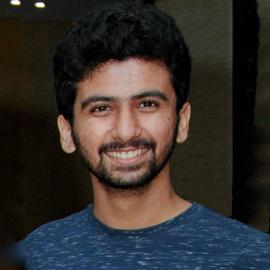
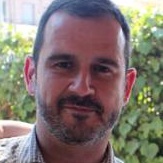
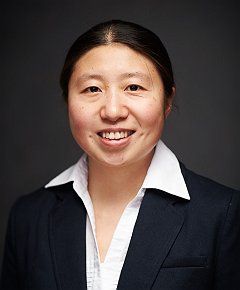
Joan Oró is a researcher at the Blanquerna Department of Physical Activity and Sport Sciences and Sports Management within the Faculty of Psychology, Educational Sciences and Sports at Blanquerna - Ramon Llull University. His work focuses on speech synthesis, voice quality analysis, and environmental noise mapping, with a particular emphasis on computational modeling and acoustic sensor networks. Research Interests: Speech signal processing, finite element modeling of phonation, environmental noise monitoring, and machine learning applications in acoustic analysis. Projects: Key contributions to the DYNAMAP initiative for real-time road traffic noise mapping and the FEMVoQ project for 3D voice quality simulation. Publications: Recent work explores vocal tract-glottal source interactions, spectro-temporal noise analysis, and intelligent clustering architectures, spanning interdisciplinary applications in acoustics, signal processing, and urban planning.
Marc Freixes Guerreiro is a Researcher at La Salle School of Engineering, Department of Engineering, part of La Salle - Universitat Ramon Llull in Barcelona, Spain. His work focuses on interdisciplinary research at the intersection of acoustics, human-environment interaction, and biomedical engineering. He actively participates in multiple research projects investigating soundscape perception, vocal tract modeling, and human comfort in built environments. His research interests span a diverse range of fields including Acoustics , Soundscape , Vocal Tract Modeling , Urban Environment , Sensor Networks , and Citizen Science . His work combines computational modeling with practical applications in both urban settings and biomedical contexts. He has particular expertise in analyzing vocal phenomena, from animal vocalizations for welfare monitoring to human phonation mechanics for speech synthesis and clinical applications. Analysis of his recent publications reveals a strong interdisciplinary trend, connecting engineering principles with applications in healthcare, urban planning, and cultural heritage. His work demonstrates expertise in both theoretical modeling (such as finite element analysis of vocal folds) and practical implementation (like sensor networks for environmental monitoring). The research spans from fundamental acoustics to applied projects addressing real-world challenges in animal welfare, medical diagnostics, and urban comfort. Marc Freixes Guerreiro leads and participates in multiple significant research projects including the BeNeXT project for Turner syndrome diagnostics, DISTRESIA for stress biomarker identification in educational contexts, Sons dels Monestirs for sacred space acoustics in Catalan monasteries, and Inhabiting Gaudí for comfort assessment in Gaudí's architectural masterpieces. His collaborative work demonstrates strong connections across engineering, medical, and humanities disciplines. His laboratory work focuses on the Human-Environment Research group within the Department of Engineering, where he develops and applies acoustic measurement techniques, computational models, and sensor network solutions. His research teams typically include interdisciplinary collaborators from engineering, medical, and humanities backgrounds, reflecting the cross-cutting nature of his research interests.
Akash Vani is a PhD Researcher at the Max Planck Institute for Astrophysics (MPA) in Garching, Germany, affiliated with the Ludwig Maximilian University (LMU) Munich through the International Max Planck Research School (IMPRS). His research bridges observational astrophysics and computational modeling. Education: MSc in Physics (2022), Heidelberg University BSc in Physics (2019), Savitribai Phule Pune University Research Interests: Akash investigates galaxy evolution from z=0 to z=10 using semi-analytical models (L-Galaxies) and observational data (Gaia, JWST). He also explores stellar populations, white dwarfs, and quantum computing applications in astronomy. Key Projects: His work includes Debugging Galaxy Evolution Models , constructing the Fifth Catalogue of Nearby Stars (CNS5) , and Deep Learning for Galaxy Morphology Classification . He contributed to photometric calibration of the UVIT telescope and studies on quantum key distribution protocols. Scientific Awards: Summer Fellow, IISER Kolkata (2019) Publications: He has published in leading journals like Monthly Notices of the Royal Astronomical Society (MNRAS) and Astronomy & Astrophysics (A&A), focusing on galaxy scaling relations, white dwarf identification, and Milky Way modeling. His work highlights discrepancies in quenching processes in simulations and improvements in stellar census completeness. Labs & Teams: Akash collaborates with the Astronomisches Rechen-Institut (ZAH, Heidelberg), Ludwig Maximilian University, and international teams leveraging Gaia data and quantum computing resources.
Alfonso Martínez Nova serves as Associate Professor at the University of Extremadura's Faculty of Health Sciences, Centro Universitario de Plasencia, with continuous academic service since 2001. Holding a PhD in Podiatry (2009, Sobresaliente Cum Laude ), he directs the BIOPIEX research group and serves as Associate Editor of the Spanish Journal of Podiatry, contributing to over 75 Scopus-indexed publications with an h-index of 17. His academic credentials include: PhD in Podiatry, University of Extremadura (2009) Licentiate in Podiatry, CESPU CRL (Portugal) (2002) Diploma in Podiatry, University of Barcelona (1999) Research focuses on human gait biomechanics, foot thermography, and functional textile analysis. His team evaluates plantar pressure reliability across populations, develops thermoregulatory socks using non-invasive thermal devices, and creates biomechanically integrated hosiery that reduces metatarsal pressure. Innovations include patented metatarsal-unloading socks and therapeutic children's footwear, demonstrating direct clinical translation of biomechanical research. Recent publications (2022-2024) reveal strong trends in orthotic intervention efficacy, post-surgical wound healing, and biomechanical adaptation to physiological changes. These works consistently bridge fundamental gait analysis with practical clinical applications, particularly in pressure redistribution for pathological feet and footwear lifecycle impacts on athletes. Key recognitions include: Virginia Novel Award (General Council of Podiatrists of Spain) Biomechanics Institute of Valencia Accésit and First Prize University of Extremadura Extraordinary Doctoral Award With 10 doctoral theses supervised and €93,750 secured for the IMEDESCAL project (2024-2027), his research leadership spans international collaborations with institutions in Belgium, Australia, and the UK. Educational contributions include 5,200+ teaching hours in podiatric surgery and biomechanics, plus innovation in gamified learning and service-based pathology detection programs. The BIOPIEX research group drives pediatric foot development studies and commercializes innovations like plantar sensory stimulation mats, maintaining active partnerships with textile manufacturers and clinical networks across Europe.
María Dolores Serrano Niza serves as Associate Professor in the Department of Classical, French, Arabic and Romance Philology at the University of La Laguna's Faculty of Arts and Humanities. She leads the GENyHUM Research Group and contributes to INULAB and IUEM institutes while directing doctoral programs in Gender Studies and Arts & Humanities. PhD in Arabic Philology, University of La Laguna (1996) Licentiate in Arabic Philology, Complutense University of Madrid Her research spans three interconnected domains: Arabic lexicography (specializing in Ibn Sidah's works), Islamic/Moorish clothing studies (documenting historical textiles and gendered dress practices), and gender studies (analyzing women's roles in religious contexts and domestic spaces). Her methodology uniquely combines philological precision with material culture analysis and gender theory. Publication trends reveal consistent output since 1999, with increasing gender-focused research after 2005. Recent works (2019-2022) integrate emotional history with domestic material culture while maintaining Arabic language pedagogy contributions. Her scholarship bridges medieval Islamic studies with contemporary gender discourse. Key recognitions include: Extraordinary Doctorate Prize (1996) Ibn Al-Abbar Research Prize (1998) Ibn al-Jatib Foundation Grant (2006) Canary Islands Institute for Women Outreach Award (2009) University Educational Innovation Prize (2015) She directs nationally-funded research projects including 'De puertas para adentro' (domestic space analysis, 15th-16th centuries) and 'Vestir la casa' (textile-emotion connections). As former Director of the Institute for Women's Studies (IUEM), she co-founded the journal Clepsydra and serves on the Spanish Society of Arabic Language Teachers (SEDLA) executive board. Her educational innovations include the 'Kalam' group developing interactive Arabic learning tools. Her GENyHUM research team collaborates across INULAB and IUEM institutes, focusing on gendered interpretations of Islamic cultural heritage through material objects and spatial analysis.
Juan Martínez López is a researcher in the Department of Engineering at the University of Almería, where he leads projects focused on sustainable agricultural engineering. His core research integrates water resource management, renewable energy applications, and precision irrigation technologies for greenhouse farming systems. He coordinates the 'Ingeniería Rural' research group specializing in developing efficient solutions for Mediterranean agriculture. His research interests span: Optimization of photovoltaic-powered irrigation systems Sustainable water management using blended conventional/desalinated sources Energy-efficient greenhouse climate control Hydraulic system modeling and optimization Agrivoltaic integration in protected cultivation Publication analysis reveals consistent focus on water-energy-food nexus solutions, with recent work advancing: Machine learning optimization of irrigation networks Solar radiation distribution modeling in agrivoltaic systems Water productivity enhancement using non-conventional resources Hydrophobic coating applications for hydraulic efficiency He leads significant research initiatives including: LIFE-DESEACROP (€189k): Desalinated seawater for soilless crops H2020 TheGreefa (€206k): Thermochemical fluids in greenhouses PID2020-118492RB-C21 (€118k): Optimized hydroponic fertigation AGL2017-85857 (€72k): Sustainable desalinated water use in citrus His patented innovations include automated soil evaporation measurement devices and he contributes to developing commercial systems like Turbofog misting technology for intensive greenhouse operations.
Alfredo Alcayde García is an Associate Professor in the Engineering Department at the University of Almería, Spain. With an h-index of 21 (Scopus) and 18 (Web of Science), he has established himself as a significant contributor to electrical engineering research, particularly in power systems analysis and renewable energy integration. His academic profile includes directing multiple doctoral theses and leading several research projects with substantial funding from national and international sources. Professor Alcayde García's research primarily focuses on electrical engineering with specialization in power systems under non-sinusoidal conditions, renewable energy integration, and energy efficiency optimization. His work bridges theoretical developments in geometric algebra applications for power theory with practical implementations in smart grid technologies and non-intrusive load monitoring. Recent research directions have expanded to include environmental applications, particularly examining microplastic pollution in agricultural contexts related to energy systems. Analysis of his recent publications (2023-2025) reveals a strong trend toward interdisciplinary research that combines electrical engineering with environmental science and data analytics. His work spans high-impact journals across multiple disciplines, demonstrating both depth in his core field and breadth through successful cross-disciplinary collaborations. The research shows consistent methodological rigor with increasing emphasis on practical applications and real-world implementation of theoretical concepts. Professor Alcayde García actively supervises graduate students and has directed multiple doctoral theses on topics ranging from drone-based power line design to electric vehicle integration. His research group 'Computación, optimización y sensorización en ingeniería y energía' maintains several active projects with significant funding, indicating strong research momentum and institutional support. Current projects demonstrate a strategic expansion into environmental applications of engineering principles while maintaining core strengths in power systems analysis. The research environment led by Professor Alcayde García emphasizes both theoretical innovation and practical implementation, with opportunities for students to engage in field work, computational modeling, and collaborative projects across engineering disciplines. His work continues to evolve with emerging energy challenges, maintaining relevance to both academic research and industry applications.
María Dolores Gil Montoya is a Professor in the Computer Science Department at the University of Almería (UAL), Spain, with a distinguished interdisciplinary research profile spanning computer science, mindfulness applications, and energy systems. Her academic career demonstrates a unique integration of technical expertise with psychological and philosophical perspectives. Her research interests focus on three interconnected domains: Mindfulness Research : Exploring applications in education and sports performance, with particular attention to bridging Eastern and Western philosophical traditions Educational Technology : Developing and implementing cooperative learning methodologies, active learning tools, and ICT integration in higher education Energy Systems : Contributing to research on power quality, electric vehicle infrastructure, and renewable energy integration Dr. Gil Montoya's publication record shows consistent scholarly output across these domains, with her most recent work focusing on the integration of mindfulness practices with educational technology. Her research demonstrates a distinctive approach that combines technical rigor with human-centered perspectives, particularly evident in her work on cooperative learning enhanced by mindfulness principles. She has successfully secured multiple research grants from Spanish government agencies, with projects ranging from high-performance computing applications to drone navigation systems. As a member of the 'Ciencia, consciencia y desarrollo' research group, she contributes to interdisciplinary work that connects technological development with consciousness studies. Her collaborations extend internationally, including work with the University of San Carlos Guatemala's Faculty of Engineering. Dr. Gil Montoya maintains an active research profile with an h-index of 13 in both Scopus and Web of Science, reflecting the impact of her interdisciplinary contributions across computer science, education, and energy research fields.
Rafael Rumí Rodríguez is a Professor in the Mathematics Department at the University of Almería, Spain, with extensive experience in probabilistic modeling and data analysis. He leads the 'Análisis de datos' research group and serves as Principal Investigator for multiple research projects, including the current 'Hacia una Inteligencia Artificial Probabilística Confiable (TOPAI-UAL)' (2023-2026). Dr. Rumí Rodríguez's research focuses on Bayesian networks and probabilistic graphical models , with applications spanning environmental science, ecology, agriculture, and education. His work includes developing methods for continuous distributions in hybrid Bayesian networks, flood risk assessment in Mediterranean regions, climate change impact modeling for Andalusian agriculture, and educational assessment analytics. He has created practical tools like the 'hcrBN' R package for hybrid Bayesian network applications. His publication record includes 43 articles , 2 books or chapters , 3 theses , and 31 conference papers , with an h-index of 16 (Scopus) and 15 (Web of Science). Many publications appear in Q1 journals, reflecting significant research impact across computer science, environmental science, and statistics. Scopus h-index: 16 Web of Science h-index: 15 Scopus i10-index: 27 Web of Science i10-index: 23 Dr. Rumí Rodríguez has secured substantial research funding throughout his career, including as Principal Investigator for the current TOPAI-UAL project (€120,100) and previous projects like the European AMIDST initiative (€323,490). His research group provides opportunities for students to engage in both theoretical advances and practical applications of probabilistic modeling, with strong connections to environmental and agricultural domains in the Mediterranean region.
Dr. Juan José Moreno Balcázar is a Professor in the Mathematics Department at the University of Almería (UAL), Spain. He leads the research group 'Teoría aproximación y polinomios ortogonales' (Approximation Theory and Orthogonal Polynomials) and has served as Principal Investigator for numerous research projects funded by Spanish national and regional agencies from 2002 through 2025. His primary research interests include Orthogonal Polynomials (particularly Sobolev orthogonal polynomials), Approximation Theory, Special Functions, and Asymptotic Analysis. His work spans theoretical developments in q-hypergeometric polynomials, difference equations for orthogonal polynomials, and applications in mathematical physics. He has also contributed to interdisciplinary areas including mathematics education, epidemiological modeling, and gender studies in science. Professor Moreno Balcázar maintains an active publication record with 68 articles, 14 books or book chapters, and 4 theses. His recent work shows continued productivity with publications in 2024, 2023, and 2022 in journals including PHYSICA SCRIPTA, Journal of Approximation Theory, and Results in Mathematics. His research demonstrates strong theoretical foundations with applications across mathematics and related fields. He has supervised multiple doctoral students and maintains collaborations with researchers across Spain and internationally, particularly in Ecuador and Brazil. His work spans both pure mathematical theory and practical applications in education and public health.
Nicolás Vila Blanco is an Associate Professor at the University of Santiago de Compostela (USC), Spain, conducting research through CiTIUS (Centro de Investigación en Tecnoloxías da Información e as Comunicacións). His academic journey includes a PhD in Information Technology from USC and the University of Coruña (2022), an M.Sc. in Data Science and Computer Engineering from the University of Granada, and a B.Sc. in Computer Science from the University of Vigo. Dr. Vila Blanco's research focuses on medical image processing using Deep Learning techniques, with particular expertise in dental panoramic radiograph analysis, age and sex estimation, oral microbiome research, and medical imaging applications for conditions like COVID-19. His work bridges computer science and clinical dentistry/medicine, developing practical tools that address real clinical challenges. His publication record demonstrates consistent output in high-impact journals and conferences, with numerous Q1 publications across medical imaging, dentistry, and bioinformatics fields. His research shows a clear trajectory from theoretical AI development to practical clinical implementation, with emphasis on tools that can be readily adopted in medical practice. Dr. Vila Blanco has developed several important research tools including DenTiUS Deep Plaque software for automated dental plaque quantification, IDALib for efficient image data augmentation, and has contributed to PrimerEvalPy for microbiome primer evaluation. His clinical research has produced evidence on antimicrobial efficacy, dental plaque analysis methods, and diagnostic systems with real-world applicability. His collaborative approach is evident in his numerous co-authored publications spanning dentistry, microbiology, cardiology, and computer science departments. This interdisciplinary work positions him as a bridge between technical AI development and clinical healthcare applications.
Francisco Javier Pérez de la Cruz serves as an Associate Professor in the Department of Civil Engineering at the School of Industrial Engineering, Polytechnic University of Cartagena, Spain. His academic career integrates technical expertise in water infrastructure with innovative educational methodologies, reflecting a commitment to sustainable engineering solutions and pedagogical advancement within civil engineering disciplines. His research spans water resources engineering, flood risk management, and sustainable water systems, with notable focus on historical water supply contexts, energy recovery in distribution networks, and carbon footprint reduction in irrigation. Educational research forms a parallel pillar, emphasizing project-based learning and gamification tools like Kahoot! to enhance multidisciplinary engineering education. This dual trajectory bridges practical infrastructure challenges with evolving teaching paradigms. Analysis of his 15 most recent publications (2018-2025) reveals consistent interdisciplinary patterns: historical engineering analyses inform modern sustainability practices, while flood risk modeling and SUDS implementation address climate resilience. Educational studies demonstrate systematic exploration of digital tools for competency development, with Kahoot! research evolving from classroom implementation to cross-disciplinary frameworks. The convergence of water-energy nexus investigations and pedagogical innovation defines his scholarly identity. Scientific Awards: No awards, fellowships, or medals were documented in the available information. Advising and Grants: The provided text contains no records of student advisement, research grants, or funded projects. His supervisory roles and external funding mechanisms remain unreported in the current dataset. Labs and Teams: No specific research laboratories, field teams, or collaborative networks were referenced. His operational research environment appears institutionally embedded within the university's civil engineering infrastructure without dedicated team descriptions.
Hannes Meinlschmidt is an Assistant Professor and Senior Scientist at the Chair for Dynamics, Control, Machine Learning and Numerics (Alexander von Humboldt Professorship) at Friedrich-Alexander University Erlangen-Nuremberg (FAU) since March 2021. He previously held a PostDoc position at the Radon Institute for Computational and Applied Mathematics (RICAM) in Linz, Austria, from September 2017. He obtained his Diploma (2011) and PhD (2017) in Mathematics from TU Darmstadt, supervised by Stefan Ulbrich. His research intersects optimal control, optimization, and PDE analysis with emphasis on: Regularity theory for elliptic/parabolic equations Control of nonlinear PDE systems Applications with nonsmooth data Variational methods for dynamic models His publications demonstrate expertise in mathematical analysis of physical systems, including semiconductor equations, thermistor control, and biological models. Work frequently addresses mixed boundary conditions, nonsmooth domains, and Hölder regularity. Teaching includes advanced mathematics courses such as: Optimization with PDEs Interpolation theory Partielle Differentialgleichungen I/II He leads research at the FAU DCN-AvH chair, contributing to PDE numerics and control theory.
Osbert Bastani is an Associate Professor at the University of Pennsylvania's Department of Computer and Information Science, where he leads the trustml@Penn research group. He is affiliated with multiple research centers including ASSET, PRECISE, PRiML, and PLClub. Previously, he completed his Ph.D. at Stanford University advised by Alex Aiken and was a postdoctoral researcher at MIT working with Armando Solar-Lezama. His research focuses on Trustworthy Machine Learning , specifically addressing: adversarial robustness through formal verification methods, distributional robustness, uncertainty quantification via conformal prediction, fairness definitions and verification, explainability techniques (LIME/SHAP), and counterfactual explanations. His work bridges theoretical guarantees with practical applications in safety-critical systems. He teaches graduate courses including CIS 7000: Trustworthy Machine Learning and CIS 4190/5190: Applied Machine Learning , with coursework covering robustness verification, calibrated prediction, fairness constraints, and attribution methods. He leads the trustml@Penn research group and collaborates with multiple Penn research centers focused on embedded systems, machine learning foundations, and programming languages.
Limin Jia is a Research Professor in the Department of Electrical and Computer Engineering at Carnegie Mellon University, with a courtesy appointment in the Computer Science Department. She is affiliated with CyLab, CMU's security and privacy research institute. She received her PhD in Computer Science from Princeton University and a BE from the University of Science and Technology in China. Her research applies formal techniques to enhance software security, focusing on programming languages and distributed systems. Key interests include: Language-based security mechanisms Formal verification of distributed systems Secure compilation techniques Intermittent computing foundations Her publications demonstrate strong emphasis on security guarantees in programming languages (Rust/WebAssembly), formal methods for intermittent systems, and software supply chain security. Recent works frequently address type systems, compiler verification, and energy-constrained computing. Dr. Jia maintains an extensive advising portfolio with current and former students spanning PhD and Master's programs. She teaches foundational security courses including Browser Security and Introduction to Information Security .