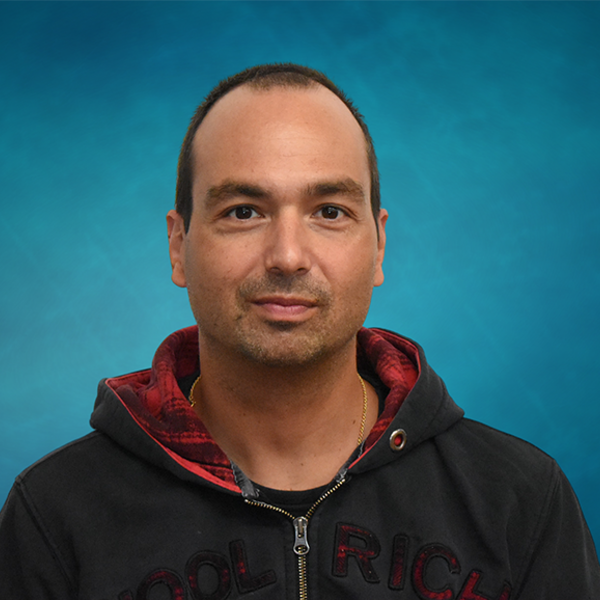
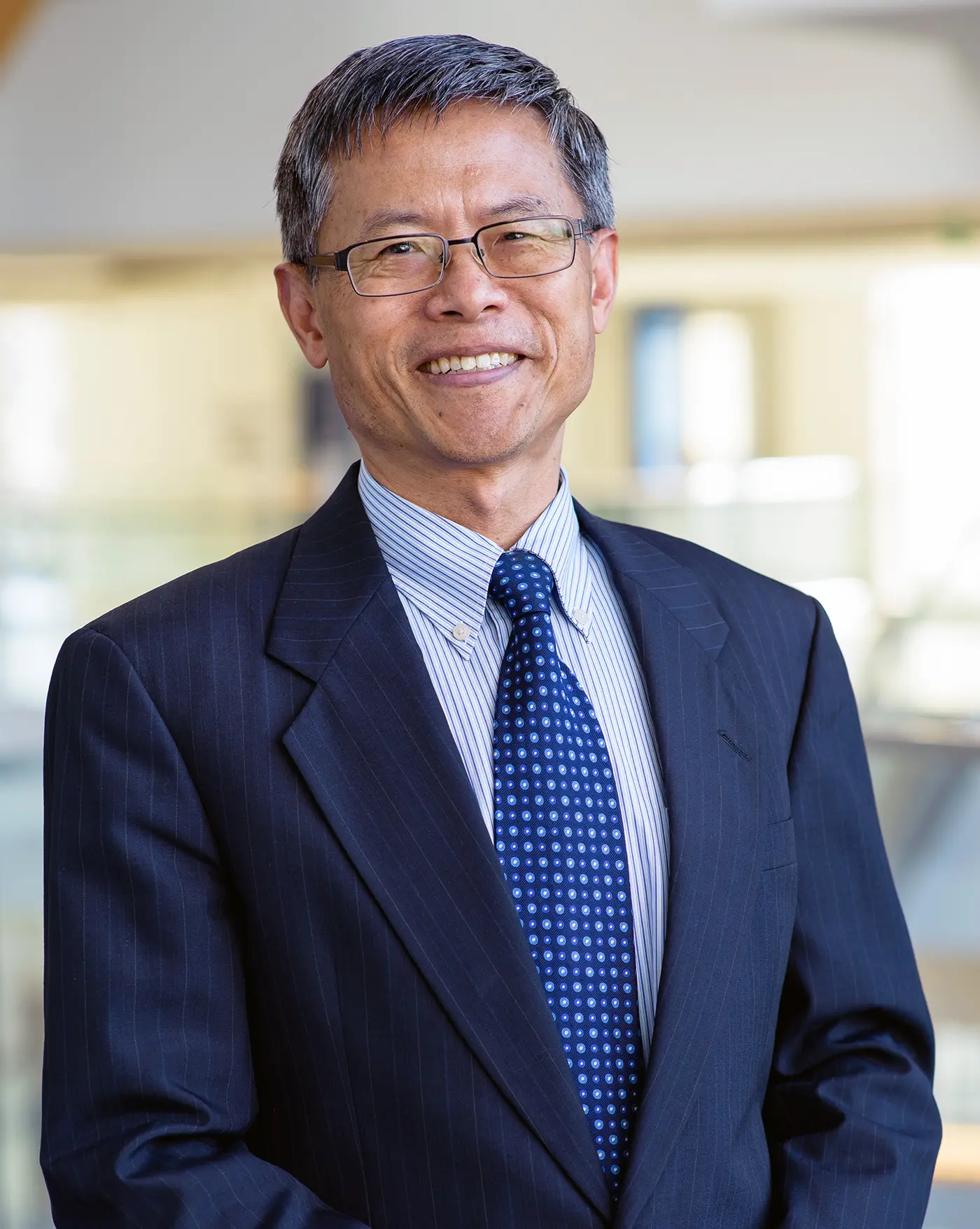
Bruno Vallespir is a Professor at Universite de Bordeaux, affiliated with the Production Engineering research group and MEI team. His work focuses on lean manufacturing, industry 4.0 integration, and enterprise interoperability using simulation frameworks. Key research themes: Lean techniques evaluation Co-simulation for manufacturing systems Organizational interoperability Safe work activity design His recent publications address: Combining lean methods with Industry 4.0 technologies Human-machine interaction in production environments Verification of collaborative processes Performance metrics for dynamic industrial contexts Collaborations include institutions like IMS Bordeaux , INCOSE , and industrial partners such as STMicroelectronics , Thales , and Stellantis .
Mickaël Bettinelli is an Associate Professor at Université Savoie Mont Blanc, affiliated with the LISTIC laboratory. He holds a PhD in Computer Science (Distributed Artificial Intelligence) from Université Grenoble Alpes and previously worked as a postdoctoral researcher at the University of Oulu's Center for Ubiquitous Computing under the EU Horizon 2020 Fractal project. Current research focuses on federated learning and distributed systems resilience Developed DonatelloPyzza, an educational Python gridworld game Active reviewer for journals/conferences including IEEE Transactions and AAMAS His research bridges federated learning, multi-agent systems, and collective intelligence, emphasizing societal impact through sustainable technological solutions and science popularization via his French YouTube channel DonatelloPyzza . Publications span topics like decentralized decision-making and bias mitigation frameworks. Scientific Awards Prix 'Coup de coeur', Concours Conter et Rencontrer les Sciences 2024 Best Paper Award at JFSMA 2021
Darius Plikynas is a Senior Researcher at the Smart Technologies Research Group within the Institute of Data Science and Digital Technologies at Vilnius University . His research integrates computational intelligence methods with agent-based simulation to model cognitive and social processes. Position: Senior Researcher, Chief Researcher in the Project Address: Akademijos St. 4, room 224, Vilnius Contact: +370 5 210 9333, +370 620 95101 Email: darius.plikynas@mif.vu.lt Personal page: http://www.dariusplikynas.eu Dr. Plikynas' research spans interdisciplinary domains including neuroscience, physics methods, complexity theory, and distributed cognitive systems. He led the 2017–2019 project "Development of a metric, conceptual and simulation model of the social impact of cultural processes" under the LMT Research Group Funding Program. His recent publications (2016–2025) reflect trends in combining machine learning with social science questions (fake news analysis, propaganda detection) and agent-based modeling of cultural/social capital dynamics. Key collaborations include Leonidas Sakalauskas, Rimvydas Laužikas, and Arunas Miliauskas. Scientific supervision includes doctoral students: Andrius Budrionis (University of Tromsø, Norway) Ieva Rizgelienė (PhD topic: "Propaganda detection and classification in social media using hybrid deep learning") He also serves as an expert at Vilnius University and has contributed to projects involving: 2D financial market visualization Neural oscillation-based cognitive modeling Indoor navigation for blind individuals Cultural participation impact on social capital
Anastasios Zafeiropoulos serves as Assistant Professor at Harokopio University of Athens, specializing in Spatial Data Management and Analysis within the Postgraduate Studies Program for “Applied Geography and Spatial Management” (Direction C: Geoinformatics). His academic role encompasses teaching “Spatial Databases” and advancing research at the intersection of geospatial technologies and distributed computing systems. His research program focuses on Spatial Databases, Internet of Things (IoT), Cloud/Edge Computing, and 6G Network Orchestration, with significant extensions into Knowledge Graph applications for Sustainable Development Goals (SDGs) and socio-emotional learning in education. Key innovations include the EduCardia methodology for student competency assessment and frameworks for climate vulnerability analysis using knowledge graphs. Analysis of his 2024-2025 publications reveals three dominant thrusts: (1) AI-driven orchestration of 6G services across the computing continuum using reinforcement learning; (2) Knowledge Graph applications for SDG interlinkage analysis and materials science; (3) EU-funded IoT/Edge Computing project ecosystems. His work consistently bridges theoretical networking concepts with practical sustainability and educational applications. Dr. Zafeiropoulos actively contributes to EU-funded initiatives in IoT and Edge Computing standardization, particularly through AIOTI WG Standardisation. His project portfolio includes NEPHELE multi-cloud ecosystem development and O-RAN slice admission control research, demonstrating strong industry-academia collaboration in next-generation networking. He leads the development of innovative tools including Palindrome.js for distributed system visualization and the EmoSocio open-access emotional intelligence model, reflecting his commitment to translating research into practical educational and environmental solutions.
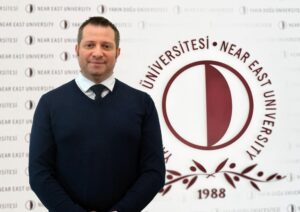
Prof. Dr. Fadi AL-TURJMAN serves as the founding Dean of the Faculty of AI and Informatics at Near East University (NEU), Cyprus. He holds multiple leadership roles including Head of the Software Engineering Department and Director of the AI and Robotics Institute and the International Research Center for AI and IoT. With a PhD in Computer Science from Queen’s University (2011), he specializes in AIoT systems, wireless networks, and blockchain integration. Affiliation: Near East University Leadership: Founding Dean for AI and Informatics, Director of AI & Robotics Institute Research Focus: His work bridges Artificial Intelligence of Things (AIoT) , Blockchain Applications , and Smart Networking . He explores cybersecurity frameworks for smart cities, quantum state optimization techniques, and novel AI-driven solutions for healthcare, agriculture, and energy systems. Key Article Trends: Recent publications emphasize Transformer models for environmental monitoring, blockchain-enabled security protocols , and evolutionary algorithms for resource optimization. His research spans interdisciplinary domains including medical diagnostics, vehicular networks, and sustainable infrastructure. Scientific Awards: Lifetime Golden Award of Dr. Suat Gunsel (2022) Multiple Best Research Awards at International Venues Labs & Teams: Directs the International Research Center for AI and IoT at NEU, leading multidisciplinary teams in developing advanced networking technologies and AI-driven solutions for global value chain applications.
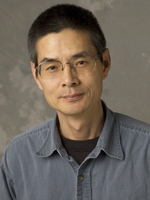
Jinming Zhang is a Professor at the University of Illinois at Urbana-Champaign , affiliated with the College of Education and the Educational Psychology department. He also holds appointments in Statistics and the Center for East Asian and Pacific Studies . His research focuses on advanced statistical methodologies for educational and psychological measurement. Research Interests: Dr. Zhang specializes in multidimensional item response theory (MIRT) , dimensionality assessment , large-scale assessments , generalizability theory , and test security . His work addresses critical challenges in psychometric modeling, including bias correction, item compromise detection, and standards alignment for English Language Learners (ELL). Notable Contributions: He developed the DETECT procedure for dimensionality analysis and pioneered real-time item monitoring systems for computerized adaptive testing (CAT) security. His empirical studies span applications to the National Assessment of Educational Progress (NAEP) and Law School Admission Test (LSAT) analysis.
Violetta Lonati is an Assistant Professor at the University of Milan 's Department of Computer Science since 2005. Her research spans Formal Languages and Automata (operator precedence languages, Wang automata, tiling systems) and Computer Science Education . She co-authored over 15 publications in theoretical computer science and education, focusing on 2D language recognition, logic characterization of automata, and pattern statistics in stochastic models. Education : PhD in Computer Science (2005) and Laurea in Mathematics (2001) from University of Milan Research Groups : ALaDDIn Lab for Didactics and Dissemination of Informatics, Bebras International Initiative Her work on Wang automata established their equivalence to tiling systems while introducing deterministic variants. In education, she designed workshops for schools and contributed to Italy's national computing curriculum proposal (2019). She held leadership roles at ACM ITiCSE (WG5 leader 2022), served as Associate Program Chair (2019-2022), and reviewed for top venues like ICER and SIGCSE TS. She received Google CS[4]HS and Informatics Europe awards for her educational contributions. Key Publications (2017-2001): Input-driven locally parsable languages (TCS 2017) Operator precedence logic characterization (SICOMP 2015) Snake-deterministic tiling systems (MFCS 2009) Graph fibrations and PageRank (RAIRO 2006) Pattern statistics in rational models (STACS 2005) Scientific awards include Google CS[4]HS (2011, 2017, 2019) and the Informatics Europe Best Practices in Education (2016). As part of ALaDDIn, she developed teacher training programs and graduate courses on computing education. Her teaching experience covers Algorithms & Data Structures (2013-2023), Computer Science Teaching (2014-2023), and courses for Biotechnology and Geological Sciences programs (2005-2007).
Laxmidhar Behera is a Professor in the Department of Electrical Engineering at the Indian Institute of Technology Kanpur, specializing in Intelligent Systems and Control. With over two decades of academic experience at IIT Kanpur and international research experience at institutions including Fraunhofer Institute of Autonomous Intelligent Systems in Germany, ETH Zurich, and University of Ulster, he has established himself as a leading researcher in cognitive robotics and intelligent control systems. Dr. Behera's research spans multiple cutting-edge domains including Cognitive Robotics, Nano-robotics, Vision based Control, Soft Computing, Information Retrieval in music and language, Semantic Information Processing, Physics of Complex Systems, Cyber Physical Systems, Formation Control of UAVs, Brain-Computer Interface (BCI), and Sanskrit Computational Linguistics. His interdisciplinary approach bridges traditional control theory with modern computational intelligence techniques, creating innovative solutions for complex real-world problems. His extensive publication record in top-tier journals like IEEE Transactions demonstrates his leadership in areas such as brain-computer interfaces, visual servoing, multi-robot systems, and music information retrieval. Notably, his work on quantum neural networks for EEG filtering and multisatellite formation control has received significant attention in the research community. UKIERI Standard Research Award 2008 Best Paper at International Conf. on Intelligent Sensors and Information Processing (ICISIP-2004) Best Paper at WoSco,02, Int. Conf. High-Performance Computing (HiPC, 2002) AICTE career award for young teacher (1997) Senior Member IEEE Multiple IEEE top accessed articles (2009-2010) As an Associate Editor for Autosoft Journal and Technical Committee Member for Intelligent Control at IEEE Control System Society, Dr. Behera actively contributes to the academic community. His laboratory in the Western Lab - 212A of the Department of Electrical Engineering serves as a hub for research in intelligent systems, where he mentors students and collaborates with researchers worldwide on cutting-edge projects in robotics, control systems, and computational intelligence.
Giorgio Scorzelli is a researcher at the University of Utah, serving as Director of Software Development for the Center for Extreme Data Management, Analysis, and Visualization (CEDMAV) and the National Science Data Fabric (NSDF) . He specializes in extreme data management, scientific visualization, and computational topology, with a focus on scalable solutions for climate science, materials science, and neuroscience datasets. His work emphasizes democratizing data access through platforms like OpenVisus , enabling efficient analysis of petascale and exascale data. Key contributions include orchestrating cyberinfrastructure, optimizing parallel I/O, and developing real-time visualization systems for heterogeneous resources. Notable scientific contributions include the NSF Grant #2127548 for NSDF development . His projects integrate cloud computing, geo-distributed storage, and FAIR digital objects to lower barriers to data democratization. Giorgio's research spans multi-resolution algorithms , computational topology , and 3D geometric modeling , with applications in infrastructure security, archaeological reconstruction, and biomedical imaging. His work bridges abstract mathematical frameworks (e.g., Boolean algebras, chain complexes) with practical software solutions.
Gérard Berry (born December 25, 1948) is a distinguished French computer scientist currently serving as Professor at the Collège de France, holding the permanent chair Algorithmes, machines et langages (Algorithms, Machines, and Languages) since 2012. He previously held the Informatique et sciences numériques chair (2009-2010) and the Technological Innovation Liliane Bettencourt chair (2007-2008) at the same institution. Before joining Collège de France full-time, he served as Director of Research at INRIA Sophia Antipolis (2009-2012) and at École des Mines de Paris (1977-2001). His research spans over 30 years in three main fields: lambda calculus and functional programming, parallel and real-time programming languages, and design automation for synchronous digital circuits. He is particularly renowned for developing the Esterel programming language. His work bridges theoretical computer science with practical industrial applications. Berry's research has evolved to include current work in Hop and HipHop for Web programming, formal verification of compilers, and languages for computer music. His publications demonstrate consistent contributions to programming language theory, formal methods, and their applications in hardware and software systems. Gold Medal of CNRS (2014) Chevalier de l'Ordre de la Légion d'Honneur (2012) Member of French Academy of Sciences (2002) Member of Academia Europaea (1993) Monpetit Prize of Académie des sciences (1990) Berry has advised 17 PhD students and reviewed numerous theses. His industrial experience includes serving as Chief Scientist Officer of Esterel Technologies (2000-2009), where he directed the implementation of the Esterel v7 compiler. He has also held significant leadership roles including President of the Scientific Council of IRCAM and membership on the Scientific Council of the National Education. His teaching at Collège de France has covered topics ranging from the foundations of computation to the societal impact of digital technology, with courses including The Informatics of Time and Events and Proving Programs: Why? When? How? His laboratory work has focused on developing practical applications of theoretical computer science concepts.
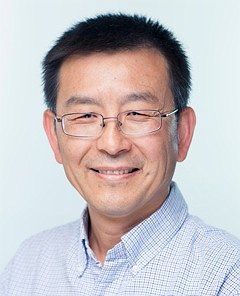
Zhiyuan Li is a Professor in the Department of Computer Sciences at Purdue University's College of Engineering. His primary research and teaching focus on program analysis, transformation, and run-time management for high-performance computing and multicore systems, as well as reliable software for networked embedded systems. Professor Li teaches graduate-level courses including CS502: Compiling and Programming Systems and CS591RS1: Research Seminar for First-year Graduate Students. Office: LWSN 3154H Contact: li@cs.purdue.edu Phone: +1 765-494-7822 Professor Li's research spans multiple areas within computer science, with particular emphasis on compiler design, program analysis, and parallel computing. His work addresses fundamental challenges in enabling efficient execution of applications on modern parallel architectures, including multicore processors and large-scale distributed systems. He has made significant contributions to techniques for data dependence analysis, loop parallelization, array privatization, and memory optimization in compilers. His research also extends to reliable software development for embedded and sensor network systems, where resource constraints and reliability requirements present unique challenges. Professor Li's publication record demonstrates consistent contributions to top-tier conferences and journals in computer science, particularly in the areas of parallel computing, compiler optimization, and high-performance numerical methods. His work shows a progression from foundational compiler techniques to applications in scientific computing domains such as computational fluid dynamics for jet engine noise simulation. This interdisciplinary approach connects low-level program analysis with real-world engineering applications requiring petascale computing resources. Principal Investigator for NSF/PetaApps project on jet engine noise simulation Principal Investigator for Intel-sponsored research on data dependence profiling Extensive service on program committees for major conferences including ICS, PPoPP, and LCTES Professor Li has been actively involved in mentoring graduate students through research projects and course instruction. His jet engine noise simulation project specifically mentions training three Ph.D. graduate students and involving undergraduate research assistants. As coordinator for the first-year graduate research seminar, he plays a significant role in guiding new students through the transition to graduate research work in computer science. His laboratory work focuses on developing compiler techniques and runtime systems for parallel and high-performance computing. The research infrastructure includes implementations in GCC for fast data dependence profiling and support for SIMD/SSE instructions, demonstrating practical applications of theoretical compiler techniques.
Alvin Cheung is an Associate Professor in the Computer Science Division at UC Berkeley's EECS department. He is affiliated with the Data Systems and Foundations group, Programming Systems group, Sky Lab, and SLICE Lab, and serves as a faculty affiliate at the Berkeley Institute for Data Science. He advises the Data Science Discovery Program and provides technical guidance to industry partners. His research spans data management, programming languages, and scalable software systems, with emphasis on helping users process large datasets efficiently. Key innovations include verified lifting (applying formal methods and ML to infer program properties) and systems for optimizing database-backed applications and geospatial analytics. Recent work explores LLM-driven code optimization and transpilation techniques. His publications (2023-2025) show strong trends in ML-enhanced systems, verified compilation, and data management tools. Articles frequently integrate formal methods, program synthesis, and hardware-aware optimizations across domains like databases, distributed computing, and HCI. Scientific Awards: ACSIC Rock Star Award (2025) Dahl-Nygaard Junior Prize (2024) VLDB Early Career Research Contribution Award (2023) IEEE TCDE Rising Star Award (2020) Sloan Fellowship (2019) NSF CAREER Award (2017) 20+ additional honors Advising & Grants: He mentors PhD/MS students (e.g., Lily Liu at OpenAI, Chenglong Wang at Microsoft Research). Research is funded by: NSF DOE ONR ARO Intel Notable grants include ONR Young Investigator Award and ARO Early Career Program Award. Labs & Teams: Leads projects in Berkeley's Data Systems/Programming Systems groups and collaborates with Sky Lab/SLICE Lab. Manages labs focused on verified compilation (e.g., Tenspiler) and data infrastructure (e.g., Spatialyze).
Jingling Xue is a Scientia Professor at the School of Computer Science and Engineering at the University of New South Wales (UNSW) in Sydney, Australia. As an IEEE Fellow of the Computer Society, he leads the Programming Languages and Compilers research group, focusing on practical applications of compiler optimization and program analysis techniques. His work bridges theoretical foundations with real-world software systems, particularly in developing open-source tools for large-scale program analysis. Professor Xue received his B.Eng and M.Eng degrees from Tsinghua University in 1984 and 1987, respectively, followed by a PhD from the University of Edinburgh in 1992. His academic journey has established him as a leading figure in programming languages and compiler technology. Xue's research spans programming languages, compiler technology, and program analysis with emphasis on practical relevance. His current projects include compiler techniques for improving parallelism and locality, pointer/alias analysis for million-line-scale programs, and static/dynamic analysis for detecting bugs and security vulnerabilities in real-world applications like web browsers and Android apps. His group actively develops open-source tools to support scientific replicability and reproducibility in these areas. His recent publications demonstrate a strong focus on applying program analysis techniques to modern challenges including AI compilers, homomorphic encryption, security vulnerability detection, and graph processing systems. The work shows evolution from traditional compiler optimization to addressing emerging domains like privacy-preserving computation and deep learning systems while maintaining rigorous theoretical foundations. Scientific Awards: Best Paper Award at CGO'13 Best Paper Award at CGO'16 Distinguished Paper Award at ECOOP'16 Distinguished Paper Award at ICSE'18 Distinguished Paper Award at ISSTA'19 Distinguished Paper Award at ASE'19 Distinguished Artifact Award at ISSTA'23 Best Artifact Award at FSE'23 Distinguished Paper Award at ASE'23 Test-of-Time Award at CGO'21 Professor Xue has successfully supervised 30 PhD students to completion, many of whom now work as professors or researchers in academia and industry. He has served as Program Chair for major conferences including LCTES'13, CC'18, CGO'20, and General Chair for LCTES'20. His group currently focuses on memory safety in Rust, smart contract analysis, AI compilers, compilation for privacy-preserving computation, and adversarial attacks in deep learning. The Programming Languages and Compilers group maintains strong connections with industry partners, translating theoretical advances into practical tools for real-world software development challenges. Their work on pointer analysis, memory safety, and compiler optimizations continues to influence both academic research and industrial practice.
Sungsoo Ahn is an Assistant Professor at the Graduate School of AI, KAIST, where he leads the Structured and Probabilistic Machine Learning (SPML) Lab. His research focuses on developing machine learning algorithms for molecular science, particularly in drug discovery, material design, and generative modeling. He directs a team of 13 researchers (including 2 post-docs and 11 students) and maintains collaborations with institutions like Mila and industry partners. His core research integrates probabilistic machine learning , generative models , and AI for science , with applications spanning molecular dynamics simulation, language model reasoning, combinatorial optimization, and graph neural networks. Key methodologies include flow matching, diffusion models, GFlowNets, and equivariant neural networks applied to chemical and biological domains. Recent publications (2023–2025) demonstrate strong emphases on: (1) Molecular generation/optimization for drug design, (2) Enhancing reliability and reasoning in large language models, (3) Graph-based machine learning for scientific discovery, and (4) Efficient training paradigms for generative samplers. These appear predominantly in NeurIPS, ICML, ICLR, and ACL. He advises multiple PhD/master's students and post-doctoral researchers in the SPML Lab. Current research directions include torsion-aware molecular generation, causal AI safety, neural operators for quantum chemistry, and multi-agent systems for molecular optimization.
Dr. Edward T. Chen serves as Professor in the Department of Operations and Information Systems at the University of Massachusetts Lowell's Manning School of Business, where he has received multiple teaching excellence awards. His academic career includes prior faculty positions at Southeastern Louisiana University and National Chung Cheng University, complemented by industry experience as a systems analyst at PepsiCo. His educational credentials include: BS in Management Science from National Chiao-Tung University, Taiwan MBA in Information Systems from Texas Tech University, Lubbock, TX PhD in Information Systems from the University of Texas at Arlington, TX Dr. Chen's research spans critical intersections of information systems with healthcare, agriculture, and business operations. His work emphasizes Knowledge Management Systems , Telemedicine Innovations , and Smart Farming Technologies , with recent expansion into AI-driven healthcare solutions and Cybersecurity frameworks . His publications demonstrate consistent focus on practical implementations addressing real-world challenges in information technology adoption. Analysis of his 2018-2024 publications reveals three dominant trajectories: (1) Healthcare transformation through telemedicine, blockchain, and AI; (2) Sustainable technology applications in agriculture and environmental management; (3) Ethical considerations in big data and privacy. These themes reflect growing industry demands for secure, efficient, and human-centered information systems across sectors. His scientific recognition includes: Outstanding Teacher Recognition from UMass Lowell Student Government Association Excellent Teaching Award from National Chung Cheng University Best Graduate Teaching Performance Award from University of Texas at Arlington Outstanding Paper Award for healthcare information systems research Dr. Chen actively contributes to academic service as journal editor-in-chief, board director, and editorial reviewer for major information systems associations. His research is supported by significant grants including: HED-funded project on Sustainable Coffee and Biofuel Production in Central America USAID Center for Sustainable Infrastructure in Developing Regions (Living Waters Initiative) He maintains permanent memberships in academic honor societies Beta Gamma Sigma, Alpha Iota Delta, Omega Rho, and Phi Beta Delta, reflecting sustained scholarly contributions to the field.