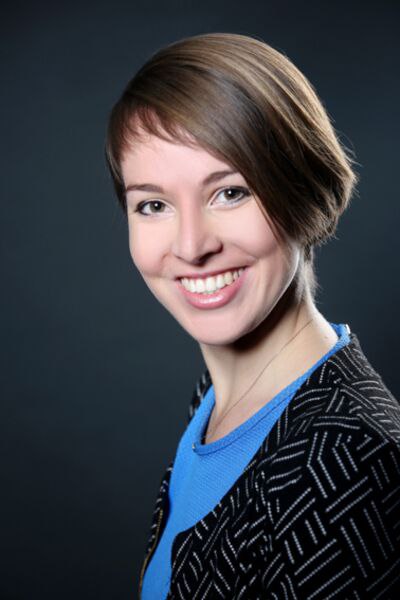
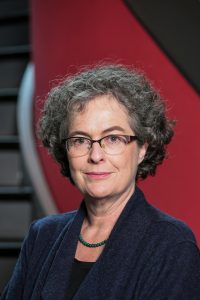
Dr. Andrea Martinelli is a Lecturer and Postdoctoral Researcher at the Automatic Control Laboratory (IfA), ETH Zurich. He holds a PhD in Automatic Control from ETH Zurich (2024) under Prof. John Lygeros, an MSc in Control Engineering (2017) from Politecnico di Milano, and a BSc in Management Engineering (2015). His research focuses on optimal control, reinforcement learning, and decentralized control strategies for large-scale systems, emphasizing scalability and applicability to renewable energy systems. He received the ETH Medal for his doctoral thesis on data-driven control methods. Education: BSc in Management Engineering, Politecnico di Milano (2015) MSc in Control Engineering with Honours, Politechnico di Milano (2017) PhD in Automatic Control, ETH Zurich (2024) Research Interests: Optimal control and reinforcement learning Data-driven methods for control systems Decentralized control of interconnected systems Dissipativity theory and passivity-based approaches Applications in renewable energy systems (DC microgrids) Teaching & Outreach: Program Manager for the CAS ETH in Automation Teaching a post-graduate course on automation in 2025 Professional Activities: Worked at Laboratoire d'Automatique (EPFL) during MSc thesis (2017) Research Assistant with Prof. R. Scattolini, Politecnico di Milano (2018)
Gustavo Valverde Mora is a Lecturer at ETH Zurich's Power Systems Laboratory in the Department of Information Technology and Electrical Engineering. His research focuses on distributed energy resources, smart grid technologies, and power system control, with expertise in behind-the-meter DER integration and hosting capacity analysis. His recent work addresses key challenges in renewable energy integration, including voltage control coordination between transmission and distribution networks, data-driven local control schemes for active distribution grids, and unsupervised load disaggregation techniques using smart meter data. He has developed novel methods for DER modeling, GIS-based system analysis, and distribution network planning. Recognized with multiple awards including the 2022 Costa Rican National Technology Award, he actively contributes to IEEE Task Forces on DER integration. His research demonstrates strong emphasis on practical grid applications, combining theoretical power systems knowledge with advanced data analytics. Dr. Valverde teaches Power System Analysis (227-0526-00L) and maintains collaborations with utilities worldwide on renewable integration challenges.
Emre Telatar is a Full Professor at École Polytechnique Fédérale de Lausanne (EPFL) with multiple affiliations within the School of Computer and Communication Sciences. His primary appointment is in the Laboratory of Theory and History of Information (LTHI), with additional roles in Signal and Image Processing (SSC) and Systems and Networking (SIN). He also serves on the PhD program committee for Computer and Communication Sciences. Professor Telatar's research focuses on communication and information theories, with specific expertise in wireless communication, network information theory, and distributed compression. His work has been consistently sponsored by the Swiss National Science Foundation and the NCCR/MICS (National Center of Competence in Research / Mobile Information & Communication Systems). His research demonstrates a strong theoretical foundation with practical applications in modern communication systems. His publication record shows a sustained contribution to the field, with significant papers spanning from the mid-1990s through the 2000s. The research trends indicate a consistent focus on fundamental aspects of communication theory with evolving applications to multi-antenna systems, ad hoc networks, and channel estimation techniques. Scientific recognition includes: IEEE Information Theory Society Paper Award (2001) EPFL Agepoly teaching prize (2005) Professor Telatar has supervised numerous PhD students throughout his career at EPFL, serving as primary advisor to current students including Coban Serhat Emre, Girish Adway, and Song Ryan Yuanqing, as well as many past students who have completed their doctoral studies under his guidance. His teaching includes foundational courses such as Principles of Digital Communications and Information Theory and Coding. He maintains his research laboratory within the Information Theory Laboratory at EPFL, continuing to advance theoretical frameworks for modern communication systems while mentoring the next generation of researchers in the field.
Prof. Dr. Julia Vogt is an Assistant Professor at the Department of Computer Science at ETH Zürich, leading the Professur für Medizin. Datenwiss. Her research focuses on medical machine learning, data science, and AI applications in healthcare. She specializes in developing interpretable AI systems for clinical decision support, particularly in pediatric diabetes management, medical imaging analysis, and anomaly detection. Her work bridges translational gaps by emphasizing causal approaches and clinical validation. Her academic role includes teaching courses like the Data Science Lab (263-3300-00L/10L) and Topics in Medical Machine Learning (263-5100-00L). Her lab's research spans predictive modeling for nocturnal hypoglycemia, echocardiogram analysis for pulmonary hypertension detection, and multimodal learning in radiology. She also contributes to national pediatric data initiatives like SwissPedHealth. Key technical areas include concept bottleneck models, stochastic AI frameworks, and generative models for medical signal denoising. Her work often emphasizes model interpretability, fairness, and robustness to distribution shifts. She collaborates on projects involving wearable devices for pediatric monitoring and AI-driven rehabilitation tools for post-stroke gait analysis.
Varun Jog is Professor of Information Theory and Statistics in the Department of Pure Mathematics and Mathematical Statistics (DPMMS) at the University of Cambridge, Faculty of Mathematics. Previously, he served as Assistant Professor at the University of Wisconsin-Madison (2016-2020) and at the University of Cambridge (2021-2024). His academic background includes a B.Tech. in Electrical Engineering from IIT Bombay (2010) and a Ph.D. in Electrical Engineering and Computer Sciences from UC Berkeley (2015). Professor Jog's research centers on fundamental questions at the intersection of information theory, statistics, and machine learning. He develops theoretical frameworks for statistical inference under constraints such as limited communication and privacy requirements, with significant contributions to hypothesis testing, differential privacy, adversarial risk analysis, and information-theoretic inequalities. His work bridges abstract mathematical principles with practical applications in data science and robust machine learning. Recent publications demonstrate a concentrated focus on distributed inference systems, particularly examining sample complexity limits in hypothesis testing under information constraints and privacy-preserving mechanisms. His research consistently reveals deep connections between information theory and statistical learning, with increasing emphasis on adversarial robustness and foundational inequalities. His scientific contributions have earned recognition through prestigious awards: NSF-CAREER Award (2020) R. Narasimhan Memorial Lecture Award (2020) Eli Jury Award from UC Berkeley EECS Department (2015) Jack Keil Wolf student paper award at ISIT (2015) Professor Jog maintains an active research group, currently supervising one PhD student while having graduated four PhD students and four Master's students. His mentorship extends to postdoctoral researchers including Amir Asadi, Deepanshu Vasal, and Andre Wibisono. Research funding includes the competitive NSF-CAREER grant. He co-organizes the Cambridge Information Theory Seminar, fostering academic exchange and collaboration within the theoretical research community.
Konstantinos Karapiperis is a Tenure Track Assistant Professor at EPFL's Laboratory of Multiscale Modeling of Materials (LMD), within the School of Architecture, Civil and Environmental Engineering (ENAC). His research integrates mechanics , multiscale modeling , and data science to study geomaterials and structural materials. PhD in Applied Mechanics (minor in Applied Mathematics), Caltech Postdoctoral Researcher & Lecturer, ETH Zürich (Marie Skłodowska-Curie Fellowship) Research focuses on granular materials , architected materials , and nonlocal modeling using techniques like Level-Set Discrete Element Method (LS-DEM) and machine learning . Recent work explores fracture control via graph neural networks and thermodynamics-informed models. Selected scientific award: Marie Skłodowska-Curie Fellowship Teaches courses in Soil Mechanics and Multiscale Modeling . PhD students include Thomas Henzel and Hrishikesh Gopakumar Menon. His Data-Driven Mechanics Laboratory (LMD) develops predictive tools for granular and structured material behavior.
Michael Gastpar is a full Professor at École Polytechnique Fédérale de Lausanne (EPFL) in the School of Computer and Communication Sciences, where he leads the Laboratory for Information in Networked Systems (LINX). He previously held faculty positions at the University of California, Berkeley (2003-2011, earning tenure in 2008) and Delft University of Technology. His research spans information theory, signal processing, communications, and systems neuroscience. His research interests focus on network information theory and related coding and signal processing techniques, with applications to sensor networks and neuroscience. Recent work demonstrates a strong shift toward exploring the theoretical foundations of modern machine learning, particularly investigating transformer architectures from an information-theoretic perspective. His research group at EPFL explores how information theory principles can provide fundamental limits and novel approaches for contemporary machine learning problems. His recent publications reveal a clear trend toward bridging classical information theory with modern machine learning. The 15 most recent papers show increasing focus on theoretical analysis of transformers, rate-distortion frameworks for language models, universal prediction methods, and applications of information measures to machine learning theory. This represents a strategic evolution from his earlier work on sensor networks and physical-layer network coding toward foundational questions in artificial intelligence. Scientific Awards: IEEE Fellow 2013 Communications Society & Information Theory Society Joint Paper Award Information Theory Society Distinguished Lecturer (2009-2011) ERC Starting Grant (2010) Okawa Foundation Research Grant (2008) NSF CAREER award (2004) 2002 EPFL Best Thesis Award Professor Gastpar has advised over 20 PhD students who have gone on to successful careers in both academia and industry. His research has been generously supported by major grants including an ERC Starting Grant "ComCom" (2011-2016) and ongoing support from the Swiss National Science Foundation. He has served in significant editorial roles, including as Associate Editor for Shannon Theory for the IEEE Transactions on Information Theory (2008-11) and as Technical Program Committee Co-Chair for the IEEE International Symposium on Information Theory in 2010 and 2021. He leads the Laboratory for Information in Networked Systems (LINX) at EPFL, which brings together researchers working at the intersection of information theory, machine learning, and networked systems. The lab maintains strong connections with both theoretical research communities and practical applications in communications and neuroscience.
Gianni Franchi is an Assistant Professor at ENSTA Paris, part of Institut Polytechnique de Paris. His research focuses on robust computer vision, uncertainty quantification, and explainable AI (XAI). He has been teaching Deep Learning, Computer Vision, and Machine Learning courses since 2020 at ENSTA Paris and Télécom Paris. PhD in Fusion of Information, Machine Learning, and Image Processing (2016) from Mines de Paris Postdoctoral experience at Paris Saclay University (2018-2020) and Seigen University (2016-2018) Current PhD students: Rémi Kazmierczak, Olivier Laurent, Adrien Lafage, Mouïn Ben Ammar Alumni: Xuanlong Yu (2020-2023) Research interests include robust computer vision, anomaly detection, uncertainty quantification, out-of-distribution detection, certifiable AI, and explainable AI. He leads the development of the PyTorch library Torch Uncertainty for uncertainty quantification in deep learning. Recent publications span uncertainty quantification in foundation models, trajectory forecasting, vision-language adaptation, and explainability benchmarks. Gianni actively collaborates on multimodal autonomous driving datasets and uncertainty-aware systems for human-agent interaction.
El Mahdi Chayti is a doctoral researcher at the École Polytechnique Fédérale de Lausanne (EPFL), affiliated with the School of Computer and Communication Sciences and the Department of Computer Science. He works under the Machine Learning and Optimization (MLO) lab, focusing on advanced optimization techniques and machine learning theory. Contact: el-mahdi.chayti@epfl.ch . Current Roles: Doctoral Assistant and PhD Student in Computer and Communication Sciences Research Interests: Machine Learning, Optimization Algorithms, Meta-learning, Second-order Optimization, Energy Forecasting His publications highlight expertise in stochastic and cubic Newton methods, hybrid deep learning models, and personalized collaborative learning. Recent works include Improving Stochastic Cubic Newton with Momentum (2025) and Hybridization of Deep Learning with Physical Knowledge for Energy Forecasting (2019) . Key trends in his research span optimization efficiency , meta-learning frameworks , and integration of domain knowledge into AI models. He emphasizes theoretical guarantees and practical scalability in algorithm design.
Rachid Cherkaoui is a Senior Scientist at École polytechnique fédérale de Lausanne (EPFL), affiliated with the School of Engineering, specifically within the Department of Electrical Engineering. He is actively associated with research units SEL-ENS, EDEY-ENS, and DESL, contributing to the Distributed Electrical Systems Laboratory (DESL). His work focuses on advanced power system optimization, smart grids, and energy market modeling. Ph.D. in Electrical Engineering, EPFL, 1992 M.S. in Electrical Engineering, EPFL, 1983 Dr. Cherkaoui's research interests include electrical power and distribution systems, distributed generation, energy storage, electricity market deregulation, and power system vulnerability mitigation. His work bridges theoretical modeling and real-world applications, particularly in flexibility provision, grid resilience, and market integration of renewable energy. His recent publications (2020–2025) reflect a strong focus on smart grid technologies, energy storage integration, and market mechanisms. Key themes include optimal dispatch of hybrid systems, TSO-DSO coordination, frequency control, and stochastic optimization under uncertainty. His work is frequently published in top-tier journals such as IEEE Transactions on Power Systems and IEEE Transactions on Smart Grid. ABB Swiss Award '83 Senior Member, IEEE Member, CIGRE Task Forces C5-2 IEEE Swiss Chapter Officer since 2005 Dr. Cherkaoui actively supervises doctoral students and collaborates extensively with researchers like Mario Paolone. He has contributed to numerous projects funded by industry, CTI/Innosuisse, and Horizon 2020. His research includes experimental validation and real-time control systems, particularly in hydropower and battery storage applications. He is also involved in national and international energy strategy discussions, including Switzerland's path to carbon neutrality.
Academic Profile: Damir Filipovic is a Full Professor and the Swissquote Chair in Quantitative Finance at the College of Management of Technology (CDM) of École Polytechnique Fédérale de Lausanne (EPFL), Switzerland. He previously held academic positions at the University of Vienna, University of Munich, and Princeton University, and served as Head of the Vienna Institute of Finance. Research Focus: Quantitative finance, risk management, stochastic processes, term structure modeling, volatility risk, and machine learning applications in financial markets. Industry Collaboration: Co-developed the Swiss Solvency Test for insurance capital requirements while consulting for the Swiss Federal Office of Private Insurance. Publications: Contributed extensively to journals like Journal of Financial Economics, Mathematical Finance, and Annals of Applied Probability, with a textbook on Term-Structure Models. Academic Service: Editorial board member of multiple journals and organizer of advanced workshops on systemic risk and financial technology. Recent Research: His work emphasizes machine learning for portfolio risk management, kernel-based yield curve estimation, and robust stochastic modeling. Keynote speaker at international conferences on finance and insurance mathematics, with over 15 recent publications in 2023-2025 addressing high-dimensional financial problems, neural control systems, and causal inference in market data. Education: Ph.D. in Mathematics from ETH Zurich (2000). Graduate of ETH Zurich and University of Vienna. Teaching & Mentorship: Supervises current and former EPFL Ph.D. students in quantitative finance, including Nicolas Camenzind, Joshua Hayes, Andrea Ruglioni, and ten others. Former students like Damien Ackerer and Lotfi Boudabsa now lead research in risk management. Labs & Programs: Directs EPFL's Finance and Technology Programme, leads the Computational Finance Group (CSF) at EPFL, and contributes to Swiss Finance Institute initiatives. Scientific Leadership: Served on EPFL Committee of Academic Evaluation and Doctoral Program Finance committee.
Franziska Boenisch is a tenure-track faculty member at the CISPA Helmholtz Center for Information Security , where she co-leads the SprintML lab for Secure, Private, Robust, Interpretable, and Trustworthy Machine Learning. Her research lies at the intersection of privacy-preserving machine learning and trustworthy ML , with a focus on differential privacy , model inversion attacks , and privacy risks in federated learning . She completed her PhD at Freie Universität Berlin and was a postdoctoral fellow at the Vector Institute for Artificial Intelligence under Prof. Nicolas Papernot. Her work has been recognized with awards such as the Academics Rising Start Award (3rd Prize) and the GI Junior-Fellow honor. Her research spans a wide range of topics including memorization in diffusion models , watermarking generative models , membership inference attacks , and privacy-preserving federated learning . She has published extensively in top-tier venues like ICML , NeurIPS , ICLR , and CVPR . She is actively involved in the academic community, serving as an Area Chair for NeurIPS , Track Chair for ACM AsiaCCS , and co-organizing workshops at ICML . She is currently hiring PhDs, postdocs, and research interns for her group.
Jian Peng is an Assistant Professor in the Department of Computer Science at the University of Illinois at Urbana-Champaign. His research focuses on computational biology, machine learning, and their applications to protein structure prediction, drug design, and molecular modeling. He has contributed to advancements in antibody engineering, protein-ligand docking, and generative models for biological systems. Key research areas include: Machine Learning for Molecular Modeling Protein Structure Prediction Antibody and Peptide Design Genomics and Single-Cell Analysis Structure-Based Drug Discovery His work emphasizes integrating deep learning techniques with biological datasets to address challenges in precision medicine, drug development, and systems biology. Notable achievements include developing the FastFold system to accelerate AlphaFold training and pioneering flow-based methods for antibody design. Awards include the Overton Prize (2020), recognizing contributions to computational biology. His research has been published in top journals and conferences, spanning topics from protein mutation prediction to geodesic-based immune complex modeling.
Sabine Süsstrunk is a Full Professor and Director of the Images and Visual Representation Laboratory (IVRL) at EPFL's School of Computer and Communication Sciences. She holds a BS in Scientific Photography from ETH Zürich, MS from Rochester Institute of Technology, and PhD from University of East Anglia. Her career includes positions at Hewlett-Packard Labs and Corbis Corporation. Her research explores computational imaging, computational photography, color processing, computer vision, and image quality. Key interests include near-infrared applications, multispectral imaging, and computational aesthetics. Her work bridges hardware and software solutions for imaging challenges. Publications demonstrate consistent focus on advancing generative models (diffusion models, neural cellular automata), 3D reconstruction (NeRF variants), and media integrity (DeepFake detection). Recent trends show increased emphasis on 3D vision, robustness in generative AI, and video analysis. Awards & Honors: IS&T/SPIE Electronic Imaging Scientist of the Year (2013) Raymond C. Bowman Teaching Award (2018) EPFL AGEPoly IC Polysphere Award (2020) 8 Best Paper/Demo Awards Fellowships: IEEE, IS&T, ELLIS, AIIA She leads the IVRL lab and advises PhD candidates while serving as President of the Swiss Science Council. Research is supported through competitive grants and industry collaborations.
Philippe Christe is an Associate Professor in the Department of Ecology and Evolution at the University of Lausanne (UNIL), Faculty of Biology and Medicine. His research centers on host-parasite interactions, with a focus on bats, birds, and their ectoparasites, integrating behavioral, physiological, and genetic approaches. He leads the Christe Group, which investigates evolutionary and ecological dynamics in host-parasite systems, particularly avian malaria and bat-mite relationships. He is actively involved in conservation initiatives, including the Jorat Peri-Urban Nature Park, and collaborates with KORA on human-wildlife interactions. Bachelor's degree in biology, UNIL (1989) PhD in Zoology and Animal Ecology, UNIL (1994) Philippe Christe’s research interests lie at the intersection of parasitology, evolutionary ecology, and conservation biology. He investigates how host defenses evolve in response to parasitic pressures, examining trade-offs between immunity and life history traits such as reproduction and survival. His work often integrates field studies with experimental and molecular techniques. Key model systems include Parus major (great tit) and Culex pipiens in avian malaria, and bat species with their ectoparasitic mites. He also explores broader ecological interactions, including predator-prey dynamics and wildlife conservation in human-modified landscapes. His recent publications reflect a strong emphasis on disease ecology, wildlife conservation, and molecular methods. Articles span topics such as avian malaria transmission, lynx population dynamics, snow leopard behavior, and habitat fragmentation effects on insects. These works employ advanced techniques like DNA metabarcoding, spatial modeling, and long-term monitoring, demonstrating a trend toward interdisciplinary, data-driven ecological research with direct conservation applications. Dubois Foundation Prize for an educational CD-Rom on bats (2004) Communication Award from the Faculty of Biology and Medicine of UNIL (2017) Philippe Christe has supervised numerous PhD and Master’s students, contributing significantly to training the next generation of ecologists and evolutionary biologists. His group collaborates widely with institutions such as the Museum of Zoology in Lausanne and KORA, and participates in large-scale conservation projects involving snow leopards, lynx, and bats. He has been involved in research grants related to host-parasite coevolution, wildlife monitoring, and conservation strategies. His leadership in establishing the Jorat Peri-Urban Nature Park and involvement in the UNIL Interdisciplinary Center for Mountain Research highlight his commitment to applied science and environmental stewardship. He leads the Christe Group, which conducts research on host-parasite coevolution, with a focus on bats and their ectoparasites, and birds affected by avian malaria. The group combines fieldwork, laboratory experiments, and molecular analyses, and includes post-docs, PhD students, and technical staff. Collaborations extend to researchers in Bern, Paris, and Spain, fostering an international and interdisciplinary research environment.