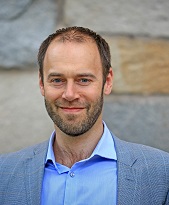
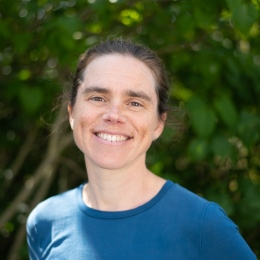
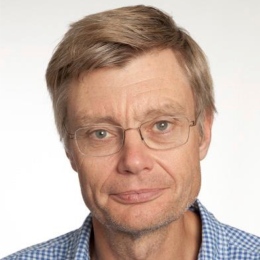
Kathleen Murphy is a Professor in the Department of Water Environmental Technology at Chalmers University of Technology, specializing in the application of spectroscopic techniques to analyze dissolved organic matter in water systems. Her research focuses on fluorescence-based methods for distinguishing water sources, detecting quality changes, and optimizing water treatment processes. She has developed influential open-source tools like the drEEM toolbox and OpenFluor database. Her work spans natural aquatic systems (freshwater/oceanic) and technical systems (drinking water, wastewater, ballast water). Current projects include improving water treatment sensors, UV disinfection indicators, and carbon management strategies. Funding sources include Formas, VINNOVA, and industry grants. Key research themes include fluorescence spectroscopy applications, organic matter reactivity, and biofilter optimization. Her interdisciplinary approach addresses global water quality challenges, with over 37 peer-reviewed publications and 10 active research projects since 2018.
Zhiqi Tang is a Digital Futures Postdoctoral Fellow at KTH Royal Institute of Technology's Division of Decision and Control Systems (EECS Department), supervised by Professors Jonas Mårtensson and Karl Henrik Johansson. She previously held positions as a postdoctoral researcher at Instituto Superior Técnico (IST) in Portugal and as an Invited Assistant Professor in their Department of Electrical and Computer Engineering. She holds a double Ph.D. in Automatic Control and Robotics from IST and I3S-CNRS (Université Côte d'Azur), receiving the EDSTIC Ph.D. thesis prize, and a B.S. in Electrical and Computer Engineering from the University of Macau (2015). Her research focuses on estimation, control, and decision-making in multi-agent systems, with applications in Robotics and Transportation Systems. Key areas include cooperative estimation, networked systems, nonlinear dynamics, and formation control. She teaches the Nonlinear Control (EL2620) course at KTH. Her recent work emphasizes safe platooning for autonomous vehicles, collision avoidance in UAV formations, and distributed localization under dynamic conditions. Notable contributions include barrier function-based control for CAVs and bearing-rigidity theory for multi-agent coordination. Her research bridges theoretical control frameworks with practical implementations in robotics and transportation. Awards: EDSTIC Ph.D. thesis prize (2021) Grants/Advising: Supervises postdoctoral and doctoral research in multi-agent systems Labs/Teams: Involved with KTH's Decision and Control Systems group and IST's Institute for Systems and Robotics
Torkel Erhardsson is an Associate Professor (Docent) in the Department of Mathematics at Linköping University, Sweden. He is affiliated with the Division of Applied Mathematics (TIMA), where he conducts research in probability theory, stochastic processes, and statistical inference. His research interests include: Bounds for distances between probability distributions using Stein's method and couplings Applications to normal and compound Poisson approximations Bayesian nonparametric inference and asymptotics of posterior distributions Higher-dimensional autoregressive processes with random coefficients Reciprocal chains and reciprocal random fields on undirected graphs His recent publications (2008–2023) in journals such as Journal of Applied Probability , Advances in Applied Probability , and IEEE Transactions on Automatic Control reflect a strong focus on theoretical probability and its applications, particularly in approximation methods and stochastic modeling. The work shows increasing emphasis on graphical models and reciprocal processes in recent years. There are no listed scientific awards or honors in the provided materials. Torkel Erhardsson actively contributes to the academic life at Linköping University, participating in seminars in statistics and mathematical statistics. There is no public information indicating student advising, grant funding, or leadership of specific research labs or teams.
György Dán is a Professor in Teletraffic Systems at KTH Royal Institute of Technology, Stockholm, Sweden. He holds a Ph.D. in Telecommunications from KTH (2006) and has extensive academic leadership roles, including Director of Third Cycle Education. His research focuses on networked systems design, with expertise in critical infrastructure security, edge computing, and cyber-physical systems. Dán has supervised over 20 PhD students and led major projects like VR DICE6G and REACT. He has authored/co-authored over 150 publications, receiving awards such as the Ericsson Research Foundation Award (2010-2014) and the 2020 KTH PhD Supervisor of the Year. Education Ph.D. in Telecommunications, KTH Royal Institute of Technology (2006) M.Sc. in Business Administration, Corvinus University of Budapest (2003) M.Sc. in Computer Engineering, Budapest University of Technology and Economics (1999) Research Interests His work spans applied game theory, smart grid security, mobile edge computing, and adversarial machine learning. Current projects include resilient edge computing systems and secure AI for cyber-physical infrastructures. Awards & Recognition Best Paper Awards at SNCNW 2025, IEEE SmartGridComm 2014, and IEEE Infocom 2008 Fulbright Visiting Scholar (University of Illinois, 2012-2013) Invited Professor at EPFL (2014-2015) Labs & Collaborations He leads the Network and Systems Engineering Division at KTH, collaborating with industries like Ericsson and ABB. His group focuses on experimental platforms like the GreenEyes testbed and stateful serverless edge computing.
Filip Szczepankiewicz is an Associate Professor and Associate Senior Lecturer in Medical Radiation Physics at Lund University, Sweden. He serves as Principal Investigator for eSSENCE: The e-Science Collaboration and LUCC: Lund University Cancer Centre, with active research projects spanning advanced MRI techniques for neuroscience, cancer imaging, and microstructure analysis. His research focuses on several key areas: Advanced diffusion MRI techniques for microstructure imaging Brain imaging applications in neuroscience and cognitive disorders Prostate cancer imaging and biomarker development Cardiac diffusion tensor imaging MRI physics and methodology development Dr. Szczepankiewicz's recent publications demonstrate sophisticated multi-dimensional MRI approaches that separate different biophysical processes within tissues. His work bridges physics, engineering, and clinical applications, particularly in neurological disorders and cancer diagnostics, with increasing emphasis on techniques that probe tissue microstructure with unprecedented detail. He leads significant research projects including: eSSENCE@LU 9:2 - Establishing the link between prostate cancer microstructure and MRI (2023-2026) Prostate Cancer Imaging Group: Multidimensional MRI-based biomarkers (2022-2030) eSSENCE@LU 6:4 - Accelerated microstructure imaging (2020-2021) His work contributes to UN Sustainable Development Goals related to good health and well-being, with documented research collaborations across multiple institutions and countries.
Joachim Toft is a Professor in the Department of Mathematics at Linnaeus University (formerly Växjö University), where he has been employed since February 2004. Prior to this position, he served as an assistant professor at Blekinge Institute of Technology in Karlskrona, Sweden. He completed his PhD in mathematics at Lund University in 1997 and was employed as a teaching assistant master at Kristianstad University from 1995 to 1998. Currently, he holds editorial positions for the Journal of Pseudo-Differential Operators and Applications and Annals of Functional Analysis, and serves as a member of the International Society of Analysis, its Applications and Computations (ISAAC). Professor Toft's research primarily focuses on pseudo-differential calculus and related mathematical fields. His work encompasses Fourier analysis, time-frequency analysis, harmonic analysis, basic operator theory, generalized functions (particularly Gelfand-Shilov spaces and Gevrey classes), and micro-local analysis. While these areas form the core of his theoretical work, he also explores applications to wave phenomena, including physics interpretations, non-stationary filters in signal analysis, and geophysics. His research approach emphasizes functional analysis, harmonic analysis, and basic operator theory more frequently than is typical within these specialized fields. The recent publication record demonstrates a strong focus on extending pseudo-differential operator theory to more generalized function spaces, including quasi-Banach spaces, Orlicz spaces, and Pilipović spaces. His work shows a clear progression toward developing more comprehensive frameworks for time-frequency analysis and operator theory, with particular attention to continuity properties, spectral invariance, and characterization of operators in various function spaces. The collaboration network spans multiple international institutions, reflecting the global nature of modern mathematical research. Professor Toft is actively involved in three major research groups at Linnaeus University: the International Center for Mathematical Modeling (ICMM), Scientific Computing and Partial Differential Equations, and Waves, Signals and Systems. His current research project focuses on developing Hörmander-Weyl calculus within the framework of ultra distributions, aiming to create calculi feasible for objects more complex than standard distributions.
Yifei Jin is a WASP Industrial PhD student at KTH Royal Institute of Technology's School of Electrical Engineering and Computer Science, specifically within the Division of Theoretical Computer Science. They are supervised by Professor Aristides Gionis and Associate Professor Sarunas Girdzijauskas at KTH, and also serve as an Experienced Researcher at Ericsson Research and a Visiting Researcher at Yale University under Rex Ying and Leandros Tassiulas. Yifei's research focuses on graph mining , network analysis , and graph representation learning , particularly applied to crowdsourcing data and wireless communication systems. Their work intersects telecommunications network optimization machine learning for graph-structured data AI-driven wireless resource management edge computing and distributed AI as evidenced by their publications spanning 2017–2025. Their academic contributions include 15 recent papers exploring topics such as neural surrogates for voltage drop estimation, wireless ray-tracing models, scalable distributed AI deployment, and vehicle platooning coordination. These publications demonstrate expertise in network traffic reduction KPI conflict analysis graph convolutional networks hyperbolic embeddings for ontologies real-time network diagnostics .
Frida Bender is a Professor of Climate Modeling at the Department of Meteorology (MISU) at Stockholm University. Her research focuses on understanding the complex interactions between clouds, aerosols, and climate, with particular emphasis on how small-scale processes affect large-scale climate patterns. Her research interests include: Aerosol-cloud-climate interactions and their representation in models Planetary and cloud albedo estimation and determining factors Cloud feedback mechanisms and climate sensitivity Aerosol forcing and characterization of present-day vs. pre-industrial aerosol distributions Values in Science and how they influence uncertainty estimation in climate science Precipitation pattern changes under global warming Marine cloud brightening as a potential climate intervention Professor Bender's work combines global climate models with observational data and e-science tools, often involving interdisciplinary collaborations and meta-studies of climate modeling. Her research is crucial for improving climate projections and understanding the Earth's climate sensitivity. Her recent publications demonstrate a strong focus on using satellite observations and climate models to understand cloud-radiation interactions, hemispheric albedo symmetry, and climate feedback mechanisms. Many of her studies employ machine learning approaches to analyze complex climate data. Scientific contributions: Extensive research on aerosol-cloud interactions and their climate impacts Work on understanding hemispheric albedo symmetry and its implications for climate sensitivity Studies on marine cloud responses to biomass burning plumes Investigations into values and ethics in climate modeling Research on climate model code genealogy and its relation to climate feedbacks Professor Bender has supervised numerous undergraduate and graduate students, contributing to the development of the next generation of climate scientists. She has also been actively involved in teaching courses on climate change solutions, climate and general circulation, and meteorology for teachers-to-be. Her research is organized within the Clouds, airborne particles and gases research group at MISU, which investigates how atmospheric particles affect cloud properties and contribute to climate change.
Jonas Nycander is a Professor of Physical Oceanography at Stockholm University's Department of Meteorology (MISU), where he has worked since 2000. His research spans multiple oceanographic domains with a particular focus on physical ocean processes and their connections to climate systems. Dr. Nycander's research interests encompass several critical areas of ocean science. His work on tidal-driven internal waves examines energy transfer mechanisms in the ocean. He investigates ocean circulation dynamics by projecting flows onto different coordinates to determine mechanical versus thermal driving forces. A significant portion of his research focuses on the nonlinear equation of state of seawater and its impact on global water mass distribution. Additionally, he explores the ocean carbon system's role in atmospheric CO 2 concentration during ice ages, the direct effects of carbon dioxide on vegetation, and climate economics. His recent publications demonstrate a strong focus on ocean circulation dynamics, particularly overturning circulation and tidal energy conversion. His work shows increasing sophistication in modeling techniques and data integration, with recent papers incorporating Argo float data and advanced ocean modeling. The research spans from theoretical frameworks examining wave propagation and energy conversion to applied studies on climate impacts and carbon cycling. A consistent thread through his work is the examination of how physical processes drive larger climate systems. Dr. Nycander has been actively involved with multiple research groups at MISU, including those focused on circulation and the land-ocean-atmosphere connection, the North Atlantic and Arctic Ocean, and the Oceanography of the Baltic Sea. His work appears to involve both theoretical modeling and analysis of observational data, suggesting a comprehensive approach to physical oceanography research. He has also collaborated on research related to stratospheric thermodynamic cycles, indicating interdisciplinary reach beyond traditional oceanography.
Kanar Alkass is a Docent (Associate Professor equivalent) at Karolinska Institutet, affiliated with the Department of Oncology-Pathology. She is a key member of Henrik Druid's Forensic Medicine research group, focusing on interdisciplinary research spanning cell biology, forensic science, and clinical medicine. Research Interests Dr. Alkass's research spans several interconnected fields including Cell and Molecular Biology, Clinical Laboratory Medicine, and Forensic Science. Her work particularly focuses on understanding cell turnover dynamics in human tissues, forensic identification methods, and the biological mechanisms underlying various diseases. She has made significant contributions to the understanding of neurogenesis, cardiomyocyte regeneration, and cancer biology through innovative methodologies that combine advanced molecular techniques with forensic applications. Recent Publications Dr. Alkass's recent publications (2023-2025) demonstrate a strong interdisciplinary approach, with work spanning neuroscience, cardiology, oncology, and forensic medicine. Her research often involves large collaborative efforts across multiple institutions, reflecting the broad impact and relevance of her work. The publications show consistent application of radiocarbon dating and molecular techniques to address fundamental questions in human biology, with increasing incorporation of computational methods like deep learning for tissue analysis. Awards and Recognition Awarded Docent title from Karolinska Institutet (2022) Advising and Grants As a Docent at Karolinska Institutet, Dr. Alkass participates in graduate student supervision and contributes to research training. Her extensive publication record in high-impact journals including Nature, Cell, and Circulation indicates successful grant funding for her research activities. Her work shows consistent funding for interdisciplinary projects bridging basic science, clinical medicine, and forensic applications. Laboratory and Research Team Dr. Alkass works within Henrik Druid's Forensic Medicine research group at Karolinska Institutet. Her research involves interdisciplinary collaborations across multiple departments and institutions, focusing on innovative approaches to studying human tissue dynamics and forensic identification. The group maintains strong connections with both clinical departments and basic science research units, facilitating translational research from bench to forensic application.
Julia Höglund is a Postdoctoral Researcher based at the Centre for Palaeogenetics, affiliated with the Department of Zoology at Stockholm University and collaborating with Wageningen University and Research. Her primary research focuses on genomic sequence annotation, mutational load quantification, and the role of genetic variation in evolution and disease. She works on endangered species like the arctic fox and extinct species such as the woolly mammoth. BSc in Biology, Lund University (2012-2015) MSc in Biology, Lund University (2015-2017) MSc in Bioinformatics, Lund University (2015-2017) PhD in Medical Sciences (Statistical Genetics), Uppsala University (2018-2022) Her research spans genetic epidemiology , inflammatory disease mechanisms , and conservation genomics , with expertise in whole-genome sequencing, polygenic risk scores, and evolutionary adaptation studies. Key projects include developing the FlyCADD model for variant scoring, analyzing estradiol's genetic impact on cancer, and exploring owl vision genetics. Recent publications reveal trends in inflammatory disease genetics (2019-2022), variant annotation (2025), and conservation genomics (2017-2019). Her work bridges computational biology, statistical genetics, and evolutionary applications. No scientific awards are explicitly mentioned in the available text. Julia works jointly with Dr. Mirte Bosse at Wageningen University and Research, focusing on genomic models for endangered and extinct species. Her lab affiliations include the Centre for Palaeogenetics and Stockholm University's Department of Zoology.
Professor Karin Hårding is a marine ecologist at the Department of Biology and Environmental Sciences, University of Gothenburg, where she leads the Seal Population Dynamics Research Group. Her work focuses on population biology of marine mammals, particularly seal species in the Baltic Sea and Skagerrak regions. Her research examines how environmental factors including climate change, disease outbreaks, hunting pressure, and pollution affect population dynamics. Key methodologies include mathematical modeling, drone-based monitoring, and long-term ecological data analysis. Current projects investigate PCB contamination effects, ecosystem changes, and innovative population assessment techniques. Professor Hårding's publication record shows consistent output in high-impact journals including Journal of Animal Ecology , Marine Mammal Science , and Environment International . Her work demonstrates strong interdisciplinary collaboration across European institutions. Notable research contributions include: Development of toxicokinetic models for pollutant impacts on seal populations Drone-based monitoring systems for pinniped body size assessment Long-term analysis of 120+ years of Baltic grey seal data Genomic studies of harbor seal population structure Her research directly informs marine conservation policy through population viability assessments and identification of extinction risks from multiple stressors. The Seal Population Dynamics group maintains active field projects in the Baltic region with international collaborations.
Erik Schaffernicht serves as a Senior Lecturer in the Department of Natural Sciences and Technology at Örebro University's School of Science and Technology. His research is primarily conducted through the Center for Applied Autonomous Sensor Systems (AASS) where he leads work in the Adaptive and Interpretable Learning Systems and Robot Navigation and Perception research groups. Dr. Schaffernicht's research spans multiple areas in robotics and artificial intelligence, with particular expertise in sensor systems, behavior trees, and gas distribution mapping. His work bridges theoretical computer science with practical applications in autonomous systems, environmental monitoring, and human-robot interaction. His research often involves developing novel algorithms for robot perception, control, and decision-making in complex environments. His recent publications demonstrate a strong focus on behavior trees for robot control, gas distribution mapping techniques, and applications of machine learning in robotics. The research shows increasing sophistication in using deep learning approaches for environmental sensing and robot navigation, with applications ranging from industrial safety to healthcare monitoring. Dr. Schaffernicht maintains an active research agenda with numerous publications in top robotics and AI venues, including IEEE Robotics and Automation Letters, Robotics and Autonomous Systems, and various IEEE conference proceedings. His work shows consistent collaboration with researchers across Europe, particularly with the AASS research center at Örebro University. His research projects include both ongoing work on automatic cognitive screening tests using eye-tracking technology and completed projects such as AIR (Action and Intention Recognition), RAISE (Robotic System for Air Quality Assessment), and SmokeBot (Mobile Robots for Disaster Site Inspection).
John Östh is a Researcher at Uppsala University with dual appointments in the Department of Human Geography and the Institute for Housing and Urban Research. His work centers on spatial analysis of urban systems, focusing on accessibility, inequality, and housing market dynamics across Scandinavian and international contexts. His primary research domains include: Urban Geography : Spatial patterns of amenities access and segregation Spatial Analysis : Advanced modeling of distance decay and interaction flows Urban Economics : Hedonic pricing in housing markets Accessibility Studies : Job and educational resource distribution Social Inequality : Disparities in urban service access Housing Markets : Short-term rental platforms and policy impacts Östh's publication trajectory reveals a methodological evolution from traditional spatial interaction models (2013-2016) toward contemporary AI-integrated approaches (2025), consistently addressing urban sustainability through rigorous quantitative analysis of accessibility inequality and housing market disruptions. His recent work demonstrates increasing integration of social media analytics and machine learning in urban studies.