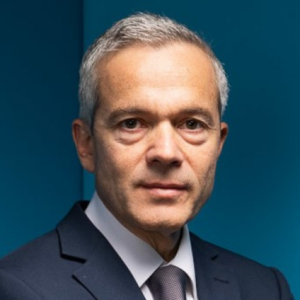
Pavlos S. Georgilakis is a Professor at the School of Electrical and Computer Engineering, National Technical University of Athens (NTUA), specializing in modern techniques for power system analysis, optimization, and renewable energy integration. He holds a Diploma (1990) and PhD (2000) in Electrical Engineering from NTUA. His career includes roles as Lecturer (2009) and Associate Professor (2018–2023) at NTUA, and Assistant Professor at the Technical University of Crete (2004–2009). Research focuses on power transmission/distribution systems, transformer design, and applying AI/optimization for grid efficiency. He led 10 research projects, including Horizon 2020 initiatives SHAR-Q, WiseGRID, and NobelGrid. He authored 3 books and over 230 publications (SCOPUS citations: >5,500). Editor of IET Smart Grid, Energies, and Electricity journals; senior IEEE member. He supervised 4 doctoral, 9 master’s, and 76 diploma theses. Awards include the 2013 Best Reviewer Award from Electric Power Systems Research. Active in energy storage, smart grids, and decentralized energy resource integration.
Eleni Stai is an Assistant Professor at the School of Electrical and Computer Engineering, National Technical University of Athens (NTUA), affiliated with the Division of Communication, Electronic and Information Engineering. She holds advanced degrees in Electrical Engineering, Mathematics, and Applied Mathematical Sciences from NTUA and the National and Kapodistrian University of Athens. Her academic credentials include: Diploma in Electrical and Computer Engineering, NTUA (2009) B.Sc. in Mathematics, National and Kapodistrian University of Athens (2013) M.Sc. in Applied Mathematical Sciences, NTUA (2014) Ph.D. in Electrical Engineering, NTUA (2015) Dr. Stai's research integrates advanced optimization techniques with communications networks and energy systems. She develops stochastic and deterministic optimization frameworks for network resource allocation, data analytics on complex topologies, and smart-grid control applications. Her work bridges theoretical foundations with practical implementations in energy-harvesting networks, network slicing, and reinforcement learning for distributed systems. Analysis of her recent publications reveals dominant research thrusts in AI-driven network management (particularly O-RAN and network slicing), energy-integrated communications, and optimization of energy communities. A significant portion of her work addresses the convergence of 5G/6G networking with power systems, emphasizing real-time control and sustainability. Her scientific contributions have been recognized through prestigious awards: Chorafas Foundation Best Ph.D. Thesis award Thomaidis Foundation Best M.Sc. Thesis award Best Paper Award at ICT 2016 Best Presenter Award at IEEE ENERGYCON 2022 Dr. Stai serves on technical program committees for major international conferences and has co-authored the book "Evolutionary Dynamics of Complex Communications Networks". She teaches undergraduate courses in Queuing Systems, Computer Networks, and Social Network Analysis, reflecting her expertise in network theory and applications. Her research trajectory demonstrates continuous evolution from fundamental network optimization to AI-enhanced solutions for next-generation communication-energy systems. Her work builds upon her postdoctoral experience at EPFL (2016-2020) and ETH Zurich (2020-2023), where she developed advanced frameworks for communications networks and energy systems.
Kostas Magoutis is Professor and Chair of the Computer Science Department at the University of Crete and collaborating researcher with FORTH-ICS. His research focuses on distributed systems, scalable data processing, IoT, and cloud computing, with projects including GreenInCities for urban regeneration and STREAMSTORE for stateful stream processing systems. Research interests include: Distributed computer systems architecture Elastic stream processing platforms Quantum-enhanced computing applications Multi-cloud application lifecycle management Recent publications demonstrate strong focus on federated data systems, quantum computing applications, and IoT-enhanced infrastructure, with consistent output in high-impact conferences and journals. Awards and distinctions: Multiple best paper awards from USENIX conferences Grand Challenge Audience Award at DEBS 2022 Marie Curie Fellowship and IBM Research awards Advises over 20 PhD and MSc students in distributed systems research. Leads multiple EU-funded projects and serves on program committees for top conferences including SOSP, EuroSys, and IEEE BigData. Directs research groups in distributed systems and cloud computing at FORTH-ICS.
Symeon Papavassiliou is a Professor at the Department of Communications, Electronics and Information Systems, School of Electrical and Computer Engineering, National Technical University of Athens since 2004. Previously held positions include Associate Professor at New Jersey Institute of Technology (1996-2004) and senior researcher at AT&T Labs (1995-1999). He leads the Network Management and Optimal Design Laboratory and has served in various academic leadership roles, including Deputy Director since 2005. His research focuses on computer networks, wireless systems, and AI-driven network management with over 400 publications. Recognized with multiple best paper awards and NSF Career Award (2003). Education: B.A. Electrical Engineering, NTUA (1990) MSc & PhD Electrical Engineering, Polytechnic University, NY (1992/1996) Key Roles: Founder, New Jersey Center for Wireless Networks & Internet Security Member, EETT (National Telecommunications Commission) 2006-2009 Editorial Board Member, multiple journals Research Interests: Specializes in mobile/distributed systems optimization, wireless networks, complex systems, IoT, and AI applications in network management. Active in 6G architecture research, edge computing orchestration, and secure federated learning frameworks. Publications highlight innovations in network resource allocation, game theory models for positioning systems, and symbiotic computing continuum architectures. Recent work emphasizes resilience in critical infrastructure and smart grid optimization. Awards: Over 10 best paper awards from IEEE conferences, AT&T recognition, and Greek Excellence in Research Grant (2012). Grants: Funded by EU Framework Programs, NSF, ESA, and industry partners like Panasonic and Northrop Grumman. Leads interdisciplinary projects like HEROES (UAV-based emergency response) and NEPHELE (multi-cloud ecosystems). Active in digital twin development for cultural heritage preservation and SDG tracking via knowledge graphs.
Professor Diomidis Spinellis is a renowned academic in Software Technology at Athens University of Economics and Business (AUEB). He specializes in software engineering practices, code quality, AI ethics, and system architecture. His work bridges theoretical advancements with practical applications in industry, emphasizing reproducibility and empirical methods. Recipient of the IEEE Computer Society's prestigious 'Distinguished Contributor Recognition,' Spinellis is the sole Greek scientist to achieve this honor. His research spans software evolution, security, and open-source ecosystems, with a focus on methodologies like refactoring, static analysis, and debugging strategies. Key research interests include AI-generated content detection, modular data analytics, and incident management systems. His studies often leverage large-scale datasets (e.g., Unix evolution, Linux supercomputing analysis) to uncover patterns in software behavior and development practices. Publications frequently address emerging technologies' societal impacts, such as energy-efficient computing and ethical AI deployment. He advocates for reproducible research through tools like the Alexandria3k framework and contributes to open-source initiatives.
Mara Nikolaidou is a Professor in the Department of Informatics and Telematics at Harokopio University of Athens since 2007 and has served as the university's Rector since 2016. She represents Greek universities in the European University Association (EUA) for 2023-2024. Her research focuses on distributed systems, system modeling, and responsible computing, with a strong emphasis on IoT, cloud/edge computing, and cyber-physical systems. She leads projects funded by national, EU, and international agencies, exploring topics like autonomous systems, ethical requirements in design, and human-in-the-loop systems. Her educational background includes roles as a computer engineer and IT consultant before academia. She is a member of IEEE (SMC Society and Systems Council) and participates in the Object Management Group (OMG) working groups for SysML and responsible computing. She organizes international conferences in software and systems engineering. Research interests span distributed systems, IoT, and ethical computing. Recent work investigates cost analysis in cloud markets, human-AI collaboration, and smart city technologies. Over 200 publications highlight her contributions to model-based systems engineering, including SysML extensions for cost/QoS analysis and frameworks for autonomous fog nodes. Grants and projects include EU-funded initiatives on smart farming, cloud brokerage, and organizational interoperability. Her lab focuses on autonomous systems and context-aware middleware. She advises on e-Government compliance frameworks and collaborates with industry partners on IoT management platforms.
Markos Anastasopoulos is Associate Professor at the National and Kapodistrian University of Athens, specializing in optical/wireless networks and mobile computing. His research focuses on 5G/6G network convergence, intent-based management, and AI-driven optimization for telecommunications. Recent publications address THz-optical integration, federated learning in transport networks, and semantic-aware radio systems. Applied work includes intelligent asset management for railways and techno-economic analyses of network deployments. Recognized with best dissertation and best paper awards, his research bridges theoretical networking with industrial applications in transportation and cloud infrastructure.
George Alexandropoulos is an Associate Professor at the Department of Informatics and Telecommunications, National and Kapodistrian University of Athens. His research focuses on telecommunications, signal processing, and reconfigurable intelligent surfaces (RIS) for next-generation wireless networks. He has contributed to advancements in integrated sensing and communications (ISAC), 6G technologies, and holographic beamforming. His work includes experimental validation of RIS prototypes, optimization of RIS-assisted systems, and analysis of secure communication strategies. Research interests include RIS hardware design, channel modeling, and applications in IoT, UAV communications, and disaster recovery networks. He explores topics like energy-efficient RIS operation, multi-RIS coordination, and RIS-enabled localization. His studies often address challenges at sub-THz frequencies, mutual coupling effects, and hardware impairments. Publications emphasize practical implementations of RIS in both indoor and outdoor settings, with a focus on real-world performance evaluation. Awards and grants are not explicitly mentioned, but his extensive publication record indicates significant academic contributions. His research often integrates machine learning for RIS configuration and reinforcement learning for resource optimization in dynamic networks.
Professor Vassilios Angelidis is a distinguished academic in the field of Electrical Engineering, currently serving as a Professor at the Department of Electrical and Computer Engineering of Democritus University of Thrace. He joined the university in June 2024, bringing with him extensive international experience from prestigious institutions including the University of Glasgow, University of Sydney, University of New South Wales (UNSW), and the Technical University of Denmark. Professor Angelidis received his educational foundation with a degree in Electrical Engineering from Democritus University of Thrace, followed by a Master of Applied Science from Concordia University in Canada, and a PhD from Curtin University in Western Australia. He further enhanced his expertise with an MBA from Curtin Graduate School of Business. His research interests span Power Electronics, Renewable Energy Sources, Electrical Power Systems, and Autonomous Electricity Networks. Professor Angelidis has made significant contributions to the development of advanced power conversion techniques, grid integration of renewable energy sources, and the application of artificial intelligence in power system analysis and prediction. His work has been instrumental in advancing the field of smart grid technologies and sustainable energy systems. An analysis of his recent publications reveals a strong focus on power electronics applications in renewable energy integration, particularly in photovoltaic systems and electric vehicle charging infrastructure. His research demonstrates expertise in developing advanced algorithms for power system monitoring and control, with particular emphasis on frequency estimation, phase angle calculation, and power quality enhancement in modern grids with high penetration of distributed energy resources. Among his notable scientific achievements, Professor Angelidis has been recognized as an IEEE Fellow for his significant contributions to power electronics and the conversion and integration of renewable energy sources into power grids. He has also received the prestigious Advanced Research Fellowship for young researchers from the Engineering and Natural Sciences Council of the United Kingdom. Throughout his career, Professor Angelidis has secured research funding from various organizations across Australia, the United Kingdom, Denmark, China, India, and Malaysia, as well as industry partners with global reach. He has served on the International Councils of Beijing Jiaotong University and Universiti Tenaga Nasional (UNITEN), and currently holds the position of Vice President-elect of the IEEE Power Electronics Community. At Democritus University of Thrace, Professor Angelidis is affiliated with the Electrical Machines Laboratory within the Energy Systems Sector, where he leads research on Control and Diagnostic Methods of Electrical Machines. His current work focuses on advancing the integration of renewable energy sources into electrical power systems while maintaining grid stability and reliability.
Stavros Papathanasiou is a Professor at the National Technical University of Athens (NTUA), affiliated with the School of Electrical and Computer Engineering and the Department of Electric Power. His academic career includes a PhD (1997) and Diploma (1991) in Electrical Engineering from NTUA. He specializes in renewable energy systems, power electronics, grid integration of renewables, energy storage, and autonomous power systems. His research focuses on optimizing energy systems with high renewable penetration, microgrids, and grid stability in isolated/islanded grids. Prof. Papathanasiou has led over 100 projects addressing regulatory frameworks for RES and storage, grid codes, interconnections, and energy policy. He collaborates internationally with utilities like TEPCO, KEPCO, and TERNA. His work emphasizes technical solutions for integrating renewables, managing grid stability, and enhancing energy resilience in non-interconnected systems. Key research areas include wind energy systems, photovoltaic technologies, battery storage optimization, and hydrogen storage applications. He has published extensively (>170 papers) in journals like IEEE Transactions on Energy Conversion and Renewable Energy, focusing on technical challenges in renewable integration, power quality, and system dynamics. His lab, the Electric Machines and Power Electronics Laboratory, develops innovative solutions for distributed energy systems. Prof. Papathanasiou advises on national and EU energy policies, contributing to the design of state aid frameworks for renewable projects and grid infrastructure. He has advised governments on island decarbonization strategies and participated in international initiatives like the MERGE project on EV-grid interactions.
Professor Kyriazis Dimosthenis holds a faculty position at the Department of Digital Systems, University of Piraeus. He earned his diploma in Electrical & Computer Engineering from the National Technical University of Athens (2001) and a cross-disciplinary MSc in Techno-Economic Systems (2004). His academic rank is Professor specializing in service-oriented architectures with a focus on quality of service and workflow management. He has led European projects like BigDataStack, CrowdHEALTH, and CYBELE, addressing challenges in cloud computing, edge computing, and AI-driven solutions for healthcare, finance, and industrial sectors. His research emphasizes resilient service-oriented systems, AI explainability, and human-centric digital transformation. Notable contributions include frameworks for dynamic resource allocation in hybrid cloud/edge environments, AI applications for maritime safety, and data governance solutions for cross-sector integration. He coordinates initiatives such as the Future Internet Architecture Board and Cloud QoS&SLAs, driving advancements in federated data marketplaces and sustainable computing practices. His recent work explores Large Language Model (LLM) applications in financial decision-making, conversational AI for MLOps, and neurosymbolic systems for defect detection. He also investigates XAI methodologies, including VirtualXAI, which leverages GPT-generated personas for explainability assessment. His projects often bridge technical innovation with societal impact, such as the iHELP platform for holistic health records and SmartCHANGE for behavioral change strategies in youth health. Key themes in his publications include bias mitigation in machine learning, dynamic deployment prediction in hybrid cloud settings, and energy-efficient data spaces for mobility. He has contributed to standards like the H2020-funded IRMOS and 5GTANGO, emphasizing interoperability and fault-tolerant architectures. His work frequently intersects with EU policy frameworks, particularly in data governance and ethical AI implementation.
Mandalaki Maria serves as an Associate Professor in the School of Architecture at the Technical University of Crete (TUC), holding a permanent position within the Teaching and Research Staff. Her office is located in Building K4 (Ground Floor), Room K4 120/Ι.10 at the TUC campus, with contact email mmandalaki@tuc.gr and phone number 282100 6169. Her research centers on Building Energy Efficiency and Solar Shading Systems, with specialized focus on Photovoltaic Integration, Daylighting optimization, Thermal Comfort management, and Sustainable Energy Planning for Mediterranean contexts. She investigates how shading devices can simultaneously control solar radiation and generate renewable energy, particularly emphasizing residential applications where visual comfort must balance energy production. Analysis of her publication trends reveals a dominant research trajectory from 2012-2020 where 60% of output concentrated on dual-function shading systems in 2020. Her work consistently addresses Mediterranean-specific challenges, demonstrating progression from foundational design principles (2020) to multi-criteria optimization (2016) and regional implementation frameworks (2014), always targeting the thermal-daylight-energy triad. Scientific Awards No scientific awards were documented in the provided information. Advising and Grants No explicit references to student supervision, grant funding, or research projects appear in the source materials. Her current focus appears centered on publication-driven research within architectural energy systems. Labs and Teams She is formally associated with the ARMIX research group in the School of Architecture, which likely focuses on architectural energy integration based on contextual analysis of her publications and institutional structure.
Elias Xidias is an Assistant Professor at the Department of Product & Systems Design Engineering, University of the Aegean. His academic focus is on Motion Planning of Autonomous Moving Units . He holds a Ph.D. in Robotics from the University of Patras and has worked as a Research Engineer in the Robotics Intelligent Transportation Systems (RITS) team at INRIA de Paris. His research interests span Robotic Logistics , Intelligent Transportation Systems , and Human-Robot Collaboration , aiming to enhance automation in manufacturing and transportation through advanced algorithms and autonomous systems. Education : Ph.D. in Robotics, University of Patras (2009) M.Sc./B.Sc. in Mathematics, University of Patras (2003) Research Interests : Xidias' work focuses on optimizing autonomous systems in dynamic environments, including path planning for car-like robots, energy-efficient task scheduling, and collaborative robotics. He explores applications in warehouse automation, maritime navigation, and multi-robot coordination. His methodologies often integrate fuzzy logic, genetic algorithms, and probabilistic models to tackle real-world challenges in logistics and manufacturing. Key Contributions : Developed algorithms for AGV routing and motion planning in flexible manufacturing systems. Advanced real-time autonomous navigation techniques for maritime and aerial vehicles. Pioneered the Aegean Ro-Boat Race , fostering innovation in marine robotics. Grants & Collaborations : Xidias has collaborated with institutions like INRIA Paris and contributed to projects such as the RITS team. His work bridges academia and industry, addressing challenges in smart logistics and autonomous systems. Labs & Teams : Associated with the Robotics & Intelligent Transportation Systems research groups, focusing on applied robotics solutions for industrial and urban environments.
Professor Siris Vasilios holds the position of full Professor at the Department of Informatics, Athens University of Economics and Business (AUEB). Previously, he served as Assistant and Associate Professor at AUEB (2009–2020) and the University of Crete (2002–2009). His expertise spans resource management in networks, blockchain-based IoT security, and future communication systems. He has published over 150 papers in top venues like IEEE INFOCOM and ACM Mobicom, and holds three patents in wireless resource management. Education: Diploma in Physics (1990), National and Kapodistrian University of Athens M.S. in Computer Science (1992), Northeastern University, Boston, USA Ph.D. in Computer Science (1998), University of Crete Research Interests: His work focuses on trusted communication in IoT , leveraging blockchain technologies for secure systems. Key areas include distributed ledger applications, energy-efficient network protocols, and satellite-terrestrial integration. He emphasizes combining theoretical methods with practical system implementations. Awards & Recognition: He has coordinated EU-funded projects (e.g., SOFIE) and served as Technical Program Chair for IEEE WoWMoM 2018 and IQ2S 2015. His research has been recognized through grants from Greek governmental and industry partners. Grants & Projects: Principal Investigator for multiple EU research projects Lead on Greek national and industry-funded initiatives Contributed to the SOFIE project addressing IoT security via interledger technologies Labs & Teams: Active in the Department of Informatics' research groups, focusing on experimental systems like Dedalus for wireless maritime networking and blockchain-based IoT prototypes.
Georgios Keramidas is an Assistant Professor in Computer Architecture at the Department of Informatics, Aristotle University of Thessaloniki . He also holds an Adjunct Professor position at the Hellenic Open University and collaborates with institutions like the University of Peloponnese and University of Patras . Research Interests : Computer Architecture, Memory Systems, Multicore/GPU Design, Low-Power Techniques, Fault-Tolerant Systems His work focuses on cache optimization , energy-efficient computing , and security-aware memory design . Key contributions include DVFS frameworks , reuse-distance prediction , and non-deterministic cache mechanisms . Recent article trends highlight innovations in computation-in-memory , IoT platform components , and security/low-power co-design . Patents on image compression and GPU optimization reflect practical applications of his research. Academic Network : Collaborates with institutions including University of Patras , University of Manchester , and TU Dresden