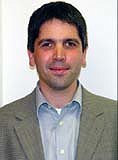
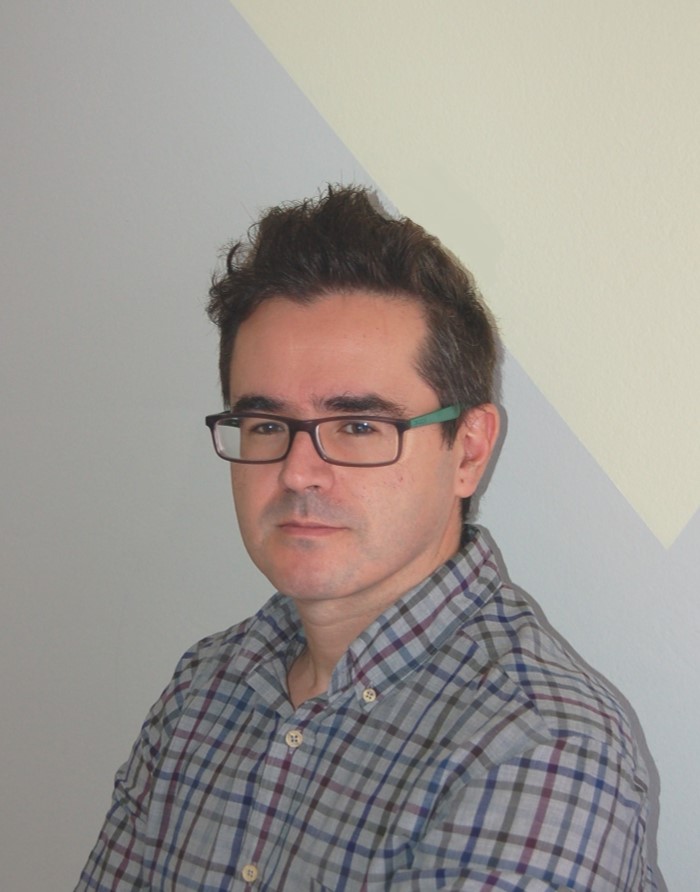
Bernhard Scholz is a Professor at the University of Sydney's School of Computer Science. His research focuses on programming languages, compilers, static analysis, and blockchain technologies, with significant contributions to Datalog optimization and smart contract security. He teaches COMP3109 Programming Languages and Paradigms and leads research in declarative programming frameworks. Scholz's primary research interests include: Development of Soufflé, a Datalog-based program analysis framework Ethereum smart contract security through tools like Ethainter and MadMax Parallel data structures for efficient Datalog evaluation Compiler optimizations for embedded systems and cloud environments His recent publications demonstrate a consistent focus on improving the efficiency and security of declarative programming systems, particularly through innovations in Datalog execution and smart contract analysis. This work bridges theoretical computer science with practical applications in blockchain and distributed systems. Scholz has secured research funding including an ARC Discovery Project on adaptive key-value stores and a Fantom Operations grant for smart contract toolchain development. He collaborates with international researchers on parallel computing and blockchain verification projects.
Panagiotis Pantazopoulos is a Senior Researcher and Technical Project Manager at the Institute of Communication and Computer Systems (ICCS) in Greece. Since 2015, he has focused on research project management and the design/analysis of Intelligent Transport Systems (ITS) applications. His work spans vehicular networks, cybersecurity, distributed machine learning, and network protocols. PhD in Computer Science (2009-2015) under Prof. Ioannis Stavrakakis (IEEE Fellow) MSc in Control and Computing from National & Kapodistrian University of Athens (2004-2009) BSc in Physics (Telecommunications major) from National & Kapodistrian University of Athens (2004) Research Interests: Connected vehicles, automated driving applications, distributed machine learning, vehicular cybersecurity, and network protocol design. His projects include HORIZON-CL3-2023 CASTOR, HORIZON-CL5-2021 CONNECT, and H2020 initiatives like Hi-Drive and TERAWAY. Recent Publications highlight edge-cloud resource allocation, federated learning, and vehicular cybersecurity. He has contributed to IEEE, Elsevier, and Springer publications, with experimental validation on 5G testbeds and cross-border datasets. Editorial Role: Associate Editor at IEEE Intelligent Vehicles Symposium since 2017.
Elias Kosmatopoulos is a Professor at the Department of Electrical and Computer Engineering, Democritus University of Thrace, with a focus on Applied Automatic Control. He has held academic positions at Technical University of Crete and University of Victoria (Canada), and served as Research Assistant Professor at the University of Southern California. His career spans over 25 years, with expertise in large-scale systems and control engineering. BEng, Production and Management Engineering, Technical University of Crete MEng, Electrical & Computer Engineering, Technical University of Crete PhD, Electrical & Computer Engineering, Technical University of Crete His research interests include robot swarms , intelligent transportation systems , and building energy consumption control . He has contributed to over 45 journal papers and 100 conference papers. Recent projects include PLUG-N-HARVEST (energy harvesting systems) and ROBORDER (autonomous border surveillance robots). Publications highlight adaptive control of electric vehicle fleets smart thermostatic load zoning multi-robot path planning underwater system exploration co-simulation for nonlinear systems He has received institutional recognition and collaborated with NASA, the European Commission, and defense agencies on advanced control systems applications.
Nikolaos Papanikolaou serves as Professor in the Department of Electrical & Computer Engineering at Democritus University of Thrace (DUTH), a position held since 2013. His expertise centers on Power Electronics applications for renewable energy integration, distributed generation, electrified transport systems, and power quality enhancement. He founded the PEL@DUTH research group, now recognized as a leading Power Electronics hub in Southeastern Europe, and maintains active collaborations with Greek industry, EU institutions, and Chinese research entities. Education: Diploma in Electrical Engineering & Computer Technology, University of Patras (1998) PhD in Electrical Engineering & Computer Technology, University of Patras (2002) Research Focus: Professor Papanikolaou's work addresses critical challenges in modern power systems through advanced power converter designs. His research spans renewable energy integration (particularly photovoltaics and wind), electric vehicle charging infrastructure, energy-saving industrial motor drives, and grid stability solutions for high-penetration distributed generation scenarios. Current projects emphasize real-world applications like smart waste management systems and photovoltaic innovation. Publication Trends: Recent work demonstrates concentrated efforts in anti-islanding techniques for microgrids, wireless power transfer systems, and bidirectional converters for industrial efficiency. His publications consistently address grid resilience under weak conditions and high renewable penetration, reflecting industry-relevant solutions for sustainable energy transition. Scientific Recognition: IEEE Senior Member (2010) and IEEE Fellow Inclusion in Stanford University's Top 2% Scientists Worldwide list Member of editorial boards for Elsevier, Springer, CPSS, and MDPI journals Leadership & Funding: He has secured and managed multiple competitive research grants including EU Horizon 2020 projects, national initiatives like 'RESEARCH – CREATE – INNOVATE', and industry partnerships (e.g., Nik. Dasteridis S.A.). His role as Scientific Manager spans projects from thermoelectric cooling systems to smart photovoltaic elements, demonstrating cross-sectoral impact. He also serves as an EU project evaluator and visiting professor for international doctoral committees. Research Infrastructure: The PEL@DUTH group under his direction operates advanced laboratories for power converter testing, renewable integration, and electric vehicle systems. Current initiatives include development of smart grid protection methods (DGRES-Pro project) and wireless power transfer solutions for distributed energy sources.
Emmanuel Varvarigos is a Professor at the School of Electrical and Computer Engineering of the National Technical University of Athens (NTUA), where he directs the High Speed Communication Networks Laboratory (HSCNL). He holds a B.E. from NTUA (1988) and a Ph.D. from MIT (1992). His career includes roles as Assistant/Associate Professor at UCSB (1992–1998), Associate Professor at TU Delft (1998–1999), and Professor at the University of Patras (1999–2015). He has led major research initiatives, including directorships at the Greek School Network and EAIT/ICT-Diofantos. His research focuses on optical networks, smart grids, cloud computing, and network algorithms. Education: B.E. in Electrical & Computer Engineering, NTUA (1988) Ph.D. in Electrical Engineering & Computer Science, MIT (1992) His research interests span optical networking (flexible OFDM, elastic bandwidth), smart grid optimization, cloud-edge computing, and distributed system protocols. He has authored over 450 publications and led 35+ EU projects, including coordinations of H2020 initiatives like ORCHESTRA and FLEXGRID. Awards include the Vinton Hayes Award and NSF recognition. Current roles include HSCNL directorship, overseeing 5 postdocs and 10+ PhD students. His HSCNL lab addresses challenges in high-speed networks, data centers, and energy grids, collaborating globally on projects like ORCHESTRA (optical networks) and SOCIALENERGY (smart grids).
Eirini Liotou is an Assistant Professor at the Department of Informatics and Telematics, Harokopio University, within the School of Digital Technology. She holds a PhD from the National and Kapodistrian University of Athens (2017), with postdoctoral research funded by the State Scholarship Foundation (ΙΚΥ) from 2019–2021. Her academic career includes adjunct teaching roles at the National and Kapodistrian University of Athens, Hellenic Open University, and Business College of Athens. She has extensive industry experience as a Senior Software Engineer at Siemens and as a Project Manager/Researcher in EU projects like 5G-IANA and XGain. Education: PhD: Quality of Experience in Mobile Networks (NTUA, 2017) MSc: Communications & Signal Processing (Imperial College London, 2012) MSc: Informatics & Telecommunications (NTUA, 2011) Diploma: Electrical & Computer Engineering (National Technical University of Athens, 2006) Research Interests: Focuses on 5G/6G networks, Software-Defined Networking (SDN), Quality of Experience (QoE), and automotive networking. Her work addresses challenges in network virtualization, edge computing, federated learning, and vehicular communications. She has contributed to projects like CASPER and SMART-NRG, emphasizing user-centric service provisioning and network orchestration. Publications: Over 25 peer-reviewed papers spanning SDN applications, QoE management, and vehicular networks. Recent trends include federated learning for cellular networks, edge computing in automotive systems, and QoE-driven network optimization. Awards: Post-doctoral Research Scholarship (ΙΚΥ, 2019–2021) Grants & Projects: Deputy Coordinator: 5G-IANA (EU 5G PPP Phase 3.VI) Deputy Coordinator: XGain (Horizon 2021) Senior Researcher: Marie Curie projects CASPER and CROSSFIRE Labs/Teams: Active in the Communication Networks Laboratory (NTUA) and the I-SENSE group at ICCS. Leads research in intelligent automotive networking and edge-cloud continuum applications.
Dimitrios Kogias is an Adjunct Lecturer and Senior Researcher at the Department of Electrical & Electronics Engineering, University of West Attica, Greece. He is affiliated with the CoNSeRT Research Lab, contributing to national and EU-funded projects like TRILLION, STORM, and FASTER HORIZON-2020. His expertise spans blockchain technology, cloud integration, IoT security, and privacy in networked environments. He holds a Ph.D. from the National and Kapodistrian University of Athens (2010), focusing on information dissemination algorithms in unstructured networks. Education Ph.D., National and Kapodistrian University of Athens (2010) M.Sc. in Electronics and Radioelectrology (2004) Diploma in Physics (2001) Research Interests His work emphasizes blockchain applications in next-gen networks, secure IoT systems, edge cloud performance, and decentralized identity management. He has co-authored publications in international journals, conferences, and book chapters, with a focus on practical implementations in smart cities, emergency response, and educational technologies. His projects include OPTORER (dynamic routing services) and MORSE (deep learning for search-and-rescue operations). Grants & Projects Contributed to HORIZON-2020 projects FASTER (emergency response tools) and STORM (cultural heritage IoT). Led research in OPTORER and DESMOS (smart infrastructure security). Collaborated on TRILLION (citizen security services) and Climate Change Communication initiatives. Labs & Teams Primary affiliation with CoNSeRT Lab at UniWA. Active in DESMOS and FASTER consortia, focusing on smart infrastructure and emergency response ecosystems.
Costas Kalogiros is a Researcher at the Department of Informatics, Athens University of Economics and Business (AUEB). His work focuses on Technology Impact Assessment, Network Economics, and Trustworthiness Evaluation in socio-technical systems. He holds a PhD in Computer Science (AUEB, 2009), an M.Sc. in Information Systems (AUEB, 2003), and a B.Sc. in Computer Science (AUEB, 2002). His research integrates game theory, optimization, and economic models to address challenges in energy systems, smart grids, and internet architectures. He has contributed to major research projects such as NOBEL GRID (2015–2018), OPTET (2012–2015), and ETICS (2010–2012), focusing on business model evaluation, trustworthiness frameworks, and future internet design. His work emphasizes socioeconomic analysis, demand response optimization, and security protocols. Notable achievements include developing methodologies for cost-effective demand response campaigns and frameworks for end-to-end trustworthiness evaluation. He has also analyzed routing protocols and incentive mechanisms in VoIP systems through collaborations with institutions like GRNET and FP7 projects. His publications span journals, conferences, and books, addressing topics such as energy profitability, trust dynamics, and future internet tussles. His research bridges theoretical models with practical implementations, impacting both academic discourse and industry practices.
Professor Eleni Miliou-Barsaki is a biologist specializing in Applied Hydrobiology at the Agricultural University of Athens (AUA), where she holds the rank of Professor in the Department of Animal Production Science. She directs the Laboratory of Applied Hydrobiology (LAB/LAH) and leads WP4: Joint Research within the European University EU-CONEXUS initiative. Her research focuses on aquatic organism physiology, sustainable aquaculture, and pollutant toxicity effects. She has coordinated multiple research projects and published extensively on topics like marine biochemistry, fish health, and molecular identification of species. Education: BSc (1981), MSc (1984), PhD (1990) in Hydrobiology and Aquaculture. Roles: Departmental instructor, lab director, project coordinator for EU-funded initiatives. Her research interests span growth dynamics, stress responses, and aquaculture sustainability. Recent work includes studies on IMTA systems, molecular authentication of seafood, and environmental toxin impacts. She actively contributes to advancing aquaculture practices through interdisciplinary projects. Grants and projects include leadership roles in five major research programs and participation in seven others. Her lab investigates biofilm dynamics, fish nutrition, and genetic markers for species identification. Future work emphasizes sustainable aquaculture innovations and ecological conservation strategies.
Bouras Christos is a Professor in the Department of Computer Engineering at the University of Patras , focusing on advanced research and teaching in computer science and telecommunications. His work spans both theoretical foundations and practical applications. Network Performance Analysis 5G/6G Communication Systems Machine Learning for Network Optimization IoT and Telematics His recent research emphasizes 5G network optimization , with publications on beamforming techniques, resource allocation algorithms, and energy efficiency in MIMO and DUDe architectures. Key subtopics include: Deep learning for user allocation Game theory-based resource management IoT latency reduction Adaptive beamforming Network slicing optimization Techno-economic modeling He contributes to the academic community through leadership in the Division of Applications and Foundations of Computer Science, which includes laboratories focused on distributed systems, combinatorial algorithms, and machine learning applications.
Dimitrios Dechouniotis is an Assistant Professor at the Department of Electrical and Computer Engineering within the School of Electrical and Computer Engineering at the University of Patras . His career spans roles in academia, research institutions, and public administration. 2004: Diploma in Electrical Engineering (University of Patras) 2006: MSc in Automation Systems (NTUA) 2014: PhD in Electrical and Computer Engineering (University of Patras) His research focuses on Systems & Control Theory , Cyber-Physical Systems , Robotics , Cloud Computing , and 5G Communications . Recent publications highlight work in edge computing , network slicing , and resource orchestration for IoT and robotics applications. He has participated in over 10 national and European research projects related to telecommunications and Industry 4.0. His technical contributions include frameworks for edge-cloud continuum orchestration , blockchain-based slice orchestration , and energy-aware resource allocation , with a strong emphasis on system modeling and control-theoretic approaches. Contact: dechouniotis@uop.gr | Office: Building Z, 2nd Floor
Arjun Guha is an Associate Professor at Northeastern University's Khoury College of Computer Sciences, where he also serves as the Area Chair for Software. He conducts research in programming languages with a focus on program synthesis for low-resource programming languages and understanding how computer science education is impacted by large language models. His work spans multiple domains including WebAssembly, software-defined networking, and serverless computing. Guha's research interests center around programming language design, implementation, and application. He has made significant contributions to understanding JavaScript through formal semantics (LambdaJS), developing functional reactive programming for web applications (Flapjax), and creating tools for software-defined networks (NetKAT, Frenetic). His recent work focuses on leveraging large language models for code generation in specialized programming languages and understanding their impact on programming education. His publications reveal a strong trend toward applying AI and machine learning techniques to programming language problems, particularly in code generation and understanding. The research spans from foundational programming language theory to practical applications in education and software development tools, with increasing focus on the intersection of programming languages and large language models. Guha has received several prestigious awards including the OOPSLA Most Influential Paper Award in 2019 for his work on Flapjax, an ACM SIGPLAN Research Highlight for his work on NetKAT, and a Best Student Paper Award. His research has been recognized for its foundational contributions to programming language theory and practical impact on software development. OOPSLA Most Influential Paper Award (2019) for Flapjax ACM SIGPLAN Research Highlight for A Fast Compiler for NetKAT Best Student Paper Award for Flapjax paper Guha advises numerous PhD, MS, and undergraduate students, with several alumni now at leading tech companies and academic institutions. His research has been supported by the National Science Foundation, the Department of Energy, the Office of Naval Research, and industry partners including Google, JPMorgan Chase, MathWorks, Meta, Oracle, and Roblox. He leads the Programming Research Laboratory at Northeastern and is actively involved in major research collaborations like the BigCode Project. Guha is a member of the Programming Research Laboratory at Northeastern and leads several major research initiatives including the BigCode Project's evaluation working group. His lab develops practical software systems like MultiPL-E (a polyglot benchmark for Code LLMs) and WasmFX (bringing effect handlers to WebAssembly), with applications in education, software development, and high-performance computing.
Dr. Georgios Kokosalakis serves as Assistant Professor at the School of Business and Economics, American College of Greece (ACG), and Executive Director of the Center of Excellence in Logistics, Shipping and Transportation (CoELST). He maintains dual academic roles as Senior Research Associate at University of Patras' Civil Engineering Department and Educational Counselor at MIT, while also directing industry ventures through Proteus Marine Ltd. His academic credentials include: Science Doctorate in Civil and Environmental Engineering, MIT (2006) Master of Science in Civil and Environmental Engineering, MIT (2000) Diploma in Civil Engineering (Structural Division), National Technical University of Athens (1998) Dr. Kokosalakis' research centers on Maritime Systems and Environmental Protection, with emphasis on operational efficiency, energy conservation, and emissions control in shipping logistics. His interdisciplinary approach integrates large data analytics, systems modeling, and sensor technology to develop practical solutions for sustainable maritime operations while addressing environmental pollution challenges. Recent publications (2019-2021) reveal dual research trajectories: maritime-focused work on energy efficiency impacts on container ship valuation, regulatory responses in shipping, and pandemic effects on second-hand markets; and civil engineering contributions to water distribution network optimization through probabilistic modeling of minimum night flow and real losses. This cross-disciplinary pattern demonstrates his ability to transfer methodologies between maritime and infrastructure domains. His scientific recognition includes: Schoettler Fellowship Award from MIT (2002-2003) Technical Chamber of Greece Best Thesis Award (1998) Exceptional Student Performance Awards (1995-1997) Active grant funding supports his research through projects with Athens Water Supply Company (2021), Greece's Center for Renewable Energy Sources (2020), and Hellenic Foundation for Research Innovation (2019). His industry experience as a shipowner and Proteus Marine Ltd Director provides practical grounding for academic work, though specific student supervision details aren't documented in available materials. The Center of Excellence in Logistics, Shipping and Transportation (CoELST) functions as his primary research ecosystem, facilitating collaborations between ACG, University of Patras, MIT, and maritime industry partners to advance sustainable transportation solutions through integrated engineering and business perspectives.