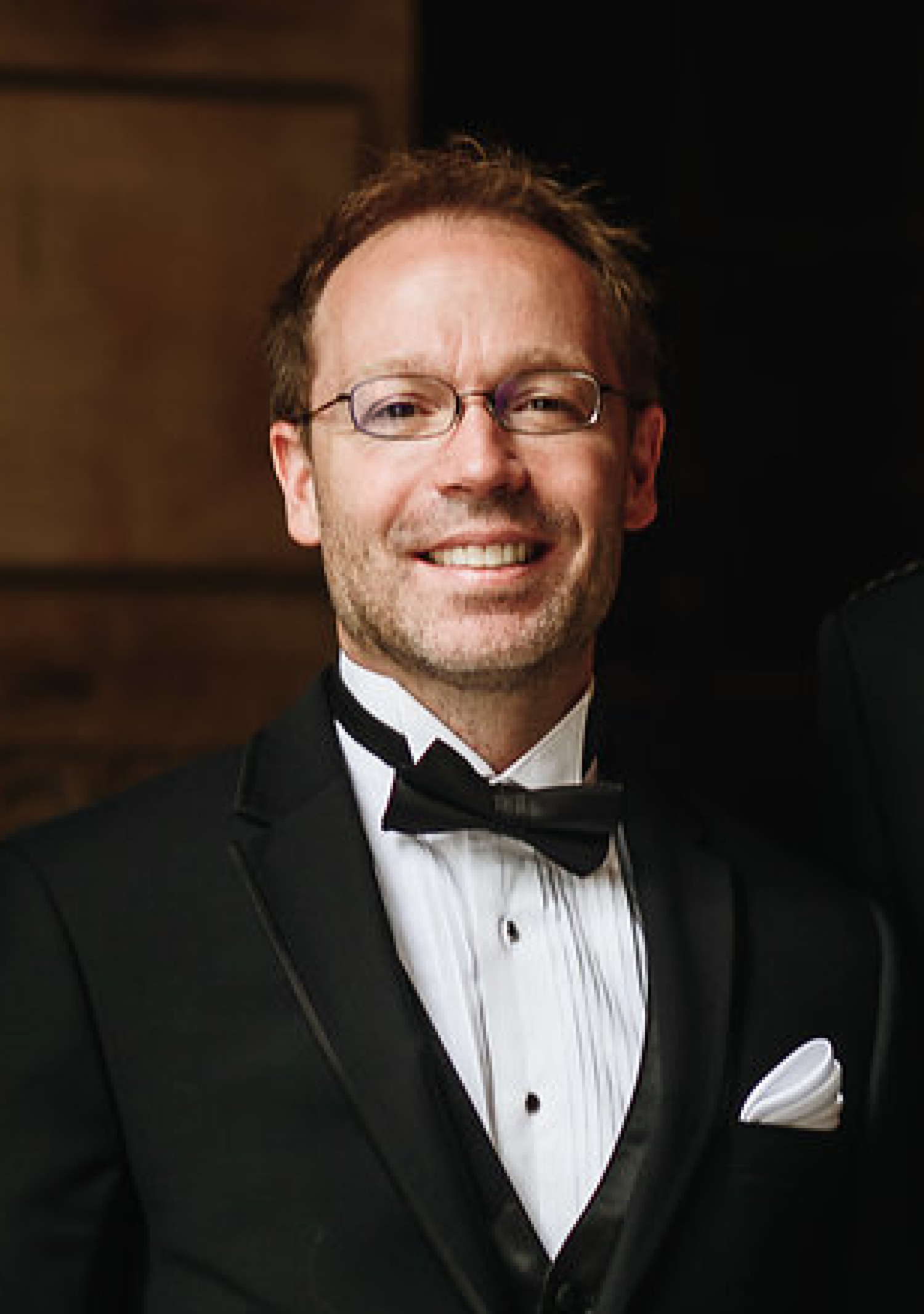
Dr. Hua Mao is an Assistant Professor in Computer and Information Sciences at Northumbria University, holding a PhD in Computing Science from Aalborg University. Previously served as Associate Professor at Sichuan University, China. Research Focus: Specializes in deep learning and artificial intelligence with applications spanning graph representation, multiview clustering, and explainable AI systems. Recent work advances techniques for processing incomplete data and invariant representation learning. Publication Trends: Her 45+ research outputs demonstrate consistent innovation in machine learning fundamentals, particularly graph-based algorithms and interpretable models. Recent articles focus on explainability frameworks and adaptive learning techniques for complex data structures including IP analytics and flood mapping applications.
Dr. Gregorio López López is an Associate Professor at the School of Engineering (ICAI) of Universidad Pontificia Comillas and a member of the Institute for Research in Technology (IIT). His research focuses on Smart and Sustainable Grids, Intelligent Systems, and Bioengineering. He holds a PhD in Telecommunications Engineering from Universidad Carlos III de Madrid (2014), recognized with the Extraordinary PhD Dissertation Award and CISCO-COIT Prize. Education: PhD in Telecommunications Engineering (UC3M, 2014), MSc and BSc in similar fields. His research interests include M2M communications optimization, IoT cybersecurity, and smart grid technologies. He has led over 17 national/EU projects including eFORT and InteGrid. His work spans 64 conference papers and 31 journal publications. Key awards: CISCO-COIT Prize (2015), Extraordinary PhD Award (2015), Deloitte Prize (2021), Lyntia Prize (2022). He advises 4 PhD students, teaches telecommunications subjects, and contributes to cybersecurity initiatives like the RAYUELA project. His lab focuses on integrating cybersecurity with smart grid systems and youth tech safety.
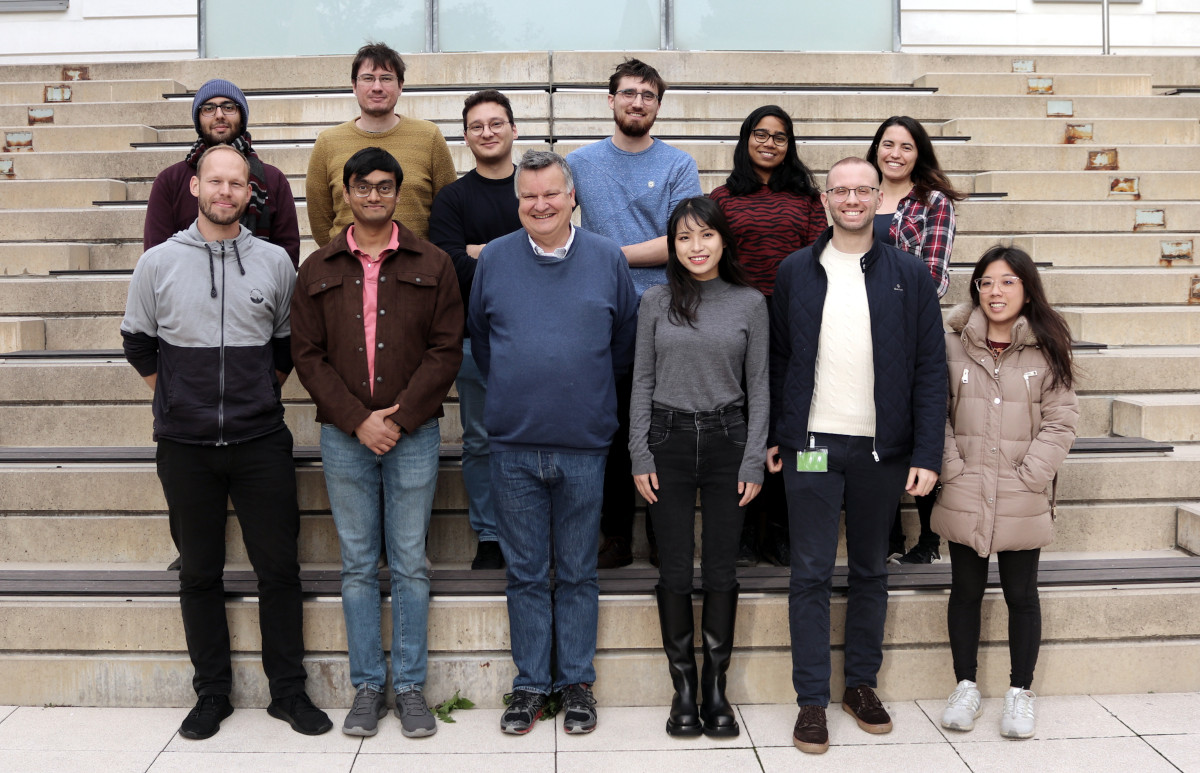
Tom Henzinger is a Professor at the Institute of Science and Technology Austria (ISTA), leading the Tom Henzinger Group. His research focuses on formal methods to enhance software quality, addressing challenges in concurrent systems, real-time and embedded systems, quantum computing, neural networks, and biochemical reaction networks. He has advised numerous PhD students and postdoctoral researchers, contributing to advancements in these fields. His work emphasizes mathematical rigor in software analysis and verification. Current projects include VAMOS (Middleware for best-effort third-party monitoring) and SPyCoDe (Semantic and Cryptographic Foundations of Security and Privacy by Compositional Design). Past projects involved model checking and runtime verification techniques. Research interests span concurrent software synthesis, quantitative modeling of reactive systems, predictability of real-time systems, and formal methods applied to quantum computation and neural networks. He is also engaged in exploring hardware-optimal solutions for quantum algorithms. Administrative Assistant Ksenja Harpprecht supports the group. Courses taught include 'Formalisms Every Computer Scientist Should Know,' focusing on logics, automata, and semantics. The group hosts regular seminars, such as the Tuesday group seminar and the Wednesday joint formal methods seminar with TU Wien's FORSYTE group.
Darshika G. Perera is an Assistant Professor in the Department of Electrical and Computer Engineering at the University of Colorado Colorado Springs (UCCS). Her research focuses on FPGA-based hardware acceleration, neuromorphic computing, and embedded systems optimization with applications in machine learning, cryptography, and battery management systems. She holds a PhD and has extensive experience in designing reconfigurable architectures for compute-intensive tasks. Her work bridges theoretical algorithms with practical hardware implementations, emphasizing efficiency and real-time performance. Key research areas include FPGA design methodologies, neuromorphic hardware for AI applications, and embedded systems security. She has published widely on topics such as hardware-software co-design for edge computing, optimization algorithms for genomics, and blockchain applications in healthcare IoT. Her contributions also span data mining hardware accelerators and dynamic reconfiguration techniques for cryptographic systems. Dr. Perera’s work is characterized by interdisciplinary collaborations, combining principles from electrical engineering, computer science, and applied mathematics. She is committed to advancing next-generation edge-computing platforms through innovative architectures and methodologies.
Timo Weidl is a Professor and Chair of Analysis and Mathematical Physics at the University of Stuttgart's Institute of Analysis, Dynamics, and Modeling. His research focuses on spectral analysis of differential operators, particularly in quantum mechanics, with applications to eigenvalue inequalities and operator theory. He has authored or co-authored influential works on Lieb-Thirring inequalities, Hardy inequalities, and spectral estimates in various geometric settings. His academic roles include teaching advanced mathematics courses (e.g., Höhere Mathematik 1/2 for physics and engineering students) and supervising graduate research. He contributed to the Ari Laptev anniversary volume on partial differential equations and spectral theory. His research spans topics like trapped modes in elastic plates, magnetic field effects in spectral gaps, and semiclassical bounds in quantum systems. Weidl’s work bridges pure mathematics and mathematical physics, addressing foundational questions in operator theory and their implications for physical systems. His recent outputs emphasize refining spectral inequalities and exploring geometric influences on eigenvalue distributions.
J. Sean Humbert is a Professor at the University of Colorado Boulder, holding a courtesy appointment in the College of Engineering and Applied Science (AES). He serves as Director of the Robotics Program and Faculty Director for the Aerospace and Defense Western Colorado University Partnership Program. His research focuses on bio-inspired robotics, autonomous systems, and advanced control methodologies. Key research areas include flight dynamics, bio-inspired perception, micro-robotics, and soft robotics. He leads the Robotics and Systems Design group, affiliated with the Hypersonic Vehicles IRT. His work integrates bio-mimetic principles with engineering challenges, emphasizing robust control in unstructured environments. Recent publications span topics like soft robotic actuators, distributed sensing, and neural dynamics in robotics. His lab develops cutting-edge technologies for subterranean exploration, UAV navigation, and bio-inspired sensor systems. Collaborations include industry partnerships and interdisciplinary projects at the intersection of robotics, biology, and control theory. Awards and recognitions are not explicitly mentioned in the provided texts. Sean Humbert’s lab is located at ECES 1B14, with an office in ECES 146. His academic contributions bridge theory and application, addressing real-world challenges in autonomous systems and robotics innovation.
Professor Risteski Aleksandar holds a Ph.D. in Telecommunications and has been a faculty member at the Faculty of Electrical Engineering and Information Technologies, University Ss. Cyril and Methodius, since 1996. He currently serves as a Professor and has held roles including Vice-Dean for Science and International Cooperation (2008–2016). His research focuses on telecommunications, cybersecurity, blockchain applications in education, and IoT security. He has extensive industry experience, including internships at IBM T.J. Watson Research Center in the U.S. Education: Ph.D. in Telecommunications (2001–2004) M.Sc. in Telecommunications (1997–2000) Dipl. Ing. in Electronics and Telecommunications (1991–1996) Research Interests: Blockchain technology for academic credential verification Cybersecurity in tactical communication systems IoT energy efficiency and reliability Network intrusion detection using deep learning Anti-forgery systems using AI and blockchain Publications Trends: Over 50 publications since 2000, with recent focus on blockchain applications in education, cybersecurity frameworks for 5G networks, and IoT energy optimization. His work bridges theoretical advancements with practical implementations in telecommunication infrastructure. Awards: No specific awards listed, though his contributions to blockchain-based educational systems and cybersecurity research are notable. Advising & Grants: No listed students, but active in research projects funded by industry partnerships. Collaborations include IBM Research and initiatives in Macedonia's telecommunication sector. Labs/Teams: Affiliated with the Institute of Telecommunications at his faculty, focusing on network security and emerging technologies.
Moharram Challenger is a tenure-track Assistant Professor in the Department of Computer Science at the University of Antwerp's Faculty of Sciences. Previously, he served as an assistant professor at Ege University (2017-2018) and as a post-doctoral researcher at the University of Antwerp (2019-2020) working on Flanders Make projects PACo and DTDesign. His academic journey includes R&D leadership roles at UNIT IT Ltd. (2012-2016), post-doctoral research at Wageningen University (2016-2017), and tenure-track faculty positions at IAU-Shabestar University (2005-2009). His research spans Cyber-physical Systems , Multi-agent Systems , and Domain-specific Modeling Languages , with recent publications focusing on quantum machine learning, digital twinning, and IoT optimization. Key projects include ITEA ModelWriter, ITEA Assume, and Flanders Make initiatives. His work demonstrates strong integration of model-driven engineering with emerging technologies like quantum computing and reinforcement learning. Challenger actively contributes to the academic community as a member of IEEE and ACM . His publication record shows consistent output across top venues, with 2025 featuring significant work in quantum-enhanced learning and CPS security. Current research emphasizes practical applications in drone energy modeling, medical diagnostics, and industrial IoT systems. His advising activities focus on cyber-physical systems and agent-based modeling, supported by grants from TUBITAK and Flanders Innovation & Entrepreneurship. Key collaborations include European ITEA projects and partnerships with industrial entities through UNIT IT Ltd. Challenger maintains active development through GitHub repositories related to code refactoring, model-driven engineering, and legacy system modernization, reflecting his commitment to practical software engineering solutions.
Marina Knittel is an Assistant Professor of Computer Science at Reed College in the Division of Mathematical and Natural Sciences, starting Spring 2025. She currently serves as a postdoctoral researcher at UC San Diego working with Profs. Barna Saha and Sanjoy Dasgupta on graph algorithms. She holds a PhD from the University of Maryland (2023) and a BS in Mathematics and Computer Science from Harvey Mudd College. Her research focuses on graph algorithm theory with applications spanning fairness in machine learning, mechanism design, and massively parallel computation. She explores interdisciplinary connections between computer science, economics, and biology, particularly how computational problems increasingly require cross-domain expertise. Knittel's publication portfolio demonstrates consistent focus on scalable algorithms for massive datasets, with recent work emphasizing fairness in clustering and hierarchical methods. Her articles frequently appear in top theoretical computer science venues and show sophisticated mathematical approaches to practical computational problems.
Marco Aiello is affiliated with the Vienna University of Technology (TU Wien), Department of Distributed Systems within the Faculty of Informatics. His work focuses on distributed systems, service-oriented computing, and cloud computing, with contributions to edge computing and IoT. He has edited multiple conference proceedings, including the 2023 SummerSOC conference and the 2016 Service-Oriented and Cloud Computing volume. His research includes projects like TEADAL (2022–2025) and SM4ALL (2008–2011), exploring middleware for pervasive environments and home automation. Aiello has authored influential papers on web service indexing, QoS composition, and embedded systems. He received the 2006 Web Service Challenge award for his indexing work. Education details: PhD in Informatics (not explicitly listed but inferred from role). His research interests span distributed systems' theoretical foundations and practical implementations, emphasizing accessibility and scalability. Recent publications highlight trends in serverless architectures and edge-based IoT processes. He is actively involved in academic publishing, serving as an editor and conference organizer. Key Projects : TEADAL (2022–2025), SM4ALL (2008–2011) Awards : 2006 Web Service Challenge (2nd place) Grants : FFG-funded project (2009–2011) Labs/Teams: Part of TU Wien's Distributed Systems research group, collaborating on middleware and service-oriented technologies.
Dwight Makaroff is a Professor in the Department of Computer Science at the University of Saskatchewan . He leads the DISCUS research group , focusing on distributed systems, networking, and performance analysis. Makaroff holds a Ph.D. from the University of British Columbia (1998), an M.Sc. (1988), and a B.Comm. (1985) from the University of Saskatchewan. Research Interests: Distributed Data Processing & Hadoop Network Support for Multiplayer Games Information-Centric Networking Energy Efficiency in Mobile Devices Multicore Architectures Wireless Network Security Sensor Networks & Data Aggregation Teaching: Courses include Operating Systems Principles , Topics in Parallel & Distributed Systems , and advanced systems courses. He coordinated the ACM ICPC programming contest teams for over a decade. Committees: Graduate Committee Chair (2013-2015) University Council Member (2006-2014) Program Committee roles at IEEE/ACM conferences (IPCCC, CASCON, etc.) Recent Research Highlights: IoT security via blockchain Wearable device communication challenges Caching strategies for information-centric networks
Alexandre Mercat is an Assistant Professor in the Department of Computer Engineering at Tampere University, within the Faculty of Information Technology and Communication Sciences. His research focuses on video coding, energy-efficient encoding, and real-time multimedia systems. He leads projects on open-source video encoders and standards, including contributions to HEVC, VVC, and V-PCC technologies. His work emphasizes machine learning integration, low-power hardware optimizations, and scalable distributed encoding frameworks. Key technical interests include improving video compression efficiency through algorithmic innovations, developing open-source tools like the UVG dataset and Kvazaar encoder, and addressing challenges in volumetric video communication and 3D point cloud encoding. His research spans theoretical algorithm design to practical implementations, with applications in virtual reality, live streaming, and edge computing. Recent projects include real-time saliency-guided video coding frameworks, energy reduction techniques for HDR streaming, and multi-layer VVC coding schemes for hybrid machine-human consumption. He also explores FPGA acceleration and parallelization strategies for distributed video encoding systems. No scientific awards are explicitly mentioned in the provided texts. While no formal advisees are listed, his research group likely involves students through open-source development and collaborative projects. His work integrates closely with industry standards bodies and open-source communities, emphasizing reproducible evaluation frameworks and end-to-end software tools.
Abdelhakim HAFID is a Full Professor at the University of Montreal , affiliated with the Faculty of Arts and Science and the Department of Computer Science and Operations Research . He leads the LRC — Laboratoire de recherche en réseaux de communication and is a member of several research centers including CIRRELT (interuniversity research center on enterprise networks, logistics, and transportation), the Cyberjustice Lab , and talents (AI for cybersecurity lab). His research focuses on Blockchain security , IoT , edge and fog computing , intelligent transport systems , and network resource management . He has supervised over 30 graduate students and led/co-led numerous research projects funded by agencies like NSERC , FRQNT , and MITACS . Notable projects include Blockchain Evolution: Quantum-Resistant Security (2025–2031) and Design and Management of Fog Networks (2019–2026). His work spans vehicular networks , mobile cloud computing , and machine learning for network optimization . He actively contributes to cybersecurity initiatives, including IoT authentication frameworks and AI-driven solutions for judicial systems (e.g., Cyberjustice ). Key Projects : Quantum-Resistant Blockchain Security (2025–2031) IoT Authentication via Blockchain and Intelligent SIM (2022–2026) Fog Network Design (2019–2026) Grants : NSERC Discovery Grants MITACS Acceleration Fellowships FRQNT Team Research Grants His lab collaborations include CIRRELT (logistics & transport) and Cyberjustice (digital law), reflecting interdisciplinary strengths in both technical and societal domains.
Professor Sang-Woo Jun is a leading researcher in systems and software for big data analytics, focusing on FPGA-based hardware acceleration and non-volatile memory (NVM) storage. His work spans applications such as graph analytics and bioinformatics, with a strong emphasis on cost-effective, high-performance computing architectures. He advises PhD students like Shengquan Ni and Yicong Huang, both of whom have achieved notable milestones (e.g., thesis defense, fellowship awards). Research Interests: Hardware Acceleration for Big Data FPGA-Based System Architectures Non-Volatile Memory Systems Graph Analytics and Bioinformatics Edge Computing and Low-Power Systems Recent Contributions: His articles highlight innovations in edge accelerators (e.g., IceSpy, Eciton), genomics acceleration (Bancroft), and scalable graph processing (Durin, Sting). These works emphasize reconfigurable systems, privacy-preserving techniques, and energy-efficient designs. Lab & Team: As part of the Intelligent Systems Group (ISG), he collaborates on events like the Southern California Database Day. His research bridges hardware-software co-design with real-world applications in IoT, environmental monitoring, and genomics.
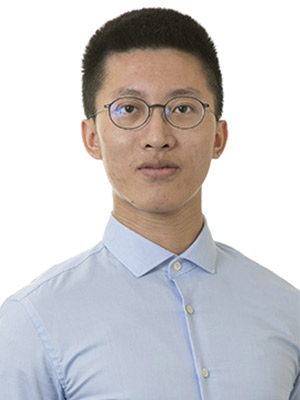
Dr. Yan Li is an Assistant Professor in the Department of Industrial and Systems Engineering at Texas A&M University. He earned his Ph.D. in Operations Research from Georgia Institute of Technology (2024), advised by George Lan and co-advised by Tuo Zhao, with collaborations involving Anton Kleywegt and Alexander Shapiro. His research focuses on the computational perspective of learning optimal decisions from data, emphasizing first-order methods and their applications in data science. B.S. in Mathematics and Applied Mathematics & B.B.A. in Accounting, Nankai University (2016) M.S. in Statistics, Georgia Institute of Technology (2018) Ph.D. in Operations Research, Georgia Institute of Technology (2024) Dr. Li’s research interests span dynamic optimization (Markov decision processes, reinforcement learning), robust/risk-averse optimization, minimax optimization, and optimization for machine learning. His work addresses computation- and sample-efficient algorithms, distributional ambiguity in dynamic optimization, and gradient-based methods for ML applications. Industry collaborations include Meta (ads ranking optimization) and Bytedance (deep retrieval models), with ongoing projects in urban transportation and recommendation systems. His publications include 15 recent articles on policy optimization, stochastic minimax methods, and implicit regularization in reinforcement learning. Awards include the Alice and John Jarvis Ph.D. Student Research Award, The Margaret and Stephen Kendrick Research Excellence Award, and the ISyE Outstanding Graduate Student Instructor Award. Teaching accolades highlight his clarity, passion, and accessibility in courses like ISEN 310 (Uncertainty Modeling) and ISEN 320 (Operations Research I). Peer reviewer for journals like Mathematical Programming and conferences including ICML and NeurIPS Industry partnerships with Ford (multi-agent RL) and Meta (embedding learning) Active in optimization communities (INFORMS, MOPTA)