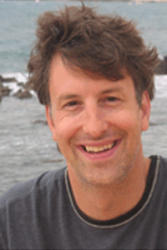
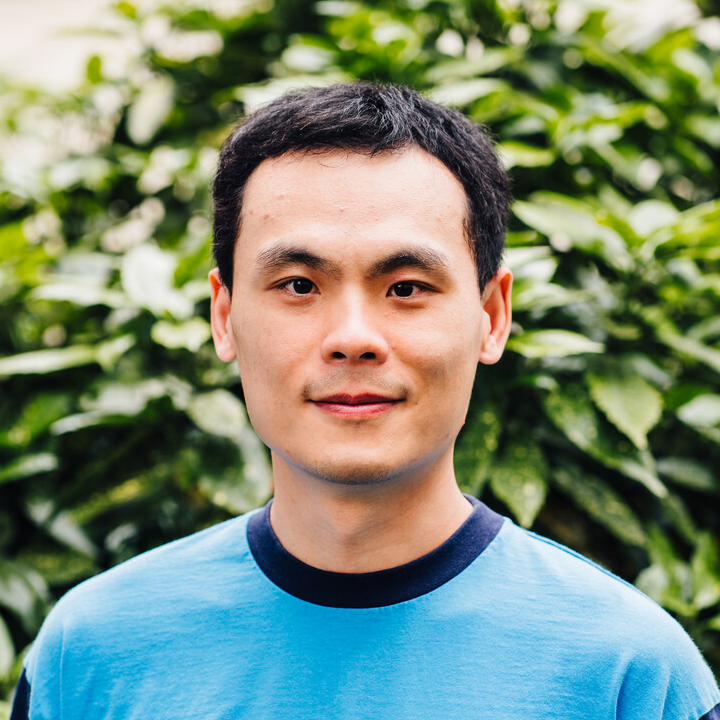
Prof. Dr.-Ing. Richard Membarth is a Research Professor for System-on-a-Chip and AI at the Edge Computing at Technische Hochschule Ingolstadt (THI). He is affiliated with the Hardware-Software Co-Design group and holds a secondary position at the German Research Center for Artificial Intelligence (DFKI) Saarbrücken. Co-creator of DSL frameworks like AnyDSL and Hipacc Key contributor to MetaDL (AI metaprogramming) and PRIME (predictive rendering) His research bridges GPU computing , domain-specific languages , and compiler technology , with recent work on Vulkan SPIR-V compilation and device-driven SpMV algorithms . Notable awards include the HiPEAC Paper Award (2018) and multiple Best Paper Awards for his compiler frameworks.
Giorgia Ramponi is an Assistant Professor with Tenure Track at the Faculty of Business, Economics and Informatics at the University of Zurich. She is also an affiliated professor at the ETH AI Center and the Data Science and AI, Computer Science and Engineering department at Chalmers University of Technology. Her educational background includes a Ph.D. in Information Technology from Politecnico di Milano (completed June 2021 with honors), advised by Marcello Restelli, and a Master of Science in Computer Science with Honours Programme (110/110 cum laude) from la Sapienza (July 2017), advised by Flavio Chierichetti and Alessandro Panconesi. Dr. Ramponi's research focuses on machine learning and mathematical modeling, with particular emphasis on reinforcement learning and multiagent learning. Her work bridges theoretical foundations with practical applications, exploring how learning algorithms can make optimal decisions in complex environments. She has made significant contributions to areas including inverse reinforcement learning, multi-agent systems, constrained Markov decision processes, and human-AI interaction through preference learning. Her recent publications demonstrate a strong trend toward addressing fundamental challenges in reinforcement learning, particularly in multi-agent settings, constrained optimization, and learning from human feedback. Her work combines theoretical rigor with practical applications across robotics, economics, and decision-making systems. Hassler Research Grant for "Unified Feedback Integration Framework for Reinforcement Learning" Dr. Ramponi actively contributes to the academic community through conference participation, invited lectures (including at the Mediterranean Machine Learning Summer School), and teaching. She designed and taught the "Data Science and Machine Learning" course for the ETH-Ashesi Master program. She is also a member of the ELLIS community, which connects excellence in AI research across Europe. Her research group focuses on developing frameworks for reinforcement learning with various feedback types, including preferences, rewards, and demonstrations. The group aims to advance the theoretical understanding of learning algorithms while addressing practical challenges in real-world applications.
Rodrigo Rico Bini is a Senior Lecturer at La Trobe University's Rural Health School, where he leads the Discipline of Exercise Science & Physiology and coordinates the Bachelor of Exercise Science program. His research focuses on quantitative analysis of human movement to improve athletic performance and reduce injury risks, specializing in cycling and running biomechanics using motion capture, force measurements, and AI modeling. He holds editorial positions at multiple sports science journals including Journal of Science and Cycling and Sports Biomechanics . His professional affiliations include the Holsworth Biomedical Research Centre and AUT-SPRINZ research institute. Dr. Bini's educational background includes a PhD in Biomechanics from Auckland University of Technology (2009-2011), an MSc from UFRGS Brazil (2006-2008), and a BPhEd from UFRGS (2000-2005). His research demonstrates consistent focus on sports biomechanics applications, with recent work exploring AI-driven motion analysis, equipment ergonomics, and active transportation health impacts. Key thematic trends include technological validation studies (wearables, neural networks), injury prevention strategies, and performance optimization across cycling, running, and occupational activities. Fellow of the International Society of Biomechanics in Sport Mid Career Research Award 2024 - La Trobe Rural Health School Certificate of Excellence in Reviewing: Physical Therapy in Sport AUT Laptop Scholarship First place, II Biofenac Brazilian Award for Exercise Science Dr. Bini supervises graduate students and leads industry collaborations, including an Australia Post-funded project on cycling biomechanics in postal delivery. He directs biomechanics research through the Holsworth Biomedical Research Centre and maintains international partnerships with institutions in New Zealand and Brazil.
Stefan Kowalewski serves as Professor of Embedded Software at RWTH Aachen University, leading the Chair of Embedded Software (Informatik 11) within the Department of Computer Science. His research spans critical domains including medical cyber-physical systems, automotive software, and industrial automation, with over 150 publications demonstrating sustained scholarly impact. Professor Kowalewski's work focuses on three interconnected research pillars: Embedded Systems Verification: Pioneering model checking techniques for PLC code, particularly addressing state space challenges in GRAFCET-based specifications Medical Cyber-Physical Systems: Developing safety-critical software for mechanical ventilation, extracorporeal membrane oxygenation, and ARDS diagnosis systems with strong clinical collaborations Automotive Software: Creating verification frameworks and safety architectures for automated vehicles through projects like UNICARagil Recent publications reveal an increasing integration of AI techniques with traditional verification methods, particularly for medical applications involving neonatal care and critical respiratory support. His 2024-2025 work shows particular emphasis on timing isolation in vehicle communication systems, middleware performance evaluation, and robust AI models for medical diagnosis. Professor Kowalewski maintains active collaborations with RWTH Aachen University Hospital's medical departments and automotive industry partners. His laboratory operates specialized facilities including the Cyber-Physical Mobility Lab for vehicle research and in-vivo testing setups for medical device validation. He has supervised numerous doctoral candidates, with recent students focusing on topics like ARDS classification algorithms, GRAFCET verification techniques, and safety architectures for software-defined vehicles. His educational contributions include developing remote teaching platforms for cyber-physical systems education.
Sebastian Trimpe is a Full Professor and Head of the Institute for Data Science in Mechanical Engineering at RWTH Aachen University, concurrently serving as Co-Executive Director of the RWTH Center for Artificial Intelligence since 2023. Previously, he led a Max Planck Research Group at the Max Planck Institute for Intelligent Systems from 2018 to 2022. His educational background includes: Ph.D. in Dynamic Systems and Control from ETH Zurich (2013) Dipl.-Ing. (M.Sc.) in Electrical Engineering from TU Hamburg (2007) MBA in Technology Management from TU Hamburg (2007) B.Sc. in General Engineering from TU Hamburg (2005) Professor Trimpe's research integrates machine learning with control theory to address safety and efficiency challenges in autonomous systems. His work spans theoretical frameworks for robust decision-making under uncertainty and practical implementations in robotics, with particular emphasis on event-triggered control, distributed systems, and data-efficient learning methodologies. Key contributions include novel approaches to safe reinforcement learning and model predictive control with guaranteed stability. Analysis of his recent publications reveals a pronounced focus on bridging machine learning with control engineering, especially in safety-critical robotics applications. Common themes include distribution-aware learning for medical diagnostics, diffusion-based control approximation, and hardware-in-the-loop validation of theoretical frameworks, demonstrating strong alignment between algorithmic innovation and real-world deployment. His scientific achievements have been recognized with prestigious honors: IFAC World Congress Interactive Paper Prize (2011) Klaus Tschira Award for public understanding of science (2014) Best Paper Award at International Conference on Cyber-Physical Systems (2019) Future Prize by Ewald Marquardt Stiftung (2020) As institutional leader, he directs the Institute for Data Science in Mechanical Engineering and co-leads the RWTH AI Center, overseeing strategic research initiatives and industry collaborations. His academic service includes editorial roles for IEEE Control Systems Society conferences and participation in the Cluster of Excellence 'Internet of Production'. The Institute for Data Science in Mechanical Engineering operates as a multidisciplinary hub where fundamental research in learning-based control meets industrial applications. Current projects focus on drone swarm coordination, deformable object manipulation, and medical diagnostics systems, leveraging both simulation environments and physical testbeds like the Mini Wheelbot platform.
Li Zhongfei is a Chair Professor and Vice Dean of the School of Business at Southern University of Science and Technology (SUSTech). He is a member of the State Council's Discipline Review Group, National Outstanding Young Scientist, National Model Teacher, and recipient of the State Council's Special Government Allowance. His career spans roles as Distinguished Professor at Lingnan College, Executive Dean at Sun Yat-sen University, and leadership positions in academic societies such as the Chinese Society for Systems Engineering. Education : PhD in Management (1997-2000) and Master's in Operations Management (1988-1990) from the Chinese Academy of Sciences, and a Bachelor of Science in Mathematics from Lanzhou University. Research Interests : His work focuses on Technological Finance Green Finance Pension Finance Financial Engineering and Risk Management Insurance and Actuarial Science with applications to financial markets, digital finance, and sustainability. Scientific Trends from his publications include: ESG rating impacts on capital markets Green innovation under carbon pricing Machine learning in cryptocurrency forecasting Robust portfolio optimization under uncertainty Climate risk and policy analysis Post-pandemic economic recovery and systemic risk Scientific Awards : Recipient of the National Teaching Achievement Award, Guangdong Province Philosophy and Social Sciences prizes, Zhong Jiaqing Operations Research Award, and recognition as a Top 2% Scientist (Stanford, 2023). He was honored as a National Model Teacher and 'Top Ten Most Respected Business School Deans in China.' Grants & Projects : Principal investigator in NSFC key projects, including 'Intelligent Investment and Risk Management under Dual Carbon Strategy' and 'Financial Innovation and Risk Management.' His projects address fintech, pension funds, and climate risk. Labs & Teams : Leads advanced research teams in SUSTech's School of Business and collaborates with international institutions like the University of Waterloo and Hong Kong Polytechnic University.
Anna Korba is an Assistant Professor at École Polytechnique, specifically affiliated with ENSAE/CREST in the Statistics Department since September 2020. She is also a co-administrator of the Master Data Science program at École Polytechnique. Her academic journey has positioned her as a leading researcher in machine learning, with particular expertise in kernel methods, optimal transport, and statistical optimization. Dr. Korba received her PhD from Telecom ParisTech in 2018 under the supervision of Prof. Stephan Clémençon. Prior to her current position, she was a postdoctoral researcher at University College London's Gatsby Computational Neuroscience Unit working with Arthur Gretton from December 2018 to August 2020. Her academic foundation includes a Master's degree in Machine Learning and Computer Vision (MVA) from ENS Cachan and ENSAE in 2015. Anna Korba's research primarily focuses on machine learning with emphasis on kernel methods, optimal transport, optimization, particle systems, and preference learning. Her work bridges theoretical statistics with practical machine learning applications, particularly in developing novel sampling and optimization methods. She has made significant contributions to understanding Wasserstein gradient flows, density ratio estimation, and variational inference techniques. Her publication record demonstrates a strong trajectory in top-tier machine learning conferences including ICML, NeurIPS, AISTATS, and ICLR. Her research shows a clear evolution from foundational work on ranking and preference learning during her PhD to more recent contributions in Wasserstein-based optimization, sampling methods, and deep probabilistic modeling. The interdisciplinary nature of her work connects statistics, optimization theory, and practical machine learning applications. Top 10% Oral Presentation at AISTATS 2022 Top 15% Long Oral Presentation at ICML 2021 She actively mentors PhD students and postdoctoral researchers, currently advising seven PhD candidates and having successfully guided several alumni to prestigious positions. Dr. Korba also contributes to the academic community through her role in administering the Master Data Science program and collaborating with researchers across institutions worldwide. As part of the CREST research center, Dr. Korba works within a vibrant team of researchers focused on statistics, machine learning, and their applications to economic and social sciences. Her research group includes current PhD students and postdocs working on various aspects of her research interests, creating a dynamic environment for advancing the field of statistical machine learning.
Massimo Franceschetti is a Professor in the Department of Electrical and Computer Engineering at the University of California, San Diego (UCSD), with faculty affiliation at Calit2. His research spans mathematical engineering, focusing on control, communication, computation, and sensing, particularly in complex networks and systems. He integrates tools from statistical physics, wave propagation, and information theory to analyze and design networked systems. Born in Naples, Italy, he studied at the University of Naples Federico II and the University of Edinburgh (European exchange program), graduating in 1997. He earned his M.Sc. (1999) and PhD (2003) from Caltech, where he received the Walker von Brimer Award and the C.H. Wiltz Prize for outstanding research and thesis. After postdoctoral work at UC Berkeley (2003-2004), he joined UCSD as faculty and held visiting positions at Vrije Universiteit Amsterdam, EPFL (Switzerland), and the University of Trento (Italy). He became an IEEE Fellow in 2018 and was nominated a Guggenheim Fellow in 2019. His research includes networked control systems , stochastic geometry , electromagnetic information theory , and social dynamical systems . Recent work explores non-invasive emotional contagion in social networks, quantum limits on information entropy, and the physics of wave propagation. His publications bridge information theory , machine learning , and network science , often applying percolation theory and random walks to explain scaling laws and wireless signal behavior. Scientific accolades include the S.A. Schelkunoff Transactions Prize , IEEE Communications Society Best Tutorial Paper Award , and the IEEE Ruberti Young Researcher Prize . He co-authored two books: Random Networks for Communication (2007) and Wave Theory of Information (2018). His students have pursued careers in academia (e.g., IIT-Bombay, Notre Dame) and industry (e.g., Google, IBM, Tesla). He teaches courses on network science , information theory , and control systems , emphasizing data-driven analysis and the physical foundations of communication. His group’s work impacts cyber-physical systems , quantum network coding , and epidemic modeling on networks .
Thuy T. Le is a Professor of Electrical Engineering at San Jose State University's College of Engineering. With a distinguished career spanning several decades, he teaches graduate and undergraduate courses in digital system design, computer architecture, microprocessor systems, and related fields. His academic journey began with earning B.S., M.S., and Ph.D. degrees from the University of California, Berkeley. Professor Le's research interests encompass a broad spectrum of cutting-edge technological domains. His primary focus areas include System-on-Chip (SoC) and Embedded System Design, Hardware Accelerators for complex algorithms, Quantum Computing, implementation of Probability theory and Monte Carlo simulation, and radiation effects on electronic devices and systems. His work bridges traditional electrical engineering with emerging computational paradigms, demonstrating a consistent ability to adapt to evolving technological landscapes while maintaining strong foundations in core engineering principles. Analysis of Professor Le's publication record reveals a consistent trajectory from nuclear reactor physics and computational methods toward modern hardware acceleration and quantum computing. His early work focused on nuclear reactor simulation and radiation shielding, then evolved to parallel computing and distributed systems, and has recently centered on hardware acceleration for complex algorithms, quantum computing applications, and AI hardware. This progression demonstrates his ability to transition between major technological paradigms while maintaining expertise in computational methods and hardware implementation. Professor Le has demonstrated significant leadership in professional service, having served as keynote speaker, general chair, technical program chair, session chair, reviewer, and committee member for numerous international conferences. His service extends beyond academia through his role as Co-Founder and Advisor of the Vietnamese Strategic Ventures Network and Chairman of the Board of the United States–Vietnam Foundation. In his educational role, Professor Le has made substantial contributions to engineering curriculum development and assessment. He has taught a wide range of courses including EE271 (Advanced Digital System Design), EE210, EE250, and various project/thesis courses. His research advising spans digital system design, ASIC, SOC, and hardware accelerators. He has also collaborated with local companies on projects related to high-performance system architectures, parallel algorithms, digital arithmetic, and System-on-Chip verification.
Dawei Han serves as Professor of Hydroinformatics at the University of Bristol's School of Civil, Aerospace and Design Engineering, leveraging advanced computational techniques to address hydrological challenges. Holding a B.Eng. and M.Sc. from Huabei alongside a Ph.D. from Salford, he is recognized as a Chartered Engineer (C.Eng.) and Fellow of the Chartered Institution of Water and Environmental Management (FCIWEM). His academic credentials include: Bachelor of Engineering (B.Eng.) from Huabei Master of Science (M.Sc.) from Huabei Doctor of Philosophy (Ph.D.) from University of Salford Professor Han's research focuses on integrating hydroinformatics with practical water management solutions, particularly in urban environments. His work pioneers applications of machine learning for rainfall nowcasting, radar-based hydrological monitoring, and climate change impact assessment. Key innovations include DREE-RF for rainfall energy estimation and frameworks for urban flood resilience, emphasizing data-driven approaches to enhance prediction accuracy and risk mitigation strategies. Analysis of his 2024-2025 publications reveals dominant themes in urban hydrology (40%), flood risk management (30%), and climate-remote sensing integration (30%). His research spans global contexts from UK catchments to Iraqi rainfall systems, consistently employing computational methods like neural networks and WRF modeling to address data-scarce environments and extreme weather events. Professional recognition includes: Fellow of the Chartered Institution of Water and Environmental Management (FCIWEM) While specific student supervision details are unavailable, his extensive publication record indicates active mentorship in hydroinformatics. Research grants likely support his work on radar remote sensing and urban climate adaptation, though explicit funding sources aren't documented in the source material. His affiliation with Bristol's engineering school positions him within interdisciplinary teams addressing infrastructure resilience, though laboratory-specific information remains unreported.
Saleh Javadi is a Senior Lecturer at the Department of Mathematics and Natural Sciences at Blekinge Institute of Technology (BTH) in Karlskrona, Sweden. He is actively engaged in research and teaching within the field of systems engineering. His educational background includes: B.Sc. in Electrical-Control Engineering from Amirkabir University of Technology (2009) M.Sc. in Electrical, Electronic and Systems Engineering from The National University of Malaysia (2013) Ph.D. in Systems Engineering from Blekinge Institute of Technology (BTH) (2021) Saleh Javadi's research focuses on signal processing, machine learning, and computer vision , with applications spanning remote sensing, intelligent transportation systems, and AI-driven industrial optimization. His work bridges theoretical advancements with practical implementations, particularly in SAR imagery analysis, drone-based agricultural monitoring, and traffic surveillance systems. His recent publications demonstrate a strong focus on remote sensing technologies, particularly Synthetic Aperture Radar (SAR) image processing and analysis. There's a clear trend toward applying machine learning techniques to solve complex problems in aerial and satellite imagery, traffic monitoring, and agricultural applications. His research shows interdisciplinary connections between computer vision, signal processing, and practical engineering applications. Saleh Javadi has received significant recognition for his innovative work: Innovator of the Year award (SKAPA – Innovation Prize in Memory of Alfred Nobel) in Blekinge for innovative efforts in optimizing and reducing energy consumption in industries by using artificial intelligence ÅForsk Entrepreneur's prize at the Swedish Innovation Council Day – Swedish Incubators & Science Park's annual conference in May 2019 Dr. Javadi is involved in practical applications of his research through projects such as "Artificiell intelligens AI kan reducera ogräsfrön i utsäde" (ongoing) and "Bekämpa Renkavle med hjälp av drönare och Artificiell Intelligens (AI)" (completed). His work demonstrates a strong commitment to translating academic research into real-world solutions that address industrial and environmental challenges. His research appears to be conducted within a collaborative framework, working with colleagues on drone technology, SAR image analysis, and AI applications across multiple domains including agriculture, maritime monitoring, and transportation systems.
Jukka K Nurminen is a Professor of Computer Science at the University of Helsinki (since 2019) and a Research Professor at VTT. He leads the Empirical Software Engineering research group and supervises doctoral students in the Doctoral Programme in Computer Science. His career spans academia and industry, including roles as Adjunct Professor at Aalto University (part-time, 2016-2021) and Principal Scientist at VTT (2016-2019). His research focuses on efficient software systems , particularly energy-efficient software , mobile cloud computing , and data-intensive systems . Recent work addresses AI system testing , ethical decision-making in software , and quantum computing software . His publications highlight trends in quantum algorithms , machine learning for edge computing , and ethical AI . Best Paper Award (2023) Nurminen has supervised 6 PhD theses, 48 MSc theses, and 21 BSc theses. He has secured over 1 MEUR in research funding, including projects like FrameQ and EM4QS for quantum middleware. His teaching innovations include hackathons and summer schools, with excellence recognized in tenure-track evaluation (2018) and adjunct professorship (2015).
Bo Markussen is a Professor at the University of Copenhagen within the Department of Mathematical Sciences . He is also a member of the Data Science Laboratory , where he contributes to statistical methodology and interdisciplinary collaborations. His academic journey began with a Cand.Scient (MSc) and PhD in Statistics from the University of Copenhagen, awarded in 1998 and 2002 respectively. 2012–present: Professor, Department of Mathematical Sciences, University of Copenhagen 2009–2012: Associate Professor, Department of Basic Sciences and Environment, University of Copenhagen 2006–2009: Assistant Professor, Department of Basic Sciences and Environment, University of Copenhagen Bo Markussen's research focuses on applied statistics , particularly in functional data analysis and multiple testing corrections in genetics . His work spans diverse domains including environmental science, agriculture, and public health. Recent research output highlights applications in Arctic climate data analysis, fire risk modeling, plant stress phenotyping, and nutritional biomarker prediction. His recent publications demonstrate a strong trend toward machine learning integration with statistical modeling , addressing challenges in high-dimensional data analysis and environmental risk assessment. Collaborations span institutions in Denmark and internationally, reflecting his engagement in pan-Arctic climate studies and tropical agricultural research. 2018–present: Associate Editor, Scandinavian Journal of Statistics 2017–2019: Chair, Danish Society for Theoretical Statistics 2015–2017: Board Member, Danish Society for Theoretical Statistics As a central figure in the Data Science Laboratory , Markussen leads statistical consultancy initiatives and contributes to methodological advancements. His expertise bridges theoretical statistics with real-world applications, particularly in handling complex datasets across biological and environmental domains.
Robert Nowak holds dual distinguished professorships as the Keith and Jane Morgan Nosbusch Professor in Electrical and Computer Engineering and the Grace Wahba Professor of Data Science at the University of Wisconsin–Madison. Based at the Discovery Building (330 N Orchard Street), he leads interdisciplinary research at the Wisconsin Institute for Discovery, bridging engineering with data science applications. His academic foundation includes: BS, MS, and PhD from the University of Wisconsin–Madison Post-doctoral Fellowship at Rice University Nowak's research program spans artificial intelligence, machine learning, and optimization with dual emphases on AI-driven health applications and systems optimization. His work integrates theoretical rigor with practical implementations, particularly in large language model fine-tuning, active learning frameworks, and neural network theory. Recent publications demonstrate strong focus on improving model efficiency, humor comprehension in AI systems, and theoretical bounds for retrieval-augmented generation. Analysis of his 15 most recent publications reveals dominant trends in large language model advancement (particularly humor understanding and task diversity), theoretical neural network analysis (including sparse architectures and multi-task learning), and novel active learning methodologies for open-world scenarios. His work consistently bridges theoretical machine learning with real-world applications in health and recommendation systems. While specific named awards aren't documented in the source material, his appointment to two endowed chairs (Nosbusch and Wahba professorships) represents exceptional institutional recognition of his scholarly impact. Nowak advises graduate students in the Electrical and Computer Engineering department and secures significant research funding, including NSF grants such as CIF: Small: Advanced Understanding and Applications of Deep Learning. His group operates within the collaborative ecosystem of the Wisconsin Institute for Discovery, fostering cross-disciplinary projects that integrate AI with health sciences and engineering systems. Current projects indicate strong momentum in human-AI collaboration frameworks and optimization of language model training pipelines.
Hongkai Wen is a Professor (Chair in Machine Learning Systems) in the Department of Computer Science at the University of Warwick, UK. He holds dual appointments as a Fellow of the Alan Turing Institute (serving as Independent Scientific Advisor for BridgeAI and member of Turing Research Ethics team) and previously worked as Senior Research Scientist at Samsung AI Centre Cambridge and postdoctoral researcher at Oxford University. Education: Computer Science, Keble College, University of Oxford Research Focus: Develops intelligent multi-modal perception systems for real-world deployment with extreme computational efficiency. Core expertise spans ML systems optimization, neural architecture search, and cross-disciplinary applications in robotics, urban mobility, and wearable/IoT security. Pioneered event-based vision techniques and training-free NAS frameworks. Publication Trends: Recent work (2023-2025) demonstrates accelerating innovation in diffusion model efficiency, on-device AI deployment, and sensor fusion techniques. Dominant themes include computational resource optimization for edge devices, multi-modal temporal modeling, and privacy-preserving spatial analytics, with significant contributions to NeurIPS, ICML, and CVPR venues. Scientific Recognition: Best Paper Award, AutoML Conf 2023 (T-CET) Best Paper Runner-up, SenSys 2024 (AdaFlow) Best Paper Awards: IPSN 2014 & EWSN 2013 1st/2nd Place, Zero Cost NAS Competition (AutoML'22) Mentorship & Funding: Actively supervises PhD candidates through thesis committees at Warwick, Ulster, and Queensland universities. Secured National AI Strategy Fund for Macro Neural Architecture Search research. Recruits annually for PhD positions with scholarships from UKRI, Turing Institute, and industry partnerships. Research Leadership: Heads the AI/ML Systems (AMS) Division at Warwick, directing a 15+ member team developing deployable ML frameworks for mobile/robotic platforms. Maintains active collaborations with Samsung AI Centre and Turing Institute's BridgeAI programme on ethical AI deployment.