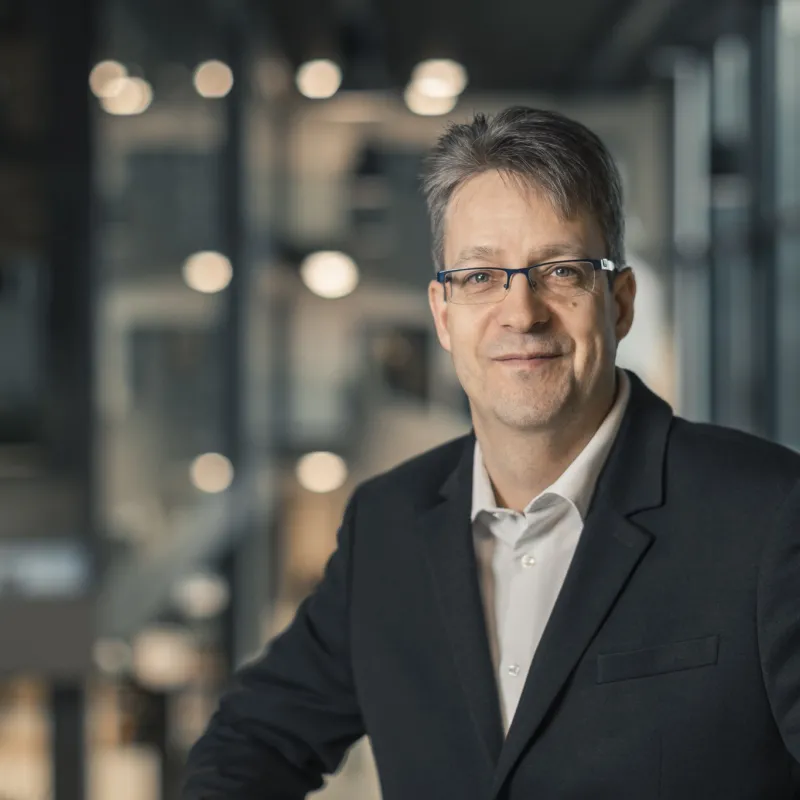
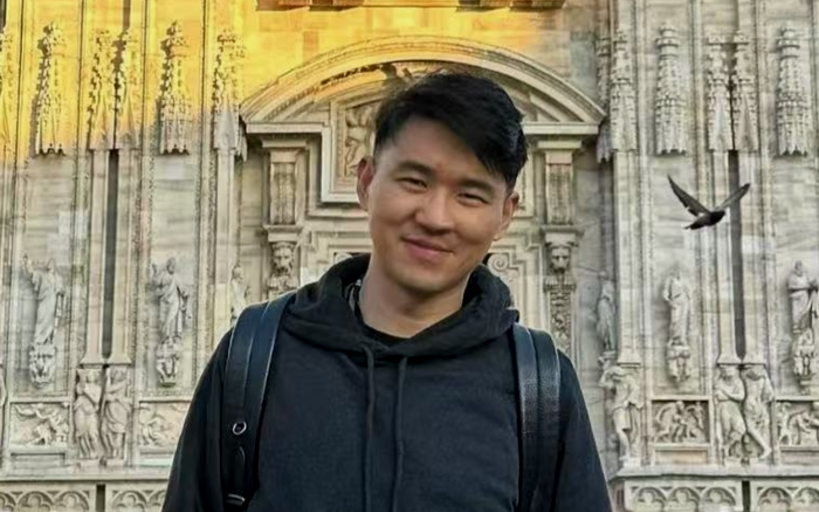
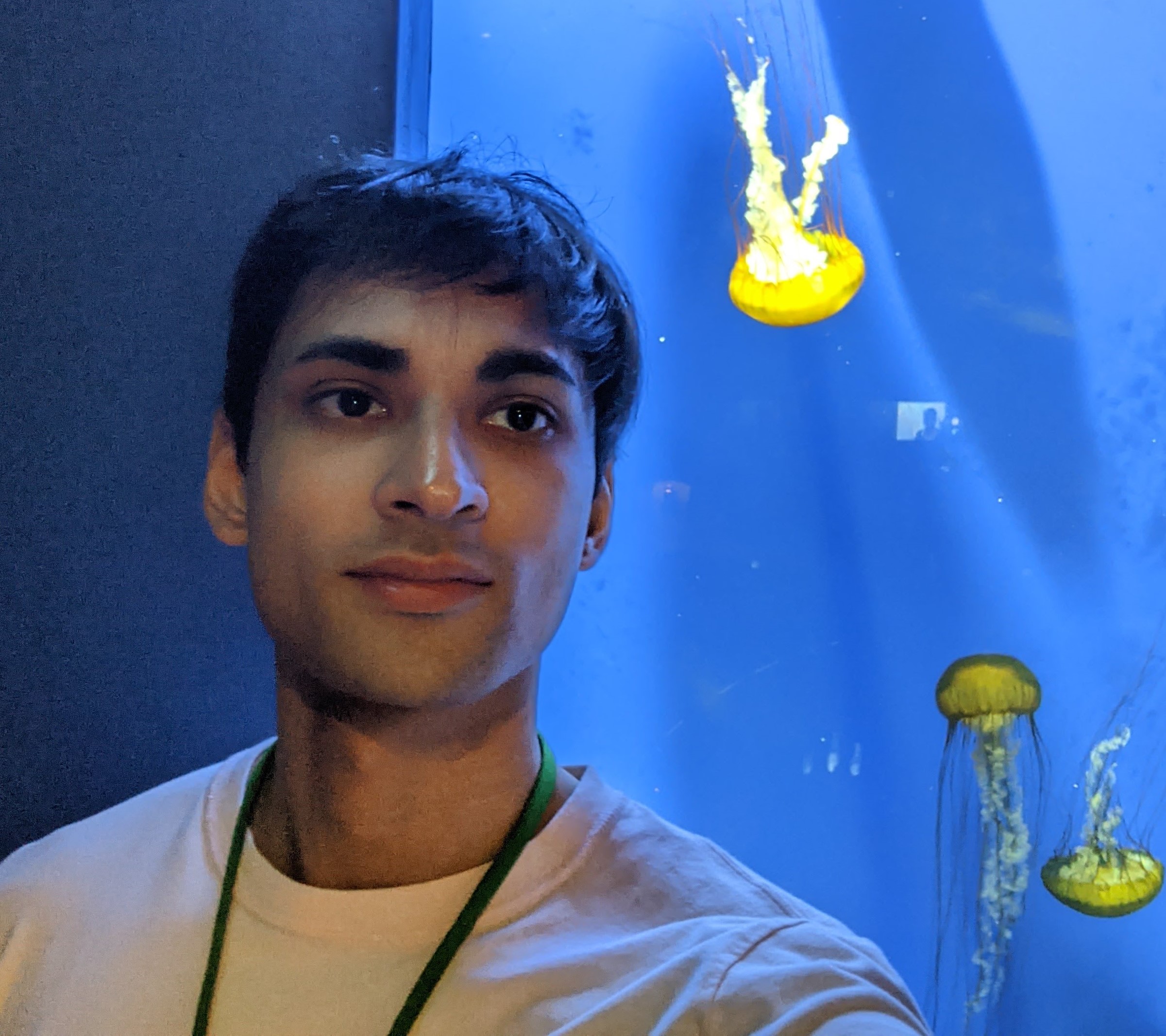
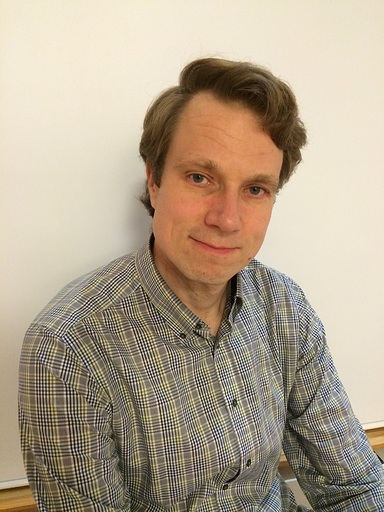
Jari Porras is a Professor of Software Engineering (specializing in Distributed Systems) at Lappeenranta-Lahti University of Technology LUT. He holds visiting professorships at Aalto University (Finland) and the University of Huddersfield (UK). His research spans distributed systems, human-computer interaction, and sustainability in ICT, with a recent focus on human and sustainability aspects of software engineering. D.Sc. (Tech) in Computer Science from LUT (1998) 500+ supervised Master’s theses and 27 examined doctoral dissertations External evaluator for 28 doctoral theses since 2000 His research interests include: Parallel and distributed computing Wireless and mobile systems Sustainable ICT Human and sustainability aspects of software engineering Wearable technology usability Big data and its organizational implications Recent publications focus on security-usability alignment, sustainability integration in software engineering, wearable technology adoption, and big data applications. He collaborates internationally and has co-authored works with researchers from multiple institutions.
Professor Mario Di Francesco is a faculty member in the Department of Computer Science at Aalto University, School of Science. He holds the academic rank of Professor and leads research in Internet of Things (IoT), wireless networking, and edge computing. His work contributes to UN Sustainable Development Goals related to innovation and infrastructure. Education: PhD in Information Engineering from the University of Pisa (2009), followed by research fellowships at Scuola Superiore Sant'Anna and adjunct faculty roles at the University of Texas at Arlington (2012-2014). Research interests include IoT systems, mobile computing, virtual reality, and distributed network architectures. He has led projects such as ASPECT (mobile video optimization), MeXICO (mobile cross-reality), and DNN-ReCoDe (edge computing for AI). Recent publications focus on VR privacy, Kubernetes security, and cloud-based network measurement frameworks. Notable awards include the Google IoT Technology Research Award (2016) and a MobileHCI Honorable Mention (2020). Active in academic service, he serves on program committees for IEEE conferences and chairs workshops in networking and pervasive computing domains. Current projects explore virtual reality systems and resource-constrained AI computation.
Tanwir Ahmad is a Project Researcher at the Department of Information Technology within the Faculty of Science and Engineering at Åbo Akademi University, Finland. His research focuses on cybersecurity, software testing methodologies, and deep learning applications for network security. With an ORCID identifier (0000-0003-3416-2422) and active research profile, he contributes to both academic and industrial cybersecurity solutions through multiple funded projects. His research expertise centers on intrusion detection systems (100% fingerprint match), early attack detection (90%), and deep learning applications in security. Key contributions include metamorphic testing frameworks for industrial control systems, explainable AI for security operations, and model-based testing integration with DevOps pipelines. His work bridges theoretical security models with practical implementation in cloud and maritime domains, emphasizing real-time detection capabilities and performance optimization. Recent publications (2023-2025) demonstrate a clear trajectory toward AI-driven security solutions, with 60% of recent work focusing on deep learning applications for network attack detection. His systematic mapping studies reveal growing interest in reinforcement learning for security testing and MLOps integration in industrial contexts. The research consistently addresses the tension between detection accuracy and computational efficiency in resource-constrained environments. Notable recognitions include: Best Paper Award (2013) for model-based testing innovations in continuous integration Best Paper Award (2024) for contributions to security testing methodologies Ahmad actively participates in major research initiatives including EU Horizon 2020 projects (VeriDevOps, MegaM@Rt2) and Business Finland collaborations (VST, N4S, PAM). His supervision portfolio includes 2 graduate students, with research spanning cybersecurity tool development and testing framework optimization. Current projects focus on virtual sea trials, DevOps security automation, and runtime model validation in industrial systems. He collaborates within Åbo Akademi's cybersecurity research cluster, working closely with Professor Truscan's team on security testing frameworks and industrial applications. His work directly supports the UN Sustainable Development Goal 9 (Industry, Innovation and Infrastructure) through secure system development practices.
Jenni Raitoharju is an Assistant Professor at the University of Jyväskylä's Faculty of Information Technology. Her research focuses on developing novel machine learning algorithms with applications in environmental studies, autonomous systems, and computer vision. Key areas include deep learning, uncertainty estimation, one-class classification, and statistical machine learning. She leads projects such as the 2024–2026 Ministry of Environment-funded study on aquatic biodiversity monitoring and a 2023 Finnish National Agency for Education project on morphotaxonomic classification. Her work bridges theoretical advancements with practical implementations, as seen in publications like Linear-Time One-Class Classification with Repeated Element-Wise Folding (2024) and AquaMonitor: A multimodal multi-view image sequence dataset (2025). She actively contributes to maritime computer vision initiatives, including organizing the 2023 MaCVi Workshop. Jenni's research also involves ecological instrumentation, such as the Riverine Organism Drift Imager (RODI) for aquatic organism studies. Her projects emphasize interdisciplinary collaboration, combining machine learning with environmental science and engineering. While no awards or grants are explicitly listed, her 17+ publications since 2011 reflect sustained academic productivity. She coordinates lab efforts focusing on AI-driven ecological monitoring and autonomous systems.
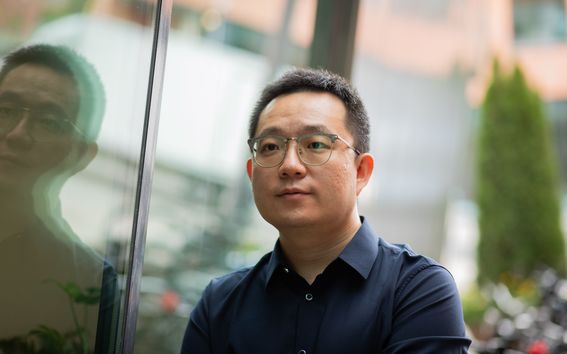
Bo Zhao is an Assistant Professor in the Department of Computer Science at Aalto University, leading the Aalto Data-Intensive System group (ADIS). His research focuses on building efficient data-intensive systems across multiple layers, from scalable machine learning systems to distributed data management systems. Research Focus: Scalable machine learning systems Distributed data processing Hardware-software co-design Quantum computing systems High-performance computing Current Projects: AthenaRL (scalable RL systems), LARA (quantum ML algorithms), FlexMoE (efficient mixture-of-experts systems). His group develops systems enabling ML deployment across hardware from quantum computers to mobile devices. Education & Career: PhD from Humboldt-Universität zu Berlin. Previously at Queen Mary University of London, Imperial College London, and Amazon Web Services. Research published in SOSP, VLDB, USENIX ATC.
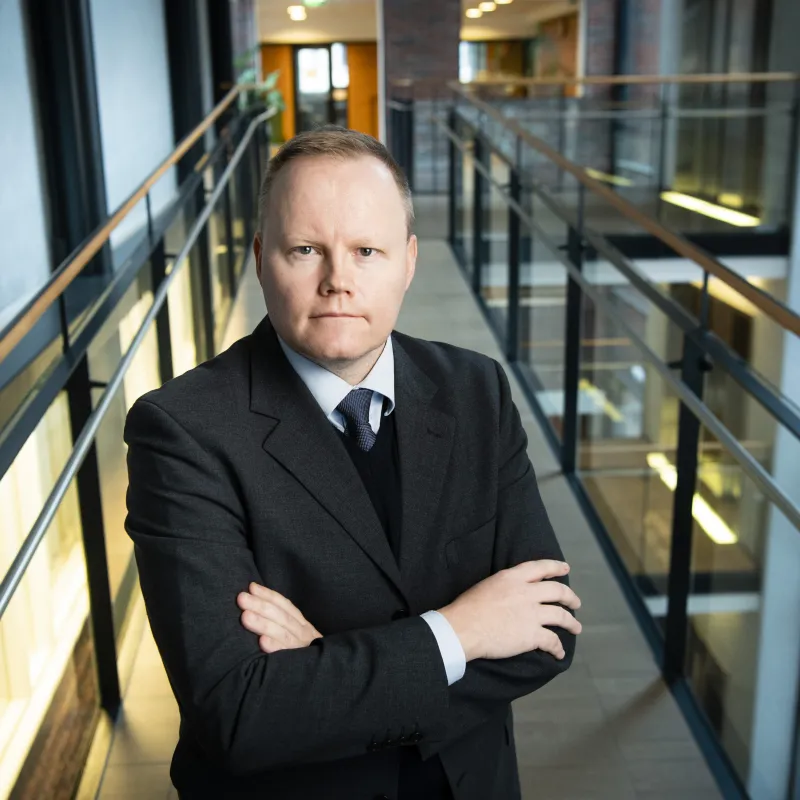
Mikael Collan is a full tenured Professor of Strategic Finance at LUT University, School of Business and Management, Finland, where he leads the Finance and Business Analytics team. He previously served as Director General of the VATT Institute for Economic Research (2021–2024) and chaired the TULANET network of Finnish state research institutes. His academic and professional roles reflect deep engagement in both academic research and public policy. Doctor of Science in Economics and Business Administration, Åbo Akademi University (2004) His research focuses on decision-making under uncertainty, particularly in investment profitability analysis and strategic decision support for real investments. Key areas include real options valuation, fuzzy logic, and the Pay-Off Method—a framework he developed for practical application of real options in industries such as mining, energy, and R&D. His interdisciplinary work bridges finance, information systems, and innovation management. He has contributed to the design of master’s programs in Strategic Finance and Business Analytics, and has extensive teaching experience in corporate finance and entrepreneurship. His recent publications highlight a strong trend in fuzzy systems, energy economics, and strategic investment analysis. Articles span topics such as patent valuation under imprecise information, renewable energy policy, electricity market regulation, and digital manufacturing. His work increasingly integrates computational intelligence with real-world business and policy challenges. Scientific affiliations and memberships include: Member, Finnish Society of Sciences and Letters (since 2015) Board member, multiple national and international SMEs Active contributor to scientific organizations in decision sciences and fuzzy systems Mikael Collan has over two decades of experience in consulting, board-level governance, and strategic management systems development. He has advised Finnish industry on business architecture, IT strategy, and process optimization. His research has been supported by collaborations with institutions across Europe and has resulted in over 110 publications, including books and high-impact journal articles. He is a recognized expert in applying advanced decision models to complex industrial and policy problems. He leads research initiatives in: Finance and Business Analytics team at LUT Development of the fuzzy pay-off method and its applications Strategic decision support systems for long-term investments
Zhengmao Li is an Assistant Professor at Aalto University's Department of Electrical Engineering and Automation. He holds a Ph.D. in Electrical Engineering from Nanyang Technological University (NTU), Singapore, and has served as a Research Fellow at Stevens Institute of Technology (2019-2021) and NTU/Singapore ETH Center (2021-2023). His research focuses on multi-energy system planning and operation, particularly in integrated power, thermal, and gas networks for microgrids, seaports, and smart buildings. Key areas include resilience enhancement via demand response, robust optimization under uncertainties, and advanced algorithms like deep reinforcement learning. Education: B.E. (Information Engineering), M.E. (Electrical Engineering) from Shandong University, China; Ph.D. (Electrical Engineering) from NTU, Singapore. Research emphasizes handling uncertainties in renewable energy, developing resilient energy systems, and applying optimization techniques such as distributionally robust stochastic methods. His work bridges theoretical advancements with practical applications in smart grids, maritime energy systems, and low-carbon industrial operations. Over 50+ peer-reviewed articles highlight his contributions to energy system resilience, multi-agent coordination, and sustainable energy technologies.
Shankar Deka is an Assistant Professor at the Department of Electrical Engineering and Automation, Aalto University, leading the Nonlinear Systems and Control research group. He is affiliated with the Finnish Center for Artificial Intelligence (FCAI). His research focuses on integrating nonlinear stability theory, optimal control, and machine learning to develop safe and robust robotic systems. Applications include telerobotic surgery, precision agriculture, and human-multirobot systems. His work explores cutting-edge topics such as Koopman operator theory for control design, adversarial attacks on neural networks, and human-in-the-loop robotics. Key contributions include advancements in convex optimization for state-constrained control, path-integral methods for system analysis, and safety-critical coordination of robotic manipulators. Recent publications highlight innovations like human-in-the-loop precision agriculture systems, robotic mirror therapy for stroke rehabilitation, and neural Lyapunov functions for nonlinear attractors. His research bridges theoretical foundations with practical applications in cyber-physical systems, medical robotics, and agricultural automation. Shankar Deka’s profile reflects a strong commitment to interdisciplinary research at the intersection of control theory, machine learning, and robotics. His work aims to create certifiably safe systems with broad societal impact.
Bilgehan Akdemir is a Doctoral Researcher at the University of Oulu within the Faculty of Information Technology and Electrical Engineering . He is affiliated with the Centre for Wireless Communications - Networks and Systems (CWC-NS) and the Wireless Medical Communications (WiMeC) research group. Educational Background : M.Sc. in Communication Engineering from Yildiz Technical University, Istanbul, Turkey (2022). His research focuses on distributed machine learning algorithms and edge computing , particularly for digital healthcare applications. Current work involves deep learning-based medical imaging data processing across distributed local-edge and cloud computing environments. Key technical domains include machine learning , artificial intelligence , wireless communications engineering , and Internet of Things . Projects : TOMOHEAD, Eware-6G. Contact : Email: bilgehan.akdemir@oulu.fi | Address: Pentti Kaiteran katu, 1, P.O. Box 4500, 90014 Oulu, Finland.
Antti Isosalo is a Postdoctoral Researcher at the Faculty of Information Technology and Electrical Engineering of the University of Oulu, Finland. He holds a Ph.D. in Medical Physics and Technology and a Master of Science (Tech.) in Information Engineering (Engineering Mathematics). Education: Ph.D. (Medical Physics and Technology), M.Sc. (Information Engineering) from University of Oulu Research interests: Deep learning Medical image analysis Pattern recognition Machine vision Breast cancer screening Distributed computing He is affiliated with the Wireless Medical Communications (WiMeC) and Medical Imaging in Diagnostics, Algorithms and Software (MIDAS) research groups. His current work focuses on AI applications in medical imaging, particularly through projects like TOMOHEAD and Tech2Heal.
Alexandros Koliousis serves as Professor of Computer Science and inaugural Faculty Director of Computing, Mathematics, Engineering & Natural Sciences at Northeastern University London, with additional affiliations as a Turing Fellow at the Alan Turing Institute, Senior Faculty Research Scientist at the Institute for Experiential AI, and affiliated faculty at Khoury College of Computer Sciences. His academic foundation includes: MSc in Advanced Computing Science (2005) from University of Glasgow PhD (2010) from University of Glasgow's School of Computing Science Professor Koliousis's research bridges computer systems and machine learning through three key thrusts: distributed deep learning systems (notably Crossbow for multi-GPU training), hybrid stream processing (Saber engine for CPU/GPU workloads), and network monitoring infrastructure (k-flows kernel module). His work addresses critical scalability and efficiency challenges in modern ML deployment. His primary recognition includes: Turing Fellowship at the UK's national institute for data science and AI As Faculty Director, he shapes academic strategy across all STEM disciplines while maintaining active research leadership. His GitHub presence (129 contributions in 2025) demonstrates ongoing engagement with open-source implementations of his research systems, which show strong community adoption with repositories accumulating over 100 stars collectively.
Antti Honkela serves as a Visitor at Aalto University's Department of Computer Science and is deeply affiliated with the Helsinki Institute for Information Technology (HIIT), a joint research institute of Aalto University and the University of Helsinki. Within HIIT, he actively contributes to the Myllymäki Petri research group and leads the Probabilistic Machine Learning research group, focusing on advanced statistical methodologies. His research centers on machine learning with rigorous emphasis on differential privacy, Bayesian statistics, and probabilistic modeling. Honkela bridges theoretical innovation with biomedical applications, particularly in drug sensitivity prediction, genomic analysis, and privacy-preserving data sharing. His work addresses critical challenges in maintaining data utility while ensuring mathematical privacy guarantees for sensitive health information. Recent publications reveal a clear trajectory from foundational privacy mechanisms (e.g., FFT-based accounting) toward efficient biomedical implementations. His 10 publications between 2016-2021 demonstrate consistent output in top venues like Nature Communications and NeurIPS, with growing emphasis on transfer learning and distributed frameworks for real-world healthcare data. Scientific recognition includes: 2001 Year-End Thesis Award from CMCM, Center for Mathematical and Computational Modeling, University of Jyväskylä While specific student counts aren't public, his active research profile suggests ongoing supervision opportunities. Funding appears sustained through HIIT's infrastructure and competitive Nordic research grants, enabling work on privacy-preserving algorithms for genomic and clinical datasets. The Probabilistic Machine Learning group provides a collaborative environment leveraging Aalto University's computational resources and HIIT's interdisciplinary network. Lab activities focus on developing theoretically sound privacy mechanisms with practical biomedical impact, particularly in drug response modeling and genomic data analysis where privacy constraints are critical.
Vesa Hirvisalo is a Senior Lecturer in the Department of Computer Science at Aalto University. His professional profile shows active involvement in research related to computing systems and artificial intelligence. Research Focus: His work primarily addresses machine learning applications in autonomous systems, real-time processing, and heterogeneous computing environments. Publications highlight expertise in deep reinforcement learning, computer vision, and industrial informatics. Recent Publication Trends: His research output demonstrates a strong focus on deep reinforcement learning for task scheduling, autonomous driving environments, and optimizing convolutional neural networks for mobile applications. Collaborations span academic and industrial domains. Professional Contact: Email: vesa.hirvisalo@aalto.fi
Kari Tammi serves as Professor and Dean of Aalto University's School of Engineering since 2015, concurrently holding the position of Chief Engineer Counselor at Finland's Administrative Supreme Court. His career spans industrial research leadership at VTT Technical Research Centre (2000-2015), postdoctoral work at North Carolina State University (2007-2008), and foundational research at CERN (1997-2000). His academic credentials include: MSc, Helsinki University of Technology, 1999 LicSc, Helsinki University of Technology, 2003 DSc, Helsinki University of Technology, 2007 Teacher’s Pedagogical Qualification, Häme University of Applied Sciences, 2017 Research Focus: Tammi pioneers in Mechatronics , Autonomous/Electric Vehicle Systems , and Energy Efficiency Optimization , with specialized expertise in Dynamics , Control Systems , and Digital Twin Applications . His work bridges theoretical innovation with industrial deployment across maritime, automotive, and manufacturing sectors. Publication Trends: Recent output (2024-2025) demonstrates concentrated advancement in industrial digital twins for crane operations, winter-condition autonomous perception, and marine energy systems. Key patterns include GPU-free real-time processing, semantic-enhanced metaverse architectures, and snow-robust sensor fusion techniques. Professional Leadership: As former VTT Team Leader and current Engineering Dean, Tammi directs cross-disciplinary research initiatives connecting academic theory with industrial practice, particularly in sustainable transportation and smart manufacturing ecosystems.
Mikael Brix serves as a post-doctoral researcher and project manager at the Research Unit of Health Sciences and Technology within the Faculty of Medicine, University of Oulu, Finland, while concurrently working as a physicist at Oulu University Hospital's Department of Diagnostics. He leads the Medical Imaging in Diagnostics, Algorithms and Software (MIDAS) research group as vice-leader. His research centers on medical imaging physics, with primary focus on X-ray detectors, computed tomography physics, and reconstruction algorithm development. He actively bridges fundamental physical phenomena research with clinical translation through industrial partnerships and diagnostic expert collaboration, increasingly leveraging artificial intelligence to enhance imaging techniques for practical healthcare applications. Analysis of his 2024-2025 publications reveals consistent innovation in CT technology, particularly photon counting detectors, metal artifact reduction, and low-dose reconstruction algorithms. His work spans cardiology, orthopedics, and forensic science applications, with notable emphasis on cost-effectiveness analysis and real-world healthcare system integration, especially within Finnish medical infrastructure. Scientific Awards: Young Investigator Award of the Radiological Society of Finland (2023) No information regarding student advising or grant funding is provided in available sources. Dr. Brix directs the MIDAS research group at University of Oulu, which develops cutting-edge medical imaging solutions, specialized algorithms, and diagnostic software tools with strong industry-academia collaboration for clinical deployment.