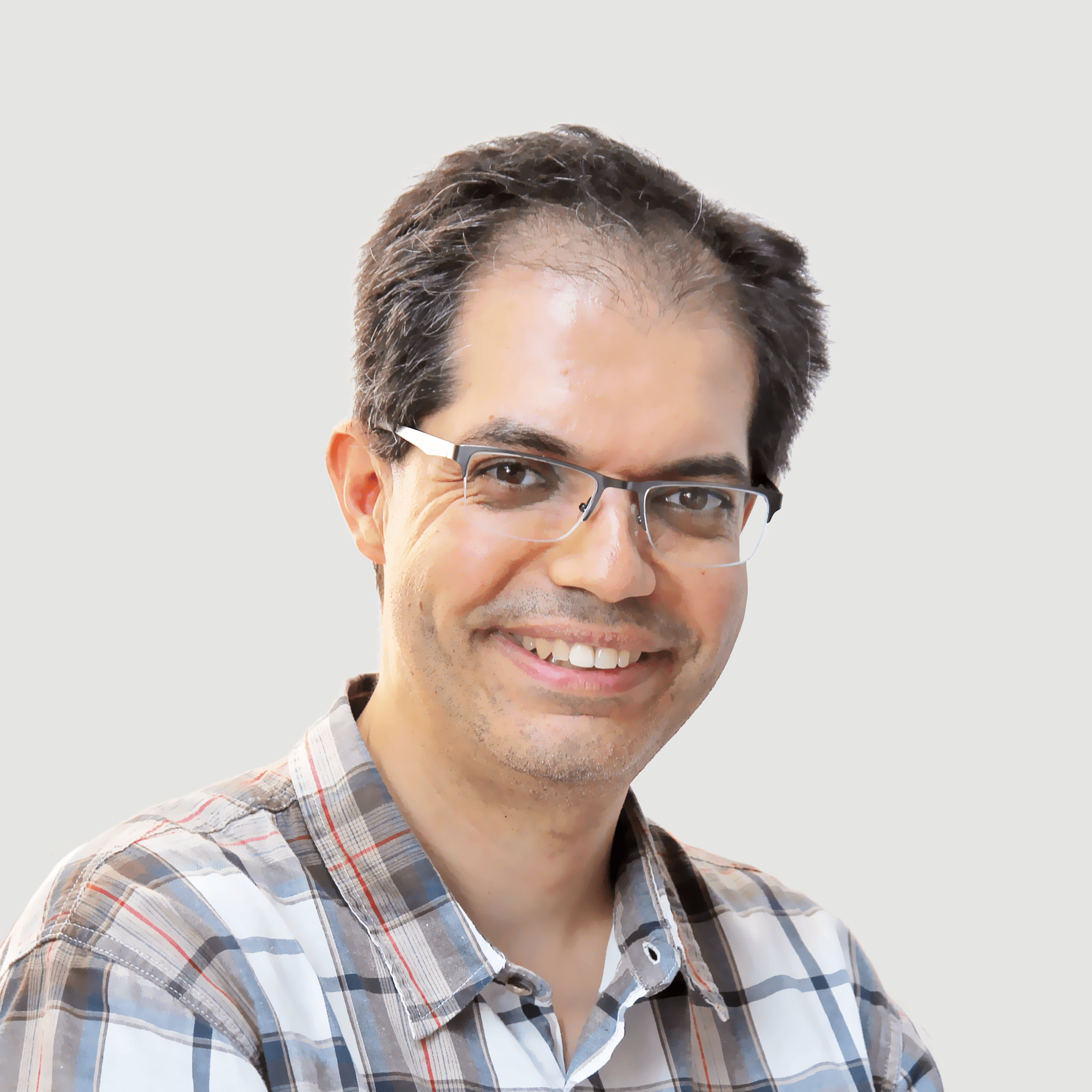
Pascal Poupart is a Professor and Canada CIFAR AI Chair at the Vector Institute, affiliated with the David R. Cheriton School of Computer Science at the University of Waterloo. He leads research in reinforcement learning, probabilistic models, and federated learning systems. Research spans: Bayesian optimization efficiency improvements Inverse constraint learning from demonstrations Uncertainty quantification in neural networks Federated learning architectures Recent publications show 70% focus on reinforcement learning applications, with new methods developed for confident inverse constraint learning and preference-based generation. Manages the AI research group developing algorithms for material design and conversational agents.
Gilbert Fridgen is Full Professor in Digital Financial Services and holder of the PayPal-FNR PEARL Chair at the University of Luxembourg's Interdisciplinary Centre for Security, Reliability and Trust (SnT). He leads the FINATRAX research group focusing on blockchain, digital identity, and sustainable digital solutions. His research explores decentralized technologies in finance, energy systems, and public administration. Current projects investigate blockchain applications in industrial demand response, NFT markets, EU digital identity wallets, and DeFi institutional adoption. Prof. Fridgen examines the intersection of technology with regulatory frameworks and user behavior in energy and financial systems. He collaborates extensively with industry partners including PayPal and Spuerkeess. Prof. Fridgen actively contributes to EU digital policy discussions, particularly regarding the European Digital Identity Wallet framework and decentralized finance governance.
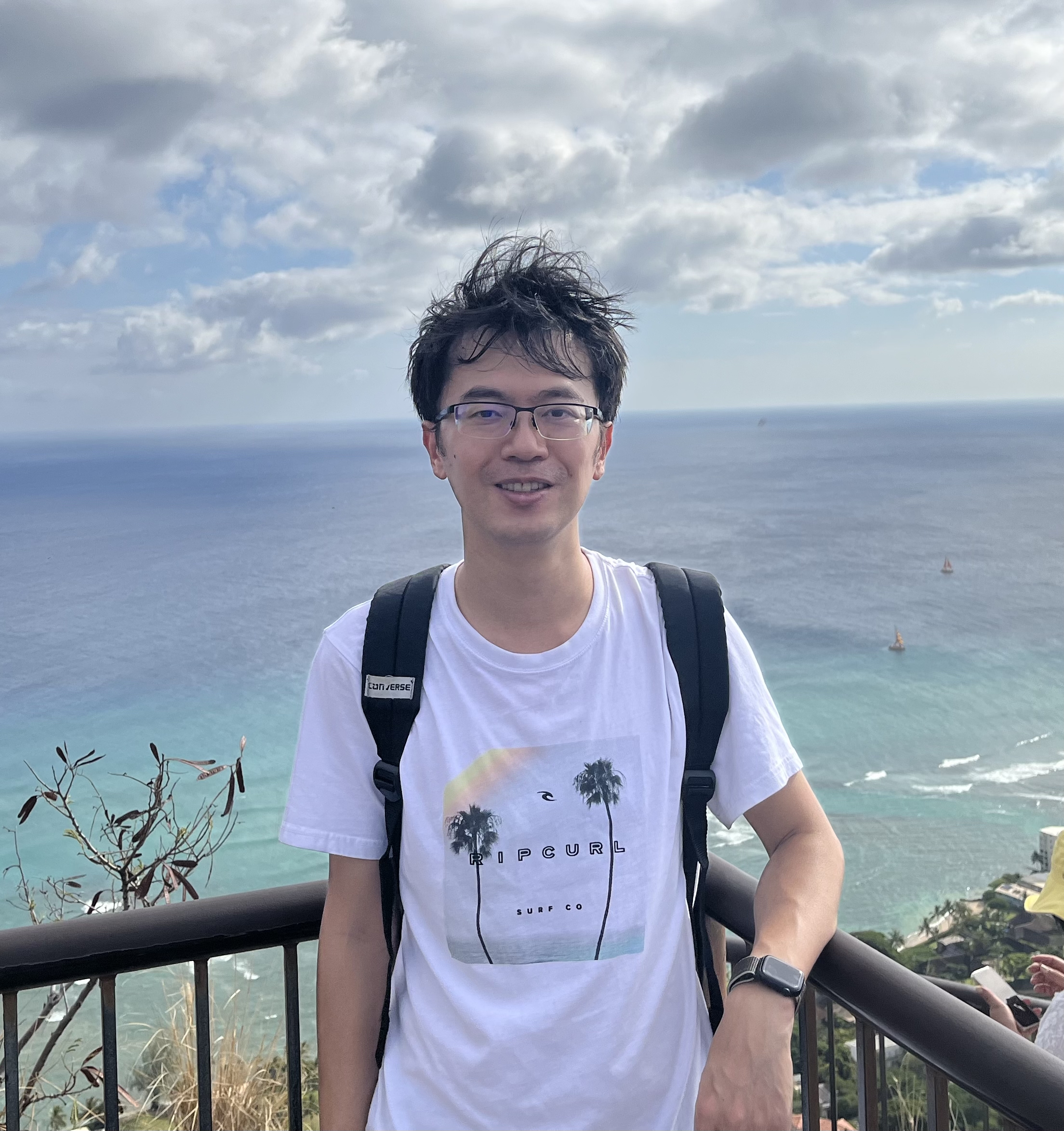
Zhun Deng is a tenure-track Assistant Professor at the Department of Computer Science, University of North Carolina at Chapel Hill. His research bridges machine learning, statistics, and theoretical computer science, focusing on rigorous frameworks for responsible AI systems. He previously held postdoctoral positions at Columbia University and completed his Ph.D. at Harvard's Theory of Computation group under Cynthia Dwork. Ph.D. in Computer Science, Harvard University (2022) B.Sc. in Mathematics, Chu Kochen Honors College, Zhejiang University His research spans theoretical foundations of machine learning, including: Quantile-based risk control and conformal prediction Fairness guarantees in algorithmic decision-making Uncertainty quantification for LLMs Copyright frameworks for generative AI Physics-informed hybrid models Multi-agent reinforcement learning with constraints Recent work analyzes LLM alignment through distribution-free methods (ICML 2025), explores performativity challenges (ICML 2025), and develops calibration techniques (ICLR 2024). Collaborations include research interns from Stanford, MIT, and NYU. Students in his group include: Ruomeng Ding (Ph.D., UNC) Xiaowei Yin (Ph.D., UNC) Kaicheng Zhang (Ph.D., UNC)
Nina Balcan is a Professor at Carnegie Mellon University and holds the Cadence Design Systems Professorship in Computer Science. She is affiliated with the School of Computer Science, specifically the Machine Learning Department (MLD) and Computer Science Department (CSD). Her research spans foundational aspects of machine learning, artificial intelligence, theoretical computer science, algorithmic game theory, and interdisciplinary connections in learning theory. Machine Learning Artificial Intelligence Theoretical Computer Science Algorithmic Game Theory Multi-Agent Systems Data-Driven Algorithm Design Her recent work focuses on advancing algorithm design through machine learning, robustness in adversarial environments, and economic modeling. Key contributions include Learning to Branch (JACM 2024), Regret Minimization in Stackelberg Games (NeurIPS 2024), and Learning Accurate Decision Trees (UAI 2024, Outstanding Student Paper Award). She has pioneered novel approaches to data-driven optimization, semi-supervised learning, and privacy-preserving clustering. Nina has received prestigious accolades including ACM Fellow AAAI Fellow Simons Investigator 2019 ACM Grace Murray Hopper Award Her teaching at CMU includes graduate courses on machine learning, advanced machine learning, and specialized topics like algorithmic game theory.
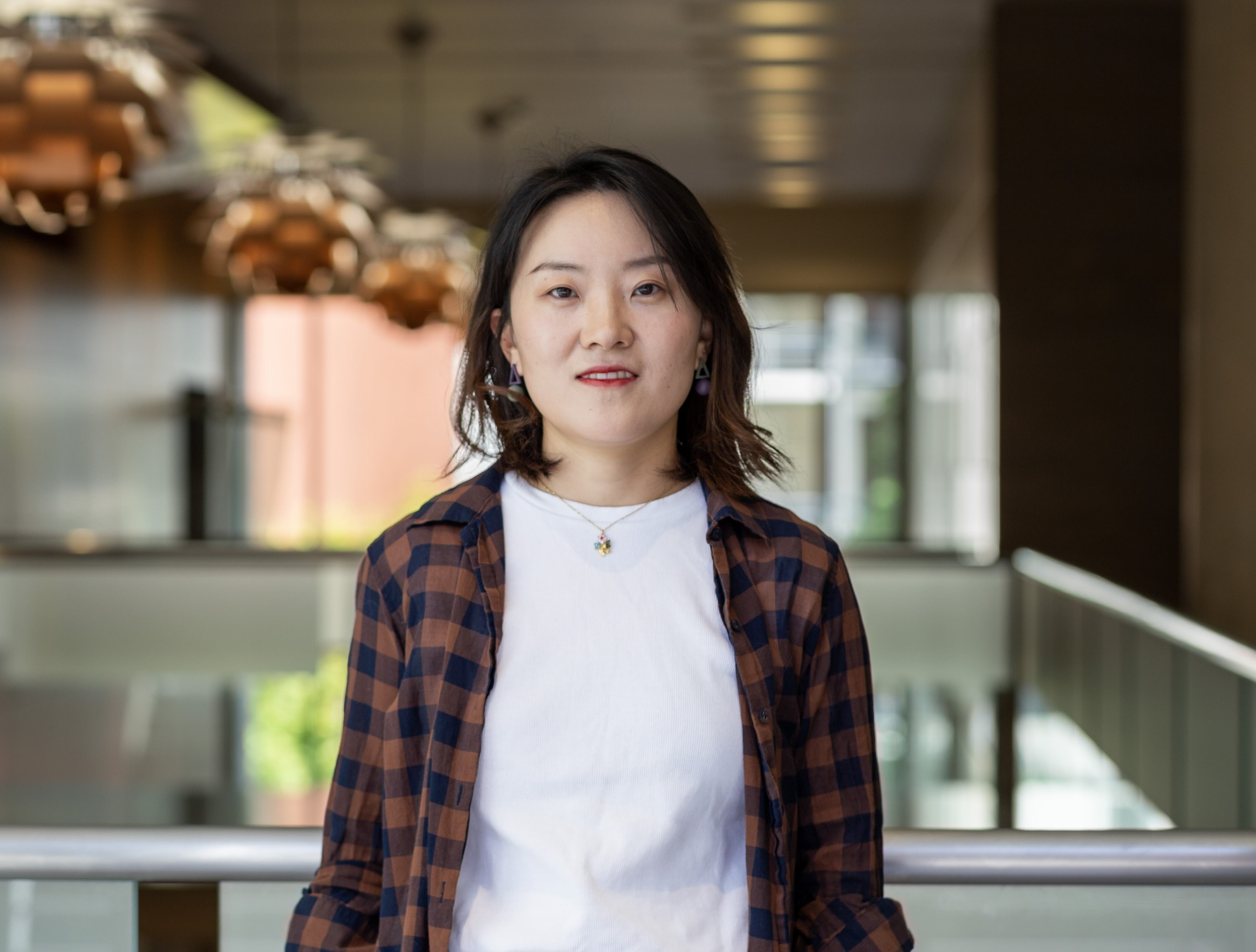
Jieyu Zhao is an Assistant Professor in the Thomas Lord Department of Computer Science at the University of Southern California (USC), part of the Viterbi School of Engineering. She holds a Ph.D. from UCLA and was a NSF Computing Innovation Fellow at the University of Maryland. Her research focuses on fairness in machine learning and NLP, particularly addressing biases in AI systems and promoting ethical AI practices. Education: Ph.D. in Computer Science (UCLA, 2021), Postdoc at University of Maryland (2022-2023), and multiple research internships at Microsoft Research, Google Research, and AI2. She also completed her undergraduate studies at the University of Virginia. Research interests include bias detection and mitigation in NLP models, trustworthy AI, and social responsibility in technology. Her work has been recognized with awards such as the EMNLP Best Long Paper Award (2017), Microsoft PhD Fellowship (2020), and EECS Rising Star (2021). She has delivered talks at conferences like NeurIPS, EMNLP, and USC Law School, and serves on committees including AAAI workflow chair. Her lab explores topics like alignment of LLMs, fairness in sequential decision-making, and ethical model interventions. She actively participates in initiatives promoting diversity and inclusion in AI, such as the UN-WOMEN Beijing panel on gender equality. Awards: 100 Brilliant Women in AI Ethics (2025), Capital One Research Award (2024), Microsoft PhD Fellowship (2020) Grants: NSF Computing Innovation Fellowship, USC Viterbi funding Labs/Teams: Leads the USC Lab focused on trustworthy AI and ethical NLP
Dai Zhongxiang is an Assistant Professor and Presidential Young Fellow at the School of Data Science, The Chinese University of Hong Kong, Shenzhen (CUHKSZ), where he joined in August 2024. Previously, he was a Postdoctoral Associate at MIT's Laboratory for Information and Decision Systems (January-June 2024) and a Postdoctoral Fellow at the National University of Singapore's Department of Computer Science (April 2021-December 2023). He completed his Ph.D. in Artificial Intelligence at NUS under the supervision of Bryan Kian Hsiang Low and Patrick Jaillet. Dr. Dai's research focuses on the intersection of theoretical and practical AI, with particular emphasis on large language models (LLMs) and optimization techniques. His work spans both theoretical foundations of multi-armed bandits and Bayesian optimization, as well as practical applications in LLM inference, including prompt optimization, in-context learning, personalization of LLMs, LLM-based agents, and scaling up test-time computation of LLMs. His research approach often bridges theoretical principles with real-world applications, particularly in AI4Science problems. His recent publications demonstrate a clear trend toward advancing LLM capabilities through optimization techniques, with increasing focus on practical deployment challenges. The research spans both theoretical contributions to optimization theory and applied work on enhancing LLM performance in real-world scenarios. His work on dueling bandits, neural bandits, and zeroth-order optimization has been consistently published in top-tier venues including NeurIPS, ICML, ICLR, and ACL. Presidential Young Fellow, CUHKSZ (2024) Dean's Graduate Research Excellence Award, NUS (2021) Research Achievement Award × 2, NUS (2019 & 2020) Singapore-MIT Alliance Graduate Fellowship (2017) Dr. Dai actively mentors multiple Ph.D. students and research assistants, with several of his students' papers accepted to top conferences. His research has received significant attention, with invitations to serve as Area Chair for NeurIPS 2025 and ICLR 2025, reflecting his growing influence in the machine learning community. His work bridges theoretical machine learning with practical applications in large-scale AI systems.
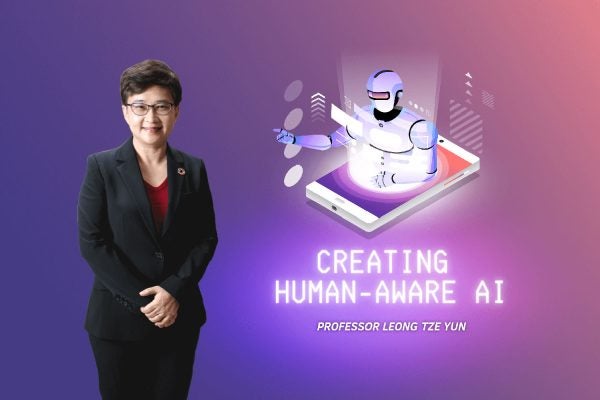
LEONG Tze Yun is a Professor in the Department of Computer Science at the School of Computing, National University of Singapore (NUS). She holds S.B., S.M., and Ph.D. degrees in Computer Science from the Massachusetts Institute of Technology (MIT). Her academic career spans both research and industry experience, with significant contributions to the fields of artificial intelligence and health informatics. Dr. Leong's educational background includes: Ph.D. in Electrical Engineering & Computer Science, Massachusetts Institute of Technology S.M. in Electrical Engineering & Computer Science, Massachusetts Institute of Technology S.B. in Computer Science & Engineering, Massachusetts Institute of Technology Her primary research interests focus on responsible AI, dynamic decision-making, neurocognitive modeling, reinforcement learning, artificial general intelligence, and biomedical and health informatics. Her work bridges the gap between theoretical AI development and practical healthcare applications, with an emphasis on ethical considerations and human-centered design. She directs the Medical Computing Laboratory at NUS, a multidisciplinary research program exploring human-aware decision modeling in complex environments. Analysis of her recent publications reveals a strong trend toward responsible AI development, with significant contributions to reinforcement learning techniques, causal inference methods, and applications of AI in healthcare. Her work increasingly integrates ethical considerations with technical AI development, particularly evident in her 2024 publications on medical AI and human values. Her scientific recognition includes: Fellow of the American College of Medical Informatics (ACMI) Founding Fellow of the International Academy of Health Sciences Informatics (IAHSI) Member of Eta Kappa Nu (Honor Society for Electrical Engineers) Dr. Leong has supervised numerous doctoral and master's students throughout her career, many of whom have gone on to prominent positions at institutions like Google, Netflix, Mayo Clinic, and academic institutions worldwide. Her advisory work extends to significant policy development, including contributions to WHO guidance on ethics and governance of AI for health. She currently serves on the World Health Organization (WHO) Expert Group on Ethics and Governance of AI for Health, the World Economic Forum (WEF) AI Governance Alliance, and the Advisory Council on AI in Uzbekistan. Her laboratory work focuses on developing adaptive systems that evolve with changing technical functionalities, system infrastructures, usage patterns, and operational contexts, with applications spanning prediction and decision analytics, human-aware robotics, game artificial intelligence, personalized education, and assistive care for elderly with neurocognitive disorders.
Pierre Vandergheynst is a Full Professor at the Swiss Federal Institute of Technology Lausanne (EPFL) in the Department of Electrical Engineering, with a courtesy appointment in Computer and Communication Sciences. He serves as EPFL’s Vice-Provost for Education since 2015 and leads the Signal Processing Laboratory 2 (LTS2). His research spans harmonic analysis, sparse approximations, mathematical data processing, and applications in signal/image processing, computer vision, machine learning, and graph-based data analysis. PhD in Mathematical Physics (1998), Université catholique de Louvain Postdoctoral Researcher at EPFL (1998-2001) Assistant Professor at EPFL (2002-2007) His research explores geometry/symmetry in high-dimensional data, redundant dictionaries for dimensionality reduction, and computational harmonic analysis on manifolds. Recent work focuses on protein structure modeling, geometric deep learning, and graph-based signal processing. Key article trends include graph neural networks for protein analysis, geometric deep learning in neuroscience, and structured knowledge priors in neural models. His 2023-2025 publications emphasize interpretable AI, long-range dependencies in graphs, and molecular representation learning. Scientific Awards: IEEE Signal Processing Magazine Best Paper Award (2023) Signal Processing Society Best Paper Award (2022) Apple ARTS Award (2007) De Boelpaepe Prize, Royal Academy of Sciences of Belgium (2009-2010) He has supervised over 30 PhD theses and contributed to foundational work in graph signal processing, compressive sensing, and geometric deep learning. His lab develops tools for data science on non-Euclidean structures, with applications in medicine, astronomy, and wireless systems.
Fabian Fagerholm is an Assistant Professor in the Department of Computer Science at Aalto University. His work bridges software engineering, human-computer interaction, and empirical research methodologies. He actively participates in research groups such as Software and Service Engineering (SSE) and Human-Computer Interaction and Design (HCID). Fagerholm's research explores: Continuous experimentation in software development Developer cognition and mental models Agile methodologies and team dynamics Low-code platforms and end-user programming Software engineering education and pedagogy His publications reflect a strong empirical focus, with recurring themes of human factors in technical systems and educational innovation. He has received notable awards including: Journal of Systems and Software Best Paper Award (2018) EUROMICRO SEAA Distinguished Paper Award (2017) Teacher of the Year (2013) Nokia Foundation Scholarship (2013) Fagerholm contributes to software engineering infrastructure through tools for experimentation and boundary artifacts, enhancing collaboration in distributed teams.
Martin T. Wells is the Charles A. Alexander Professor of Statistical Sciences at Cornell University, with joint appointments in the Department of Statistical Science, Department of Biological Statistics and Computational Biology, Department of Social Statistics, and as Professor of Clinical Epidemiology and Health Services Research at Weill Medical School. He serves as Editor-in-Chief of the ASA-SIAM Book Series and Co-Editor of the Journal of Empirical Legal Studies. Cornell University, Ithaca, NY Weill Cornell Medical College Research Interests span applied and theoretical statistics, Bayesian methods, biostatistics, clinical epidemiology, and computational biology. His work bridges disciplines like finance, legal studies, and health services research. Article Trends highlight advancements in Bayesian modeling, quantum cognition machine learning, tensor analysis, and misclassification correction, with applications in genomics, finance, and public health. Fellow of the American Statistical Association Fellow of the Royal Statistical Society Contributions include developing statistical software (e.g., rTensor), methodological innovations in clinical trials, and empirical legal studies on civil rights and the death penalty.
Sheila McIlraith is a Professor in the Department of Computer Science at the University of Toronto, holding the Canada CIFAR AI Chair at the Vector Institute and serving as Associate Director and Research Lead at the Schwartz Reisman Institute for Technology and Society. Her research spans AI safety, ethics, reinforcement learning, and knowledge representation, with a focus on human-compatible AI and long-term societal impacts. Her career includes six years as a Research Scientist at Stanford University and a year at Xerox PARC. McIlraith’s work has been recognized through ACM and AAAI fellowships, as well as prestigious awards like the SWSA 10-Year Award (2011) and the CAIAC Lifetime Achievement Award (2024). Research Interests: AI Safety and Alignment Human-Compatible AI Reinforcement Learning with Ethical Constraints Semantic Web Services Cognitive Robotics and Diagnostic Systems Probabilistic and Logical Reasoning Recent Contributions: Her work emphasizes ethical AI integration, such as the Embedded Ethics Education Initiative (E3I), and addresses challenges in long-term AI risks, multi-agent systems, and interpretable decision-making frameworks. Awards and Honors: ACM Fellow AAAI Fellow 2023 IJCAI-JAIR Best Paper Prize 2024 CAIAC Lifetime Achievement Award Labs and Teams: McIlraith leads initiatives at the Schwartz Reisman Institute and contributes to the Vector Institute, focusing on societal and ethical dimensions of AI technology.
Pieter Abbeel is a Professor in the Department of Electrical Engineering and Computer Sciences (EECS) at the University of California, Berkeley. He leads the Berkeley Robot Learning Lab and co-directs the Berkeley Artificial Intelligence Research (BAIR) Lab. His work focuses on advancing AI and robotics through deep reinforcement learning, imitation learning, and unsupervised learning, with applications in automation, healthcare, and education. Abbeel's research also explores the societal implications of AI and its potential to revolutionize other scientific and engineering fields. Education: Ph.D. in Computer Science, Stanford University (2008) M.S. in Electrical Engineering, KU Leuven, Belgium (2000) Research Interests: Robotics, AI, Machine Learning, Reinforcement Learning, Autonomous Systems, and Applications in Surgery, Manufacturing, and Education. Recent Article Trends: Focus on multimodal learning, robot manipulation, protein structure prediction, and scalable AI systems. Key areas include sim-to-real transfer, embodied AI, and foundation models for decision-making. Awards & Honors: IEEE Kiyo Tomiyasu Award (2022) ACM Prize in Computing (2021) IEEE Fellow (2018) MIT Tech Review TR35 (2011) Advising & Grants: Advises startups and has received grants from NSF, DARPA, and industry partnerships. Notable students include those advancing robotics, reinforcement learning, and bioAI. Labs & Initiatives: Berkeley Robot Learning Lab, BAIR Lab, and collaborations with the Center for Human-Compatible AI (CHAI). Founded companies include Gradescope, Covariant, and Berkeley Open Arms.
Clemens Otto is a Full-time Associate Professor of Finance at the Lee Kong Chian School of Business, Singapore Management University. He holds a Ph.D. (Finance) from London Business School (2012), an M.Res. (Finance) from London Business School (2009), and a CEMS Master (International Management) and Dipl.-Kfm. (Business Administration) from the University of Cologne and HEC Paris (2006). His research focuses on Financial Contracting, Corporate Disclosure Practices, Behavioral Finance, and Strategic Investment Decisions. Key research interests include analyzing how disclosure policies impact capital markets, the behavioral drivers of corporate investment, and the effects of regulatory frameworks on firm behavior. His work integrates theoretical finance with empirical evidence from supply chains, healthcare disclosures, and debt markets. Notable awards include the Michael J. Brennan Award (2022) and the SAC Capital Ph.D. Award (2012). His publications span journals such as the Review of Financial Studies , Management Science , and The Accounting Review . Current research explores disclosure externalities in supply chains and the strategic implications of peer disclosures in clinical trials. Prof. Otto has been affiliated with SMU since 2017, advancing through roles from Assistant Professor (2017–2021) to his current position. His expertise aligns with SMU’s strategic priorities in Asia-focused finance and sustainable living through informed corporate governance frameworks.
Rajeev Alur is the Zisman Family Professor in the Department of Computer and Information Science at the University of Pennsylvania, leading the School of Engineering and Applied Science. He is the Founding Director of the ASSET Center for Trustworthy AI and a member of the PRECISE Center. His research focuses on formal methods for system design, integrating AI, cyber-physical systems, and machine learning with logical reasoning to ensure safety in autonomous systems. Alur has held leadership roles in major NSF projects like ExCAPE and has directed the Embedded and Multi-Scale Systems (EMBS) program. His research interests span formal verification, temporal logics, programming abstractions, and synthesis techniques. Notable contributions include the development of Nested Words (visibly pushdown languages), streaming string transducers, and tools like AutomataTutor for education. He has advised over 60 PhD students and postdocs, many of whom now hold academic and industry leadership positions. Alur’s awards include the 2024 Knuth Prize and the 2016 Alonzo Church Award. His work on Verisig and compositional verification of neural networks has advanced safety-critical AI applications. He teaches foundational courses like CIS 2620 and develops educational tools, emphasizing both theoretical rigor and practical impact. Key projects include the ASSET Center’s focus on trustworthy AI, integration of logical specifications in reinforcement learning, and formal verification of closed-loop systems with neural components. His publications span over 350 papers, with recent work addressing neurosymbolic learning, security in large language models, and efficient neural network verification.
Prof. Roger Wattenhofer is a Full Professor at the Department of Information Technology and Electrical Engineering, ETH Zurich, Switzerland, and Deputy head of the Computer Engineering and Networks Lab. He holds a doctorate in Computer Science from ETH Zurich (1998) and has held positions at Brown University and Microsoft Research before returning to ETH. His research focuses on distributed computing, wireless networks, and algorithmic systems design, with contributions to Byzantine agreement protocols, blockchain technologies, and neural network architectures. He teaches courses such as Distributed Systems and Computational Thinking. Education: Ph.D. in Computer Science (ETH Zurich, 1998). Research interests include distributed systems, network algorithms, and the intersection of machine learning with distributed computing. His work spans both theoretical foundations and practical implementations, addressing challenges in fault tolerance, consensus mechanisms, and algorithmic efficiency. Recent publications explore topics like adversarial robustness in voting systems, privacy in reinforcement learning, and generative music models. He actively contributes to open-source frameworks and benchmarks for neural algorithmic reasoning.