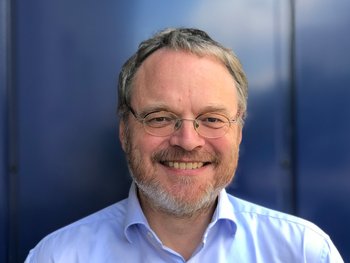
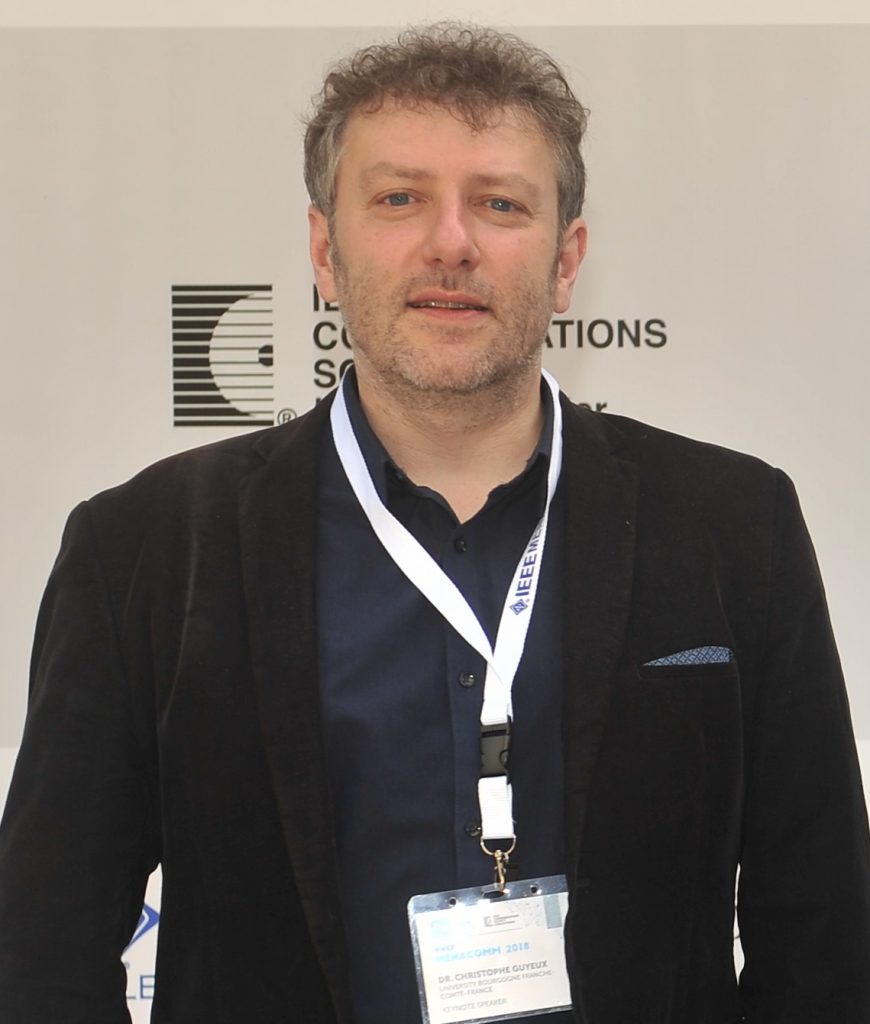
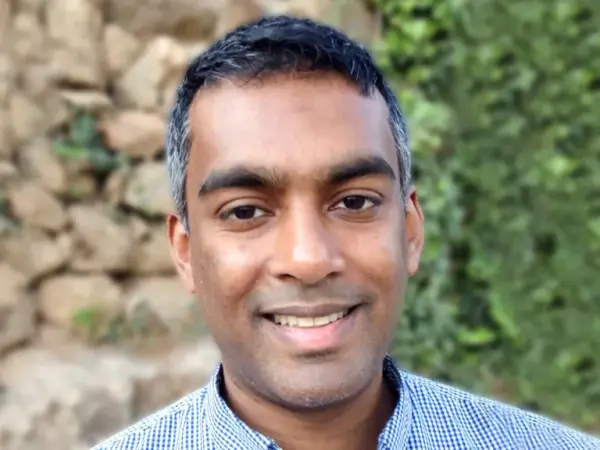
Carlo Curino is a researcher at Microsoft Research , focusing on database systems, cloud computing, and machine learning integration. He has collaborated extensively with institutions including MIT, Microsoft, and the University of Wisconsin-Madison. His research spans Geo-distributed data analytics Automated configuration tuning Tensor-based database systems Data lake optimization Spark performance engineering Recent publications highlight his work on AI-driven systems like MotherNet and Rockhopper , alongside contributions to query processing over compressed data and log-structured tables. Collaborators include prominent figures such as Raghu Ramakrishnan and Jesús Camacho-Rodríguez . Key projects involve LST-Bench (cloud storage benchmarking), AutoComp (data compaction), and PyFroid (commodity workstation analytics). His work bridges database optimization with modern machine learning demands in enterprise environments.
Floriano Scioscia is a researcher at the Polytechnic University of Bari, Department of Electrical Engineering and Information Technology, with extensive contributions to the Semantic Web, Internet of Things, and knowledge-based systems. His work focuses on developing frameworks for semantic reasoning, resource discovery, and intelligent systems in ubiquitous computing environments. His research interests span multiple domains within computer science: Semantic Web technologies and ontology reasoning Internet of Things and Cyber-Physical Systems Cloud-Edge computing architectures Knowledge representation and semantic matchmaker systems Mobile and ubiquitous computing applications Analysis of his recent publications (2023-2025) reveals a strong focus on edge-based semantic reasoning, with significant work on the Tiny-ME and Cowl frameworks for lightweight OWL reasoning on resource-constrained devices. His research has increasingly incorporated blockchain technologies into IoT systems and explored the concept of "Internet of Conscious Things" with social capabilities for smart objects. The interdisciplinary nature of his work bridges computer science with healthcare applications, particularly in clinical decision support systems. Dr. Scioscia has collaborated extensively with researchers including Michele Ruta, Eugenio Di Sciascio, Giuseppe Loseto, and Filippo Gramegna across numerous projects spanning more than 15 years of research output.
Philipp Cimiano is a Professor at the Faculty of Engineering, Bielefeld University, and leads the Semantic Databases Group. He holds additional roles as Coordinator of the Cognitive Interaction Technology Center (CITEC) and Director of the Joint Artificial Intelligence Institute (JAII). His research focuses on the intersection of language, semantics, and knowledge representation, with applications in Explainable AI , Knowledge Graphs , and AI in Medicine . Education: University of Stuttgart, University of South Australia, Karlsruhe Institute of Technology (KIT) Key Research Areas: Knowledge Representation, Ontologies, Explainable AI, Clinical Decision Support His recent work emphasizes dialogue-based XAI , federated learning , and semantic data integration . He has secured funding from the German Research Foundation (DFG) and the European Union for projects like TRR 318 "Constructing Explainability" and Pret-a-LLOD. Scientific Awards Carl Adam Petrie Prize, KIT Faculty of Business and Economics Editorial Roles Co-editor, Journal of Applied Ontology Area Editor, Semantic Web Journal Editorial Board, Journal of Web Semantics Notable Projects TRR 318 (Subprojects B01, C05, INF) 3B: Bots Building Bridges for online deliberation LLM4KMU: Open Source LLMs for SMEs
Volker Dürr is a Professor of Biological Cybernetics at Bielefeld University , Faculty of Biology, and a member of the Center for Cognitive Interaction Technology (CITEC) . His work focuses on sensory control of locomotion , active tactile sensing in insects , and biomimetic modeling of movement systems. Education : Habilitation in Zoology (University of Cologne, 2008; Bielefeld, 2005), PhD in Biology (Bielefeld, 1998), Diploma in Biology (Tübingen, 1994) Academic Career : Professor at Bielefeld (2009-present), Junior Research Group Leader (University of Cologne, 2007-2009), Research Assistant (Bielefeld, 1998-2006) His research investigates how insects use antennal mechanosensory systems and proprioception to control locomotion in complex environments. Key themes include goal-directed movements , sensorimotor integration , and biomimetic robotics . Publications emphasize tactile sensing (15/23 articles), neural control of movement (9/23), biomechanical modeling (7/23), and cross-species locomotion analysis (4/23). Recent work explores virtual reality paradigms for locomotion studies and spiking neural networks for proprioceptive modeling.
Prof. Dr. Michael Goedicke is a faculty member at the University of Duisburg-Essen , holding the Professorship for Practical Informatics / Specification of Software Systems since 1994. His academic career spans over three decades with continuous contributions to software engineering and educational technology.
Thomas Villmann is a Professor of Computational Intelligence and Techno-Mathematics at Mittweida University of Applied Sciences in Germany. He serves as Deputy Spokesperson for the Mathematics Department, AI Coordinator at the university, Director of the Saxon Institute for Computational Intelligence and Machine Learning (SICIM), and President of the German Chapter of the European Neural Network Society (GNNS). His academic credentials include the German 'Dr. rer. nat. habil.' designation, indicating both doctoral and habilitation qualifications in natural sciences. Professor Villmann's research focuses on computational intelligence with particular emphasis on vector quantization, learning vector quantization, neural networks, and interpretable machine learning. His work spans theoretical developments in mathematical foundations of machine learning algorithms as well as practical applications in bioinformatics, remote sensing, medical diagnostics, and autonomous systems. He has developed mathematically sound methods for data-based analysis (clustering), decision support systems, data-based prediction models, and visualization of complex data. His recent publication record demonstrates a strong trend toward interpretable and explainable AI, with emphasis on vector quantization techniques applied across diverse domains including medical diagnostics (particularly breast cancer detection), fairness in machine learning, satellite remote sensing, and autonomous vehicle systems. Villmann's work consistently bridges theoretical mathematics with practical applications, maintaining a focus on making machine learning models more transparent, reliable, and ethically sound. As Director of SICIM and leader of the Computational Intelligence Research Group, Professor Villmann oversees an integrated research ecosystem focused on problem-oriented intelligent data analysis. His institutes aim to stimulate interest in computational intelligence among students and young researchers while supporting public institutions, authorities, and companies in data analysis both regionally and internationally. His leadership extends to organizing academic events and workshops, including serving as president of the German Chapter of the European Neural Network Society.
Cédric du Mouza is a full Professor within the CEDRIC Laboratory at the Conservatoire National des Arts et Métiers (CNAM) in Paris, France. His research activities lie at the intersection of database systems, data mining, and digital humanities, with a strong emphasis on social network analysis, knowledge base population, and spatial/temporal data management. Education details are not explicitly provided in the source material. His research interests can be summarized as follows: Database Technologies: scalable indexing, distributed repositories, spatial and temporal data structures. Data Mining & Machine Learning: community detection, influence maximization, recommender systems. Digital Humanities: prosopographic databases, historical social networks, credibility assessment of historical sources. Social Media Analytics: Twitter user profiling, early detection of popular accounts, reducing filter bubbles. Across more than two decades, Prof. du Mouza has produced a rich scholarly record that blends theoretical advances with practical applications. Recent publications (2020-2024) highlight a methodological shift toward end-to-end evaluation frameworks for knowledge base population, uncertainty modeling in historical corpora, and real-time influence maximization in advertising ecosystems. These works are published in premier venues such as SIGIR , VLDB Journal , WISE , CIKM , and leading French conferences (EGC, BDA). No specific scientific awards, funded projects, or doctoral student names are mentioned in the supplied text. Prof. du Mouza collaborates extensively within interdisciplinary teams involving historians, computer scientists, and statisticians, reflecting CEDRIC’s integrative research culture. While no dedicated laboratory or team name is provided, his continuous affiliation with CEDRIC/CNAM confirms an active and ongoing role in both research and graduate-level education.
Samira Si-Said Cherfi is a Professor at the Centre d'études et de recherche en informatique et communications (CEDRIC) within the Conservatoire National des Arts et Métiers (CNAM) in Paris. With a research career spanning over 25 years, she has established herself as a leading expert in data quality, conceptual modeling, and ontology engineering. Her work bridges theoretical computer science with practical applications in healthcare systems, business process management, and knowledge representation. Her research interests focus on data quality assessment , conceptual modeling methodologies , ontology engineering for complex systems , and cyber-physical security in healthcare infrastructures . She has pioneered approaches for evaluating RDF data completeness, developing quality metrics for conceptual schemas, and creating ontologies for healthcare security. Her work demonstrates how formal modeling techniques can solve real-world problems in information systems. Analysis of her recent publications reveals a strong trend toward cyber-physical security and healthcare information systems , where she applies semantic technologies to address cascading effects in critical infrastructures. Her work consistently connects theoretical foundations in conceptual modeling with practical applications in knowledge graphs and data integration. She has made significant contributions to understanding how OWL semantics can be effectively utilized in RDF-based knowledge graphs. As an active member of the academic community, she has served as guest editor for special journal issues and contributed to major international conferences including RCIS, CAiSE, and EDOC. Her leadership in the field is evident through her editorial roles and collaborative research projects. Professor Si-Said Cherfi leads research within the CEDRIC laboratory, specifically contributing to the 'Complex data, machine learning and representations' and 'Data mining and statistics' research teams. Her work often involves interdisciplinary collaboration with healthcare professionals, security experts, and industry partners to address complex challenges in information systems security and data quality.
Thushyanthan Baskaran serves as Chair of the Department of Public and Regional Economics at Ruhr University Bochum, Germany, where he maintains an active research program in public economics, political economy, and regional development. His work examines fiscal institutions, resource wealth impacts, and political representation across diverse institutional contexts including Germany, Africa, and international comparative frameworks. His core research investigates how political institutions shape economic outcomes, with particular focus on fiscal federalism dynamics, gender disparities in political participation, resource curse mechanisms, and local government behavior. He employs rigorous empirical methods including quasi-experimental designs and micro-level data analysis to explore questions of tax policy, electoral systems, and intergovernmental transfers. Analysis of his 2017-2024 publications reveals consistent methodological sophistication and thematic depth, particularly in examining mineral wealth effects on African development, age demographics in legislative decision-making, and women's political representation. His collaborative work frequently addresses policy-relevant questions through natural experiments and cross-national comparisons. No information regarding scientific awards, student advising, research grants, or laboratory affiliations was present in the source materials.
Klaus Stein is a part-time lecturer at the Chair of Heritage Conservation , Otto-Friedrich University of Bamberg. His work bridges digital technologies , spatial modeling , and cultural heritage through interdisciplinary research projects. Co-leader of the UrbanMetaMapping project (BMBF-funded) analyzing WWII war damage maps Developed KTF (Wiki-based terminology framework) for SMEs Contributed to COM (Communication-Oriented Modeling) DFG research network Active in EMN-MOVES project for age-friendly mobility solutions His research focuses on digital heritage , social network analysis , and collaborative GIS , with over 20 years of publications in spatial cognition and information systems . While his primary role involves teaching in the Master's program in Digital Heritage Technologies , he also contributes to open-source GIS and web mining methodologies. Key projects include: Find Diversity (BioDiv2Go): Promoting biodiversity awareness via location-based games Virtual Spaces : Digital reconstruction of historical church color schemes
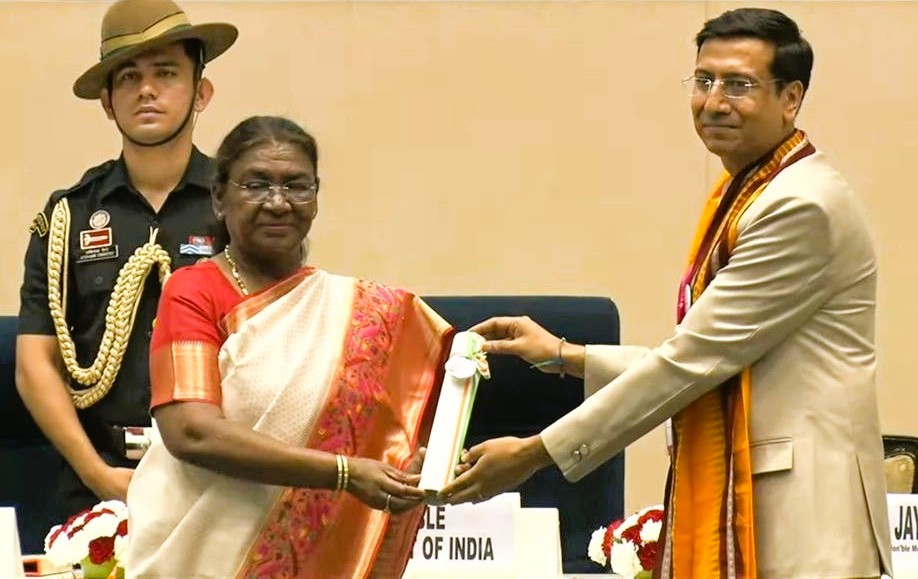
Prof. Kapil Ahuja is a Full Professor in the Department of Computer Science & Engineering at the Indian Institute of Technology Indore (IIT Indore), where he heads the Mathematics of Data Science and Simulation (MODSS) research lab. After completing dual Master's degrees and a Ph.D. from Virginia Tech (USA) followed by postdoctoral work at the Max Planck Institute in Germany, he has held visiting positions at UT Austin, IMT Atlantique, Sandia National Labs, TU Dresden, and TU Braunschweig. His administrative roles include founding Dean of International Affairs and former Head of Computer Science & Engineering at IIT Indore. Education: Ph.D. in Mathematics, Virginia Tech (2011) M.S. in Mathematics, Virginia Tech (2009) M.S. in Computer Science, Virginia Tech (2007) B.Tech. in Mechanical Engineering, IIT (BHU) Varanasi (2001) Research Focus: Prof. Ahuja's work bridges theoretical advances with real-world applications, emphasizing machine learning algorithms for plant/cancer studies, game-theoretic poverty reduction models, exascale climate modeling solvers, and drone trajectory optimization. His interdisciplinary approach integrates numerical linear algebra with network science to solve complex systems problems across healthcare, agriculture, and climate science, supported by 4.85 Crores INR in external funding. Publication Trends: Recent work demonstrates growing emphasis on AI-driven optimization for physical systems (drones, climate models) and biomedical applications (cancer classification). His publications increasingly feature cross-disciplinary collaborations between computer science, biology, and economics, with notable contributions in explainable AI for healthcare and resource allocation algorithms for social networks. Scientific Recognition: National Teacher's Award (2024) from the President of India Five-time recipient of IIT Indore's Best Teacher Award (2013-2023) Best Poster Award at International Workshop on Game Theory & Networks (2019) Steeneck Graduate Research Fellowship (Virginia Tech, 2011) Multiple SIAM travel awards for international conferences Mentorship & Service: Prof. Ahuja has graduated 5 Ph.D. and 4 M.S. (Research) students while mentoring 75 B.Tech. projects. He serves as Associate Editor for Applied Intelligence Journal (Springer Nature) and Knowledge and Information Systems, organizes international conferences, and reviews for 35+ academic sources. His administrative leadership significantly expanded IIT Indore's global partnerships through the Research Park initiative. Research Infrastructure: The MODSS lab maintains active collaborations with Oak Ridge National Lab, Sandia National Labs, and European institutions. Current projects include AI-optimized drone swarms for agricultural monitoring and game-theoretic models for poverty intervention, utilizing high-performance computing resources for large-scale simulations.
Anton Dignös is a professor at the Free University of Bozen-Bolzano , specializing in temporal databases , time series analysis , and database systems . His research focuses on efficient query processing for interval data, temporal joins, and schema design, with significant contributions to in-memory and time series databases. Key research areas include: Temporal Data Management : Advanced techniques for interval and duration queries. Time Series Analytics : Machine learning integration and pattern detection. Schema Optimization : Automated design and tuning of database schemas. Visual Analytics : Tools for period data comparison and correlation analysis. His work spans collaborations with researchers like Johann Gamper and Michael H. Böhlen , addressing challenges in healthcare systems, industrial applications, and financial data analytics. Notable contributions include algorithms for temporal anti-joins , range-duration queries , and machine learning-based anomaly detection .
Clélia de Mulatier is an Assistant Professor at the University of Amsterdam , affiliated with both the Institute for Theoretical Physics and the Informatics Institute . She leads research at the intersection of statistical physics, information theory, and computer science , focusing on theoretical and numerical methods for complex systems . Her work spans collaborations with experimentalists in neuroscience and biology , and she actively participates in educational programs across multiple Dutch universities. Research Labs : Computational Soft Matter Lab, Computational Science Lab Affiliations : Dutch Institute for Emergent Phenomena (DIEP), Netherlands Platform Complex Systems (NPCS) Her research develops minimally complex spin models for high-order data analysis , applying exact Bayesian model selection to uncover hidden variable communities in binary datasets. This work has produced open-source tools like MinCompSpin and MinCompSpin_Greedy for different system sizes. Publications demonstrate expertise in tensor networks for dimensional reduction , epidemic modeling , and branching random walks in confined environments . Teaching includes Python programming , complex systems theory , and statistical inference for physics students across multiple institutions. She serves as program committee member for International Conference on Computational Science and organizes academic discussions through initiatives like Behind the CV: story from a Physicist .
Professor Dirk J. Lehmann is a Professor of Data Science in IoT at Ostfalia University of Applied Sciences, Faculty of Computer Science, where he has been employed since May 2022. He holds significant leadership roles including Deputy Head of the Institute for Information Engineering (since 2024), Research Officer of the Faculty of Computer Science (since 2023), and membership in multiple committees including the Admissions Committee for Digital Technologies and the Digital Technologies Examination Board. Professor Lehmann's extensive academic journey includes: Part-time professorship in Data Science in IoT at Ostfalia University (2020-2022) Senior Specialist for Digitalization, AI, and Visual Analysis at IAV GmbH (2018-2023) Assistant Professor of Visual Data Analysis at Nazarbayev University, Kazakhstan (2017) Visiting professorships at TU Graz, Austria and Universidad Rey Juan Carlos, Spain (2016-2017) Researcher at Otto-von-Guericke University Magdeburg (2009-2017) His research expertise centers on Visual Analytics and Data Science, with particular emphasis on high-dimensional data visualization, categorical data analysis, and IoT applications. Professor Lehmann leads the Data Science in IoT working group, conducting research across three main areas: visual data analysis, distributed data analysis using AI methods, and applied data analysis in geology, climate data, medicine, and industrial processes. His methodological contributions include innovative visualization techniques for complex datasets across multiple domains. Analysis of Professor Lehmann's 15 most recent publications (2017-2025) reveals a consistent focus on advancing visualization techniques for complex data analysis. His work spans categorical data visualization (CatNetVis), biological data analysis (D. Melanogaster research), optimization of star coordinate systems, and interactive exploration methods for large datasets. These publications appear in top venues including IEEE Transactions on Visualization and Computer Graphics and EuroVis, demonstrating both theoretical rigor and practical application across diverse domains from healthcare to environmental science. As an educator, Professor Lehmann teaches a comprehensive range of courses from foundational mathematics to advanced machine learning and visualization techniques. He actively supervises student projects and theses, emphasizing clear project definitions with measurable acceptance criteria. His international collaborations span institutions in Israel, Saudi Arabia, China, Austria, and Spain, reflecting a global research perspective that bridges academic theory with industry applications, particularly through his previous role at IAV GmbH, a Volkswagen subsidiary.
Dr. Jakub Kuzilek is a researcher at the Institute of Computer Science, Faculty of Mathematics and Natural Sciences, Humboldt University of Berlin. He is a member of the "Didaktik der Informatik / Informatik und Gesellschaft" (Computer Science Education | Computer Science and Society) research group, also affiliated with the Educational Technology Lab at the German Research Center for Artificial Intelligence. He joined the CSES research group in January 2020 after previously working at the Faculty of Mechanical Engineering, CTU in Prague, and completing a 4-year research stay at the Open University. Dr. Kuzilek completed his Ph.D. in Biomedical Signal Processing using Blind Source Separation methods. His academic journey transitioned from biomedical signal processing to educational data mining when Professor Zdenek Zdrahal from the Knowledge Media Institute (Open University) invited him to work on data mining of student data in the OU Analyze project. Dr. Kuzilek's primary research interests focus on the intersection of machine learning and education. His work centers on Educational Data Mining (EDM) and Learning Analytics (LA), with particular emphasis on explainable AI applications in educational settings. He investigates student behavior in online learning systems, develops predictive models for student success, and explores methods for providing actionable feedback to learners. His research bridges the gap between signal processing techniques from his earlier work and modern educational technology applications, with a strong focus on practical implementations that can directly benefit students and educators. Analysis of Dr. Kuzilek's recent publications (2021-2024) reveals a clear focus on advancing Learning Analytics and Educational Data Mining. His work consistently explores how machine learning can be applied to understand and improve educational outcomes, with particular attention to explainability of predictive models. Key research threads include student success prediction using behavioral data, algorithmic approaches to student grouping, automated feedback generation, and the use of self-assessments in higher education. His methodological approach combines rigorous statistical analysis with practical educational applications, often using real-world educational datasets to validate his findings. Best paper award for "An Automatic Method for Holter ECG Denoising Using ICA" (2011) Second place in CINC Challenge 2011 for "Simple Scoring System for ECG Signal Quality Assessment on Android Platform" (2011) Dr. Kuzilek actively mentors students at various levels, supervising numerous bachelor's and master's theses on topics related to Learning Analytics, Educational Data Mining, and machine learning applications in education. His grant portfolio demonstrates sustained research activity, including leadership roles on projects funded by the Czech Science Foundation, University Development Foundation, and BMBF. His current research focuses on AI-supported personalization in vocational training and implementing AI-based feedback systems in higher education institutions. As a core member of the Computer Science Education | Computer Science and Society research group at Humboldt University, Dr. Kuzilek collaborates with colleagues including Prof. Dr. Niels Pinkwart and other researchers to advance the field of educational technology. His work bridges theoretical research in machine learning with practical applications in real educational settings, contributing to both academic knowledge and tangible educational improvements.