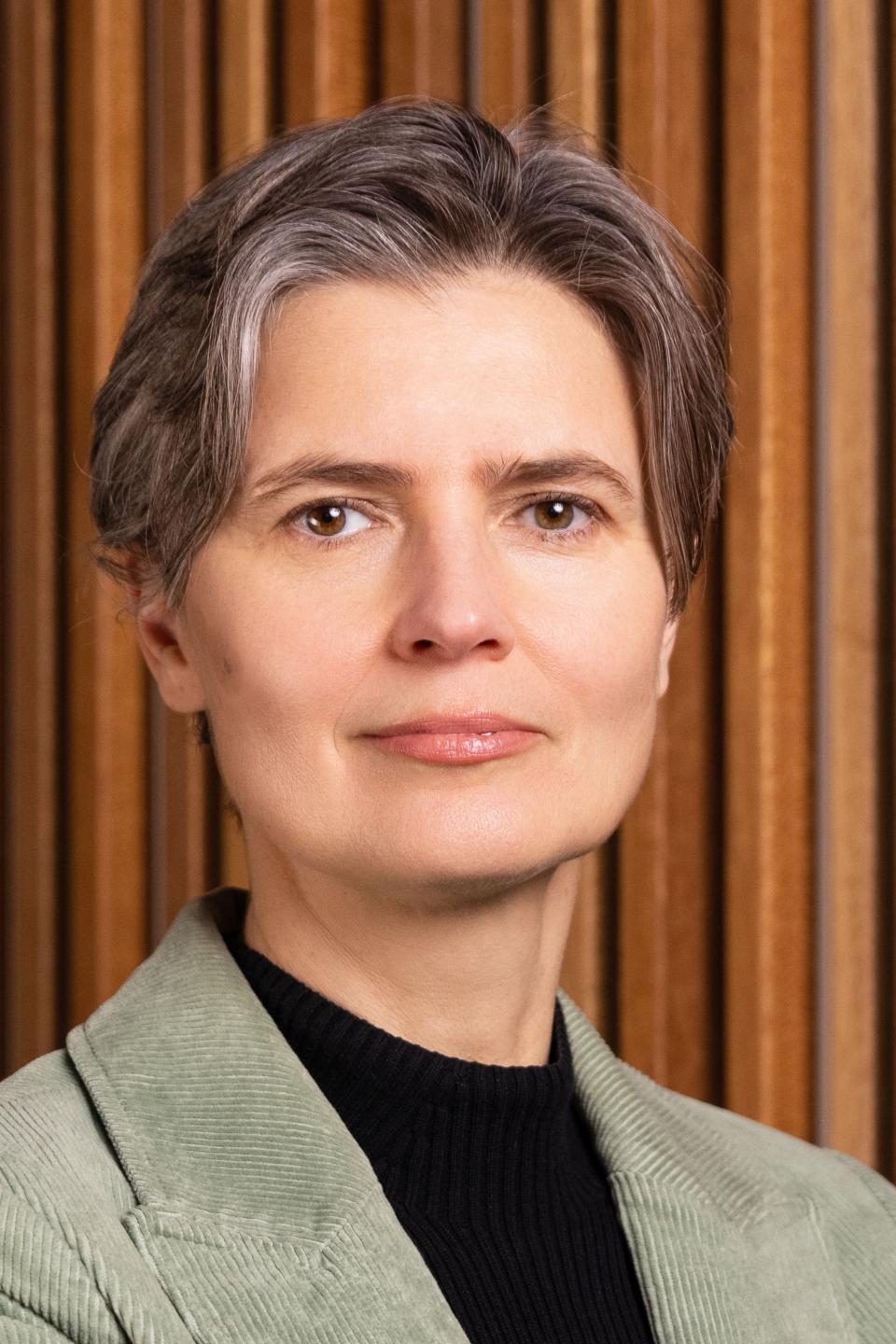
Adriana Iamnitchi is a Full Professor and Key Domain Chair for Computational Science at Maastricht University's Faculty of Science and Engineering, affiliated with the Department of Advanced Computing Sciences. Her research focuses on computational social science, social media dynamics, and misinformation detection. Her primary research interests include: Analysis of coordinated information campaigns across social platforms Development of LLM-based synthetic data generation for social media research Polarization quantification in multi-community networks Policy compliance frameworks for digital regulation (e.g., EU's Digital Services Act) Ethical AI applications for content moderation and transparency Her recent publications (2023-2025) demonstrate strong focus on: Cross-platform disinformation detection using multimodal embeddings Generative AI for synthetic social media datasets Quantitative analysis of toxicity monetization in creator economies Regulatory compliance automation for content transparency
Roberto Giorgi is an Associate Professor of Computer Engineering at the Department of Information Engineering, University of Siena, Italy. He has held this position since October 1, 2006, following his tenure as an Assistant Professor since March 15, 1999. His educational background includes a Ph.D. in Computer Engineering from the University of Pisa (1999) with a thesis on coherence protocols for shared-memory multiprocessors, and an Electronic Engineering degree (1995) with a thesis on trace-driven performance evaluation of multiprocessors. Giorgi's primary research focuses on Computer Architecture , particularly on multiprocessor/multicore issues including processor design, coherence protocols, programmability, and energy efficiency. His work spans both theoretical and practical aspects of computer architecture, with emphasis on real-world implementations and educational tools. He has coordinated significant EU-funded projects including AXIOM (2014-2018) on Smart Cyber-Physical Systems and TERAFLUX (2009-2014) on Many-Cores. His recent publications (2022-2025) demonstrate a strong progression toward practical applications of computer architecture research, with particular emphasis on RISC-V architecture, FPGA-based acceleration, dataflow computing models (especially DF-Threads), and graph processing. Many of his papers address educational tools for computer architecture education, real-time object detection on embedded platforms, and novel execution paradigms for edge computing and HPC. IEEE Senior Member ACM Lifetime Member Coordinator of EU-funded AXIOM project (2014-2018) on Smart Cyber-Physical Systems Coordinator of EU-funded TERAFLUX project (2009-2014) on Many-Cores Giorgi has been actively involved in securing research funding and building collaborations, particularly in high-performance computer architecture research with emphasis on scalable architectures and embedded systems. He leads the Computer Architecture Lab (ROOM 223) at the University of Siena, which was established in 2007, and has been instrumental in developing practical implementations of architectural concepts including the AXIOM platform for cyber-physical systems.
Kalle Lyytinen is the Iris S. Wolstein Professor of Management Design and Distinguished University Professor at Case Western Reserve University's Weatherhead School of Management, where he also serves as Faculty Director of the Doctor of Business Administration Program. He is a Professor in the Department of Design & Innovation. Lyytinen received his PhD in 1986 from the University of Jyvaskyla, Finland, following an Econ Lic (1982) and MS (1978) from the same institution. He was initially appointed to Case Western Reserve University in 2001. Lyytinen's research focuses on digital innovations and how they shape organizations and industries. His work helps organizations identify, absorb, manage, implement and transform through digital innovations. His specific research areas include the content and logic of digital innovation, digital innovation regimes and infrastructures, organizing processes of digital innovation, and how digital technology shapes engineering and design practices. He has also studied the adoption of new technologies, particularly mobile technologies, new collaboration forms enabled by technologies, and methods for determining large-scale system requirements. With over 450 publications in prestigious journals including Information Systems Research, Management Information Systems Quarterly, and Organization Science, he is among the top five scholars in the information system field by citations (51,000, h-index 100). Lyytinen's recent publications demonstrate his continued leadership in the digital innovation space, with research spanning digital platforms, technical debt, software complexity, and socio-technical systems. His work consistently bridges theoretical frameworks with practical applications across multiple industries and contexts. Distinguished University Professor 2017 Case Western Reserve University Honorary Doctorate 2017 Lappeenranta University of Technology, Finland Enduring Research Impact Award 2016 Weatherhead School of Management Honorary Doctorate 2016 Copenhagen Business School LEO Award 2013 Association for Information Systems Best Paper Awards from AIS (ICIS), HICSS and AoM (OCIS) Lyytinen has served as Vice President for the Association for Information Systems, Senior Editor for Information Systems Research, and Editor-in-Chief for the Journal of the Association for Information Systems. He has held editorial board positions in all major information systems and several organization theory and management journals. His global academic engagements include positions at London School of Economics, Erasmus University, University of Sorbonne, LUISS University, University of Cape Town, Copenhagen Business School, City University of Hong Kong, Auckland University School of Business, Umea University, Aalto University, and Oslo University.
Donald H. Taylor is a Professor at Duke University with dual appointments in the Sanford School of Public Policy and the Department of Family Medicine and Community Health. He serves as the Director of the Social Science Research Institute and is an Executive Core Faculty Member at the Duke-Margolis Institute for Health Policy. Additionally, he holds affiliations as an Associate of the Duke Initiative for Science & Society and an Affiliate of the Duke Global Health Institute. Dr. Taylor's educational background includes: Ph.D. in Public Health, Health Policy and Management from the University of North Carolina, Chapel Hill (1995) M.P.P. from the University of North Carolina, Chapel Hill (1992) B.S. from the University of North Carolina, Chapel Hill (1990) As a leading health policy scholar, Dr. Taylor's research has evolved through several key phases. Initially focusing on rural health and identification of underserved areas, his work expanded to examine the economics of smoking and cessation. For the past two decades, his primary focus has been on elderly care systems and their impacts on individuals, families, public programs, and inter-generational wealth. More recently, he has delved into archival research methods to illuminate the role of race in American history, and is exploring how visual art and fiction might effectively challenge cultural acceptance of various forms of inequality. His extensive publication record shows consistent focus on Medicare, Medicaid, palliative care, and end-of-life care. A significant portion of his recent work examines racial disparities in healthcare, the economics of nursing and palliative care, and the impact of policy changes on vulnerable populations including the elderly and homeless. His research often employs sophisticated economic analyses to evaluate healthcare interventions and policy changes, with particular attention to how policies affect different demographic groups. Dr. Taylor has held significant leadership roles including serving as Chair of the Academic Council (2017-2019) and Director of the Social Science Research Institute since 2019. His grant portfolio demonstrates sustained funding for projects examining palliative care, Medicare/Medicaid policy, and health disparities, with current projects spanning from 2018 to 2025. His ongoing research initiatives focus on community-based palliative care models, racial inequality in healthcare, and innovative approaches to making health policy more effective and equitable. Through his work with the Duke-Margolis Institute for Health Policy, he continues to influence health policy at both state and national levels, particularly regarding Medicare reform, Medicaid expansion in North Carolina, and addressing systemic racial disparities in healthcare delivery.
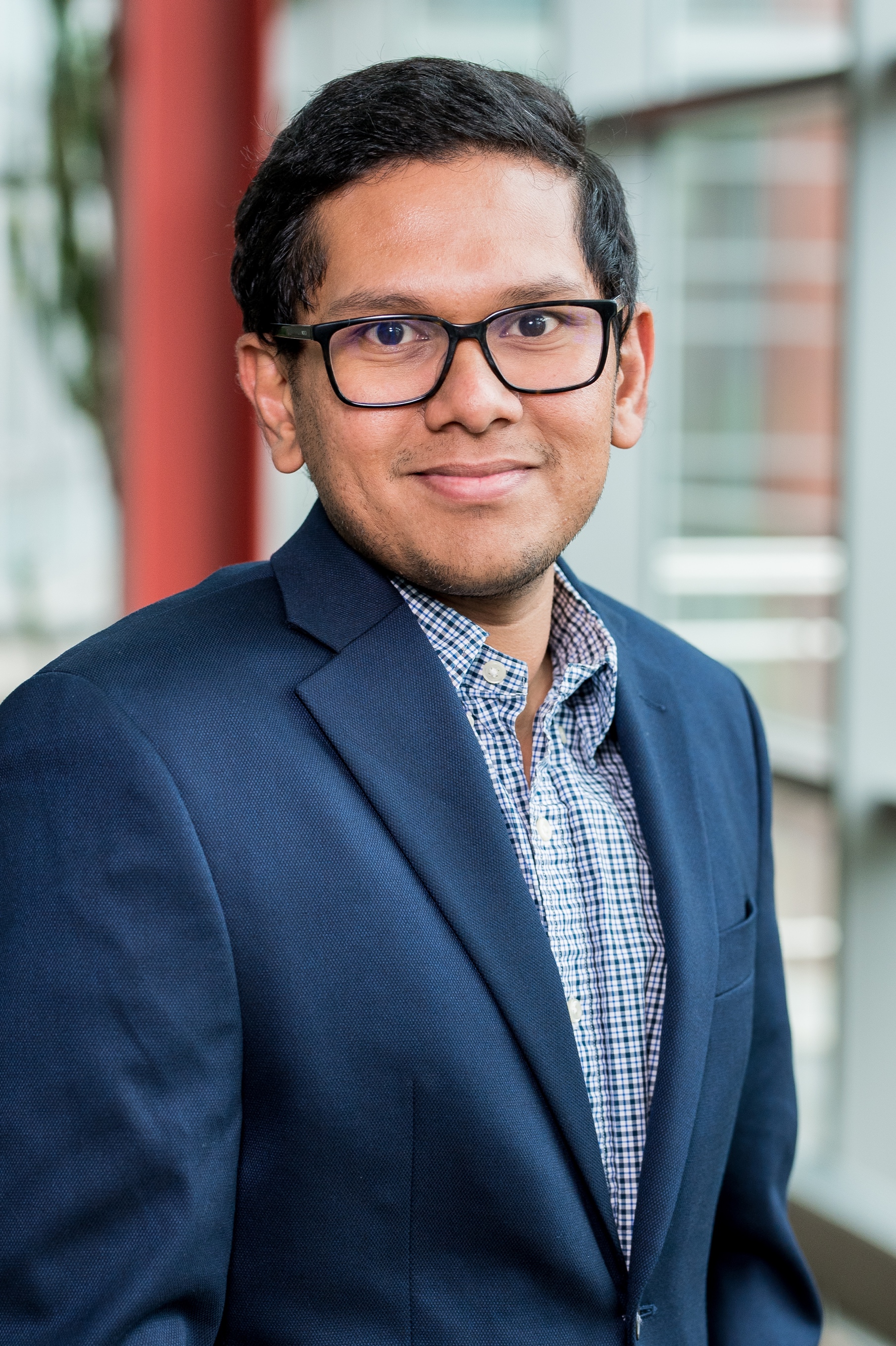
Charith Mendis is an Assistant Professor in the Siebel School of Computing and Data Science at the University of Illinois at Urbana-Champaign, with joint appointments in the Department of Computer Science, Electrical and Computer Engineering, and the Coordinated Science Lab. His research focuses on the intersection of compilers, program optimization, and machine learning systems. Dr. Mendis received his educational background from prestigious institutions: Ph.D. in Computer Science from Massachusetts Institute of Technology (2020) S.M. in Computer Science from Massachusetts Institute of Technology (2015) B.Sc. in Electronics and Telecommunication Engineering from University of Moratuwa (2013) His primary research interests center around compiler technology and machine learning systems. Mendis leads the ADAPT lab at UIUC, where his team works on creating high-performance ML optimization techniques and automated compiler construction using machine learning and formal methods. His work bridges the gap between traditional compiler design and modern machine learning approaches, with applications in tensor compilers, graph neural networks, and sparse computation. He has developed novel frameworks for optimizing deep learning workloads, verification of compiler transformations, and performance modeling for emerging hardware architectures. Mendis has established himself as a leading researcher in compiler optimization for machine learning systems, with a particular focus on tensor compilers, graph neural networks, and performance modeling. His recent publications demonstrate increasing sophistication in combining formal methods with machine learning techniques to solve challenging problems in compiler optimization and verification, with multiple papers accepted at top-tier conferences including OOPSLA, PLDI, POPL, and SIGMOD. His notable scientific achievements include: Google ML and Systems Junior Faculty Award (2025) DARPA Young Faculty Award (2024) NSF CAREER Award (2024) Distinguished Paper Award at POPL (2025) William A. Martin Thesis Award for Outstanding SM thesis, MIT (2015) Multiple teaching excellence awards at UIUC (2021-2023) Dr. Mendis actively mentors students through the ADAPT lab, offering research opportunities for undergraduates, master's students, and PhD candidates interested in compiler technology and machine learning systems. His research is supported by significant funding from the ACE center (part of JUMP 2.0), National Science Foundation (NSF), DARPA, IIDAI, and industry partners including Google, Intel, Amazon, and Qualcomm. He teaches advanced courses in compiler construction and machine learning for compilers. He leads the ADAPT lab at UIUC, which focuses on developing advanced compiler technologies for modern machine learning workloads. The lab maintains active collaborations with industry partners and has established itself as a leading research group in compiler optimization for AI systems. Current projects include tensor compilers, graph neural network optimization, and automated verification of deep learning systems.
Elina Mäkinen serves as Professor of Science, Technology, and Organization at Tampere University's Faculty of Management and Business. She concurrently holds a docentship at the University of Helsinki's Faculty of Social Sciences and serves on editorial boards including the Journal of Organizational Change Management. Her institutional affiliations reflect deep engagement with organizational studies across Nordic academic networks. Her academic background includes a B.Sc. and M.Sc. in Sociology from the University of Helsinki and a Ph.D. in Organization Studies from Stanford University. This foundation supports her research at the intersection of institutional theory and scientific practice. Mäkinen's research centers on interdisciplinary knowledge production, examining how academic careers evolve at disciplinary boundaries. She investigates ethical regulation in science, academic entrepreneurship, and team science dynamics, with particular focus on boundary work and knowledge integration processes. Her work reveals how researchers navigate institutional constraints while pursuing translational science. Analysis of her publication trajectory shows consistent focus on boundary phenomena in science, evolving from early work on clinical recruitment to recent studies of ethical governance. The corpus demonstrates methodological diversity across ethnographic, interview-based, and network analysis approaches within organizational sociology frameworks. As principal investigator, she leads two major projects: The Emergence of Health and Life Science Innovations (HeLSI) and Competing Imaginaries of Ethical Science (IMAGES), funded by the Foundation for Economic Education (2020-2023) and Emil Aaltonen Foundation (2023-2025). These projects examine structural and ethical dimensions of contemporary science. Her laboratory work centers on transdisciplinary collaboration, particularly through the New Social Research unit, where she investigates how researchers build shared epistemic frameworks across disciplinary divides. Current efforts focus on ethical regulation systems in non-medical research contexts.
Dr. Mei Nan is an Associate Professor in the Department of Communication at Tongji University's School of Art and Media. With a career spanning since 2004, she previously held positions at Chang'an University before joining Tongji in 2017. Her academic credentials include a Master's from Shaanxi Normal University, postgraduate studies at Communication University of China, and ongoing doctoral research at Xi'an Jiaotong University's School of Economics and Finance. Research Expertise Her research bridges media economics, AI-driven communication paradigms, and film studies, with specific focus areas including: Media economics and corporate governance interactions Artificial intelligence's impact on communication theory Film/audiovisual language analysis Media culture evolution Marketing models in digital ecosystems Teaching Portfolio Dr. Nan teaches both undergraduate courses ( Audiovisual Language, Chinese/Foreign Film History, Media Culture, Chinese Film Appreciation ) and graduate seminars ( Intelligent Communication Theory and Practice ). Her pedagogical approach integrates contemporary media developments with theoretical foundations. Awards and Grants Tongji University Hongda Award (2021) Tongji Cup General Education Course Paper Competition Teaching Teacher Excellent Organization Award (2021) Principal Investigator: Shanghai Philosophy and Social Science Planning Project (2018BGL025) studying media impact on corporate recovery
Richard Barichello is a Professor in the Department of Food and Resource Economics at the Faculty of Land and Food Systems, University of British Columbia (UBC), where he serves as Graduate Advisor for Agricultural Economics. His academic career spans over four decades with significant contributions to agricultural policy analysis and international trade economics, particularly focused on Southeast Asia. His educational background includes a PhD in Economics (1979) and MA in Economics (1972) from the University of Chicago, and a BA in Agricultural Economics (1969) from UBC. This foundation supports his expertise in complex policy analysis and economic modeling. Dr. Barichello's research centers on agricultural policy instruments, quota systems, trade reform, and development economics with special emphasis on Indonesia and Southeast Asia. His work examines capitalization of government program benefits, raw material export bans, and the intersection of agricultural policy with poverty reduction. Current research increasingly addresses pandemic impacts on food systems and sustainable resource management. Analysis of his recent publications (2015-2024) reveals persistent focus on agricultural trade dynamics, policy risk assessment, and Southeast Asian economic development. Key thematic threads include dairy industry economics, food price inflation mechanisms, and the complex relationship between globalization, poverty, and food security - often using Indonesia as a critical case study. No scientific awards are explicitly documented in the provided materials. As Graduate Advisor for Agricultural Economics, Dr. Barichello mentors students in the Master of Food and Resource Economics program. His extensive policy engagement includes advising Vietnam's Prime Minister (1995-97), Harvard Institute for International Development collaborations in Indonesia (1986-88), and leadership as Department Head (1988-1994), indicating substantial grant-funded research and international policy influence. His international project work includes the Customs and Economic Management Project with Indonesia's Department of Finance and co-presenting agricultural policy training for Indonesia's Ministry of Agriculture (1994-97), demonstrating sustained engagement with Southeast Asian economic institutions through interdisciplinary policy teams.
Kalina Bontcheva is a Senior Researcher in the Natural Language Processing Group within the Department of Computer Science at the University of Sheffield. She holds an EPSRC Career Acceleration Fellowship (working part-time since October 2015) focused on personalized summarization of social media content. Her research spans multiple EU-funded projects including PHEME (computing veracity of social media), TrendMiner, DecarboNet, and uComp, with significant contributions to the GATE (General Architecture for Text Engineering) open-source NLP infrastructure since 1999. Dr. Bontcheva's research interests focus on the intersection of natural language processing and social media analysis. Her work encompasses NLP for social media, semantic search, information extraction from social platforms, crowdsourcing of NLP corpora, collaborative text annotation, semantic technologies, and text mining and analytics. She has particular expertise in developing methods for personalized, abstractive multi-document summarization across different social media platforms, addressing the challenges of noisy, jargon-filled and dynamic content. Her interdisciplinary approach combines machine learning, semantic technologies, and social dimension analysis to create systems that adapt to individual users' information seeking goals. Analysis of her recent publications reveals a strong focus on social media processing challenges, with emphasis on Twitter analysis, temporal expression recognition, and handling noisy text. Her work consistently addresses the unique characteristics of social media content and develops specialized techniques for information extraction, sentiment analysis, and user geolocation within these platforms. The GATE framework serves as the foundation for much of her tool development, demonstrating her commitment to creating reusable, open-source NLP infrastructure. Her most significant award is the EPSRC Career Acceleration Fellowship, which supports her work on personalized social media summarization. This prestigious fellowship includes a substantial budget of £560k and involves collaborations with industry partners including The Press Association, British Telecom, and Fizzback. Dr. Bontcheva has led numerous major research projects throughout her career. She was Principal Investigator on three EU-funded projects (MUSING, TAO, and ServiceFinder) between 2006-2009, coordinating the TAO consortium with seven partner institutions. She currently leads the PHEME EU project and serves as PI for TrendMiner and DecarboNet European projects, while also contributing as Co-I on the uComp project. Her project portfolio demonstrates consistent success in securing competitive research funding across multiple domains within NLP and semantic technologies. She works within the Natural Language Processing Group at the University of Sheffield, which has been central to the development of the GATE infrastructure. Her work connects with various initiatives including the GATE Cloud platform and the TextVRE project for e-humanities textual studies. She has established collaborations with organizations including the Press Association, British Telecom, Oxford Internet Institute, and Sheffield's Department of Journalism to ensure her research addresses real-world needs across different user communities.
Fredrik Haas is a Researcher at the Department of Biology, Faculty of Science, Lund University, Sweden. He is affiliated with BECC (Biodiversity and Ecosystem services in a Changing Climate), Biodiversity and Conservation Science, and Biodiversity and Evolution research groups. His work contributes to UN Sustainable Development Goals related to life on land and climate action. His research focuses on bird ecology , population dynamics , and conservation in changing climates . Key topics include waterbird responses to climate warming, hybridization in bird species (e.g., Corvus), and the effectiveness of protected areas. He is deeply involved in national monitoring programs and large-scale collaborative studies across Europe. Recent publications highlight trends in waterbird distribution shifts , impacts of climate change on avian communities , and conservation threats such as lead poisoning in sea ducks . His work combines field data, long-term monitoring, and cross-national collaboration to inform conservation policy. Årets miljöhjälte 2021 (Environment Hero of the Year 2021) Fredrik Haas leads and coordinates multiple research projects, including long-term bird monitoring initiatives funded by the Swedish Environmental Protection Agency and FORMAS. He serves as Principal Investigator on projects related to avian influenza preparedness and marine protected area functionality for waterbirds. His work is embedded in the Swedish Bird Survey infrastructure, contributing to national and international biodiversity reporting. He actively engages in public outreach, including media interviews and scientific presentations, such as discussing GPS tracking of diving ducks and new coastal bird survey programs.
Inna Sharf is a Professor at the Department of Mechanical Engineering, Faculty of Engineering, McGill University. She is affiliated with the Aerospace Mechatronics Laboratory, focusing on dynamics, control, and robotics. Her work spans space robotics, UAVs, forestry automation, and multibody systems. Ph.D., University of Toronto B.ASc., University of Toronto Her research interests include: Dynamics and control of robotic systems Space robotics for debris removal and on-orbit servicing Unmanned aerial vehicles (quadrotors, indoor airships) Forestry robotics for tree-harvesting automation Multibody dynamics and contact modeling Recent publications emphasize: Control algorithms for quadrotors and UAV swarms De-orbitation strategies using natural resonances Motion planning under dynamic constraints Thermalling and energy-efficient flight for gliders Collaborative payload transport and adaptive control Tether and net-based debris capture systems
Xiaonan Lu is an Associate Professor of Electrical Engineering Technology at Purdue University's School of Engineering Technology, with a courtesy appointment in the Elmore Family School of Electrical and Computer Engineering. His research focuses on critical challenges in modern power systems dominated by inverter-based resources, particularly stability and control in microgrids and renewable-integrated grids. His research interests span power systems engineering with emphasis on small-signal stability analysis, dynamic modeling of hybrid AC/DC microgrids, and advanced control strategies for grid-forming and grid-following inverters. He investigates AI-assisted modeling techniques, resilience enhancement through hydrogen integration, and data-driven optimization of microgrid operations to address challenges in low-inertia power systems and distributed energy resource coordination. Analysis of his recent publications (2024-2025) reveals dominant trends toward AI-aided stability assessment, seamless control transitions between inverter modes, and quantifiable trade-offs in voltage regulation and power sharing. His work consistently addresses practical implementation challenges including communication delays, cyber resilience, and standardized testing methodologies for inverter-dominated systems.
Professor Stephen Jenkins is a leading expert in Economic and Social Policy at the London School of Economics and Political Science (LSE) since 2011, with a focus on inequality , poverty dynamics , and applied econometrics . He has held leadership roles including Head of the Department of Social Policy (2016-2019, 2023-2024) and coordinates the Global Inequalities Observatory at LSE’s International Inequalities Institute. Education: BSc in Economics, University of Otago (1974-1977) PhD in Economics, University of York (1983) His research interests span: Analysis of income distribution, redistribution via taxation and social security Income mobility and poverty dynamics Measurement errors in survey and administrative data Survival analysis and limited dependent variable models Recent research trends emphasize: Top-income inequality using tax and survey data Labour market volatility and income risk Policy impacts on inequality and poverty Statistical methods for income distribution analysis Scientific awards and honors : Presidency of three major global associations: IARIW (2006-08), ECINEQ (2021-23), ESPE (1998) Distinguished Fellow of the New Zealand Association of Economists (2019) Research Fellow at IZA, Bonn (since 2000) Editorial leadership roles: Journal of Economic Inequality (2014-17), The Stata Journal (current) Advising and grants : Supervises doctoral research in inequality, poverty, and econometrics Contributed to high-impact policy reports for UK DWP, OECD, and New Zealand Treasury REF2021 Impact Case Study: Better measurement of income inequality Member of scientific advisory boards for IAB, WIFO, and Motu Labs and teams : Coordinator of the Global Inequalities Observatory at LSE Key member of LSE’s Department of Social Policy and International Inequalities Institute Collaborates with institutions including IZA, Motu, and IAB
Celeste Malone, PhD, is an Associate Professor and Coordinator of the School Psychology Program at Howard University's School of Education. She holds a PhD in School Psychology from Temple University and postdoctoral training from Johns Hopkins University. Her research focuses on multicultural competence in school psychology, diversification of the profession, and culturally responsive practices. She leads the Multicultural School Psychology Research Group (MSPRG), developing tools like the School Psychology Multicultural Competence Scale. Dr. Malone has held leadership roles in NASP (2022–2023 President, first Black woman in the role) and APA, advocating for equity. She received presidential awards from NASP, APA Division 16, and others. Education: Brown University (BA Psychology), Johns Hopkins (MS Counseling), Temple University (PhD School Psychology) Research interests include bridging research-practice gaps, addressing microaggressions, and improving mental health access for marginalized youth. Notable contributions include frameworks for MTSS (Multi-Tiered Support Systems) in anti-racist schooling and pandemic-era advocacy for educational equity. Key awards: 2024 Outstanding Article Award (School Psychology Review), Jean Baker Mid-Career Service Award (APA) Her work emphasizes social justice through leadership development, policy advocacy, and anti-oppressive training. Current projects explore faculty diversity recruitment, LGBTQ+ competency in training, and liberatory mentoring practices.
Dr. Ertem Esiner is a Senior Research Scientist and Coordinator at the Illinois Advanced Research Center at Singapore (Illinois ARCS), affiliated with the University of Illinois Urbana-Champaign. He holds a Ph.D. in Computer Science and Engineering from Nanyang Technological University (2017), an M.Sc. in Computer Science and Engineering from Koç University (2013), and a B.Sc. in Computer Engineering from Koç University (2011). His academic career includes teaching assistantships at both NTU and KU. Cryptography Security Privacy Cyberphysical Systems His research focuses on security solutions for cyberphysical systems, including the development of a security engine for enforcing automated policies and provenance verification in industrial control systems. Current projects include the Plug & Play Security Engine (Principal Investigator, 2023-2026) and automated security policy generation tools for IIoT environments. His work spans applications in smart grids, building energy management, and communication-based train control systems. Recent publications demonstrate a trend toward real-time security enforcement and provenance tracking in time-critical systems, including patented solutions for message authentication. He has secured multiple research grants totaling 5+ years of funding and leads teams of 4-7 members across collaborative projects with NTU, RESYNC Technologies, and Singapore-ETH Centre. Notable researcher from CREATE (2019) SINGA PhD scholarship recipient WOWZAPP 2012 hackathon winner UPE/ACM Scholarship awardee Vehbi Koç Scholarship recipient He has contributed to ACM and IEEE journals, developed a Building Energy Management System (BEMS) testbed , and published foundational work on secure data storage, query integrity, and decentralized access control mechanisms. His teaching experience includes courses on cryptography, operating systems, and algorithm design.