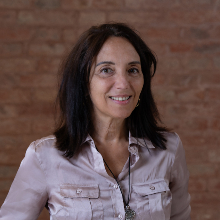
Barbara Carminati is a Professor at the Department of Theoretical and Applied Science, University of Insubria, Italy. Her work focuses on security, privacy, and trust management in decentralized systems, particularly online social networks, IoT, and emerging technologies like blockchain and digital twins. She has contributed extensively to access control, risk assessment, and collaborative frameworks. Her research spans trust modeling , privacy-preserving mechanisms , and malware detection , with a strong emphasis on decentralized social networks and UAV security . She actively explores the application of blockchain for secure workflows and information sharing. Recent publications highlight her engagement with large language models for security optimization, IoT botnet detection , and metadata leakage analysis . Her work bridges theoretical foundations with practical implementations in cybersecurity, social network management, and edge computing. Contact: barbara.carminati@uninsubria.it
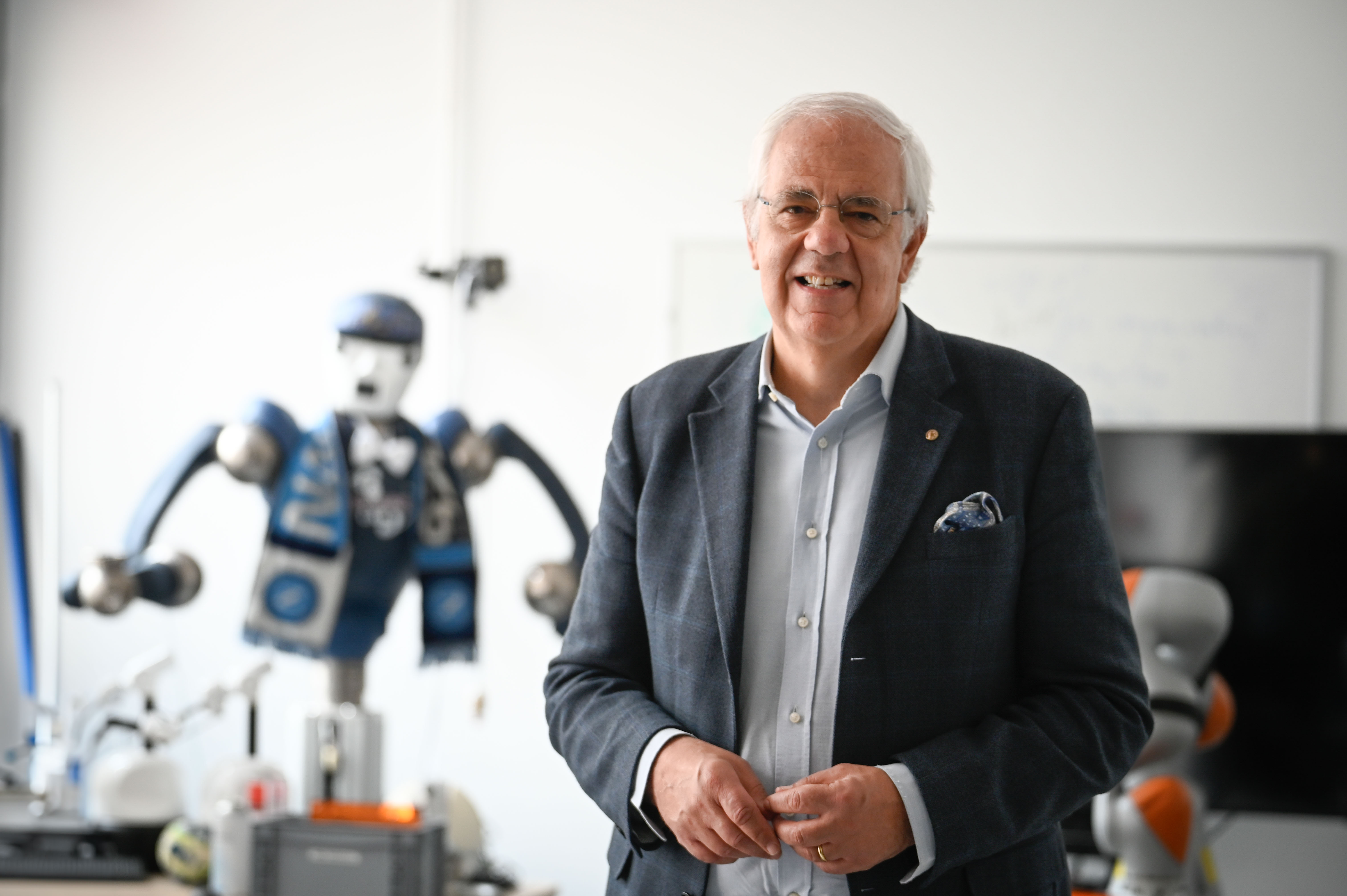
Prof. Bruno Siciliano is a full Professor of Automatics and Robotics at the University of Naples Federico II's Department of Electrical Engineering and Information Technology (DIETI). He directs the PRISMA Lab and chairs the Scientific Council of the ICAROS Center. His research focuses on robotics, automation, and human-robot interaction, with notable contributions to medical robotics, deformable object manipulation, and AI integration. He has received prestigious awards such as the 2024 IEEE RAS Pioneer Award and is a Fellow of multiple international organizations. Affiliations: Director, PRISMA Lab Chair, ICAROS Center Scientific Council Member, ACN Technical-Scientific Committee Research Interests: His work spans robotics education, surgical robotics, non-prehensile manipulation, and AI-driven robotic systems. Notably, his projects include the ERC-funded EndoTheranostics initiative for robotic colonoscopy and RoDyMan for dynamic manipulation. His contributions bridge robotics with healthcare, automation, and cognitive systems. Awards & Honors: 2024 IEEE RAS Pioneer in Robotics and Automation Award Genio Award (2024) for pioneering Italian robotics Fellowships: IFAC, IEEE RAS, and international AI associations Grants & Leadership: ERC Synergy Grant (2023, 10M€) and Advanced Grant (2013) Leadership roles in IEEE RAS and international robotics initiatives Labs & Teams: PRISMA Lab focuses on robotics paradigms like design, knowledge, and human-robot interaction, with projects in medical robotics and autonomous systems.
Prof. Fabio Galasso is a Full Professor in the Department of Computer Science at Sapienza University of Rome, where he heads the Perception and Intelligence Lab (PINLab). His research focuses on fundamental innovation in computer vision and machine learning, with particular emphasis on distributed intelligent systems, perception frameworks, and general intelligence within sustainable and interpretable AI contexts. His research interests span multiple domains of computer vision including video segmentation , motion forecasting , distributed intelligent systems , and shape reconstruction . Galasso's work emphasizes sustainable AI approaches that operate within constrained computational resources while maintaining interpretability and verifiability. His research bridges theoretical foundations with practical applications across retail, smart cities, and industrial settings. His recent publications demonstrate a clear progression toward increasingly complex human motion understanding and forecasting, with a strong emphasis on real-world applications. The research trajectory shows movement from foundational video segmentation techniques toward sophisticated motion prediction systems and anomaly detection frameworks that integrate multiple modalities. Key themes include temporal consistency, computational efficiency, and practical deployability in resource-constrained environments. His scientific achievements have been recognized with prestigious awards: 2019 IoT/WT Innovation World Cup 2019 Digital Champions Award 2018 Deutscher Digital Award Galasso has coordinated significant research initiatives including a Marie Sklodowska-Curie Actions project (Horizon 2020) and served as Principal Co-Investigator in multiple German-funded projects from the Ministry of Education and Ministry of Economics. His industry experience includes founding and directing OSRAM's Computer Vision Department in Munich, where he led R&D efforts connecting AI research with smart lighting applications, resulting in successful innovation transfers like the award-winning VISN product. He leads the Perception and Intelligence Lab (PINLab) at Sapienza University of Rome, fostering research that spans fundamental computer vision techniques to practical implementations in retail, smart cities, and industrial applications. The lab maintains strong connections with both academic institutions (including previous collaborations with University of Cambridge and Max Planck Institute) and industry partners.
Giuseppe Pascazio serves as a Full Professor in the Department of Mechanics, Mathematics & Management at the Polytechnic University of Bari, Italy. His research spans computational fluid dynamics with dual focus on aerospace applications and biomedical engineering, particularly in hypersonic flow phenomena and microwave ablation technologies for cancer therapy. His primary research interests include fluid dynamics, computational methods for high-enthalpy flows, thermochemical non-equilibrium modeling, turbulent boundary layer analysis, and biomedical device optimization. Pascazio develops advanced numerical techniques including high-order schemes, state-to-state kinetics implementations, and GPU-accelerated solvers to address complex flow physics in atmospheric entry and medical applications. His work bridges fundamental gas dynamics with practical engineering solutions for spacecraft thermal protection and minimally invasive cancer treatments. Analysis of his recent publications (2021-2025) reveals three dominant research thrusts: (1) High-fidelity simulation of hypersonic flows with detailed chemistry using state-to-state kinetics, (2) Development of robust numerical methods for shock-capturing in thermochemically non-equilibrium flows, and (3) Biomedical applications focusing on microwave ablation probe design and microcapsule transport in vascular systems. His aerospace work emphasizes atmospheric reentry physics while biomedical research targets cancer therapy optimization. Pascazio has participated in significant research projects including "PrInCE" (Innovative Processes for Energy Conversion) and "INNOVHEAD" (Advanced technologies for reduction of polluting emissions in Heavy Duty engines). His collaborative work involves industrial partnerships in aerospace and medical device sectors, though specific grant details beyond project names aren't provided. He maintains active research output with over 50 publications demonstrating consistent contributions to high-speed aerodynamics and biomedical fluid dynamics.
Annarita De Maio serves as a Researcher in Operations Research (MAT/09) at the Department of Economics, Statistics and Finance (DESF) of the University of Calabria, where she teaches Logistics, Operations Research, and Mathematical Methods for Economics courses across undergraduate and graduate programs including Economics, Data Science, and Management Engineering. PhD in Mathematics and Computer Science (2018), University of Calabria Dissertation: Integrated Logistics and Last-Mile Deliveries (developed with Procter & Gamble) Research periods at P&G Brussels and CIRRELT/Laval University (Quebec) Her research centers on Logistics 4.0 innovations with dual emphasis on sustainable last-mile delivery systems (crowdshipping, autonomous robots, locker networks) and smart tourism applications . Current projects integrate IoT and AI for optimizing pharmaceutical distribution, perishable goods logistics, and urban tourist trip planning while addressing environmental constraints and stochastic demand patterns. Recent publications (2022-2025) reveal three thematic clusters: (1) stochastic optimization for dynamic delivery systems, (2) sustainable urban logistics solutions using multi-modal transport, and (3) data-driven tourism management frameworks. Her work consistently bridges theoretical modeling with industrial case studies involving Italian companies and municipal authorities. As an active member of DESF's Quantitative Methods for Economics, Finance and Management research group, she contributes to regionally and nationally funded projects focusing on mathematical programming applications. Her international conference participation includes speaking and organizing roles at major logistics and operations research events. Dr. De Maio collaborates within the department's research ecosystem through the Quantitative Methods group, which develops computational models for decision-making in finance, actuarial science, and transportation. Current initiatives explore crowdshipping economics, green tourist trip design, and risk-aware inventory systems for perishable commodities.
Leonardo Lanari is an Associate Professor at the Department of Computer, Control and Management Engineering (DIAG) of Sapienza University of Rome. His research focuses on robotics, particularly humanoid motion generation, model predictive control, and nonlinear control systems. He has contributed to advancements in gait stability, underactuated robotics, and remote robotic experiments through the REAL Lab. PhD in Systems Engineering from Sapienza University Visiting Scholar at Rensselaer Polytechnic Institute Research Interests Robotics (humanoid locomotion, flexible manipulators, underactuated systems), control theory (MPC, robust control), and large-scale system control. His work integrates geometric approaches with practical robotic implementations. Recent Article Trends Focus on model predictive control for humanoid stability, stair navigation, and cooperative transportation systems. 2025 studies emphasize feasibility-driven motion planning in complex environments. Scientific Awards 2020 IEEE Robotics and Automation Magazine Best Paper Award Teaching & Grants Teaches Control Systems and Multivariable Feedback Control at Sapienza. Has developed courses on underactuated robots and control problems in robotics. Involved in grants for healthcare AI platforms like CADUCEO and humanoid applications in aircraft manufacturing. Labs & Teams Membro del Robotics Lab at DIAG. Collaborates with international institutions including MIT, Rensselaer Polytechnic Institute, and Airbus on humanoid robotic projects.
Francesco Liberati is an Associate Professor in Automatic Control at Sapienza University of Rome, Department of Computer, Control and Management Engineering (DIAG). His research focuses on cyber-physical systems, model predictive control (MPC), and hybrid MPC-deep learning algorithms with applications to power systems, traffic control, and task scheduling. PhD in Systems Engineering from Sapienza University (2015) Assistant Professor (RTD-B) at Sapienza University (2021-2024) Assistant Professor (RTD-A) at eCampus University (2015-2017) Liberati’s work combines theoretical advancements in control theory with real-world implementations in smart grids and transportation systems. He has pioneered approaches integrating MPC with reinforcement learning for large-scale optimization problems, particularly in electric vehicle (EV) charging and grid reconfiguration. His recent publications emphasize: Stochastic and economic MPC for renewable energy storage Decentralized control algorithms for EV charging Cyber-physical security in microgrids and smart infrastructure Hybrid AI-control solutions for traffic and industrial systems Scientific recognition includes: 2021 Best Paper Award, IEEE World AI IoT Congress (AIIoT) 2021 Networked Systems Best Paper Award He serves as Associate Editor for Advanced Control for Applications (Wiley) and on the Editorial Board of Smart Cities (MDPI). His applied research spans European Commission H2020 projects and collaborations with industry partners in energy and transportation sectors.
Chiara Petrioli is Full Professor at Sapienza University of Rome's Department of Computer, Control and Management Engineering and Deputy Rector for scouting, fundraising, and business incubation. She founded the spinoff WSENSE S.r.l. and coordinated the university's Computer Science Ph.D. program. Her research pioneers the Internet of Underwater Things, leading to breakthrough technologies featured in international media and the NT100 list. Her research interests center on wireless, embedded, IoT, and cyber-physical systems, with a focus on underwater networking. She designs and optimizes communication protocols, security mechanisms, and energy-efficient architectures for underwater sensor networks, enabling applications in environmental monitoring, archaeology, and deep-sea exploration. Recent publications highlight trends in underwater acoustic communications (e.g., dual-channel protocols, S2C modulation), security (authentication, key exchange), and energy efficiency (wake-up radio, UAV-assisted data collection). Applications span dissolved oxygen monitoring, submerged heritage preservation, and sustainable deep-sea mining impact assessment. Her scientific awards include: IEEE Fellow 2021 Fulbright Scholar Inspiring Fifty 2018 N2Women 2019 Star in Computer Networking and Communications Gamma Donna Women Startup Award 2022 Top 2% World Scientist by Stanford Repubblica D 100 Women to Change the World 2021 As principal investigator, she has led over twenty national and international projects, including EC projects GENESI and SUNRISE, and EASME projects ArcheoSub and Seastar. She founded WSENSE S.r.l., a spinoff that translates research into innovative technologies, resulting in international patents and features in BBC, RAI, Wired, and National Geographic. She actively contributes to the academic community as chair of IEEE SECON steering committee, associate editor of ACM/IEEE Transactions on Networking, and through leadership roles in ACM SIGMOBILE and IEEE Transactions on Mobile Computing.
Karim Abu Salem serves as a Fixed-term Assistant Professor in the Department of Mechanical and Aerospace Engineering (DIMEAS) at the Polytechnic University of Turin, affiliated with the College of Mechanical, Aerospace, and Automotive Engineering. He additionally holds invited membership in the College of Management and Production Engineering. His teaching portfolio includes Aerospace Vehicle Design, Space Flight Mechanics/Structures, Space Environment Operations, and Aeronautical Legislation courses for both bachelor's and master's programs in Aerospace Engineering. Dr. Abu Salem's research centers on sustainable aviation innovation, specializing in box-wing aircraft configurations, hybrid-electric and hydrogen propulsion systems, and advanced structural design methodologies. His work addresses critical challenges in emissions reduction, flight dynamics optimization, and climate impact mitigation through computational modeling, metamodeling techniques, and multidisciplinary design analysis. Key focus areas include unconventional aircraft architectures, power management systems, and metamaterial applications for next-generation aerospace vehicles. Analysis of his recent publications (2023-2025) reveals a concentrated research trajectory toward decarbonizing regional and medium-range aviation. His work demonstrates increasing emphasis on liquid hydrogen propulsion, box-wing aerodynamic efficiency, and holistic environmental impact assessment beyond CO 2 emissions. The publications exhibit strong collaboration patterns with researchers like G. Palaia and E. Carrera, primarily targeting high-impact journals in aerospace engineering and sustainability. As an active educator, Dr. Abu Salem contributes to curriculum development across multiple aerospace engineering programs, bridging theoretical concepts with emerging sustainable aviation technologies through his course collaborations and lectures.
Delibra Giovanni is an Associate Professor at Sapienza University of Rome, specializing in aerodynamics, aeroacoustics, and renewable energy systems. His research focuses on optimizing turbomachinery performance, including axial fans, wind turbines, and hydrogen storage systems. He employs advanced computational fluid dynamics (CFD) and machine learning techniques to address challenges in renewable energy integration, thermal management, and noise reduction. Key research areas include: Wind energy systems and offshore wind farm design Hydrogen storage and safety in green energy applications Aeroacoustic control in industrial fans and turbines CFD-based optimization of heat exchangers and cooling systems Recent work emphasizes the integration of photovoltaic and biomass systems in renewable energy communities, as well as experimental validation of wave energy turbines. His publications highlight innovations in fan blade design, leakage modeling, and multi-objective optimization frameworks for sustainable energy infrastructure. Collaborations involve both academic institutions and industry partners, focusing on real-world applications such as tunnel ventilation systems and Mediterranean island energy solutions. Giovanni's contributions bridge theoretical modeling with practical engineering challenges in the transition to clean energy.
Andrea Calimera is a Full Professor in the Department of Control and Computer Science (DAUIN) at the Polytechnic University of Turin, where he is also a member of the Interdepartmental Center SmartData@PoliTO - Big Data and Data Science Laboratory. He is actively involved in teaching and research, contributing to doctoral programs and undergraduate and graduate courses in computer engineering and data science. Full Professor (L.240), Polytechnic University of Turin Department of Control and Computer Science (DAUIN) Member, SmartData@PoliTO - Big Data and Data Science Laboratory Member, College of Computer, Film and Mechatronics Engineering His research interests center on electronic design automation, energy-efficient electronic systems, and low-power design, with strong connections to artificial intelligence, embedded systems, and IoT. His work bridges hardware and software optimization for intelligent edge devices. The recent publications (2023–2025) reflect a focused trend on federated learning, secure and efficient AI deployment on edge devices, and low-power embedded systems. Topics include robust evaluation in federated learning, resource management under label skew, homomorphic encryption for private tensor operations, pipeline optimization for keyword spotting, and side-channel attacks via DVFS for neural network fingerprinting—highlighting expertise in both performance and security of AI systems on constrained hardware. Andrea Calimera supervises PhD and master's students and leads research projects funded by competitive and commercial grants. He has contributed to national and international patents on low-power depth estimation and single-image signal processing. Scientific Director, SENSEI Project (2017–2019): Energy-efficient machine learning on chip for IoT Scientific Director, Commercial Project (2020–2022): Design tools for AI on energy-efficient embedded mobile devices Supervision of PhD student Erich Malan (ongoing, since 2022) on distributed and federated learning over IoT networks Supervision of Bachelor's student Chen Xie (2020–2024) on synthesis of smart sensors He teaches courses such as High-Level Synthesis (PhD), Synthesis and Optimization of Digital Systems, Machine Learning for IoT, and Efficient Computing for Artificial Intelligence across Computer Engineering and Data Science programs. His research group is EDA - Electronic Design Automation (DAUIN), which focuses on hardware-software co-design for intelligent systems.
Dr. Vito Trianni is a researcher at the Institute of Cognitive Sciences and Technologies (ISTC-CNR) in Rome, Italy, with a focus on swarm robotics , collective intelligence , and bio-inspired algorithms . He collaborates with institutions like Sapienza University of Rome and Queen Mary University of London on projects involving decentralized decision-making, UAVs for precision agriculture, and self-organizing systems. His work bridges theoretical insights from natural systems (e.g., honeybee colonies) with practical robotic implementations. His research interests center on Designing collective decision-making systems for robot swarms Modeling psychophysical laws in superorganism behavior Autonomous construction using compliant materials Applications of swarm robotics to real-world challenges like agriculture Key trends in his publications include bio-inspired design, micro-macro dynamics, and decentralized cognition. Scientific awards include the Rosaria Conte Memorial Fellowship for interdisciplinary research. He has supervised PhD candidates like Luigi Feola and collaborated with researchers such as Andreagiovanni Reina and Marco Dorigo . Projects like DICE , SAGA , and BeesBook highlight his lab’s focus on experimental and theoretical robotics. Public outreach activities at events like Wired Next Fest 2015 and RomeCup demonstrate his commitment to science communication.
Simone Corbellini is an Associate Professor at the Polytechnic University of Turin, Department of Electronics and Telecommunications (DET), and a member of the College of Electronic, Telecommunications and Physics Engineering. His research spans electrical and electronic engineering, with a focus on artificial neural networks, calibration, wireless sensor networks, and embedded systems. Research keywords: Artificial Intelligence Metrology & Measurement IoT & Signal Processing Recent projects include MicrowaveRad (microwave radiometers for thermometry) and PVZEN Lab (energy community monitoring systems). He supervises PhD students Davide Ceschini, Davide Sgro', and Marco Sento, contributing to projects on low-power distributed sensors and biomedical devices. His scientific accolades include a National Patent for tire production process control. Teaching roles cover Testing and Certification and Electronic Circuits in Electronic, Biomedical, and Electrical Engineering programs.
Silvia Faggian is an Associate Professor at Ca' Foscari University of Venice's Department of Economics. She serves as the Department's Delegate for Entrance Exams and Additional Learning Requirements in Mathematics. Her research focuses on mathematical methods in economics, actuarial sciences, and financial mathematics, with particular expertise in network theory, optimal control, and spatial economics. Research interests span mathematical economics, network externalities, spatial resource allocation, dynamic optimization, and economic growth models. Her work frequently applies advanced mathematical techniques to economic systems and resource distribution problems. Publications demonstrate sustained focus on dynamic optimization problems, spatial economics, and network-based economic modeling. Recent work emphasizes resource competition in networked systems and growth models with externalities, while earlier publications established foundational contributions to vintage capital theory and optimal control applications. Teaching activities include coordination of mathematics entrance requirements and undergraduate mathematics instruction within the economics curriculum.
Ruggero Carli is an Associate Professor at the Department of Information Engineering, University of Padova. His research focuses on control systems, robotics, and optimization, with emphasis on model-based reinforcement learning, distributed optimization algorithms, and energy systems. His work bridges theoretical advancements with real-world applications, including autonomous robotics, smart grids, and nonlinear control. Key contributions include physics-informed machine learning frameworks, ADMM-based distributed optimization methods, and MPC-driven control solutions for underactuated systems. Research interests include: Model-Based Reinforcement Learning for Robotics Nonlinear Model Predictive Control (NMPC) Distributed Optimization and ADMM Variants Energy Networks and Smart Grids Robot Dynamics and System Identification Recent publications emphasize: Continual learning for driver behavior analysis Physics-informed control for underactuated systems Robust optimization in unreliable networks Autonomous robotic manipulation with large language models His research integrates control theory with modern machine learning techniques, addressing challenges in edge computing, distributed systems, and real-time implementation.