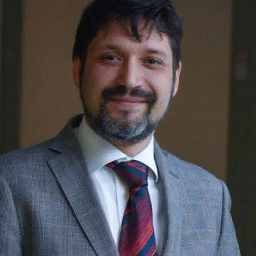
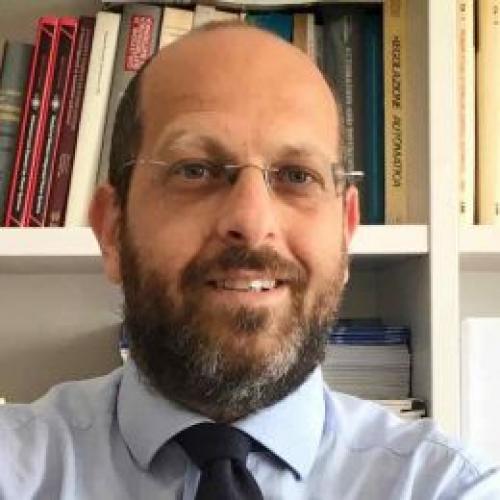
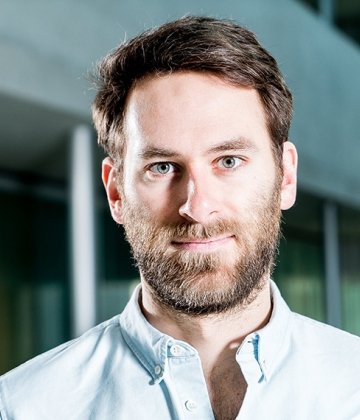
Gianfranco Chicco is a Full Professor at the Politecnico di Torino , Italy, within the Department of Energy (DENERG). He serves as Scientific Director of the Electrical Power Systems research group and the Turin unit of the ENSIEL Consortium. A Fellow of IEEE (since 2018), he has held editorial leadership roles as Editor-in-Chief of Sustainable Energy, Grids and Networks and Subject Editor of Energy , while chairing major conferences like IEEE ISGT Europe 2017 and UPEC 2020. Education : Laurea (cum laude) in Electrical Engineering (1987), Ph.D. in Electrical Engineering (1992), Doctor Honoris Causa (2017, Polytechnic University of Bucharest; 2018, Technical University 'Gheorghe Asachi' of Iasi). Research Interests : Focus on power transmission and distribution systems , distributed energy resources , and multi-energy smart grids , with applications in artificial intelligence , load management , and power quality . His work addresses technical, economic, and environmental aspects of distributed generation and smart grid sustainability . Publications Trends : Recent articles emphasize photovoltaic power optimization , dynamic grid modeling , and multi-energy system coordination , reflecting expertise in renewable integration , clustering algorithms , and adaptive control . Key subfields include voltage stability , load forecasting , and blockchain for energy trading . Awards : IEEE Fellow (2018-) Best Paper Awards at SEST (2018, 2020) Doctor Honoris Causa (2017, 2018) 'Giancarlo Vallauri' Degree Prize (1988) Advising and Grants : Supervises PhD students in power converters , renewable integration , and high-voltage measurement methodologies . Leads European projects like H2020 MIGRATE and OSMOSE, focusing on grid resilience , clustering-based network planning , and multi-energy sustainability .
Riccardo Raheli is a Full Professor at the University of Parma , Department of Engineering and Architecture, with a career spanning over three decades in Information and Communication Technologies (ICT). He has served as Chair of the Councils for Telecommunications and Communication Engineering programs, and as representative of the University of Parma in CNIT and its Members' Assembly. Education: Laurea in Electronic Engineering (University of Pisa, 1983), M.Sc. in Electrical and Computer Engineering (University of Massachusetts, 1986), Postgraduate Diploma (Scuola Superiore Sant'Anna, 1987) Key Roles: President of Degree Councils (2002-2018), CNIT Committee Member (2000-2005), Editorial Board member for IEEE Transactions, Springer and MDPI journals His research bridges telecommunications , digital signal processing , and healthcare applications , producing extensive international publications and industrial patents. He has co-authored monographs including Detection Algorithms for Wireless Communications (Wiley, 2004) and LDPC Coded Modulations (Springer, 2009). Recent article trends show interdisciplinary work in automotive stress monitoring (IoT/Matlab-based systems), video processing for healthcare (neonatal seizures, respiratory monitoring), and acoustic field control (microphone virtualization, personal sound zones). His work spans machine learning applications in automotive systems, stochastic acoustic modeling , and power-line communications . Scientific Leadership : Co-Chair for IEEE conferences (ICC 2010, GLOBECOM 2011, ISPLC 2020) Editorial roles in 7+ international journals Grants & Collaborations : Led industrial patents in communications systems Coordinated CNIT Technical Reports series (2025) He teaches Wireless Communications and Digital Signals Laboratory , emphasizing Matlab/Simulink proficiency. His laboratory sessions focus on practical implementation of signal processing algorithms, requiring full software installation on personal devices.
Stefano Grivet-Talocia is a Full Professor at the Department of Electronics and Telecommunications at the Polytechnic University of Turin, where he also serves as Director of the Doctoral School and President of the Doctoral School Council. He is a member of the Interdepartmental Center SmartData@PoliTO - Big Data and Data Science Laboratory, the University Committee for Research, Technology Transfer and Services to the Territory, and the Commission for the Promotion of Library, Archive and Museum Heritage. His academic career spans over two decades at Politecnico di Torino, where he has established himself as a leading researcher in electromagnetic modeling and signal integrity. Grivet-Talocia earned his Laurea degree (summa cum laude) in Electronic Engineering in 1994 and his Ph.D. in Electronic and Communication Engineering in 1998, both from the Polytechnic University of Turin. Between 1994 and 1996, he conducted research at NASA/Goddard Space Flight Center in Greenbelt, Maryland. His educational background laid the foundation for his expertise in electromagnetic modeling, wavelet analysis, and signal processing. His research focuses on behavioral modeling, electromagnetic compatibility, macromodeling, model order reduction, numerical modeling, passivity, power integrity, signal integrity, transmission lines, and wavelets . Grivet-Talocia is particularly renowned for his work on passive macromodeling of interconnect structures, development of the TOPLine technique for transmission line simulation, and pioneering contributions to passivity enforcement algorithms. He has co-authored the first book entirely dedicated to Macromodeling (2016) and developed innovative approaches to waveform relaxation and wavelet-based signal processing. His recent publications (2024-2025) demonstrate continued leadership in model order reduction, with significant contributions to data-driven modeling of linear and nonlinear systems, power integrity analysis, and electromagnetic compatibility. His work spans both theoretical advances in numerical methods and practical applications in circuit design, with strong industry relevance particularly for semiconductor and electronic design automation companies. IEEE Fellow (2018-present) Three Intel SRS Grants (2022-2024) Three IBM SUR Grant Awards (2007-2009) Best Associate Editor Award - IEEE Transactions on Components, Packaging and Manufacturing Technology (2020) Multiple Best Conference Paper Awards (2006-2020) URSI Young Scientist Awards (1999) Ranked among the "top 2% worldwide researchers" (Stanford) since 2019 Grivet-Talocia actively supervises doctoral students including Michele Cusano, Sara Paknezhad Panahi, Antonio Carlucci, and Kun Zhao. He has secured numerous research grants from competitive national calls (PRIN) and commercial contracts with industry partners including Intel, IBM, Nokia, Hitachi, Infineon, and Cadence. His technology transfer activities include co-founding the spin-off IdemWorks (2007-2016), which was acquired by CST in 2016. He also developed the autoCircuits web service for automated circuit problem generation, widely used in electrical engineering education. He leads the EMC Group (Electromagnetic Compatibility) at DET and has been instrumental in establishing the Compact Dynamical Modeling research area. His work has practical applications in high-speed electronics design, with algorithms embedded in commercial tools like IBM PowerSPICE. Grivet-Talocia maintains strong industry connections through his research projects and serves as Associate Editor for IEEE Transactions on Components, Packaging and Manufacturing Technology.
Guido Perboli is a Full Professor in the Department of Management and Production Engineering (DIGEP) at the Polytechnic University of Turin, where he also serves as Logistics Coordinator and Project Coordinator for activities supporting relationships with government bodies. He is a member of the Interdepartmental Center CARS@PoliTO (Center for Automotive Research and Sustainable Mobility) and serves as Director of the ICT for City Logistics and Enterprises (ICElab@Polito) research center, which he founded in 2016. His research interests span a broad range of topics including Operations Research, Logistics, Last-mile Delivery, Sustainable Logistics, Combinatorial Optimization, Stochastic Programming, Business Development, and Lean Business methodologies. His work particularly focuses on City Logistics, Green Logistics, and the application of emerging technologies like Blockchain and AI in supply chain management. He has developed GUEST, a Lean Business methodology for innovation processes from early idea definition to implementation. Professor Perboli's recent publications demonstrate a strong focus on urban logistics, last-mile delivery optimization, blockchain applications in supply chains, and the integration of AI techniques in transportation systems. His work shows an increasing trend toward interdisciplinary research that combines optimization methods with emerging technologies to address sustainable urban mobility challenges. Professional Recognition: CASE Best Paper award from IEEE Conference on Automation Science and Engineering (2011) Effective member of INFORMS (2019-present) Effective member of EURO (1995-present) Effective member of AIRO (1995-present) Associate Editor for Journal of Applied Research and Technology (2020-present) Associate Editor for Sustainability (2018-present) Professor Perboli actively advises PhD students and has supervised numerous research projects, including EU-funded initiatives like SINFONICA, HESTER, and 5G-LOGINNOV. He serves as Scientific Director for multiple commercial research projects focused on blockchain, IoT, and AI applications in logistics. Beyond academia, he is Chief Scientific Officer of Arisk S.p.A., a fintech company specializing in business crisis prediction using AI and machine learning. His research group, ICElab@Polito, focuses on two main areas supporting urban growth: logistics and enterprises. The center collaborates with numerous companies including Amazon, DHL, and FCA, addressing real-world challenges in urban logistics and supply chain management through innovative research approaches.
Giorgio Fagiolo is a Full Professor of Economics at Sant'Anna School of Advanced Studies. His work spans agent-based computational economics, economic networks, and macroeconomic policy analysis. University: Sant'Anna School of Advanced Studies (Scuola Superiore Sant'Anna) Department: Economics Email: giorgio.fagiolo@sssup.it Research interests focus on agent-based modeling , macroeconomic instability , and climate-economy interactions . He develops computational models to study industrial dynamics, financial integration, and policy design in complex systems. Key themes: Endogenous growth cycles, R&D network stability, and green transition policies. Methodological emphasis: Empirical validation of agent-based models and nonlinear economic dynamics. Scientific awards include collaboration with leading institutions like ETH Zurich, Columbia University, and OFCE Sciences Po. His publications appear in journals such as Journal of Economic Dynamics and Control and Ecological Economics .
Gabriella Casalino is an Assistant Professor at the University of Bari Aldo Moro, Department of Computer Science, and a key researcher at CILAB - Computational Intelligence Lab. Her work focuses on Computational Intelligence methods for interpretable data analysis, particularly in eHealth, Data Stream Mining, and eXplainable Artificial Intelligence (XAI) within medical and educational domains. She has contributed to innovative approaches in smartphone-based health monitoring, fuzzy logic applications, and remote vital sign detection via photoplethysmography. Education : Ph.D. in Computer Science, with advanced training at institutions like Universitat de Girona and Université de Mons. Research Trends : Recent publications highlight applications of evolving granular computing, neuro-fuzzy systems, and explainable AI in hypertension prediction, bipolar disorder monitoring, and educational data analysis. Key subfields include remote health monitoring, medical data streams, and hybrid AI models. Grants : Research funded by AIRC (Italian Cancer Research Foundation), focusing on computational methods for healthcare challenges. Labs & Collaborations : Active in CILAB, collaborating on projects involving mHealth solutions, cardiovascular risk assessment, and intelligent educational systems.
Marco Badami is a Full Professor at the Department of Energy (DENERG) , Polytechnic of Turin. He serves as Scientific Director for national and EU-funded research projects in energy systems and has been a Course Lecturer for Energy Systems and Industrial Use of Energy since 2010. He supervises PhD students in Energetics and Electrical Engineering . Research Interests: His work spans energy systems optimization, machine learning applications for industrial energy efficiency, smart grids, cogeneration scheduling, blockchain-based energy data immutability, and predictive maintenance algorithms for photovoltaic plants. Current projects focus on AI-driven energy audits, optimized control systems for industrial microgrids, and digital twin architectures. Collaborations: He works with Trigenia Srl, Stogit SpA, and international institutions on commercial research contracts. His scientific contributions include 15+ publications on topics like LSTM forecasting for solar energy, deep reinforcement learning for multi-energy systems, and decentralized peer-to-peer energy trading platforms.
Diana Gratiela Berbecaru is an External Collaborator and External Lecturer at the Department of Control and Computer Science (DAUIN), Politecnico di Torino, where she contributes to teaching and research in cybersecurity and digital identity. She is affiliated with the TORSEC Security Group and actively participates in EU-funded research projects such as Q-FENCE, focusing on quantum-resistant cryptography. She teaches core courses including Security and Privacy for Digital Identity Frameworks and Information Systems Security , and has been recognized with the Italian national scientific habilitation as Associate Professor in 2025, affirming her academic standing. Full Name: Diana Gratiela Berbecaru University: Politecnico di Torino Department: Department of Control and Computer Science (DAUIN) Academic Rank: Associate Professor (habilitated) Teaching Status: Part-time External Lecturer Email: diana.berbecaru@polito.it Her research focuses on cybersecurity, identity management, and trusted computing, with specific interests in authentication, authorization, data privacy, network security, and trusted computing in distributed and IoT environments. She investigates practical implementations of digital identity systems using the eIDAS infrastructure, certificate validation, TLS security, and post-quantum cryptography. Her work bridges theoretical security models with real-world deployment challenges. Her recent publications (2022–2025) reflect a strong focus on TLS security, X.509 certificate analysis, anomaly detection using AI, remote attestation for IoT, and post-quantum migration strategies. These works are published in high-impact venues such as IEEE Access, IEEE ISCC, and ARES, indicating active and influential contributions to the cybersecurity research community. The research trend shows a consistent emphasis on practical tools and frameworks for enhancing trust and security in digital systems. Scientific Awards and Recognition: Italian National Scientific Habilitation as Associate Professor (Abilitazione Scientifica Nazionale, II fascia), 2025 She serves as an Associate Editor for IEEE Transactions on Network and Service Management and IEEE Access , and as a Guest Editor for Electronics and Computer Networks . She chairs and co-chairs international workshops such as TrustAICyberSec and IMTrustSec, and is a frequent member of program committees for major conferences including ARES, IDC, and ISCC. These roles demonstrate her active engagement in academic leadership and knowledge dissemination. Labs and Research Groups: TORSEC - Security Group (DAUIN): Core research group focusing on cybersecurity, trusted systems, and digital identity.
Federico Silvestro is a Full Professor at the University of Genoa , affiliated with the Naval, Electrical, Electronic and Telecommunications Engineering Department . His academic roles include being a Course Coordinator, Department Council Member, and Deputy Director of DITEN. His research focuses on Power systems stability and control Cybersecurity in energy networks Electric propulsion for marine applications Optimal energy storage and microgrid design Integration of renewable energy in maritime contexts Recent publications highlight trends in data-driven power system analysis , DC microgrid modeling , cybersecurity for virtual power plants , and advanced energy management strategies for maritime and port systems. Email: federico.silvestro@unige.it He leads the ENET-RT Lab , focusing on real-time power systems simulation and co-simulation platforms for marine and grid applications.
Roberto Garello is a Tenured Associate Professor at the Department of Electronics and Telecommunications (DET) of Politecnico di Torino . He specializes in Communication Systems , Satellite Networks , and Channel Coding , with a focus on 5G/6G Technologies and Non-Terrestrial Networks . His work aligns with the School of Master’s Programmes and Lifelong Learning . Research Interests: Satellite communications systems, Direct-to-Satellite IoT constellations, Mega-constellation services in space, and physical layer advancements for 5G/6G. Teaching: Offers courses like Information Theory for Data Science , Communication and Network Systems , and Space Exploration and Resources , while supervising Applied Signal Processing Laboratory . Projects: Leads initiatives such as DitDSSS (satellite localization), RESTART (future telecommunications), and TESL@ (ICT energy efficiency). Scientific Awards: Received Best Paper Awards at CTRQ 2010 and COCORA 2013. Students: Supervises PhD candidates including Alessandro Compagnoni, Agbotiname Lucky Imoize, and Riccardo Tuninato, focusing on topics like Wireless Communication, Machine Learning, and Non-Terrestrial Networks. Publications: His recent work explores OTFS vs. OFDM, spectrum sensing algorithms, MIMO with cylindrical arrays, and 5G NTN synchronization, reflecting trends in satellite IoT and machine learning integration.
Patrick Dallasega is an Associate Professor in the Department of Industrial Plants at the Faculty of Science and Technology of the Free University of Bolzano (Italy). He holds a PhD from the University of Stuttgart and has been a Visiting Scholar at Chiang Mai University (Thailand) and Worcester Polytechnic Institute (USA). His expertise spans supply chain management, Industry 4.0 integration in SMEs, lean construction methodologies, and sustainable production planning in ETO/MTO environments. He teaches Project Management and Industrial Plants courses in Industrial Mechanical Engineering programs. His research focuses on digital transformation in manufacturing, including smart mobile factories, augmented reality applications for training, and synchronization of production and on-site assembly processes. Collaborative projects like the AR-enhanced industrial training initiative with Memc aim to reduce errors and costs in complex industrial setups. His work emphasizes human-centered technology integration, sustainability, and real-time data utilization for adaptive production strategies. Education Bachelor/Master: Free University of Bolzano (Italy) MSc: Polytechnic University of Turin (Italy) PhD: University of Stuttgart (Germany) Research Interests Professor Dallasega’s research explores the intersection of Industry 4.0 technologies with lean manufacturing principles, particularly in complex Engineer-to-Order (ETO) and Make-to-Order (MTO) sectors. He investigates how digital twin frameworks, augmented reality (AR), and real-time data analytics can enhance supply chain resilience, reduce operational losses, and improve workforce training efficiency. His work also addresses sustainability challenges in mobile and distributed manufacturing systems, emphasizing eco-friendly logistics and smart factory design. Key Projects Recent collaborations include: Development of an AR-based training module to boost procedural knowledge retention in machinery setups Comparative studies on Industry 4.0 adoption in SMEs across Europe and Asia Framework for digital twin-driven quality control in precast manufacturing Grants & Advising No specific grants or student advisees are listed in the provided data. His focus remains on collaborative industry projects and institutional teaching responsibilities. Labs & Teams Involved in cross-disciplinary teams at the Free University of Bolzano, particularly in the NOI Techpark innovation hub. Leads initiatives on smart mobile factories and human-centered robotics applications in manufacturing environments.
Dr. Silvia Bonomi serves as an Associate Professor in the Department of Computer, Control and Management Engineering at Sapienza University of Rome, where she has held academic positions since 2006. Her career progression includes Research Fellow (2010-2011), Tenure Track Assistant Professor (2016-2019), and current Associate Professor appointment since 2019. She maintains her office in Room B114 and is actively engaged in research and teaching within the university's engineering faculty. Her educational background includes: PhD in Computer Engineering, Sapienza University of Rome and Institut de Formation Supérieure en Informatique et Communication (IFSIC/IRISA), Rennes, France (completed under advisors Prof. Roberto Baldoni and Prof. Michel Raynal) Dr. Bonomi's research critically examines dynamic distributed systems where entities autonomously join and leave networks, with applications spanning VANETs, airborne networks, social networks, and distributed cloud services. She pioneers work in Byzantine fault tolerance for mobile environments, blockchain security with emphasis on smart contract vulnerability analysis, and resilient cybersecurity frameworks integrating human factors. Her investigations into publish-subscribe systems focus on quality-of-service enhancements, while her peer-to-peer systems research addresses fundamental connectivity challenges in large-scale decentralized environments. This interdisciplinary approach bridges theoretical distributed computing with practical cybersecurity applications. Analysis of her 15 most recent publications (2021-2024) reveals dominant trends in blockchain security (particularly smart contract vulnerability taxonomies and analysis tool efficacy) and fault-tolerant distributed systems (reliable communication under Byzantine faults in dynamic networks). Her work increasingly integrates human factors into cybersecurity models and develops visual analytics for business-centric risk assessment. Publications span top venues including IEEE CSR, OPODIS, SAFECOMP, and journals like Computers & Security, demonstrating consistent contributions to both theoretical foundations and practical cybersecurity implementations.
Alexander Kocian is an Assistant Professor at the Department of Computer Science, University of Pisa. He holds a Ph.D. in Electrical and Electronic Engineering from Aalborg University (Denmark) and a Master's in Electrical Engineering from TU Vienna (Austria). His research focuses on Machine Learning, IoT, Agro Informatics, Health Informatics, and Real-time embedded systems. He has led major projects like AGRITECH (€40M funded by PNRR) and FuorisuoloSmart, advancing smart agriculture and healthcare technologies. Dr. Kocian serves as IEEE Senior Member (since 2024) and EAI Fellow (since 2022). He is Associate Editor of IEEE Access (2025–present), and Editorial Board member of Stats (2019–present) and Signals (2020–present). He has organized conferences like the EAI Int. Conf. on Intelligent Transport Systems (INTSYS) as General Chair (2024) and Steering Committee Member (2023). His work includes 50+ peer-reviewed publications, 4 patents, and contributions to telemedicine platforms like TESHEALTH (ESA-funded). Key projects span precision farming, IoT-based greenhouses, and AI-driven healthcare solutions. Current efforts emphasize data spaces for agritech and health informatics interoperability.
Prof. Chiara Dall'Asta is a Full Professor of Food Chemistry at the University of Parma's Department of Food Science. Since 2023, she serves as the Rector's Delegate for Doctoral Programs and has coordinated the PhD Course in Food Science since 2019. She acts as the Chancellor’s liaison to the European Food Safety Authority (EFSA) and contributes to EFSA Working Groups, authoring multiple scientific opinions on mycotoxin risk assessment. Her research spans natural bioactive compounds, mycotoxins, metabolomics, and computational toxicology, with recent expansion into food fraud detection using non-targeted mass spectrometry. Key methodologies include HR-MS metabolomics, ion mobility MS, and computational models to study xenobiotic interactions. She has published over 200 peer-reviewed papers and edited the book Masked Mycotoxins . Recent publications (2022-2025) highlight trends in mycotoxin analysis, food safety risk assessment, plant-based product safety, and computational toxicology. Work frequently integrates advanced analytical technologies (e.g., GC-IMS, LC-HRMS) with chemometrics for food authenticity and contamination studies. Teaching responsibilities include courses in Food Characterization, Risk Assessment of Chemical Compounds, and Xenobiotics in Food across undergraduate and graduate programs in Gastronomic Science, Food Safety, and Pharmaceutical Chemistry.
Basile Grassi is an Assistant Professor of Economics at Bocconi University, Research Fellow at CEPR, and Affiliate at IGIER. He obtained his PhD from Paris School of Economics and completed postdoctoral research at Oxford University. His research examines macroeconomic phenomena through firm-level lenses, particularly focusing on how production networks, firm heterogeneity, and industrial organization shape aggregate economic outcomes. Major contributions include analyzing business cycle fluctuations through large firm dynamics, measuring pandemic impacts via input-output networks, and studying EU integration effects. Grassi teaches intermediate macroeconomics at undergraduate and PhD levels. He develops analytical tools for assessing sectoral economic shocks, with applications to climate change adaptation and industrial policy.