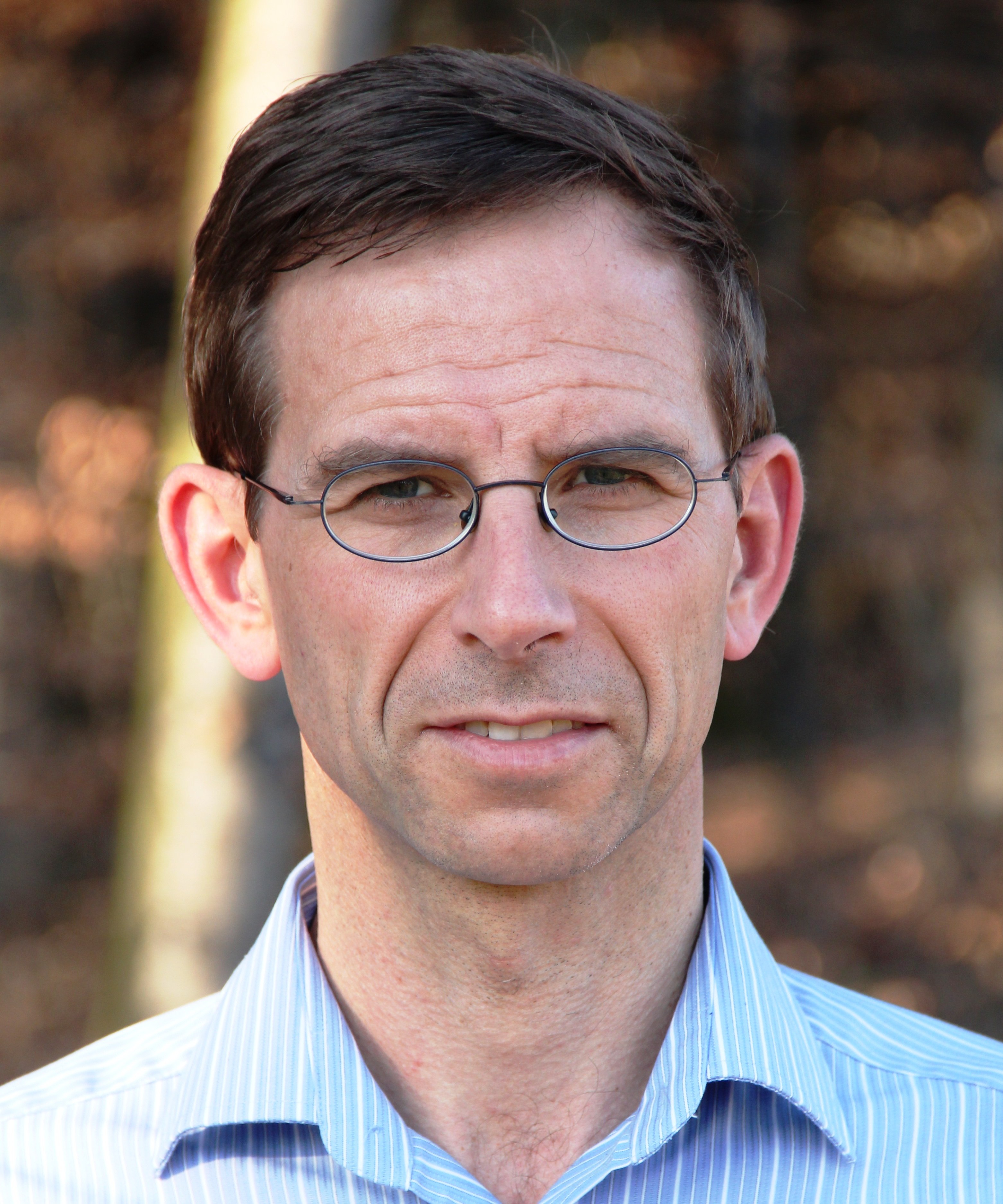
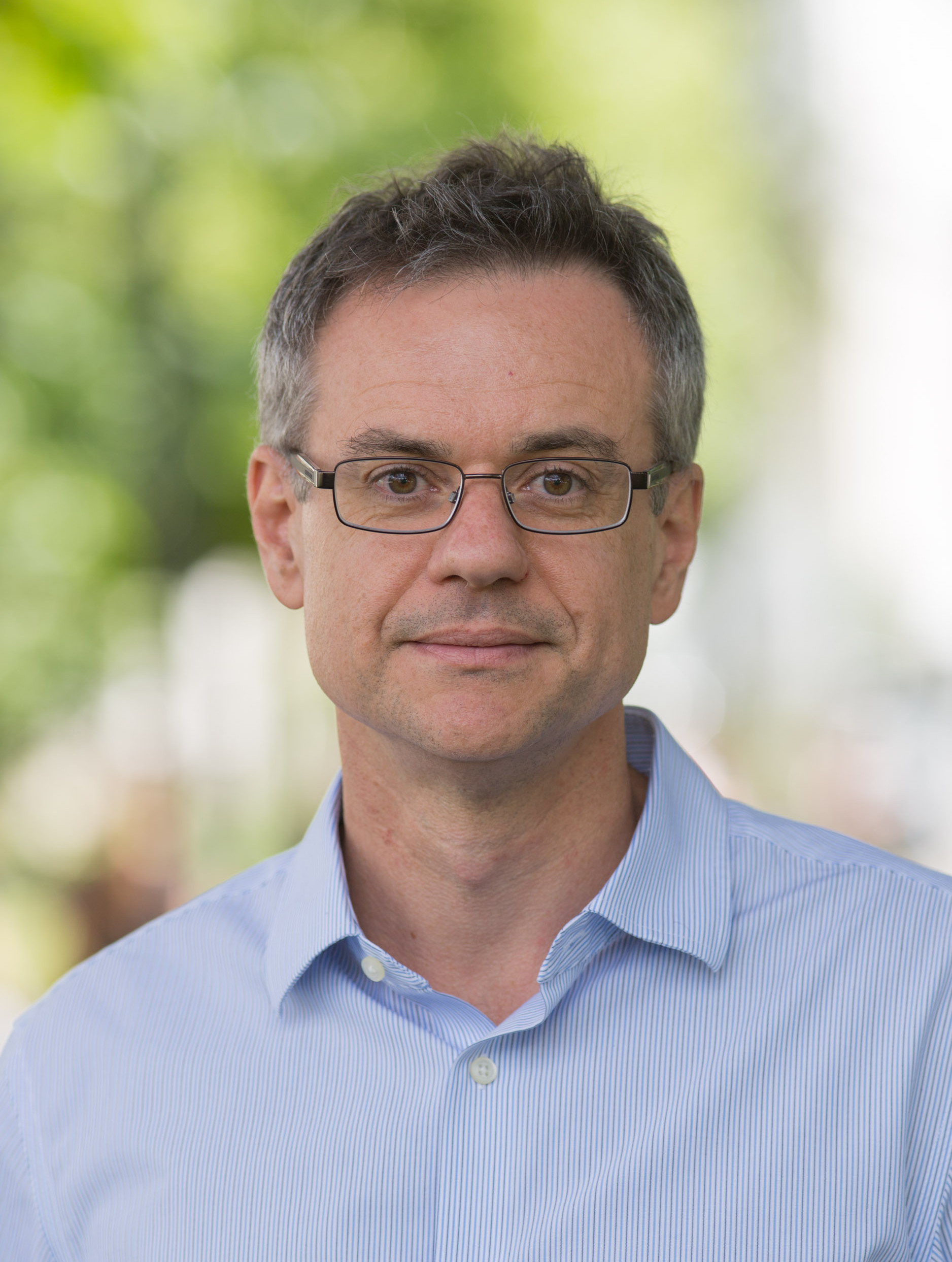
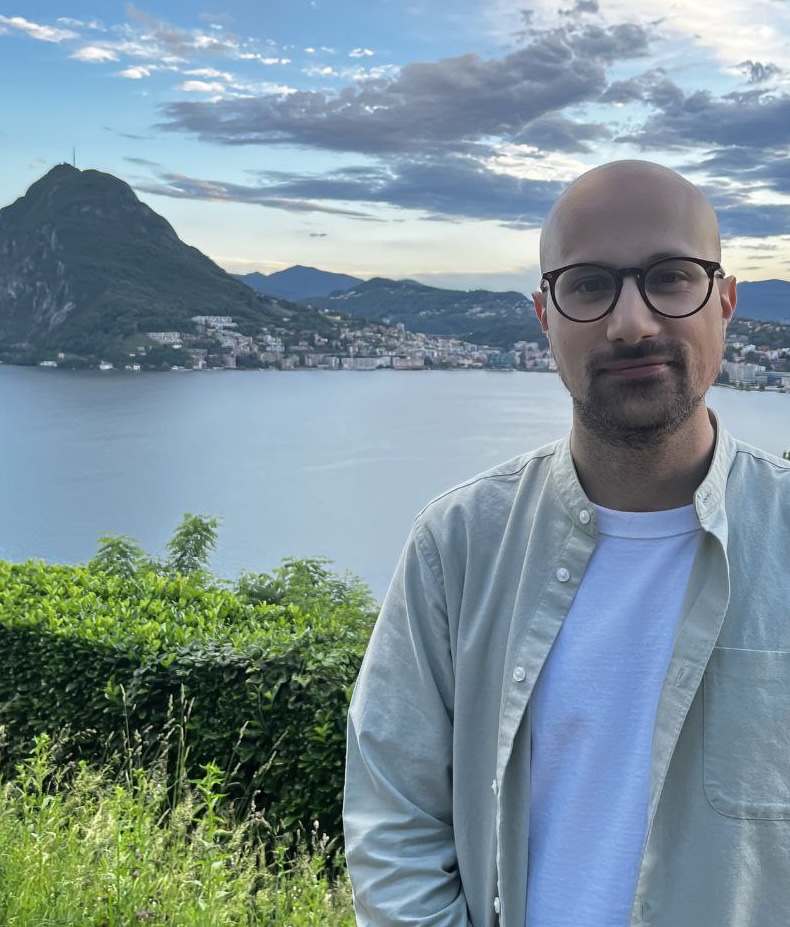
Patrick Eugster is a full professor at the Università della Svizzera italiana (USI) and leads the Software Systems (SWYSTEMS) group within the Computer Systems Institute . He has held academic positions at Purdue University, TU Darmstadt, and MIT as a visiting faculty. His research focuses on distributed software systems , addressing challenges in consistency, efficiency, and security in decentralized environments. Current affiliation: USI Faculty of Informatics Prior affiliations: Purdue University (2005-2016), TU Darmstadt (2014-2017), MIT (2012/2013) Research Interests Distributed Systems : Investigating reliable failure detection, deterministic data paths for 6G, and hybrid synchronous/asynchronous architectures. Network Innovation : Optimizing TCAM encoding, analyzing microbursts, and developing quantum network protocols. Security & Verification : Creating confidentiality-preserving mechanisms and formal verification approaches for distributed software. Scientific Contributions 2025: Best paper at TACAS on Horn clause validation 2025: IFIP Jean-Claude Laprie Award for dependable computing 2024: Key papers at IEEE Network, ACM PLDI, and IEEE INFOCOM Funding & Collaborations Swiss National Science Foundation grants #200021_197353 and #200021_192121 EU Horizon Europe MSCA staff exchange project CloudStars Industry partners: Cisco, Amazon AWS, Facebook Research, SAP, Northrop Grumman Cybersecurity Research Consortium Labs & Teams Directs the SWYSTEMS group, which includes postdocs like Sina Darabi and Shamiek Mangipudi, PhD students such as Anita Buckley and Jérôme Graf, and alumni who have become faculty at institutions like Télécom Paris and University of Southern California.
Ambrogio Fasoli is a Full Professor at École Polytechnique Fédérale de Lausanne (EPFL), affiliated with the School of Basic Sciences and the Center for Research in Plasma Physics (SPC). He holds leadership roles including Academic Vice President and oversees multiple plasma physics research groups, such as the TCV Tokamak Physics and Low-Temperature Plasma Physics and Applications teams. His work focuses on magnetic confinement for nuclear fusion, fast-ion dynamics, and Alfvén eigenmode stability in tokamaks. Key Research Areas: Magnetic confinement, tokamak experiments, fast-ion transport, plasma turbulence, nuclear fusion technology Teaching: Courses on nuclear fusion and plasma physics fundamentals Recent Publications examine advanced tokamak configurations, fast-ion loss diagnostics, Alfvén eigenmode behavior, and proton beam interactions in plasma. His work bridges experimental studies on TCV and JET tokamaks with theoretical modeling and AWAKE experiment contributions. Supervised Students include Daniel Louis Arthur Biek, Jesus Poley Sanjuan, and over a dozen EPFL doctoral candidates. His contact and institutional details span EPFL's Vice-Presidency and SPC research units.
Maryam Kamgarpour is a Tenure Track Assistant Professor at École Polytechnique Fédérale de Lausanne (EPFL), School of Engineering. She previously held faculty positions at the University of British Columbia and ETH Zürich. Her work bridges stochastic control , multiagent learning , and game theory , focusing on safety-critical systems. Education: PhD in Engineering from UC Berkeley, BSc in Applied Science from University of Waterloo. Research Interests: Control under uncertainty, game theory, mechanism design, mixed-integer optimization, and applications to transportation, robotics, power grids, and healthcare. Her recent publications emphasize safe reinforcement learning , multirobot coordination , and stochastic trajectory planning , with applications to aircraft navigation and energy systems. She has received the European Union ERC Starting Grant, NASA High Potential Individual Award, and IEEE Transactions on Control of Network Systems Outstanding Paper Award. Scientific Awards: ERC Starting Grant (2016-2021) NASA High Potential Individual Award (2010) NASA Excellence in Publication Award IEEE Outstanding Paper Award (2022) PhD Students: Jordan Philip Christopher Maddux Anna Maria Ni Tingting Ren Kai Salizzoni Giulio Schlaginhaufen Andreas Vaishampayan Saurabh Dilip Vallat Gabriel Rémi Former EPFL student: Guo Baiwei
Prof. Torsten Braun is a Professor and Head of the Communication and Distributed Systems (CDS) research group at the Institute of Computer Science, University of Bern. His research focuses on advanced networking technologies, edge computing, and machine learning applications in telecommunications. He leads projects addressing challenges in 5G/6G networks, federated learning optimization, and intelligent systems for smart cities. His work integrates theoretical frameworks with practical implementations, emphasizing distributed systems, service-oriented architectures, and IoT security. Key research areas include edge caching strategies for VR/AR applications, trajectory prediction using reinforcement learning, and resilient network design against jamming attacks. Braun has contributed to innovations in vehicular networks (V2X), RAN intelligence, and decentralized machine learning frameworks. He holds leadership roles in developing adaptive resource management systems for edge-cloud environments and has pioneered solutions for energy-efficient federated learning in heterogeneous IoT ecosystems. Publications span topics like spatial-temporal point cloud sensing, mobility-aware service orchestration, and secure positioning systems. His team explores cross-disciplinary applications such as LoRaWAN-based urban heat monitoring and blockchain-inspired public key infrastructures for IoT (Veritaa-IoT). Braun actively engages in standardization and industry collaborations to advance next-generation network architectures.
Patrick Thomas Eugster is a Full Professor of Computer Science at the Università della Svizzera italiana (USI), leading the Software Systems (SWYSTEMS) group within the Computer Systems Institute, which he co-founded. Previously, he held faculty positions at Purdue University (2005-2016) and TU Darmstadt (2014-2017), with a visiting role at MIT (2012/2013). His research focuses on distributed systems, networking, security, and programming languages, with over 160 publications and significant industry collaborations with companies like Amazon, Google, and Facebook. Education: He holds an M.S. (1998) and Ph.D. (2001) in Computer Science from École Polytechnique Fédérale de Lausanne (EPFL). Research Interests: His work addresses distributed systems challenges such as fault-tolerance, security, and efficient resource management. Recent topics include datacenter reliability, quantum network verification, and confidential computing. His team explores intersections between systems, languages, and networks to build robust and secure distributed applications. Publications: Recent work spans topics like failure detection in datacenters, formal verification of systems, and network congestion control. Key venues include USENIX ATC, ACM SIGMETRICS, IEEE Network, and TACAS. His 2025 work on failure detection and TCAM encoding exemplifies contributions to system resilience and hardware optimization. Awards: Jean-Claude Laprie Award (2025), TACAS Best Paper (2025), ERC Consolidator Grant (2014), NSF CAREER Award (2007). Advising & Grants: Supervised over 20 PhD and postdoctoral researchers. Active grants include EU Horizon Europe CloudStars, Swiss National Science Foundation, and industry partnerships with Cisco and SAP. Labs & Teams: Directs the SWYSTEMS group, collaborating on projects like secure cloud analytics, quantum network verification, and datacenter monitoring. Former students hold roles at universities, tech firms, and startups.
Fernando Pedone is a Full Professor at the Faculty of Informatics, Università della Svizzera italiana (USI), leading the Computer Systems Institute (SYS). He holds a Ph.D. in Computer Science from EPFL (1999). His research focuses on dependable distributed systems, distributed algorithms, and fault-tolerant data management. Pedone has authored over 70 papers and co-edited 'Replication: Theory and Practice.' Roles: Full Professor, SYS Director Affiliations: USI, Swiss National Science Foundation (SNSF), Interchain Foundation Teaching: Distributed Algorithms, Distributed Systems, Operating Systems Research interests span atomic multicast protocols, state machine replication, blockchain synchronization, and consensus algorithms. His work bridges theoretical foundations with practical implementations, emphasizing scalability and fault tolerance. Pedone's projects are sponsored by entities like SNSF, CTI, and Microsoft Research. Notable contributions include 'Heron' (shared-memory state replication), 'PrimCast' (atomic multicast), and studies on blockchain state synchronization. His lab oversees over 20 PhD students, with alumni holding roles in academia and industry. Grants and collaborations include partnerships with the Hasler Foundation, European Commission, and Western Digital Research. Pedone actively participates in conferences like Middleware, DSN, and EuroSys.
Bart Vandereycken is an Associate Professor in the Mathematics Department at the University of Geneva, specializing in numerical analysis and scientific computing. His research focuses on large-scale and high-dimensional problems solved using low-rank matrix and tensor techniques, with applications in numerical linear algebra, optimization, and nonlinear eigenvalue problems. He previously held positions as an instructor at Princeton University and postdoctoral researcher at EPF Lausanne and ETH Zurich, and earned his PhD from KU Leuven in 2010. His research interests include Riemannian optimization algorithms, multilevel preconditioning, and machine learning applications. He serves as an associate editor for SIAM Journal on Matrix Analysis and Applications and Linear Algebra and its Applications . Bart organizes the Numerical Analysis seminar with colleagues, and advises students interested in numerical analysis or numerical linear algebra. Recent work emphasizes convexity structures in matrix decompositions, robust preconditioning techniques, and scalable low-rank algorithms for high-dimensional PDEs. His 2024–2025 publications explore advancements in Riemannian optimization schemes, subspace iteration methods, and distributed computing applications of matrix decompositions. Key themes include improving convergence guarantees and developing geodesic-based optimization frameworks for challenging numerical problems.
Laurie Porte is a Researcher at the École Polytechnique Fédérale de Lausanne (EPFL) within the School of Basic Sciences (SB) and the SPC-TCV (Tokamak Physics) group. She also holds a Lecturer position in the EDPY-ENS department under EPFL's Vice-Presidency for Academic and Student Affairs. Her research focuses on plasma physics , electron cyclotron resonance heating (ECRH) , and MHD effects in tokamak confinement . Her work includes groundbreaking studies on electron Bernstein wave heating , transport analysis in H-mode plasmas , and fast-ion dynamics using diagnostics like collective Thomson scattering . She has contributed to ITER gyrotron development and TCV tokamak experiments , with publications in journals such as Physical Review Letters and Nuclear Fusion . Her research spans topics like density peaking , current profile tailoring , and quasi-stationary ELM-free H-mode plasmas . Students advised: James Winston Irawati Tumbokon Matteo Fontana Pedro Andres Molina Cabrera Arsène Stéphane Tema Biwole Scientific collaborations: Publications with teams from EPFL , IAEA , and APS conferences.
Dr. Miguel Ramirez Gonzalez is a Researcher at the Zurich University of Applied Sciences (ZHAW) , affiliated with the School of Engineering and the IEFE Electric Power Systems and Smart Grids department. His research focuses on modern power system challenges, including renewable integration, stability enhancement, and machine learning applications for grid security. Research Focus Dr. Gonzalez's work spans: Power System Dynamics : Inertia quantification, stability assessment, and oscillation damping. Renewable Integration : Grid-forming converters, HVDC links, and solar/wind integration. Computational Methods : Machine learning (CNNs, transfer learning) for security assessment and optimization. Real-time Simulation : Hardware emulation and co-simulation of transmission-distribution networks. Project Leadership He leads key initiatives: Deputy Project Leader for inertia measurement to support renewables (ongoing). Project Leader for expanding the CE-Nordic dynamic grid model using OPAL-RT (completed). Team member in Europe-North Africa interconnection studies (completed). Publication Trends His 15 most recent works (2020-2025) emphasize machine learning-driven solutions for power system stability, real-time simulation validation, and converter-based grid support. Dominant themes include CNN architectures for security assessment, spatio-temporal data analytics, and hardware-in-the-loop testing for low-inertia systems. Laboratory & Collaboration He contributes to the IEFE laboratory, specializing in dynamic hardware emulation and real-time grid simulation. Collaborations include work with international utilities and conferences like IEEE PowerTech and CIGRE.
Andrea Cini is a postdoc researcher affiliated with the Graph Machine Learning Group and the Dalle Molle Institute for Artificial Intelligence (IDSIA USI-SUPSI) at the University of Lugano (USI). He also holds a position as a SNSF postdoc fellow at the University of Oxford under Prof. Michael Bronstein, focusing on machine learning for time series forecasting and graph processing. His research integrates graph deep learning methodologies with spatiotemporal dynamics, emphasizing applications in healthcare, energy systems, and intelligent systems. Education: PhD in Computer Science and Engineering (USI, 2020), supervised by Prof. Cesare Alippi MSc and BSc in Computer Science and Engineering (Politecnico di Milano) Visiting researcher at Imperial College London (Prof. Danilo Mandic) Research interests span graph neural networks , time series forecasting , and spatiotemporal data processing . His work has introduced influential methods such as the Torch Spatiotemporal library, and has been recognized with a best paper award. Recent publications emphasize applications in relational conformal prediction, hierarchical forecasting, and energy grid optimization. Awards include the Best Paper Award for contributions to graph-based forecasting methodologies. Current projects are funded by the Swiss National Science Foundation, exploring graph-based reinforcement learning and spatiotemporal modeling at the University of Oxford. Collaborations include affiliations with the Northernmost Graph Machine Learning group at UiT the Arctic University of Norway. His research bridges theoretical advancements and industrial applications in fields like healthcare dynamics prediction and smart grid optimization.
Dr. Vanille Ritz is a postdoctoral researcher at the Swiss Seismological Service (SED), ETH Zurich, with a split position between the Modelling Group and the GeoBest team. Her expertise lies in developing hydro-geomechanical and statistical models to understand and forecast induced seismicity in geothermal systems. She focuses on projects like GeoBest, which provides seismological support for Swiss geothermal energy initiatives, and has been a key contact for cantons Vaud, Jura, and Geneva. She holds a Ph.D. from ETH Zurich (2023) and a M.Sc. in Seismology from Université de Strasbourg (2017). Research interests include induced seismicity mitigation, geothermal reservoir engineering, and real-time seismic monitoring. Her work integrates data-driven approaches with physics-based models to optimize energy production while minimizing seismic risks. Notable contributions include the 'Transient Evolution of Earthquake Size Distributions' study (2022), recognized with the SSA Student Award. Education: Ph.D., ETH Zurich (2018–2023): Modelling Induced Seismicity in Deep Geothermal Systems M.Sc., Université de Strasbourg (2015–2017): Seismology Geophysical Engineering, Ecole et Observatoire des Sciences de la Terre (2014–2017) Professional activities include leadership in projects like DEEP (2021–2024), COSEISMIQ (2018–2021), and DESTRESS (2017–2018), advancing de-risking strategies for geothermal energy. Awards include the 2023 SSA Student Presentation Award for seismic risk indicator research. Her work bridges geoscience and engineering, emphasizing collaboration with cantonal governments and energy stakeholders to ensure sustainable geothermal development. Current efforts focus on synthetic benchmark datasets and real-time forecasting tools for induced seismicity management.
Prof. Edouard Bugnion is a Full Professor at the Data Center Systems Laboratory within the School of Computer Science and Communications at École Polytechnique Fédérale de Lausanne (EPFL). Since joining EPFL in 2012, he has led research in datacenter systems and virtualization, with prior experience as VMware's first CTO and Cisco's VP/CTO. Research Interests: Data Center Systems Network and Data Plane Efficiency Operating System Design Virtualization Technologies Trusted Execution Environments Low-Latency Computing His recent publications focus on datacenter efficiency for OLDI applications, system security through hardware-based trust, and network-compute co-design . These works span topics from microsecond-scale latency optimization to privacy-preserving proximity tracing systems. Scientific Recognition: Elected ACM Fellow (2017) ACM Software Systems Award (2009) Teaching: Currently teaching CS-212: Systems Programming Project , with past courses including CS-522: Principles of Computer Systems and CS-410: Technology Ventures .
Marzio Sorlini is an Associate Professor of Industrial Process Sustainability at the University of Applied Sciences and Arts of Southern Switzerland (SUPSI), affiliated with the Department of Innovative Technologies (DTI) and the Sustainable Production Systems Laboratory (LSPS). He has been active at SUPSI since 2009, combining teaching in Management Engineering with research in sustainability, manufacturing innovation, and circular economy. His work focuses on integrating sustainability into industrial processes through methodologies like Life Cycle Assessment (LCA) and Lean manufacturing. Education: Master of Science in Management Engineering (Politecnico di Milano, 2001) and PhD in Industrial Engineering (Università degli Studi di Parma, 2017). Professional roles include co-founding Technology Transfer System s.r.l. (2006) and leading SUPSI’s Sustainable Production Systems research initiatives. Research interests emphasize sustainable manufacturing systems, industrial symbiosis, and digital tools for environmental performance assessment. Key projects include SAM (sustainability in mould&die industry), CO-VERSATILE (pandemic response manufacturing), and Circular TwAIn (AI-driven circularity). His publications address topics like LCA methodologies, industrial agglomeration sustainability, and anthropocentric workplace design. Notable contributions include developing the Sustainability Platform (SP) for LCA applications and advising on mass customization and lean-green production paradigms. Current roles involve strategic leadership in EU projects targeting sustainable manufacturing resilience and circular economy innovation.
Masashi Sugiyama is a Professor at the Department of Complexity Science and Engineering, Graduate School of Frontier Sciences, The University of Tokyo, where he has been serving since 2014. He concurrently serves as the Director of the RIKEN Center for Advanced Intelligence Project (AIP) since 2016, leading research groups focused on fundamental AI technologies, AI applications, and social issues of AI. His academic journey began at Tokyo Institute of Technology, where he earned his Bachelor, Master, and Doctor of Engineering degrees in Computer Science in 1997, 1999, and 2001 respectively, before becoming an Assistant Professor and later Associate Professor at the same institution. Sugiyama's research primarily focuses on statistical machine learning, with particular expertise in weakly supervised learning, learning from noisy supervision, and learning under distribution shift. His work has established important theoretical frameworks for density ratio estimation, covariate shift adaptation, and non-stationary environments. He has developed numerous practical algorithms including KLIEP (Kullback-Leibler importance estimation procedure), uLSIF (unconstrained least-squares importance fitting), and LSDD (least-squares density difference), which have become standard tools in the machine learning community. Analysis of his recent publications reveals a strong emphasis on reliable and robust machine learning techniques that can handle imperfect supervision and data distribution changes. His work spans theoretical foundations, algorithm development, and practical applications across various domains including bioinformatics, anomaly detection, and dimensionality reduction. The recurring themes in his research include direct density ratio estimation methods, importance weighting techniques, and mutual information-based approaches for various machine learning tasks. Award for Science and Technology from the Japanese Minister of Education, Culture, Sports, Science and Technology (2022) Japan Academy Medal (2017) Japan Society for the Promotion of Science Award (2017) Faculty Award from IBM (2007) Nagao Special Researcher Award from the Information Processing Society of Japan (2011) Young Scientists' Prize for the Commendation for Science and Technology by the Minister of Education, Culture, Sports, Science and Technology Japan (2014) Sugiyama has served as program co-chair for major machine learning conferences including NeurIPS 2015, AISTATS 2019, and ACML 2010 and 2020. He has received prestigious fellowships including the Alexander von Humboldt Foundation Research Fellowship (2003-2004) and the European Commission Program Erasmus Mundus Scholarship (2006). He is the (co-)author of influential machine learning monographs including Machine Learning in Non-Stationary Environments (MIT Press, 2012), Density Ratio Estimation in Machine Learning (Cambridge University Press, 2012), Statistical Reinforcement Learning (Chapman & Hall, 2015), and Machine Learning from Weak Supervision (MIT Press, 2022). At RIKEN AIP, Sugiyama leads research initiatives focused on developing robust AI systems that can operate reliably in real-world conditions with imperfect data. His laboratory maintains an active software development effort, providing open-source implementations of many of his research contributions, which has significantly influenced both academic research and practical applications of machine learning.
André Hodder is a Senior Lecturer and Researcher at École polytechnique fédérale de Lausanne (EPFL) within the School of Engineering. He holds multiple affiliations across the institution, serving as Senior Lecturer in Electrical Engineering (SEL-ENS), Microengineering (SMT-ENS), and as a Researcher in the Distributed Electrical Systems Laboratory (DESL). His office is located in building ELG 037 with additional workspace in ELL 116. Dr. Hodder's research focuses on electrical machines, particularly linear induction motors for high-speed transportation systems. His work addresses critical challenges in maglev technology, Hyperloop systems, and transportation electrification. He has developed highly accurate analytical models for linear induction motors that consider multiple physical effects including finite motor length, magnetomotive force harmonics, slot effects, edge effects, and tail effects. His research contributes to the integration of propulsion, levitation, and guidance functionalities into single motor systems, aiming to improve efficiency and performance of future high-speed transportation solutions. His recent publications (2024-2025) demonstrate a strong research trajectory in advancing linear motor technology for sustainable transportation. The publications reveal a consistent focus on modeling, optimization, and control strategies for linear induction motors, with particular emphasis on enhancing levitation force capabilities and developing decoupled control schemes for propulsion and levitation. Dr. Hodder actively supervises doctoral research, having guided the theses of Lucien Pierrejean and Simone Rametti, both working on linear motor applications for high-speed transportation systems. His teaching portfolio includes fundamental courses in energy conversion, electrical machines, and advanced laboratory work in electrical energy systems. As a member of the Distributed Electrical Systems Laboratory, he contributes to EPFL's research mission in sustainable energy systems and transportation electrification, working within a collaborative environment that bridges theoretical modeling with practical implementation.