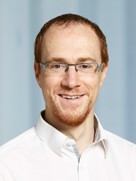
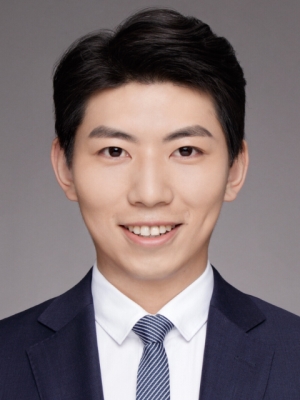
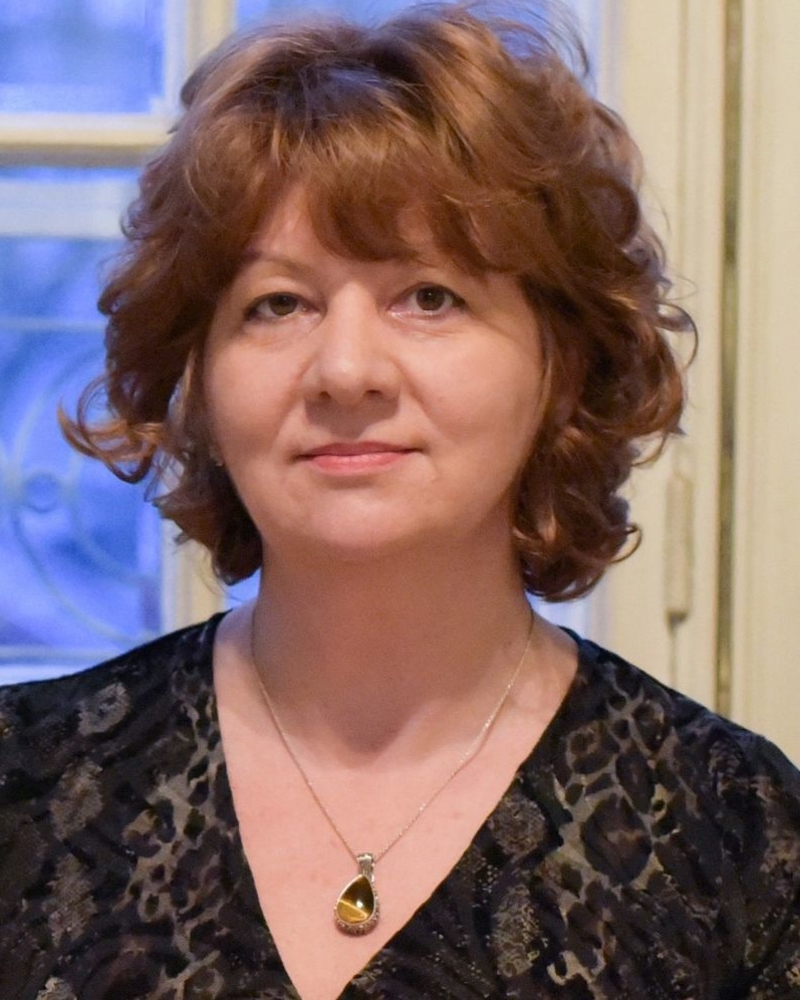
Lukas Hewing is a Lecturer at ETH Zürich's Department of Mechanical and Process Engineering. He received his BSc and MSc in Mechanical Engineering and Automation Engineering from RWTH Aachen University, where he was awarded the Springorum Denkmünze for his master's work. He is currently pursuing a PhD in the Intelligent Control Systems Group at ETH Zürich. His research focuses on predictive control of dynamical systems with machine learning methods and stochastic MPC. Key areas include Gaussian process-based control, autonomous racing applications, and safety-critical systems design. His work bridges control theory with practical implementations in robotics and medical devices. Hewing's publications demonstrate a strong focus on learning-based control methods applied to autonomous systems and medical technology. Recent work shows increasing applications in safety-critical domains like autonomous vehicles and ventilators, combining theoretical rigor with practical validation.
Alexandru Calotoiu is a Researcher in the Department of Computer Science at ETH Zürich, affiliated with the Professorship for Scalable Parallel Computing. His work focuses on performance modeling, high-performance computing (HPC), serverless systems, and cloud computing. He leads research in empirical performance modeling for complex applications, optimization of parallel algorithms, and scalable cloud architectures. Key research areas include noise-resilient performance models, serverless computing frameworks, and compositional parallel programming. He has contributed to benchmarking tools like SeBS and developed techniques for loop scheduling, static analysis, and resource disaggregation in HPC environments. His publications from 2023–2025 emphasize serverless systems (e.g., FaaSKeeper, Cppless), performance embeddings for optimization, and specialized supercomputing for climate science. These studies address scalability, reproducibility, and cross-platform performance portability in data-centric workloads. No scientific awards are explicitly listed, but his work has been presented at leading conferences such as ISCA and IEEE/ACM events. He collaborates on projects like rFaaS (RDMA-enabled serverless platforms) and Process-as-a-Service frameworks. His research bridges theoretical models with practical implementations in distributed systems and cloud infrastructure.
Prof. Torsten Hoefler is a Full Professor at the Department of Computer Science, ETH Zürich. His research focuses on High-Performance Computing (HPC), parallel systems, networking, and AI-infrastructure. He leads projects on scalable interconnects, network topology design, and cloud computing benchmarks like SeBS. His work bridges theoretical foundations with practical implementations in distributed systems. Research Interests : High-Performance Computing & Networking Parallel Algorithms & Architectures AI Infrastructure & Distributed Systems Chiplet Interconnects & Topology Optimization Key Contributions : Developed tools like ATLAHS (AI/HPC network simulation) Advanced RDMA-based communication protocols (SDR-RDMA) Benchmarks for serverless computing (SeBS-Flow) His recent articles (2025) emphasize adaptive networks, low-precision AI models, and energy-efficient HPC systems. He also explores ethical computing and sustainability in supercomputing through initiatives like Core Hours & Carbon Credits.
Prof. Ralf Jung is an Assistant Professor at ETH Zürich's Department of Computer Science, leading the Programming Language Foundations Lab under the Institute for Programming Languages and Systems. His work focuses on formal verification of programming languages, particularly Rust and Iris. Previously, he earned his PhD at Saarland University and MPI-SWS, advised by Derek Dreyer, followed by a postdoc at MIT CSAIL's PDOS group. Research Interests: Formal foundations of Rust, including tools like Miri for detecting undefined behavior and MiniRust for precise specification. Iris logical framework for modular verification of programming languages at scale. Concurrent and distributed systems verification using separation logic. Advising & Labs: He leads the Programming Language Foundations Lab and is hiring postdocs. His work integrates theoretical rigor with practical tooling for real-world language verification challenges. Labs/Teams: Programming Language Foundations Lab at ETH Zürich, collaborating with the Rust language team and global research community.
Dr. Kari Kostiainen is a Lecturer at the Department of Computer Science, ETH Zürich. His affiliation includes the Institute for Information Security (Institut f. Informationssicherheit) and he is associated with the Security of Wireless Networks course in the Autumn Semester 2025. His research focuses on cybersecurity, blockchain technology, privacy-preserving systems, and trusted execution environments. Kari's work addresses challenges in phishing detection, cryptocurrency regulation, and secure communication protocols. Key research interests include: Phishing prevention and organizational cybersecurity Blockchain scalability and privacy in digital currencies Trusted execution environments (TEEs) and enclave security Privacy-preserving technologies for decentralized systems Secure access control mechanisms and user-friendly security setups His recent publications emphasize advancements in CBDC design, censorship-resistant payment systems, and lightweight blockchain client privacy. Notable contributions include Platypus (privacy-preserving CBDC framework) and Tee-based mining pool optimizations. Dr. Kari Kostiainen can be contacted at kari.kostiainen@inf.ethz.ch . His office is located at CNB F 103.2, ETH Zürich.
Dr. Mengshuo Jia is a Senior Scientist and Principal Investigator at ETH Zürich, affiliated with the Power Systems Laboratory (PSL) within the Department of Electrical Engineering. He holds a Ph.D. from Tsinghua University (2016–2021) and a B.Eng. from North China Electric Power University (2012–2016). His roles include Guest Lecturer for 'Optimization in Energy Systems' and Associate Editor for IEEE Systems Journal and IET Renewable Power Generation. Education: Ph.D. in Electrical Engineering, Tsinghua University (2016–2021) B.Eng. in Electrical Engineering, North China Electric Power University (2012–2016) Research focuses on AI4Science , Uncertainty Modeling , Probabilistic Analysis , Stochastic Optimization , and Data-Driven Power Systems . Notable contributions include the RePower LLM-driven research platform and the DALINE toolbox for power flow linearization. His work bridges AI advancements with energy system challenges, enhancing autonomous research and grid optimization. Recent publications emphasize LLM applications in energy systems, small modular reactor integration, and hydrogen supply chain optimization. Over 10 peer-reviewed articles since 2022 highlight interdisciplinary innovation. Awards: 2023 ESI Hot Paper (top 0.1%) and Highly Cited Paper (top 1%) 2023 China First Prize of High-influence Papers 2022 Springer Thesis Award Advising and grants include leadership in Swiss National Science Foundation projects and editorial roles in top-tier journals. Collaborations emphasize data-driven methodologies and privacy-preserving distributed algorithms. Labs: Active in the Power Systems Laboratory (PSL) at ETH Zurich, advancing research in energy system optimization and AI integration.
Dr. Richard Whitfield is a Senior Scientist at ETH Zurich's Laboratory of Sustainable Polymers, working with Professor Athina Anastasaki. His research focuses on depolymerization methods for chemical recycling and sustainable polymer development. He holds a PhD from the University of Warwick where he developed copper-mediated polymerization strategies, including work on cationic polymers for gene delivery and a research fellowship at UC Santa Barbara. His current work explores advanced chemical recycling techniques including oxygen-tolerant depolymerization, thermal RAFT processes, and solvent-free recycling approaches. He has developed innovative methods for controlling polymer dispersity and network properties to enhance recyclability. Dr. Whitfield maintains an active publication record in polymer chemistry with recent work focusing on sustainable materials and circular economy principles.
Prof. Christoph Studer is a Full Professor of Integrated Information Processing at ETH Zurich's Department of Information Technology and Electrical Engineering. He leads the Integrated Systems Laboratory and directs SwissChips. His research focuses on wireless communication, machine learning, signal processing, and hardware-efficient algorithms, with applications in B5G systems, sensing-communication integration, and low-power signal processing. He holds a Ph.D. and M.S. from ETH Zurich (2009 and 2006) and has held academic positions at Cornell University before returning to ETH in 2020. Notable honors include the NSF CAREER Award (2017), ETH Medal for Doctoral Dissertation (2011), and multiple teaching awards. Education: M.S. and Ph.D. in Information Technology and Electrical Engineering, ETH Zurich (2006, 2009) Visiting Researcher, Stanford University (2005) Research Interests: Develops algorithms and hardware for high-throughput, low-power wireless systems. Key areas include: B5G multi-antenna systems and simultaneous sensing-communication (SISCO) Analog-to-feature (A2F) conversion for low-power signal classification Hardware-software co-design for efficient microchip integration Publications: Focus on channel charting, jammer mitigation, and deep learning for communication. Recent work includes CSI2Vec, jammer-resilient synchronization, and distributed MIMO systems. Awards: US NSF CAREER Award (2017) Michael Tien Teaching Award (2016) ETH Medal for Doctoral Thesis (2011) Labs/Teams: Leads the Integrated Systems Laboratory at ETH and directs SwissChips, a national initiative for integrated circuit development.
Cesare Alippi is a Full Professor at the Faculty of Informatics, Università della Svizzera italiana (USI), and also holds a professorship at Politecnico di Milano, Italy. He serves as a visiting Professor at Guangdong University of Technology (China) and Consultant Professor at Northwestern Polytechnic of Xi'an (China). His academic leadership extends to multiple international institutions where he has served as a visiting researcher including UCL (UK), MIT (USA), ESPCI (France), CASIA (China), A*STAR (Singapore), and University of Kobe (Japan). Professor Alippi's research interests center around graph-based learning, adaptation and learning in non-stationary environments, and intelligence for embedded, cyber-physical systems and IoT. His work bridges theoretical foundations with practical applications in sensor networks, environmental monitoring, and industrial processes. He has established significant research infrastructure including the Wireless Embedded Systems (WEmSy) Lab and the Internet of Things Lab, with notable deployments for marine environment monitoring in Queensland, Australia and the Fiji Islands, as well as rockfall and landslide monitoring systems across Italy and Switzerland. His research output shows a clear evolution toward graph-based deep learning approaches for time series analysis, anomaly detection, and spatiotemporal forecasting, reflecting the growing importance of graph neural networks in handling complex relational data in non-stationary environments. Major Awards: IEEE CIS Enrique Ruspini Meritorious Service Award (2024) IEEE CIS Outstanding Computational Intelligence Magazine Paper Award (2018) Gabor Award from International Neural Network Society (2016) IBM Faculty Award (2013) IEEE Instrumentation and Measurement Society Young Engineer Award (2004) Professor Alippi has held significant leadership roles including Past Board of Governors member of the International Neural Network Society, Past member of the Administrative Committee of the IEEE Computational Intelligence Society, and Past Vice-President for Education of the IEEE Computational Intelligence Society. He has served as Associate Editor for Proceedings of IEEE and several other prestigious journals. His research has been supported through numerous grants including an IBM Faculty Award in 2013 specifically for research on Intelligent Embedded Systems working in non-stationary environments. His research infrastructure includes the Wireless Embedded Systems (WEmSy) Lab and the Internet of Things Lab, with notable deployments including a sophisticated automatic, adaptive, sustainable and reliable wireless monitoring system for marine environments deployed in Queensland, Australia (2007) and under deployment at the Fiji Islands (2014-2015). He has also led several top-world deployments for rockfall and landslide monitoring across Italy and Switzerland since 2010, demonstrating the practical impact of his research in real-world harsh environments.
Mihaela Albu is a Professor of Electrical Engineering at the Politehnica University of Bucharest (UPB), Romania. She teaches Advanced Topics in Instrumentation and Measurement, Smart Distribution Grids, and Signal Processing at both Master’s and Bachelor’s levels, while also contributing to courses like "Elektrische Meßtechnik" and "Sensoren" in the German Department of UPB. Ph.D., "Politehnica" University of Bucharest (1998) Diploma in Electrical Engineering, "Politehnica" University of Bucharest (1987) Her research spans smart energy grids , focusing on optimal renewable energy integration , real-time control , and DC grid technologies . She pioneered a DC demonstration platform at 230V and proposed power quality metrics for DC systems. Other interests include wide-area measurement systems , nonlinear power system phenomena , and IEEE/IEC standards for power systems. She has coordinated research teams funded by national and international grants, authored a monograph on power system measurements, 7 book chapters, and over 20 peer-reviewed journal publications. Her leadership in IEEE Instrumentation and Measurement Society includes roles like AdCom member, Distinguished Lecturer, and Vice-Chair of the PES-Romania Chapter. Key awards include the Fulbright Fellowship (2002–2003, 2010) IEEE Distinguished Lecturer recognition Dr. Albu founded the interdisciplinary MicroDERLab at UPB, a hub for smart grid research, and contributed to virtual laboratories and IEEE education initiatives.
Prof. Dr. Thomas Michael Bohnert is a faculty member at ZHAW School of Engineering, specializing in distributed systems and cloud computing. He has led multiple projects including: Bringing FIWARE to the NEXT step (completed), Enterprise Cloud Robotics Platform (completed), Apache Cloudstack for NFV (completed), Solidna cloud storage (completed), T-NOVA NFV services (completed), and Mobile Cloud Network (completed). Research Focus: Cloud robotics Network Functions Virtualization (NFV) Software-Defined Networking (SDN) Mobile cloud networking Resilient cloud systems Energy-efficient cloud platforms Publications Trends: His work spans 2012-2024 with consistent focus on cloud-native application design, NFV orchestration, SDN implementation, and mobile cloud integration. Key themes include self-managing systems, distributed computing frameworks, and infrastructure optimization. Collaborations: Frequently collaborates with Andrew Edmonds, Giovanni Toffetti Carughi, Piyush Harsh, and Sandro Brunner across EU projects and industry partnerships.
Boegli Alexis is an Associate Professor at Haute Ecole Arc - Ingénierie (HES-SO) since 2018, with a PhD in Science from the University of Neuchâtel. Specializing in embedded systems, RF technologies, and energy-efficient electronics, he focuses on applications requiring high constraints such as energy autonomy and compactness. His research spans BLE-based localization, dielectric elastomer actuators, and energy harvesting for biomedical devices. His educational background includes a BSC in Computer Science and Communication Systems from HES-SO and advanced studies in Microengineering at EPFL. He teaches courses like Electrotechnics I and co-supervises doctoral students in interdisciplinary projects. Key research areas include: RF Localization Systems (BLE AoA/AoD) High-Voltage Electronics for Capacitive Actuators Zero-Power Wearable Energy Harvesting Smart Sensor Networks Recent work demonstrates sub-meter accuracy in IoT localization systems using BLE and developed ultra-high-voltage (7kV) converters for dielectric elastomer actuators. His 2025 research explores inverted actuation cycles for facial prosthetics, reducing energy consumption by 1.5%. Patents include a BLE-based access control system combining RF positioning and video analysis (2022) and a real-time regulatory compliance method for wireless transmitters (2013). Collaboration with EPFL and CSEM drives technology transfer in industrial and biomedical applications. His projects often involve Innosuisse, SNSF, and industry partners.
Pengbo Zhu is a researcher at the École polytechnique fédérale de Lausanne (EPFL), specifically affiliated with the Laboratory of Urban Transport Systems (LUTS) within the School of Architecture, Civil and Environmental Engineering (ENAC). His work focuses on developing innovative control algorithms to address critical challenges in urban transportation systems, particularly in the domain of Autonomous Mobility-on-Demand (AMoD) and ride-hailing services. Dr. Zhu's research interests center around vehicle repositioning strategies, hierarchical control frameworks, and data-enabled predictive control methods for optimizing urban mobility. His work bridges transportation engineering with control systems theory, developing solutions that balance passenger demand with vehicle supply in dynamic urban environments. He has made significant contributions to coverage control algorithms that align vehicle distribution with demand patterns across city districts. Analysis of his publication trends shows a consistent focus on hierarchical control approaches for vehicle repositioning, with increasing sophistication from 2022 to 2025. His research has evolved from basic coverage control methods to integrated multi-layer frameworks that combine macroscopic traffic modeling with microscopic vehicle guidance, demonstrating both theoretical depth and practical applicability in real-world urban networks. Dr. Zhu's work has been supported by prestigious funding sources including the Swiss National Science Foundation and the European Union's Horizon 2020 program. His research demonstrates strong potential for practical implementation, with simulations conducted on real urban networks (particularly Shenzhen, China) showing significant improvements in key performance metrics like passenger waiting times and service rates. As an active researcher at EPFL, Dr. Zhu collaborates extensively with Professor Nikolaos Geroliminis and other researchers in the urban transportation field. His work contributes to the development of more efficient, sustainable urban transportation systems that benefit customers, service providers, and the environment through optimized fleet operations in mobility-on-demand services.
Dr. Ulrich Hilmar Wagner is a tenured staff scientist at the Paul Scherrer Institute (PSI), specializing in X-ray optics and beamline instrumentation. He works within the Laboratory for Non-linear Optics under the PSI Center for Photon Science, contributing to the development of advanced photon diagnostic tools for the SwissFEL project. As a former beamline scientist at Diamond Light Source, he designed and optimized imaging and coherence beamlines. Wagner also serves as a Visiting Scientist at the University of Southampton for coherent imaging and scattering research. University of Göttingen (Physics B.Sc./M.Sc.) University of Jena (PhD in Plasma Physics and X-ray Optics) Marie-Curie Fellow at Rutherford-Appleton Laboratory/Imperial College His research focuses on integrating mechanical, optical, and control simulations for beamline design while advancing at-wavelength metrology techniques to standardize X-ray optical component diagnostics. His work enables in-situ alignment of high-intensity free-electron laser systems and explores coherence-based 5D X-ray imaging with temporal and spectral resolution. Recent publications highlight his contributions to photon beam diffusors for SwissFEL, soft X-ray monochromator design, and adaptive optics characterization using X-ray grating interferometry across multiple institutions (LCLS, Diamond Light Source, Swiss Light Source). These reflect his expertise in mitigating radiation damage and preserving coherence in advanced photon facilities. Marie-Curie Fellowship Wagner leads the development of SwissFEL's soft X-ray ATHOS beamlines and collaborates with international research teams at facilities like LCLS. His work bridges theoretical optics with practical implementation in diffraction-limited X-ray beamlines.
Ueli Schilt is a Research Associate and Doctoral Student at the Lucerne School of Engineering and Architecture, part of the Lucerne University of Applied Sciences and Arts (HSLU). His work focuses on thermal energy systems, renewable generation, and energy efficiency in Swiss urban and regional contexts. He is affiliated with the Institute of Mechanical Engineering and Energy Technology (IME), specifically within the Thermal Energy Storage research group. Role: Research Associate & Doctoral Student Institution: Lucerne University of Applied Sciences and Arts (HSLU) School: School of Engineering and Architecture Institute: Institute of Mechanical Engineering and Energy Technology (IME) Research Focus: Thermal energy storage, multi-energy system optimization, renewable integration Ueli Schilt’s research explores the integration of thermal energy storage in multi-energy systems, solar PV expansion, and heating system retrofits. His work emphasizes temperature considerations, load forecasting, and sensor technology validation. Key projects include decentralized renewable generation in Swiss regions and the SENSHOEK initiative for adaptive heating controls. Recent publications highlight advancements in air quality monitoring, heat pump consumption analysis, and communal energy planning tools. While no scientific awards are explicitly listed, his contributions to peer-reviewed journals and international conferences indicate active academic engagement. Collaborations with Philipp Schütz and other researchers underscore interdisciplinary teamwork in energy modeling and policy support.