Marco Raglianti is a Postdoctoral Fellow and Research Assistant in the Reverse Engineering, Visualization, and Evolution Analysis Lab (REVEAL) at the Faculty of Informatics, Università della Svizzera italiana (USI). His research focuses on software engineering, documentation landscapes, developer communities, and visualization tools. He holds a PhD in Informatics from USI (2025) and M.Sc./B.Sc. degrees in Computer Science from the University of Pisa (Cum Laude). Key contributions include tools like DwarvenMail for documentation analysis, DiscOrDance for Discord community visualization, and Vizor for interactive graph exploration. He co-supervised multiple thesis projects and taught courses in software engineering at USI. His work bridges empirical software engineering with practical tool development, emphasizing developer-centric solutions. Raglianti's publications address topics like UML evolution, VR-based refactoring, and microservices data access patterns. He actively reviews for journals like ACM Transactions on Software Engineering and conferences such as ICSE and ESEC/FSE. His lab's focus on reifying software documentation reflects a commitment to improving developer workflows through systematic analysis and visualization.
Slobodan Lukovic is a Senior Researcher at the Faculty of Informatics of the Università della Svizzera italiana (USI), affiliated with the ALaRI group and the Dalle Molle Institute for Artificial Intelligence (IDSIA USI-SUPSI). He holds a PhD in Computer Architectures from USI and a master’s in Embedded Systems Design, alongside a bachelor’s degree from the University of Belgrade’s Faculty of Electrical Engineering. His research focuses on applying advanced AI techniques to IoT challenges, particularly in sustainability and Smart Grids. Key areas include energy storage optimization, grid load forecasting using deep learning, and blockchain integration in smart city infrastructure. He leads projects such as SONDER, GraPV, and SWAIN, emphasizing proactive maintenance, grid resilience, and virtual power systems. Lukovic’s work spans cyber-physical systems, data-driven methods, and machine learning applications. Notable contributions include frameworks for smart grid disturbance analysis, fault injection testing, and multi-agent systems for prosumer integration. His expertise in NoC-based MPSoC security and model-driven design further underscores his interdisciplinary approach. He has advised multiple projects and contributes to labs/teams at USI, focusing on bridging ICT and energy systems for sustainable urban development.
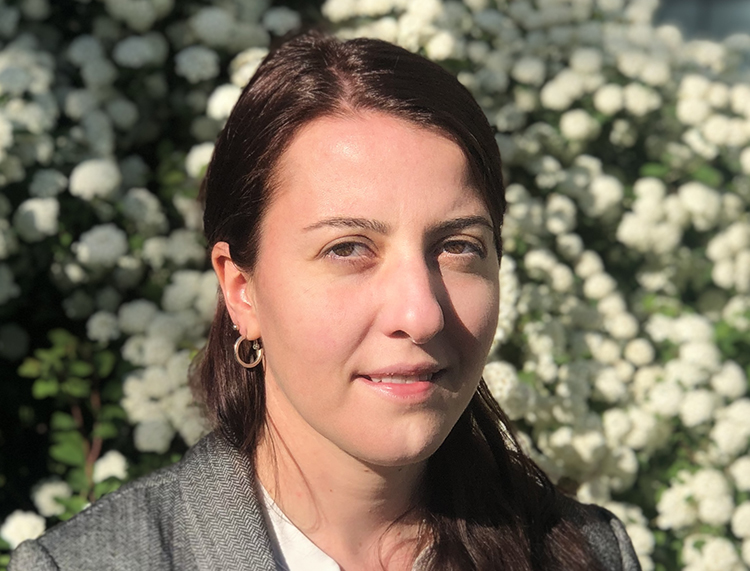
Selin Yilmaz is an Assistant Professor (conditional pre-tenure at the rank of Associate Professor) in Energy Transformation Governance at the University of Lausanne (UNIL), affiliated with the Institute of Geography and Sustainability (IGD) within the Faculty of Geosciences and the Environment. She holds a PhD in Philosophy (2017) from the London-Loughborough Centre for Doctoral Training in Energy Demand, combining quantitative socio-technical modeling with interdisciplinary approaches. Her work bridges micro and macro scales, focusing on energy demand dynamics, sustainability transitions, and policy frameworks. She previously spent six years at the University of Geneva as a postdoc and assistant professor. Her research integrates sociology of energy, science and technology studies (STS), and institutional policy analyses. Key methodologies include participatory methods, co-design, and joint governance within Living Labs ecosystems to enhance sustainability experimentation. She explores intersections between energy efficiency/sufficiency, supply-demand interactions, and social license for automated demand-side management (DSM). Recent work emphasizes electricity tariff design, consumer acceptance of smart technologies (heat pumps/EVs), and typologies of energy communities. Her projects address climate-resilient energy systems, including fifth-generation district heating/cooling and borehole thermal storage. Cross-cutting themes include equity considerations, behavioral segmentation, and governance frameworks for energy transitions.
Marc Weibel is a Senior Lecturer in the Center for Financial Data Science and Econometrics at the School of Management and Law, Zurich University of Applied Sciences (ZHAW), a position he has held continuously since August 2021. Previously, he served as Senior Lecturer in Financial Mathematics at ZHAW from January 2010 to July 2017 and concurrently as Chief Investment Officer at ENISO Partners AG from September 2017 to November 2022. He maintains active professional memberships in the Bachelier Society and European Finance Association, with an ORCID identifier (0000-0002-0819-9224) for scholarly attribution. His academic credentials include a PhD in Mathematics / Financial Mathematics from the University of Technology Sydney (2016-2019), an Advanced Certificate in Portfolio and Risk Management from Symmys (2012), a Master of Advanced Studies in Economics and Finance from the University of Geneva (2002-2004), and a Master in Economics from the University of Neuchâtel (1997-2001). Weibel's research focuses on the intersection of quantitative finance and data science, with primary emphasis on Portfolio Management, Risk Management, Machine Learning, and ESG Investing. His work integrates advanced mathematical techniques with practical financial applications, particularly in scenario-based optimization and alternative data utilization. He has published extensively on ESG factor integration, portfolio risk control, and financial data quality, often leveraging R and Python programming for empirical analysis. Analysis of his 2022-2024 publications reveals a pronounced shift toward sustainable finance, featuring multiple studies on ESG data validation, climate risk tools, and factor-tilt investment strategies. His scholarly output demonstrates consistent innovation in optimization algorithms (ADMM, model predictive control) and machine learning applications (NLP for greenwashing detection, reinforcement learning for SMEs), bridging theoretical finance with Swiss market implementation challenges. Marc Weibel has led significant applied research projects including the Adaptive AI-Driven Platform for P2P Lending Decisions and Liquid Instruments-Based Replication of Financial Indices. His collaborative work spans ESG-compliant product development, climate commitment tracking, and NLP-based analysis of corporate communication. Project roles reflect deep engagement with Swiss financial institutions through the Risk- and Finance-Lab. As a core team member of ZHAW's Risk- and Finance-Lab, he contributes to industry-academia partnerships focused on real-time financial decision systems. His project portfolio emphasizes practical solutions for Swiss asset owners, including ESG product customization and reinforcement learning frameworks for SME risk management.
Naoaki Okazaki is a Professor in the Department of Computer Science at Tokyo Institute of Technology's Graduate School of Information Science and Engineering, with joint research affiliations at AIST (National Institute of Advanced Industrial Science and Technology). He serves as a leading researcher in Natural Language Processing with particular expertise in grammatical error correction, bias evaluation in language models, and Asian language processing. His research interests span multiple critical areas of contemporary NLP including: Natural language processing for educational applications Bias evaluation and mitigation in pre-trained language models Machine translation, especially for Japanese and Korean Subword tokenization techniques and vocabulary optimization Multimodal learning and vision-language models Development of evaluation metrics for NLP tasks Professor Okazaki's publication record demonstrates consistent high-impact contributions to top NLP conferences (ACL, EMNLP, NAACL) from 2021-2025. His recent work shows increasing focus on the challenges posed by large language models, including membership inference attacks, prompt sensitivity in bias evaluation, and developing native Japanese resources rather than relying on translation approaches. His research group regularly achieves state-of-the-art or competitive results across multiple NLP tasks. As Program Chair for ACL 2023, Professor Okazaki contributed to improving conference peer review processes and increasing transparency in academic decision-making. His leadership extends to mentoring numerous graduate students who frequently appear as co-authors on his publications.
Christoph Koch is a Full Professor of Computer Science at École Polytechnique Fédérale de Lausanne (EPFL), leading the Data Analysis Theory and Applications Laboratory (DATA). His academic journey includes previous roles as Associate Professor at Cornell University (2007-2010) and Saarland University (2005-2007), with academic foundations from TU Vienna (PhD 2001, Habilitation 2004) and research at CERN. Education: PhD in Artificial Intelligence (TU Vienna & CERN, 2001), Habilitation (TU Vienna, 2004) Appointments: EPFL (2010-present), Cornell University (2007-2010), Saarland University (2005-2007), TU Vienna (2003-2005) His research focuses on database theory and systems , with recent work spanning query optimization , transaction processing , and parallel data management . His publications address topics like robustness under SQL isolation levels , quantifier elimination for query optimization , and Datalog extensions . Articles trend toward high-dimensional data cubes , transactional concurrency , and embedded DSLs for performance-critical systems . Scientific accolades include: Best Paper Awards: PODS (2002) ICALP (2005) SIGMOD (2011) VLDB (2014) GPCE (2017) ERC Consolidator Grant (2011) Google Research Award (2009) ACM SIGLOG Alonzo Church Award (2021) He has advised numerous PhD students including Immanuel Trummer (now at Cornell), Milos Nikolic (Edinburgh), and Lionel Parreaux (HKUST). His lab contributes to query engine architectures , parallel processing systems , and quantum computing applications in database optimization.
Meisam Razaviyayn is an Associate Professor at the University of Southern California (USC) with joint appointments in the Department of Industrial and Systems Engineering , Computer Science , Quantitative and Computational Biology , and Electrical Engineering . He serves as the Associate Director of the USC-Meta Center for Research and Education in AI and Learning and holds the Andrew and Erna Viterbi Early Career Chair . His academic background includes a Ph.D. in Electrical Engineering with a minor in Computer Science from the University of Minnesota, followed by a postdoctoral fellowship at Stanford University. Razaviyayn maintains active collaborations with industry partners like Google Research and Amazon. Current Roles : Faculty Visitor at Google Research Editorial Roles : Associate Editor for SIAM Journal on Optimization and IEEE Transactions on Signal Processing His research focuses on optimization algorithms for modern data science problems, particularly addressing privacy , fairness , and scalability in machine learning systems. Recent work includes differentally private optimization frameworks and fair learning algorithms applicable to large-scale and decentralized data scenarios. Key scientific awards include: 2022 NSF CAREER Award 2022 Northrop Grumman Excellence in Teaching Award 2021 AFOSR Young Investigator Award 2021 3M Nontenured Faculty Award 2020 ICCM Best Paper Award in Mathematics 2019 IEEE Data Science Workshop Best Paper Award He actively advises Ph.D. students and leads research initiatives in robust and private machine learning . His group has received funding from NSF, Google Research, and Amazon for projects related to generative AI training , differentially private algorithms , and distributed optimization . Razaviyayn also contributes to academic service as a conference chair and workshop organizer.
David Preinerstorfer is a Professor of Statistics and Econometrics at the Vienna University of Economics and Business (WU) and Director of the Swiss Institute for Empirical Economic Research (SEW-HSG) at the University of St.Gallen. His research focuses on the statistical foundations of algorithmic decision making, particularly in dynamic economic systems and uncertain environments. Director, SEW-HSG (2024–2025) Associate Professor, University of St.Gallen (2021–2024) Assistant Professor, Université libre de Bruxelles (2017–2021) PhD in Statistics and Operations Research, University of Vienna (2011–2015) His work integrates reinforcement learning, optimal control, stochastic programming, and optimization to develop robust and scalable algorithmic solutions. Key research areas include high-dimensional inference, moment-based methods, and optimal policy learning with distributional targets. Recent publications focus on moment-dependent phase transitions, power enhancements for testing moment equalities, and regularization in policy learning. He has contributed to journals like Econometrica and Econometric Theory . Scientific Awards Econometric Theory Multa Scripsit Award (2024) Tjalling C. Koopmans Econometric Theory Prize (2024) Adolphe Wetrems Prize (2022) Advanced ARC Grant (2018) University of Vienna Publication Awards (2016) He collaborates with institutions such as Universitat Pompeu Fabra, TU Graz, and Erasmus University Rotterdam. His research emphasizes both theoretical and practical advancements in data-driven decision making.
Prof. Bryan Alexander Ford is an Associate Professor at École Polytechnique Fédérale de Lausanne (EPFL), where he leads the Decentralized and Distributed Systems (DEDIS) lab within the School of Computer and Communication Sciences, Department of Computer Science. He also holds teaching positions in SIN (Systems and Networking) and SSC (Security and Software Composition) at EPFL, and serves on the Open Science Strategic Committee. His academic journey includes faculty positions at Yale University following his Ph.D. at MIT. Dr. Ford's research spans multiple domains with a primary focus on building secure decentralized systems. His work encompasses privacy and anonymous communication systems like Dissent, systems security, blockchain technology, and novel approaches to operating systems for deterministic parallel computing such as Determinator. He has made seminal contributions to parsing theory through his development of Parsing Expression Grammars (PEGs) and packrat parsing algorithms, which provide linear-time parsing with backtracking capabilities. His research also extends to networking protocols including the Unmanaged Internet Architecture and Structured Stream Transport, as well as virtualization technologies like VX32. Ford's publication record demonstrates a remarkable evolution from foundational work in parsing and programming languages to cutting-edge research in decentralized systems and security. His early career focused on operating systems theory, parsing algorithms, and language design, culminating in influential papers on packrat parsing and PEGs. More recently, his work has shifted toward practical decentralized systems, blockchain technology, and security architectures, while maintaining connections to programming language theory through projects like Matchertext and MinML. This trajectory reflects both continuity in his interest in system architecture and a strategic pivot toward emerging challenges in decentralized computing. As an educator and mentor, Ford advises multiple PhD students at EPFL through the EDIC program and welcomes prospective students and researchers to join his lab. His teaching includes courses on decentralized systems engineering and technologies for democratic society, reflecting his commitment to both technical rigor and societal impact of computing technologies.
Laurent Lehmann is a Full Professor at the University of Lausanne, holding a position in the Department of Ecology and Evolution within the Faculty of Biology and Medicine. He has served as director of the master's program 'Behaviour, Economics, and Evolution' since 2015. Previously, he was an Assistant Professor at the University of Lausanne (2011-2015) and the University of Neuchâtel (2009-2011). His academic journey includes postdoctoral research at Stanford University with Prof. Marc Feldman, Cambridge University with Dr. François Balloux, and the University of Helsinki with Prof. Hanna Kokko. Lehmann's research focuses on mathematical and simulation models to study the evolution of social behaviors, including cooperation, altruism, and learning. His work spans three primary areas: individual decision processes, life-history evolution, and the transition to large-scale human societies. His theoretical approach addresses fundamental questions about how social behaviors evolve through natural selection, with particular attention to the roles of kinship, spatial structure, and cultural transmission. Analysis of his recent publications reveals a strong emphasis on mathematical modeling of social evolution, with recurring themes including Hamilton's rule, kin selection, cultural transmission, and evolutionary game theory. His work bridges theoretical biology with anthropological questions about human social evolution, particularly examining how large-scale cooperation emerged in human societies. Recent papers demonstrate increasing integration of cultural evolution with traditional population genetic approaches. As an academic mentor, Lehmann has supervised doctoral students including Fumagalli E. (2014), with research focusing on information sharing and social network dynamics. His work has received funding from major research agencies including ERC and SNSF Starting Grants, as noted on his departmental profile. Lehmann leads a research group within the Department of Ecology and Evolution that develops mathematical models to understand social behavior evolution. His group collaborates across disciplinary boundaries, connecting evolutionary theory with economics, anthropology, and cognitive science to address fundamental questions about human sociality and cooperation.
Hannes Freiße is an Assistant Professor at the Geneva School of Landscape, Engineering and Architecture (HES-SO), specializing in Mechanical Engineering . His research focuses on Additive Manufacturing , Laser Machining , Welding , and Surface Treatment technologies. Education: BSc HES-SO in Mechanical Engineering from Geneva School of Landscape, Engineering and Architecture Key Competencies: Additive Manufacturing, Laser Machining, Industrial Welding, Quality Control, Surface Treatment Recent research highlights include: 2025: Development of a deep-learning segmentation model for automated detection of surface porosity defects in laser-deposited bronze coatings 2024: 3D COMSOL Multiphysics simulation of bimetallic alloy cooling processes tracking solidification dynamics and residual stresses 2024: Comparative studies on laser cladding techniques for tribological applications and bronze-on-steel deposition His work addresses critical challenges in metallurgical bonding , wear resistance , and process optimization across multiple manufacturing domains.
Mauro Carpita is a Full Professor at the School of Engineering and Management of the Canton of Vaud (HEIG-VD), part of the University of Applied Sciences and Arts Western Switzerland (HES-SO). He serves as Director of the Energy Institute, leading research and development in power electronics and energy conversion systems. His work bridges academic research with industrial applications through numerous collaborative projects across Switzerland. Professor Carpita's research focuses on power electronics and energy conversion systems, with expertise in digital controller design, system simulation, grid integration of renewable energy sources, and medium-voltage DC distribution technologies. His work addresses critical challenges in modern power grids, particularly the integration of renewable energy sources and maintenance of grid stability in low-inertia systems. His research spans from fundamental power electronics to applied grid integration solutions for applications ranging from electric aviation to satellite systems. His recent publications demonstrate a strong focus on grid-forming inverter technologies and advanced modeling techniques for modern power systems. His work on direct voltage control for grid-forming inverters provides innovative solutions for maintaining grid stability as renewable energy penetration increases. His research on medium-voltage DC distribution systems explores continuous time simulation methodologies that enable more efficient grid operation and planning. These publications reflect his commitment to developing practical solutions for real-world power system challenges with significant industrial relevance. Professor Carpita has secured substantial research funding through numerous projects with both academic and industry partners. His projects include 'Soft Open Point with Storage' (CHF 194,445), 'SCCER 2 Phase 2 - WP3' (CHF 257,888), 'Power and Data Contactless Transmission System' (CHF 137,100), and 'Development of the propulsion chain for high-altitude electric aviation' (CHF 5,000,000). Funding sources include the HES-SO Rectorate, Innosuisse, EOS Holding SA, and various industrial partners including DEPsys, RUAG Aerospace, and ABB Sécheron. As Director of the Energy Institute, Professor Carpita oversees a research environment that fosters innovation in energy technologies. His institute maintains strong connections with industry through projects ranging from satellite power systems to smart grid technologies. The Energy Institute under his direction collaborates extensively with other research groups within HES-SO and serves as a hub for power electronics research with practical applications in electric transportation, renewable energy integration, and advanced grid technologies.
Mauro Carpita is a full Professor at HES-SO (University of Applied Sciences and Arts Western Switzerland), serving as Director of the Institute of Energy . His work focuses on power electronics, smart grids, and energy conversion systems , with extensive collaboration in industrial and academic projects . Research Interests: Power Electronics for renewable energy integration Smart Grid Stability and control systems Energy Conversion technologies for high-altitude aviation and industrial applications Digital Controllers and system simulation Recent Publications address grid forming inverters, MVDC distribution modeling, residential energy consumption causality, and stochastic optimization for active distribution networks. These works emphasize grid stability, converter efficiency, and renewable energy integration. Project Leadership includes Innosuisse-funded initiatives like Limitless and Prisys , as well as collaborations with industry partners DEPsys, RUAG Aerospace, and ABB Sécheron . Projects span soft open point systems, fuel cell converters, and electromagnetic compatibility in smart grids.
Benoit Bach is a full professor at Changins - High School of Viticulture and Oenology , part of HES-SO - University of Applied Sciences and Arts Western Switzerland . Holding a BSc and MSc in Life Sciences from HES-SO, he leads research at the intersection of oenology, wine microbiology, and sustainable production technologies. Education : BSc and MSc from HES-SO institutions Primary Research Areas : Wine protein stability, membrane contactors for gas management, bioprospecting indigenous yeast strains, chitosan applications in food preservation His work spans analytical method development and industrial implementation, focusing on reducing environmental impact while preserving wine quality. Projects include INTERREG Ecofass-Vin for carbonated beverage distribution, and collaborations with Agroscope and French research institutes. Funded by HES-SO Rectorat, OFAG, and Innosuisse, his teams develop tools for microbial biodiversity management and wine stabilization. Key contributions include standardized haze potential tests, automated distillation sensors using impedance spectroscopy, and valorization of grape byproducts through Valuxtract and DistiMatu-2 initiatives. His research directly impacts winemaking practices, particularly in biological acidification, fining agent alternatives, and sensory space definition for distilled beverages.
Mohammad Hossein Moradi is a researcher at ETH Zürich affiliated with Prof. Christopher Onder's research group. His work focuses on sustainable transportation and renewable energy systems, with contact via moradim@ethz.ch. His research integrates machine learning with environmental engineering to optimize energy infrastructure across transportation and power sectors. Key interests include emission reduction in maritime and urban transit systems, thermo-electrical analysis of photovoltaic technologies, and pollution control through intelligent systems. His interdisciplinary approach bridges mechanical engineering, data science, and sustainability science. Recent publications (2021-2024) reveal consistent application of reinforcement learning and AI for route optimization, CO2 reduction, and renewable energy integration. Dominant themes include electrified public transportation infrastructure, maritime vessel efficiency, solar power plant allocation, and advanced thermography for PV systems. This work demonstrates strong cross-disciplinary connections between transportation engineering, environmental science, and computational modeling.