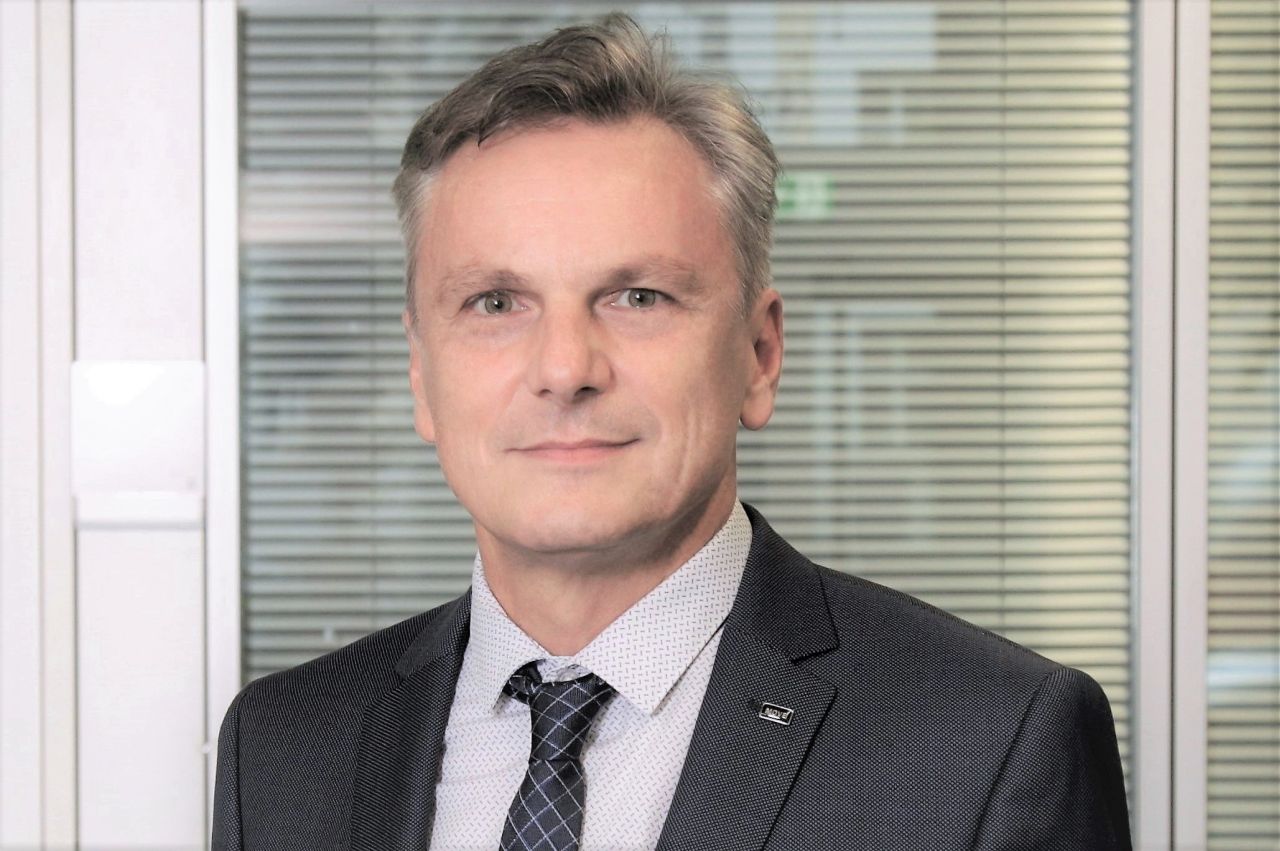
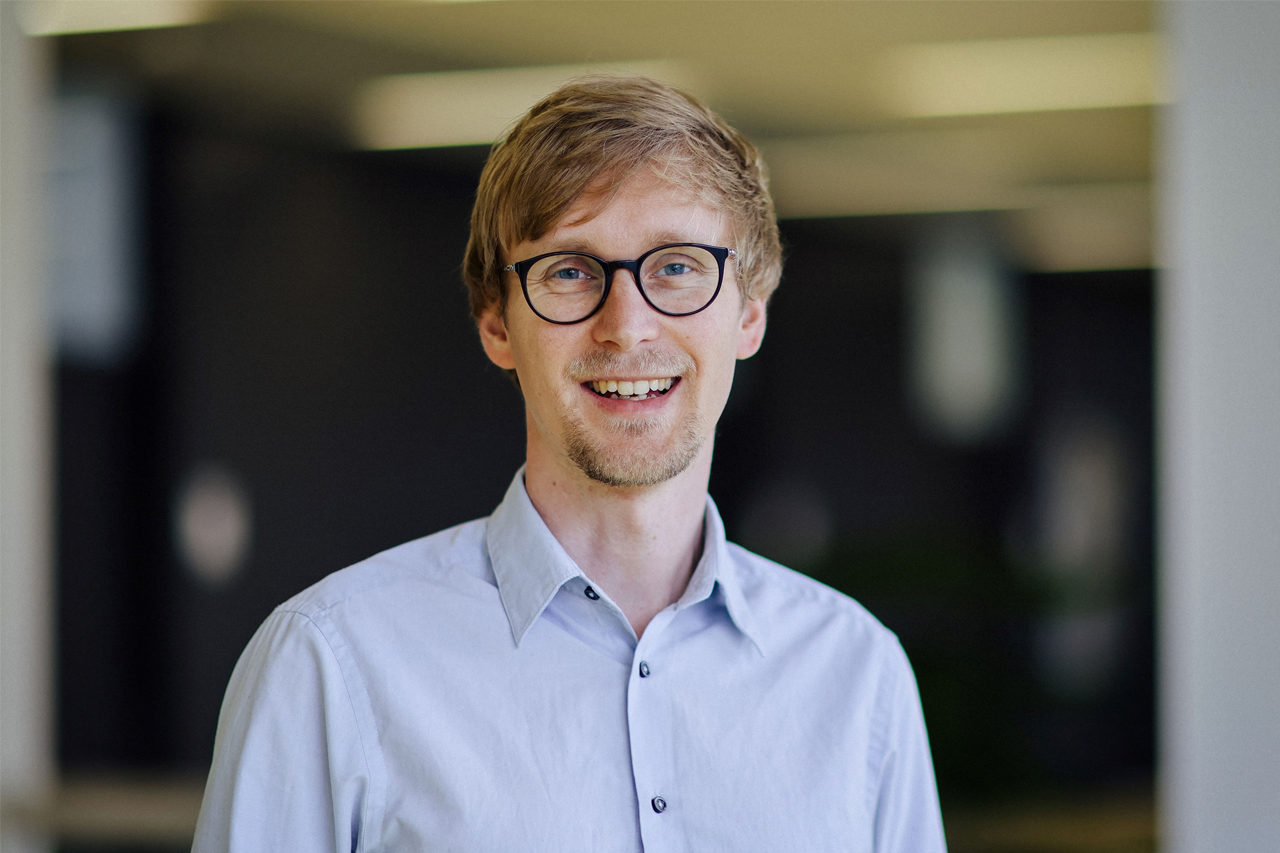
Prof. Xiaoming Fu is a Professor at the Institute of Computer Science, University of Göttingen, and Head of the Computer Networks Group. He also holds a secondary membership in the Center for Statistics. His research focuses on AI-driven networking, edge computing, federated learning, and video analytics. He teaches courses such as 'AI-Empowered Networking and Mobile Communications' and oversees multiple seminars and internships on topics like smart cities and network optimization. His work spans technical innovations in multi-agent systems, low-latency services, and resource-efficient machine learning. Recent articles highlight contributions to neural-optimized video streaming, privacy-preserving MARL, and cross-modal social media analysis. He collaborates on interdisciplinary projects involving mobility data, socioeconomic analysis, and quantum networks. Prof. Fu’s research integrates reinforcement learning, network architecture design, and distributed systems to address challenges in 5G/6G, IoT, and smart cities. His lab develops solutions for edge-cloud orchestration, video quality adaptation, and resilient resource allocation, with applications in both academia and industry.
UnivProf. Dr. Jens Grabowski is a full professor at the Institute of Computer Science at Georg-August-Universität Göttingen, leading the Software Engineering for Distributed Systems group. His primary roles include teaching advanced courses on software engineering, software testing, and parallel computing, as well as supervising practical internships in these domains. His research focuses on software engineering methodologies, cloud computing architectures, static analysis tools, and model-driven approaches to system design. Education details are not explicitly listed, but his academic position implies a PhD in Computer Science. His work spans both theoretical contributions (e.g., defect prediction models, developer behavior studies) and applied systems (e.g., cloud resource management frameworks, testing tool development). He is actively involved in open-source software research, particularly analyzing Apache projects and Python ecosystems. Key research themes include: Model-driven cloud orchestration using standards like TOSCA and OCCI Static analysis tool evaluation and warning management Empirical studies on software evolution and developer practices Simulation-based approaches for system validation His recent publications (2021-2025) demonstrate sustained contributions to cloud computing infrastructure, static analysis tool efficacy, and software testing methodologies. Notable frameworks developed include MoDMaCAO for cloud application management and the SmartShark ecosystem for mining software repositories. Grants and advising activities are not explicitly detailed in the provided texts, but his leadership in multiple research groups implies significant involvement in academic funding and PhD supervision. He maintains collaborations in distributed systems, cloud computing, and software engineering education.
Dr. Lorenzo M. Procopio Peña is a Researcher at the Institute for Photonic Quantum Systems (PhoQS) at the University of Paderborn, Germany. His work focuses on quantum optics, quantum information, and photonics, with a particular emphasis on cryogenic systems, frequency-bin entangled photons, and quantum control protocols involving indefinite causal structures. He has contributed to advancements in quantum state manipulation, photonic network architectures, and the development of frequency-domain quantum gates for scalable quantum technologies. Key research interests include cryogenic feedforward of quantum states, parallelization of quantum gates using silicon microresonators, and the application of indefinite causal order in quantum communication and parameter estimation. His work bridges foundational quantum mechanics with applied photonics, aiming to enhance quantum information processing capabilities through novel experimental setups and theoretical frameworks. Publications highlight contributions to quantum tomography, reconfigurable multi-user protocols using frequency-domain gates, and the study of quantum 3-switch behavior. While no explicit grants or awards are listed, his research aligns with cutting-edge topics in quantum photonics and quantum information science.
Hannes Rusch is an Associate Professor in the Micro- and Public Economics Department at Maastricht University and an Independent Max Planck Research Group Leader at the Max Planck Institute for the Study of Crime, Security and Law (MPI-CSL) in Freiburg. His research integrates behavioral economics, experimental methods, and evolutionary game theory to explore societal issues like cooperation, conflict, and intergroup dynamics. He focuses on how human societies manage conflicting interests to avoid segregation, violence, and war. His work spans interdisciplinary collaborations with organizations such as the UM Behavioral Insights Center and the Marburg Center for Institutional Economics. Rusch's research interests include intergroup conflict, altruism, heroism, and the evolutionary roots of cooperation. His recent publications analyze refugee integration dynamics, editorial bias in experimental economics, and the application of machine learning to central bank communication. He has secured over €2 million in funding and taught numerous courses, with over 50 citations to his work. His affiliations include the German National Academic Foundation and interdisciplinary economics fellowships. Current projects explore green monetary policy surprises and the ethical implications of institutional design. Notably absent from his profile are explicit awards or formal student listings, though his extensive publication record and institutional roles highlight his academic contributions. His work bridges economics, psychology, and evolutionary biology, emphasizing real-world societal challenges.
Benoît Macq is a distinguished professor at the ICTEAM Institute , Université catholique de Louvain, Belgium. With over 350 publications spanning 1990–2025, his work bridges signal processing , medical imaging , machine learning , and data security . Key collaborators: Christophe De Vleeschouwer Simon K. Warfield Jean-François Delaigle Mathieu De Craene Research interests include: Adaptive algorithms for real-time model deployment and domain adaptation 3D reconstruction and medical image segmentation for radiation therapy Security in blockchain-based distributed learning systems Transformers for EEG classification and proton radiography Recent publications focus on foundation models in cytology and remote sensing, holonic multi-agent systems for VR, and secure codestreams for UAV object detection. His work emphasizes scalable architectures and privacy-preserving techniques in dynamic environments. Advising: Dani Manjah Antoine Aspeel Maxime Zanella
Dr.-Ing. Peter Scholz is a Senior Research Fellow at the Institute of Fluid Mechanics , Technische Universität Braunschweig. With a PhD in Mechanical Engineering (2009) and a background in Aerospace Engineering from TU Braunschweig, he specializes in aerodynamics , active flow control , and experimental fluid dynamics , particularly using fluidic vortex generators and numerical simulations . He leads research groups and played a pivotal role in designing the university’s large water tunnel. Core Research Areas: Aerodynamics, Flow Control, Fluid Mechanics, Experimental Methods, Numerical Simulations, Aerospace Applications. His recent publications focus on supersonic flow dynamics , laminar flow control , and wake structure analysis , with methodologies spanning Large-Eddy Simulation , PIV measurements , and high-speed flow diagnostics . Though no formal awards are documented, his work is integral to Germany’s flow control research initiatives. Dr. Scholz collaborates extensively with institutions like DLR and Fraunhofer WKI, advancing sustainable propulsion and flow control technologies.
Dr. Slavisa Aleksic is a Professor for Network Technologies and Network Management at the Faculty of Digital Transformation , Leipzig University of Applied Sciences (HTWK Leipzig) since February 2021. Previously, he held academic roles at Hochschule für Telekommunikation Leipzig (2015-2021), TU Wien (2010-2015), IBBT, Ghent University (2011), and TU Wien in various capacities since 1999.
Felix Kaule is a Laboratory Engineer at the Institute for Development-Oriented Mechanical Engineering , Faculty of Engineering, HTWK Leipzig. He works under the supervision of Prof. Dr.-Ing. Anke Bucher and Prof. Dr.-Ing. Stephan Schönfelder, focusing on mechanical strength analysis of silicon wafers and solar cells. Current research in PV production technologies Project manager for BMWi-funded NextTec project Expertise in finite element modeling and experimental validation His work bridges computational simulation with practical testing in laboratories like bikelab , where mechanical properties of components are evaluated. Recent publications highlight innovations in half-cell module manufacturing, thermal laser separation, and microcrack mitigation in photovoltaic materials. Scientific contributions include: Optimizing diamond wire sawing processes Analyzing residual stress effects in solar cells Advancing kerfless cutting technologies Improving mechanical strength through plasma etching
Baoguo Yu is a Professor at the Department of Navigation Science and Technology within the School of Geodesy and Geomatics at Wuhan University. He has established himself as a leading researcher in the field of navigation and positioning systems, with over 70 publications spanning from 2016 to 2025 across prestigious journals including IEEE Transactions on Instrumentation and Measurement, Sensors, and IEEE Access. His research interests primarily focus on GNSS (Global Navigation Satellite Systems), indoor positioning technologies, pseudolite systems, and signal processing for navigation applications. Professor Yu's work demonstrates a strong emphasis on practical implementations, particularly in challenging environments where traditional GNSS signals are degraded or unavailable. His recent publications reveal a growing integration of machine learning techniques with traditional navigation approaches, reflecting the evolving nature of the field. Analysis of his 15 most recent publications shows a clear research trajectory toward high-precision positioning solutions, with particular attention to indoor navigation challenges, LEO satellite navigation augmentation, and robust positioning under interference conditions. His work spans theoretical algorithm development to practical implementations for smartphones, unmanned vehicles, and specialized navigation equipment. Professor Yu maintains extensive collaborations with researchers across China, particularly with scholars from Wuhan University and other prominent Chinese institutions. His frequent co-authors include Lu Huang, Xingli Gan, Heng Zhang, and Chuanzhen Sheng, suggesting well-established research teams working on complementary aspects of navigation technology. His research has significant applications in autonomous vehicles, pedestrian navigation, emergency response systems, and any domain requiring precise positioning where GPS signals are unreliable. The consistent publication output in high-impact journals demonstrates his active research program and continued contributions to advancing navigation science.
Adilson Marques da Cunha is a Professor at the Brazilian Aeronautical Institute of Technology (ITA), with a focus on software engineering and computational systems. His career spans academic research and development in embedded systems, real-time applications, and machine learning methodologies. Affiliation: Brazilian Aeronautical Institute of Technology Research Interests: Dr. da Cunha's work centers on agile software development , embedded system optimization , and numerical integrator frameworks . He has contributed to deep reinforcement learning for robotics and recommender systems for news, while also exploring climate prediction models using big data. Publication Trends : 2025 papers focus on universal numerical integrators and Python testing frameworks; 2024 work involves autonomous air navigation; 2022 studies include humanoid robotics and climate modeling
Prof. Dr. Folker Roland serves as Rector of Harz University of Applied Sciences since 2017, following two terms as Vice Rector for Studies, Quality Management, and Continuing Education (1997-2000, 2007-2016). Appointed Professor of Business Administration with focus on Production and Logistics in 1994, his career bridges academic leadership and industry collaboration, notably through Volkswagen AG procurement work during doctoral studies. Georg-August-University Göttingen: Diplomkaufmann in Business Administration and Mathematics (1983-1988) University of Göttingen: Dr. rer. pol. in Business Administration (1988-1993), dissertation on procurement strategies developed at Volkswagen AG His research trajectory evolved from core procurement/logistics topics (1980s-1990s) toward sustainable energy systems and higher education management (2000s-present). Current work emphasizes bioenergy villages as models for rural energy independence, while continuing contributions to university quality frameworks and digital procurement systems. This dual focus reflects his administrative responsibilities intersecting with applied research. Publication trends reveal strategic adaptation to emerging fields: early works centered on production optimization and procurement strategies, shifting toward interdisciplinary sustainability projects after 2000. The 2006-2013 bioenergy village publications demonstrate practical implementation of theoretical frameworks, while 2013-2015 works address digital transformation in supplier management and continuing education models. No scientific awards or major honors are documented in the provided materials. As Rector, Roland oversees institutional strategy while maintaining research activity, though specific student supervision or grant details remain unreported. His leadership in the Jühnde Bioenergy Village project involved cross-disciplinary teams including environmental scientists and local government stakeholders, exemplifying practice-oriented research. Current work likely focuses on scaling bioenergy models and digital transformation in university administration, though future directions aren't explicitly stated. Roland directs university-wide operations from Wernigerode campus office (Room 6.104), with research activities coordinated through Harz University's applied science framework. His bioenergy work maintains connections to the Göttingen research tradition in sustainability, though no dedicated lab is specified.
Prof. Dr. René Simon is affiliated with the Harz University of Applied Sciences , where he works in the Department of Automation and Computer Science . His research focuses on control technology , programmable controllers , and industrial automation standards , particularly through contributions to IEC 61131-3 and PLCopen initiatives. Collaborations : Institut für Automation und Kommunikation (ifak), Hangzhou Dianzi University (Chair Professor 2018-2020) Leadership Roles : Convenor for IEC TC65/SC65B/WG7, Chairman of PLCopen, Deputy Chairman of DKE K962 SPS He teaches automation systems and programming languages, with examples including virtual PLC (vPLC) implementations. His work emphasizes distributed automation systems and XML exchange formats for programmable controllers.
Chao Yin is a researcher at Shanghai University , Department of Computer Engineering and Science. His work spans multiple domains including Machine Learning, Cloud Computing, Fault Diagnosis, and Supply Chain Optimization. Key research areas: Machine Learning , Cloud Computing , Quantum Computing , Supply Chain Systems , Network Security Scientific Contributions (2024-2025): Developed heterogeneous graph neural networks for automotive supply chain analysis Created MSDF-VAE cloud-edge fault diagnosis framework using transfer learning Proposed quantum metrology methods with Heisenberg-limited precision Designed LARP pseudonym protocol for V2X communication Optimized fog computing resource scheduling with hybrid metaheuristics Prior Work (2012-2023): Contributed to fluid animation feature preservation from single images Developed label distribution learning for facial age estimation Designed erasure coding storage systems for big data Created multi-agent manufacturing networks in cloud environments
Dr. Carsten König is a Research Fellow at the Max Planck Institute for Radio Astronomy since 2019, focusing on Galactic structure, high-mass star formation, and astrophysical software development. He holds a PhD from the same institution (2013–2018) and contributes to data catalog projects like OGHReS and SEDIGISM. Research spans galactic dynamics, molecular clump properties, and instrumentation software Key collaborations with international teams on ATLASGAL and GLOSTAR surveys Specializes in submillimeter observations and machine learning for astrophysical data His recent publications (2021–2025) analyze stellar feedback in molecular clouds, ammonia tracers in star-forming regions, and galactic filament structures.
Henry Hoffmann is Professor and Liew Family Chair of the Department of Computer Science at the University of Chicago. He serves as Chair of the department and leads research in self-aware and adaptive computing systems. His work bridges traditional computer systems areas with control theory and machine learning to create systems that automatically adapt to meet high-level goals. Hoffmann received his Ph.D. from MIT in 2013 under advisors Anant Agarwal and Srinivas Devadas, with his dissertation titled "SEEC: a framework for self-aware management of goals and constraints in computing systems." He earned an S.M. from MIT in 2003 and a B.S. with highest honors and distinction from UNC-Chapel Hill in 1999. Hoffmann's research focuses on developing self-aware computing systems that understand high-level goals and automatically adapt their behavior to meet those goals optimally. His recent work has shifted toward applying these techniques to control machine learning and AI systems, building learning systems that dynamically adapt their internal structure and resource usage to meet accuracy, energy, performance, and security goals at inference time. His interdisciplinary approach combines operating systems, computer architecture, control theory, and machine learning. Analysis of Hoffmann's recent publications reveals a clear trajectory toward increasingly sophisticated applications of self-aware computing principles. His work has evolved from foundational resource management to cutting-edge applications in AI/ML systems, quantum computing, and security. The publications demonstrate a consistent theme of using control theory and machine learning to create adaptive systems that optimize multiple competing objectives like performance, energy efficiency, and reliability. Recent papers show expanding applications into large language models, quantum algorithms, and privacy-preserving techniques. Presidential Early Career Award for Scientists and Engineers (PECASE) 2019 DOE Early Career Award 2015 Samsung Security Hall of Fame recognition IEEE Micro Top Picks Honorable Mention awards FSE Test of Time Honorable Mention ASPLOS Hall of Fame recognition Hoffmann has mentored numerous PhD and Master's students who have gone on to successful careers in academia and industry. His research has secured over $19 million in funding for the University of Chicago. He co-founded Config Dynamics in 2019 to commercialize aspects of his self-aware computing research. His work has practical applications across data centers, edge computing, AI systems, and quantum computing. Hoffmann leads the SEEC (Self-aware, Energy-Efficient Computing) research group at the University of Chicago. The group focuses on developing frameworks and techniques for building self-aware computing systems that can dynamically adapt to changing conditions and requirements. The group maintains strong collaborations with industry partners and other academic institutions, particularly in the areas of quantum computing, AI systems, and energy-efficient computing.