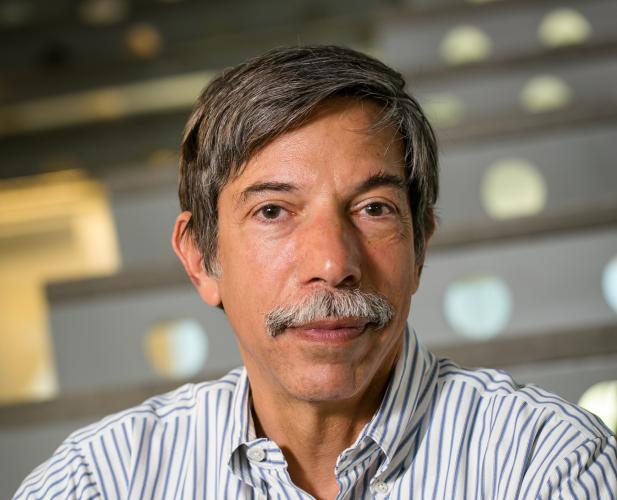
Seth Lewis Gilbert is a Professor and Head of the Department of Computer Science at the National University of Singapore (NUS), within the School of Computing . He holds the Dean's Chair Associate Professor title and focuses on algorithms for large-scale distributed systems , emphasizing scalability and fault-tolerance . His work spans wireless networks , contention resolution , dynamic networks , and blockchain protocols . Ph.D. in Computer Science, MIT (2007) M.S. in Computer Science, MIT (2003) B.S. in Electrical Engineering & Mathematics, Yale University (1999) His research explores trusted coordination in systems with untrusted and unreliable participants, addressing challenges like Byzantine agreement , load balancing , and contention resolution . He has pioneered formal frameworks for accountability in distributed protocols and developed novel algorithms for asynchronous task allocation . Recent publications include work on consensus protocols , leader election , and contention resolution , reflecting his focus on dynamic network environments . His research has earned recognition at venues like DISC, ICDCS, and CCS. Scientific Awards & Honors : Young Researcher Award (NUS, 2014) Faculty Teaching Excellence Award (2013/14, 2014/15, 2015/16) School of Computing Teaching Excellence Honour Roll (2016-2021) Best Paper Awards at DISC (2023, 2022), ICDCS (2022), IPDPS (2022) Best Student Paper Award at DISC (2022) He serves on the Steering Committee for DISC as Treasurer and has chaired program committees for DISC, OPODIS, and SPAA. His work bridges foundational algorithmic theory with practical applications in blockchains and dynamic networked systems .
Vassilis Zikas is an Associate Professor at the School of Cybersecurity and Privacy and holds a courtesy appointment in the School of Computer Science at Georgia Tech. He previously held positions at Purdue University, the University of Edinburgh, and Rensselaer Polytechnic Institute (RPI). His research focuses on cryptography, blockchain technologies, cryptocurrencies, game theory, and distributed computing. He leads the Blockchain Lab at Georgia Tech and serves as Chief Scientist at Sunday Group, where he contributes to the Mobby blockchain architecture. His work is supported by the NSF, DoD, Swiss NSF, and industry partners like Sunday Group and Algorand Foundation. He has organized major conferences including PKC 2020 and has served on program committees for EUROCRYPT, CRYPTO, and TCC. He advises PhD students in cryptography and related fields and has mentored postdocs and master’s students. Zikas’ publications span topics like secure multi-party computation (MPC), blockchain security, and cryptographic protocol design. His recent work includes advancements in privacy-preserving protocols, adaptive security frameworks, and composability in blockchain systems. Notable awards include the 2023 Leadership Award from Purdue College of Science and an AnlytiXIN Fellowship. He actively contributes to both theoretical and applied aspects of cybersecurity and privacy through academic and industrial collaborations.
Marta Kwiatkowska is a Professor of Computing Systems at the University of Oxford and a Fellow of Trinity College. Her research focuses on probabilistic verification , quantitative model checking , and formal methods for complex systems including autonomous robots, medical devices, and biological systems. She leads the development of the PRISM and PRISM-games probabilistic model checkers. Key research areas: Probabilistic systems, formal verification, autonomous robotics, medical device analysis, systems biology Grants: ERC Advanced Grant VERIWARE, EPSRC Programme Grant Mobile Autonomy Awards: 2024 ETAPS Test-of-Time Tool Award for PRISM Students: Current and former advisees in topics spanning formal methods, robotics, and quantitative verification The PRISM-games extension enables verification of stochastic multi-player games with applications in network protocols, autonomous systems, and game theory. Her work bridges theory, algorithms, and practical implementation, with real-world applications in ubiquitous computing and nanotechnology.
Ben Fisch is an Assistant Professor of Computer Science at Yale University's School of Engineering & Applied Science. He is also the co-founder of Espresso Systems, a company focused on blockchain infrastructure. His research focuses on privacy and verifiability in decentralized systems like Bitcoin and Ethereum, with applications in digital finance and healthcare. Dr. Fisch received his B.A. from the University of Pennsylvania and completed his Ph.D. at Stanford University, where he worked with Dan Boneh in the applied cryptography research group. His educational background provided the foundation for his work at the intersection of cryptography, distributed systems, and economics. His research centers on leveraging cryptographic tools such as succinct non-interactive zero-knowledge proofs (zk-SNARKs), private information retrieval, and homomorphic encryption to address challenges in verifiable computation, verifiable storage, and verifiable fairness. He has made significant contributions to verifiable delay functions (VDFs) and proofs of replication, which have been adopted by major blockchain projects including Ethereum 2.0, Chia, and Filecoin. His work on Filecoin's Proofs of Replication has helped the network reach over 1.5 exabytes of storage capacity. His publication record shows a clear trend toward increasingly sophisticated cryptographic protocols for blockchain applications, with recent work focusing on data availability for Bitcoin rollups, efficient folding schemes for pairing-based arguments, and privacy pools with proof-carrying disclosures. His research bridges theoretical cryptography with practical implementations that have real-world impact in decentralized systems. His notable recognition includes: Best Paper Finalist at ACM CCS 2017 for 'Iron: Functional Encryption using Intel SGX' Dr. Fisch's research has led to significant technology transfer, most notably with his work on Verifiable Delay Functions (VDFs) sparking a multimillion dollar industry initiative through the VDF Alliance. His research on Proofs of Replication forms the basis of Filecoin's incentive layer and consensus protocol. His newer SNARK system Basefold is being used by several commercial products. He maintains active collaborations across academia and industry, with publications spanning top conferences in cryptography and security. As co-founder of Espresso Systems, Dr. Fisch leads a team developing next-generation blockchain infrastructure, particularly focusing on sequencing layers for rollups. His work bridges academic research with practical implementation, ensuring that theoretical advances in cryptography find real-world applications in decentralized systems.
Cao Jiannong is currently a Chair Professor and Director of the University Research Facility in Big Data Analytics at Hong Kong Polytechnic University . He has held academic roles including Assistant Professor at City University of Hong Kong and University Lecturer at the University of Adelaide and James Cook University. His research spans Cloud and Edge Computing , Parallel and Distributed Systems , Big Data Analytics , and Wireless Sensing . Ph.D. in Computer Science, Washington State University (1990) MSc in Computer Science, Washington State University (1986) BSc in Computer Science, Nanjing University, China (1982) His work focuses on solving theoretical and practical challenges in distributed computing , mobile cloud systems , and wireless sensor networks . Recent projects include coupled network embedding models for heterogeneous networks and SDN architectures for vehicular communication. His research also pioneers WiFi-based non-invasive health monitoring and fault-tolerant sensor deployment for structural health applications. Dr. Cao's publications highlight advancements in network embedding , edge computing , and WSN optimization . Key papers address multi-user computation partitioning , energy-efficient SHM systems , and consensus protocols for mobile networks. These works have been cited over 15,000 times, with an h-index of 60. Ministry of Education (China) Natural Science Award (2018) Distinguished Member, ACM (2017) Fellow, IEEE (2014) Best Paper Awards at IEEE DSAA, SMARTCOMP, and WCNC Dr. Cao has advised multiple PhD students, including Linchuan Xu and Weigang Wu , whose research on WSN-based SHM and coupled network embedding has practical impact. His leadership includes directing Hong Kong Polytechnic University's Big Data Research Facility and serving on technical committees for IEEE INFOCOM and ACM/IEEE conferences.
Monika Henzinger is Professor at the Institute of Science and Technology Austria (ISTA), heading the research group of Theory and Applications of Algorithms. She also serves as Vice President for Technology Transfer at ISTA since 2024. Previously, she held professorships at the University of Vienna (2009-2023) and EPFL, Switzerland (2005-2009), was Director of Research at Google (1999-2005), and served as Assistant Professor at Cornell University. Professor Henzinger's research centers on efficient algorithms and data structures with three main thrusts. First, she investigates dynamic settings where program inputs are repeatedly updated, seeking solutions faster than restarting computations. Second, she develops privacy-preserving algorithms that add minimal noise to protect input data while maintaining efficiency. Third, she translates theoretically optimal algorithms into practical implementations for dynamically changing inputs. Her work consistently addresses resource conservation in data processing, particularly computing time and memory space, while exploring the theoretical limits of possible savings. Henzinger's recent publications (2024-2025) reveal strong trends in dynamic algorithms, differential privacy, and graph theory. Her research consistently bridges theoretical computer science with practical applications, focusing on algorithms that adapt to changing inputs while preserving computational efficiency and data privacy. She has made significant contributions to problems like dynamic matching, minimum cut computation, and privacy-preserving data analysis across various domains. Professor Henzinger has received numerous prestigious awards and honors: Wittgenstein Award (2021) Two ERC Advanced Grants (2014, 2021) Carus Medal of the German Academy of Sciences Leopoldina (2019) SIGIR Test of Time Award Fellow of the Association of Computing Machinery (2016) Member of the Austrian Academy of Sciences (2017) CAREER Development Award of the National Science Foundation Best paper Award at the Symposium on Discrete Algorithms (2024) Professor Henzinger currently advises PhD students Bardiya Aryanfard, Antoine El-Hayek, and Roodabeh Safavi Hemami, along with postdocs Anamay Chaturvedi and Niklas Hahn. Her research is supported by multiple significant grants including an ERC Advanced Grant for 'Design and Evaluation of Modern, Fully Dynamic Data Structures,' the FWF Wittgenstein Prize, and the WEAVE Project on 'Static and dynamic hierarchical graph decompositions.' She also serves as Principal Investigator for the FWF project 'Fast algorithms for a reactive network layer,' providing substantial funding for her innovative work in algorithms and data structures. Professor Henzinger leads the Theory and Applications of Algorithms research group at ISTA, which focuses on developing practical algorithms for dynamic environments. Her team investigates resource conservation in data processing, specializing in dynamic algorithms that efficiently handle changing inputs, privacy-preserving algorithms that minimize noise while protecting data, and translating theoretical algorithms into practical implementations. The group maintains a strong presence in theoretical computer science through regular publications in top conferences and journals, and collaborates extensively with institutions worldwide to advance algorithmic research.
Lam James is a Chair Professor of Control Engineering at the University of Hong Kong (HKU), affiliated with the Faculty of Engineering. He holds a BSc (1st Hons.) in Mechanical Engineering from the University of Manchester, and MPhil/PhD degrees from the University of Cambridge. His academic journey includes roles as a Croucher Fellow, Lecturer at the University of Melbourne, and faculty member at City University of Hong Kong before joining HKU in 1993. Professor Lam serves as Editor-in-Chief for four international journals including IET Control Theory and Applications and Journal of The Franklin Institute . His research focuses on networked control systems, vibration control, control theory, and multi-agent systems. With 600+ peer-reviewed publications, he maintains an H-index of 102 (Web of Science) and 108 (Scopus), recognized as a Highly Cited Researcher in multiple fields. Education: BSc Manchester (Mechanical Engineering), MPhil/PhD Cambridge Editorial Roles: 20+ journals, including leadership roles since 2012 His awards include Foreign Membership of Academia Europaea (2024), National Academy of Artificial Intelligence membership (2025), and two State Natural Science Awards (2015, 2019). He is a Fellow of multiple institutions including IEEE, IMechE, and HKIE.
Maria Apostolaki is an Assistant Professor of Electrical and Computer Engineering at Princeton University. Her research focuses on designing secure, reliable, and high-performance networked systems, integrating expertise in networking, security, blockchain, and machine learning. She holds a Ph.D. from ETH Zurich (2021) and an M.Eng. from the National Technical University of Athens (2015). Education: Ph.D., ETH Zurich 2021 | M.Eng., NTUA 2015 Her work investigates challenges in network security, distributed systems, and adversarial resilience. Notable contributions include SABRE (protecting Bitcoin from routing attacks) and TANGO (collaborative route control). She has advised multiple graduate students in computer science and engineering. Key honors include the NSF CAREER Award and the IRTF/IETF Applied Networking Research Prize (2018). Her lab explores cutting-edge topics like contextual robustness in ML-driven network functions and formal methods for secure systems. Advising: 6 advisees in COS/ECE domains Grants: NSF CAREER Award, innovation grants for AI/robotics Her TANGO framework enables secure cross-domain routing, while recent work addresses vulnerabilities in Ethereum PoS and BGP routing protocols.
Andrew Miller is an Associate Professor in the Electrical and Computer Engineering department at the University of Illinois, specializing in Programming Languages, Formal Methods, Software Engineering, Security and Privacy, and Systems and Networking. His research focuses on blockchain technologies, cryptography, and secure systems. Professor Miller's research spans multiple critical areas in modern computer security. His work primarily focuses on blockchain technologies , where he has made significant contributions to understanding and improving the security, privacy, and performance of systems like Bitcoin and Ethereum. He has conducted empirical analyses of privacy in the Lightning Network and developed protocols for confidential smart contracts. His work in cryptography includes research on multiparty computation, zero-knowledge proofs, and formal methods for cryptographic protocol design. Miller also investigates security vulnerabilities in proof-of-stake systems and resource exhaustion attacks, contributing to the robustness of decentralized systems. His applied security research extends to privacy-preserving health applications, as evidenced by his work on the Safer Illinois platform for COVID-19 contact tracing. Miller's publication record demonstrates consistent contributions to top security and systems venues including IEEE Security & Privacy, ACM CCS, Financial Cryptography, and USENIX Security. His research shows a clear trajectory from foundational work in blockchain security to more applied systems addressing real-world privacy and security challenges. Recent work focuses on making multiparty computation services publicly auditable and developing decentralized identity solutions that maintain compatibility with existing systems. Distinguished Reviewer Award, IEEE Security & Privacy 2018 Professor Miller has advised students including Vivek Nair, who joined the prestigious Hertz Fellows program in 2022. He has taught various courses including Introduction to Algorithms & Models of Computation, Advanced Computer Security, Cryptography, Applied Cryptography, and Ideal Functionality in Cryptography. His research has received support through grants including the SaTC: CORE: Medium project on "Automated Support for Writing High-Assurance Smart Contracts" in 2018. Miller is actively involved in research groups focusing on blockchain security, cryptographic protocols, and privacy-preserving systems. His lab appears to collaborate extensively with researchers across multiple institutions, as evidenced by the diverse author lists on his publications. Current work seems to be focused on making decentralized systems more secure, privacy-preserving, and accessible for real-world applications.
Eamonn Keogh is a Professor in the Computer Science and Engineering Department at the University of California, Riverside. His pioneering work centers on the Matrix Profile, a transformative approach to time series data mining enabling efficient solutions for motif discovery, anomaly detection, and similarity search. His algorithms (STAMP, STOMP, SCRIMP, DAMP, SCAMP) offer exact, parameter-free, and scalable solutions across domains like seismology, bioinformatics, and industrial IoT. Research areas include: Development of ultra-fast algorithms for time series joins and motif discovery at unprecedented scales (breaking the 100 million barrier) GPU acceleration for time series mining Domain-agnostic methods for semantic segmentation and anomaly detection Novel primitives like Time Series Chains, Snippets, and Consensus Motifs His work is highly cited and recognized by industry and academia, with applications ranging from NASA's Cassini mission to detecting BGP anomalies in computer networks.
Peter Pietzuch is a Professor in the Department of Computing at Imperial College London, where he leads the Large-Scale Data & Systems (LSDS) group. He also serves as the Director of Research and is a Visiting Researcher at Microsoft Research Cambridge. Pietzuch holds a Ph.D. from the University of Cambridge and a B.A. from Girton College. His research spans distributed systems, cloud computing, big data processing, and systems security. Key interests include: Scalable architectures for cloud-native applications Efficient stream processing and machine learning systems Trusted execution environments and secure cloud infrastructure Optimization of serverless computing and distributed databases His recent publications focus on adaptive machine learning frameworks, secure cloud resource management, and high-performance stream processing systems. Trends show strong emphasis on hardware-software co-design, confidential computing, and fault-tolerant architectures. Awards include: Best Paper Award at Middleware'03 He actively advises PhD students and secures grants for projects like Faasm (serverless computing) and Teechain (blockchain security). His LSDS group collaborates with industry partners including Microsoft Research. Pietzuch teaches undergraduate and graduate courses including Scalable Systems for the Cloud and Operating Systems . He co-founded the ACM DEBS conference and serves on steering committees for EuroSys and Middleware.
Fred B. Schneider is the Samuel B. Eckert Professor of Computer Science at Cornell University , where he has been a faculty member since 1978. His career spans foundational work in trustworthy systems , fault-tolerant distributed systems , and system security . He served as department chair from 2014–2018 and previously earned a B.S. in Engineering from Cornell (1975) and a Ph.D. in Computer Science from Stony Brook University (1978).
Giuseppe Fontana is an Associate Professor of Political Economy (SECS-P/01) at the University of Sannio (UNISANNIO) in the Department of Law, Economics, Management and Quantitative Methods (DEMM). He has maintained an active research profile for over two decades, establishing himself as a significant contributor to Post-Keynesian economics and monetary theory. His research interests include: Post-Keynesian Economics Monetary Theory and Endogenous Money Macroeconomic Policy and Financial Stability Financialization and Socioeconomic Impacts Economic Methodology and History of Economic Thought International Trade and Exchange Rate Theory Stock-Flow Consistent Modeling Fontana's scholarly trajectory demonstrates a consistent focus on heterodox economic approaches, particularly Post-Keynesian theory. His work evolved from theoretical contributions in the early 2000s to increasingly policy-relevant analyses of contemporary economic challenges. His recent publications show special attention to the Eurozone crisis, the impact of the COVID-19 pandemic on European economies, and the theoretical foundations of monetary production. He frequently employs stock-flow consistent modeling to provide comprehensive analyses of macroeconomic phenomena, challenging mainstream economic frameworks with alternative theoretical perspectives. Fontana has established important collaborations with scholars like Emiliano Brancaccio, Riccardo Realfonzo, and Marc Lavoie, demonstrating his integration within international networks of heterodox economists. His work has been published in leading heterodox economics journals including the Cambridge Journal of Economics, Journal of Post Keynesian Economics, and Review of Political Economy, as well as in edited volumes with major academic publishers like Palgrave Macmillan and Edward Elgar.
Prof. Bryan Ford leads the Decentralized/Distributed Systems (DEDIS) lab at EPFL. He focuses on secure decentralized systems, including blockchain technology, privacy, and systems security. He earned his Ph.D. from MIT and held faculty positions at Yale University and EPFL. His work spans distributed consensus protocols, peer-to-peer networking, and privacy-preserving systems. Key projects include QuePaxa (timeout-free consensus), UIA (global connectivity for mobile devices), and MedCo (secure healthcare data sharing). He advises numerous PhD students and contributes to open-source projects like Bitcoin collective signing and privacy networks like Riffle. Education: Ph.D., MIT; Postdoctoral work at Yale Research interests include blockchain scalability, consensus algorithms, and cryptographic privacy. His lab develops systems like TRIP for coercion-resistant voting and F3B to mitigate blockchain front-running. His work on NAT traversal and peer-to-peer protocols (e.g., STUN/ICE) remains foundational in network architecture. He emphasizes practical, auditable security solutions such as CertiKOS and atomic cross-chain transactions (Atom). Notable contributions: CoSi (collective signing), OmniLedger (sharded blockchain), and privacy-preserving protocols like PURBs (Protected Unsealable Recursive Boxes). His lab collaborates with Swiss Post to audit e-voting systems and designs democratic cryptocurrencies like PoPCoin.
Sebastian U. Stich is a tenured faculty member at the CISPA Helmholtz Center for Information Security , where he has been since December 2021. He is also a member of the European Lab for Learning and Intelligent Systems (ELLIS) since June 2020. His research focuses on optimization methods for machine learning, collaborative learning algorithms, privacy and security in distributed systems, and theoretical foundations of deep learning. Stich received his PhD in Theoretical Computer Science from ETH Zurich (2014), following a Master's in Mathematics at the same institution (2010-2014). Prior to CISPA, he worked as a research scientist at EPFL (2016-2021) and held positions at ETH Zurich and ICTEAM/CORE. He has been awarded the ERC Consolidator Grant 2024 , Google Research Scholar Award (2023), and Meta Privacy-Enhancing Technologies Research Award (2022). His team includes Dr. Anton Rodomanov (since 2023), Dr. Rotem Mulayoff (since 2024), Xiaowen Jiang (2023), Yuan Gao (2023), and notable alumni like Anastasia Koloskova (defended 2023). Stich actively organizes workshops (e.g., NeurIPS OPT 2024) and serves on editorial boards ( Journal of Optimization Theory and Applications , Transactions on Machine Learning Research ). He teaches advanced courses in optimization at Saarland University and has held visiting positions at MIT. Key scientific contributions include: Developing ProgFed for progressive federated learning (2021) Creating ProxSkip to accelerate communication in federated settings (2022) Formalizing SCAFFOLD with control variates for FL (2020) Introducing RelaySum mechanism for decentralized learning (2021) Proposing Lookahead-Minmax for GAN training (2021) His work addresses fundamental challenges in: Decentralized optimization theory Communication-efficient algorithms Privacy-preserving model training Handling heterogeneous data distributions Stochastic gradient dynamics Second-order optimization methods