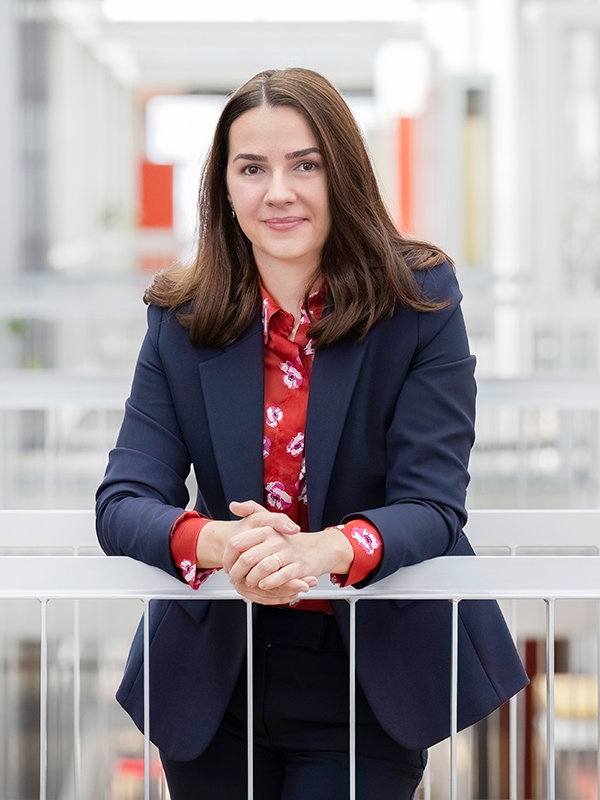
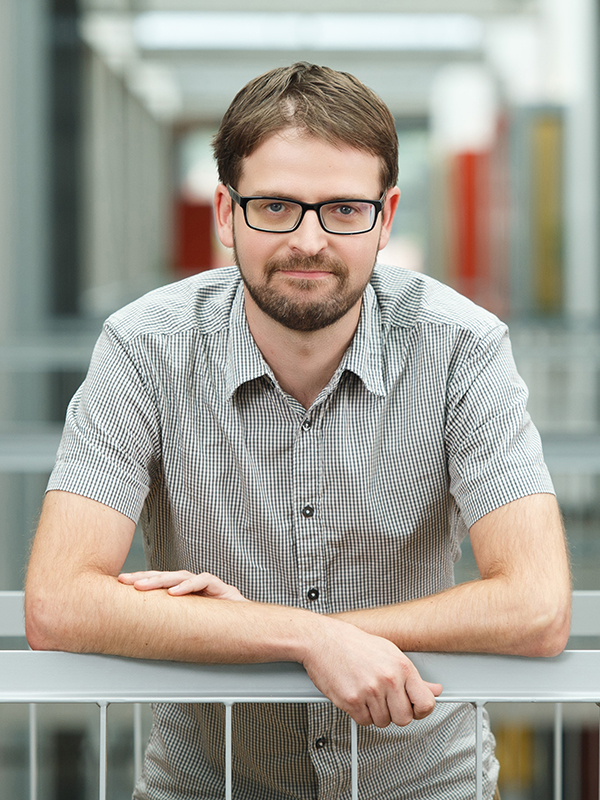
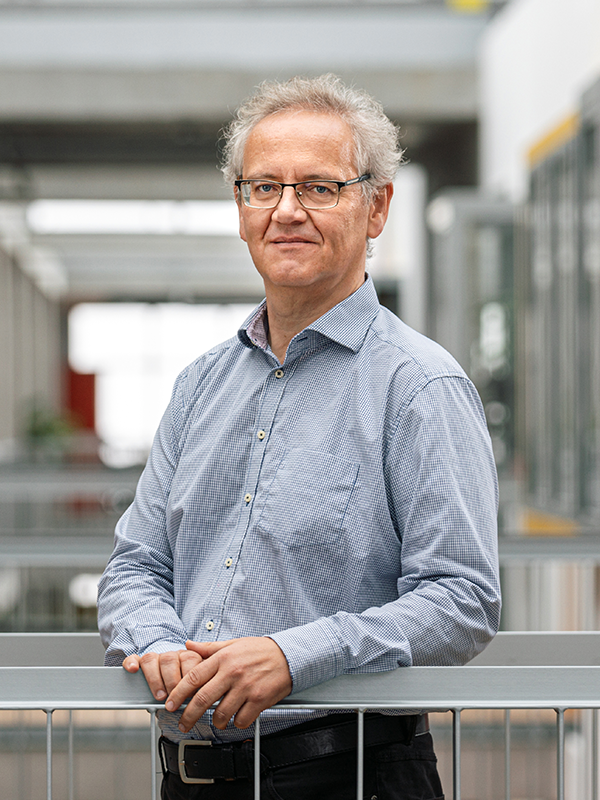
Dr. Alina Luminita Machidon is an academic researcher and assistant affiliated with the Computer Communications Laboratory. She actively contributes to projects focused on digital transformation, approximate computing, and smart public governance. Current affiliation: Computer Communications Laboratory Her research interests span: Digital transformation for public governance Adaptable distributed AI systems Resource-efficient computing Context-aware on-device AI Energy-efficient UAV-based agriculture Recent projects include: P2-0426 (2022-2027): Digital Transformation for Smart Public Governance N2-0393 (2025-2027): Approximate Computing for Distributed AI J2-3047 (2021-2024): Context-aware On-Device Approximate Computing AgriAdapt (2023): Energy-efficient UAV agriculture Prior projects: N2-0136 (2020-2021): Resource Efficiency in Smartphones
Slavko Žitnik is an Associate Professor and Vice-dean at the Faculty of Computer and Information Science, University of Ljubljana, where he is a member of the Laboratory for Data Technologies. His academic career spans multiple research projects and international collaborations focusing on data technologies and natural language processing. His primary research interests include information retrieval, information extraction, natural language processing, entity extraction, relationship extraction, coreference resolution, data merging, redundancy elimination, and ontologies. Dr. Žitnik's work often bridges theoretical computer science with practical applications in various domains including education, healthcare, and smart city ecosystems. Dr. Žitnik has led and participated in numerous significant research projects including P2-0359 on Ubiquitous Computing (2023-2027), PoVeJMo on Adaptive Natural Language Processing with Large Language Models (2023-2026), and the GOBLIN COST Action for building global networks of large-scale knowledge graphs. His recent work demonstrates a strong focus on adapting natural language processing techniques with large language models and creating practical applications of these technologies. His scientific contributions span multiple domains including: Natural Language Processing and Information Extraction techniques Knowledge graph construction and integration Applications in education, healthcare, and smart city ecosystems Development of practical tools and systems for data processing Dr. Žitnik has established international collaborations with institutions including Harvard University's Department of Biomedical Informatics (where he conducted a research visit from July to October 2022), the University of South Florida, and various European partners through COST Actions and other collaborative frameworks.
Uroš Čibej serves as an Assistant Professor at the Faculty of Computer Science and Informatics, University of Ljubljana, where he teaches core courses including Theoretical Foundations of Computer Science, Computability Theory, and Algorithms and Data Structures. As a member of the Algorithmics Laboratory, he contributes to both educational and research initiatives within the institution. His research centers on distributed systems, scheduling theory, and complexity theory, with specialized focus on approximate, probabilistic, and distributed algorithms. This work addresses fundamental challenges in computational efficiency and scalability, particularly relevant to modern distributed computing environments and big data applications. Dr. Čibej actively participates in major research projects such as ARRS Program P2-0095 "Parallel and Distributed Systems" (2020-2026), ARRS Project N2-0171 "Graph Theory and Combinatorial Scientific Computing" (2021-2023), and earlier initiatives including "Graph Optimization and Big Data" (2016-2019). His project portfolio demonstrates consistent engagement in theoretical algorithm development with practical applications in network analysis and visualization. Within the Algorithmics Laboratory, he collaborates on advancing theoretical computer science methodologies while mentoring students through coursework in foundational programming and computational theory.
Assoc. Prof. Dejan Lavbič is an Associate Professor at the University of Ljubljana, Faculty of Computer and Information Science with 15+ years of academic experience. His research focuses on intelligent agents, multi-agent systems, ontologies, and blockchain-based smart contracts , particularly in semantic web technologies, AI services ecosystems, and information quality assessment . Doctor of Philosophy in Computer Science, University of Ljubljana (2010) Bachelor of Science in Computer Systems and Informatics, University of Ljubljana (2004) His scientific contributions span semantic web frameworks, blockchain applications, and machine learning systems, with 20+ peer-reviewed publications. Recent works include: Smart contract classification with AI Cardano blockchain identity systems Information quality metrics with gamification Awards include Cambridge CAE certification and multiple industry certifications. He mentors students in decentralized applications, AI development, and smart city ecosystems , having guided 6+ diploma/master theses on topics like automated essay grading and air quality data collection.
Veljko Pejović is an Associate Professor at the Faculty of Computer and Information Science (FRI), University of Ljubljana, Slovenia, where he also serves as Head of the Computer Communications Laboratory. His research focuses on mobile computing with special emphasis on resource efficiency in mobile and IoT environments. His educational background includes a PhD in Computer Science from the University of California, Santa Barbara (2012) and a dipl. ing (BS) from the University of Belgrade, Serbia (2006). Pejović's research interests center around mobile deep learning, approximate computing, and resource-efficient computing. His work explores how computation accuracy can be dynamically adapted based on contextual factors to optimize resource usage without significantly compromising user experience. He has made significant contributions to mobile sensing, machine learning on resource-constrained devices, and security in IoT environments. His recent publications reveal a strong trend toward making AI more efficient and accessible on mobile and edge devices, with particular focus on approximate computing techniques, federated learning frameworks, and context-aware adaptation of computational resources. His research spans applications from precision agriculture using UAVs to behavioral authentication in IoT environments and mental health inference from mobile sensor data. Scientific Awards: 10-Year Impact Runner Up Award at ACM UbiComp for InterruptMe work Outstanding research achievement award for 2024 by the Faculty of Computer and Information Science Best Paper Nominee (top 4%) at UbiComp'14 for InterruptMe Pejović actively mentors PhD and master's students, with numerous theses resulting in workshop, conference, and journal publications. He serves as Associate Editor for ACM IMWUT and ACM JCSS, and has held organizational roles in major conferences including ACM UbiComp 2025. His research is supported by multiple significant projects including approXimation for adaptable diStributed artificial intelligence (ARIS), CODA, AgriAdapt, and CARMA. His laboratory, the Computer Communications Laboratory at FRI, focuses on developing practical systems and frameworks for resource-efficient mobile computing, with several open-source tools and datasets publicly available for the research community.
Borut Robič is a Full Professor and Head of the Theoretical Computer Science Chair at the Faculty of Computer and Information Science, University of Ljubljana . He also serves as Head of the Laboratory for Algorithmics and President of the Faculty's Academic Assembly since 2005. His work spans computability theory, algorithms, and parallel computing, with notable contributions to foundational concepts and educational literature. University: University of Ljubljana School: Faculty of Computer and Information Science Roles: Professor, Head of Theoretical Computer Science Chair, Head of Laboratory for Algorithmics, President of Academic Assembly Robič's research interests focus on computability and complexity theory, algorithm design, and parallel computing frameworks. His publications emphasize historical context, formal methods, and modern computational paradigms like hypercomputing. Publication trends reveal a progression from foundational algorithmic theory (1999) to advanced computability research (2020), with a 2018 work bridging parallel programming and practical implementation. Projects include leadership in ARRS research programmes on parallel systems (2020-2026) and past collaborations on graph optimization and big data initiatives. Laboratory affiliations: Head of the Laboratory for Algorithmics and active member of its research team.
Prof. Marko Robnik Šikonja is a Full Professor at the Faculty of Computer and Information Science , University of Ljubljana . As head of the Machine Learning and Language Technologies Laboratory , he leads research in artificial intelligence, machine learning, data mining, natural language processing, and network analytics. He has authored over 150 publications with more than 5000 citations on Google Scholar. Research Focus: Deep neural networks, model explanation, embeddings, ensemble learning, and interdisciplinary applications in healthcare (e.g., STRATIFYHF for heart failure detection) and digital humanities (e.g., Language Resources for Slovene ). Scientific Awards: ECML/PKDD 2019 Journal Track Reviewer Award 2018 Outstanding Research Achievement at University of Ljubljana 2015 Golden Medal for contributions to the university Key Projects: STRATIFYHF (2023-2027): AI for heart failure risk stratification EMBEDDIA (2019-2021): Cross-lingual embeddings for European news KAUČ (2016-2022): Slovene textbook quality improvement
Prof. Dr. Vlado Stankovski serves as Full Professor and Vice Dean at the University of Ljubljana's Faculty of Computer and Information Science, leading major EU-funded initiatives including EBSI-VECTOR (€14.5M), TRUSTCHAIN (€12M), and ONTOCHAIN (€6M) focused on blockchain integration, decentralized systems, and next-generation internet protocols. His research spans software engineering, cloud/edge/fog computing, distributed systems, semantics, and artificial intelligence, with particular emphasis on blockchain applications for smart contracts, digital identity (eIDAS2), and knowledge management. Current projects address real-world implementations in smart construction, healthcare traceability, educational credentialing, and public administration digitalization. Analysis of his 2020-2023 publications reveals dominant trends in decentralized architectures, with 70% of works integrating blockchain with semantic web standards (W3C DID) and fog computing. Key application areas include service-level agreement management (25%), smart construction ecosystems (20%), and cross-border AI/data governance (15%), demonstrating strong industry-academia collaboration through Horizon Europe and EU digital identity frameworks. As scientific coordinator of TRUSTCHAIN and ONTOCHAIN managing over €50M in combined funding, he mentors students through thesis topics in blockchain development and decentralized systems. His laboratory work at the Data Technologies Laboratory supports courses in computer science fundamentals, communications security, and fog computing for smart services, with active involvement in EU skills initiatives like ESSA for software competency standardization.
Assistant Professor Aljaž Zalar is affiliated with the University of Ljubljana at the Faculty for Computer and Information Science . His research focuses on Real Algebraic Geometry , Truncated Moment Problems , and Matrix Polynomials , with applications in Operator Theory and Positive Linear Maps . PhD in Mathematics, University of Ljubljana (2017) MSc and BSc in Mathematics, University of Ljubljana (2013, 2011) Zalar's work bridges theoretical mathematics and computational applications, including copositive matrices , positive semidefinite matrix completions , and noncommutative polynomial positivity . His recent projects address truncated moment problems on curves and algebraic structures in optimization . His publications from 2016–2025 span journals like Linear Algebra and its Applications , SIAM Journal on Applied Algebra and Geometry , and Integrable Equations and Operator Theory , emphasizing polynomial operator analysis and matrix inequalities . Zalar supervises postdoctoral and graduate students, including PhD candidate Rajkamal Nailwal and Igor Zobovič, and mentors undergraduate researchers. He leads the ARIS grant project J1-60011 on real algebraic geometry approaches to moment problems.
Assistant Professor Jure żabkar is affiliated with the Faculty of Computer and Information Science at the University of Ljubljana, where he teaches Artificial Intelligence, Machine Learning, and Programming courses while serving as a Laboratory Member in the Artificial Intelligence Laboratory (Laboratorij LUI). His research focuses on applied artificial intelligence with emphasis on: Deep reinforcement learning for real-time optimization (e.g., low-voltage power grid management) Intelligent tutoring systems and qualitative modeling from data Medical applications including Parkinson's disease detection and lung cancer prognostics Multi-agent systems with incremental learning capabilities Current research includes the ARRS-funded DRIFT project (L2-4436, 2022-2025) on power distribution optimization. Past projects span European initiatives like X-MEDIA and XPERO, Slovenian ARRS programs (2009-2020), and Structural Funds projects for dyslexia screening (PKP6) and Parkinson's monitoring (PARKINSCHECK). As an active laboratory member, he contributes to AI systems development across domains from medical diagnostics to cultural heritage platforms, with recent work including smartphone ECG applications and knowledge-sharing frameworks.
Assoc. Prof. Dr. Žiga Unuk is an Associate Professor at the University of Maribor's Faculty of Civil Engineering, Traffic Engineering and Architecture (FGPA), affiliated with the Department of Building Structures and Miroslav Premrov's Lab. His academic roles include membership in the FGPA International Cooperation Commission, facilitating global research partnerships. Education highlights: BSc in Civil Engineering (2011) and MSc in Civil Engineering (2014) from University of Maribor, with exchanges at Graz University of Technology PhD in Civil Engineering focusing on reversible reinforcement techniques for historic timber structures Research expertise spans structural engineering innovations, particularly: Hybrid material systems (timber-glass composites, fiber-reinforced concrete) Non-invasive strengthening methods for building conservation Development of patented structural connections for sustainable construction Current projects include ARIS-funded research on hybrid steel-concrete joints for lattice structures. His 11 publications since 2018 predominantly explore fiber-reinforced concrete behavior, timber-glass composites, and computational modeling of structural elements, with recent work emphasizing experimental validation of hybrid systems. Grants and lab involvement: Leading ARIS-funded postdoctoral project (2022-present) Active researcher in Miroslav Premrov's Lab, focusing on composite material applications