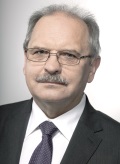
Tomasz Kajdanowicz serves as an Associate Professor in the Department of Artificial Intelligence at Wrocław University of Science and Technology's Faculty of Information and Communication Technology. His research bridges theoretical machine learning with practical cybersecurity and natural language processing applications. His primary research interests focus on graph neural networks , large language model optimization , and interpretable cybersecurity systems . Notable contributions include the MIRAD framework for ransomware detection and PUGG dataset development for Polish language processing. His work demonstrates consistent innovation in graph representation learning, particularly through multiplex graph fusion techniques and knowledge graph enrichment strategies. Analysis of his recent publications reveals a strong trajectory toward trustworthy AI systems with emphasis on hallucination detection (FactSelfCheck), latent space optimization (LatentPrompt), and synthetic data generation for medical applications. His cybersecurity research shows increasing sophistication in interpretable threat detection mechanisms. His academic supervision includes multiple doctoral and master's students evidenced through co-authorship patterns, particularly in graph-based learning and NLP projects. Current collaborations span biomedical signal processing (fNIRS analysis) and efficient LLM deployment strategies. His laboratory work centers on the AI Security Lab within the Department of Artificial Intelligence, focusing on adversarial robustness testing and real-time network monitoring systems. Key initiatives include the development of Polish-language NLP benchmarks and cross-domain graph embedding frameworks.