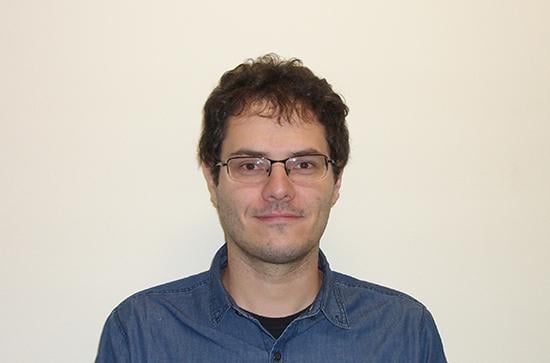
Dr. Tony Lyons is a Lecturer in the Department of Computing and Mathematics at South East Technological University (SETU). His research focuses on nonlinear fluid dynamics, geophysical flows, and quantum mechanics with applications in relativity and soliton theory. He holds a PhD from Technological University Dublin (2013), an MSc in Theoretical Physics from Vrije Universiteit Amsterdam (2007), and a BSc in Theoretical Physics from Trinity College Dublin (2004). His work spans interdisciplinary topics including geophysical fluid dynamics, inverse scattering methods, and geometric analysis of fluids. Recent research explores particle paths in equatorial flows, nonlinear mountain waves with active precipitation, and relational space-time models. His contributions include studies on eddy viscosities in atmospheric boundary layers and soliton solutions via dressing methods. Dr. Lyons has authored over 19 peer-reviewed publications, contributing to journals like Nonlinear Analysis: Real World Applications , Foundations of Physics , and Communications on Pure and Applied Analysis .
Dr. Ghulam Murtaza is a Postdoctoral Researcher in the Department of Computing and Mathematics at South East Technological University (SETU). His research focuses on quantum technologies, photonics, and telecommunications engineering. He holds a PhD in Quantum Technologies from the University of Naples Federico II (2023), an MSc in Electronics and Communication Engineering from Beijing University of Posts and Telecommunications (2019), and a BSc in Electrical Telecommunication Engineering from Government College University Faisalabad (2015). His key research areas include quantum cryptography, molecular single-photon sources for quantum key distribution, and electromagnetic compatibility in communication systems. Recent work explores room-temperature molecular photon emitters and the impact of coaxial connectors on signal integrity. Publications highlight advancements in quantum communication systems, optical frequency combs, and energy-efficient routing algorithms. His multi-disciplinary approach bridges quantum optics, telecommunications, and machine learning applications in medical imaging.
Dr. Frances Cleary is the Head of Research Division (MEPS) at the Walton Institute, SETU, Ireland. She leads the Mobile Ecosystem and Pervasive Sensing (MEPS) division focusing on healthcare e-textiles, AI, 5G/6G, smart transport, and VR/AR. She has over 20 years of experience in roles spanning test engineering, business development, and technical leadership. Education: PhD in Royal College of Surgeons in Ireland (RCSI) Bachelor of Technology in Electronic Engineering from Waterford Institute of Technology Research Interests: Frances' work spans healthcare innovation, cybersecurity, smart transport systems, and emerging technologies like e-textiles and neuromorphic computing. Her division combines AI, NLP, and pervasive sensing to address challenges in healthcare and urban mobility. Recent Articles: Her 2024 publications include reviews on XR interventions for autism and epileptic seizure detection devices. In 2023, she explored AI-driven e-textiles and soft exosuits. Earlier works focus on 5G networks, cybersecurity frameworks, and smart transport systems. Grants & Funding: She has secured EU and national-level funding for cluster projects and digital innovation initiatives. Her team collaborates with industry partners to drive knowledge transfer. Labs & Activities: Frances organizes events like the Digital Education Conference 2024 and participates in conferences like ICIC24. She mentors researchers in her division and oversees lab management for experimental facilities and prototyping.
Roger Young is an Assistant Lecturer specializing in Internet of Things architectures, smart city systems, and distributed data processing. His research develops frameworks for efficient information distribution in urban vehicular networks and edge computing environments. Key research areas include IoT-enabled smart transportation systems, edge intelligence architectures, and adaptive data processing methods. Publications demonstrate applications in traffic optimization, fuel efficiency monitoring, and real-time urban analytics. Technical contributions include novel flow-based architectures for vehicular data distribution and governance models for self-adaptive IoT systems.
Assoc. Prof. John O'Sullivan is an Associate Professor and Head of School at the University of College Dublin's School of Civil Engineering. He is a Fellow of the UCD Earth Institute and a member of the UCD Dooge Centre for Water Resources Research. His expertise spans catchment hydrology, river hydraulics, fluvial processes, and coastal engineering. He leads major projects like ACCLIMATIZE (climate change modeling for coastal waters) and ECOSTRUCTURE (sustainable coastal defenses). O'Sullivan has over 100 publications and supervised 8 PhD/MSc students. He coordinates modules in Hydraulics, Professional Work Experience, and Computer Applications in Civil Engineering. Education: BA (Mathematics), Trinity College Dublin BAI (Engineering), Trinity College Dublin DPhil, University of Ulster MSc (Civil Engineering), Queen's University Belfast Professional Certificate in University Teaching & Learning, UCD Research Interests: Focus on water-sensitive urban design, sediment transport modeling, and microbial pollution in aquatic systems. His work integrates field measurements with machine learning for predictive models in coastal resilience and water quality forecasting. Grants & Projects: ACCLIMATIZE (EU Bathing Water Directive compliance) SWIM (real-time bathing water quality models) ECOSTRUCTURE (eco-friendly coastal defenses) RECONNECT (river barrier impact assessments) Professional Activities: Leadership roles in Engineers Ireland, including Chair of the Civil Engineering Division. Active in curriculum development, including a hybrid academic advising model praised for improving student engagement. Labs/Teams: Leads interdisciplinary teams in the Dooge Centre and Earth Institute, collaborating on projects like microplastic fate studies and antimicrobial resistance tracking in rivers.
Babak Ziaie serves as an Assistant Lecturer (academic rank: Lecturer) in the Department of Mechanical & Manufacturing Engineering at Atlantic Technological University, Ireland, where he is actively pursuing his PhD with expected completion in September 2025. His doctoral research focuses on developing Ti6Al4V TPMS porous hip implants through topology optimization and additive manufacturing techniques. His educational background includes a Master's degree from K.N. Toosi University of Technology (2010-2013) and a Bachelor's degree from the University of Tabriz (2006-2010). Research interests center on biomedical engineering applications, specifically additive manufacturing of porous hip implants, finite element modeling, material science characterization, and biomechanical optimization to address stress shielding and fatigue failure. Analysis of his 2024-2025 publications reveals a concentrated research trajectory in TPMS-based implant design, integrating computational modeling with experimental validation. Key themes include mechanical property optimization of porous structures, stress distribution mapping, and clinical translation of bioinspired gradient implants to prevent bone resorption. Affiliated with ATU's MISHE (Mathematical Modelling and Intelligent Systems for Health & Environment) and PEM (Precision Engineering Materials and Manufacturing Centre) research units, his work directly contributes to UN Sustainable Development Goal 3 (Good Health and Well-being). He is currently accepting PhD students for advanced research in orthopedic implant development.
Asif Yar, PhD, is a researcher in the Department of Computing, focusing on deep learning, wireless sensor networks, and environmental monitoring. His work bridges machine learning and IoT technologies to address real-world challenges in sensor calibration and data accuracy. Research Themes : Deep learning methods, wireless sensor networks, extreme learning machines, environmental monitoring, and distributed optimization. Collaborations : Active in interdisciplinary research with affiliations in IIoT edge environments and air pollution monitoring systems. Citations : 1 citation (Scopus), with a h-index of 1. His recent publications highlight advancements in self-calibration algorithms for large-scale wireless sensor networks using deep learning and attention-based GRUs, alongside novel approaches like temporal fusion transformers for air pollution monitoring in IIoT edge environments. He also explores distributed optimization frameworks using Apache Spark for scalable systems. Asif Yar is currently accepting PhD students and contributes to the academic community through peer-reviewed conference publications and collaborative research projects.
James Green is a Professor at the School of Allied Health, University of Limerick, specializing in Health Psychology and Sustainable Mobility. He leads the ISCycle research projects, focusing on ebike adoption and equitable sustainable transport, while also contributing to open science initiatives. Education: PhD & BA (Hons) in Psychology (University of Otago), MA in Teaching & Learning (Centre for Transformative Learning) His research examines health behavior change, communication, and the intersection of psychology with sustainable transport. Recent work includes applications of systems mapping and behavioral statistics. Key article trends span behavioral modeling, sustainable mobility frameworks, and methodological innovations in smartphone-based research. His collaborations extend across Europe and Ireland, addressing social participation and open science training. Scientific Awards: SEAI National Energy RD&D Funding Programme 2023 (€979,189) - PI for ISCycle2 SEAI National Energy RD&D Funding Programme 2021 (€642,718) - PI for ISCycle European Health Psychology Innovative Initiatives Grant 2024 (€4,942) - Collaborator Green actively supervises PhD students and contributes to health psychology societies. His lab, the Physical Activity for Health Research Centre, investigates how ebikes can enable lasting transport behavior change and equity.
Professor Isabel Rozas is a Professor in the School of Chemistry and an affiliated faculty member at the Trinity Institute of Neuroscience (TCIN) , Trinity College Dublin. With a PhD from Universidad Complutense de Madrid and postdoctoral experience in Canada, she joined TCD in 2000, rising to full Professor in 2011. She is a Fellow of Trinity College Dublin (2005) and a globally recognized expert in medicinal and computational chemistry, particularly in guanidinium-based compounds and DNA minor-groove binders. PhD, Universidad Complutense de Madrid (1987) MSc (Licenciado de grado), Universidad Complutense de Madrid (1982) BSc (Honours), Universidad Complutense de Madrid (1981) Her research lies at the intersection of medicinal chemistry, computational modeling, and drug discovery , with a focus on designing novel therapeutic agents for cancer, infectious diseases, and neurological disorders. She investigates compounds targeting DNA minor-groove, α2-adrenoceptors, kinase pathways in multiple myeloma, and viral proteases like TMPRSS2 involved in SARS-CoV-2 entry. Her work combines synthetic organic chemistry with computational methods to understand non-covalent interactions, contributing to the IUPAC definition of hydrogen bonding. Analysis of her recent publications reveals a strong trend toward multifunctional therapeutics —designing guanidinium derivatives that bind nucleic acids or inhibit key enzymes. Her work spans anticancer agents, antivirals, anti-infectives, and CNS-active compounds, unified by a central chemical motif. She has published 173 peer-reviewed articles with over 9,000 citations (Google Scholar), reflecting sustained impact in the field. Scientific Awards and Recognition: Fellow of Trinity College Dublin (2005) Advising and Grants: Professor Rozas has supervised 20 PhD and 5 MSc students . She has secured approximately €2.5 million in research funding , including major SFI grants for developing SARS-CoV-2 entry inhibitors and anti-tuberculosis agents. Her leadership extends to editorial roles (e.g., Editor of Results in Chemistry ) and organizing major conferences such as Medicinal Chemistry Ireland. Laboratories and Teams: She leads a multidisciplinary research group at TCD that integrates experimental and computational approaches, collaborating with biochemists, microbiologists, and pharmacologists. She founded and chairs the Division of Medicinal and Biological Chemistry within the Institute of Chemistry of Ireland and has held key leadership roles at TCD, including Director of Research and Director of Global Relationships in the School of Chemistry.
Professor Susi Geiger is a Full Professor of Markets, Organizations and Society at University College Dublin's School of Business. She holds leadership roles including Vice-Principal for Research, Innovation, and Impact in the College of Business, and sits on the WHO Technical Advisory Group on Pharmaceutical Pricing Policies. Her research focuses on market innovation in healthcare and pharmaceutical sectors, emphasizing equity and ethical governance. She leads the €2M ERC-funded MISFIRES project on collaborative market solutions, with a focus on HIV/AIDS, diabetes, and genomics markets. Education: PhD and MA from Dublin City University, with academic training in Germany and France. Her work spans 80+ peer-reviewed articles across journals like Journal of Management Studies and Organization Studies , and books including Healthcare Activism: Markets, Morals, and the Collective Good . Research Interests: Pharmaceutical market dynamics, digital health ecosystems, market resilience, and global health equity. Current projects address psychedelics markets, PPE resilience, and migrant healthcare access. Awards: ERC Consolidator Grant (2018), Marie Curie Global Fellowship (2015) Grants: €10M+ including Enterprise Ireland and Horizon 2020 funding Leadership: UCD Academic Council, College Executive, and multiple editorial boards Labs/Teams: Leads the MISFIRES research team of six researchers and collaborates across institutions including UC Berkeley and Stockholm School of Economics.
Professor Siobhán Clarke is a leading academic in the School of Computer Science and Statistics at Trinity College Dublin, focusing on software systems that enable smart urban environments. She directs the Enable SFI research programme and the Future Cities center, while co-leading major initiatives like ADVANCE and contributing to CONNECT and Lero . Her work bridges theoretical and applied research in dynamic software services, IoT, and edge computing. BSc, PhD (Dublin City University) Member of the Royal Irish Academy (MRIA, 2023) Fellow of Trinity College Dublin (FTCD) Her research explores smart city infrastructure , dynamic software adaptation , and multi-agent collaboration in large-scale mobile environments. Key projects include DIVERSIFY (EU FP7), Lero (SFI center), and TRANSFoRm (EU FP7 healthcare interoperability). Scientific contributions span QoS optimization , stigmergic service composition , and decentralized coordination . Awards include the Best Student Paper at ICWS 2011 and 2011 Postgraduate Course of the Year as Course Director. She supervises PhD and MSc students in software engineering, IoT, and urban computing. Current Projects: Enable (SFI), Future Cities (Trinity), ADVANCE (SFI) Previous Projects: DIVERSIFY (EU), TRANSFoRm (EU), Slice-Oriented Programming (SFI)
Associate Professor Chandralal Hewage is a structural biologist at the School of Biomolecular and Biomedical Science, University College Dublin, with over 30 years of expertise in NMR spectroscopy. His research focuses on biologically active peptides for diabetes therapy, antimicrobial drug development, and liver disease metabolic studies. Research Interests: Structural analysis of diabetes-related peptides Design of GIP and endothelin receptor drugs NMR-based antimicrobial peptide studies Liver cell metabolic profiling in disease states Development of computational peptide modeling tools Scientific Contributions: Organizer of international conferences EUROMAR 2012 and ICMRBS 2018. Author of >100 publications. Developer of bioinformatics tools APPTEST and ENNAVIA for peptide structure/activity prediction. Professional Affiliations: ICMRBS Council Member European Peptide Society Council Member Chairman of Irish Peptide Society
Associate Professor Yan Yan is a leading researcher at University College Dublin's School of Biomolecular and Biomedical Science, where she currently holds the position of Associate Professor (since July 2024) after serving as Assistant Professor from 2018-2024. Her research program focuses on understanding nanoscale interactions with the immune system to develop novel immunotherapies for cancer and infectious diseases. PhD in Biochemistry and Molecular Biology from Peking University, China Postdoctoral training at the University of Melbourne Science Foundation Ireland SIRG Fellow Marie Curie Fellow Australian Research Council DECRA Fellow Professor Yan's research interests center on nanoscale shape biology and its applications in immunotherapy development. She has pioneered work on how nanoparticle architecture influences immune responses, particularly through the study of nanostructure shape effects on T cell receptor repertoires and histone modifications. Her interdisciplinary approach combines nanotechnology, immunology, and biointerface science to develop novel therapeutic strategies. Her laboratory investigates protein corona formation, nanoparticle translocation across biological barriers, and the development of shape-dependent immunomodulatory therapies. Analysis of Professor Yan's publication record reveals a strong focus on systematic investigation of nanoscale shape effects on biological systems. Her work has evolved from fundamental studies of protein corona formation to more recent applications in immunotherapy development, with increasing emphasis on translation to clinical applications. Her research demonstrates consistent innovation in methodology, particularly in developing frameworks for systematic nanoscale shape discovery and evaluation. 1st Prize Interstellar Initiate at New York Academy of Sciences (2017) Starting Investigator Research Grant from SFI (2016) Australian Eureka Prize for Excellence in Interdisciplinary Scientific Research (2013) Discovery Early Career Research Award from ARC (2013) Reviewer Excellence Award (top 1% reviewers, 2017) Professor Yan has successfully secured numerous research grants including HEA Covid-19 funding, the NANOSCAPE project, EXOTRAIN, and multiple UCD Equip Scheme awards. She supervises PhD students and coordinates modules including Biochemist's Toolkit, Bioprocessing, and Enzyme Technology & Protein Engineering. Her laboratory is part of the Conway Institute at University College Dublin, where she leads an interdisciplinary team working at the interface between nanostructures and the immune system. Her research group maintains active collaborations across multiple disciplines, focusing on translating nanoscale discoveries into therapeutic applications for cancer and infectious diseases.
Rafael de Andrade Moral is a Professor of Statistics at Maynooth University's Faculty of Science & Engineering (since 2025), with prior roles as Associate Professor (2023-2025) and Assistant Professor (2018-2023). He holds a PhD in Statistics (University of São Paulo, 2014-2017) and dual bachelor's degrees in Biology and Education. His work bridges Statistical Ecology , Computational Biology , and Data Science , focusing on modeling ecological systems, agricultural pest dynamics, and biodiversity-ecosystem function relationships. Key research themes include Bayesian modeling , multivariate ecological forecasting , and machine learning applications . He founded the Theoretical and Statistical Ecology Research Group and serves on committees like the Young-ISA Chair . His recent articles span topics like insect abundance forecasting , weed-crop competition under climate change , and neuroinformatics-based learning analysis , reflecting interdisciplinary engagement. Scientific accolades include the Young Statistician Showcase Prize (2018), A-mu-sing Competition First Place (2021), and Maths Week Award (2022). He has advised three PhD students and contributed to over 50 peer-reviewed publications. Active in teaching innovation (e.g., Teaching Statistics through Music ), he also provides statistical consultancy to organizations like NIBIO and Jomakol .
Dr. Edgar Galván is an Associate Professor in the Department of Computer Science at Maynooth University's Faculty of Science & Engineering. He is a leading expert in Genetic Programming (GP) and Evolutionary Algorithms, with a focus on semantic-based approaches, neutrality, and multi-objective optimization. His work spans applications in combinatorial optimization, gaming (e.g., Carcassonne), and software engineering, including neuroevolution for deep learning architectures. Current Affiliation: Maynooth University Previous Roles: Senior Researcher at University College Dublin, Trinity College Dublin, and INRIA Paris-Saclay Research interests include: Semantic-based Genetic Programming Multi-objective Evolutionary Algorithms Monte Carlo Tree Search Circular Economy Applications Privacy-Preserving Optimization Neuroevolution in Autonomous Systems His recent publications analyze semantic diversity in GP, neural architecture search, and privacy-aware swarm optimization. Key awards include being ranked among the top 1% of GP researchers by University College London (2020), a Marie Curie Fellowship (2014), and a Best Paper Award at ECTA 2015. Current Projects: REBUILD (Circular Economy Buildings, 2024-2027), VISION (Circular Business Models, 2023-2026) Previous Grants: Stochastic Bio-inspired Algorithms (2014-2017, €267k), circAI (2022-2023, €142k) Dr. Galván serves on program committees for IEEE, ACM, and Springer conferences, and as Scientific Adviser for institutions in Ireland, France, and Mexico. His work bridges theoretical GP analysis with real-world applications in energy optimization and AI.