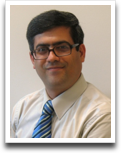
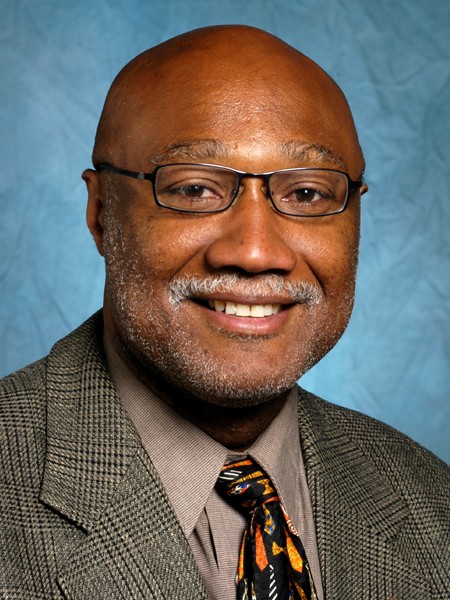
Alan Wagner is an Associate Professor in the Department of Computer Science at the University of British Columbia (UBC), where he has held tenure since 1987. He is a member of the Institute for Computational Intelligence and Cognitive Systems (ICICS). With over 35 years of experience, his research focuses on parallel and distributed computing, high-performance computing (HPC), and message-passing systems (particularly MPI). His work emphasizes latency reduction, scalability, and middleware development using protocols like SCTP and TCP. Education: Ph.D. in Computer Science, University of Toronto (1987) M.Sc. in Computer Science, University of Alberta (1983) B.Sc. (Honors) in Mathematics, Dalhousie University (1977) Research interests include parallel algorithms, distributed systems, and applications in computational finance and data analytics. He has contributed to open-source projects like FG-MPI (a fine-grain MPI implementation) and SCTP-based MPI middleware, enhancing MPI's performance on commodity networks. His work has been supported by grants such as the NSERC I2I Grant (2008) and CFI Leaders Opportunity Fund (2009). He has advised over 20 M.Sc. students and 2 Ph.D. students. His teaching includes courses on parallel algorithms (CPSC 521) and computer networking (CPSC 317). He currently chairs UBC's Computer Science Graduate Admissions Committee.
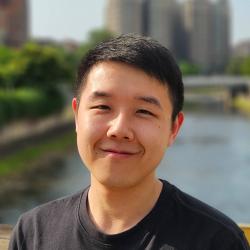
Kenny Chiu is a Ph.D. Statistics candidate and Sessional Lecturer at the University of British Columbia's Department of Statistics within the Faculty of Science. Supervised by Benjamin Bloem-Reddy, he teaches undergraduate statistics courses including STAT 306: Finding Relationships in Data and serves as a TA Trainer for new teaching assistants. Ph.D. Statistics (2021-Present) M.Sc. Statistics (2019-2021) B.Sc. Combined Honours in Computer Science and Statistics (2013-2018) His research focuses on symmetry applications in statistical inference and computation, developing methods for identifying distributional symmetries from data with applications spanning statistics, machine learning, and scientific discovery. He actively contributes to Flexible Learning initiatives developing statistics educational resources and facilitates Instructional Skills Workshops for graduate students through UBC's Centre for Teaching, Learning and Technology. His publication portfolio demonstrates expertise in symmetry-based hypothesis testing, particularly with applications to particle physics as evidenced by his NeurIPS 2023 workshop paper. His work combines theoretical statistical innovation with practical computational implementations, reflected in his publicly available GitHub repositories containing Julia code for symmetry testing frameworks. As an educator, Chiu has extensive teaching experience across multiple statistics courses including STAT 305, STAT 404, and SCIE 300, demonstrating commitment to both undergraduate instruction and graduate teaching development through his TA training role since 2021.
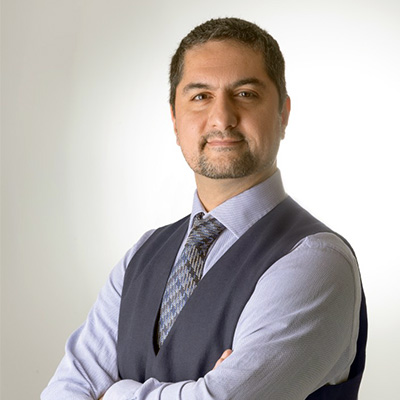
Dr. Shervin Shirmohammadi is a Professor at the University of Ottawa’s School of Electrical Engineering and Computer Science, specializing in multimedia systems and networks. He leads the Distributed and Collaborative Virtual Environment Research Laboratory, focusing on video systems, gaming systems, and healthcare engineering applications. His research has secured over $13M in funding, resulting in 300+ publications, 65+ trained researchers, 20 patents, and numerous awards including IEEE Fellow status. Education: Ph.D. in Electrical Engineering from the University of Ottawa. Professional credentials include P.Eng. (Ontario) and ACM Lifetime Membership. Research Interests: Multimedia Systems and Networks Networked Gaming and Video Systems Healthcare Engineering via Multimedia Machine Learning Applications Sensor Networks and IoT Funding and Impact: Over $13M in grants from public/private sectors, leading to technology transfers and patents. Serves as Editor-in-Chief of IEEE Transactions on Instrumentation and Measurement, and on editorial boards of ACM and IEEE journals. Awards: IEEE Fellow (202?), University of Ottawa Gold Medal, Professional Engineer licensure. Lab and Teams: Directs the Distributed & Collaborative Virtual Environment Lab, collaborating on projects like GAViST5G datasets, mmWave-based activity recognition, and AI-driven network management systems.
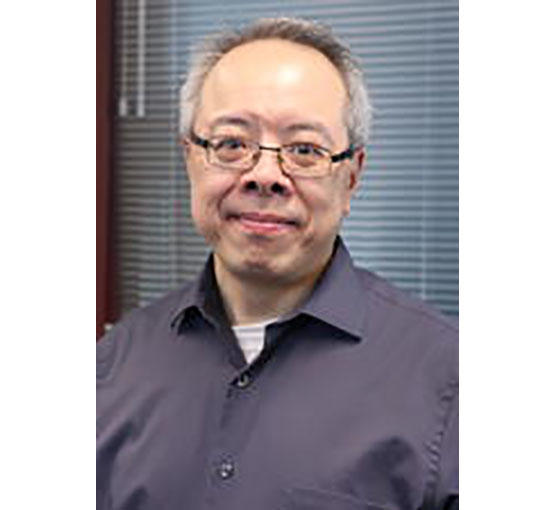
Professor Tet Him Yeap serves as an Associate Professor and Associate Director of the System Science Program within the School of Electrical Engineering and Computer Science at the University of Ottawa. With a tenure dating back to October 1989, he maintains an active research profile from his office in STE 5025. His academic contributions are anchored in electrical engineering and computer science, particularly in advancing communication systems and neural network applications for real-world problems. Professor Yeap's research program is centered on three interconnected pillars: Internet of Things (IoT) for smart infrastructure, neural network architectures, and VLSI design. Within IoT, he explores applications in smart farming—such as precision agriculture and environmental monitoring—and predictive maintenance for transportation systems. His neural network work emphasizes Restricted Hopfield Networks, focusing on adversarial robustness and associative memory capabilities. Additionally, he investigates VLSI implementations for communication systems, including visible light communication (VLC) under challenging ambient light conditions, and wireline/wireless access technologies. Analysis of Professor Yeap's 15 most recent publications (2023-2025) reveals a strategic shift toward interdisciplinary applications of machine learning in agriculture and robust communication systems. Approximately half of these works address smart farming challenges, leveraging UAV imagery, federated learning, and neural networks to predict crop yields and nitrous oxide emissions. The remainder concentrates on enhancing neural network robustness (particularly Restricted Hopfield Networks) and optimizing visible light communication for outdoor use. This dual focus underscores his commitment to both theoretical advances in AI and practical solutions for sustainability. Professor Yeap mentors graduate students in his research areas, with Kalonji H Kalala currently under his supervision. While specific grant awards are not detailed in the provided materials, his extensive publication record in high-impact areas suggests active involvement in funded projects, likely including collaborations with agricultural technology initiatives and engineering research consortia focused on IoT and communication systems.
Philip Fong is an Associate Professor in the Department of Computer Science at the University of Calgary. He previously held a Tier-2 Canada Research Chair in Software Security (2009–2019) and served as faculty at the University of Regina (2003–2008). He holds a B.Math and M.Math from the University of Waterloo and a Ph.D. from Simon Fraser University. His research focuses on access control mechanisms, IoT security, privacy in social computing systems, and language-based security. He has contributed to frameworks addressing policy negotiation, inference attack mitigation, and privacy-preserving systems. Notable work includes developing the Papilio tool for Android permission visualization and formalizing purpose-based privacy policies. His scientific achievements include the Tier-2 Canada Research Chair. His research spans interdisciplinary areas such as geo-social computing, federated systems protection, and hybrid logic-based policy enforcement. He has also explored security in open-source medical records systems and design patterns for multi-stakeholder platforms. Collaborations involve secure collaboration models and policy analysis techniques. His work bridges theoretical foundations (e.g., policy satisfiability) with practical tools (e.g., visualization systems for access control).
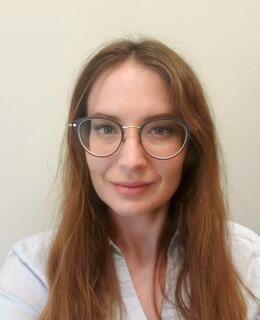
Dr. Kelsey Lucas is an Assistant Professor in the Department of Biological Sciences at the University of Calgary's Faculty of Science. Her research program in ecological biomechanics investigates how fish swimming mechanics influence behavior, energetics, and habitat selection. She examines how body morphology and movement dynamics determine swimming performance across species and environments. Her work integrates biomechanical measurements with ecological context to understand habitat occupancy patterns in freshwater systems. This research provides biomimetic insights for underwater vehicle design while assessing environmental impacts on fish populations. Dr. Lucas teaches courses including Vertebrate Zoology, Animal Physiology, and Comparative Vertebrate Anatomy. Her lab website provides additional information about ongoing research projects and publications.
Bing Si is a Professor in the Department of Soil Science at the University of Saskatchewan's College of Agriculture and Bioresources. His research focuses on soil water dynamics, thermal regimes, and hydrophobicity across pedon, hillslope, and landscape scales, with applications in ecosystem reclamation and sustainable agriculture. He holds a Ph.D. from the University of Guelph, an M.Sc. and B.Sc. from institutions in China. Research interests include understanding mechanisms governing soil water storage, particularly in semi-arid and boreal environments, as well as optimizing soil management for reclamation of mining waste and improving water use efficiency. His work addresses challenges in hydrocarbon-affected soils and layered soil systems. Publications emphasize advanced methodologies in soil physics, such as wavelet analysis of spatial patterns, heat pulse probe improvements, and isotope-based water sourcing models. Key themes include deep soil water availability, groundwater recharge in loess regions, and the impact of afforestation on hydrological cycles. Teaching includes undergraduate courses in Soil Science and Environmental Science, and graduate courses in Soil Physics and Environmental Sustainability.
Christian LÉGER is a Professor in the Department of Mathematics and Statistics at the University of Montreal , affiliated with the Faculty of Arts and Science . He holds a Ph.D. from Stanford University (1988). His research focuses on advancing statistical methodologies, particularly in resampling techniques like the bootstrap, adaptive estimation, and model selection, with applications in diverse fields such as biomedical research and industrial reliability. Research Interests: LÉGER’s work emphasizes leveraging computational power to enhance statistical methods. Key areas include bootstrap methodology for variance estimation, confidence interval construction, and parameter tuning (e.g., bandwidth selection in kernel density estimation). Recent projects explore inference in post-variable-selection regression models and the validity of bootstrap for estimators with non-standard convergence rates (e.g., least median of squares). Recognition: He received the Prix d'excellence en enseignement in 2000 from the Faculty of Arts and Sciences for outstanding teaching in the sciences. Advising & Collaboration: He has supervised multiple graduate students, including two industrial fellowships through the CRSNG program. His applied work includes consulting projects, with one leading to a master’s thesis. He collaborates on interdisciplinary topics such as age replacement policies in reliability engineering and statistical methods in medical imaging. Publications: Over 15 peer-reviewed articles since 1987 reflect his contributions to bootstrap theory, nonparametric methods, and statistical applications in fields ranging from biostatistics to operations research.
Dr. Alia Lumley is an Assistant Professor in the Department of Mathematics and Statistics at York University's Faculty of Science. Her academic focus spans analytic number theory, prime distribution, and value distribution of L-functions over function fields and number fields. Doctorate in Pure Mathematics (Analytic Number Theory), York University (2019) Master's in Pure Mathematics, University of Lethbridge (2014) Bachelor of Science in Mathematics, University of Lethbridge (2010) Dr. Lumley's research explores extreme value distributions of L-functions, zeros of L-functions, and prime number distribution patterns. Her work bridges theoretical number theory with computational verification. Recent publications demonstrate a focus on Selberg's central limit theorem, moments of L-functions, and explicit bounds for prime-containing intervals. These works span both number fields and function fields frameworks. Faculty Sponsor for Association of Women in Mathematics student chapter Contact: S508 Ross (South), York University, 4700 Keele Street, Toronto, ON M3J 1P3 | Phone: 416 736 2100 Ext. 55250 | Email: alumley2@yorku.ca
Jean Philippe Thivierge is a Professor in the Department of Psychology at the University of Ottawa, Faculty of Social Sciences. His research integrates experimental and computational approaches to study the dynamics of neuronal networks underlying memory and cognition. Research Interests: Dr. Thivierge's work centers on neural dynamics , neurosciences , and systems biology . He investigates how large-scale neuronal populations encode and maintain memories by combining multielectrode recordings with biologically realistic simulations. His lab explores principles of network organization across spatial and temporal scales, focusing on phenomena like neuronal avalanches, attractor dynamics, and functional connectivity. The analysis of his recent publications reveals a strong emphasis on computational modeling , statistical analysis of neural data , and network-level neuroscience . His work bridges experimental findings with theoretical frameworks, particularly in understanding scale-free dynamics, criticality, and information processing in cortical and hippocampal circuits. Scientific Contributions: While specific awards are not listed, his publication record in high-impact journals such as Neuron , PLoS Computational Biology , and Journal of Neurophysiology reflects significant contributions to computational and systems neuroscience. Advising and Research: Dr. Thivierge mentors several trainees, including graduate students and postdoctoral fellows, many of whom are co-authors on his publications. His lab employs multielectrode array technology and large-scale neural simulations to probe the mechanisms of memory formation and network stability. Although grant details are not provided, his sustained research output suggests active funding support. Laboratory Focus: The Thivierge Lab operates at the intersection of experimental neurophysiology and computational modeling, utilizing both in vitro recordings and in silico simulations to test hypotheses about brain network function. The lab's approach enables rigorous testing of biophysical mechanisms linking synaptic properties to emergent network behaviors.
Benjamin D Seamone is a permanent faculty member in the Mathematics Department at Dawson College (Montreal) and an adjunct research faculty in the Department of Computer Science and Operations Research at Université de Montréal. His research focuses on graph theory, including structural properties of graphs, graph searching, and surveillance. He holds a PhD in Applied Mathematics from Carleton University (2014), an MMath in Combinatorics and Optimization from the University of Waterloo, and a BSc from Canada's #1 undergraduate university. He coordinates Dawson College’s pre-university programs in Science nature and Sciences, informatique et mathématique. Education: PhD in Applied Mathematics, Carleton University (2014), supervised by Brett Stevens. MMath in Combinatorics and Optimization, University of Waterloo, co-supervised by Penny Haxell and Jacques Verstraëte. BSc from #1 undergraduate university in Canada . Research Interests: Seamone’s work centers on graph theory, particularly structural properties of graphs, graph searching algorithms, and network surveillance. His contributions include studies on acyclic colorings, eternal domination, Hamiltonian cycles, and biased combinatorial games. He collaborates widely, with affiliations to CRM and ISM Combinatorics and Algebra groups, and has conducted research at LaBRI (Université de Bordeaux). Publications Trends: His articles span topics from planar graph colorings to combinatorial game thresholds, reflecting a strong focus on discrete mathematics and algorithmic graph theory. Recent work emphasizes eternal domination and Hamiltonian cycle dynamics. Awards and Grants: No formal scientific awards are listed, though he has an Erdős number of 3. His research has been NSERC-funded during his postdoctoral fellowship at Université de Montréal. Lab/Tech Affiliations: Member of CRM and ISM Combinatorics groups, and previously at LaBRI (Bordeaux).
Kate Hale is an Assistant Professor at the Department of Geography , University of British Columbia , within the Faculty of Arts . Her research focuses on cold region hydrology, particularly characterizing snowpack dynamics, climate variability, and ecohydrologic processes to understand drivers of water availability in alpine and Arctic watersheds . She leverages ground-based observations , remote sensing , and computational modeling to analyze snow water storage heterogeneity and its impacts on hydrologic partitioning. Education: PhD, University of Colorado Boulder (2022) MA, University of Colorado Boulder BS, Georgetown University Research Interests include snowpack-water storage interactions, climate change impacts on seasonal hydrology, and stakeholder-driven water management strategies. Her work addresses how snowpack heterogeneity and warming trends transform alpine hydrology from multi-year storage to ephemeral systems, with implications for water quality, ecosystem health, and regional adaptation. Recent Publications span journals like Hydrological Processes , Water Resources Research , and Communications Earth & Environment , focusing on snowmelt-driven hydrology, rain-snow transition zones, and Western North American water scarcity. Her 2023 Communications Earth & Environment study highlighted declining snowpack trends linked to climate change. Scientific Awards: Dean of Arts Faculty Research Award (2024/25) Kate Hale teaches courses related to climate science and hydrology , and advocates for equity in science to enhance environmental outcomes through diverse scientific communities.
Dr. Amirnaser Yazdani is a Professor and Associate Chair for Graduate Studies in the Department of Electrical and Computer Engineering at Toronto Metropolitan University. He holds adjunct appointments as Associate Professor at the University of Toronto and University of Western Ontario. His academic background includes a Ph.D. in Electrical Engineering from the University of Toronto (2005), M.Sc. from University of Tehran (2001), and B.Sc. from Sharif University of Technology (1995). Education: Ph.D. Electrical Engineering, University of Toronto (2005) M.Sc. Electrical Engineering, University of Tehran (2001) B.Sc. Electrical Engineering, Sharif University of Technology (1995) Research Focus: Dr. Yazdani leads pioneering research in high-power electronic conversion systems with applications in renewable energy integration, microgrids, and smart grids. His work emphasizes modeling, control design, and stability analysis of distributed energy resources. Key areas include: Advanced converter topologies for HVDC transmission and renewable integration Energy management strategies for DC distribution networks and electric vehicles Robust control frameworks for islanded microgrid operation Protection systems for inverter-based distributed generation Publication Trends: His recent articles demonstrate strong focus on DC power systems, microgrid resilience, and electric vehicle integration. Theoretical contributions include novel control methodologies for power converters, while applied research features case studies on grid modernization. Recurring themes include stability enhancement, fault tolerance, and optimization of hybrid renewable systems. Awards & Honors: IEEE Student Branch Professor of the Year (2016, 2017) Chair's Research & Teaching Awards, Ryerson University (2013, 2014) NSERC Industrial Research Fellowship (2005-2006) Multiple teaching excellence awards from University Students' Council IEEE Senior Member status (2009) Edward S. Rogers Scholarship (2004-2005) Academic Leadership: As Project Leader of NSERC-funded Canadian Smart Microgrid Strategic Network, he coordinates national research initiatives. He chairs the IEEE PES Working Group on Distributed Energy Resources Modeling and serves as Associate Editor for IEEE Transactions on Sustainable Energy. His research group focuses on power electronics applications for next-generation grids.
Ojelanki Ngwenyama is a Professor of Global Management and Director of the Institute for Innovation and Technology Management at Toronto Metropolitan University's Ted Rogers School of Management. He holds additional appointments as Emeritus Professor of Information Systems at the University of Cape Town and Docent at University of Jyväskylä since 1996. His international academic career spans institutions including Université de Nantes, University of Münster, Deakin University, University of South Africa, and Copenhagen Business School. Education: D.Phil (HC, 2009) - University of Pretoria, Faculty of Engineering Ph.D. in Computer Science (1988) - SUNY Binghamton, Thomas J. Watson School of Engineering MBA in Organizations and Management (1985) - Syracuse University, Whitman School of Management MS in Computer Information Systems and BS in Computer Science (1983) - Roosevelt University Professor Ngwenyama's research spans critical areas of Information Systems with particular focus on organizational innovation, technology management, and the social implications of ICT in development contexts. His work bridges theoretical rigor with practical applications, examining how technology influences organizational structures, social dynamics, and economic development. His recent research explores the ethical dimensions of AI, digital entrapment in big data systems, and sustainable technology practices, reflecting his commitment to addressing pressing societal challenges through information systems research. Analysis of his publication trends reveals a consistent focus on critical social theory applied to information systems, with increasing attention to digital ethics, human flourishing in digital environments, and the societal implications of emerging technologies. His work demonstrates interdisciplinary breadth, connecting information systems with management theory, social science, and development studies. Scientific Awards and Recognitions: Fellow of the Association for Information Systems Member of the Academy of Science of South Africa Andrew Mellon Professor (2011) in South Africa Velux Visiting Professor (2012) at Copenhagen Business School As Director of the Institute for Innovation and Technology Management, Professor Ngwenyama leads the SSHRC-funded project 'Accelerating Digital Technology Adoption In Canadian Companies' and oversees several ongoing research initiatives including Organizational Innovation and Design, Decision modeling for Technology Management, Information Technology and Global Development, and Critical Social Science Research Methods. His research has secured significant funding and has been applied in both developed and developing country contexts. Professor Ngwenyama maintains active research collaborations across multiple continents, working with scholars from Europe, Africa, and North America. His research group focuses on critical examination of technology implementation, particularly examining power dynamics, social implications, and ethical considerations in digital transformation processes.
Barbara Bordalejo is a Professor at the University of Lethbridge with dual appointments in Digital Humanities and English . She serves as President of the Canadian Society for Digital Humanities/Société canadienne des humanités numériques and has held leadership roles in Global Outlook:: Digital Humanities and the European Association of Digital Humanities . Her work focuses on: Digital Editions : Leading the CantApp project (2020) for mobile access to Chaucer’s Canterbury Tales , co-developing the Textual Communities platform with Peter Robinson, and editing Darwin’s Origin of Species . Textual Scholarship : Exploring phylogenetic methods for manuscript analysis, collation techniques, and the intersection of bioinformatics with textual criticism. Equity in Digital Humanities : Investigating gender and minority representation through publications like Minority Report (2018) and co-organizing ADHO diversity workshops (2017–2022). AI and Academic Integrity : Analyzing false positives in AI detection software (2025) and advocating for responsible AI policies in education. Her research projects include collaborations with Richard North and Peter Robinson on digital tools, work with Roopika Risam on intersectional DH, and contributions to global DH initiatives across disciplines and regions.