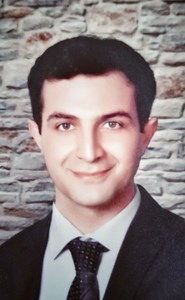
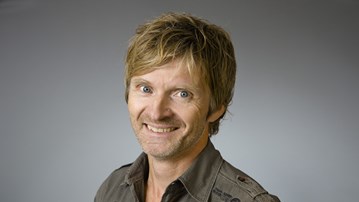
Soheil Samii is an Associate Professor at the Department of Computer and Information Science (IDA) at Linköping University. His research focuses on real-time systems, cyber-physical systems (CPS), and embedded systems, with particular emphasis on automotive applications, fault-tolerance, and networking. He leads the Adaptive Software for the Heterogeneous Edge-Cloud-Continuum (ASTECC) project, funded by the Swedish Foundation for Strategic Research (SSF). His work integrates software engineering, real-time scheduling, and safety-critical systems design. Samii’s research interests include resource optimization for 5G networks, time-sensitive networking (TSN), and automotive cybersecurity. He has contributed to frameworks for fault-tolerant embedded systems and cloud-assisted control systems. His publications often address challenges in distributed embedded control, vehicular networks, and reliability engineering. Recent articles highlight advancements in multi-traffic resource allocation for real-time applications and automotive CPS security. He collaborates with industry and academia on projects like zone-based architectures for trailering systems and perception-aware autonomous vehicle controllers. Samii supervises multiple PhD students and contributes to the Software and Systems (SAS) division at IDA, which emphasizes software engineering and computer systems research. His work bridges theoretical foundations and practical industrial applications in automotive and embedded computing domains.
Sindri Magnússon serves as an Associate Professor in Machine Learning at Stockholm University's Department of Computer and Systems Science. His research focuses on distributed optimization, machine learning, and data-driven decision-making within complex network systems, with applications spanning power grids, IoT infrastructure, and satellite operations. His educational background includes a B.Sc. in Mathematics from the University of Iceland (2011), an M.Sc. in Applied Mathematics (Optimization and Systems Theory) from KTH Royal Institute of Technology (2013), and a Ph.D. in Electrical Engineering from KTH (2017). He completed postdoctoral research at Harvard University (2018-2019) following a 9-month visiting PhD stint there in 2015-2016. Magnússon's research integrates theoretical optimization frameworks with practical machine learning implementations, particularly emphasizing reinforcement learning, federated systems, and distributed algorithms for resource-constrained environments. His work bridges theoretical guarantees with real-world applications in critical infrastructure and industrial systems. Analysis of his recent publications reveals a strong focus on communication-efficient distributed learning, non-stationary reinforcement learning environments, and predictive maintenance systems. His team consistently develops novel algorithms addressing asynchronous updates, model mismatch in federated settings, and multi-objective optimization challenges across IoT and satellite networks. Major awards include the IEEE ICASSP best student paper award (as supervisor) and a prestigious Swedish Research Council (VR) Starting Grant. VR Starting Grant: Resource Constrained Machine Learning in Complex Networks (PI, 4 MSEK, 2021-2024) Digital Futures: DEMOCRITUS project on critical societal infrastructures (Co-PI, 4 MSEK, 2021-2024) Vinnova: Smart Converters for Climate-neutral Society (PI, 3 MSEK, 2022-2025) He actively supervises seven PhD candidates including main supervision for Ali Beikmohammadi, Shubham Vaishnav, and Mohsen Amiri, plus industrial PhD projects with Spotify. As Associate Editor for IEEE/ACM Transactions on Networking, he contributes significantly to the networking and machine learning research communities.
Mahdi Abbasi serves as an Associate Professor in the Department of Computing Science at Umeå University, Sweden, where he conducts research at the intersection of machine learning and distributed computing systems with emphasis on resource-constrained environments. His research portfolio spans critical domains in modern computing: Edge Computing infrastructure optimization Tiny Machine Learning (Tiny ML) applications Cloud-Edge continuum workload distribution Distributed systems autonomy Computational resource allocation Latency-sensitive processing frameworks Analysis of his recent publications reveals a focused trajectory toward developing autonomous, compact machine learning models that enable intelligent workload management across distributed computing environments, reducing cloud dependency while improving operational efficiency in IoT and mobile ecosystems. No scientific awards were documented in the provided source material. Available information contains no records of graduate student supervision, research grant acquisitions, or specialized laboratory affiliations associated with Dr. Abbasi's academic activities.
Alessandro Vittorio Papadopoulos is a Professor of Electrical and Computer Engineering at Mälardalen University (MDU) and a QUALIFICA Fellow at the University of Málaga's Institute for Software Technology and Software Engineering. His research focuses on modeling and control of interconnected systems under uncertainty, integrating Control Theory with Embedded Systems , Distributed Systems , and Real-Time Systems . He has served as a Scientific Advisor for companies like ABB and Zero Point Technologies. Education: PhD from Politecnico di Milano (2013), supervised by Alberto Leva; Postdoctoral work at Politecnico di Milano and Lund University's Department of Automatic Control under Karl-Erik Årzén. Research Trends: His articles emphasize Swarm Robotics , Stochastic Scheduling , Privacy-Preserving Control , and Edge-Cloud Continuum . Key subfields include Distributed Control , Uncertainty Modeling , Real-Time Optimization , and Secure Communication . Awards: He received the Most Influential Paper Award at SEAMS 2025, QUALIFICA Fellowship , and Outstanding Paper Award at ECRTS 2021, alongside a Best Artefact Award in 2017. Advising: Supervised PhD theses by Anna Friebe and Daniel Bujosa Mateu. Labs & Collaborations: Affiliated with the Lund Center for Control of Complex Engineering Systems (LCCC) and MDU's research groups.
Mihhail Matskin is a Professor at the Royal Institute of Technology (KTH) within the Department of Software Logic & Computer Systems. He specializes in cloud computing, big data pipelines, machine learning, and distributed systems. His work emphasizes optimizing cloud resource allocation, developing graph-based cost models, and advancing AI-driven systems like SQL recommendation engines and relation extraction frameworks. He actively contributes to KTH's educational mission through roles as examiner and course manager in advanced computer science and engineering courses, including Distributed AI, Cloud Storage Optimization, and Big Data Workflow Design. His research spans over two decades, focusing on scalable data management solutions, edge computing applications in healthcare, and semantic analysis of social media. Notable projects include the DataCloud initiative for big data pipeline orchestration and the DEF-PIPE DSL visualization framework. Matskin’s work bridges theoretical advancements with practical implementations, addressing challenges in reproducibility of LLM-based systems, containerized edge computing, and constraint programming for robotics. His academic contributions include pioneering studies on cloud cost modeling, rule-based storage tiering, and contrastive learning for NER tasks. He has advised numerous advanced-level degree projects across computer science, embedded systems, and communication technologies. Matskin’s lab focuses on innovative solutions at the intersection of distributed systems, AI, and data engineering.
Sindri Magnússon is an Associate Professor and Senior Lecturer at Stockholm University's Department of Computer and Systems Sciences (DSV), part of the Data Science Research Group. He holds a B.Sc. in Mathematics from the University of Iceland (2011), a Master’s in Applied Mathematics (Optimization and Systems Theory) from KTH Royal Institute of Technology (2013), and a Ph.D. in Electrical Engineering from KTH (2017). He completed a postdoctoral fellowship at Harvard University (2018–2019) and was a visiting PhD student there in 2015–2016. His research focuses on distributed optimization, decision-making, and machine learning in cyber-physical systems and IoT. Key projects include AI-driven equitable decision-making, smart converter control for renewable energy systems, federated reinforcement learning, and sustainable data-driven algorithms. His work bridges core data science with applications in critical infrastructures, energy systems, and societal challenges. Recent articles explore multi-objective optimization for satellite scheduling, federated learning for privacy-preserving AI, and reinforcement learning in non-stationary environments. His contributions span theory and practice, addressing scalability, sustainability, and ethical AI. He is actively involved in the Data Science Research Group, which develops algorithmic methods for decision-making in smart cities and energy systems. No awards or grants are explicitly listed, but his projects suggest significant research funding and collaboration.
Erik Elmroth is a Professor at the Department of Computing Science, Umeå University. He leads research in distributed systems, cloud/edge computing, and autonomous resource management, directing a 30+ member research group. His leadership includes transformative roles as department head (2009-2021) and Deputy Director at High Performance Computing Center North (HPC2N). Elmroth serves on executive committees for the SEK 6.2B Wallenberg AI program (WASP) and SEK 390M eSSENCE initiative, and leads multiple Kempe Foundation projects. Research interests center on: Autonomous control of cloud/edge infrastructures Software-defined systems and federated clouds AI-driven resource optimization High-performance computing architectures Robust machine learning for distributed environments His publications emphasize adaptive cloud systems, anomaly detection, and federated learning, with consistent focus on scalability and resilience in edge/cloud deployments. Awards and honors: Member of Royal Swedish Academy of Engineering Sciences (IVA) Nordea Scientific Prize (2011) SIAM Linear Algebra Prize (2000) National HPC Lecturer appointment He has supervised 40+ PhD students and secured major grants including the Swedish Research Council's second-largest award for the Cloud Control project. Elmroth founded the Control Workshops series and co-founded Elastisys AB, a cloud security firm with 50+ employees recognized as Umeå's Spin-off Company of the Year.
Paul Townend is an Associate Professor at Umeå University , Sweden, with a Docent qualification. He leads the Green Distributed Computing group and serves as Research Leader for the Autonomous Distributed Systems (ADSLab) lab. Scientific Coordinator for Horizon Europe COGNIT Co-Manager & Scientific Advisor for WASP WARA-Ops Member of WASP Graduate School Management Team His research focuses on energy-efficient and sustainable distributed systems , with a current emphasis on Edge-Cloud integration . Additional areas include fault tolerance, provenance, data center optimization, and simulation . He has supervised 5 PhD students and 2 postdocs , with expertise in IoT, machine learning for cloud management, and microservices . Best Paper Awards at SOSE 2013 and ISORC 2012 Principal Investigator for grants totaling over $5.8M , including projects like Adaptive Monitoring of Streaming Data and Energy-Aware Cloud-Edge Management
Praveen Kumar Donta is an Associate Professor (Docent) and Senior Lecturer at the Department of Computer and Systems Sciences, Stockholm University, Sweden. His research focuses on distributed computing continuum systems, learning-driven approaches for IoT and edge computing, and intelligent data protocols. He leads the Distributed Immersive Participation research group which investigates how humans and things can be more connected and exchange information in real and virtual societies. Education: Ph.D. in Computer Science & Engineering from Indian Institute of Technology (Indian School of Mines), Dhanbad (2021) Visiting Ph.D. Fellow at Mobile&Cloud Lab, University of Tartu, Estonia (2019-2020) Master in Technology from JNTUA, Ananthapur (2014) Bachelor in Technology from JNTUA, Ananthapur (2012) Dr. Donta's research centers on distributed computing continuum systems that integrate cloud, edge, and IoT devices to deliver scalable and low-latency computing resources. His work explores learning techniques in IoT, AI/ML for computing systems, cognition and causality in computing systems, and cyber-physical continuum applications. He investigates how human body analogies can inform the design of more resilient and efficient distributed systems, as well as developing frameworks for privacy enforcement, equilibrium in computing continuum systems, and energy-efficient user interactions with smart environments. His research has significant applications in smart city management, satellite services, and intelligent transportation systems. Dr. Donta's publication record demonstrates a strong focus on the intersection of distributed systems, machine learning, and privacy-preserving technologies. His recent work shows an increasing emphasis on human-inspired approaches to distributed computing, with particular attention to making these systems more interpretable, efficient, and adaptable. His research spans theoretical foundations of computing continuum systems to practical implementations in areas like satellite services, smart environments, and anomaly detection. Scientific Awards and Recognition: IEEE Senior Member ACM Professional Member Dr. Donta serves as an editorial board member for several prestigious journals including IEEE Internet of Things Journal, Computing (Springer), Transactions on Emerging Telecommunications Technologies (Wiley), Measurement, and Computer Communications (Elsevier). He actively mentors the next generation of researchers, currently supervising PhD student Alfreds Lapkovskis and co-supervising Shubham Vaishnav. His research is supported by projects such as the Heterogeneous Computing Continuum for a Sustainable Smart City Management (HCSCM), which aims to develop scalable, secure solutions for urban environments by integrating IoT, edge, and cloud computing. As part of the Distributed Immersive Participation research group, Dr. Donta collaborates with researchers across disciplines to explore how technological advances enable humans and things to be more connected. The group focuses on application areas such as culture, transport, intelligent vehicles and e-health, developing solutions that enhance participation in both real and virtual societies.