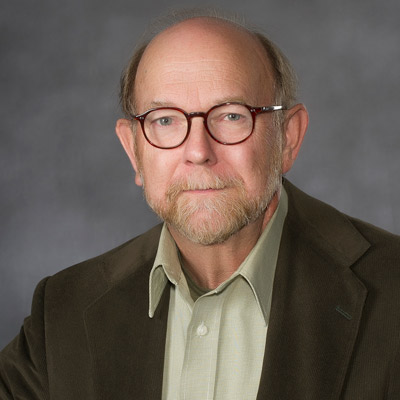
Dr. Troy V. Mumford is an Associate Professor in the Department of Management at Colorado State University's College of Business. He holds a Ph.D. in Organizational Behavior and Human Resource Management from Purdue University's Krannert Graduate School of Management. His research focuses on leadership across organizational levels, team roles, and quality culture development, with over a decade of publications in top-tier journals. Ph.D. from Purdue University Teaches Organizational Behavior, HRM, and Compensation Consulted biomedical, financial, and government sectors Editorial board member for Academy of Management Review His work spans high-performance work practices, team dynamics, and leadership mechanisms, including foundational team role research and situational judgment testing. Recent studies examine HRV training applications, cross-country organizational systems, and ethical workplace dynamics. Scientific contributions include methodological advancements in organizational research, leadership strataplex modeling, and team effectiveness frameworks. He has served as reviewer for Harvard Business School Publishing and Personnel Psychology.
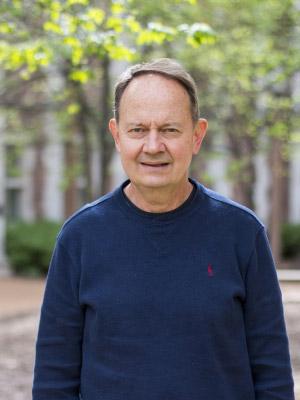
Robert Godwin-Jones is a Professor in the Department of Foreign Language at Virginia Commonwealth University's College of Humanities and Sciences, where he has served since 1979. He holds the position of Foreign Language Liaison and maintains active scholarly contributions through his "German Stories" digital repository and "Communicating Across Cultures" blog, focusing on technology-enhanced language pedagogy and intercultural communication. His educational background includes: B.A. in French and German from Franklin and Marshall College (1971) M.A. in Comparative Literature (German, French, and English) (1973) Ph.D. in Comparative Literature from the University of Illinois Urbana-Champaign (1977) Dr. Godwin-Jones specializes in Computer-Assisted Language Learning (CALL), with research spanning artificial intelligence applications, virtual reality environments, and digital literacies for language learners. His work examines how emerging technologies transform second language acquisition through ecological semiotics, distributed agency models, and multimodal communication frameworks. He investigates pedagogical translanguaging strategies for less commonly taught languages and analyzes authenticity in AI-mediated language interactions, particularly in pragmatics and writing development. Analysis of his 2021-2025 publications reveals three dominant trajectories: (1) generative AI integration in language instruction with emphasis on ethical implementation and threat mitigation; (2) extended reality applications creating immersive language spaces in the metaverse; and (3) ecological approaches connecting smart devices, ambient intelligence, and situated learning contexts. His scholarship consistently bridges theoretical frameworks with practical classroom applications across 19th-century German literature studies and contemporary language education. He maintains active professional engagement through memberships in: Delta Phi Alpha German Honorary Society Phi Kappa Phi Honorary Society Modern Language Association American Association of Teachers of German American Association of Teachers of French Foreign Language Association of Virginia As director of the "German Stories" project since 1994, he has curated verified editions of 19th-century German narratives with English translations under Creative Commons licensing, creating what has become a foundational resource for literary study and language acquisition. His blog extends this work through contemporary analyses of intercultural communication challenges, while his scholarly leadership in organizations like CALICO shapes national discourse on technology in language education. His laboratory functions as the "German Stories" digital ecosystem, which has evolved into a comprehensive platform hosting annotated texts, pedagogical resources, and research archives. This environment supports both formal classroom instruction and informal learning communities, demonstrating his commitment to porous classroom models that integrate physical and digital learning spaces.
Dr. André Artelt is a researcher at the University of Bielefeld within the Faculty of Engineering and affiliated with the Machine Learning Group at the Center for Cognitive Interaction Technology (CITEC). His work focuses on Explainable AI (XAI), particularly counterfactual explanations, and their applications in critical infrastructure like water distribution networks. Current Research: Explainable AI Counterfactual explanations Water network monitoring Physics-informed graph neural networks Scientific Contributions: His recent publications explore reinforcement learning for water pump scheduling, scalable graph neural networks for water systems, and benchmark frameworks like EPyT-Flow. He investigates how training data affects explanation quality and develops tools for robust counterfactual reasoning. Awards: Project Lamarr Fellowship
Brennan Bean is an Assistant Professor in the Mathematics and Statistics Department at Utah State University's College of Arts & Sciences. His work focuses on geospatial modeling, statistical methods for extreme weather analysis, and machine learning applications in structural and environmental engineering. Recent publications highlight expertise in snow load prediction, Bayesian entropy, and interdisciplinary data science. Notable contributions include optimizing design methods for insulated concrete wall panels and addressing deployment challenges for ML models in engineering contexts. Research trends span geospatial data integration, climate change impact assessments, and educational interventions in STEM. Key subfields include ground snow load mapping, extreme value statistics, climate downscaling, and high-dimensional ecological modeling.
David Balota serves as an Adjunct Professor in the Department of Psychological and Brain Sciences at Washington University in St. Louis. With a career spanning multiple decades, his research has significantly contributed to our understanding of cognitive processes in aging and Alzheimer's disease. His work bridges theoretical cognitive psychology with clinical applications, particularly in developing sensitive cognitive markers for early detection of neurodegenerative conditions. Dr. Balota's primary research interests focus on the interplay between attention, memory, and language processing, with specific emphasis on how these cognitive domains change in healthy aging and in the presence of dementing illnesses like Alzheimer's disease. His research program has extensively examined automatic and controlled processes in cognitive tasks, lexical decision performance across the lifespan, and the development of sensitive cognitive markers for preclinical Alzheimer's disease. A significant portion of his recent work has focused on mind-wandering, reaction time variability, and their relationship to Alzheimer's disease biomarkers. His extensive publication record demonstrates consistent contributions to the field, with recent work increasingly incorporating digital assessment methods and biomarker research. Dr. Balota has made notable contributions to understanding how subtle cognitive changes can predict progression to cognitive impairment, particularly through examining attentional control processes and their relationship to tau pathology and neurodegeneration. Dr. Balota has been instrumental in developing large-scale lexical decision and naming corpora that have become standard resources in psycholinguistics research. His work on the English Lexicon Project has provided valuable data for understanding word recognition processes across different age groups and clinical populations.
Dr. Samantha Stanley is a Research Fellow at the University of New South Wales within the Faculty of Science's Institute of Climate Risk & Response. Holding a PhD in Psychology from Victoria University of Wellington (awarded July 2019), she specializes in applying social psychological theory to climate change challenges. Her research spans ecological emotions, climate change communication, political polarization on climate issues, the psychology of meat consumption, and public attitudes toward climate policy reform. Notable research streams include eco-anger dynamics, climate anxiety measurement, solastalgia (environmental distress), and cross-cultural studies of climate perceptions across dozens of countries. Stanley's publication record demonstrates a strong focus on climate psychology, with numerous high-impact articles in leading journals. Her work frequently examines psychological barriers to climate action, emotional responses to environmental change, and communication strategies for building climate policy support across political divides. Recent research leverages massive international datasets to identify universal and culturally-specific patterns in climate attitudes. ARC DECRA Fellowship (2024) for research on climate migration and climate finance 2024 Discovery Early Career Researcher Award Defence Science and Technology Group project funding (2022-2024) ANU School of Medicine and Psychology Fast Grant (2023) University of Canberra Faculty of Health seed grant (2019) As principal investigator on multiple research projects, Stanley collaborates extensively across disciplines and international boundaries. Her work with the International Climate Psychology Collaboration has produced one of the largest cross-national datasets on climate attitudes, involving researchers from over 60 countries. Current research examines how different forms of climate-related anger drive or hinder pro-environmental action, and how trust in climate scientists varies globally.
Robb W Lindgren is a Professor at the University of Illinois at Urbana-Champaign with appointments in Curriculum and Instruction and Educational Psychology . He serves as Associate Dean for Research in the College of Education and holds affiliations with the National Center for Supercomputing Applications (NCSA) , Beckman Institute for Advanced Science and Technology , and Center for Social & Behavioral Science . His research focuses on Embodied learning through gesture and physical interaction Design of mixed/augmented reality educational systems Collaborative STEM education with immersive technologies Recent publications highlight his work in: Biochemistry simulations using haptic feedback (2024) VR-based spatial reasoning for astronomy education (2023) Metaverse learning environments with theory-driven design (2023) Climate change simulations with full-body tracking (2022) His research group explores how physical movement and gestural interfaces shape scientific understanding and conceptual change. Key collaborations include work with Jee Hyang Park , Jun Kang , and Thomas Kim , focusing on Gesture-mediated collaboration XR learning analytics Agency in embodied design
Ioana Galu serves as Associate Professor of Violin and Viola in the Department of Music at the University of South Dakota, directing the Violin/Viola Studio and performing with the Rawlins Piano Trio. Previously on faculty at Heidelberg University (2004-2016) and The College of Wooster (2014-2016), she maintains active roles with the Eastern Music Festival since 2004 and co-founded the Romanian-American chamber music festival 'American Musicians in Transylvania'. Her educational background includes: Doctor of Musical Arts in Contemporary Music, Bowling Green State University (2012) Artist Diploma in Violin Performance, University of Cincinnati College-Conservatory of Music (2011) Master of Music in Violin Performance, Bowling Green State University (2003) Master of Music in Violin Performance and Chamber Music, Gheorghe Dima Music Academy, Romania (1999) Bachelor of Music in Violin Performance and Pedagogy, Gheorghe Dima Music Academy (1998) Dr. Galu's research examines Contemporary Music performance practices, Solo Violin Repertoire interpretation, Injury Prevention methodologies, and Performance Anxiety management. Her work bridges technical mastery with expressive artistry, focusing on physical sustainability and psychological resilience for string musicians through practical pedagogical frameworks. Recent scholarly presentations reveal evolving interests in efficient practice systems, bowing mechanics, and the socio-artistic dimensions of performance. She increasingly explores mindfulness applications, genre-crossing repertoire, and recovery of women composers' works, demonstrating commitment to both technical innovation and social relevance in string performance. Notable awards include The American Prize in Chamber Music (2022), Chamber Music Community Engagement Award (2009), and multiple competition prizes from George Enescu Violin Competition (1996) to CCM Concerto Competition (2004). As advisor and grant recipient, she directs the Rawlins Piano Trio with four consecutive South Dakota Arts Council Touring Arts Roster grants (2018-2026). Her leadership extends to Music4Romania board membership and co-founding initiatives promoting Romanian-American cultural exchange. Dr. Galu performs as concertmaster for multiple orchestras and maintains active chamber music collaborations, notably through her festival work connecting Transylvanian and American artists.
Martin Hebart is a Professor for Computational Cognitive Neuroscience and Quantitative Psychiatry at Justus Liebig University Giessen and an Independent Max Planck Research Group Leader at the Max Planck Institute for Human Cognitive and Brain Sciences in Leipzig, Germany. His work bridges cognitive neuroscience, computer science, and psychology to explore visual perception, object recognition, and computational models of brain function. PhD in Psychology from Bernstein Center for Computational Neuroscience Berlin (2014) M.Sc. and B.Sc. in Neuro-cognitive Psychology from Ludwig Maximilian University Munich His research integrates psychophysics , neuroimaging (fMRI, MEG), and machine learning to decode how visual input transforms into stable object representations and how these insights inform psychiatric conditions like hallucinations. Articles highlight his focus on computational models , neural network alignment , and large-scale behavioral-neuroimaging datasets (e.g., THINGS-data). His group’s work spans from basic visual cognition to translational applications in psychiatry. Scientific awards include postdoctoral fellowships from the National Institute of Mental Health (2016) and Alexander von Humboldt Foundation (Feodor Lynen, 2016), alongside doctoral and study scholarships. He leads a multidisciplinary team at the intersection of JLU Giessen’s Medical Department and MPI, mentoring students in visual neuroscience , AI-driven modeling , and clinical applications .
Kevin De Pauw is a postdoctoral researcher at the Department of Physiotherapy, Human Physiology and Anatomy at Vrije Universiteit Brussel (VUB). He actively contributes to 12 research projects with a focus on robotics, mental fatigue, brain physiology, and sports physiotherapy. Current projects include Brubotics, APEX, and TBrainBoost Collaboration network spans Belgium, Germany, and Netherlands Key research themes: Mental Fatigue (100%), Robotics (100%), and Prosthetics (52%) Research Interests: His work explores the intersection of brain physiology, fatigue mechanisms, and robotics applications in rehabilitation. He develops predictive musculoskeletal simulations and investigates inter-limb asymmetry in athletes. Article Trends: Recent publications show increasing focus on robot-assisted rehabilitation , brain neuroplasticity , and mental fatigue quantification . Research combines AI-driven wearable robotics with neurophysiological monitoring . Student Supervision: He mentors Master's students in topics related to Lower limb asymmetry analysis Adolescent cognition-fitness relationships Exoskeleton interface design Laboratory Affiliation: Member of Brubotics and TBrainBoost teams at VUB, working on sustainable human-centered robotics and neurocirculation enhancement technologies.
Sinead O'Keeffe is a Research Fellow at the University of Limerick in the Faculty of Science and Engineering , specifically within the Department of Electronic and Computer Engineering . Her research bridges the technical domain of optical fiber sensor development with critical applications in radiation therapy and sports medicine. Primary Research Themes Medical radiation dosimetry using optical fiber sensors Brachytherapy dose monitoring systems Sports injury prevention in Gaelic football and running Mental health literacy in rural farming communities Key Technical Contributions Development of scintillation-based dosimeters Characterization of perfluorinated polymer fibers 3D printed sensor systems for clinical and rehabilitation applications Interdisciplinary Applications Prostate cancer radiotherapy dose measurement Mental health intervention programs for athletes Work-family conflict analysis in Irish farming Email: sinead.okeeffe@ul.ie
Kevin Webb is an Associate Professor in the Computer Science Department at Swarthmore College . He earned his Ph.D. in Computer Science in 2013 from the University of California, San Diego (UCSD) , advised by Alex Snoeren and Ken Yocum. His academic journey includes a Master of Science (2010) and Bachelor of Science (2007) in Computer Science from UCSD and Georgia Tech, respectively. Research Interests: Networks , Distributed Systems , Cloud Computing , Operating Systems , Parallel Computation , and Computer Science Education Research (focusing on assessment and interactive teaching methods). Publications: His work spans topics like topology switching, tenant segregation in cloud networks, concept inventories for data structures, and tools like Blender and ParaVis. He is a co-author of the open-access textbook Dive into Systems , which introduces computer architecture and systems to students with only a CS1 background. Teaching: He has taught courses such as CS31: Introduction to Computer Systems , CS45: Operating Systems , and CS43: Computer Networks at Swarthmore. At UCSD, he served as a teaching assistant and instructor for courses on distributed systems and operating systems. Contact: Kevin is reachable at kwebb@cs.swarthmore.edu .
Kvetoslava Matlovičová is an Associate Professor in the Department of Tourism at Bratislava University of Economics and Business. Her work bridges Tourism Geography , Territorial Marketing , and Sustainable Development with a focus on Roma communities , cultural heritage , and urban resilience . Her research explores the intersection of semiotic place branding , Anthropocene challenges , and postdisciplinary geographical frameworks . She pioneered studies on medical tourism in Hungary and pro-poor tourism in marginalized Roma settlements, emphasizing community-based solutions. Key projects include the 15-minute city sustainable urban model and metamodern shifts in geographical epistemology. Her 2025 article on AI adoption in EU tourism highlights data-driven spatial analysis. Scientific Awards: Rector's Award 2015 (Social Sciences and Humanities) Rector's Award 2016 She has led grants like Game-based learning innovation (KEGA 020EU-4/2024) and Sociological dialogue support (project 312031V749). Her advisory roles focus on territorial development and geographic education reform .
Dr. Carolina Euan is a Lecturer in Statistics at the School of Mathematical Sciences, Lancaster University, with affiliations to the Data Science Institute and STOR-i Centre for Doctoral Training. Her research focuses on time series analysis, spatio-temporal modeling, and their applications in environmental data science and brain data analysis. School of Mathematical Sciences Data Science Institute STOR-i Centre for Doctoral Training Biostatistics Research Group Centre of Excellence in Environmental Data Science Her work spans multiple disciplines: Environmental Data Science: Marine heatwaves, solar irradiance modeling, particle number size distribution Brain Data Analysis: Neural connectivity, brain signal clustering, coherence-based inference Statistical Methodology: Spatio-temporal extremes, spectral estimation, functional data analysis Recent publications demonstrate expertise in: 2025: Neural connectivity modeling, functional data analysis, particle distribution 2024: Virtual collaboration frameworks, precipitation regime modeling, spectral estimation 2023: Brain signal clustering, source apportionment, directional wave spectra Supervision includes: Kajal Dodhia: STOR-i (extreme sea temperatures) Jordan Hood: Bayesian modeling (COVID prevalence) Carla Pinkney: STOR-i
Dr. Christopher Hassall is an Associate Professor of Animal Biology at the School of Biology, University of Leeds , with research spanning entomology, climate change impacts, urban ecology, and conservation science. He leads the Hassall Lab and the BioDAR Project , which uses weather radar for biodiversity monitoring. Research Interests Quantifying insect abundance via weather radar (BioDAR/PestDAR/DRUID projects) Urban freshwater ecosystems and socio-ecological dynamics Evolution of insect camouflage/mimicry and flight behavior Climate change impacts on pollinators and invasive species Shadow diversity and extinction studies (Leverhulme DTP Co-Director) Scientific Awards Fellow of the Higher Education Academy Fellow of the Royal Entomological Society Advising : Supervises postgraduate researchers including Sicily Fiennes , Isabella Flowers , and Mx Solanum Foulstone , with a focus on interdisciplinary extinction studies and urban entomology.